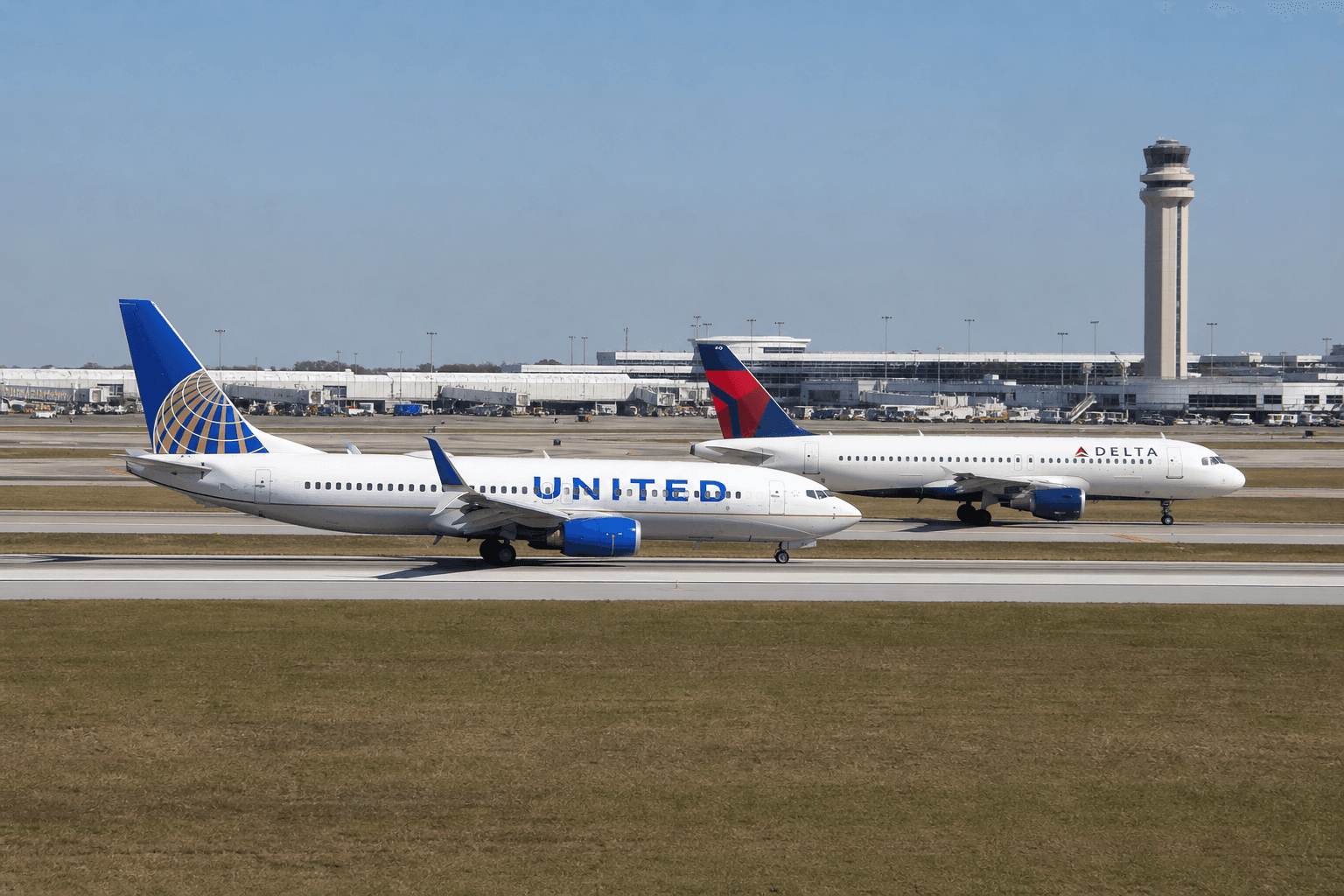

Federal Appeals Court Vacates DOT Order Against Delta and Aeromexico Antitrust Immunity
What to Know A federal appeals court has vacated the Department of Transportation’s order stripping Delta and Aeromexico of antitrust immunity, ruling the department’s reasoning was “arbitrary and capricious.” In This Article Why the dispute traces back to a fight between the US and Mexican governments over slots at Mexico City’s main airport. How the court found DOT broke from its own precedent by only analyzing competition at one airport instead of the whole US-Mexico market. Why a previous US-Japan joint venture approval undercut DOT’s argument for terminating this one. Why this ruling doesn’t necessarily end the fight, and what DOT would need to do to try again. Show 4 more points + .pyok-callout { display: flex; border-radius: 0; background: #f7f9fc; margin: 24px 0; font-family: -apple-system, BlinkMacSystemFont, "Helvetica Neue", Arial, sans-serif; } .pyok-callout-inner { padding: 20px 24px; width: 100%; } .pyok-callout-head { margin-bottom: 12px; } .pyok-callout-tag { font-size: 20px; font-weight: 900; letter-spacing: 0.04em; text-transform: uppercase; color: #120E43; } .pyok-callout-list { margin: 0; padding: 0; list-style: none; } .pyok-callout-list li { position: relative; padding-left: 18px; margin-bottom: 12px; font-size: 17px; line-height: 1.55; color: #1a1a1a; } .pyok-callout-list li::before { content: ""; position: absolute; left: 0; top: 9px; width: 6px; height: 6px; border-radius: 50%; background: #120E43; } .pyok-callout-list-more li:last-child { margin-bottom: 0; } .pyok-callout-subhead { text-align: center; font-size: 11px; font-weight: 700; letter-spacing: 0.1em; text-transform: uppercase; color: #8a93a3; margin: 22px 0 14px; padding-top: 14px; border-top: 1px solid #e1e7ef; } .pyok-callout-more { max-height: 0; overflow: hidden; transition: max-height 0.35s ease; } .pyok-callout-toggle { display: inline-flex; align-items: center; gap: 6px; margin-top: 10px; padding: 0; border: none; background: none; color: #120E43; font-size: 14px; font-weight: 700; cursor: pointer; } .pyok-callout-toggle:hover { text-decoration: underline; } .pyok-callout-toggle-icon { display: inline-flex; align-items: center; justify-content: center; width: 16px; height: 16px; border: 1.5px solid #120E43; border-radius: 0; font-size: 12px; line-height: 1; } (function () { document.querySelectorAll('.pyok-callout-toggle').forEach(function (btn) { btn.addEventListener('click', function () { var card = btn.closest('.pyok-callout-inner'); var more = card.querySelector('[data-more]'); var isOpen = btn.getAttribute('aria-expanded') === 'true'; var textEl = btn.querySelector('.pyok-callout-toggle-text'); var iconEl = btn.querySelector('.pyok-callout-toggle-icon'); if (isOpen) { more.style.maxHeight = '0px'; btn.setAttribute('aria-expanded', 'false'); textEl.textContent = btn.dataset.moreText; iconEl.textContent = '+'; } else { more.style.maxHeight = more.scrollHeight + 'px'; btn.setAttribute('aria-expanded', 'true'); textEl.textContent = btn.dataset.lessText; iconEl.textContent = '\u2212'; } }); }); })(); Delta Air Lines has won a temporary reprieve in the Department of Transportation’s attempt to strip it of antitrust immunity with partner airline Aeromexico as part of an extensive joint venture agreement. The justices hearing the case in the Eleventh Circuit appeals court vacated the DOT’s order ending the antitrust immunity, labeling the reasoning behind the order as “arbitrary and capricious.” As background, in 2016, the DOT approved antitrust immunity to Delta and Aeromexico for an extensive joint venture agreement, which saw the airlines closely coordinate schedules on flights between the United States and Mexico. In 2025, however, the Trump administration began a review of the antitrust immunity deal after a dispute broke out between the U.S. and Mexican governments over access rights to Mexico City's Benito Juárez International Airport (MEX). We are not a rubber stamp — courts retain a role, and an important one, in ensuring that agencies have engaged in reasoned decisionmaking. 11th Circuit Court of Appeals .pyok-quote { display: flex; background: #f7f9fc; border-radius: 0; margin: 28px 0; font-family: -apple-system, BlinkMacSystemFont, "Helvetica Neue", Arial, sans-serif; } .pyok-quote-inner { padding: 24px 28px 22px; width: 100%; } .pyok-quote-text { margin: 0; padding: 0; border: none; font-family: Georgia, "Times New Roman", serif; font-size: 22px; line-height: 1.5; font-weight: 400; font-style: italic; color: #120E43; } .pyok-quote-attribution { margin: 14px 0 0; font-size: 13px; font-weight: 700; letter-spacing: 0.02em; text-transform: uppercase; color: #8a93a3; } The Trump administration accused the Mexican government of abusing a so-called 'Open Skies' deal with the US by limiting slots at Mexico City's key international gateway airport and trying to force U.S. airlines to move to a lesser-used airfield on the outskirts of the city. The Mexican government insists that slot controls were only imposed at MEX because not only is the airport close to full capacity, but because major improvement works that are required at the airfield will create even further capacity constraints. The Department of Transportation (DOT) took the view that the restrictions imposed on US and other foreign airlines by the Mexican government unfavorably benefited Aeromexico, which retains the bulk of the slots at Benito Juárez Airport. As most travelers to Mexico City want to fly the Benito Juárez Airport, the DOT viewed Aeromexico's and, in turn, Delta's dominance at the airport as anti-competitive. Last September, the DOT issued a final order stripping Delta and Aeromexico of their antitrust immunity, but the following month, Delta filed a lawsuit in the US Court of Appeals for the Eleventh Circuit seeking a review. On Thursday, the court vacated the DOT’s final order , ruling that the Trump administration’s market analysis justifying the final order was too narrow. In the past, the DOT had reviewed the market as a whole, which in this case would include all routes between the United States and Mexico. Whereas, for this final order, the DOT had focused solely on competition at MEX airport. The court ruled that the DOT failed to explain why it had departed from this precedent of reviewing the entire market. The DOT argued that a true Open Skies agreement was essential to airlines winning and maintaining antitrust immunity, but the court found that the U.S. had previously approved Japanese joint ventures, despite a similar carveout at Tokyo Haneda Airport. While the court has vacated the DOT’s 2025 final order on this issue, that’s not to say that the DOT can’t issue another final order to terminate Delta’s and Aeromexico’s antitrust immunity… but to do so, the department will have to address the issues raised by the court. Delta responded to Thursday’s judgment, saying in a statement: "For nearly a decade, Delta’s joint cooperation agreement with Aeromexico has provided greater choice, more seamless travel, and increased connectivity for consumers while supporting U.S. jobs and economic growth.” “We appreciate the 11th Circuit’s careful review and remain focused on ensuring our customers, employees, and communities continue to benefit from this longstanding partnership.”