Skip to content
The Touch and GoThe Touch and Go
The Touch and Go

Your daily aviation briefing

Aviation news, from every corner of the industry.

Airline news, business aviation, aviation safety, the tech shaping the industry, and more — the news that matters to you, all day long.

Top story

Top stories right now

  1. 01
  2. 02
  3. 03
  4. 04

More aviation news

RSS
Boeing 787 Dreamliner engine nacelle showing serrated chevrons at an airport
SustainabilityAug 2, 1:00 AM

Boeing's Chevrons Quiet Engines but Cost Fuel on 787, 747-8, and 737 MAX

Aircraft design is a constant exercise in balancing various technologies. Engineers rarely have the luxury of maximizing every performance metric simultaneously; instead, they make carefully calculated compromises between fuel efficiency, weight, operating costs, emissions, passenger comfort, and regulatory compliance. One of the clearest examples of this balancing act can be found on three modern Boeing aircraft families: the 787 Dreamliner, 747-8, and 737 MAX.

Modern Spirit Airlines corporate headquarters campus in Dania Beach with adjacent residential units and parking
Flight TrainingAug 1, 9:04 PM

Spirit Airlines' $250M Dania Beach Campus Faces $88M Bankruptcy Bid

Spirit opened its new $250 million "Spirit Central" corporate campus in 2024, complete with training facilities, employee housing, and space for more than 1,000 workers. Now, in bankruptcy, a stalking horse bidder is offering just $88 million for much of the nearly brand-new headquarters complex — an extraordinary markdown for a project that symbolized how far the airline had drifted from its ultra-low-cost roots.

Malaysia Airlines Boeing 737 on tarmac at Soekarno-Hatta Airport during day
AirportsAug 1, 6:29 PM

Malaysia Airlines Pilot Detained in Indonesia for Smuggling Over 70,000 Ecstasy Pills

A Malaysia Airlines pilot faces the threat of being sentenced to death by a court in Indonesia after he was allegedly caught trying to smuggle more than 70,000 ecstasy pills into Soekarno–Hatta International Airport on the island of Java during a work trip, hiding the more than 55 pounds of narcotics in his luggage. To make matters worse, the Malaysia Airlines pilot, who had just operated a flight from Kuala Lumpur, tested positive for ecstasy (also known as MDMA) and cocaine. Identified only by the initials MBSO, the Boeing 737 First Officer has been detained under Law No. 35 of 2009 on Narcotics, which carries a maximum sentence of death for the most serious charges or life imprisonment. Indonesian authorities said on Friday that MBSO was caught after a routine X-ray inspection of luggage by customs officials. Officers noticed something suspicious in a suitcase, which was identified by MBSO as being his. Inside, they discovered 14 large packages containing ecstasy and one package of methamphetamine. In total, officials counted 70,114 ecstasy pills. MBSO then allegedly told law enforcement that he had been recruited by a drug-smuggling gang, and for this particular shipment, he had been promised a payout of 50,000 Malaysian Ringgit (US $12,235). He was to transport the shipment to Jakarta, where he would check into a local hotel and meet up with a runner who would collect the drugs. This wasn’t the first time that MBSO had smuggled drugs into Indonesia, prosecutors allege. He has also allegedly smuggled methamphetamine to Sabah, Malaysia, and delivered 7 kg of methamphetamine to Jakarta during a previous trip. While rare, pilots and flight attendants are sometimes recruited by international drug smuggling gangs, often targeting crew members with debt problems or substance misuse issues. Malaysia Airlines has had more than its fair share of crew members caught up in this type of activity. In 2018, for example, a senior member of cabin crew at Malaysia Airlines was jailed for 12 months after being caught trying to smuggle £150,000 in criminal cash out of Heathrow Airport in West London. The money is believed to have come from illegal drug dealing. Two years later, a Malaysian flight attendant who hid millions of dollars’ worth of heroin in her underwear was jailed for nine and a half years by a Melbourne court for smuggling the drugs into Australia. The mother of two smuggled heroin into Australia on at least eight occasions between October 2018 and January 2019, when she was finally caught. The flight attendant claimed she had agreed to help the drug smugglers to help pay off her daughter's mounting medical bills. Other airlines in the region have had similar issues. In March 2023, four Vietnam Airlines flight attendants were arrested on suspicion of trying to smuggle around 11.4 kilograms of ecstasy from France through Ho Chi Minh City Airport. The drugs were concealed in toothpaste tubes. And a couple of monts a go, a Thai flight attendant was busted by police and customs agents at Melbourne International Airport as she attempted to smuggle 1kg of heroin into Australia.

Boeing 787 cockpit with digital displays and avionics systems
RegulatoryAug 1, 6:00 PM

Boeing 787 Core Software Updates Must Go Through Manufacturer and FAA Approval

The Boeing 787 runs on a software architecture that is fundamentally different from any commercial aircraft that came before it. Rather than dozens of independent avionics computers each running their own embedded software, the 787 consolidates most of its major functions onto a shared computing platform called the Common Core System, with approximately 300 Loadable Software Airplane Parts distributed across roughly 1,400-1,500 locations on the aircraft. The software is not a separate product from the airframe. It is part of the aircraft's FAA type certificate.

B-1B Lancer bombers lined up on RAF Fairford runway during daytime operations
Military/DefenseAug 1, 4:00 PM

US Air Force Deploys Nearly One-Third of B-1B Bomber Fleet to RAF Fairford

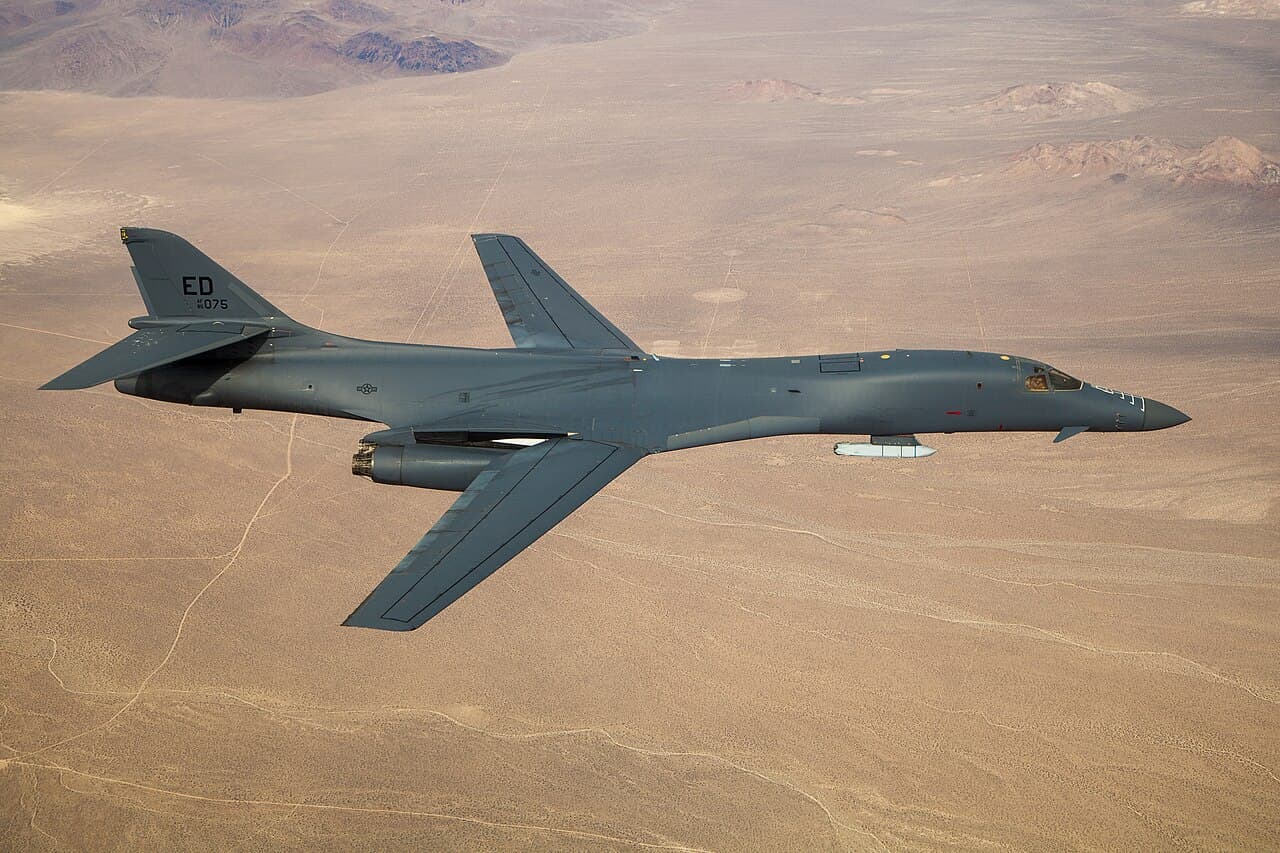
At the peak of Operation Epic Fury (around late March 2026) , the US Air Force deployed around 15 B-1B Lancers and around six B-52H Stratofortresses at the UK's RAF Fairford airbase. The initial wave of B-1Bs arrived on or after March 6, with B-52s arriving soon after. As of the time of writing (late July), a large share of the Air Force's operational Rockwell B-1 Lancer fleet remains deployed at RAF Fairford.

Commercial airliner at night parked at Jakarta Soekarno-Hatta Airport with customs officers nearby
Aviation SafetyAug 1, 9:49 AM

Malaysia Airlines Pilot Arrested in Indonesia with 70,000 Ecstasy Pills and Multiple Drugs

A lot of drug smuggling happens by airplane, and it's not totally uncommon to see pilots and flight attendants involved, given how much they travel, plus the special privileges they have at some airports. Well, here's one of the most extreme stories I've ever heard — a Malaysia Airlines pilot was caught in Indonesia transporting 57 pounds of ecstasy. Not only that, but he even tested positive for methamphetamine, ecstasy, and cocaine. Malaysia Airlines pilot caught smuggling drugs into Indonesia This incident happened on the night of Tuesday, July 28, 2026, at Jakarta Soekarno-Hatta Airport (CGK). Customs officers at the airport were inspecting baggage at the international arrivals hall via x-ray, and noticed a bag that looked suspicious. The bag was later collected by a 39-year-old Malaysia Airlines pilot who had just completed flight MH727 from Kuala Lumpur Airport (KUL). At that point, customs officers approached the pilot, and took him and the suitcase to a customs inspection room for further examination. It was there that authorities discovered 14 large packages containing more than 70,000 ecstasy pillows, weighing a total of 26 kilograms (57 pounds). There was also a separate package of methamphetamine. As you'd expect, the pilot was detained, and authorities are still trying to figure out the network he was involved in. During questioning, the pilot stated that he had been instructed by another person to transport the drugs to Jakarta, and that they would be picked up from his hotel. He was offered 50,000 MRY (11,700 USD) for doing the job. The pilot also admitted that he had previously transported drugs on two occasions. In addition to once previously transporting seven kilograms (15 pounds) of methamphetamine to Jakarta, he had also once transported methamphetamine to Sabahh, Malaysia. Unfortunately for this pilot, Indonesia has some of the strictest anti-drug laws of anywhere in the world, and drug trafficking charges can carry a life sentence, or even the death penalty (though the country has maintained a moratorium on executions for the last decade). This Malaysia Airlines pilot was caught at Jakarta Airport The pilot also tested positive for three different drugs Here's what makes this story even more shocking. When this all happened, the pilot also had a drug test administered on him, and that showed positive results for methamphetamine, ecstasy, and cocaine. I'm not an expert on this stuff, but I'd interpret that to mean that the results were positive for this being in his system, rather than him just coming in contact with these drugs? Because if so… wow! One would certainly hope that he hadn't consumed these drugs shortly before flying, and that they were just in his system from days earlier. Of course that still completely violates rules and is unacceptable, but there's a difference between doing these drugs days before a flight, vs. an hour before a flight. Sometimes we'll see airline employees get caught drug smuggling because they need (or want) the money, even if they wouldn't consume any of these drugs themselves. However, in this case it seems the pilot both consumed and smuggled drugs. This Malaysia Airlines pilot also tested positive for drugs Bottom line A Malaysia Airlines pilot was caught smuggling a huge quantity of drugs at Jakarta Airport, including 57,000 ecstasy pills. He admitted he had done something like this twice before, and that someone was supposed to pick up the drugs at his hotel. Unfortunately for him, this is going to come with quite the punishment, given Indonesia's strict anti-drug laws. What makes this even wilder is that a drug test was performed on him, and he tested positive for methamphetamine, ecstasy, and cocaine. What do you make of this Malaysia Airlines pilot drug bust?

Boeing 787 Dreamliner taxiing at an airport during daytime
AirlinesAug 2, 10:05 AM

Norse Atlantic Eyes Sale or Merger After IndiGo Leasing Deal Ends

All-Boeing 787 airline Norse Atlantic Airways is pursuing a sale, merger, or partnership, as the airline has otherwise run out of viable options, after India's IndiGo pulled the plug on its aircraft leasing agreement. To Norse Atlantic's credit, the airline sure is putting a positive spin on this . Is there any chance this will work out well for the airline, or is this overoptimism? Norse Atlantic gets back 787s, has nowhere to fly them The airline industry can be a funny business, and there's no clearer example of that than Norse Atlantic Airways. The airline launched in 2022 , with the goal of operating long haul, low cost flights, particularly across the Atlantic. That wasn't exactly a unique business model, because this was exactly what Norwegian did, before it discontinued long haul flights in 2021 . Not only was the idea sort of copied, but Norse Atlantic had some executives from Norwegian, and even picked up the planes that Norwegian previously flew. But as is all too common in the airline industry, clearly they thought it would be different this time around… it wasn't. So in 2024 we saw the airline update its business model , making the focus less about operating regularly scheduled commercial flights, and more about leasing out aircraft, all while reducing its fleet. The company got a lifeline when IndiGo decided to lease some Norse Atlantic 787s to dabble in long haul flying, ahead of the airline taking delivery of its own Airbus A350s . However, between all the airspace closures, high oil costs, and generally declining performance at IndiGo as the airline increasingly moves away from its core strengths, the airline has now decided to scrap that experiment. These planes will be returning to Norse Atlantic as of November 1, 2026. This means Norse Atlantic will be getting back five Dreamliners (beyond the one that has already been returned), just in time for the winter season… which isn't exactly the ideal time of year for a long haul, low cost airline to get more planes! So what's the plan? Norse Atlantic's IndiGo leases are coming to an end Norse Atlantic now open to basically any opportunity What does Norse Atlantic plan to do with these planes that are being returned? Well, let me just quote the airline. Here's what it had to say about fleet deployment: Norse is already engaged in discussions with several airlines regarding ACMI opportunities for up to five aircraft and expects to provide further updates in due course. Moreover, the Company intends to deploy part of the returning fleet within its own network for increased production on selected profitable routes during the upcoming winter season, such as flights from Europe to Orlando and New York. And here's the more interesting point, about a strategic update: The transition provides Norse Atlantic with greater fleet flexibility as the Company advances its strategic review. Given the level of interest received to date as part of the strategic review, the Board has decided to move forward with a formal process, which may result in a sale, merger or partnership. Further information will be provided as and when appropriate. I also can't help but point out this quote from Norse Atlantic CEO Eivind Roald: "The return of these six aircraft opens up strategic opportunities that were not available to us before. We are seeing strong demand for modern, fuel-efficient long-haul aircraft, and we also see attractive opportunities to deploy additional capacity within our own network. Our priority is to use this increased flexibility to improve profitability and create long-term value for our shareholders." Correct, when you run out of business opportunities, that does indeed open up strategic opportunities that were not available before! Now, I'm struggling to see where there's much upside here. Norse Atlantic leases its fleet of planes, so it's not like an "acquisition" of a company that barely has scheduled flights and that is struggling to lease out aircraft adds much value. If Norse Atlantic's own scheduled operations were anywhere close to profitable on a year-round basis, the airline wouldn't be in this situation. If someone wanted the planes, well… they could just do what Norse Atlantic did to Norwegian. Wait until the company goes out of business and the planes are returned to the leasing company, and then pick them up there. I'm not trying to be so flippant, I feel bad for the people who would be losing their jobs here. But we also have to be realistic that basically replicating a failed business model with the same planes and similar routes isn't a recipe for success. We've seen this over and over… just look at what we saw in Iceland with WOW Air and then PLAY Airlines. Norse Atlantic's top cabin is premium economy Bottom line Norse Atlantic is once again finding itself in a tough situation — well, even tougher situation, since I don't think it was ever in a good situation. For the past 18 months or so, the airline has been leasing out a majority of its active fleet to IndiGo, but those planes will be returned as of late 2026. While the airline claims it will try to redeploy the planes on profitable routes, that's easier said than done. It's also reportedly in talks to lease the planes to other airlines. The company is pursuing "strategic opportunities," which could include a sale, merger, or partnership, but the upside seems pretty limited when your planes are leased in the first place. How do you see this situation playing out for Norse Atlantic?


Airbus A321XLR taxiing at Mumbai airport under clear skies
AirlinesAug 2, 5:30 AM

IndiGo Halts Leased Widebody Flights, Awaits Airbus A350 to Restart Long-Haul Service

India’s largest airline, IndiGo, will suspend its current wide-body flight operations from October 25, 2026, marking a temporary halt to its early long-haul experiments while it awaits delivery of its own Airbus A350-900 fleet. ezstandalone.cmd.push(function () { ezstandalone.showAds(119); }); The decision, announced on July 31, also ends the airline’s damp-lease (ACMI) agreement with Norway’s Norse Atlantic Airways. Under this arrangement, six Boeing 787-9 aircraft had been operating selected India-Europe routes since early 2025. IndiGo entered the partnership to accelerate learning in long-haul operations, develop crew and network capabilities, and establish brand presence ahead of its A350 arrivals, originally expected from 2027. ezstandalone.cmd.push(function () { ezstandalone.showAds(127); }); The leased Dreamliners enabled services to destinations including London Heathrow, Amsterdam, Manchester, and others. External Pressures Force ACMI Closure However, the operating environment deteriorated markedly. Airspace restrictions linked to Middle East geopolitical tensions forced longer routings, while elevated fuel prices, currency pressures, and rising costs eroded route efficiency, schedule reliability, and competitiveness. ezstandalone.cmd.push(function () { ezstandalone.showAds(128); }); As a result, Mumbai–Amsterdam flights will switch to IndiGo’s Airbus A321XLR narrowbodies from October 25. London Heathrow services will be temporarily discontinued until the A350-900s arrive. Photo Credit: IndiGo The airline has stressed that its broader international expansion plans remain intact, with continued growth via the A321XLR and eventual deployment of its 60 ordered A350s. IndiGo has pledged to support affected passengers through alternative arrangements or refunds. ezstandalone.cmd.push(function () { ezstandalone.showAds(129); }); From Norse Atlantic’s perspective, the parties mutually agreed to end the ACMI partnership effective November 1, 2026. One of the six 787-9s had already been scheduled for return at the end of August following IndiGo’s earlier closure of its Manchester route. The remaining five will now also be redelivered. Norse Atlantic Perspective Norse CEO Eivind Roald described the 18-month collaboration as valuable but noted that elevated fuel prices, airspace disruptions, and longer flight routings from the Middle East conflict had undermined commercial viability for both sides. ezstandalone.cmd.push(function () { ezstandalone.showAds(130); }); “We have jointly concluded that alternative deployment of the aircraft will be more commercially beneficial to both parties,” Roald said. The returned aircraft will give Norse greater flexibility. The carrier is in discussions with multiple airlines for new ACMI placements covering up to five jets and plans to deploy part of the fleet on profitable winter routes, including services from Europe to Orlando and New York. This capacity boost also supports Norse’s ongoing strategic review. Following interest from potential counterparties, the board has launched a formal process that could lead to a sale, merger, or strategic partnership, aiming to enhance long-term shareholder value. ezstandalone.cmd.push(function () { ezstandalone.showAds(131); }); Photo Credit: IndiGo Conclusion The episode highlights the challenges facing long-haul operators in a volatile geopolitical climate. For IndiGo, the pause represents a prudent short-term recalibration rather than a retreat from international ambitions. The airline built its success on a disciplined narrowbody model and views the A350 programme as the foundation for genuine long-haul growth. For Norse Atlantic, the end of a major ACMI contract that once covered half its fleet creates both near-term redeployment opportunities and strategic optionality. As IndiGo transitions its European network and prepares for its own widebodies, and as Norse seeks new partners or structural change, both carriers are adapting to an industry environment where flexibility and cost discipline have become essential. ezstandalone.cmd.push(function () { ezstandalone.showAds(132); }); The temporary cessation of IndiGo’s leased widebody flying underscores how external shocks can reshape even carefully planned expansion strategies, while reinforcing the airline’s long-term commitment to connecting India with the world.

An Airbus A321 taxiing on a Vietnamese airport apron under overcast sky, illustrating Bamboo Airways' limited active fleet situation.
Business AviationAug 2, 6:00 AM

Bamboo Airways Suspends Scheduled Flights Amid Tax and Fleet Troubles

Bamboo Airways now owes more than VND440 billion (about US$16.8 million) in unpaid taxes. Vietnam’s Gia Lai Provincial Tax Department has warned it may impose a temporary travel ban on the airline’s beneficial owner if the debt is not paid. ezstandalone.cmd.push(function () { ezstandalone.showAds(119); }); Tax Pressures and Route Cuts This tax problem arrives at a difficult time. The carrier has progressively cut operations after years of restructuring. From 1 August 2026, Bamboo Airways suspended its Hanoi–Lijiang charter flights. Officials said the route was no longer commercially viable. The airline apologised to passengers and travel partners affected by the cancellation. ezstandalone.cmd.push(function () { ezstandalone.showAds(127); }); More significantly, the carrier has now stopped selling tickets for domestic scheduled flights from 1 August 2026. Its website and booking systems show no available options on major routes such as Hanoi–Ho Chi Minh City, Hanoi–Da Nang and Hanoi–Quy Nhon. The last scheduled service is set for 22 August. Bamboo is operating only limited charter services with a single active Airbus A321 (registration VN-A227). Once flying up to 44 aircraft, the airline now lists just three on its books, with two parked. ezstandalone.cmd.push(function () { ezstandalone.showAds(128); }); Image Credit: Boeing Fleet Collapse and Daily Disruptions By the end of 2025 Bamboo still had eight aircraft. Today only three Airbus narrowbody jets remain on paper. In practice, just one flies regularly. The reduction stems from ongoing talks with lessors over delayed payments and outstanding debts. These constraints force the airline to maximise every available plane. On 28 July 2026, a single Airbus A321 (registered VN-A227) handled a six-sector rotation linking Hanoi, Ho Chi Minh City, Da Nang and Macau. Delays built up through the day. Five of the six flights arrived between nearly two and almost three hours late as problems cascaded along the itinerary. ezstandalone.cmd.push(function () { ezstandalone.showAds(129); }); Planespotters.net data shows only one of Bamboo Airways’ two leased Boeing aircraft was operational at the time. Limited fleet availability has driven poorer performance. Vietnam’s Civil Aviation Authority reported the airline’s on-time rate at 66.8 percent in June 2026, well below the industry average of 75.7 percent. Bamboo Airways has apologised for the disruptions and introduced a refund process for affected passengers. It acknowledged that high request volumes may slow processing times. ezstandalone.cmd.push(function () { ezstandalone.showAds(130); }); A Turbulent History These troubles have deep roots. Bamboo Airways launched in 2019 under the FLC Group, founded by Trịnh Văn Quyết. It grew quickly and once held around 20 percent of Vietnam’s domestic market. The carrier operated nearly 30 aircraft, including Boeing 787 Dreamliners, and served dozens of routes. Everything changed in 2022. Authorities arrested Quyết on stock-manipulation charges. FLC’s financial crisis hit the airline hard. Bamboo recorded a record after-tax loss of VND17.6 trillion that year. Accumulated losses pushed equity negative. Photo Credit: Melv_L – MACASR, CC BY-SA 2.0, via Wikimedia Commons In 2023 a new investor group, linked to Him Lam and led by Lê Thái Sâm, took control. They injected capital and tried to restructure. ezstandalone.cmd.push(function () { ezstandalone.showAds(131); }); Yet the debt burden stayed high. An independent audit in July 2025 showed more than VND9,000 billion owed to suppliers, banks and other creditors. The biggest single creditor is Airports Corporation of Vietnam (ACV) with roughly VND2,600 billion. Sacombank holds nearly VND4,000 billion. By September 2025 the new owners handed operational control back to FLC. At that point the airline had only seven aircraft and 12 domestic routes. The recovery that followed proved short-lived. Lessors reclaimed planes after payment delays. The fleet shrank further. Many domestic schedules for August 2026 simply disappeared from booking systems, culminating in the near-complete halt of scheduled services. ezstandalone.cmd.push(function () { ezstandalone.showAds(132); }); Looking Ahead Despite the crisis, Bamboo Airways still talks of recovery. Management aims to add eight to ten aircraft each year from 2026 to 2030 and rebuild the fleet to around 40 jets. Talks have taken place with Boeing, Eastbridge Partners and South Korea’s RAKSO Holdings. Most of these plans remain early proposals. For now the outlook stays highly uncertain. With scheduled flights effectively suspended, heavy legacy debt, a tiny active fleet and ongoing tax pressure leave little room for error. ezstandalone.cmd.push(function () { ezstandalone.showAds(133); }); Passengers face disruptions while the airline fights to stay aloft through limited charters. The coming weeks will show whether Bamboo Airways can stabilise, resume regular operations, or must shrink even further.

De Havilland DHC-515 water bomber undergoing assembly at Calgary facility
Business AviationJul 27, 2:48 PM

De Havilland to begin final assembly of DHC-515 water bomber with 2028 delivery target

Assembled in Calgary, the DHC-515 is a modernised variant of the prior CL-415 water bomber. De Havilland Canada is marching toward an expected 2028 delivery of its first DHC-515 water bomber, with much of the aircraft already manufactured and final assembly expected to start this year. “The mid…and the forward fuselage [sections] have been put together,” De Havilland vice-president of corporate affairs Neil Sweeney said on 21 July at the Farnborough air show. “It’s on track for delivery in 2028.” Also on that day De Havilland released a video showing major airframe components being assembled at the company’s Calgary site. Workers have joined the first aircraft’s cockpit to its hull (forming the forward fuselage), and the mid-fuselage “is now being integrated with the forward fuselage”. De Havilland has also completed production of the first DHC-515’s 28.6m (93.8ft)-span wing box. “It’ll be moved over to final assembly, I think, by the end of the year, and then we’ll start to do test flights next year,” Sweeney says. The twin Pratt & Whitney Canada (P&WC) PW100-powered DHC-515 is an update to the prior CL-415, itself a sibling in a CL-series product line starting with the 1960s-era piston-powered CL-215. Long-defunct Canadair launched the programme before it was taken over by Bombardier, which produced the CL-415 in Montreal until shuttering the line in 2015. Then in 2016, Viking Aircraft – a subsidiary of Longview Aviation Capital, which also owns De Havilland – acquired the CL programme. Longview later moved the programme from Viking to De Havilland, which set up a DHC-515 assembly site in Calgary. Development is several years behind an original schedule but De Havilland has since 2024 been working toward the 2028 first-delivery goal. Roughly 80 of the prior variant CL-415s remain in service, according to fleet data provider Cirium. Source: De Havilland Canada The DHC-515 differs from the CL-415 in having modern Garmin G300 avionics, a new “water-drop control system”, improved corrosion protection and a new air conditioning system, the company has said. It will cruise at up to 187kt (346km/h), carry up to 6,140 litres (1,620gal) of water and be capable of filling its tanks within 12sec by performing an in-flight scooping manoeuvre over lakes and other water bodies. Alternatively, the DHC-515 can carry 680 litres of firefighting foam. De Havilland has also pitched the aircraft as suitable for surveillance, maritime patrol and medevac missions. The company holds orders for 38 of the aircraft, says Sweeney. That figure is up from about 20 two years ago. Buyers include state authorities in Croatia, Greece, France, Indonesia, Italy, Portugal and Spain.

Bombardier Challenger 3500 business jet on taxiway with clear sky background
Business AviationJul 27, 1:52 PM

Bombardier delivers 200th Challenger 3500 jet to Ferrari heir Piero Ferrari

Bombardier has delivered its 200th Challenger 3500 executive jet to Piero Ferrari, the son of Italian icon Enzo Ferrari who founded the luxury carmaker. On July 27, 2026, Bombardier said the delivery brings together one of business aviation's "most successful super-midsize jets" with one of the world's most renowned names in mobility, design, and craftsmanship. According to Bombardier, Piero Ferrari, who is the Vice Chairman of Ferrari , will use his new Challenger 3500 to travel to Formula One races and other business engagements. Pierro Ferrari is often cited as one of the richest people in Italy and it understood to own around 10% of the company built by his father. Enzo Ferrari passed away in 1988. "Delivering the 200th Challenger 3500 jet is a defining milestone for Bombardier and a powerful testament to the aircraft's remarkable success in the super-midsize segment," David Murray, Executive Vice President, Manufacturing, IT and Bombardier Operational Excellence System, said. MarcussFA14 / Shutterstock.com He continued: "We are especially proud to mark this milestone with Mr. Piero Ferrari and thank him for the confidence he has placed in Bombardier." The 200th Challenger 3500 was delivered just four years after its entry into service in 2022. Bombardier claims that "since its first full year of deliveries in 2023, the aircraft has out delivered every other business jet model in the medium and heavy categories". "The Challenger 3500 jet has quickly established itself as a category leader, and we look forward to building on that momentum," Murray added. The Bombardier Challenger 3500 is proving very popular with fleet operators after recent firm commitments from BOND, NetJets and VistaJet. RELATED Bombardier wins $1.18B Vista order for 40 jets, may rise to $4B with options

Commercial airliner at night parked at Jakarta Soekarno-Hatta Airport with customs officers nearby
Aviation SafetyAug 1, 9:49 AM

Malaysia Airlines Pilot Arrested in Indonesia with 70,000 Ecstasy Pills and Multiple Drugs

A lot of drug smuggling happens by airplane, and it's not totally uncommon to see pilots and flight attendants involved, given how much they travel, plus the special privileges they have at some airports. Well, here's one of the most extreme stories I've ever heard — a Malaysia Airlines pilot was caught in Indonesia transporting 57 pounds of ecstasy. Not only that, but he even tested positive for methamphetamine, ecstasy, and cocaine. Malaysia Airlines pilot caught smuggling drugs into Indonesia This incident happened on the night of Tuesday, July 28, 2026, at Jakarta Soekarno-Hatta Airport (CGK). Customs officers at the airport were inspecting baggage at the international arrivals hall via x-ray, and noticed a bag that looked suspicious. The bag was later collected by a 39-year-old Malaysia Airlines pilot who had just completed flight MH727 from Kuala Lumpur Airport (KUL). At that point, customs officers approached the pilot, and took him and the suitcase to a customs inspection room for further examination. It was there that authorities discovered 14 large packages containing more than 70,000 ecstasy pillows, weighing a total of 26 kilograms (57 pounds). There was also a separate package of methamphetamine. As you'd expect, the pilot was detained, and authorities are still trying to figure out the network he was involved in. During questioning, the pilot stated that he had been instructed by another person to transport the drugs to Jakarta, and that they would be picked up from his hotel. He was offered 50,000 MRY (11,700 USD) for doing the job. The pilot also admitted that he had previously transported drugs on two occasions. In addition to once previously transporting seven kilograms (15 pounds) of methamphetamine to Jakarta, he had also once transported methamphetamine to Sabahh, Malaysia. Unfortunately for this pilot, Indonesia has some of the strictest anti-drug laws of anywhere in the world, and drug trafficking charges can carry a life sentence, or even the death penalty (though the country has maintained a moratorium on executions for the last decade). This Malaysia Airlines pilot was caught at Jakarta Airport The pilot also tested positive for three different drugs Here's what makes this story even more shocking. When this all happened, the pilot also had a drug test administered on him, and that showed positive results for methamphetamine, ecstasy, and cocaine. I'm not an expert on this stuff, but I'd interpret that to mean that the results were positive for this being in his system, rather than him just coming in contact with these drugs? Because if so… wow! One would certainly hope that he hadn't consumed these drugs shortly before flying, and that they were just in his system from days earlier. Of course that still completely violates rules and is unacceptable, but there's a difference between doing these drugs days before a flight, vs. an hour before a flight. Sometimes we'll see airline employees get caught drug smuggling because they need (or want) the money, even if they wouldn't consume any of these drugs themselves. However, in this case it seems the pilot both consumed and smuggled drugs. This Malaysia Airlines pilot also tested positive for drugs Bottom line A Malaysia Airlines pilot was caught smuggling a huge quantity of drugs at Jakarta Airport, including 57,000 ecstasy pills. He admitted he had done something like this twice before, and that someone was supposed to pick up the drugs at his hotel. Unfortunately for him, this is going to come with quite the punishment, given Indonesia's strict anti-drug laws. What makes this even wilder is that a drug test was performed on him, and he tested positive for methamphetamine, ecstasy, and cocaine. What do you make of this Malaysia Airlines pilot drug bust?

JetBlue aircraft parked at JFK Airport amid operational delays
Aviation SafetyAug 1, 2:50 AM

JetBlue Offers $5,000 Bonuses to Flight Attendants Amid Severe Staffing Crisis

The beleaguered New York-based airline JetBlue is reportedly offering flight attendants bonuses of $5,000 to pick up additional flying on their scheduled days off as the carrier seeks to recover from days of disruption that have resulted in hundreds of flights being canceled, and many more being delayed. On one night last week, JetBlue was forced to ground all flights due to arrive at New York JFK as widespread thunderstorms caused havoc across the Northeast, leading to FAA-mandated ground stops in Baltimore, Boston, Newark, New York, and Washington Dulles and Washington National airports. Jetblue unconfirmed "Emergency meeting today. Inflight Management today sent every inflight crew in a Special Assignment (SPA or our version of TDY in another temporary role) back to the line to fly. Only exception is those on Special Assignment as Inflight Supervisors. Every… — JonNYC (@xJonNYC) July 31, 2026 To give another indication of the kinds of disruption that JetBlue has been battling, on July 22, the airline was forced to cancel 257 flights, representing a quarter of the airline’s planned flights, and an additional 373 flights were delayed. The continued disruption has led to a situation in which flight crews have been left ‘out of position’ or, in other words, in a different destination than where they were meant to be to work their next flight. This has resulted in a shortage of flight attendants to operate flights. To add to JetBlue’s woes, sources cited by trusted aviation insider JonNYC on X claim that the number of fatigue and sickness calls has been on the rise, further adding to the airline’s attempts to staff its flights. In an attempt to ‘reset the system,’ JeBlue has reportedly called on flight attendants who have been on ‘special assignment,’ such as taking on office-based roles, to return to flying on a temporary basis to fix the staffing shortage. This will include flight attendants who work as instructors at JetBlue’s training center in Florida. A flying bonus is also being offered to all flight attendants for August, with the ability to earn between 2,000 and 4,000 Crewbucks – an internal currency that can be exchanged for confirmed flights or even cash. 2,000 Crewbucks is worth $2,000, and 4,000 Crewbucks are worth $4,000. The airline has also been offering ‘holiday pay’ on many days in July, which is worth around double the normal flying pay for flight attendants who picked up work on their scheduled days off.

Boeing 737 Max 10 aircraft during flight test at Boeing Field
Aviation SafetyJul 30, 9:01 PM

Boeing Completes Final 737 Max 10 Certification Flight Test Ahead of Year-End Approval

Company expects to achieve the Max 10’s certification this year. Boeing has completed its final planned 737 Max 10 certification flight test, a milestone the airframer says puts it on track to meet its goal of achieving the type’s regulatory approval before year-end. “With flight testing complete, the programme now shifts to closing the remaining development assurance reviews and system safety assessments, and submitting final deliverables”, the company said to the US Federal Aviation Administration on 28 July. Boeing is working on the 737 Max 10’s certification programme alongside that of the Max 7 – the two variants of the twinjet that have yet to enter service. The manufacturer has said it expects to secure the Max 7’s approval this summer, followed by the Max 10’s clearance sometime this year. It expects to begin delivering both types next year. The final Max 10 certification flight involved an “interiors evaluation to confirm audibility of the lavatory smoke detector and cabin speaker system”, Boeing says. The jet took off and returned to King County International airport – Boeing Field. The company used three Max 10s for the type’s flight-test programme, logging some 2,060 flight hours. Those flights let Boeing evaluate two design changes : an updated engine anti-ice system and an “enhanced” angle of attack (AoA) system. Boeing redesigned the anti-ice system to prevent a problem involving engine inlet inner barrels overheating in some circumstances. It added "turbulators" on the forward fan cases ahead of the Max's twin CFM International Leap-1B engines. Those devices make air entering the engine swirl, drawing in cooler air and reducing temperatures, Boeing vice-president of 737 development Chris Payne said on 8 July. The enhanced AoA is intended to keep pilots from facing information overload in cases where one of the Max’s two AoA sensors fail – a factor contributing to two 737 Max crashes in 2018 and 2019. The new AoA system simplifies "flight deck effects" by identifying AoA faults, inhibiting stick shake and displaying a simple message to pilots: "AoA Fault", Payne said. All Max models, including aircraft in service, will eventually have both updates.

Modern Spirit Airlines corporate headquarters campus in Dania Beach with adjacent residential units and parking
Flight TrainingAug 1, 9:04 PM

Spirit Airlines' $250M Dania Beach Campus Faces $88M Bankruptcy Bid

Spirit opened its new $250 million "Spirit Central" corporate campus in 2024, complete with training facilities, employee housing, and space for more than 1,000 workers. Now, in bankruptcy, a stalking horse bidder is offering just $88 million for much of the nearly brand-new headquarters complex — an extraordinary markdown for a project that symbolized how far the airline had drifted from its ultra-low-cost roots.

United Airlines Boeing 777 parked at an international airport with crew boarding
Flight TrainingJul 29, 2:11 PM

United Flight Attendants Can Now Use Secret Crew Bunks During Non-Rev Travel

A few weeks ago, it emerged that flight attendants at United Airlines who are using their ‘non-rev’ staff travel privileges might soon be able to occupy one of the most comfortable flat beds on board the Chicago-based carrier’s international widebody aircraft fleet. And, no, we don’t mean a Polaris Business Class seat. We’re referring to something far more comfortable and spacious… the secret crew bunks, or what is officially called the ‘Overhead Flight Attendant Rest’ or OFAR on Boeing 777s and 787 Dreamliners. The idea behind the policy is that non-rev flight attendants who have been left with a jumpseat because every seat is otherwise occupied by a fare-paying passenger will now be able to get some rest during a long-haul flight – something that is almost otherwise impossible if you’re stuck on a pull-down jumpseat. While some other U.S. airlines, including non-unionized Delta Air Lines, have allowed their non-rev jumpseating flight attendants to use crew bunks for several years, the opportunity has only now been opened up to United Airlines flight attendants following an agreement between the carrier and the Association of Flight Attendants (AFA-CWA) as part of the successful conclusion of very lengthy contract negotiations. But there was a delay in actually implementing the benefit because the union needed to lock down a policy to make it as fair as possible. Thankfully, that policy has now been agreed. Here’s how it will work: The crew bunks (or crew rest seats on aircraft without bunks) will only be offered to flight attendants who have been assigned a jumpseat. If a non-rev passenger has been assigned any type of passenger seat, that’s where they have to stay. The bunks will only be available for use by United Airlines flight attendants. If a flight attendant for another airline is jumpseating, then they can’t use the crew bunks, even if they are trained on that aircraft type. Dependent on the aircraft type and the number of crew actually working the flight, there may or may not be a spare bunk that can be used. And no, flight attendants can’t share bunks. If there is more than one non-rev jumpseater, then use of the bunks will go in seniority order. The bunks can only be occupied when the aircraft is at an altitude of at least 15,000 feet on Boeing 787s and 25,000 feet on Boeing 777s. For taxi, takeoff, ascent, descent, and landing, non-rev crew have to be in their jumpseat. Non-rev flight attendants need to be careful not to disturb the working crew when they are taking their assigned breaks. United Airlines managers, even those who have gone through flight attendant training, aren’t allowed to occupy the bunks as part of this policy. Even when there aren’t enough crew rest seats or bunks available for non-rev flight attendants when the working crew is taking their breaks, that doesn’t mean they can’t still be used. A non-rev traveler could use the bunks during the first and second meal service, and then sit on their jumpseat during the assigned crew breaks. Every flight attendant who works on widebody aircraft will have their favorite bunk, so you can probably imagine there being some type of coordination with the international purser over which bunks the non-rev travelers are allowed to occupy, so as not to annoy the working crew. The bunks of the Boeing 777-300 are generally regarded as one of the best OFAR facilities, with every bunk being equal in the amount of space available and the threat of noise disturbance from the cabin. In contrast, the Boeing 787 has some bunks that are slightly more private, and one bunk that is slightly roomier… but additional space comes at the expense of peace as it is located right above the galley area. While not a concern for United’s flight attendants, one of the most hated crew bunks are one the Airbus A380, and, specifically, a module that was built in the cabin on the main deck. These bunks are not only pretty cramped, but they also carry every bit of sound from within the cabin.

B-1B Lancer bombers lined up on RAF Fairford runway during daytime operations
Military/DefenseAug 1, 4:00 PM

US Air Force Deploys Nearly One-Third of B-1B Bomber Fleet to RAF Fairford

At the peak of Operation Epic Fury (around late March 2026) , the US Air Force deployed around 15 B-1B Lancers and around six B-52H Stratofortresses at the UK's RAF Fairford airbase. The initial wave of B-1Bs arrived on or after March 6, with B-52s arriving soon after. As of the time of writing (late July), a large share of the Air Force's operational Rockwell B-1 Lancer fleet remains deployed at RAF Fairford.

NASA X-59 experimental aircraft flying against a clear blue sky during a test flight
Military/DefenseAug 1, 7:00 AM

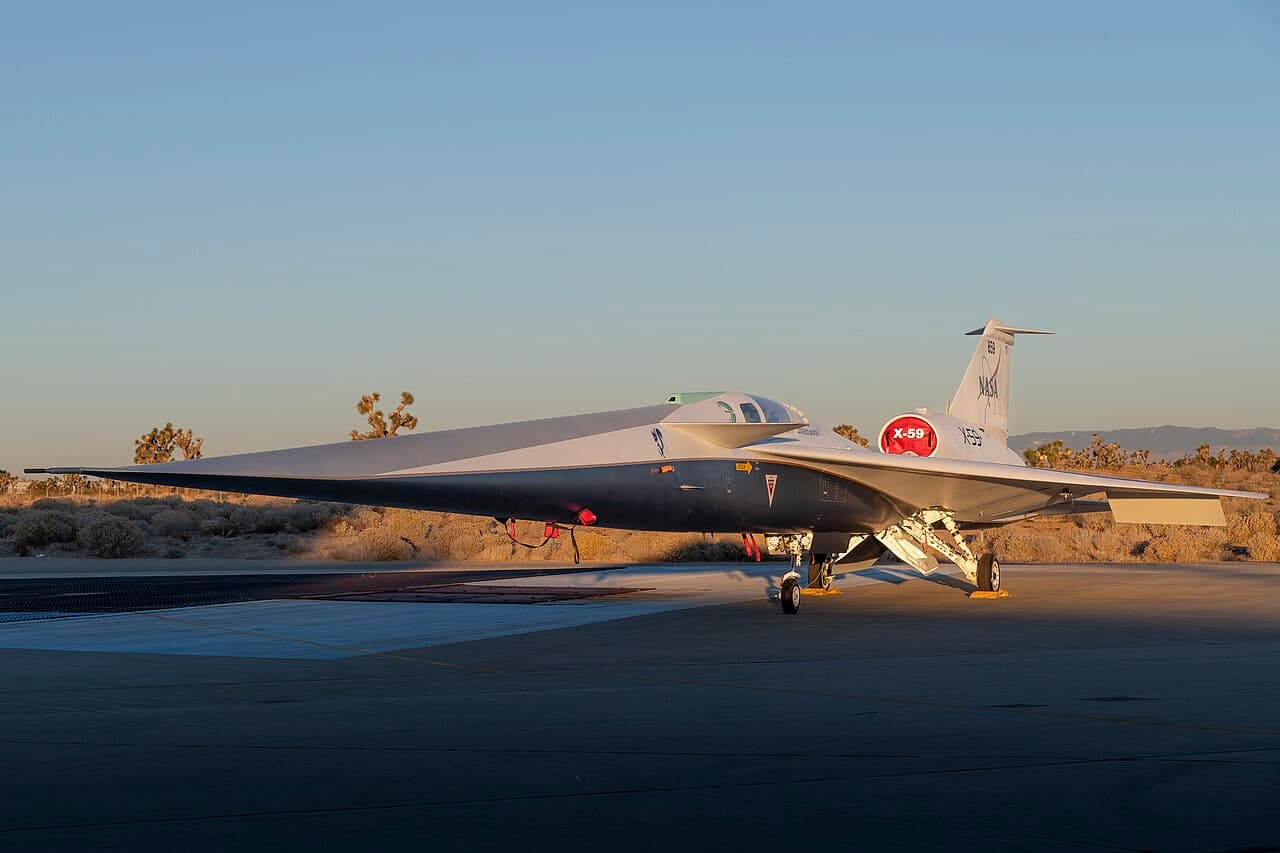
NASA X-59 Quesst Breaks Sound Barrier After Nearly Seven Months of Careful Test Flights

The NASA X-59 Quesst aircraft, built by Lockheed Martin Skunk Works, took roughly seven months from its first flight on October 28, 2025, to safely cross the sound barrier for the first time on June 5, 2026. Rather than immediately flying at full speed, experimental aircraft must undergo a careful process called envelope expansion. Even though the X-59 is intended to pioneer quiet supersonic flight for commercial airliners, engineers must slowly push the aircraft's limits to ensure it remains safe and controllable.

F-35 fighter jet parked on Eglin Air Force Base ramp with maintenance crews nearby at dusk
Military/DefenseAug 1, 5:00 AM

US Controls All F-35 Mission Data Updates, Grounding Allied Squadron Autonomy

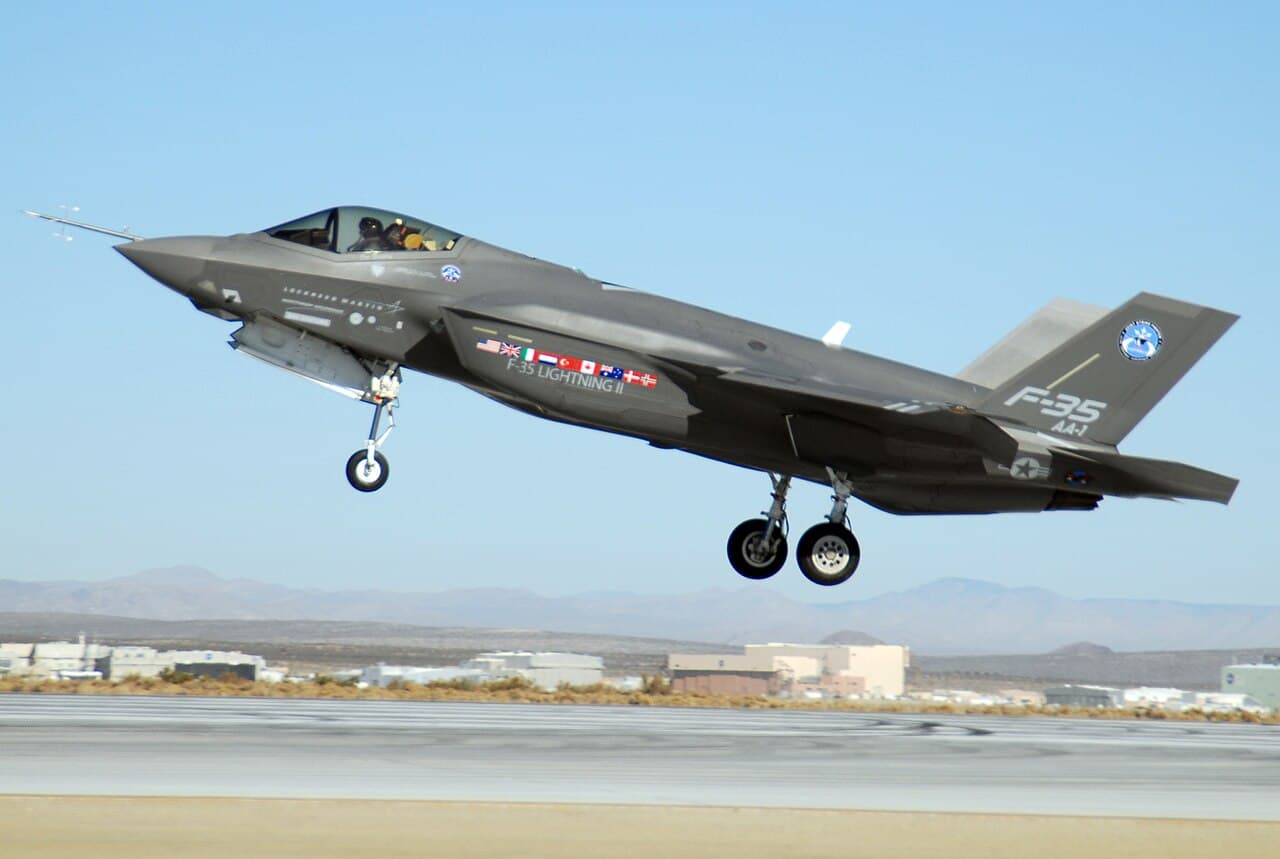
The Lockheed Martin F-35 Lightning II is one of the most important weapon systems developed in the 21st century. It represents a major paradigm shift for air power not only in the US Air Force, but the Navy and Marines as well as 19 other US Allied partner nations around the world that are part of the global fleet. In addition to being the most expensive defense industrial project in history, it is also one of the most closely guarded classified projects to ever become a multinational defense program.