

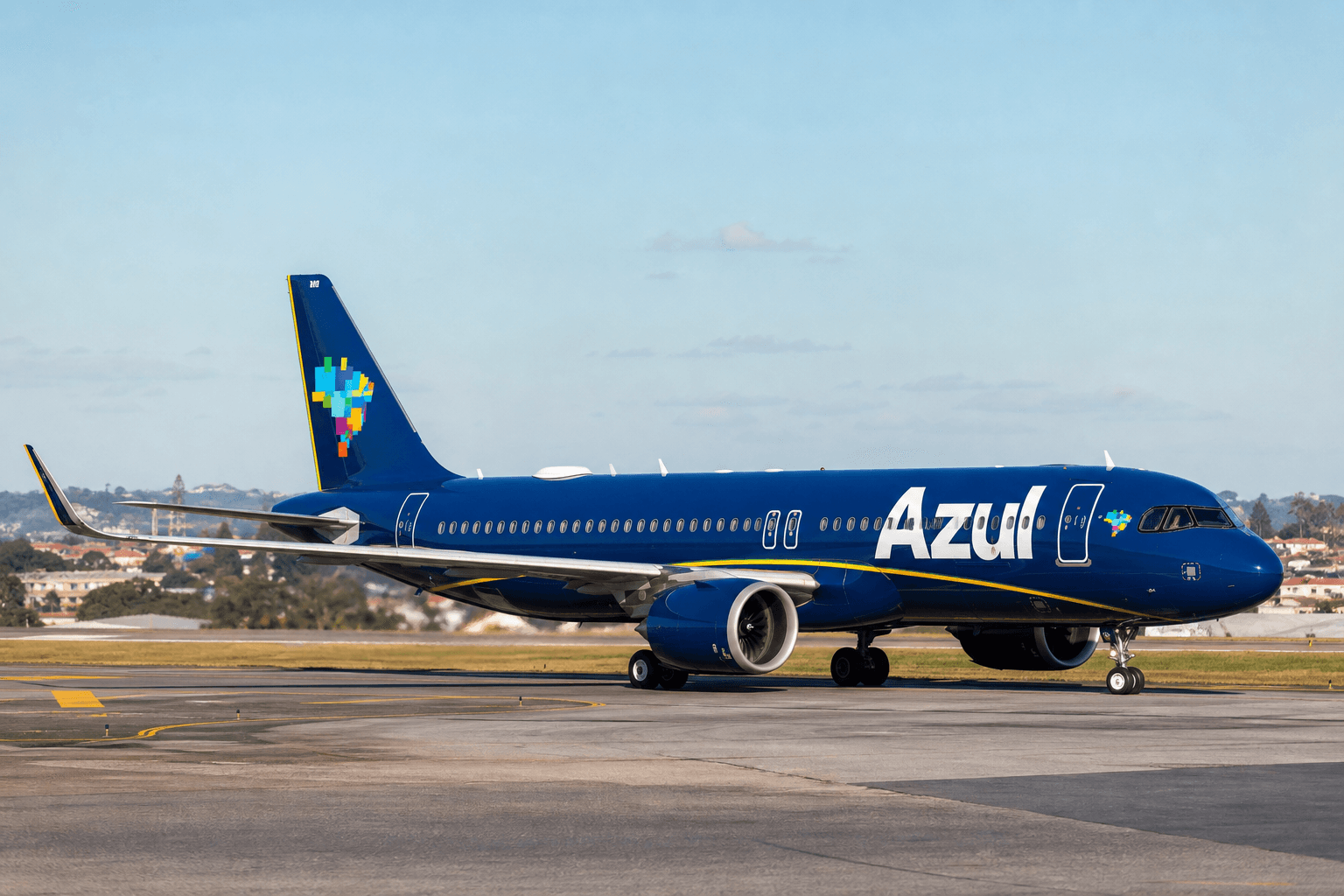
Azul reports record Q2 revenue but doubles losses amid international capacity cuts
Azul drastically cut capacity, especially on international routes, as fuel costs surged. Brazil's Azul reported record operating revenue for the second quarter as losses doubled due to fuel costs. Despite cutting capacity by more than 10% year-over-year, operating revenues hit R$5.0 billion ($980 million) – up about 0.7% from a year ago. Operating profit swung to a R$159 million ($30.3 million) loss from R$380 million ($72 million) in profit a year ago as oil prices surged. International capacity was also sharply reduced by nearly 25% in order to "protect liquidity and maintain focus on long-term value creation." “I think some of our competitors planned capacity assuming the war would end", chief executive John Rodgerson says. "We feel very good about the disciplined approach we made." Rodgerson cited choppiness in fuel prices for the lack of guidance, saying it is about "building credibility and pointing investors to the long-term strategy of Azul." Executives say 2026 is a “transition year," as the carrier emerges from Chapter 11 reorganisation proceedings that wrapped up in February. The airline says capacity growth will resume by the end of the year, but has not provided future financial guidance through the end of the year and beyond. “We just don’t think there’s value in providing guidance as the fuel curve continues to bounce around as much as it has," he continues. In July, American Airlines chief executive shared similar concerns, saying higher-than-expected fuel costs after the second quarter closed caused the airline to erase more than $1 billion in expected profits from their expectations. Demand from both business and consumers is strong in the third quarter so far. President Abhi Shah says corporate fares are "probably the highest ever" in the history of Brazil and that Azul is "probably having our best B2C [business to consumer sales] week this year in the last six months easily." New aircraft should help with expansion and premium growth. Azul has received one Airbus A320neo this year, with another expected but delayed. One replacement A330 is flying, another is "on its way," and more on order, executives say. Their target is to have 12 widebody international aircraft in the fleet by the end of the year. “Over the last four or five years, Azul lost a little bit of its glow because we were fighting for survival,” Rodgerson says. “Azul is now back.”