

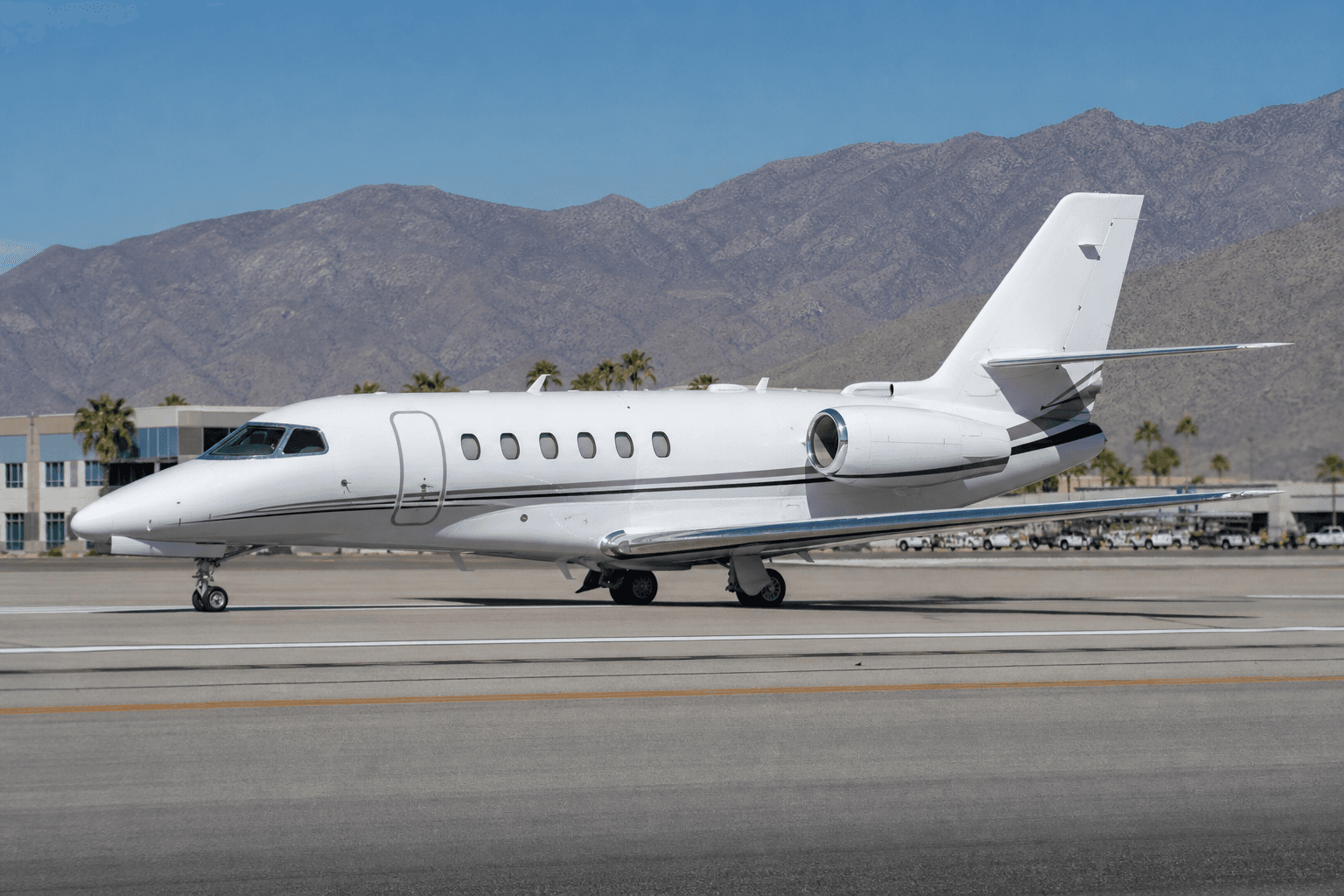
Double engine flameout doomed NetJets Citation Latitude near Laredo highway landing
Damage to fuel system and engine starter generator under scrutiny after Texas-bound NetJets aircraft attempted emergency diversion. US investigators have disclosed that both engines on a Cessna 680A Citation Latitude flamed out while it was attempting an emergency approach to Laredo, resulting in its crashing fatally on a highway . They are working to understand the significance of damage to the fuel system and engine starter generator discovered during inspection of the wreckage. The NetJets aircraft's crew — en route from Los Cabos, Mexico, to Austin, Texas, on 16 June — had informed Houston area centre of a generator failure and multiple other system problems, including a low fuel level, and requested diversion to Laredo. Houston controllers vectored the aircraft for a runway 36L approach to Laredo, with a 270° turn to allow it to reduce altitude. But on final approach the jet's right-hand engine flamed out followed, a few seconds later, by the left engine, says the National Transportation Safety Board. The jet was powered by Pratt & Whitney Canada PW306D1 engines. While the captain was flying, the first officer asked Laredo tower whether there were open fields on the right, but was informed that there was only a highway. This north-south highway, known as the Bob Bullock Loop, is located about 1.5km east of the 36L axis, and the crew aligned the jet with the northbound lane in a bid to touch down. Video evidence suggests "fire flaring up around the airplane" while it was on final approach, says the inquiry in preliminary findings. "As the airplane touched down in the northbound lanes of traffic, it sheared off several light poles, struck a vehicle, and came to rest straddling the right-hand edge of an overpass," it adds. The aircraft's fuselage rolled onto its right side and, after the main cabin door was opened, five of the six occupants emerged. One of the jet's four passengers did not survive. Damage to the fuel tube assembly and fuel pressure switch NTSB Investigators have revealed that the crew had reported an unusual intermittent vibration early in the flight, and sought advice from NetJets, but were ultimately cleared to proceed to the destination. As the jet neared the Mexico-US border, however, the crew began to receive alerts about the fuel system — initially cautions about low right-hand fuel pressure, before indications of electrical issues and then a low-fuel warning — prompting the crew to declare an emergency with Monterrey area centre, which handed the flight to Houston. Examination of the wreckage found the right engine fuel pressure switch was separated from the fuel tube assembly, with a fracture of a weld joint between the two. Several fuel tube assembly clamps were found fractured. The inquiry also discovered that the right-hand engine starter generator was missing "multiple" screws from its outer housing. This generator had been overhauled in April last year, and had about 57h of time remaining. When the generator was removed, its shaft was found bent and the cooling fan fractured, while several cooling-fan blades and ball bearings were discovered. The cooling-fan shroud also contained "circumferential scoring marks". Investigators have transferred the starter generator, fuel tube assembly, and other components to the safety board's Washington laboratory for analysis.