

Dan-Air Flight 1008 Crashes Into Tenerife Mountain Killing All 146 Onboard
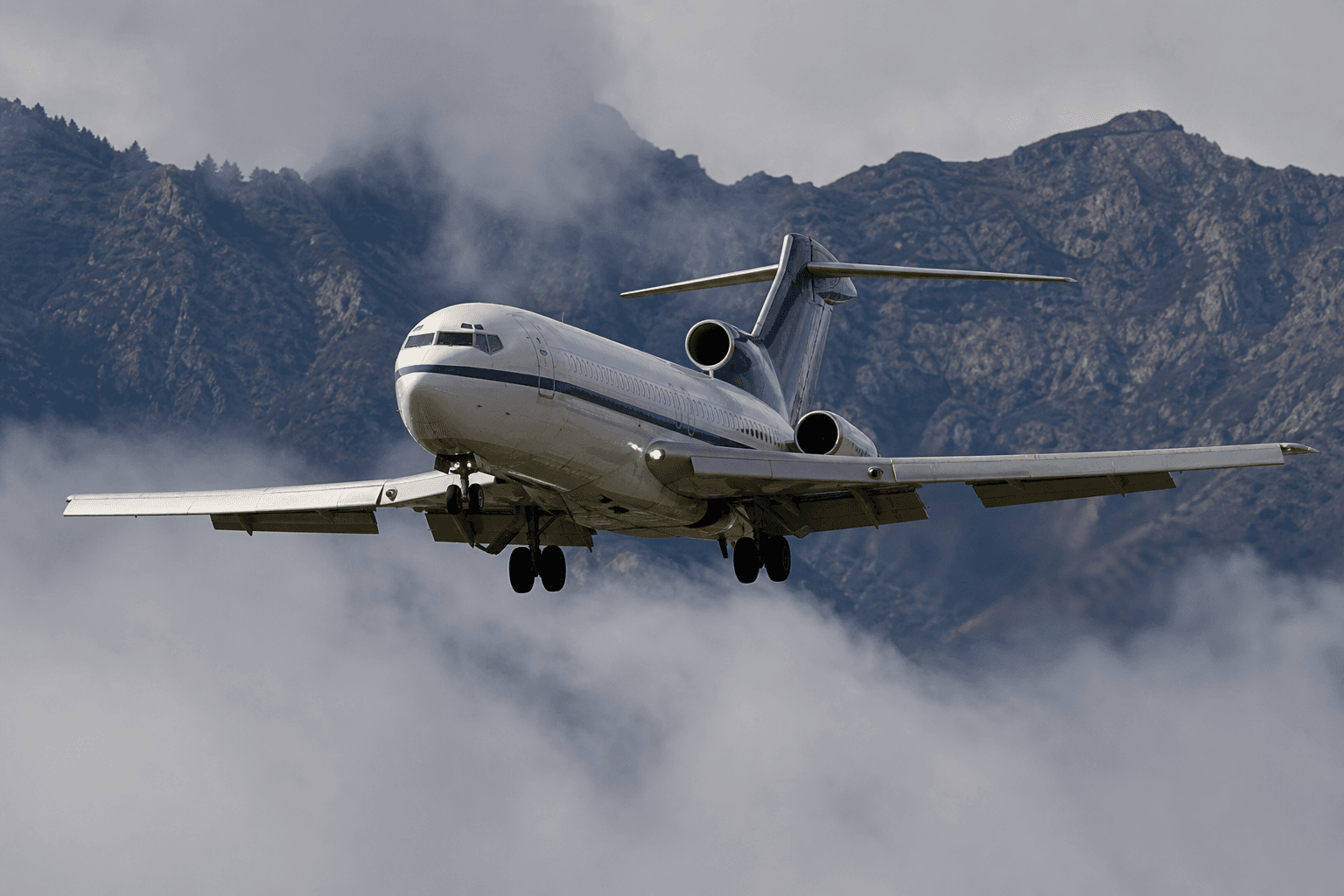
On 25 April 1980, tragedy struck one of Britain’s best-known independent airlines when a Dan-Air London Boeing 727 crashed into a mountainside while approaching Tenerife in the Canary Islands. The loss of Flight 1008 claimed the lives of all 146 passengers and crew on board, making it the deadliest accident in Dan-Air’s history and one of the worst aviation disasters involving a British airline at the time. A Holiday Flight to Tenerife The accident aircraft. Photo: Rob Hodgkins Dan-Air Flight 1008 was a charter service from Manchester to Tenerife North Airport (then known as Los Rodeos), carrying 138 holidaymakers and eight crew aboard a Boeing 727-46 registered G-BDAN. Built in 1966, the trijet had joined Dan-Air’s fleet in 1974 after earlier service in the United States. By 1980 it had accumulated more than 30,000 flying hours and was one of several Boeing 727s that had joined the airline. The flight across the Bay of Biscay and into the Canary Islands was routine. Weather around Tenerife, however, was less forgiving. Low cloud obscured the mountainous interior of the island, requiring aircraft to rely entirely on instrument procedures during their approach. Confusion During the Approach As Flight 1008 neared Tenerife North, it was sequenced behind a slower Iberia aircraft. Air traffic control instructed the Dan-Air crew to enter a holding pattern near the airport before commencing their approach. The problem was that this was not one of the published holding procedures available on the crew’s approach charts. Although the instructions were acknowledged, ambiguity over exactly how the hold should be flown soon led to a fatal navigational error. Instead of remaining clear of the island’s mountainous terrain, the Boeing 727 drifted towards high ground while descending. Unaware of the developing danger, the aircraft continued descending after being cleared to 5,000 feet—an altitude that was safe for the intended procedure, but not for the path the aircraft had actually taken. A Desperate Final Attempt Moments later, the Ground Proximity Warning System (GPWS) sounded, warning the crew that terrain lay directly ahead. The pilots immediately applied full power and attempted to climb away from danger. However, believing they were in a different position to where they actually were, the captain initiated a steep right turn. At 13:21 local time, the Boeing 727 struck the forested slopes of Mount La Esperanza while still in cloud. The aircraft broke apart on impact and was destroyed. There were no survivors. What Caused the Crash? The official Spanish investigation concluded that the accident was a classic example of Controlled Flight Into Terrain (CFIT), where an aircraft under full control is inadvertently flown into the ground. Investigators determined that the flight crew had incorrectly interpreted the unpublished holding procedure and descended into an area where the minimum safe altitude was far higher than the altitude they had been cleared to fly. However, the subsequent British conclusion to the investigation painted a more complex picture. It found that the instructions issued by air traffic control had been ambiguous and that the unpublished holding pattern itself was unsuitable for a Boeing 727 to fly accurately. The report also concluded that the aircraft should never have been cleared below 7,000 feet while operating in that area, noting that the assigned altitude of 5,000 feet left no safe terrain clearance. Rather than blaming a single error, the investigation highlighted how misunderstandings, unclear procedures and inadequate terrain protection combined to produce a catastrophe. Dan-Air’s Darkest Day The accident was a devastating blow for Dan-Air London. Founded in 1953, the airline had built an excellent reputation operating inclusive-tour charters, scheduled services and ad hoc flights across Europe. Its fleet of Comets, HS.748s, One-Elevens, 727s and later 737s became a familiar sight at British regional airports throughout the 1970s and 1980s. Although the airline continued to grow following the accident, Flight 1008 remained its worst-ever disaster involving fare-paying passengers. Dan-Air would eventually be acquired by British Airways in 1992, bringing one of Britain’s best-loved independent airlines to an end. Remembering Flight 1008 Dan Air 1008 Memorial in Manchester. Plucas58, CC BY-SA 4.0 <https://creativecommons.org/licenses/by-sa/4.0>, via Wikimedia Commons Today, more than four decades later, Flight 1008 is sometimes overshadowed by the far more widely known Tenerife Airport Disaster of 1977, which also occurred at Tenerife North Airport. Yet the accident remains a significant event in British aviation history. It reinforced the importance of clearly published instrument procedures, unambiguous air traffic control phraseology and maintaining safe terrain clearance at all times during instrument approaches. For those who remember seeing Dan-Air’s Boeing 727s arriving at airports around Britain, Flight 1008 also serves as a poignant reminder of an airline that played an important role in UK aviation—and of the 146 people whose holiday ended in tragedy on the slopes of Tenerife. Boeing 727 Special For more content on the classic Boeing 727 trijet airliner, Airport Spotting Premium members have access to the special edition July 2026 magazine packed full of articles and info. For this, and all the other content that comes with a Premium membership, you can sign up here . Title image: clipperarctic, CC BY-SA 2.0 <https://creativecommons.org/licenses/by-sa/2.0>, via Wikimedia Commons