

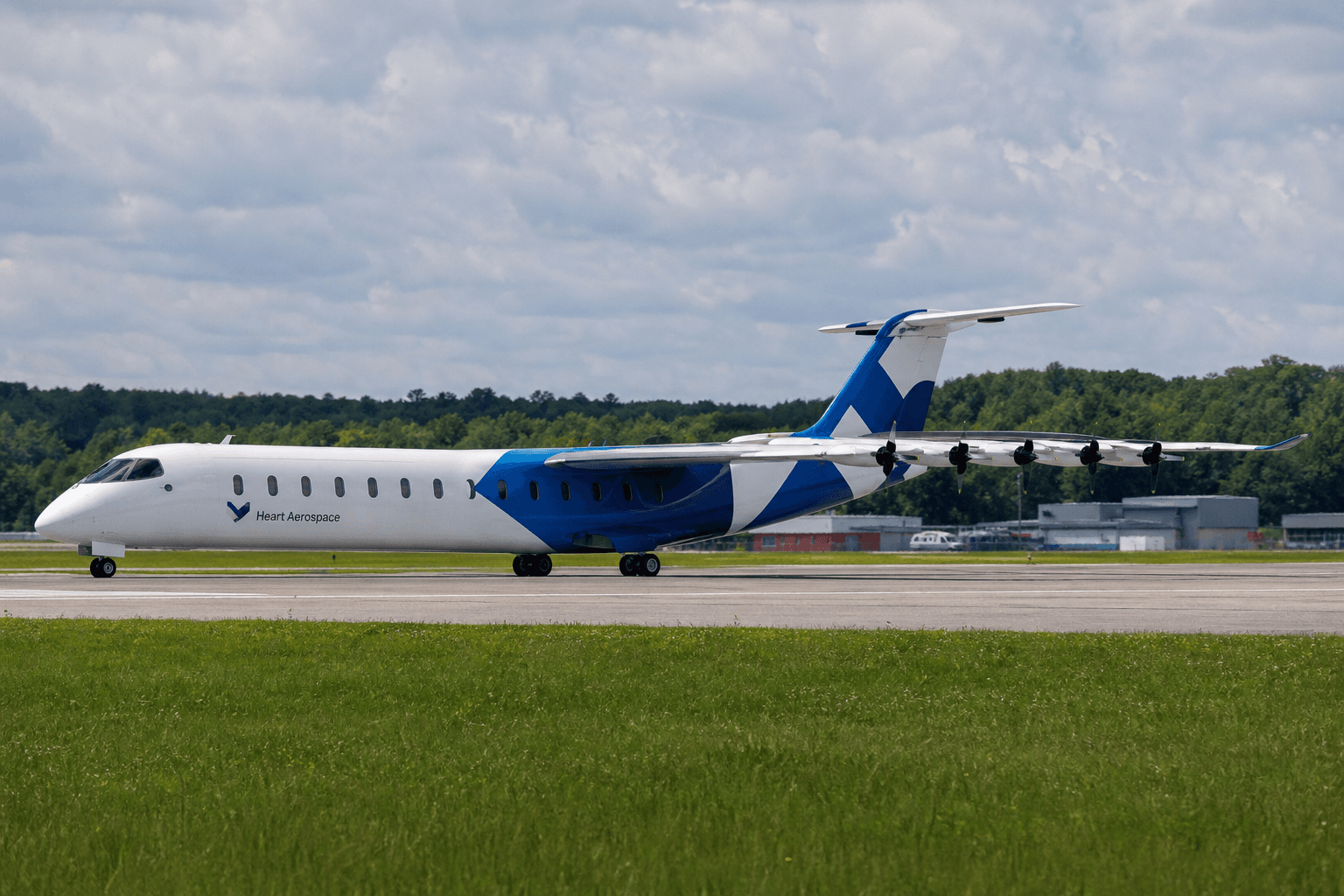
Heart Aerospace's X1 Achieves Maiden Flight as World's Largest Electric Plane
Heart Aerospace has completed the first flight of its X1 demonstrator. The company calls the aircraft the largest battery-electric plane ever to take to the skies. ezstandalone.cmd.push(function () { ezstandalone.showAds(119); }); The X1 spans 106 feet from wingtip to wingtip. It measures 76 feet from nose to tail and weighed more than 25,000 pounds at takeoff. The piloted flight took place on August 12, 2026, at Plattsburgh International Airport in upstate New York. The mission lasted 27 minutes. ezstandalone.cmd.push(function () { ezstandalone.showAds(127); }); The aircraft climbed to 1,100 feet above ground level, and its electric propulsion system delivered more than one megawatt of power. The flight occurred under an FAA Special Airworthiness Certificate in the Experimental Category. The test profile covered taxi, takeoff, climb, maneuvering, and landing. ezstandalone.cmd.push(function () { ezstandalone.showAds(128); }); Heart designed the mission to show that all-electric flight can work at a scale relevant to commercial airline operations. Powered only by batteries, the X1 used about five dollars’ worth of electricity. First Flight pic.twitter.com/1HvuAxXPzT — Heart Aerospace (@heartaerospace) August 13, 2026 Why the Milestone Matters The flight arrived as global jet fuel prices stayed high. Prices averaged $3.50 per gallon in early August 2026, up 63 percent from the previous year. Electric propulsion could cut operating costs and reduce airlines’ exposure to oil market swings. ezstandalone.cmd.push(function () { ezstandalone.showAds(129); }); “With the first flight of X1, Heart Aerospace has demonstrated electric flight at the scale of a commercial airliner,” said Anders Forslund, founder and CEO of Heart Aerospace. “Electric commercial aircraft have the potential to fundamentally reshape airline economics and, ultimately, lower the cost of air travel for passengers. This is at the heart of our vision for abundant air travel, with electrification enabling more affordable, frequent, and cleaner air service to and from airports closer to home.” Path to the ES-30 Airliner The X1 serves as a full-scale demonstrator for Heart’s planned ES-30 production aircraft. The company is using it to validate key technologies, aerodynamics, flight performance, and its own organizational capabilities. ezstandalone.cmd.push(function () { ezstandalone.showAds(130); }); The ES-30 is a conventional fixed-wing, 30-seat hybrid-electric regional airliner. Heart is developing it for FAA Part 25 certification. Major carriers including United Airlines, Air Canada, and JSX have already made customer commitments. United Airlines CFO Michael Leskinen praised the achievement. “The first flight of X1 is a major technical achievement for Heart Aerospace, a company United has been proud to support,” he said. “Electric commercial aircraft have real potential to deliver a better travel experience for passengers while strengthening our business.” ezstandalone.cmd.push(function () { ezstandalone.showAds(131); }); Air Canada’s John Di Bert, executive vice-president and chief financial officer , added that the energy transition in aviation will need many solutions. He noted that the airline’s investment in Heart reflects a commitment to technologies that can transform the industry. Photo Credits: Heart Aerospace Lower Costs Ahead Heart targets entry into service for the ES-30 in 2031. The company expects the aircraft to cut operating costs by more than 40 percent compared with today’s regional jets. Savings would come from lower energy costs, simpler electric propulsion systems that need less maintenance, and higher reliability from an integrated electronics and software design. ezstandalone.cmd.push(function () { ezstandalone.showAds(132); }); Further gains could arrive as battery technology improves and as airlines face more emissions-related fees. The ES-30’s design should limit exposure to those costs. Ben Stabler, Heart’s chief technology officer , said the X1 program has given the company full-stack capability. “We are carrying that full-stack capability directly into the ES-30, our first production aircraft and the foundation of a broader technology platform for electric airliners.” ezstandalone.cmd.push(function () { ezstandalone.showAds(133); }); Heart is already building the first pre-production ES-30 at its pilot plant in Los Angeles. Flight testing of that aircraft is scheduled to begin in 2028. The successful X1 flight marks a clear step toward practical electric regional air travel.