

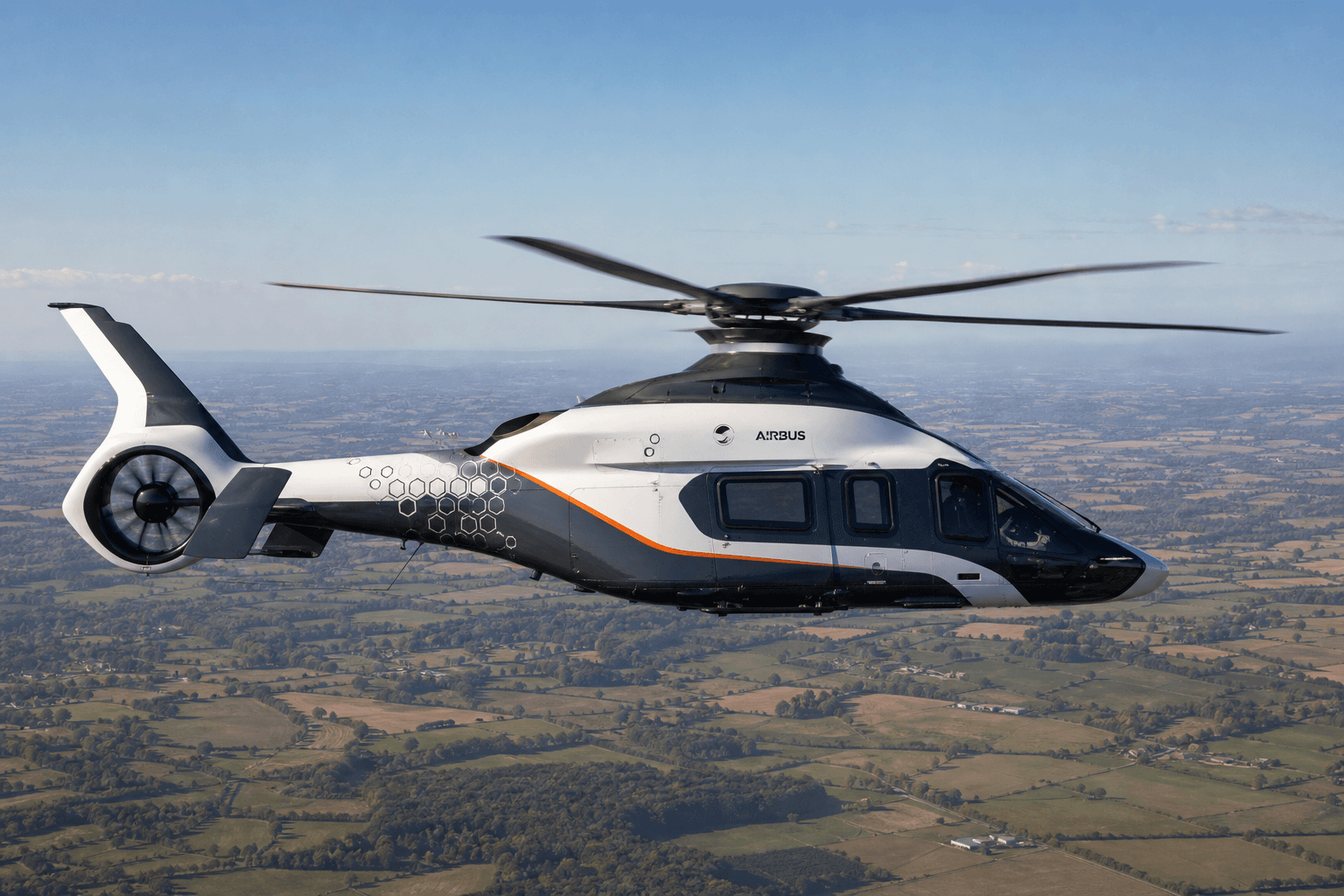
Illustration: The Touch & Go
Airbus Helicopters CEO: High-Speed Civil Rotorcraft Depends on Military Demand
Airbus Helicopters signals no new civilian high-speed rotorcraft launch without prior military platform deployment of its Racer technology.
The gist
Airbus Helicopters' high-speed rotorcraft plans hinge on military adoption before civilian models emerge.
Airbus Helicopters continues to develop its high-speed compound rotorcraft technology through ongoing flight tests with the Racer demonstrator. The demonstrator program validates the compound architecture designed to provide greater speed and efficiency than traditional helicopters. However, the company’s CEO recently indicated that launching a new civilian rotorcraft based on this technology is unlikely without first establishing the high-speed concept within the military sector.
Since entering flight tests, the Racer demonstrator has been instrumental in assessing the benefits of a compound rotorcraft, which combines features like a pusher propeller and fixed wings to achieve higher cruise speeds. This approach promises to bridge the gap between conventional helicopters and fixed-wing aircraft, targeting operational advantages for both military and civilian applications.
Despite this promising development, Airbus Helicopters is adopting a cautious strategy for commercial deployment. The CEO emphasized that securing a military contract or platform to adopt the Racer technology would serve as a critical foundation before considering adaptations for civil rotorcraft. This pathway helps mitigate risk and ensures the technology matures under demanding operational conditions.
The military interest is crucial because high-speed rotorcraft could provide enhanced capability for missions requiring fast troop movement and logistical support, potentially increasing the aircraft's appeal and viability. Civil operators may benefit eventually, but only after the technology proves itself robust and mission-ready in military service.
The reliance on military endorsement reflects the significant investment and certification challenges associated with introducing radically new rotorcraft designs to market. Furthermore, demonstrated military success could accelerate regulatory acceptance and customer confidence in civilian markets.
Looking ahead, industry observers will watch for any advancement in military procurement decisions as a bellwether for when Airbus Helicopters might pivot toward civil applications. The Racer program's progress indicates a patient but strategically grounded approach to expanding rotorcraft performance envelopes.
More in Military/Defense

How L3Harris certified the new Air Force One in only 10 months
Refurbishing the Qatar-sourced 747-8I included swapping in new engines, replacing the interior and adding secure communication equipment. Delivering the newest "Air Force One" jet to the US government on time took 10 months of three-shift work by hundreds of technicians at defence contractor L3Harris. The company and the US Air Force (USAF) unveiled the VC-25…

Leonardo, Baykar pair M-346FA with uncrewed Kizilelma for teaming demonstration
Pilots aboard the light-attack jet took full control of the uncrewed Turkish fighter platform. Leonardo's M-346 has completed an initial crewed/uncrewed teaming (C-UCT) demonstration with the Baykar Technologies Kizilelma uncrewed combat air vehicle. Conducted from Corlu in Turkey last month as part of a joint activity named K-Swarm, the initial series of live sorties involved…
The Cold War Operation That Kept Nuclear-Armed B-52s Minutes From Soviet Airspace At All Times
The reason why the USAF kept nuclear armed B-52s on continual rotation just outside of Soviet airspace...for nearly a decade.
Air Force Awards Uncrewed Fighter Contracts
The service also selected six companies for mission autonomy software as part of its uncrewed fighter program.