

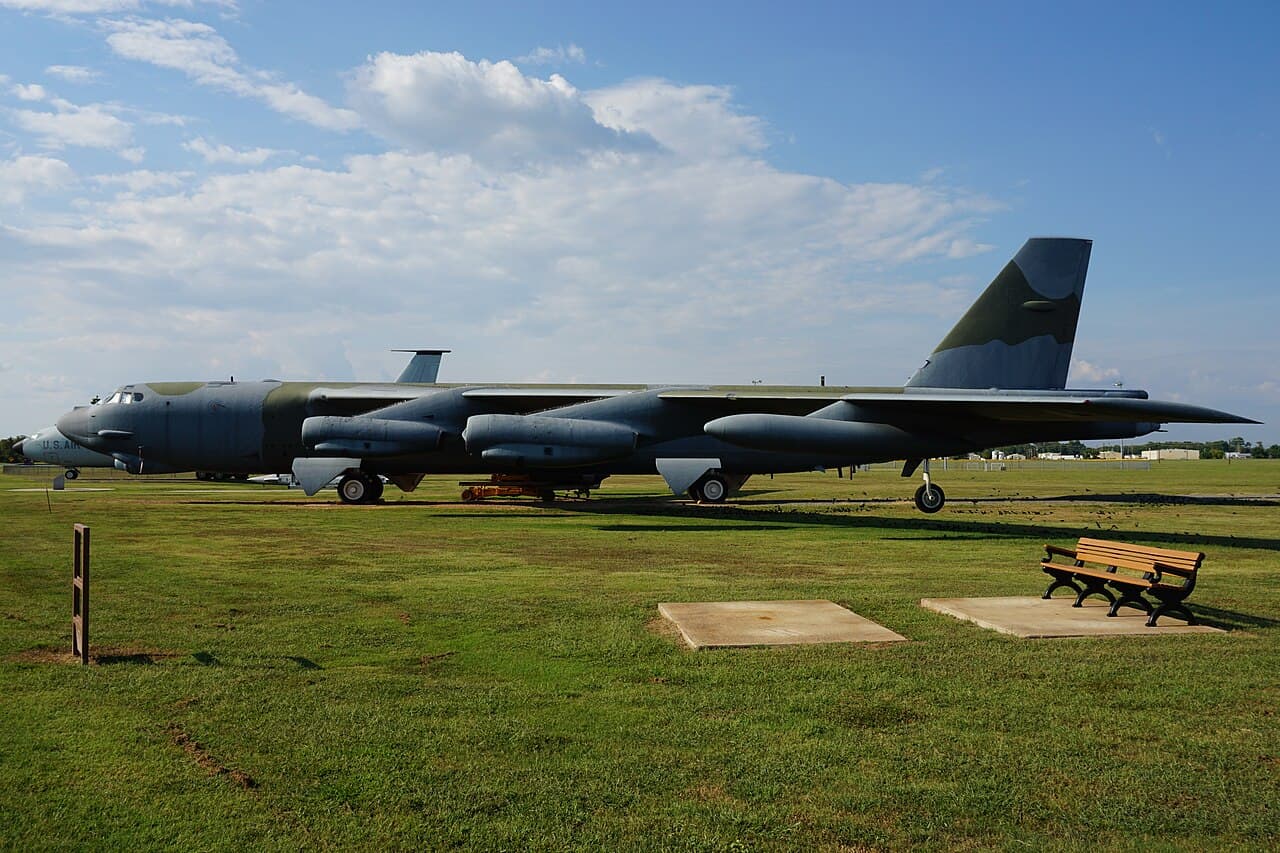
Image: Michael Barera · CC BY-SA 4.0 · via Wikimedia Commons
USAF Maintained Nuclear-Armed B-52s Near Soviet Borders for Nearly a Decade
During the Cold War, the US Air Force kept nuclear-armed B-52 bombers continually on alert just outside Soviet airspace to maintain strategic readiness.
The gist
For almost ten years, US nuclear-armed B-52s patrolled close to the USSR to ensure constant deterrence during the Cold War.
Throughout the Cold War, the United States Air Force implemented an operation whereby nuclear-armed B-52 Stratofortress bombers were maintained on continuous rotation near Soviet airspace. This procedure kept the bombers merely minutes away from entering Soviet territory, serving as a direct deterrent against potential aggression from the USSR. The mission required precise orchestration and endurance to hold these strategic assets at high readiness levels.
The operation stretched across nearly a decade, highlighting how vital the United States deemed constant airborne nuclear threat presence at close proximity to the Soviet Union. The B-52s carried nuclear weapons, providing a swift response capability in the event of escalating tensions or conflict. Being airborne and near enemy borders minimized response time and increased the credibility of US deterrence during this critical period of geopolitical rivalry.
This practice was part of broader Cold War strategies aimed at maintaining a delicate balance of power through mutually assured destruction doctrines. The continual rotation of aircraft ensured no gaps in coverage, maintaining a persistent reminder of the US’s nuclear strike capability just beyond Soviet detection or interception range. The presence of these bombers near Soviet airspace also underscored the importance of long-range bombers in strategic nuclear posture before the widespread deployment of intercontinental ballistic missiles.
Coordination for such operations required extensive planning in terms of flight routes, refueling, and crew shifts to keep the bombers aloft and on station while managing the risks associated with close proximity to a potential adversary’s air defenses. The initiative demonstrated the logistical and operational challenges faced in sustaining such a high-alert state, reflecting Cold War era military readiness levels.
Ultimately, the decade-long commitment to maintaining these nuclear armed B-52s near Soviet airspace played a crucial role in the deterrence strategy that helped prevent direct conflict between the two superpowers. It stands as a testament to the lengths both nations went to ensure their security and a balance of power through strategic presence and readiness.
Looking forward, understanding this Cold War airborne alert operation offers perspective on the role of strategic bombers and the evolving nature of geopolitical deterrence strategies amid advancing missile and surveillance technologies. It also provides historical context for current discussions about nuclear posture and the future role of bombers in modern nuclear forces.
More in Military/Defense

Air Force Awards Uncrewed Fighter Contracts
The service also selected six companies for mission autonomy software as part of its uncrewed fighter program.
Shield AI readies for X-Bat first flight with initial test aircraft complete
The autonomous vertical take-off and landing combat jet will make a maiden sortie towards the end of 2026. AI and autonomy developer Shield AI has now almost completed the first three test assets for its X-Bat collaborative combat aircraft (CCA) programme as it builds towards a first flight later this year. Speaking to FlightGlobal at…
Ukraine hits Moscow with heavy drone strikes, igniting oil refinery
The long-range bombardment shows how far Ukraine has come in developing its domestic weapons industry. Ukraine launched a significant attack against the Russian capital on 18 June, targeting energy infrastructure around Moscow with long-range drones. Dozens of one-way attack munitions breached Russia's air defences in the early hours, with strikes continuing into the day. The…
World Cup Drone Violations Draw Federal Response
Federal agencies have reported dozens of drone seizures and mitigations at World Cup sites in the U.S. and Mexico.