

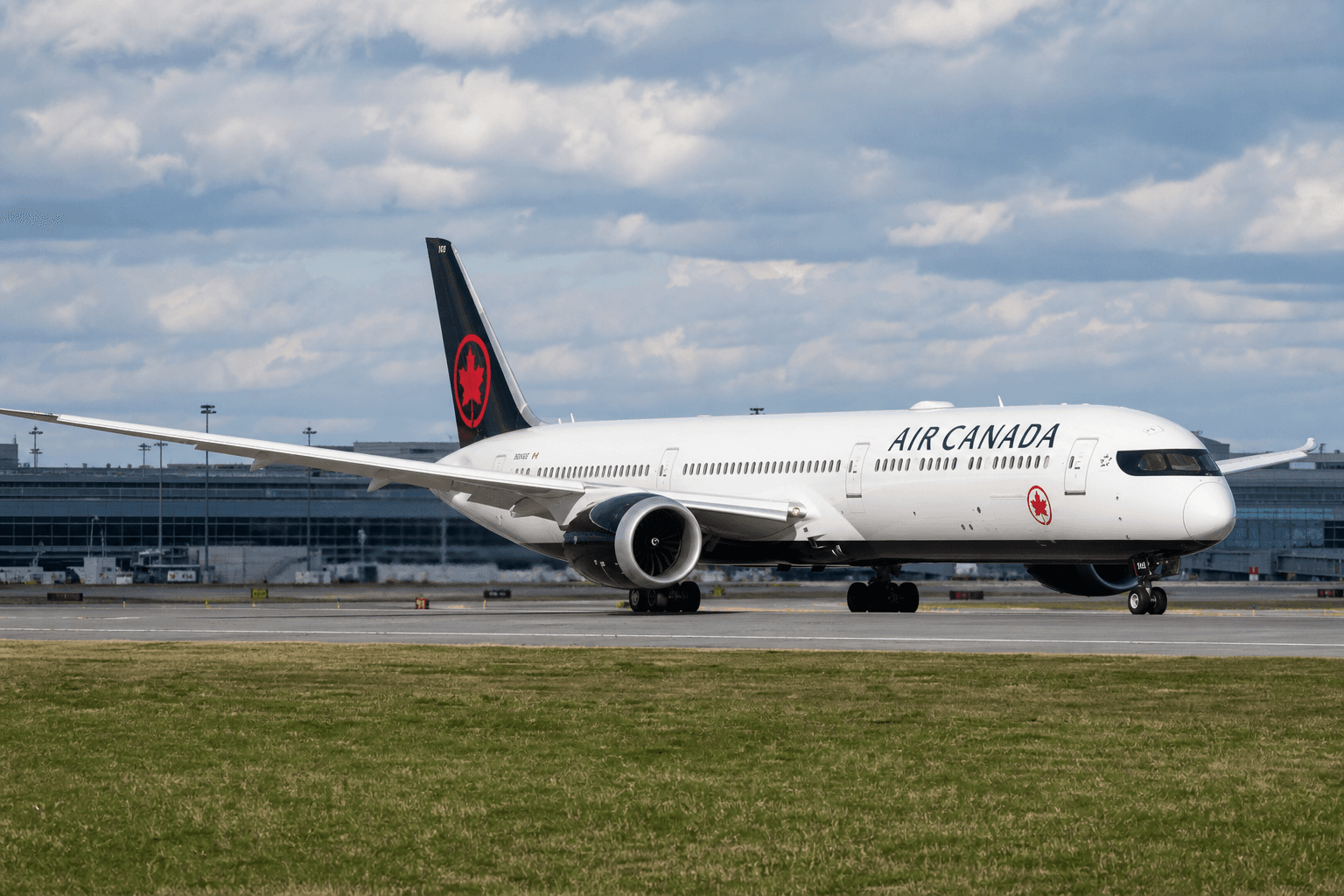
Air Canada Sets New Q2 Revenue Record Despite Rising Fuel Costs and Operational Hurdles
Air Canada reported strong second-quarter 2026 results driven by solid demand. The airline achieved record operating revenues of $6.3 billion. This marked an 11 per cent rise from the same period last year. ezstandalone.cmd.push(function () { ezstandalone.showAds(119); }); Demand stayed robust across the network. Premium and corporate travel performed well. Sixth Freedom traffic also contributed. Capacity grew just 0.3 per cent year over year. Weather disruptions in the later part of the quarter limited flight completion rates. This kept capacity slightly below the lower end of guidance. ezstandalone.cmd.push(function () { ezstandalone.showAds(127); }); Key Financial Highlights Adjusted EBITDA reached $719 million. This sat at the top end of the company’s second-quarter guidance range. The result came despite a 49 per cent jump in fuel expense. Operating expenses totalled $6.481 billion. This led to an operating loss of $215 million. The loss included $388 million in labour-related and other charges. ezstandalone.cmd.push(function () { ezstandalone.showAds(128); }); On an adjusted basis, the picture looked stronger. Air Canada posted adjusted pre-tax income of $77 million. Adjusted net income stood at $114 million, or $0.40 per diluted share. The reported net loss was $178 million, equal to $0.63 per diluted share. Adjusted CASM came in at 15.47 cents. Cash generation remained healthy. Net cash flows from operating activities totalled $651 million. Free cash flow reached $174 million. The airline used $125 million to repurchase more than six million shares. Its net leverage ratio held steady at 1.7.CEO ezstandalone.cmd.push(function () { ezstandalone.showAds(129); }); Photo Credit: Air Canada Comments on Performance President and Chief Executive Officer Michael Rousseau highlighted the quarter’s strengths. “Air Canada delivered record second-quarter operating revenues… supported by strong demand across our network,” he said. He pointed to diversified revenue sources, effective pricing, and focus on controllable costs. Rousseau also thanked employees for their commitment. He noted the company’s solid cash position and balance sheet. These factors support investment and shareholder returns. Looking ahead, Rousseau expressed confidence. He cited resilient premium and corporate demand, fare actions to offset fuel volatility, and disciplined cost control. ezstandalone.cmd.push(function () { ezstandalone.showAds(130); }); He also mentioned Anko van der Werff as his announced successor and the path toward an investment-grade rating in the mid-term. Photo Credit: Air Canada Updated Full-Year Guidance Air Canada reinstated and updated its full-year 2026 outlook. Adjusted EBITDA is now expected between $2.9 billion and $3.2 billion. This is lower than the previously suspended range of $3.35 billion to $3.75 billion. Capacity growth is forecast at 2.25 per cent to 3.25 per cent versus 2025. Adjusted CASM should rise 5 to 6 per cent from 2025 levels. Free cash flow is projected between $200 million and $500 million. ezstandalone.cmd.push(function () { ezstandalone.showAds(131); }); Assumptions include modest Canadian GDP growth and continued demand trends. The Canadian dollar is expected to average C$1.41 per U.S. dollar. Jet fuel is assumed at about C$1.38 per litre in the third quarter and C$1.29 in the fourth. The company plans to offset a significant portion of higher fuel costs through pricing and hedging. It also assumes $1 billion from planned sale-and-leaseback transactions in 2026. Longer-Term Outlook Air Canada continues to target operating revenues of approximately $30 billion by 2028. It aims for an adjusted EBITDA margin of at least 17 per cent that year. Aspirations for 2030 include further margin gains and strong free cash flow generation. ezstandalone.cmd.push(function () { ezstandalone.showAds(132); }); The results show Air Canada navigating higher fuel costs and one-time charges while capturing strong travel demand. Management remains focused on cost control, cash generation, and long-term value creation.