

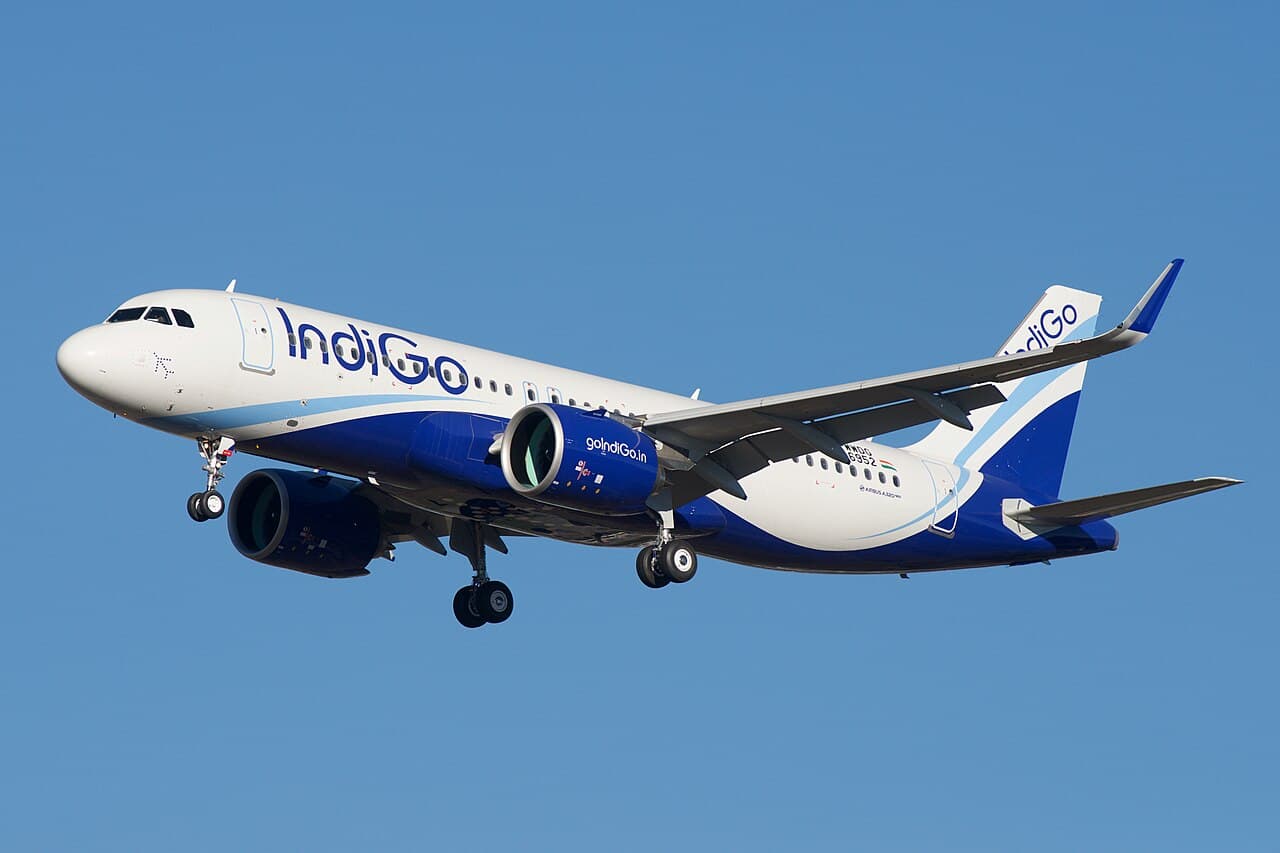
Airlines Approach End of Disruptions from Pratt & Whitney GTF Engine Groundings
A number of impacted operators see end in sight for AOG disruption amid stepped-up maintenance activity. Ever since details first emerged in 2023 of the disruptive recall of Pratt & Whitney's geared turbofans (GTFs), a string of operators have been getting used to having a portion of their aircraft grounded. The manufacturer recalled the engines due to production errors involving the use of powder metal that left the engines possibly containing defective metallic parts. The issue left hundreds of commercial aircraft grounded at any given time, awaiting inspections and part replacements. Much of the impact has been on the PW1100Gs which power Airbus A320neo-family jets. Other GTF variants include the A220's PW1500Gs, and the PW1900G, which powers Embraer’s E190-E2s and E195-E2s. While compensation has been agreed with affected carriers, the groundings have caused a range of challenges for airlines as they managed the unavailability of parts of their fleet. Indeed, Indian carrier Go First blamed the issue when it collapsed in 2023, a claim challenged by P&W which counter-argued the carrier had breached its contractual obligations, while the groundings were among several challenges faced by US discounter Spirit Airlines before its grounding earlier this year. Chris Calio, chief executive of P&W parent, RTX, last month reiterated that the financial and technical outlook for its GTF fleet management plan "remains on track". That has been driven by increased maintenance capacity and ramped production of critical engine components . "PW1100 [aircraft on ground] are down again sequentially and down 25% year-to-date, and we expect AOGs to keep trending lower throughout the second half of the year," he said, speaking during RTX's second-quarter earnings call on 23 July. "The improvement is driven by MRO output, which was up over 40% year-over-year, supported by a 23% reduction in turnaround time." While not every impacted operator provided an update on fleet availability related to the issue during the recent round of earnings calls, executives of several of those that did spoke of an improving situation. Air Astana "We finally see light at the end of the tunnel, closer than we have ever seen and earlier than we expected," says Air Astana chief executive Ibrahim Canliel. The carrier, which has over 40 A320/321neos in its fleet of 63 aircraft, points to an increased number of engine inductions in the first half, together with securing 11 additional engines to support fleet availability. As a result, it says the number of aircraft groundings is around 60% below the same period last year. "With the number of inductions increasing, we have not only reduced the number of groundings this year – which has helped us address new markets – but also have a much stronger outlook for the remainder of the year and particularly summer 2027,” says Canliel. “It is the first time in many years where we are looking at a scenario where we aim for zero groundings." Resolving the issue is key to the Kazakh carrier controlling its unit costs. "Our biggest challenge was our constraint on growth," says Canliel. Air Astana has seen its unit costs rise as the carrier has not been able to increase the size of the operational fleet against which it is spreading that cost. Volaris Chief executive of Mexican low-cost carrier Volaris, Enrique Beltranena, had earlier this year talked of reaching an inflexion point on the issue and struck a similarly positive note during the carrier's second-quarter results call last month. Volaris reported AOGs have fallen from 41 aircraft at the start of the year to 24 as of the end of June. "We expect AOGs to remain broadly around this level in the near term as individual aircraft rotate in and out of service through scheduled engine inductions, returns to service and major maintenance events," Beltranena says. Aircraft availability is expected to progressively improve, with normalisation anticipated by the end of 2027. "Importantly, the overall recovery trajectory remains consistent with our plan," he adds. "Aircraft availability is expected to progressively improve, with normalisation anticipated by the end of the year of 2027." The restoration of its full Airbus A320neo fleet plays a key part in the carrier's ambition to improve its earnings, enabling Volaris to reduce its aircraft leasing costs while increasing its revenue opportunities despite operating a smaller fleet. Volaris expects its contracted fleet to drop from 155 aircraft as of June to 137 at the end of 2027. Volaris is in the process of merging with Viva, another Mexican carrier impacted by the GTF issue. Viva says it had an average of 28 aircraft, out of an A320neo-family fleet of 65, grounded by the issue in the second quarter. That compares with an average of 26 out of a Neo fleet of 57 a year before. Wizz Air Central European budget carrier Wizz Air also reported it was on track with its plan to be clear of GTF-related A320neo-family aircraft groundings by the end of 2027 . "We have made tremendous progress," said Wizz Air chief executive Jozsef Varadi, during the airline's fiscal first-quarter results call earlier this month. Wizz had 27 aircraft on the ground due to the issue at the end of June, compared with 41 aircraft at the same point last year. "We have the plan in place that is now pretty intact and we believe is going to get delivered by the end of calendar 2027, when the entire GTF grounded fleet will be ungrounded," he says. While Varadi notes there remains engine maintenance congestion, and challenges on spare parts availability, he does not believe there is a huge risk to the aircraft ungrounding plan. "Structural groundings we should be out in 18 months from now," he says. Turkish Airlines Turkish Airlines remains disrupted by the GTF issue. The carrier's chair, Murat Seker, speaking during the carrier's second-quarter earnings call on 5 August, said the airline still had around 40 aircraft grounded and that this will increase to around 50-55 towards the end of the year. But he adds: "We had a very constructive meeting with Pratt & Whitney at the Farnborough air show. They are trying to increase the maintenance rate of our engines. "Hopefully, by next year, we’ll be able to have an improvement on the induction rate." Air Baltic Latvian carrier Air Baltic was among the A220 operators impacted by the additional checks. But the carrier believes it is now over the issue . Speaking earlier this year, Air Baltic chief operations officer Pauls Calitis said 2025 was a "turning point" in the performance of the PW1500G engine. "In 2025, we saw for the first time that the engine removal rate or availability was stable and as forecast." As a result, the carrier was able to reduce to three the number of wet-leased aircraft it needed to bring over the peak summer period last year and was not expecting to wet-lease any aircraft to cover the issue during this summer's peak. The airline has, though, just announced plans to reduce its fleet of A220s as part of a strategic overhaul focusing on financial stability rather than growth, as it seeks fresh capitalisation following a challenging period in which fleet availability issues compounded wider geopolitical challenges. Another European A220 operator, Swiss International Air Lines, last year took the the step of parting out some of its sub-fleet of A220-100s to help support operation of its larger fleet of -300s. It now expects to phase out its -100s , of which four remain in service, by the end of next year. Cebu Pacific Low-cost A320neo operator Cebu Pacific says it is seeing “improvements” in engine inspection turnaround times, but remains cautious about when the issue will be fully resolved. On its second-quarter earnings call, airline finance chief Mark Cezar said that while the improvements are “encouraging”, the situation “still requires active ongoing management&