

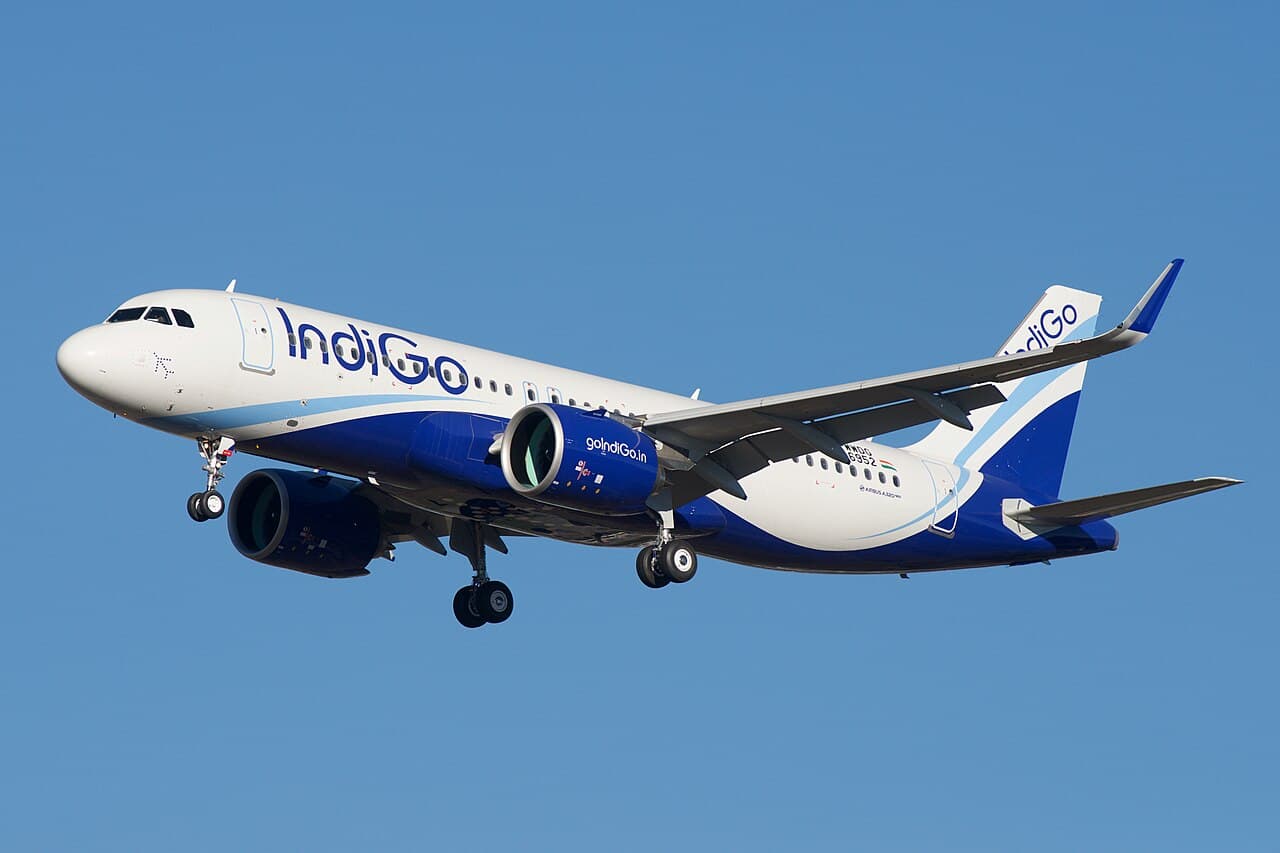
Image: BriYYZ from Toronto, Canada · CC BY-SA 2.0 · via Wikimedia Commons
Airlines Approach End of Disruptions from Pratt & Whitney GTF Engine Groundings
Operators powered by Pratt & Whitney's GTF engines report steady improvements as maintenance ramps up and grounded aircraft numbers decline.
The gist
Pratt & Whitney's GTF engine issues continue to ease, with airlines progressively returning grounded aircraft to service through increased maintenance activity.
Continuing coverage
All Mro →- Pratt & Whitney's 35-Part Hot Section Plus Retrofit Set to Nearly Double A320neo Engine Time-On-Wing
- Dubai Aerospace Enterprise Poised to Be World's Third Largest Aircraft Lessor with 1000-Plane Fleet
- Air France-KLM and Lufthansa submit binding bids for minority stake in TAP Air Portugal
- Boeing Forecasts Nearly $5 Trillion Market for Aviation Services and 2.4 Million Jobs by 2045
- Emirates completes 100th aircraft retrofit in unprecedented $5 billion overhaul program
Since 2023, airlines operating Pratt & Whitney's geared turbofan (GTF) engines have faced significant operational disruptions due to a manufacturer recall. Pratt & Whitney initiated the recall after discovering production defects linked to powder metal use, potentially causing faulty engine components. This has led to hundreds of aircraft grounded worldwide, predominantly impacting the PW1100G-JM engines found on Airbus A320neo-family jets. Other affected variants include the PW1500G for the A220 and the PW1900G powering Embraer's E190-E2 and E195-E2 aircraft.
The groundings have imposed complex operational challenges, forcing airlines to manage reduced fleet availability and consequent schedule disruptions. Notably, Indian carrier Go First cited GTF-related groundings as a contributing factor to its 2023 collapse, though Pratt & Whitney contested this claim, attributing failures to contractual breaches by the airline. Similarly, U.S. low-cost carrier Spirit Airlines experienced difficulties prior to its grounding earlier in the year.
Pratt & Whitney's parent company, RTX, emphasizes that the outlook for resolving the issues remains positive. Chief executive Chris Calio highlighted during the company's July 2026 earnings call that year-to-date aircraft-on-ground (AOG) numbers for PW1100 engines have declined by 25 percent, aided by a 40 percent increase in maintenance, repair, and overhaul (MRO) output and a 23 percent reduction in turnaround times. The company anticipates continued improvement through the latter half of the year.
Several operators have publicly reported progress in regaining fleet availability. Kazakhstan’s Air Astana, with a fleet including over 40 A320/321neos, achieved a roughly 60 percent reduction in groundings year-over-year. CEO Ibrahim Canliel attributes this to increased engine inductions and acquiring additional spare engines, projecting a strong operational outlook with ambitions to reach zero groundings in 2027. The resolution is critical for Air Astana’s cost control and growth strategies.
Mexican low-cost carrier Volaris has also observed improvements, reducing grounded aircraft from 41 to 24 through June 2026. CEO Enrique Beltranena expects stabilization at this level temporarily as aircraft cycle through scheduled inductions and maintenance, aiming for full normalization by the end of 2027. Volaris’ fleet management includes plans to downsize from 155 aircraft in mid-2026 to 137 by the close of 2027, supporting recovery of leasing costs and revenue potential. The airline is concurrently merging with Viva Aerobus, which has experienced similar GTF-related groundings.
European budget airline Wizz Air is pursuing a comparable recovery timeline. CEO Jozsef Varadi reported that as of June 2026, 27 aircraft remain grounded due to GTF issues, down from 41 a year prior. The airline maintains a firm plan to restore full operational status to its A320neo fleet by the end of 2027, despite ongoing engine maintenance congestion and spare parts challenges. Varadi anticipates the elimination of structural groundings within 18 months.
Conversely, Turkish Airlines continues to grapple with the situation, still having around 40 grounded aircraft, expected to rise to 50-55 by year-end. Chair Murat Seker noted productive discussions with Pratt & Whitney aimed at accelerating engine maintenance cycles, hopeful of improved induction rates in 2027.
Among A220 operators, Latvia’s Air Baltic considers itself past the peak of disruptions. COO Pauls Calitis described 2025 as a turning point for PW1500G engine performance, stabilizing removal rates and availability. This allowed the carrier to minimize wet-leasing needs during peak seasons. However, Air Baltic plans to reduce its A220 fleet amid strategic financial restructuring following prolonged availability issues and geopolitical strains.
Swiss International Air Lines took measures last year by parting out some of its smaller A220-100s to support its larger A220-300 fleet, planning to phase out remaining -100 models by the end of 2027. Meanwhile, Philippine carrier Cebu Pacific reports improvements in engine inspection times, though remains cautious about a full resolution timeline, acknowledging the situation demands ongoing active management.
Frequently asked questions
- What caused the recall of Pratt & Whitney’s GTF engines?
- Pratt & Whitney recalled the GTF engines due to production errors involving powder metal that could cause defective metallic parts, leading to safety concerns and requiring inspections and part replacements.
- How have airlines been impacted by the GTF engine issues?
- Many airlines experienced aircraft groundings affecting operational capacity, leading to schedule disruptions, higher costs, and financial difficulties, with some carriers like Go First and Spirit Airlines facing severe consequences linked to the groundings.
- What is the current outlook for resolving the GTF engine problems?
- The outlook has improved with increased maintenance output and faster turnaround times, leading to declining grounded aircraft counts. Airlines expect normalization and full restoration of their fleets by the end of 2027 based on ongoing maintenance efforts and spare engine acquisitions.
Read more
All MRO/Maintenance →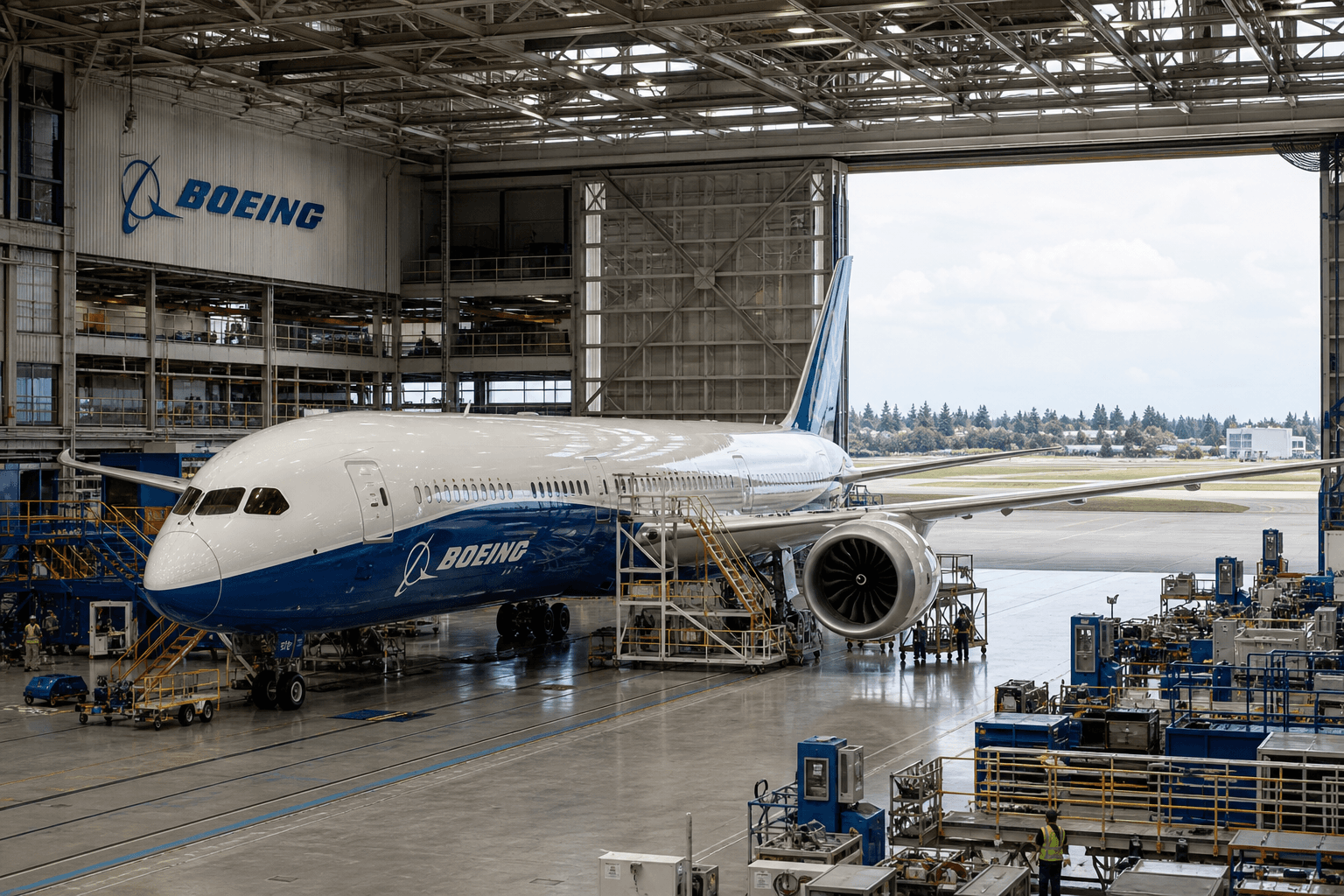
Boeing Forecasts Nearly $5 Trillion Market for Aviation Services and 2.4 Million Jobs by 2045
Boeing has released its latest 20-year outlook, forecasting a massive $4.9 trillion market for commercial aviation support and services through 2045. ezstandalone.cmd.push(function () { ezstandalone.showAds(119); }); The company also projects strong demand for more than 2.4 million new aviation professionals worldwide. This positive outlook highlights the industry’s resilience and long-term growth potential despite current challenges. The forecasts come from Boeing’s 2026 Services Market Outlook and Pilot & Technician Outlook. They show sustained expansion in commercial aviation, with air traffic and demand expected to double over the next two decades. ezstandalone.cmd.push(function () { ezstandalone.showAds(127); }); Near-term supply chain and production issues are not expected to derail this long-term trajectory. Key Trends Driving the Services Several important factors will shape the future of aviation services: ezstandalone.cmd.push(function () { ezstandalone.showAds(128); }); Aircraft lifecycle management and efficiency initiatives Digitalization and data-driven services as fleets become smarter Geographic shifts in where services are needed most Workforce transformation to meet evolving demands Rising retirements that increase the need for new talent “As we look toward the future, we see strong demand for services across the portfolio, new opportunities as fleets become more digitally enabled and a growing need for a skilled workforce,” said Chris Raymond, president and CEO of Boeing Global Services . ezstandalone.cmd.push(function () { ezstandalone.showAds(129); }); Boeing expects digital solutions, maintenance, repair, overhaul, parts supply, and training to drive much of this growth. Airlines and operators will focus on keeping aircraft flying safely, efficiently, and sustainably while adopting new technologies. A rendering of Boeing’s Second 787 Final Assembly Building when complete (Credit: Boeing) Massive Workforce Demand Ahead Fleet growth and retirements will create significant job opportunities. Boeing’s outlook projects a global need for approximately: 674,000 new pilots 728,000 maintenance technicians 1,023,000 cabin crew members ezstandalone.cmd.push(function () { ezstandalone.showAds(130); }); This totals more than 2.4 million new aviation professionals through 2045. About two-thirds of these positions will replace retiring workers, while one-third will support expanding fleets. The industry is turning to innovative training methods to address these shortages. Competency-based training, immersive technologies, and advanced simulation tools will help develop skilled personnel faster and more effectively. “Our industry will keep the expanding global fleet flying safely and efficiently by investing in workforce development worldwide,” said Chris Broom, Vice President of Commercial Training Solutions at Boeing Global Services . “Immersive technologies will enhance training and support the highest quality aviation standards.” ezstandalone.cmd.push(function () { ezstandalone.showAds(131); }); Photo Credit: Boeing Regional Opportunities Vary Widely Demand will not be uniform across the globe. Eurasia leads with $1.185 trillion in services and support demand and 571,000 new personnel. China follows closely at $875 billion and 425,000 workers. North America is projected to need $995 billion in services and 438,000 new professionals. Other notable regions include: Southeast Asia: $425 billion, 258,000 personnel Middle East: $475 billion, 236,000 personnel Latin America: $260 billion, 136,000 personnel Africa: $140 billion, 75,000 personnel These figures reflect shifting economic power, growing middle classes in emerging markets, and varying fleet ages and growth rates. ezstandalone.cmd.push(function () { ezstandalone.showAds(132); }); Photo Credit: Boeing Challenges and Opportunities The industry faces real constraints in production, supply chains, and workforce availability. However, Boeing views these as areas for investment and innovation. Digital modernization, sustainability efforts, and improved training will help overcome barriers and unlock new value. The aviation services sector offers stable, long-term opportunities compared to the more cyclical aircraft manufacturing market. As fleets grow and age, the need for ongoing support creates recurring revenue streams for service providers, airlines, and training organizations. This outlook signals confidence in aviation’s future. Strong passenger demand, technological progress, and global economic expansion should drive the industry forward, creating trillions in economic activity and millions of skilled jobs worldwide. ezstandalone.cmd.push(function () { ezstandalone.showAds(133); }); For aviation professionals, students considering careers in the field, and businesses in the supply chain, Boeing’s forecasts point to a bright horizon filled with opportunity. Success will depend on proactive investment in people, technology, and sustainable practices.
Emirates completes 100th aircraft retrofit in unprecedented $5 billion overhaul program
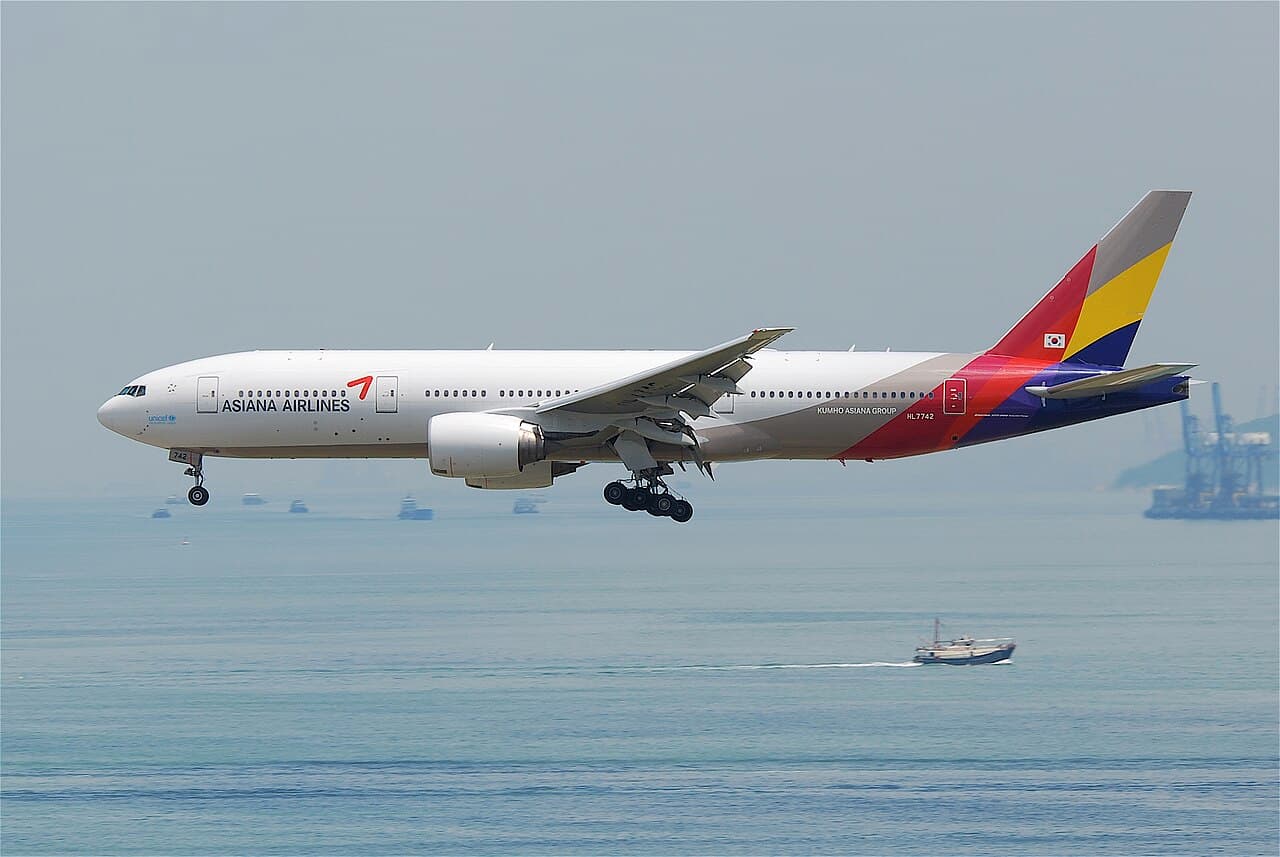
Emirates shared that it has officially refurbished its 100th aircraft as part of what it calls the largest retrofit program ever undertaken by a carrier. The milestone comes just under four years after the project began in November 2022, with work carried out entirely in-house at the airline's Engineering hangars in Dubai. So far, the effort has touched 47 Airbus A380s and 53 Boeing 777s, giving each one a full nose-to-tail overhaul. That's roughly 28 aircraft refreshed every year since the program launched — a pace Emirates says has required rewriting much of the playbook on how retrofits of this scale are done. We've just hit a major milestone. Emirates has retrofitted its 100th aircraft. With a collective 4.4 million man hours invested, we continue to deliver an elevated customer experience across our network. https://t.co/BIFI4bKs8Q pic.twitter.com/DyY4Lh7LvJ — Emirates (@emirates) July 14, 2026 About 20 more aircraft are expected to be finished by the end of this year, pushing the airline well past the halfway point on a 219-aircraft plan backed by $5 billion in investment. The scope of the labor behind those numbers is considerable. Emirates says more than 400 engineers and technicians have logged a combined 4.4 million man hours over 44 months to get the job done. Sir Tim Clark, President of Emirates Airline, called it a significant achievement, noting that a project of this size and complexity, which was handled entirely in-house, demanded a level of planning, precision, and craftsmanship the airline hadn't had to apply at this scale before. A cabin-by-cabin rebuild #image_title Every retrofit involves the aircraft's interior being taken apart down to the studs and rebuilt piece by piece. Depending on the aircraft, that means engineers are working with more than 4,000 individual parts for an A380 and over 2,500 for a 777, all removed, refreshed or replaced and reinstalled with precision. Each retrofitted aircraft has also come out of the hangar with a new Premium Economy cabin, part of a broader push to bring the product to more routes across the network. In total, Emirates has installed more than 3,800 new Premium Economy seats through the program so far. To manage a job of this scale, the Emirates Engineering team came up with some unconventional solutions of its own. Modified catering trucks are used to ferry large components between the retrofit workshop and the aircraft inside the hangars, while the team developed zonal tracking systems and specialized storage procedures to keep parts moving efficiently. Engineers also designed and built custom equipment to access hard-to-reach areas of each aircraft's interior. More than 100 suppliers have been involved in supporting the effort. How the program came together Emirates first announced the retrofit initiative in November 2021, initially covering 105 aircraft. The first plane to go through the process, an A380, entered the Dubai hangars in November 2022. As customer demand grew, the airline expanded its scope twice in 2024 — first to 191 aircraft in May, then to 219 by the end of that year. The first retrofitted Boeing 777 returned to commercial service that August. The work has grown more ambitious over time, as well. In May 2026, engineers completed a two-to-three-class retrofit on an A380 that included structural changes to the aircraft, marking the first time a Premium Economy cabin has been added to the upper deck. Emirates says thousands of kilograms of leather, fabric, and other materials removed from the aircraft are being upcycled into limited-edition items, including luggage sold under its "Aircrafted by Emirates" collection. The airline has also turned repurposed Economy Class seat fabric into more than 4,000 backpacks, which have been distributed to children in 11 countries. RELATED Emirates unveils more cities for retrofitted A380s, B777s, new long-range A350s
Air Europa to Receive First Airbus A350-900 in 2028 amid Strategic Overhaul
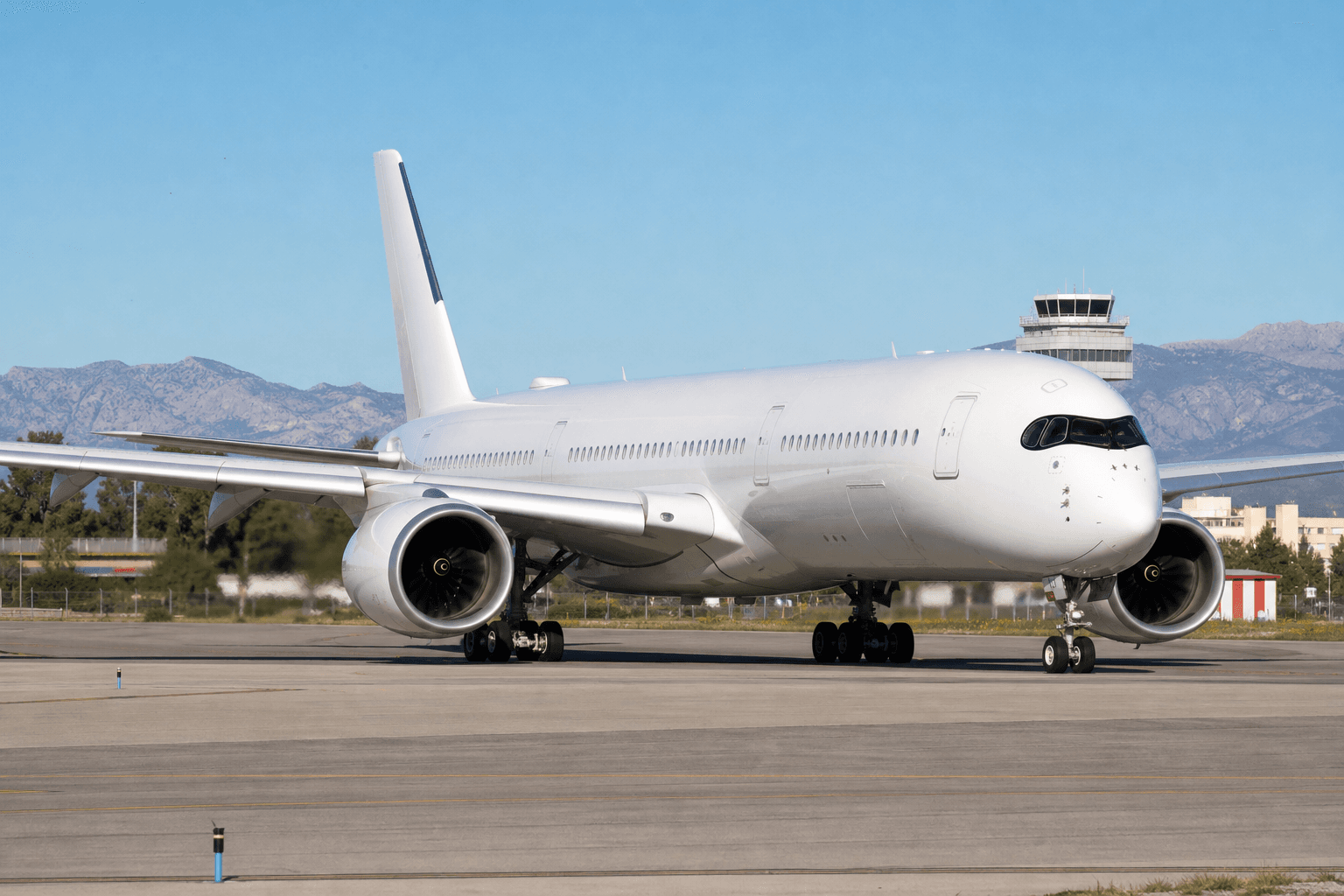
Spanish carrier is "optimistic" about this year after increasing 2025 profits by one-third. Air Europa expects to take delivery of its first Airbus A350-900 in 2028 and has embarked on a new strategic plan to achieve a "major structural and operational transformation" over the next two years. The Spanish carrier, which increased its full-year pre-tax profit by one-third to €155 million ($176 million) in 2025, says its new '+Air 28' plan will focus on operational efficiency, profitability and data-driven decision-making. As part of the plan, the carrier will launch a new maintenance division – Air Europa Technics – which will provide MRO services for its own aircraft and to third-party operators. Air Europa says it will adapt its maintenance capabilities to service the A350-900, ahead of incorporating the type into its currently all-Boeing fleet. It operates more than 60 aircraft, comprising 787-8s and -9s as well as 737s, and is in the process of adding 737 Max 8s as well . The carrier firmed an order with Airbus for up to 40 A350-900s at the beginning of this year. Air Europa confirms to FlightGlobal that the airline will take delivery of its first A350 at some point in 2028. Air Europa says it is "optimistic" about the remainder of 2026, despite "global instability surrounding the fuel market". Operating revenue in the first four months of the year was 9.2% higher than in the same period in 2025. The airline aims to increase its full-year pre-tax profit by 28% in 2026, it says. Full-year revenue in 2025 was 7.3% higher than the previous year, at €3.1 billion. Earnings before interest, taxes, depreciation and amortisation (EBITDA) increased by 14%, to €235 million. Passenger numbers were up 2.6% on a 1.5% increase in capacity, leading to a slight increase in load factor to 84.4%. "The continuous expansion and renewal of our fleet, together with structural improvements and operational efficiency, are the pillars on which we will continue to grow and demonstrate the strategic role we play, especially in Europe and Latin America," says Air Europa president Juan Jose Hidalgo. The airline’s chief executive, Richard Clark, adds: “The 2025 results are, once again, the outcome of the joint collaboration of all the professionals at this company. This effort does not stop, and it is the key to continuing our international expansion, as reflected in the opening of new routes, both domestic and international.” Air Europa’s recently-opened routes include Oviedo and Seville in Spain, Geneva in Switzerland and Johannesburg in South Africa. Star Alliance carrier Turkish Airlines is in the process of acquiring a 25-27% stake in Air Europa , which is a SkyTeam member. British Airways parent IAG is also a 20% shareholder in Air Europa, which is majority-owned by Globalia.
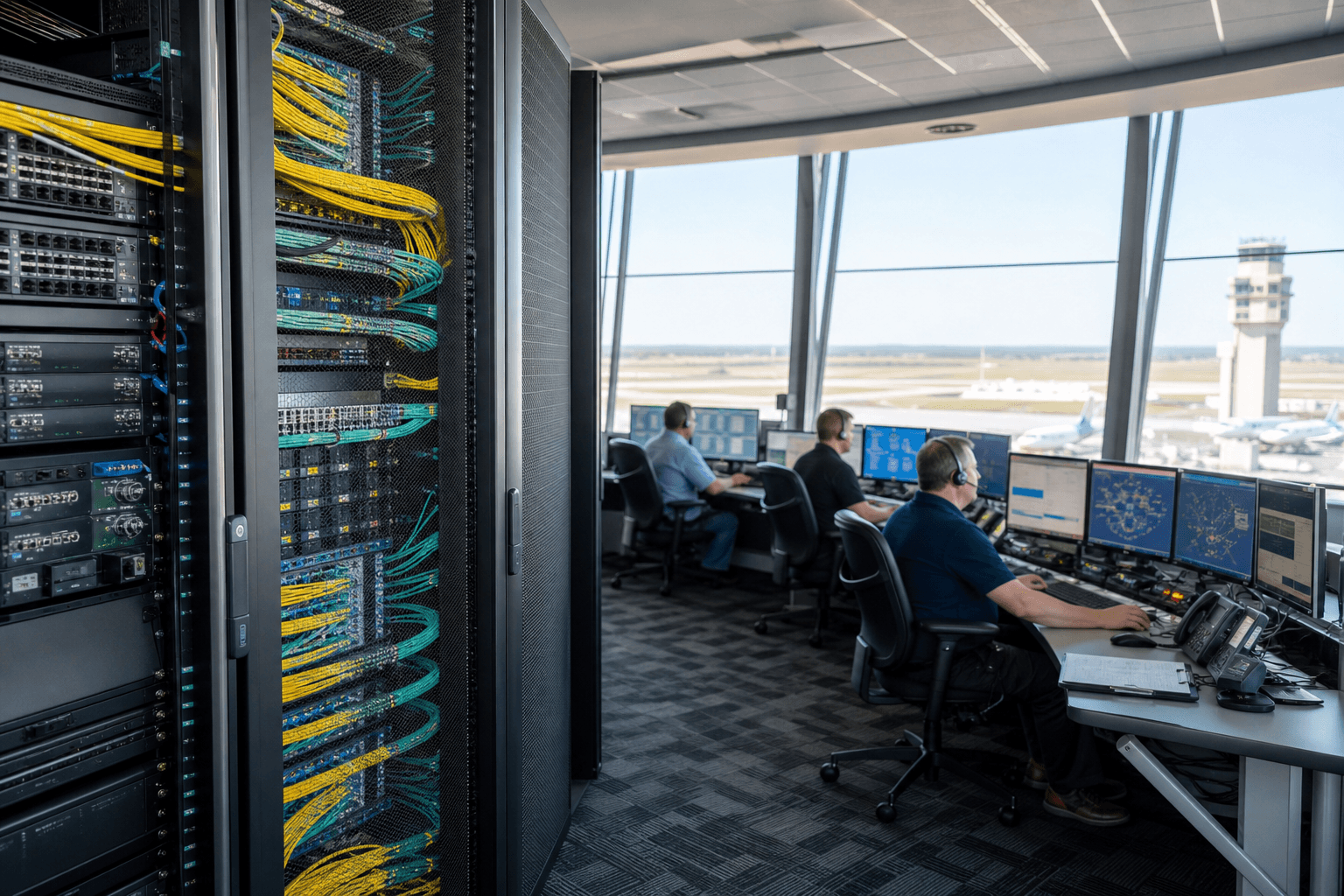
FAA assigns AT&T central role in $2 billion air traffic network overhaul
The Federal Aviation Administration (FAA) has moved a key part of its air traffic control network modernization effort to AT&T, awarding the company an initial $74.3 million award under a contract expected to grow into a multibillion-dollar deal. The award covers initial work on FAA Enterprise Network Services, or FENS, the communications network that will support the agency's broader overhaul of the US air traffic control system. FENS is intended to replace the FAA Telecommunications Infrastructure network that has supported agency communications for more than two decades. The system provides the backbone connecting air traffic facilities and other FAA operations across the National Airspace System. The FAA previously awarded Verizon a 15-year FENS contract in 2023 worth more than $2 billion. That agreement called for Verizon to design, build, operate and maintain the agency's next-generation communications platform. The new AT&T award comes as the FAA accelerates work on its Brand New Air Traffic Control System, an effort to replace aging radar, telecommunications, software and hardware by the end of 2028. The FAA said it is restructuring FENS around AT&T to accelerate deployment and meet its 2028 ATC modernization deadline, with Verizon remaining in a supporting role. Telecommunications is one of the highest priorities in that program because it connects the National Airspace System, according to the FAA. The agency says it has already replaced more than one-third of its old copper infrastructure with high-speed digital fiber. The broader modernization plan calls for 5,170 new high-speed network connections using fiber, satellite and wireless technology. It also includes 27,625 new radios, 462 digital voice switches and 612 new radars. The FAA says the work is aimed at improving reliability and reducing delays caused by aging equipment. Flight-delay minutes attributed to equipment problems in 2025 were about 300% higher than the average from 2010 through 2024, according to the agency. Congress has provided $12.5 billion toward the air traffic control overhaul, but the FAA says another $20 billion will be needed to complete the program. The FAA has not yet disclosed the full value of the long-term AT&T FENS agreement. The initial $74.3 million award is the first publicly identified funded work under the new arrangement, but is certain to grow much larger over several years.
The Daily Touch & Go
The day's best aviation news in your inbox. Free, no spam.