

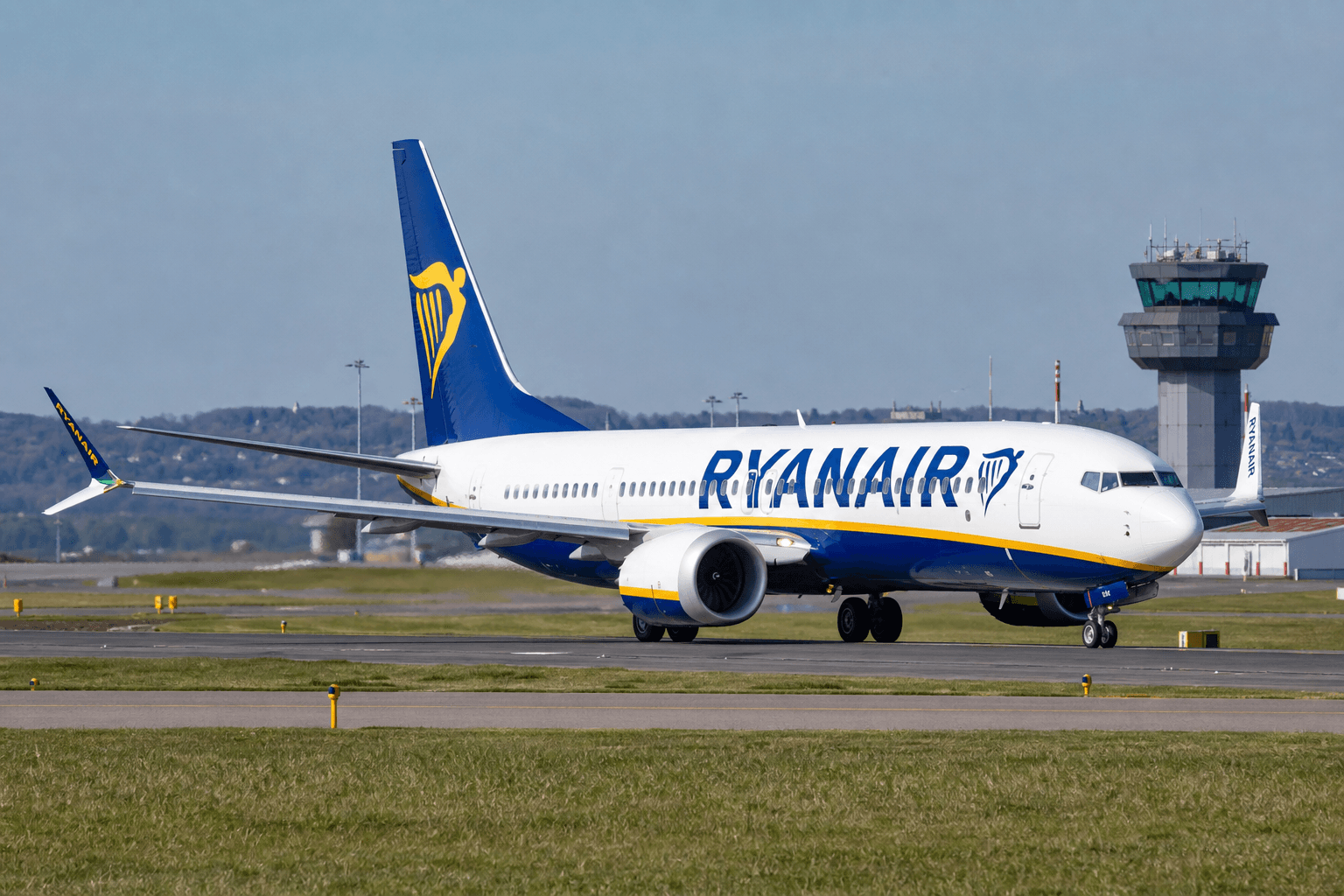
Crew oversight led to Boeing 737 Max 8 slow, shallow take-off at Luton after intersection departure change
Pilots accepted intersection departure for Max 8 but did not update flight-management computer. UK investigators have determined that the crew of a Boeing 737 Max 8 did not update performance data after switching from a planned full-length runway take-off to an intersection departure. The crew of the Ascend Airways jet (G-CRUX) had informed London Luton air traffic control that they could accept a departure from intersection A of runway 25. But the pilots, who had originally intended a full-length take-off, failed to verify that the revised V-speed data had been correctly entered into flight-management computer. This resulted in a lower thrust setting than required. Flight-data analysis revealed that the maximum thrust during the take-off roll was 82.1% rather than the 85.2% needed. Available runway distance from intersection A was 1,771m — some 345m less than the full length. Owing to the low thrust, the take-off roll was "long", says the Air Accidents Investigation Branch, and the aircraft lifted off just 162m from the runway end — crossing it at a height of just 13ft. According to the inquiry the subsequent climb was "slow" and "very shallow". Air traffic control information stated that the aircraft appeared on radar to be climbing through 900ft about 0.8nm from the airport. "Under normal circumstances the aircraft would appear much closer to the airfield at that height," the inquiry says. It points out that an engine failure or loss of thrust during the take-off roll could potentially have resulted in an overrun. None of the 162 passengers and six crew members was injured during the occurrence on 22 April last year. Ascend Airways' UK division ceased operations in April this year.