

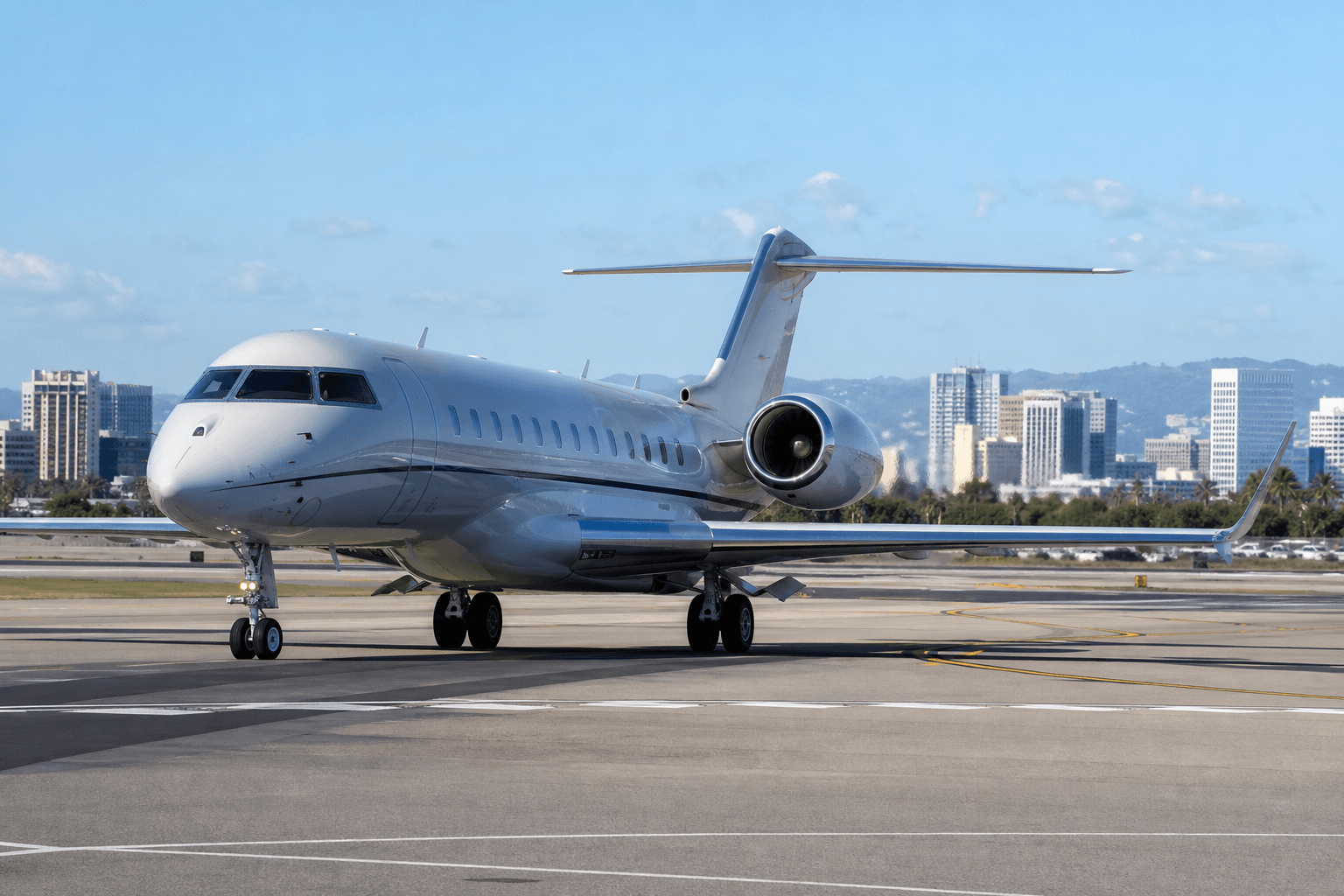
Tech Boom Fuels Surge in Private Jet Demand Among Young SpaceX Employees
There is a youth movement taking place in the world of private aviation as young technology sector workers benefit from an explosion of growth. In June, SpaceX raised a record $85.7 billion in its initial public offering (IPO), and the company's valuation now hovers around $2 trillion. The New York Times estimated that around 4,000 SpaceX employees could become millionaires once they sell their stock. Already, some are contemplating ditching commercial travel for luxury jets, whether through full ownership or fractional or charter programs. "The past six to 10 months, I've had a handful of guys that are involved in SpaceX with money burning a hole in their pocket," an anonymous aircraft broker based in California told Reuters . The person said that technology clients comprise about 75 percent of the broker's customer base, compared to only about one-third a decade ago. They added that customers are willing to pay 10 to 15 percent more than what they were one year ago. Typically, chartering a private jet costs anywhere from $2,500 to $19,000 per hour , depending on the aircraft type, flight distance, time of year, and number of people traveling. Purchasing a brand-new jet will typically run you $1.1 million to $90 million , not accounting for the cost of a qualified crew—which can be upward of $215,000—insurance, storage, or fuel and maintenance. Used jets still cost millions. Those costs are prohibitive to the vast majority of Americans. But data indicates that the percentage of people who can afford them is on the rise. Youth Movement Private jet and jet-card membership company Jet Linx, which also spoke to Reuters, said that through May, its business is up 70 percent year over year—"far ahead of the expectations we had going into 2026," per CEO Jamie Walker. The company said jet-card membership sales did particularly well in San Antonio, Dallas, and Austin, Texas. SpaceX launches its gargantuan Starship rocket from a remote site near the Texas-Mexico border. Charter provider Mercury Jets told Reuters it has seen double-digit growth in demand among technology executives this year. The company said that following SpaceX's IPO, it heard from several prospective customers who had never flown private. WingX, a subsidiary of aviation intelligence provider Jetnet, backed up the trend with data. It told Reuters that during SpaceX's IPO window, business jet activity near the company's Texas launch site spiked 177 percent. The explosion in private aviation began in earnest months ago, per Jetnet's data. Globally, the firm recorded a 13.4 percent increase in flights operated by private owners through the first five months of 2026 compared to the same stretch last year. Fractional ownership grew 11.8 percent over the same period. The trend could be due to higher investor confidence amid the anticipation of other IPOs. Among the next major companies in line to go public are OpenAI and Anthropic, both based in San Francisco. WingX told Reuters that through June 14, business jet traffic in San Francisco was up about 11 percent year-over-year—the fastest growth among major U.S. cities. D.J. Hanlon, executive vice president of sales at Flexjet, told the outlet that the company's customer base is getting younger as more people benefit from "self-made first-generation wealth," such as through IPOs. Jetnet noted that business jet deliveries grew about 24 percent during the dotcom boom. The Outlook North America is already the largest global market for private aviation, accounting for 71 percent of global business jet departures through May, per Jetnet's most recent "market monitor." And it could continue to take market share. "Global business jet departures grew 5.1 percent over the last twelve months and U.S. corporate profits hit a record high, while the ultra-wealthy population that drives most of the industry's demand is also at an all-time high," read the outlook, published July 2. Jetnet found that there were more than 684,000 ultra-high-net-worth individuals (UHNWIs) in 2025, up from 658,000 the prior year. U.S. corporate profits in the first quarter of 2026, meanwhile, reached a record $3.95 trillion, it said. At the same time, consumer confidence tracked by the University of Michigan reached an all-time low. The report found that Latin America and Africa led growth in private aviation activity over the 12 months trailing May, while the Middle East contracted sharply. Corporate flight departments and branded charter services also saw less activity. Average aircraft utilization globally, though, was 9.4 percent above 2019 levels, with fractional fleets increasingly turning to midsize jets. According to the data, which excludes turboprops, there were 751 global business jet deliveries in the trailing 12 months preceding May 26, a decline from the 819 deliveries in full-year 2025. Transactions of pre-owned aircraft decelerated hard. The total value of these transactions also declined, but order books reached record highs. Bombardier's backlog was up 43 percent year-over-year, while Gulfstream led the industry with $22.3 billion in its order book. Despite slowing transactions, private aviation inventory remains tight and is creating a seller-friendly market, Jetnet concluded. For-sale inventory is also getting older, and 2025 saw a below-average number of aircraft scrapped. That leads Jetnet to believe a wave of fresh retirements is imminent.