

UK RAF evaluates total F-35A fleet size to restore nuclear-capable airforce role
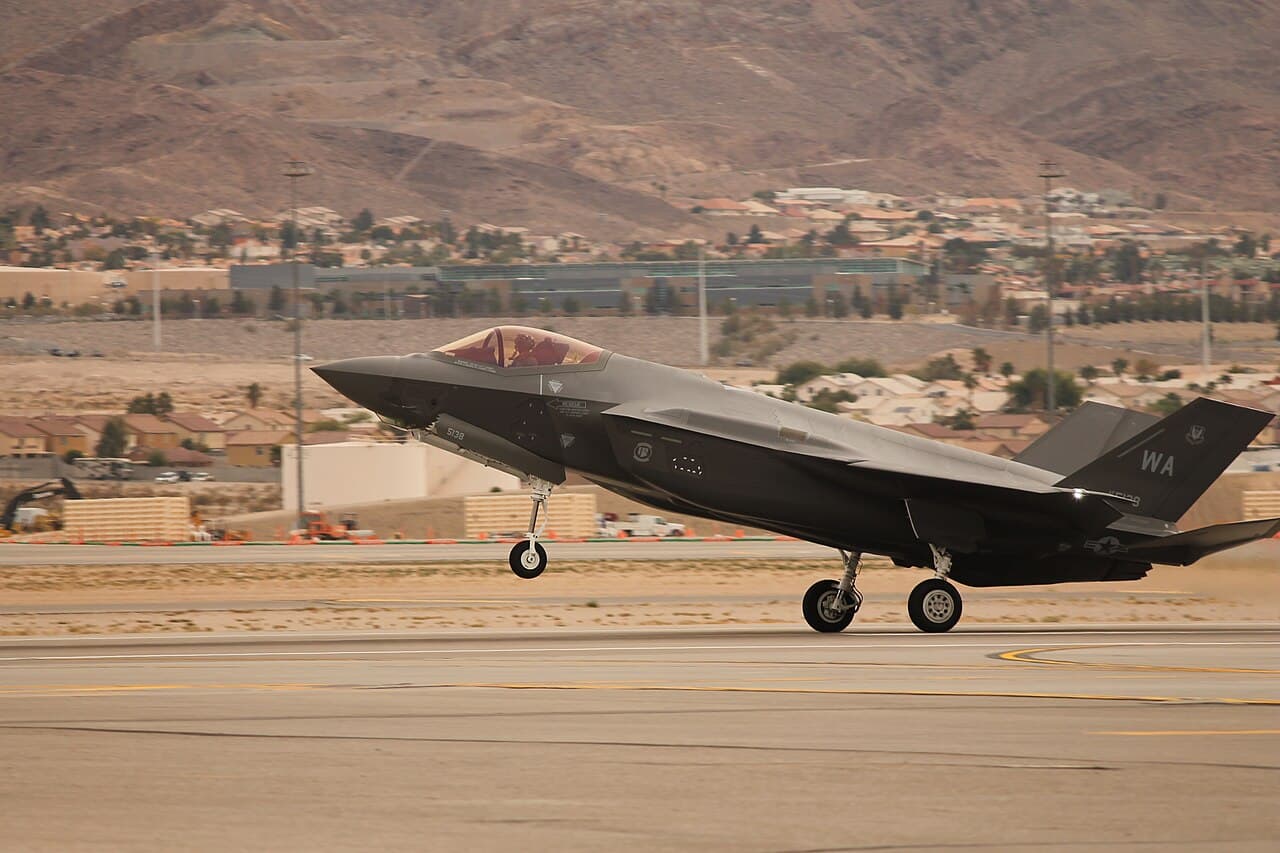
Initial purchase of 12 conventional take-off jets will support operational conversion unit, service says. The UK Royal Air Force (RAF) is working to determine its future fleet requirement for the Lockheed Martin F-35A, as the service works toward regaining an air-launched nuclear weapons capability from next decade. Speaking at the Global Air & Space Chiefs' Conference (GASCC) in London on 15 July, Air Vice-Marshal Jim Beck, the RAF's director capability & programmes, referred to a planned purchase of 12 F-35As, recently confirmed within the UK's Defence Investment Plan . First details of the acquisition had emerged as part of London's Strategic Defence Review publication of June 2025, with the dozen conventional take-off and landing aircraft to be acquired alongside 15 short take-off and vertical landing F-35Bs: the latter variant is already flown by the RAF and Royal Navy. At that time, the UK Ministry of Defence said fielding the F-35A would enable London to work towards supporting NATO's dual-capable aircraft (DCA) mission for the first time since the late 1980s. "We did not buy those [F-35As] for dual-capable aircraft [DCA] capability – we bought them for our [operational] conversion unit," Beck says. "At the same time we stated we will get back into the dual-capable aircraft role, supporting NATO: the two are separate," he states. "We are doing the analysis to understand the size and posture of the force that we will need to undertake it," he says of the planned DCA commitment. "The mission is very specific – it is to reintegrate the Royal Air Force into NATO's nuclear burden-sharing framework," Beck says. Additional RAF F-35As involved in the role would be armed with US-supplied B61-12 tactical nuclear bombs, while their operation also would depend on NATO-operated boom-equipped tankers, as the UK currently lacks that capability. "The next part is for us to understand DCA, standardise that into our joint training and longstanding partnership with our NATO and European DCA partners," Beck says. "This is one of the most important moves we have made as the RAF for a generation," he notes of the planned reintroduction of the lapsed capability. Addressing the importance of the UK reinstating its defensive capability in support of NATO, he notes: "Make no doubt about it: Russia does not have a 'nuclear taboo' and if it needs to in warfare, it will release a tactical nuke.” The RAF has not had an air-launched nuclear weapon in its inventory since the retirement of its last Panavia Tornado-borne WE177 free-fall bombs in 1998. Also speaking at the GASCC event, French air force Lieutenant General Stephane Virem, commander, strategic forces, outlined the operational activities required to maintain readiness in the aerial nuclear strike role. France's strategic forces – which use the Dassault Aviation Rafale, along with submarine-launched nuclear weapons – participate in over 70 exercises each year, including four major activities performed under the name Operation Poker. "French deterrence is not a theoretical concept – it is operational, tested and continuously adapted for the changing environment," Virem says. Meanwhile, Dr Brendan Mulvaney, director of the China Aerospace Studies Institute (CASI) at the US National Defense University, points to Beijing's massive investment in nuclear weapons, noting that it is expected to have 1,000 nuclear missiles in its arsenal by 2030. "Today's environment is not a return to the Cold War, it is something that is far more complex," he says. "The People's Liberation Army is fundamentally changing how it thinks about its hardware, and its underlining strategic posture. "The visible evidence of this is considerable. We at CASI are tracking the construction of over 300 new missile silos in western China, and the shift to solid-fuel allows them a more rapid response, dramatically reducing their launch preparation time."