

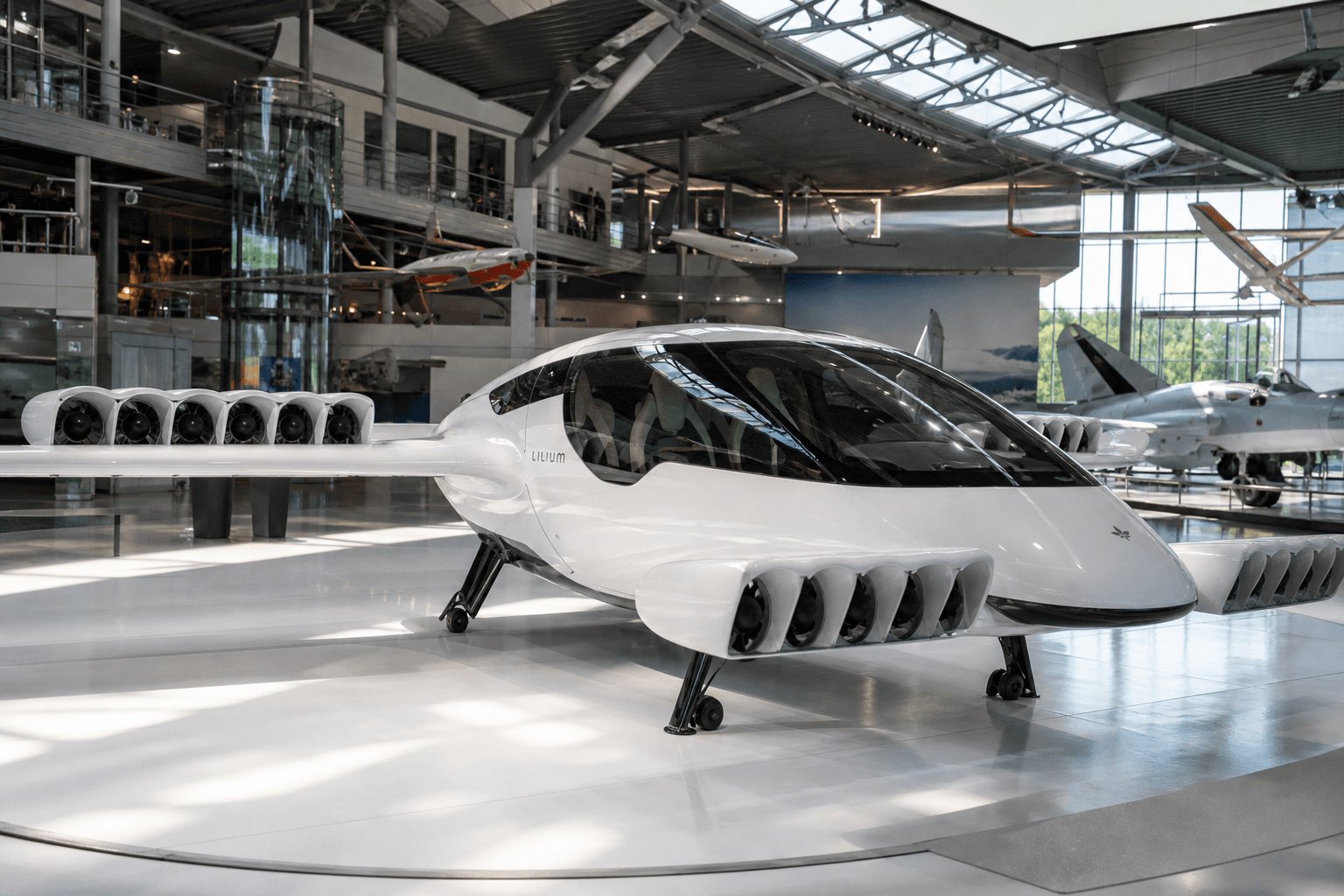
Historic Lilium Phoenix eVTOL prototypes preserved in German aviation museums
The lighter side of Flight International . Museum pieces With a growing list of advanced air mobility ventures giving up the ghost well before their experimental designs reach the market, history risks losing a physical record of their visions. However, thanks to the efforts of Robert Gardemin, the original test aircraft of one of the electric vertical take-off and landing (eVTOL) sector's pioneers have been saved. German developer Lilium filed for insolvency in October 2024. With no buyer found for the company's assets, Gardemin launched a successful crowdfunding campaign to raise €10,000 ($11,600) to rescue the so-called Phoenix scaled prototypes, which he describes as representing "years of dedicated work by over 1,000 people and one of the most ambitious electric aviation programmes ever developed in Germany". The uncrewed test aircraft had been heading for the scrapheap after completing early flight testing in Spain, with one – Phoenix 2 – notching almost 200 flight hours. According to an update from Gardemin on LinkedIn, the prototypes have been transferred to the Deutsches Technikmuseum in Berlin and Luftfahrtmuseum Wernigerode in Saxony Anhalt, where they will be reassembled for display, ensuring that "an important chapter in the emergence of eVTOL technology is not erased but made accessible to the public for generations to come". Joyce’s choices Alan Joyce was a working class lad from Dublin, the son of a cleaner and a factory worker, who through a love of numbers – mathematics, then management science – found himself working for and then running airlines, including, at the age of 42, Qantas. Now, almost three years after he quit as chief executive of the Australian flag-carrier, Joyce has penned a memoir, Riding the Jet Stream . He says he had two motivations – one professional, one personal. He needed to "set the record straight" about his 15-year stint at Qantas, including the grounding of the fleet in 2011, the industrial battles, and steering the business through the pandemic. Former Qantas CEO shares his experiences. Source: BillyPix "I wanted to tell it as it actually unfolded, in the room, under pressure, with every decision carrying enormous consequences for tens of thousands of people," he explains. The other was "more personal", he says. "I wanted to encourage young leaders to learn from my successes and failures, because I think that's where the real lessons sit." He also writes about what it was like to be "one of the few openly gay CEOs in corporate Australia" and how he used his platform for "something bigger than the bottom line, including the campaign for marriage equality". Riding the Jet Stream is available from Hardie Grant Books. Chipmunk at 80 Published to commemorate the 80th anniversary of the de Havilland Canada DHC-1’s first flight, Chipmunk at 80 includes “first-hand stories from pilots, engineers and custodians”, along with over 200 photographs, including rare archive shots. Written by Ben Griffiths and Ian Black, Volume 1 is a fitting tribute to an iconic type much loved by generations of military pilots, air cadets and total aviation people everywhere. Available to order now via chipmunkat80.carrd.co for £37.99. Bristol where-port A confused Doug Brown references a recent picture from The Sun newspaper, illustrating a story about Bristol airport's ambition to introduce long-haul flights. "I couldn't work out why Lulsgate had big X marks on the runway, and a massive displaced threshold I don't remember from landing my Hamble Cherokee there, until I spotted the Brabazon hangars to the right of the shot," he says. The picture was of a Bristol airport, but not the Bristol airport, BRS in Lulsgate Bottom. Instead, it was the former Filton airfield, famous birthplace of Concorde and now largely a housing estate, with the main Brabazon hangar repurposed to a music arena. Yuckspeak We can also coordinate any speaking moments with members of the leadership team = We can arrange an interview. Copa mechanism We are warned to avoid mangling metaphors, but surely there is an exception for Copa Airlines boss Pedro Heilbron's splendid summation of the Panamanian carrier's risk strategy: "We never roll the dice without a parachute." From yuckspeak to tales of yore, send your offcuts to murdo.morrison@flightglobal.com From the archive 1926 Gentleman’s way The Chairman, in thanking Mr. Upson for his talk, said that, having tested most of the methods of getting up into the air, he considered the airship the only gentleman’s way of travelling. His own experience in English airships was that one sat in comfort, there was no noise, one rang a bell for anything one wanted to eat or drink, one gazed quietly out on the scenery, and one could talk. Most of all, however, he would like to know from Mr. Upson when this airship was going to be finished. They had all talked about airships for such a long time, and what he wanted was to see the airship in the air. Mr. Upson said he was very sorry that the one question as to when the airship would be finished was the one that he was afraid he was unable to answer. 1951 ‘The Big Show’ Every evening, Pierre Clostermann recorded the story of his life with the R.A.F., and by the end of the war his jottings filled three large notebooks. They have now been published as "The Big Show", so that “Free Frenchmen might be reminded of their own hopes and loyalties” in those darker years and so that the tales of their sons’ deeds might give some consolation to the families of his fallen friends. Not one of these pages can be passed over lightly. The breathless concentration as the judder of a Spitfire’s cannon answers the anxious thumb at the gun-button, heart-beats quickening at the telephone’s urgent tinkle, the proud yet pitiful show of bravado as the lone pilot returns without his comrades – all those undying moments of a fighter pilot’s life are here. 1976 Amateur aerobatics There is no legislation to prevent an untutored pilot from attempting aerobatics, or to prevent an unqualified tutor from doing aerobatic coaching. This is a curious anomaly. A pilot may not take a passenger at night without being suitably trained and tested, yet he can legally roll his unsuspecting victim upside-down with no formal training at all. It is questionable as to which is more hazardous. Aviation legislation can be meticulous on seemingly petty points – it is only recently that the CAA has proposed making shoulder harnesses mandatory for the front seats of light aircraft – but appears sometimes to turn a blind eye to others. So there is little to prevent a pilot from picking up a few tips from an aerobatic pundit and then going up to try some manoeuvre himself. 2001 After the attacks With the backlog of passengers stranded by the events of 11 September now cleared, the slump in passenger confidence will leave the airlines having to fly, in some cases, near-empty aircraft. With little hope of securing finance from investors, the only solution is a direct injection of Federal cash. Assuming there are no more terrorist attacks, passengers may return, slowly. But airlines will have to cope with the cost of implementing new security measures. Israeli airline El Al is arguably the safest to fly on, but the cost of implementing El Al-style security measures, from pressurised, double armoured doors to the flightdeck, to individually interviewing each passenger, would be crippling. That is why the USA must step in and fund new security measures directly.