


Illustration: The Touch & Go
Historic Lilium Phoenix eVTOL prototypes preserved in German aviation museums
Two of Lilium's pioneering eVTOL Phoenix prototypes have been rescued from scrapping and relocated to Berlin and Wernigerode museums for public display.
The gist
Original Lilium Phoenix eVTOL prototypes saved from destruction, now showcased in German museums preserving eVTOL history.
Continuing coverage
All Evtol →The innovative electric vertical take-off and landing (eVTOL) designs developed by German firm Lilium have taken a significant step toward preservation after the company’s insolvency in late 2024. Robert Gardemin spearheaded efforts to save the original Phoenix scaled prototypes, which represent an ambitious chapter in the burgeoning eVTOL sector. These aircraft, once slated for disposal, have been secured through a successful crowdfunding campaign and transferred to German aviation museums for restoration and exhibition.
Lilium's insolvency announcement in October 2024 marked a setback for its advanced air mobility vision, with no suitable buyer emerging for its assets. The company’s Phoenix test aircraft, instrumental in years of developmental work that engaged more than a thousand personnel, were at risk of being lost. Gardemin's initiative raised approximately €10,000 (equivalent to $11,600), allowing the physical artifacts of this pioneering program to be preserved rather than scrapped.
The Phoenix prototypes had completed early test flights in Spain, with the Phoenix 2 model accumulating nearly 200 flight hours in uncrewed operations. This flight experience offers valuable data demonstrating the technology’s feasibility and progress at the time. By preserving these test articles, the museums safeguard tangible evidence of the innovative engineering achievements that fueled Germany’s eVTOL ambitions.
Currently housed at the Deutsches Technikmuseum in Berlin and the Luftfahrtmuseum Wernigerode in Saxony Anhalt, the Phoenix aircraft are undergoing reassembly. This ensures that museum visitors will have access to physical representations of eVTOL development, illustrating a key transition in urban air mobility technology. The restored prototypes will serve as educational exhibits that highlight the technological challenges and breakthroughs of electric aviation’s early era.
Lilium’s Phoenix program was among the most ambitious electric aircraft initiatives in Germany, reflecting broader industry trends toward zero-emission, vertical lift solutions aimed at revolutionizing urban transport. Though the company was unable to continue operations, the preserved aircraft are an important part of documenting the sector’s history. Their survival allows the public and industry observers to examine the design and scale of early eVTOL platforms.
The successful crowdfunding and subsequent museum transfers underscore a community and enthusiast commitment to preserving aerospace heritage, which can often be erased when companies exit the market. By rescuing these aircraft, Gardemin and supporters have prevented a complete physical loss of the technology and opened the way for reflection on the early challenges in eVTOL development.
These prototypes represent a crucial technical milestone: they embody the transition from conceptual electric VTOL concepts to tangible flyable craft with documented flight hours. Museum exhibits featuring working prototypes enable a deeper understanding of the evolving technology landscape in sustainable aviation. Preserving such artifacts ensures lessons learned and inspirations generated endure for future innovators.
Lilium’s insolvency reflects the volatility of the emerging advanced air mobility sector, where many startups face financial and technical hurdles before reaching commercial viability. However, the Phoenix prototypes stand as testimony to the scale of investment, effort, and innovation that characterized the early phase of electrically powered vertical flight. By safeguarding these aircraft, German aviation museums contribute to chronicling the sector’s developmental history.
Visitors to the Deutsches Technikmuseum and Luftfahrtmuseum Wernigerode will soon have the opportunity to witness up close one of Germany’s most ambitious efforts in electric aviation. This curation extends beyond mere artifact preservation; it offers a narrative of aerospace innovation at a time of intense transformation. The Phoenix prototypes thus serve as physical bookmarks in the ongoing story of sustainable urban air mobility.
Frequently asked questions
- What happened to Lilium's original Phoenix eVTOL prototypes after the company's insolvency?
- After Lilium filed for insolvency in October 2024, the Phoenix test aircraft were saved from being scrapped through a crowdfunding campaign and transferred to German museums for preservation and public display.
- How much flight testing had the Phoenix prototypes completed?
- One of the prototypes, Phoenix 2, had logged nearly 200 flight hours during uncrewed test flights conducted in Spain before being retired from testing.
- Where are the Phoenix eVTOL prototypes now located?
- They have been moved to the Deutsches Technikmuseum in Berlin and the Luftfahrtmuseum Wernigerode in Saxony Anhalt, where they are being reassembled for museum exhibition.
Read more
All Military/Defense →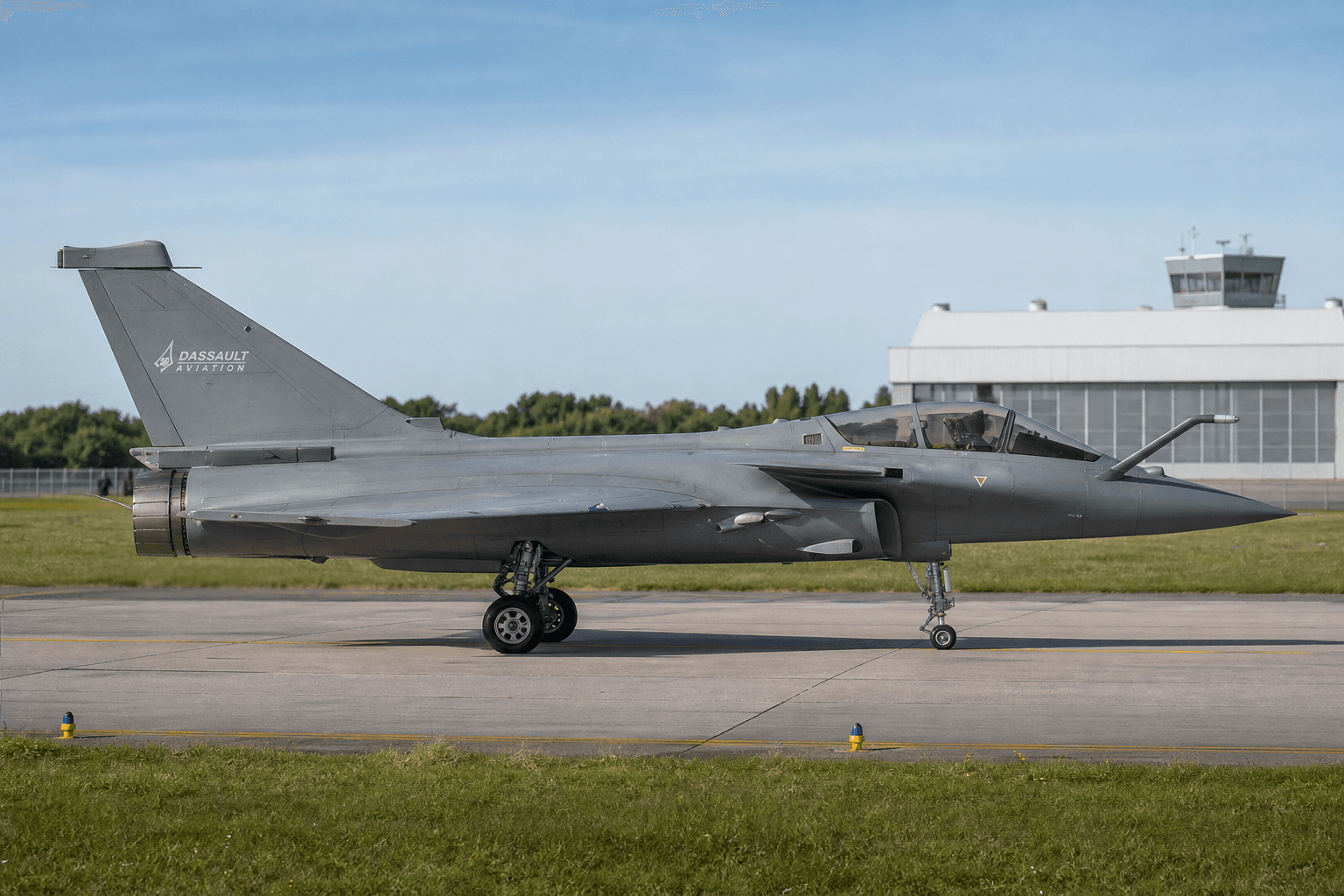
Europe's FCAS fighter program collapses amid industrial disputes and divergent military goals
Where next for Europe’s future combat aircraft plans? Perhaps the most surprising thing about the collapse of the European Future Combat Air System (FCAS) programme was that it took so long to fall apart. Even from the outset you did not need to be an expert in business dynamics or industrial politics to see that the relationship between lead protagonists Airbus and Dassault Aviation was likely to be strained at best. French airframer Dassault is, like it or not, a fiercely independent entity with a chief executive in Eric Trappier for whom the adjective 'pugnacious' is tailor-made. Dassault thought it was to be fully in charge, the architect as the company phrased it, of the New Generation Fighter (NGF), the manned platform at the heart of FCAS. But faced with what it felt was the steady encroachment of Airbus onto its turf, tensions inevitably ratcheted up. Indeed, it was always going to be a challenge to yoke Dassault to a wider pan-European construct, particularly when it lacks the collaborative spirit that, thanks to its origins, is part of the Airbus DNA. There also seemed to be an inherent issue with what the three countries funding FCAS wanted to achieve with the NGF – France sought a replacement for the Rafale, including the naval version, while Germany and Spain targeted an air dominance fighter as a Eurofighter successor. Remember too that France and Dassault have history here: originally part of the Future European Fighter Aircraft programme – the precursor to the Eurofighter – the pair left, to develop the Rafale independently, due to disagreements over design authority and operational requirements. Sound familiar? But with the dust now settling on the inherently fissiparous FCAS project, the question becomes: what next? Can France and Dassault proceed once more in splendid isolation? At a technological level, almost certainly, after all, whatever criticism can be laid at the airframer's door, it does not lack for design and manufacturing nous. However, the stumbling block may be the eye-watering sums needed to bring a sixth-generation fighter into service. German industry, with some Spanish contribution, has already announced the ' Team Gen 6 ' grouping that it says is willing to work with any interested party to advance the interests of European sovereignty. Mind you, it is unclear who else is available. At this stage, ushering Germany and Spain into the Global Combat Air Programme being progressed by Italy, Japan and the UK – seemingly harmoniously so far – seems challenging, if not outright impossible. That leaves Sweden, which is still mulling options for a successor to its current Saab Gripen E. Mind you, with relations between Paris and Stockholm ever-closer – notably, France is acquiring at least two Saab GlobalEye surveillance jets – perhaps a different marriage of convenience could be contemplated? Equally, perhaps the real lesson from the debacle is that agility is key: many of the capabilities envisioned for the broader FCAS project – the system of systems concept – are already being tested or deployed by adversaries. Whichever direction Europe's new divorcees take – remarriage or remaining single – the watchword for a future fighter, now more than ever, is the need for speed.
![Pentagon Releases Its Clearest UFO Video Yet—A Massive Structure Captured By Military Sensors [Roundup]](/_next/image?url=https%3A%2F%2Favoibnodqwjxlpbhunuu.supabase.co%2Fstorage%2Fv1%2Fobject%2Fpublic%2Fstory-images%2Fai%2Fpentagon-releases-its-clearest-ufo-video-yet-a-massive-structure-captured-by-mil-160d06a6.png&w=3840&q=75)
Pentagon Releases Sharply Detailed Military Infrared Footage of Large UFO Structure
The Pentagon has released a fourth batch of declassified UFO files, including unusually clear military-sensor footage of a massive two-tiered object. Plus Uber fights competition, Citi cuts JetBlue transfers, a Marriott booking trick, and more.
Ukraine Pursues European Drone Deals Amid Kamikaze Strikes on Russian Lines
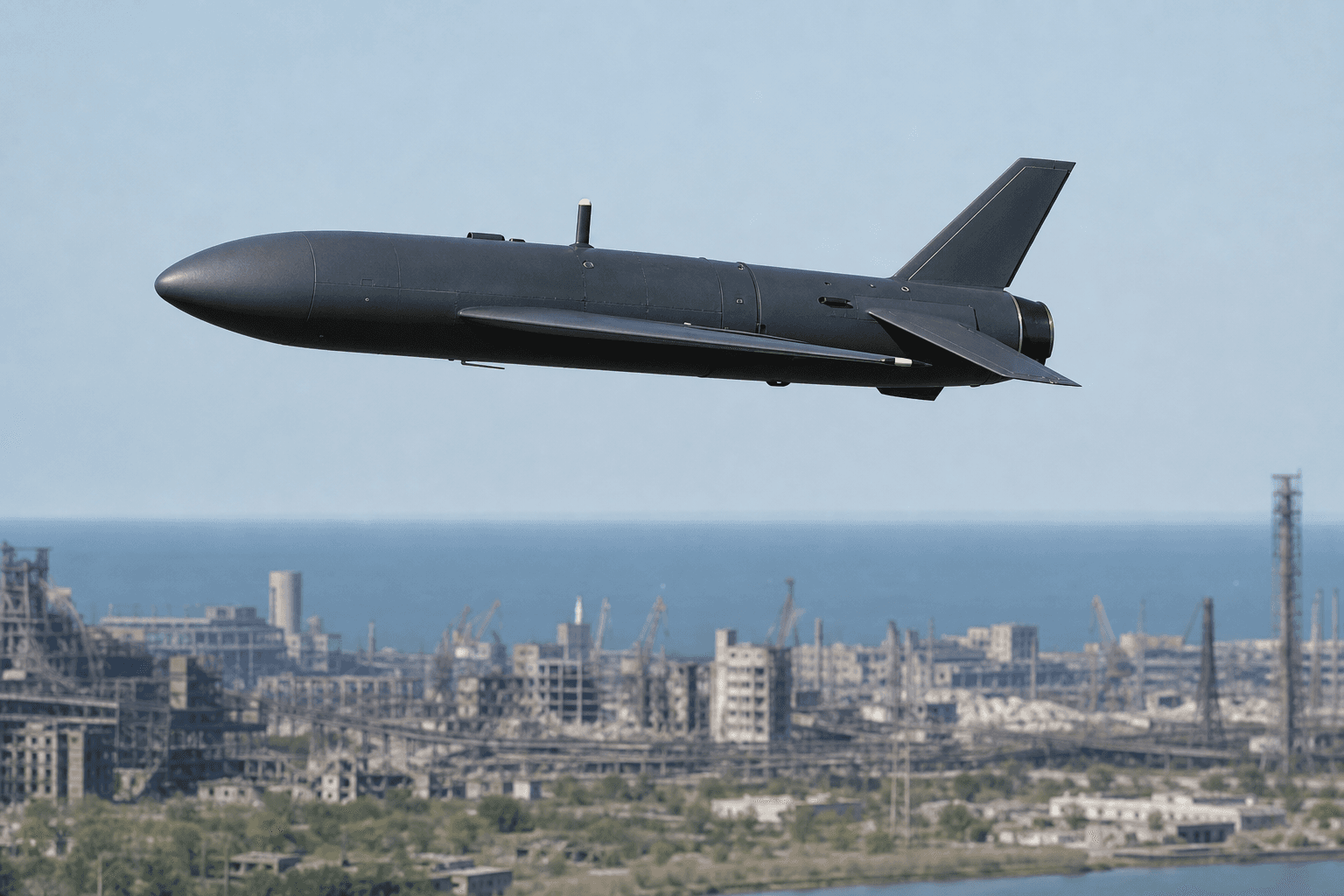
Pictured is a photo of a May 8 posting by the Ukrainian National Guard’s First Azov Corps of a Hornet kamikaze drone near the Donetsk region’s port city of Mariupol on the Sea of Azov above the Black Sea. Russia captured the city in May, 2022, but Ukraine is trying to retake it. Ukrainian President Volodymyr Zelenskyy is pursuing drone deals with European nations, even as the U.S. has so far delayed such a deal and as Ukraine uses increasingly long range, kamikaze "one way attack" drones to strike Russian infrastructure. "Today every country needs the modern means to at least monitor and protect its own airspace and sea borders," Zelenskyy told the Council of the European Union in Dublin on Tuesday. "Without Ukraine, without Ukraine's experience and security expertise–tested in modern war, it is impossible to guarantee security today, especially when it comes to air defense and maritime security." A bipartisan group of six House legislators have introduced the Strategic Unmanned Systems Partnership Act –a bill to improve drone collaboration between the U.S. and Ukraine. Rep. Michael McCaul (R-Texas), the second ranking Republican on the House Foreign Affairs Committee, and Rep. Marcy Kaptur (D-Ohio), the second ranking Democrat on the House Appropriations Committee's defense panel, sponsored the legislation. Kaptur is also a co-founder and co-chair of the Congressional Ukraine Caucus. On June 9, Sens. Mike Rounds (R-S.D.) and Jacky Rosen (D-Nev.), members of the Senate Armed Services Committee, introduced companion legislation, S. 4711, in the Senate. Zelenskyy told Face the Nation on May 31 that Ukraine had "wanted to conclude the first drone deal with the United States." "The U.S. wanted to test all types of our drones," he said. "We agreed to the way they wanted to test, train with, and use our systems in the air, on land, and at sea, but we still don't have a bilateral drone deal–a big framework document…American companies have advanced AI technologies we don't have. In turn, we have many things they don't have, due to our extensive experience on the battlefield." "We need to negotiate, not just talk about it," Zelenskyy said. "Take the necessary steps and do it as quickly as possible. For this, we need President Trump to say yes." This month, Ukraine and Latvia signed a drone deal, and Ukraine is negotiating drone deals with the EU and other EU members, including Finland, Denmark, Ireland, and Bulgaria. Beside Latvia, Ukraine has drone deals with Norway, the Netherlands, and Germany. While the United States begins its Drone Dominance Program (DDP) to field drones with a unit cost below $10,000, U.S. drones with Pentagon-heralded battle experience outside of Ukraine have been non-disposable, higher-end ones. One Ukrainian company, Ukrainian Defense Drones, has been selected by the DDP to manufacture attritable small drones. On May 20, U.S. Air Force Chief of Staff Gen. Kenneth Wilsbach told the House Armed Services Committee that the number of air-to-ground strikes in Iran by U.S. Air Force MQ-9A Reapers by General Atomics has far outstripped the number by any other aircraft. "For Epic Fury, perhaps the most valuable player was unmanned–the MQ-9," Wilsbach said. "We've made many, many strikes. I don't want to say how many because the number's classified, but no other platform's even close to the MQ-9. We get a lot of utility out of them." The Pentagon said at the time that it had made more than 13,000 strikes on Iran since Feb. 28. The Air Force has lost at least 24 MQ-9A Reapers in the Iran strikes, and the service is looking at a follow-on to the Reaper that would significantly reduce the drone's unit cost, which ranges between $30 million and $50 million. U.S.-Ukrainian drone co-production so far has included the $15,000 Multi-spectral Extended Range Optical Sight (MEROPS) interceptor drone by Perennial Autonomy, formerly Swift Beat LLC–an American company established by Eric Schmidt, the former head of Alphabet Inc.'s Google. Another Perennial Autonomy drone that has seen use in Ukraine is the Hornet, a $5,000, Group 2 kamikaze drone able to fly silently in the terminal phase to evade electronic jamming and use SpaceX's Starlink communications terminals to strike Russian supply lines, including truck convoys, more than 150 miles away. A version of this story originally appeared in sister publication Defense Daily .
Pentagon's Drone Dominance Program Narrows Field to 19 Vendors for $300M Gauntlet II Challenge
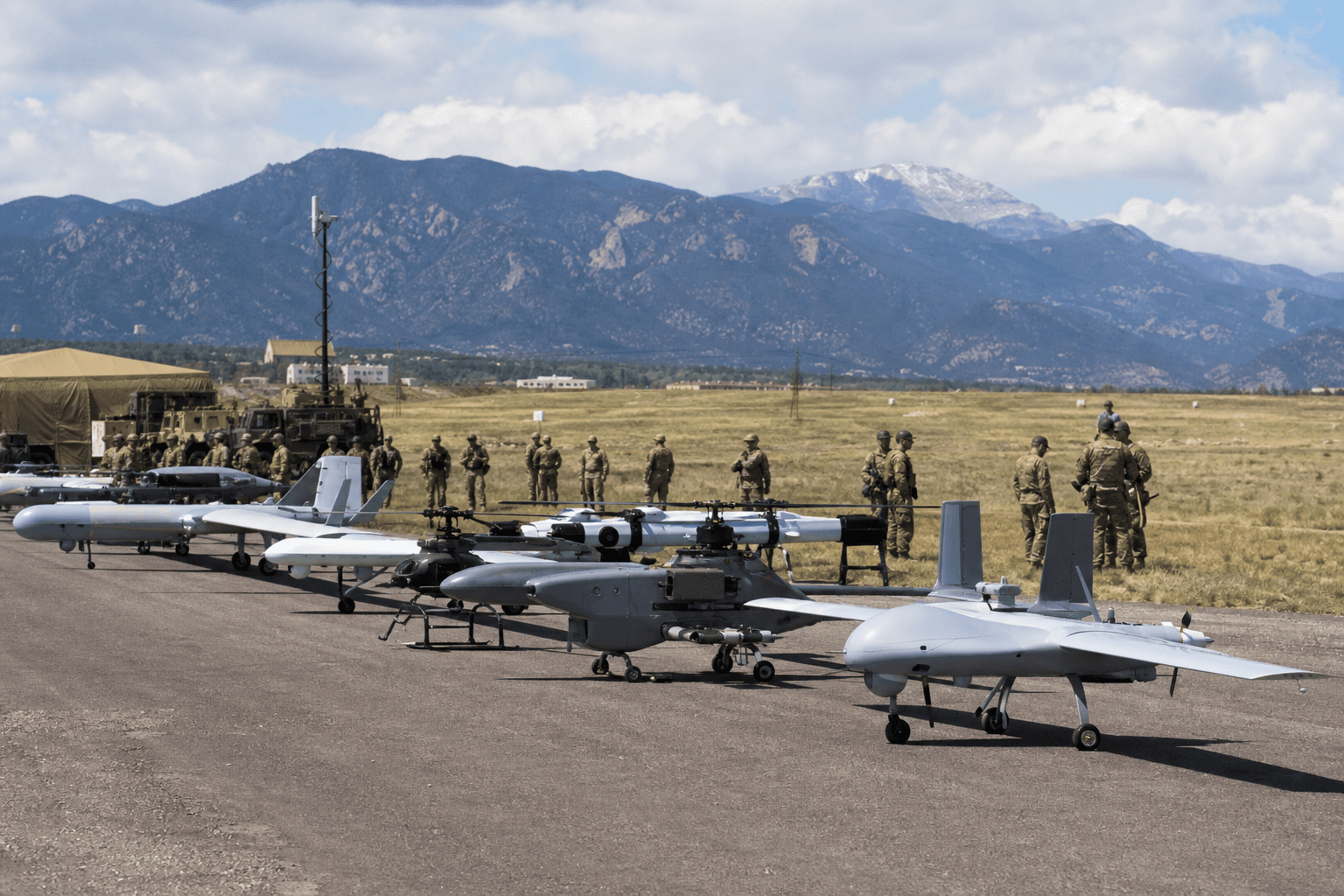
First person view combat drone developed by Ukraine’s Grim Tech. (Photo: Grim Tech) The Pentagon's Drone Dominance Program (DDP) on July 1 said it invited 19 companies to compete in the final stage of its second challenge round in August with a chance to win production orders worth a combined $300 million. The companies invited to compete at Fort Carson, Colo., are Ascent Aerosystems, Auterion Government Solutions, Griffon Aerospace, Grim Tech, Hyperscale, ModalAI, a team of Mountain Horse Solutions and AG3 Labs, Neros Technologies, ORQA US LLC, Perennial Autonomy, Renegade UxS, Skycutter, Stellarion, Swarm Defense, Teal Drones, Ukrainian Defense Drones (UDD), Vector, Wilcox Cherry Defense and XTEND Reality. Each company has about five weeks to deliver 120 drones with lethality payloads for the Gauntlett II final challenge. The drone vendors are paired with at least one of five previously selected lethality providers, which are Bravo Ordnance, Kela Defense US Inc., Kraken Kinetics, Mountain Horse LLC and Northrop Grumman [NOC] SUkrystems Corp. The 19 finalists were whittled down from 49 companies that competed in June at a qualifier at Camp Grayling, Mich. For that event, the companies provided about 79 unique drone systems to compete in one or two mission areas, long range strike and tactical assault in close quarters. At Fort Carson, the drones will be put through operational testing in the mission relevant scenarios that occur in contested electromagnetic environments. A Request for Solutions for Gauntlet II in April said the top performer in each mission area will receive an order for 8,000 prototype drones, second place 7,000, third place 6,000, fourth place 5,000 and fifth place 4,000. In March, the DDP selected 11 top performers from Gauntlet I at Fort Benning, Ga. Among those winners, Skycutter, ModalAI, Auterion, UDD, Ascent Aerosystems and Griffon Aerospace are in the hunt for Gauntlet II orders. Neros, which finished second in Gauntlet I, has completed deliveries and acceptance of its 2,400 drones contracted by DDP, according to the DDP's website. As of June 18, the DDP has accepted 80 of Ascent's drones against a production order for 1,600, DDP says. Most of the other companies selected for Gauntlet 1 prototype orders have either begun to ship their drones or are ramping production. Only Skycutter, which won Gauntlet I, and Napatree, the third place finisher, are listed as neither ramping nor shipping their drones yet, DDP says. The aim of the DDP is help create a domestic industrial base for small, relatively inexpensive and attritable drones produced in massive numbers that the Defense Department can draw on. Some of the competitors are not based in the U.S., such as Britain's Skycutter and Ukraine's Grim. UDD represents Ukraine's F-Drones and is establishing a manufacturing facility in Northwest Ohio. A version of this story originally appeared in sister publication Defense Daily .
The Daily Touch & Go
The day's best aviation news in your inbox. Free, no spam.