


Image: Wwt2112 at English Wikipedia · Public domain · via Wikimedia Commons
Black Comedians Settle Lawsuit Over Racially Targeted Jet Bridge Stops at Atlanta Airport
Eric André and Clayton English reached a settlement with Clayton County over a controversial jet bridge search program that disproportionately targeted Black passengers with police stops at Atlanta-Hartsfield Airport.
The gist
Eric André and Clayton English settled a lawsuit after being racially profiled by Clayton County police during Atlanta airport jet bridge stops.
Comedians Eric André and Clayton English have concluded a legal battle against Clayton County regarding a controversial police practice at Atlanta-Hartsfield International Airport, where officers conducted stops on passengers boarding planes via jet bridges. The program, initiated by the Clayton County Police Department, involved officers stationing themselves on jet bridges to randomly question travelers before boarding. André and English challenged this practice as racially biased and degrading, prompting their lawsuit filed in October 2022.
The genesis of the controversy lies in the ‘jet bridge stop program,’ which purported to randomly intercept passengers, yet data revealed stark racial disparities. Over an eight-month span, officers conducted 402 consensual encounters with passengers; of these, just two led to drug-related charges. Nonetheless, the police seized more than $1 million in cash and money orders suspected of criminal ties. Crucially, records disclosed through an Open Records Act request showed that 56% of those stopped were Black, indicating a disproportionate impact.
Erik André’s personal encounter took place on April 21, 2021, when he was stopped on the jet bridge while boarding a flight from Atlanta to Los Angeles. He was questioned about drug possession for roughly five minutes, surrounded by other passengers passing by, making for a humiliating and degrading experience. Similarly, Clayton English faced an equivalent stop in October 2020 when boarding his own flight to Los Angeles, reflecting the ongoing nature of the program.
Researchers from the Policing Project, supporting André and English, found the odds that Black passengers were randomly selected to be less than one in 100 trillion, strongly suggesting systemic racial profiling rather than chance. The program’s method and execution raised serious concerns about civil rights violations and coercive policing tactics within an airport environment frequently used by millions annually.
Following protracted negotiations, the two comedians reached an out-of-court settlement with Clayton County. As part of the resolution, each received a payment of $15,000. While the county did not admit any legal guilt or liability tied to the allegations, it announced the termination of the jet bridge stop program. Furthermore, police assigned to Atlanta-Hartsfield will now be required to undergo comprehensive constitutional rights training.
Another critical component of the settlement involves increased accountability measures. Clayton County has committed to equipping officers working at the airport with body cameras, enhancing transparency during policing encounters. These changes aim to prevent future abuses and rebuild trust between law enforcement and the community they serve, particularly travelers vulnerable to such stops.
The settlement signifies a tangible response to longstanding concerns about racial profiling in airport security and policing practices. Clayton County’s acknowledgment of the problematic nature of the jet bridge stops, despite denying wrongdoing, marks a significant procedural shift in airport policing operations.
This case has spotlighted the broader implications of law enforcement strategies in airports, where security and civil liberties must be carefully balanced. The response from Clayton County could serve as a precedent for other jurisdictions facing scrutiny over similar racial disparities in passenger screening or police stops.
For commuters and stakeholders at Atlanta-Hartsfield, the largest and busiest airport in the world by passenger traffic, these reforms could improve the travel experience and ensure policing respects constitutional protections. The impact of this settlement extends beyond the individuals involved, prompting renewed examination of equitable policing practices at transport hubs nationwide.
Frequently asked questions
- What was the jet bridge stop program at Atlanta-Hartsfield Airport?
- It was a police initiative where officers stationed themselves on jet bridges to randomly stop and question passengers before boarding flights, purportedly to detect illegal activity.
- Why was the jet bridge stop program controversial?
- Because data showed that 56% of the passengers stopped were Black, with researchers estimating less than one in 100 trillion odds that this racial disparity was by chance, indicating racial profiling.
- What changes did Clayton County agree to as part of the settlement?
- Clayton County agreed to end the jet bridge stop program, provide constitutional rights training to officers at the airport, and require them to wear body cameras to improve accountability.
Read more
All Regulatory →
Klimov Advances VK-1600S Turboprop to Power Modernised An-2 Aircraft
VK-1600S powerplant to be based on helicopter engine. Russia's United Engine is preparing to build a demonstrator of a new engine for smaller aircraft types including a modernised Antonov An-2. It has completed design documentation for a prototype of the Klimov VK-1600S turboprop. "The next stage is creation of a demonstrator engine and a test rig, which are necessary to validate the design and certify the new product," says the firm. Intended to generate 1,450shp (1.08MW) at take-off, the powerplant is based on the VK-1600V for helicopters. "Existing key components, including the gas generator, are used as the basis, accelerating the development process," says United Engine, adding that the two powerplants will have 60-65% commonality. It says it is aimed at applications including modernised versions of the An-2 – such as the TVS-2DTS. Such modernisation programmes had originally been developed to feature a Honeywell engine. "There are still many of these aircraft in Russia, so there is a need for new engines," says state technology firm Rostec. United Engine says the VK-1600S would be used with the Aerosila AV-17 propeller. "We plan to complete the demonstrator engine soon and prepare a specialised test rig," says Klimov chief designer Anton Kolosov.
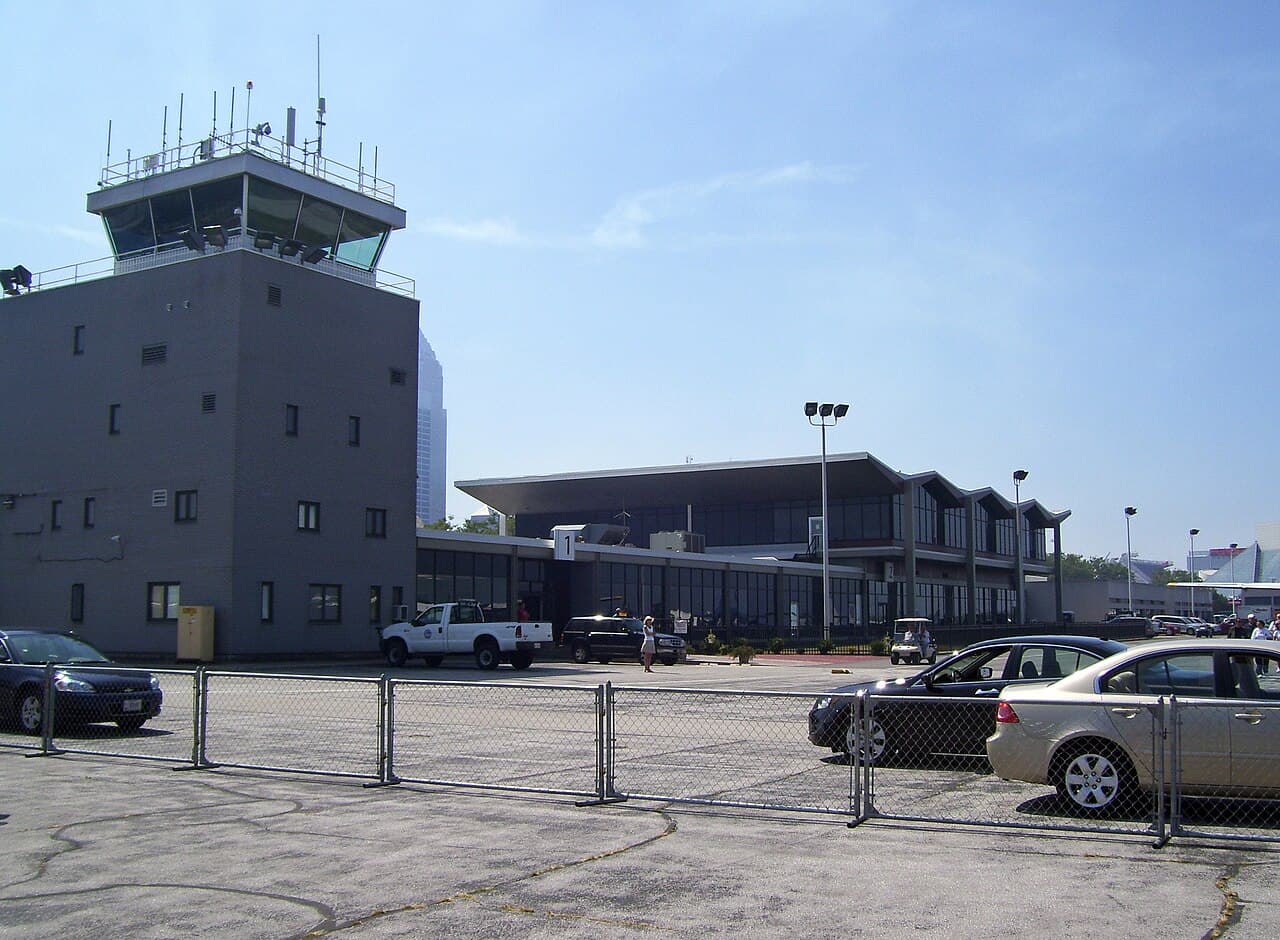
FAA Opposes Cleveland's Plan to Close Burke Lakefront Airport; Congressional Override Lacks Support
FAA Administrator Bryan Bedford on Friday publicly opposed Cleveland's effort to close Burke Lakefront Airport, while Ohio Sens. Bernie Moreno and Jon Husted indicated they would not support using Congress to bypass the FAA's traditional review process. FAA Opposes Closure "We need to talk about how to reopen new facilities, not how do we close existing valuable real estate," Bedford told News 5 Cleveland. The administrator said the FAA generally opposes airport closures and cited anticipated growth in air traffic, including drones and electric vertical takeoff and landing aircraft, as part of the agency's reasoning for retaining capacity. Cleveland Mayor Justin Bibb's administration has been pursuing the possible closure of Burke as part of a broader redevelopment of the city's lakefront. The city says the airport is underused and has operated at a multimillion-dollar deficit over the past two decades. Burke primarily serves business and general aviation aircraft, flight schools and medical helicopters. Cleveland has studied possible replacement uses for the property that include parks, trails, recreation facilities and other development. Congressional Path Loses Support The city has identified two potential routes for closing Burke , either through the FAA's standard process or through congressional action. Moreno said Friday that he would not support overriding the FAA, while Husted's office said any proposed change should proceed through the traditional FAA review process. Existing federal and state grant obligations could otherwise require the city to maintain Burke until 2039. Cleveland would also have to avoid taking additional grants that could extend those obligations. "Congress was the shortcut that Mayor Bibb was counting on to close the airport," AOPA Great Lakes Regional Manager Kyle Lewis said. "We have worked behind the scenes for months and had many productive conversations with local and federal officials on this important issue. We've said from the beginning that the city should work with the FAA to develop an airport master plan to provide an unbiased path forward for the airport that takes the needs and concerns of all parties into consideration."
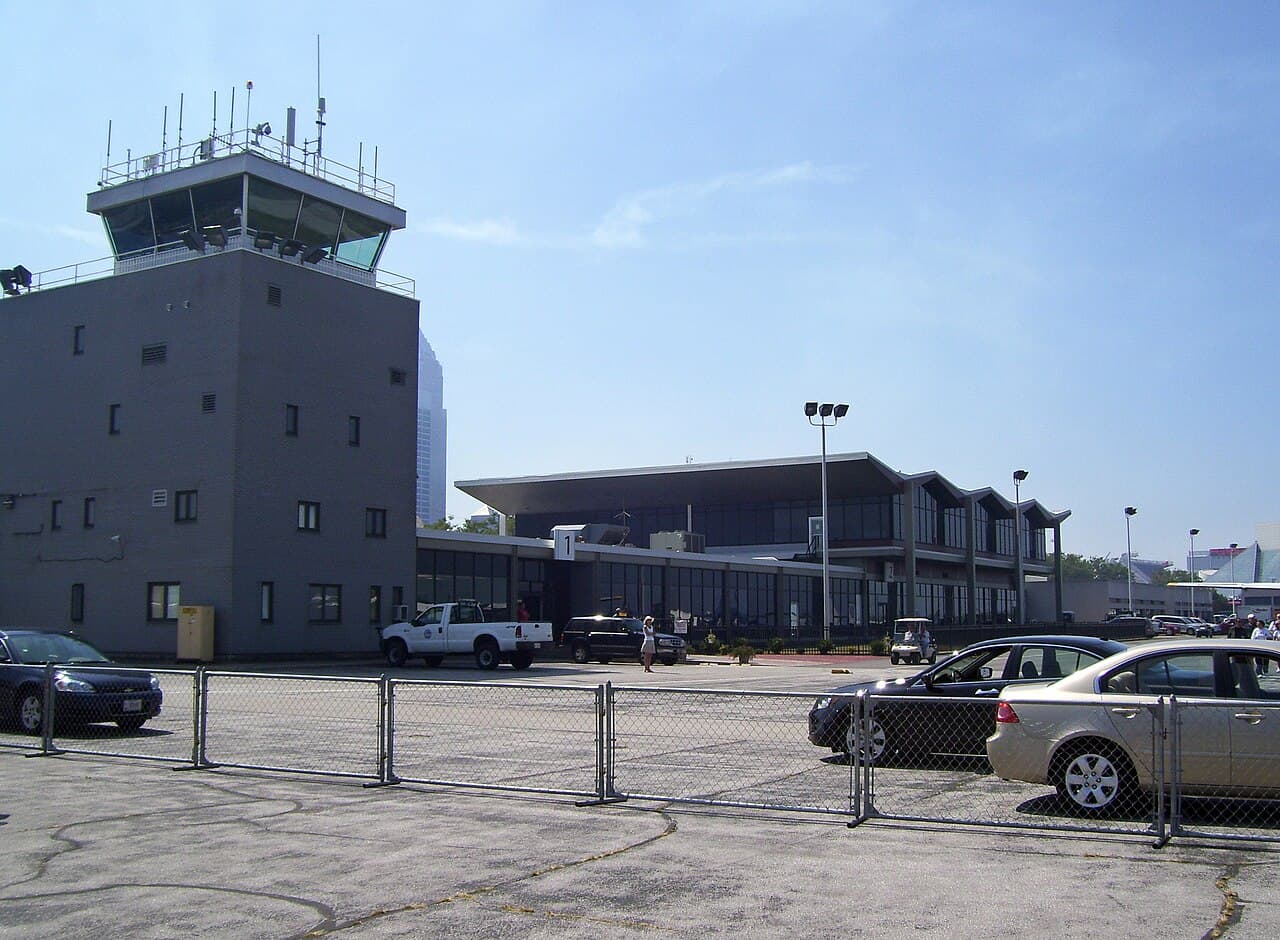
FAA and Ohio Senators Firmly Oppose Closure of Burke Lakefront Airport
Contact: Dan Hubbard, 202-431-5970, dhubbard@nbaa.org Washington, DC, Aug. 15, 2026 –  The National Business Aviation Association (NBAA) applauds the Federal Aviation Administration (FAA) and Ohio's U.S. senators for … Continued

Pilatus inaugurates $123M Schwarzhorn composite manufacturing center in Nidwalden
Pilatus has opened a new CHF 100 million ($123 million) composite manufacturing center in Switzerland as it prepares to expand the use of the lighter-weight materials in future aircraft. The new "Schwarzhorn" building in the Swiss canton of Nidwalden brings Pilatus' composite development and production operations together under one roof for the first time. The facility provides workspaces for about 300 employees. Pilatus CEO Markus Bucher said the project represents the company's largest investment in a single new facility to date. Pilatus has used fiber-reinforced composite materials for more than 40 years, although their use was traditionally limited to non-load-bearing parts such as covers and cowlings. That changed with the PC-24 twinjet, which uses composites in primary structures including load-bearing control surfaces. The lighter structures help reduce aircraft weight and fuel consumption, and Pilatus said it plans to increase its use of composites in the future. The Schwarzhorn facility handles the full production process, starting with delivery and storage of raw materials and continuing through component manufacturing, subassembly and surface treatment. Finished component kits can then be sent directly to final assembly. Pilatus said the manufacturing areas were also designed to accommodate new production and inspection technologies and greater automation in the future. Bringing engineering and manufacturing teams into the same facility is intended to improve cooperation between the two groups. "With this building, Pilatus is once again reaffirming its commitment to Switzerland as a place of innovation, manufacturing, and training," Bucher said. The facility also incorporates photovoltaic panels on its roof and facades, while waste heat from production processes and groundwater are used for heating and cooling. Pilatus is seeking LEED Platinum certification for the building, which would be a first for the company. The Schwarzhorn name refers both to a Swiss mountain and to the dark color of the composite components produced there.
The Daily Touch & Go
The day's best aviation news in your inbox. Free, no spam.