


Federal Agencies Respond to Numerous Drone Incidents at 2026 World Cup Venues in US and Mexico
Dozens of drones have been seized or mitigated by federal authorities at World Cup sites, highlighting ongoing security challenges during the international event.
The gist
Federal agencies have intercepted many unauthorized drones at World Cup locations, underscoring heightened airspace security efforts.
Throughout the 2026 FIFA World Cup, federal agencies have reported multiple incidents involving unauthorized drone activity over stadiums and fan zones in both the United States and Mexico. These interventions include dozens of drones being seized or otherwise mitigated to ensure the safety and security of event attendees and players. Given the massive crowds and global viewership, controlling unmanned aerial vehicles (UAVs) has been a priority for homeland security officials.
The presence of unauthorized drones near large public gatherings like the World Cup raises concerns about potential threats, including privacy violations, disruptions, and risks to manned aircraft operating in the vicinity. To address these challenges, federal authorities have deployed specialized counter-drone technologies and protocols that enable early detection and safe neutralization of rogue UAVs. Coordination among agencies including the Department of Homeland Security, FAA, and local law enforcement has been crucial to these efforts.
The United States and Mexico, hosting games in various metropolitan areas as part of the first World Cup staged across multiple countries since 1994, have invested heavily in comprehensive airspace security measures. This includes temporary flight restrictions (TFRs) and no-drone zones established around stadiums during match days. Despite these restrictions, the high volume of drone encounters demonstrates the difficulties in fully preventing unauthorized UAV flights during such a high-profile sporting event.
Historically, unauthorized drones around stadiums have posed sporadic but serious risks, with some incidents causing temporary suspensions of events or flights. The experiences during this World Cup underscore a growing need for robust integrated airspace management solutions that can handle the increased availability and attractiveness of drone technology to unauthorized users. Lessons learned here will likely inform future major event security planning.
Looking ahead, authorities will evaluate the effectiveness of their drone mitigation strategies deployed during the World Cup to refine tactics, technologies, and regulations. The event’s incidents serve as a reminder that with the growing ubiquity of UAVs, enhanced surveillance and rapid response capabilities remain essential to safeguarding major sporting events and maintaining controlled airspace.
As drone technology continues to evolve and proliferate, governments and event organizers worldwide will need to bolster cooperation and invest in innovative counter-UAV systems. Ensuring the safety of players, fans, and infrastructure during globally significant events like the FIFA World Cup hinges on staying ahead of emerging aerial threats.
More in Military/Defense
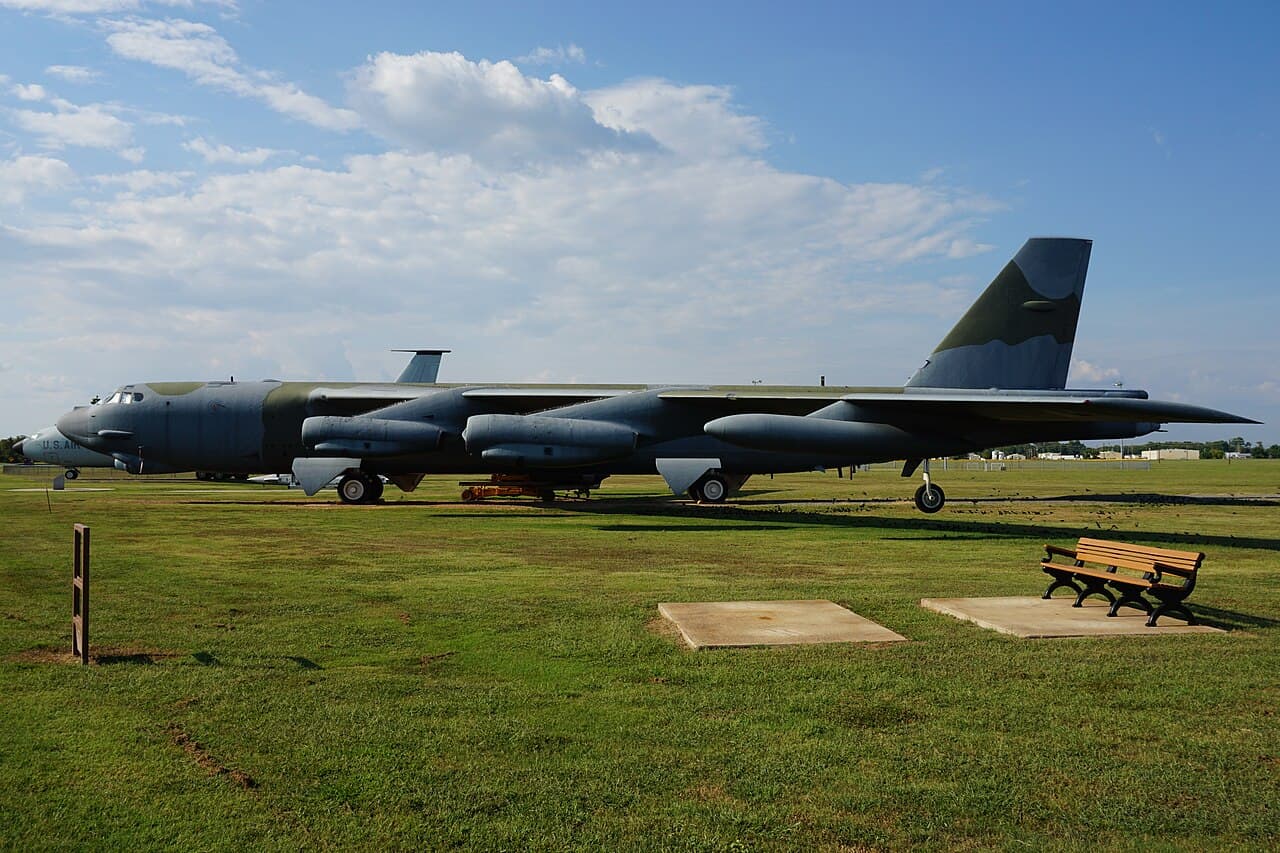
The Cold War Operation That Kept Nuclear-Armed B-52s Minutes From Soviet Airspace At All Times
The reason why the USAF kept nuclear armed B-52s on continual rotation just outside of Soviet airspace...for nearly a decade.
Air Force Awards Uncrewed Fighter Contracts
The service also selected six companies for mission autonomy software as part of its uncrewed fighter program.
Shield AI readies for X-Bat first flight with initial test aircraft complete
The autonomous vertical take-off and landing combat jet will make a maiden sortie towards the end of 2026. AI and autonomy developer Shield AI has now almost completed the first three test assets for its X-Bat collaborative combat aircraft (CCA) programme as it builds towards a first flight later this year. Speaking to FlightGlobal at…
Ukraine hits Moscow with heavy drone strikes, igniting oil refinery
The long-range bombardment shows how far Ukraine has come in developing its domestic weapons industry. Ukraine launched a significant attack against the Russian capital on 18 June, targeting energy infrastructure around Moscow with long-range drones. Dozens of one-way attack munitions breached Russia's air defences in the early hours, with strikes continuing into the day. The…