
Boeing advances new St Louis factory for sixth-generation combat jet production
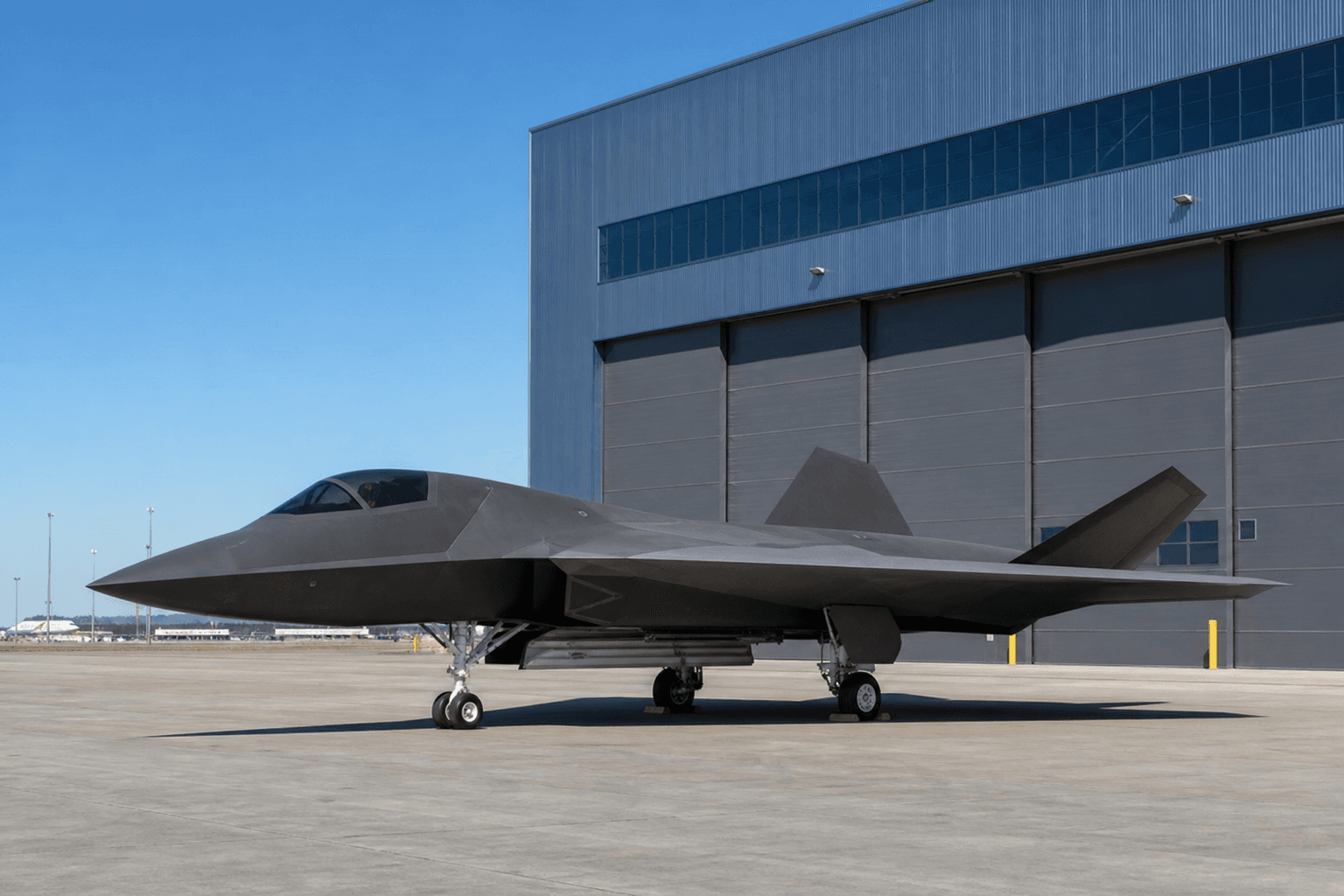
Although not officially tied to the US Air Force’s F-47 programme, the St. Louis plant is widely expected to assemble the new sixth-generation fighter. Boeing is progressing with construction of a new classified factory that will build the next generation of advanced combat aircraft. Work on the site began in 2024 across the street from the St. Louis, Missouri, headquarters of Boeing Defense, Space & Security (BDS). Known within the company as the Brownleigh Site, the new factory is located in the heart of Boeing’s combat aircraft production campus, which includes assembly lines for the F-15EX, F/A-18E/F and T-7A jets, as well as several types of precision munitions. The MQ-25 uncrewed refueller will be assembled at another plant in nearby Mascoutah, Illinois. “Momentum continues on our St. Louis expansion,” says Dan Gillian, general manager of Boeing’s air dominance unit. “We are expanding our defence footprint while supporting next-generation capabilities.” Images released by Boeing indicate that exterior work on the 102,000sq m (1.1 million sq ft) factory is now largely complete, with the roof, exterior panels and hangar doors all installed. Redevelopment of a disused McDonnell Douglas manufacturing site known as the Northern Tract is also progressing, including the installation of the first steel support columns. The Brownleigh Site, along with the rest of Boeing’s fighter production campus and delivery centre, is adjacent to St. Louis Lambert International airport. Although not officially tied to the US Air Force’s Next Generation Air Dominance (NGAD) programme, the factory being developed at the Brownleigh Site is expected to produce Boeing’s developmental F-47 fighter, which will be the Pentagon’s first frontline sixth-generation tactical jet. Boeing has long been cagey about the $1.8 billion factory, which the company began first developing in 2023. Active construction began in 2024, well before Boeing had secured a competitive win for the NGAD contract against rival Lockheed Martin. The new advanced combat aircraft factory under construction at the Brownleigh Site is located in close proximity to Boeing’s defence business headquarters and the company’s fighter delivery centre at St. Louis Lambert International airport. Credit: Screenshot from Google Earth During a 2024 FlightGlobal visit to BDS headquarters in St. Louis, Boeing executives described the advanced combat aircraft plant as a “bet” on the company’s future. A billboard visible outside the Brownleigh Site construction area prominently featured a sixth-generation-style black jet, proclaiming Boeing's commitment to fighter manufacturing. That risky bet paid off. Boeing won the NGAD competition in 2025 and is now progressing toward the first flight of an F-47 prototype, currently planned for 2028. The airframer is also a presumptive finalist for the US Navy’s F/A-XX sixth-generation fighter, alongside rival Northrop Grumman. The expansion of Boeing’s industrial footprint in St. Louis has likely contributed to the confident proclamations from BDS chief executive Steve Parker that the company is capable of delivering both the F-47 and F/A-XX, should Boeing also be selected for the navy programme. "Can Boeing do both? Absolutely," Parker said last year at the 2025 Paris air show. Parker affirmed that stance in a recent interview with FlightGlobal. He also describes the F-47 contract as a “generational windfall” for Boeing while declining to give specific progress updates on the secretive programme. "What I will tell you is that it's going very well,” Parker says. “We'll let our actions speak more so than words." The US Air Force has suggested it will field at least 185 F-47s, which will have an unrefuelled combat radius of 1,000nm (1,850km), a top speed of Mach 2 and the ability to team with the new category of uncrewed fighters currently in development, including the General Atomics Aeronautical Systems FQ-42 and Anduril Industries FQ-44. Boeing is separately set to benefit from a large increase to the USAF’s planned buy of F-15EX fighters. The latest fiscal year 2027 Pentagon budget request would increase that fleet size as high as 268 jets, elevating Boeing to full-rate production of 24 F-15EXs annually by 2028-2029. Israel also aims to operate a total of 50 F-15IAs , an Israel-specific variant of the F-15EX.