

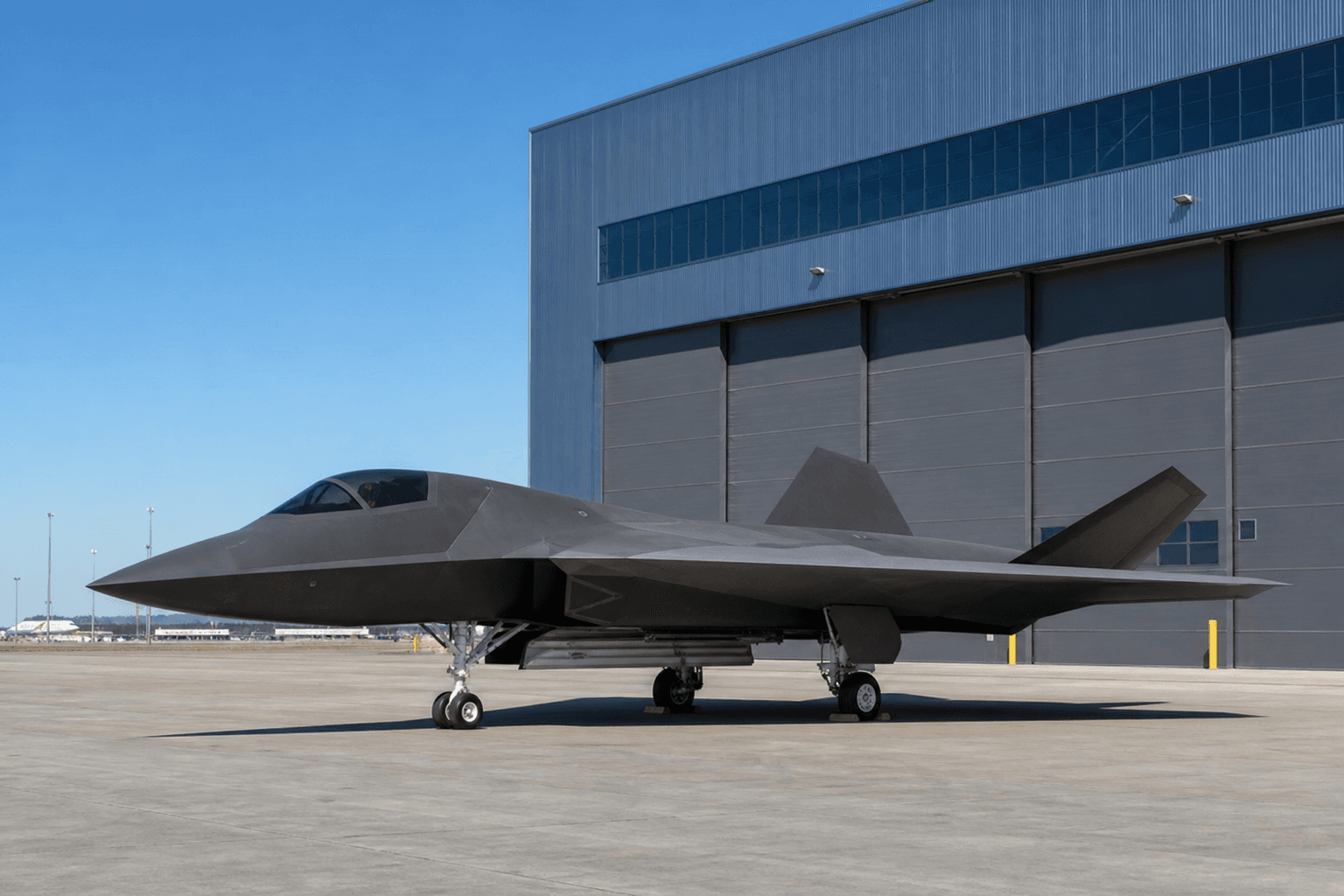
Illustration: The Touch & Go
Boeing advances new St Louis factory for sixth-generation combat jet production
Boeing is completing construction of a new 1.1 million sq ft plant in St Louis to assemble its F-47 sixth-generation fighter, aiming for a 2028 prototype flight.
The gist
Boeing's new St Louis factory nears completion as it prepares to build the F-47 sixth-gen fighter, targeting 2028 test flights.
Continuing coverage
All Boeing →- USAF's New T-7A Red Hawk Trainer Set to Revolutionize Pilot Training by 2027
- FAA imposes Canadian operation restrictions on 1,000 US aircraft over 5G altimeter risks
- FAA expands 737 Max directive after new overheating cabin incidents
- FAA Lets Boeing Self-Certify 737 MAX Deliveries on Alternating Weeks Under Limited ODA
- Boeing Launches Comprehensive Brand Review Amid Recovery Acceleration
Boeing is progressing steadily with construction on a large new manufacturing facility in St Louis, Missouri, set to produce its next-generation combat aircraft. The factory, known internally as the Brownleigh Site, spans around 102,000 square meters (1.1 million square feet) and is located within Boeing Defense, Space & Security's (BDS) established combat aircraft campus. This site, adjacent to St Louis Lambert International Airport, already hosts production lines for Boeing’s F-15EX, F/A-18E/F, and T-7A jets, alongside precision munitions manufacturing. Boeing’s decision to expand this campus reflects a strategic investment in its advanced air combat capabilities.
The Brownleigh Site project emerged from Boeing’s efforts starting in 2023, with active construction kicking off in 2024. Despite the facility’s initially secretive nature and the absence of any official linkage to specific Air Force programs at the time, it soon became widely understood that the new plant would assemble Boeing’s developmental F-47 fighter. The F-47 is intended as the Pentagon's first frontline sixth-generation tactical fighter jet, currently a high-stakes program within the overarching Next Generation Air Dominance (NGAD) initiative.
Images recently released by Boeing reveal that exterior construction on the Brownleigh facility is mostly complete, with the roof, exterior panels, and hangar doors installed. Concurrently, redevelopment work continues on the adjacent Northern Tract, a formerly disused McDonnell Douglas manufacturing area, where steel framework erection has begun. Together, these projects significantly expand Boeing’s footprint in the heart of its historic St Louis combat aircraft production hub.
Boeing’s general manager of air dominance, Dan Gillian, characterized the expansion as a continuation of Boeing’s commitment to next-generation capabilities and a significant defense footprint growth. Boeing executives previously described the plant as a pivotal 'bet' on the company’s future in fighter manufacturing. The gamble paid off when Boeing won the NGAD competition in 2025, propelling the company forward with the F-47 prototype, which is planned to make its maiden flight by 2028.
Boeing also remains a leading contender for the US Navy’s upcoming F/A-XX sixth-generation fighter contract alongside Northrop Grumman. The expanded St Louis complex aligns with CEO Steve Parker's assertions that Boeing is capable of concurrently producing both the Air Force's F-47 and potentially the Navy’s F/A-XX fighters. Parker has termed the F-47 contract a 'generational windfall' for Boeing and has expressed confidence in the program's progress while maintaining operational secrecy about specific milestones.
Specific performance details for the F-47 outlined by the US Air Force include an unrefueled combat radius of approximately 1,000 nautical miles (1,850 km), a top speed of Mach 2, and the ability to integrate and coordinate with emerging classes of uncrewed fighter drones like General Atomics’ FQ-42 and Anduril’s FQ-44. These capabilities underscore the F-47’s role as a cutting-edge platform intended to dominate future air combat through manned-unmanned teaming and advanced tactical reach.
In addition to the next-generation fighter development, Boeing is benefiting from the Pentagon's increased purchase plans for its current F-15EX fleet. The fiscal year 2027 budget request raises the intended number of F-15EX jets to as many as 268 units, enabling Boeing to ramp up production to 24 aircraft annually by 2028-2029. Internationally, Israel is also set to acquire 50 of a variant tailored from the F-15EX design, designated the F-15IA, expanding Boeing’s export footprint.
The simultaneous growth of both legacy and cutting-edge fighter programs illustrates Boeing’s multi-pronged strategy to secure its position as a leader in manned air combat aircraft for the coming decades. The Brownleigh Site’s initial build-out marks a critical milestone in readiness to mass-produce the F-47, bolstering the US Air Force’s future tactical capabilities while supporting Boeing’s long-term defense manufacturing presence in St Louis.
Frequently asked questions
- What is the purpose of Boeing's new factory in St Louis?
- Boeing's new factory in St Louis, known as the Brownleigh Site, is being built to assemble the F-47 sixth-generation fighter jet.
- When is the F-47 fighter prototype expected to have its first flight?
- The F-47 prototype is planned to make its first flight in 2028.
- What other production lines are located near the new Brownleigh Site?
- The Brownleigh Site is near assembly lines for the F-15EX, F/A-18E/F, T-7A jets, and precision munitions in Boeing’s St Louis combat aircraft campus.
Read more
All Military/Defense →
GCAP Awards £4.6bn Contract for Sixth-Gen Fighter Advanced Concept Phase
Three-nation funding allocation covers activities until end of 2027. The trinational Global Combat Air Programme (GCAP) has entered its next phase, with the award of an 18-month contract funding the completion of its advanced concept and assessment phase. Announced on 3 July – two days after its signature – the new allocation of £4.6 billion…

ZeroAvia and Marshall Aerospace Partner to Explore Hydrogen-Electric Systems for Military Aircraft
U.K.-based ZeroAvia and Marshall Aerospace said Wednesday they are collaborating to evaluate hydrogen-electric propulsion and power systems for future defense aircraft applications. The work will combine ZeroAvia's hydrogen-electric propulsion technology, which the company has tested in flight, and Marshall's experience in military aircraft modification, integration, certification and fuel systems. The effort is in an early stage and will focus on prototyping and evaluation before any decisions are made on deployment or operational use. "This collaboration brings together complementary UK aerospace expertise to turn the potential of hydrogen-electric propulsion into real military capability," ZeroAvia Executive Chair Christine Ourmières-Widener said. "Defense applications are already demanding greater endurance, lower thermal signatures and more operational flexibility, and we're focused on proving where this technology fits." ZeroAvia's ZA601 electric engine reached a separate certification step earlier this year when the FAA published final special conditions for the 600-kW engine, which the company plans to use in its ZA600 hydrogen-electric powertrain for 10- to 20-seat commercial aircraft.
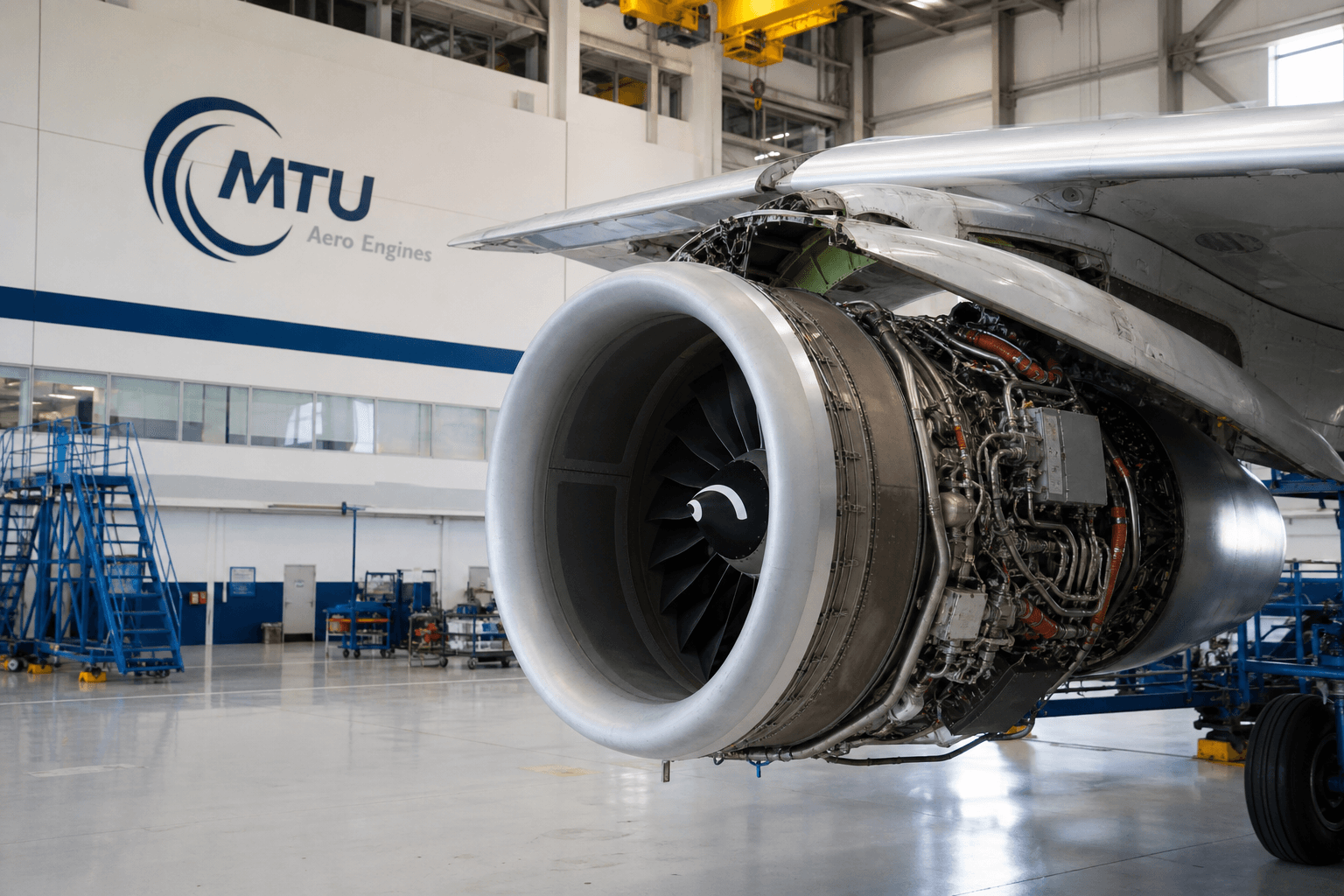
MTU Aero Engines launches expanded Fort Worth hub with debut CFM Leap-1B induction
German engine systems specialist marks official opening with induction of first Leap-1B. MTU Aero Engines is probably best known for its ties to Pratt & Whitney, as a risk-share partner on the International Aero Engines V2500 and its successor, the Geared Turbofan (GTF). The German company holds up to an 18% share in the GTF, depending on the variant, with responsibility for the low-pressure turbine and first four stages of the high-pressure compressor. However, on the maintenance, repair and overhaul side – from which MTU derives more than two-thirds of its revenues – much of the recent focus has been on the RTX subsidiary's competitor, CFM International. MTU has been ramping up its presence in the CFM aftermarket as well as looking to boost its capabilities with GE Aerospace, which owns CFM alongside France’s Safran Aircraft Engines. The Munich-based company on 8 July officially unveiled its expanded Fort Worth MRO hub after a $120 million investment, and announced the induction of the Texas operation's first CFM Leap engine, a -1B for long-standing customer Brazilian airline GOL. Munich-based MTU describes the 43,000sq m (463,000sq ft) facility as its North American flagship. Fort Worth is one of eight global sites and the only one in the MTU network awarded "Premier" status by CFM – the engine maker's highest level of approval. The licence allows MTU to carry out a range of maintenance services including full overhauls and in-house repairs on Leap and CFM56 engines. MTU hopes to shortly induct at Fort Worth its first Leap-1A – the version of the engine for the Airbus A320neo family, although it will not give details on customer discussions. It expects the global Leap market to be three times as big as that for the CFM56, peaking at some 8,000 shop visits a year by 2045. MTU also plans to extend its authorisations there by 2029 to the GE Aerospace GEnx, which vies with the Rolls-Royce Trent 1000 to power the Boeing 787. "As one of the world's leading engine MRO providers, we are systematically expanding our global footprint," says chief executive Johannes Bussmann, a former Lufthansa Technik head who took over from Lars Wagner in September. "Fort Worth will be a cornerstone of our strategy to support next-generation engine programmes at scale." MRO is the fastest growing segment for MTU – with shop visits split roughly two-thirds in favour of the V2500/GTF and one third CFM/GE. However, in terms of workload value the balance shifts more towards 50/50 because MTU carries out complex repairs on GE engines, such as the turbine centre frame on the GEnx. The company – which also has MRO operations in Hanover and Berlin, Germany, and Zhuhai in China as well as Serbia, Canada, and Poland – claims to be the number two engine aftermarket service provider by shop visits, with an annual tally of more than 1,400, and to have the broadest portfolio of manufacturer authorisations in the market, with more than 30 types. The ongoing durability issues with the GTF have boosted demand for its services, with the engine accounting for about 40% of its commercial maintenance revenues last year, according to MTU's annual report. The V2500 as well as the GE GE90 and CF6-80 were also significant contributors to its MRO turnover. Military muscle While civil engines dominate at MTU, military activities remain vital. As Germany's propulsion champion it contributed to the development of the powerplants for the Airbus Defence & Space A400M and Eurofighter Typhoon among others, and continues to build elements of the engines. However, the recent cancellation of the Franco-German-Spanish New Generation Fighter (NGF) dealt the defence side of the business a blow. Bussmann said at June's ILA show in Berlin that the company was ready to "move on" and work with any European partners on an engine for one or more sixth-generation combat aircraft, which he insists Berlin and Europe needs to maintain sovereignty and industrial and technological capabilities in defence. MTU had been collaborating with Safran on NGF, part of the wider Future Combat Air System (FCAS) project. He insisted work done by the European Military Engine Team, formed by MTU and Safran in 2021, was not wasted because valuable intellectual property would be retained. A partnership with Rolls-Royce, part of the Global Combat Aircraft Programme (GCAP) between Italy, Japan and the UK, is one possibility, but any progress will be down to largely to politicians rather than industry, admits Bussmann. MTU has also expanded its portfolio into the fast-emerging area of small turbojet engines for military uncrewed air vehicles, acquiring in April Cologne-based start-up AeroDesignWorks. The company, a 2011 spin-out from the DLR German aerospace research centre, was specialising in gas turbines with a thrust of around 90lbf (400N). It was part of a decision by MTU, which had already in 2023 bought electric motor supplier eMoSys, to "enlarge our product portfolio in the UAV sector", says Bussmann. "Our strategy is to build a family of engines for drones and to be a major provider of this technology in Europe." Additionally, MTU is keeping its hand in when it comes to future sustainable advances. In early July it announced a joint venture with Airbus to develop and commercialise a "revolutionary" hydrogen fuel cell powertrain – following a memorandum of understanding signed at last year's Paris air show.
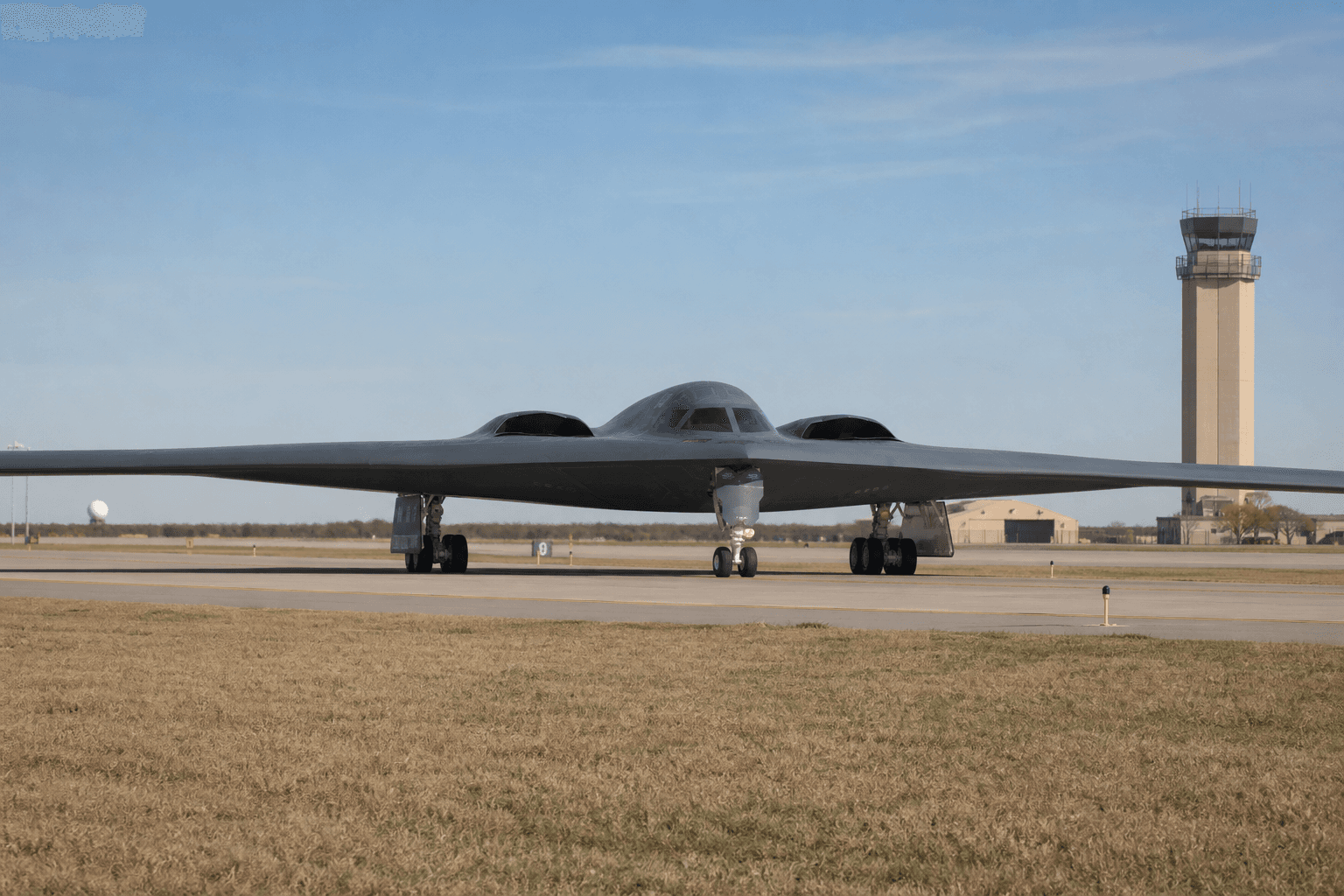
B-2 Spirit Bomber Equipped with Functional Crew Rest Facilities for Ultra-Long Missions
The Northrop B-2 Spirit is not designed for comfort; it is designed survive the first night of war. It is designed to be one of the first aircraft to kick in the proverbial door and carry out some of the operation's opening strikes. Unlike other bombers in service with the US, Russia, and China, it is able to penetrate enemy air defenses. To avoid the risk of being struck on the ground and to maximize surprise and uncertainty, these bombers often take off directly from their home base at Whiteman AFB, Missouri.
The Daily Touch & Go
The day's best aviation news in your inbox. Free, no spam.