


Garmin launches G2000 PRIME flight deck for high-performance piston and electric aircraft
Garmin unveiled its all-touchscreen G2000 PRIME integrated flight deck designed for Class I and II piston and electric aircraft, featuring advanced display and safety technologies from the G3000 PRIME platform.
The gist
Garmin's new G2000 PRIME flight deck brings cutting-edge touchscreen technology and enhanced safety features to high-performance piston and electric aircraft.
Garmin announced the release of the G2000 PRIME integrated flight deck aimed at high-performance Class I and II piston and electric aircraft. This system marks an expansion of Garmin's advanced flight deck offerings, incorporating cutting-edge features and interface designs similar to those introduced with the company’s G3000 PRIME product line. The G2000 PRIME is tailored specifically to meet the operational demands of light general aviation aircraft that require sophisticated avionics solutions.
Central to the G2000 PRIME’s design are two large 14-inch primary display units that utilize edge-to-edge touchscreen glass, optimized for sunlight readability, ensuring pilots can clearly see flight data under varying lighting conditions. These displays boast processing power more than double that of earlier systems, accompanied by connectivity speeds advertised to be up to 100 times faster, enhancing system responsiveness and data processing capabilities during flight.
In addition to the primary displays, the G2000 PRIME includes 7-inch secondary touchscreen displays which serve multiple roles depending on the aircraft installation. Besides functioning as system control and data entry consoles, some configurations allow the secondary displays to act as standby flight instruments, providing vital backup flight data if required. The interface supports multi-touch input, capable of recognizing up to 10 simultaneous gestures, and integrates hand-stabilization technology designed to maintain control accuracy during turbulent flight conditions.
Flight planning and safety receive significant enhancements through the system's software suite. Graphical flight plan editing allows pilots to visualize route modifications, while taxiway routing aids in ground navigation. A Modified Flight Plan function previews potential route changes before activation, reducing cognitive workload. Pilots can pre-configure an Emergency Return function during system initialization, streamlining critical in-flight decision-making processes.
The G2000 PRIME also integrates smart checklists linked with the crew alerting system, enabling automatic opening of relevant checklist items based on alerts and verifying switch or system positions as per procedural requirements. Its compatibility with advanced Garmin safety technologies such as Autoland, Smart Glide, Smart Rudder Bias, Electronic Stability Protection, Emergency Descent Mode, and autothrottle expands its operational safety envelope significantly.
Airport surface operations benefit from Garmin's suite of situational awareness tools incorporated into the G2000 PRIME. Features like Runway Occupancy Awareness, 3D SafeTaxi, and SurfaceWatch provide pilots with real-time spatial information about runway and taxiway status, reducing the risk of runway incursions or navigation errors on the ground. These tools provide enhanced situational awareness especially during low-visibility or complex airport operations.
Connectivity options built into the G2000 PRIME include LTE, Wi-Fi, Bluetooth, SiriusXM, and Garmin Connext satellite services, supporting comprehensive data connectivity for inflight weather, traffic, and other critical information. These capabilities align with the demands of modern GA pilots for integrated and connected avionics environments to support safe and efficient flight operations.
Garmin has indicated that aircraft manufacturers will soon announce specific models planned to incorporate the G2000 PRIME system, signaling forthcoming market availability. The introduction of this flight deck coincides with Garmin’s recent release of the AXIS panel suite, a streamlined avionics solution combining multiple flight and communication functions into a single display targeted at general aviation aircraft.
The G2000 PRIME represents Garmin’s commitment to extending sophisticated flight deck technologies to a wider range of aircraft, delivering enhanced safety features, faster processing, and high-integrity situational awareness. It exemplifies the company’s strategic focus on integrating touchscreen interfaces and smart technologies into light piston and electric aircraft cockpits, meeting growing pilot expectations for intuitive and connected flight decks.
Frequently asked questions
- What aircraft types is the Garmin G2000 PRIME designed for?
- The G2000 PRIME is designed for high-performance Class I and II piston and electric aircraft, targeting the light general aviation segment.
- What are the main display features of the G2000 PRIME flight deck?
- It features two 14-inch edge-to-edge sunlight-readable touchscreen primary displays with twice the processing power of earlier systems, plus 7-inch secondary touchscreen displays for control, data entry, and standby instrument functions.
- Which safety and operational technologies does the G2000 PRIME support?
- The system supports Garmin's Autoland, Smart Glide, Smart Rudder Bias, Electronic Stability Protection, Emergency Descent Mode, autothrottle, as well as surface tools like Runway Occupancy Awareness, 3D SafeTaxi, and SurfaceWatch.
Read more
All Aviation Safety →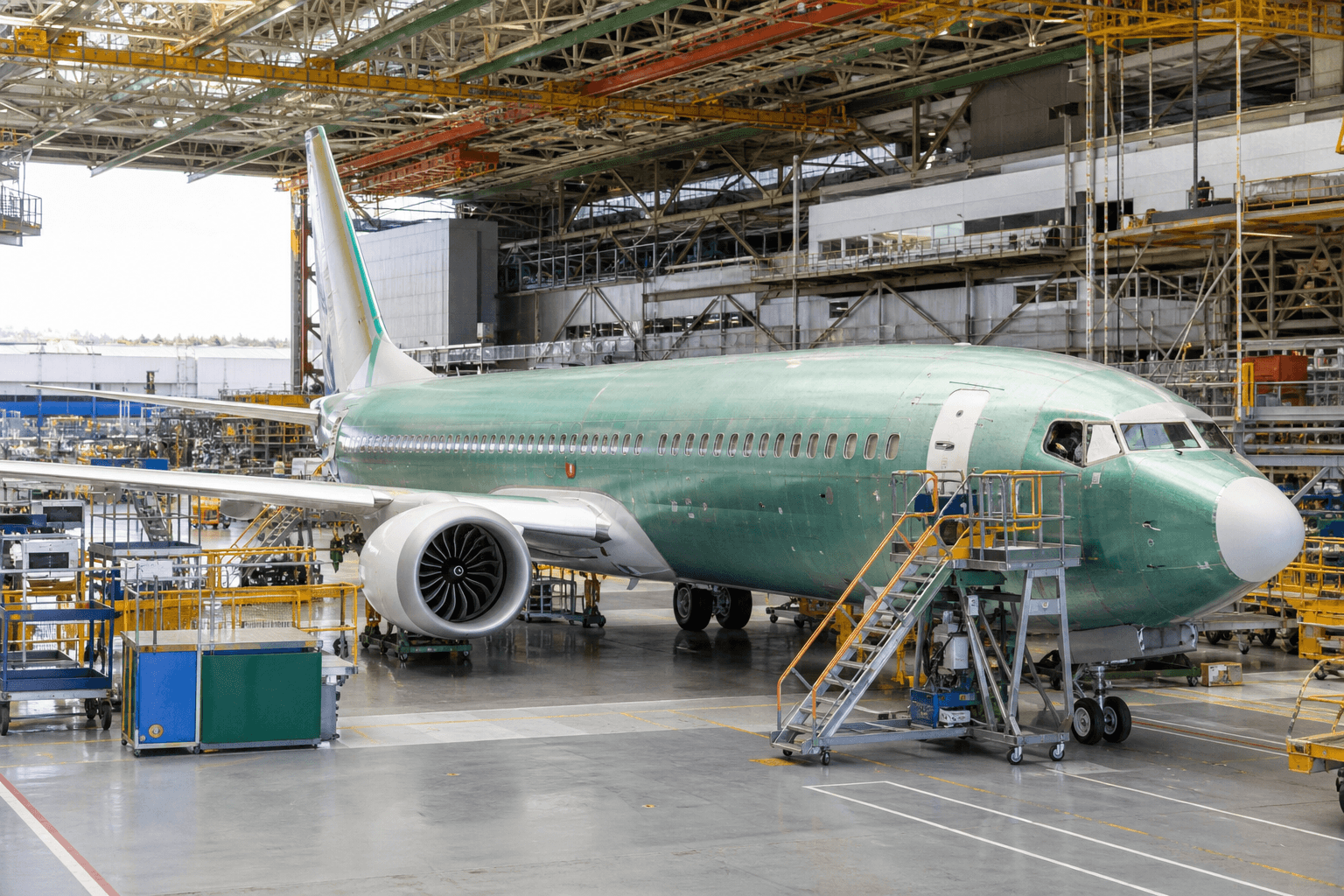
Boeing advances 737 Max and 777-9 programs with key system redesigns and production ramp-up
Executives detail redesigns of the 737 Max’s engine anti-ice and angle-of-attack systems, alongside flight-test headway with new widebody-twin. Ahead of this year’s signature aviation event in Farnborough, Boeing has more wind at its back than at any time in recent memory. The company has hiked production to rates not seen in years, finalised two 737 Max system updates and is close to securing the Max 7’s long-delayed certification, with approval for the Max 10 to follow. Boeing also just opened a new 737 production line in Everett and is ticking off regulatory boxes for certification of its delayed 777-9. Executives have disclosed more about those programmes in recent days, while insisting the airframer has made progress addressing quality and cultural issues. Boeing has said it expects the Federal Aviation Administration will certificate the Max 7 this summer, although on 9 July The Wall Street Journal reported that the approval could come as early as this month. Boeing vice-president of 737 development Chris Payne says the company has now completed all Max 7 certification flight tests and 95% of “certification deliverables” due to the Federal Aviation Administration (FAA). Anti-Ice Redesign He also detailed the redesign of the 737 Max’s engine anti-ice system, a change required because the existing system in certain circumstances can cause engine inlet inner barrels to overheat. The changes notably involve installing “turbulators” on the forward fan case that sits ahead of the Max’s twin CFM International Leap-1B engine. The turbulators are “literally a washer and fastener that go through the inlet in a circumferential row around the engine”, says Payne. Their purpose is to make air entering the engine swirl, which draws in colder air and reduces the temperature “at the critical point” by 93°C (200°F). “It does a fantastic job of really taking care of the temperature conditions,” Payne says. “It’s a highly integrated solution for the aircraft and the engine.” The redesign also includes replacing the forward fan case, which has “acoustic perforations” intended to reduce noise, with a perforation-free “hard-walled” case. Contrary to expectations, those perforations did not reduce noise; the hard-walled case is actually quieter and the change ensures sufficient “fan-flutter margin”, says Boeing senior vice-president of development programmes Mike Sinnett. The anti-ice redesign also includes a new “flow restrictor”, limiting how much hot air strikes critical components, insulation blankets around inlet ducts, circuit breakers, wiring, a “fault redundancy” pressure switch and an integrated air systems controller for the engine anti-ice valve. “We have done all of the [anti-ice] certification testing. We’ve done all the analysis, all the flying, all the lab testing,” Payne says. “We’ve submitted almost all of the deliverables for it. We’re just in the last throes of getting certified.” With the 737 Max 10 Boeing will introduce its “enhanced AoA” system. Source: AirTeamImages Payne says Boeing has meanwhile completed 98% of the Max 10’s flight-test programme. It has two planned flight tests remaining and should complete those this quarter, putting the company on track to achieve certification for the variant before year-end. Payne also says that last quarter Boeing completed level 3 of the Max 10’s “development assurance” work – the regulatory framework used to demonstrate adherence to processes. It has also finished 60% of Development Assurance Level 4 (the final level), and expects to be done this quarter. Additionally, Boeing has submitted 30% of required documents for the Max 10’s system safety analysis, Payne adds. With the Max 10, Boeing is introducing another change, to the angle of attack (AoA) system. It undertook that project because two Max 8 crashes, in 2018 and 2019, revealed that failure of one of the Max’s two external AoA sensors can trigger the Maneuvering Characteristics Augmentation System (MCAS), which trims the aircraft nose-down and is supposed only to activate to counteract excessive nose-up pitch. That sequence preceded both Max crashes, putting those jets into dives from which the pilots did not recover. In addition to MCAS issues, investigators cited pilot workload as contributing to the accidents. That is because AoA failures can activate the stall-warning stick shaker even if the aircraft is not stalling and prompt “five different” cockpit warnings, including false alarms, says Boeing 737 deputy chief test pilot Bill Quashnock. For that reason, Boeing developed its “enhanced AoA” for the 10. The redesign simplifies “flight deck effects” by identifying AoA faults, inhibiting stick shake and displaying a simple message to pilots: “AoA Fault”. “Our engineers have run all the simulations, showing that for pretty much every conceivable error that we know, the monitors will catch it,” Quashnock says. As a backup, Boeing’s enhanced AoA system includes a cockpit switch for pilots to deactivate the stick shaker. Following Max 10 certification, Boeing will deliver other Max models with the improved system, and within two years retrofit in-service jets. Boeing has for two years been delivering Max with “provisions” enabling technicians to complete the updates in as little as 2h. Some 1,200 jets, about half of the in-service fleet, have those provisions. Updates to other aircraft will take several days, Boeing says. Boeing’s North Line became operational on 6 July when workers started assembling a 737 Max 10 for WestJet. Source: Jennifer Buchanan/Seattle Times/Pool Perhaps the most visible sign of Boeing’s upswing lies within Everett hangar space that until several years ago housed 787 assembly (a jet now built entirely in South Carolina). On 6 July, Boeing began operating a 737 Max assembly line in that space, adding to three lines in Renton. The company says the extra space will allow it to ramp 737 output from 47 to 52 jets monthly, with additional rate hikes to follow. "Long term, we really want to use the space to support the [Max] 10,” says Boeing Commercial Airplanes chief executive Stephanie Pope. Though the 777-9’s approval is seven years behind Boeing’s original schedule, executives insist the project is progressing, noting the company has completed half planned 777-9 certification flight tests. It aims to start delivering 777-9s next year. Boeing 777-9 vice-president Terry Beezhold notes many certification flight tests require the aircraft be in its final configuration. Boeing has made several updates to the jet in recent years, contributing to delays. “We’ve had a number of lay-ups throughout our test programme, updating the aircraft from its original build,” he says. “We are in the final phases of completing those lay-ups.” Two 777-9 test aircraft (WH001 and WH002) are now in the “final certification configuration”. WH001 is ready to begin certification flight tests and WH002 will come online in “a couple of weeks”, Beezhold says. Boeing is now working through the final step, stage 5, of the 777-9’s Type Inspection Authorization (TIA) – the document confirming an aircraft meets certification requirements and approving certification flight tests. Historically the FAA approves TIAs in their entirety but has been approving the 777-9’s authorisation in stages. When all primary 777-9 certification work is complete, Boeing will turn its focus to securing 180min ETOPS (extended twin-engined operations) approval for the type. It may later work with airlines to receive longer-duration approvals, Beezhold says
Atlanta Hartsfield Shuttle Bus Manager Sues City After Stabbing by Homeless Attacker
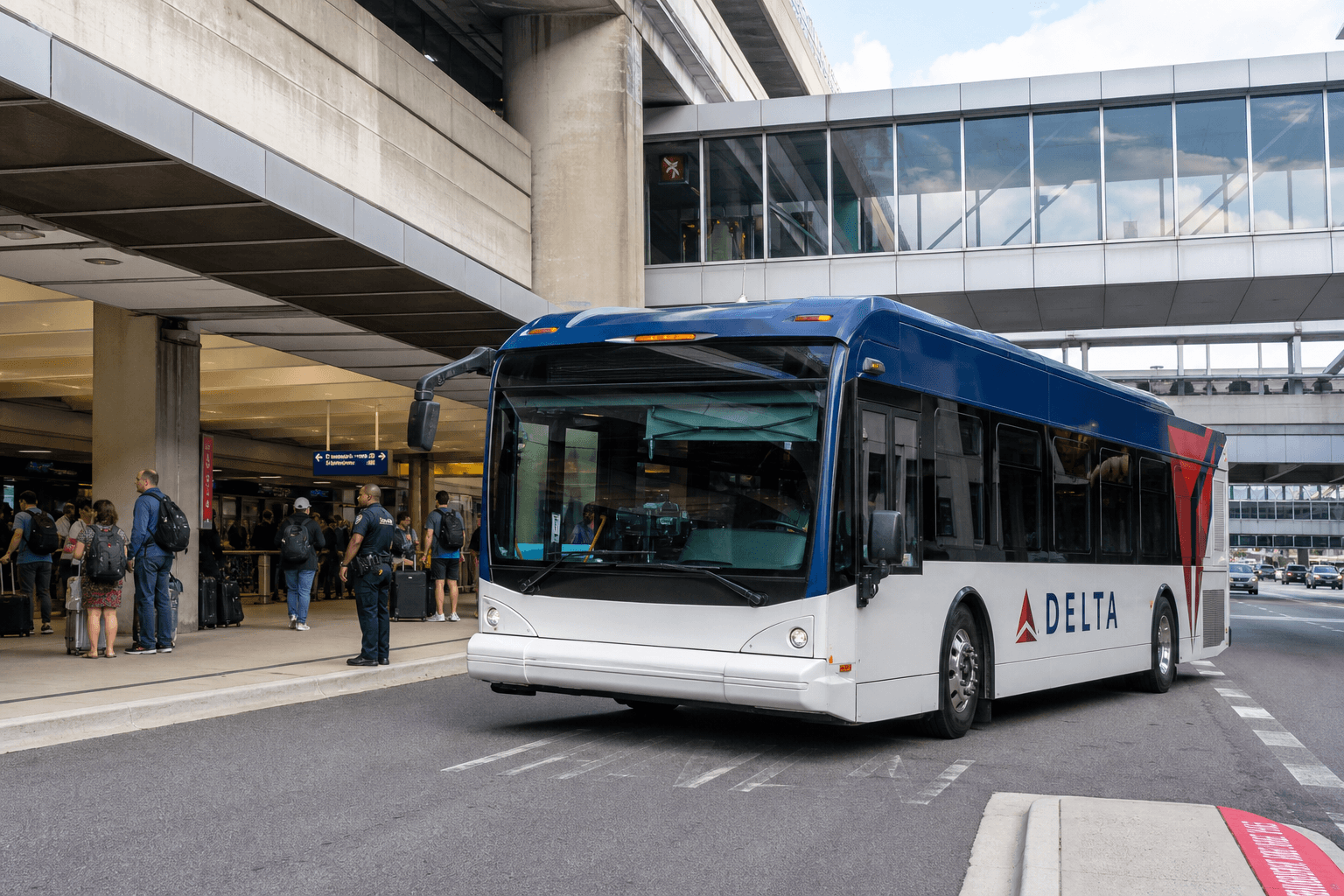
A shuttle bus manager who was violently assaulted, stabbed, and slashed by a homeless person as he defended a female bus driver at Atlanta Hartsfield International Airport (ATL) is suing the City of Atlanta for negligence, accusing the city of not doing enough to ban law-breaking vagrants from the world’s busiest airport in the months before the attack. Kwan Lawrence had only been working as a shuttle bus manager at ATL for a month before the violent and sustained assault that left him with a stab wound to his eye, a deep laceration across his nose, and a broken right wrist. Lawrence now lives with Post-Traumatic Stress Disorder from the attack, anxiety, and sleep disorders. His medical bills since the September 2024 assault have now exceeded $80,000. According to a recently filed lawsuit in the Superior Court of Fulton County, which covers Atlanta Hartsfield, Lawrence’s attorney says the airport had experienced a “significant problem with homeless persons coming to and being present at the Airport without purpose to be there,” for several years. The lawsuit alleges that homeless people were responsible for “serious criminal activity at the Airport premises, including numerous assaults on passengers and employees present at the Airport.” The Airport, which is owned by the City of Atlanta, did not, however, take reasonable steps to prevent this criminal activity, the lawsuit alleges. On September 11, 2024, Lawrence was on duty in the main terminal when he received a report from a shuttle bus driver that a homeless person was riding her shuttle and acting in a “hostile manner” towards her and other passengers, including making “lewd, sexually threatening comments” towards the driver. Lawrence called the driver to return to the terminal, which she immediately did. When the bus pulled up at the terminal, the perpetrator initially got off the bus. Lawrence stood between the driver and the bus entrance as the perpetrator continued to make threatening comments towards the driver. Lawrence told the homeless person that he wasn’t allowed back on board the bus, at which point the perpetrator threatened to kill Lawrence. He then attempted to reboard the bus. Lawrence stood in his way and was subjected to a violent assault. The aftermath of the vicious assault suffered by Kwan Lawrence. The perpetrator pulled a knife on Lawrence, slashing him across the face and stabbing him above the eye. In the melee, Lawrence broke his right wrist. Lawrence had to be rushed to the hospital, while the perpetrator was allowed to flee the scene on foot. Only in the wake of this incident did the City of Atlanta set up a task force to combat homelessness at the airport. “Defendant [the City of Atlanta] knew or should have known that a significant number of violent crimes had been committed on the Airport premises related to the problem of homeless persons loitering on the Airport premises and engaging in criminal activity,” the lawsuit continues. The complaint alleges that the City was negligent in failing to protect passengers and employees from this criminal activity. Unfortunately, it’s not just Atlanta Hartsfield that has seen a spike in homeless persons using its facilities in recent years. A number of major airports around the world have experienced serious issues, and some have gone to great lengths to stop homeless persons from using terminal buildings as a shelter. Last May, for example, it emerged that Madrid Barajas Airport in Spain was stationing security guards at every single entrance and exit to the terminals after the number of homeless people sleeping at the airport had swelled to 500 per night. Entry to the terminal building is now only permitted with a boarding pass and loved ones must say goodbye to their loved ones at the entrance. Spain’s state-owned airport operator Aena slammed the Madrid City Council for not doing enough to help it address the problem, accusing local lawmakers of being negligent.
Passenger recounts worst flights including frightening Royal Jordanian storm and hostile TAAG service
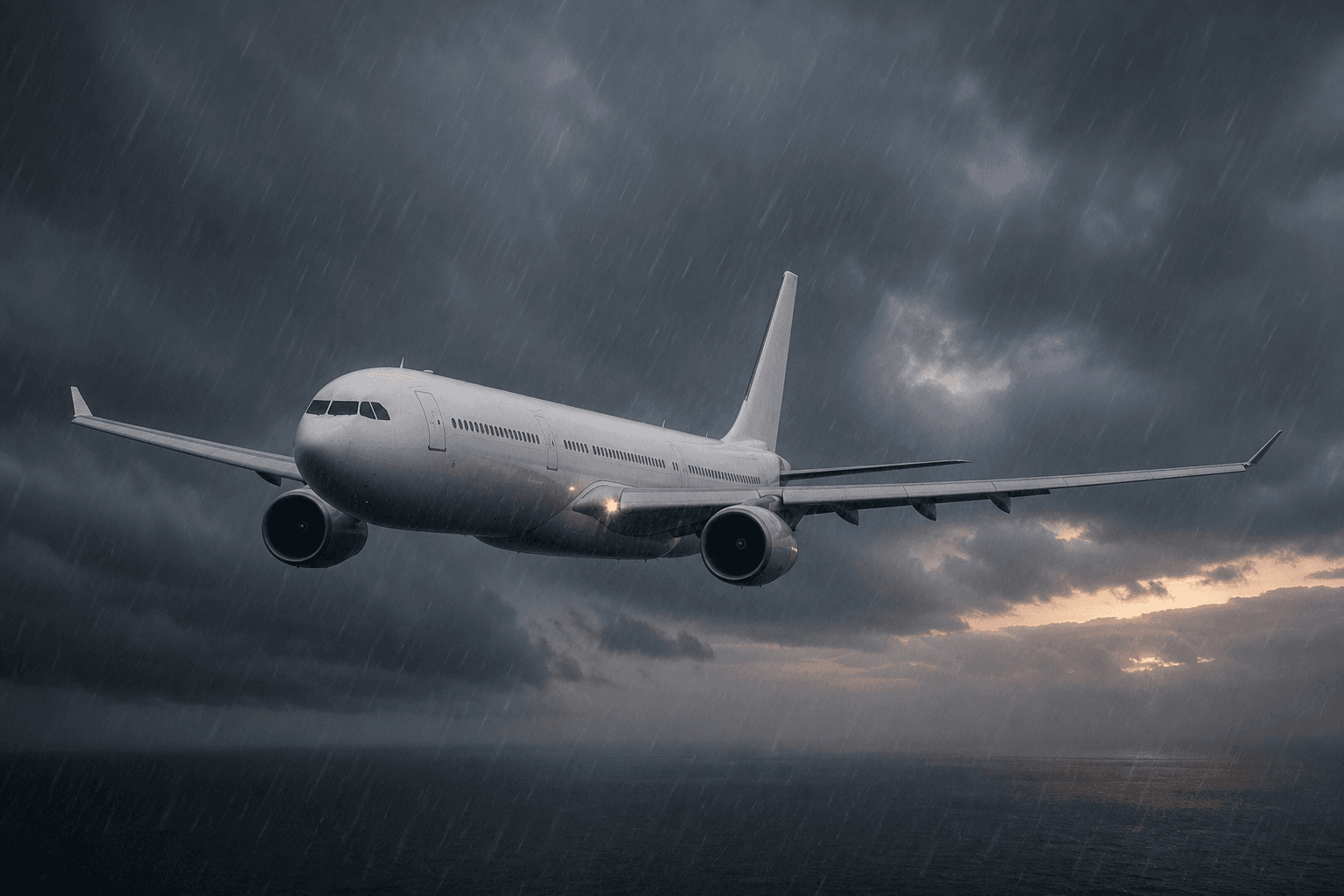
Over the years, I've flown well over five million miles, across a countless number of airlines. Obviously there's some variance between flights, but for the most part, things go pretty smoothly, and not much catches me off guard. Of course some flights are more memorable than others. I typically make lists with what I consider to be my best flight experiences, though in this post, I figure it's fun to maybe share some of the worst flight experiences I've had over the years. The focus with this list is on flights that were memorable in a negative way, rather than just being bad in line with expectations. In other words, the list won't have flights where I flew economy on an ultra low cost carrier, and the legroom was limited. Heck, I'm not even including most of the things I've experienced over time that are strange and uncomfortable but that happen, which may rattle the average traveler, from engine failures, to lightning strikes, to deaths onboard, to people being removed from flights in handcuffs. I'm also not including things like Air India first class or Pakistan International Airlines business class , which are known to be subpar, so I came in with low expectations. Longtime OMAAT readers may remember some or all of these. So here we go, in no particular order… My Royal Jordanian flight from hell In March 2013, I flew Royal Jordanian's A330 business class on what was supposed to be a routine fifth freedom flight from Bangkok (BKK) to Hong Kong (HKG), and it ended up being the scariest flight of my life . Bad weather, lightning strikes, turbulence, etc., don't generally scare me, but I've never experienced anything like this before. We spent around 30 minutes circling at a low altitude in what can only be described as the worst weather I've ever experienced. If you've seen Air Crash Investigation, this part of the flight felt like something right out of the show. I can't even describe the level of turbulence, hail was battering the fuselage, and the cabin was otherwise so eerily quiet, aside from people praying and crying. Some of the flight attendants were in the jump seats crying. It's hard to explain, but it's the only time in my life where I thought I wasn't going to survive a flight. When the plane finally touched down in Hong Kong, I was literally crying (as were most other passengers). One of the business class flight attendants was in the cockpit for the entire approach. In addition to her makeup being all over her face (as if she had been crying), she commented how the captain said that was going to be his last flight. I imagine that wasn't actually serious, but it wasn't a joke either… Following that flight, I developed a fear of flying , whereby for most of the rest of the year, I was terrified every time that I stepped on a plane. Fortunately I eventually got over it , but I hope I never have a flight like that again. Little did I know how this flight would end up TAAG Angola Airlines' first class "service" I love trying new airlines, and in March 2018, I was delighted to fly TAAG Angola Airlines' 777 first class from Luanda to Sao Paulo. Unfortunately a short while after boarding, the purser became very concerned about my picture taking, to the point that he aggressively approached me and demanded I delete all my pictures. He even demanded to see both my camera roll and phone notepad, and even got the captain involved. The whole situation was incredibly awkward, though even beyond that, service was quite lousy. For example, when I woke up in the morning, I wasn't greeted with a smile and asked how my sleep was. Instead, I was scolded. "Why did you sleep so long? We only have 30 minutes, you need to eat fast. I give you 10 minutes." I didn't even ask to have breakfast! Meanwhile the TAAG employees seated in first class received great service, for the record… What the TAAG crew didn't want you to see! Lufthansa purser accuses me of recording crew I'm an introvert who doesn't enjoy conflict, and doesn't want to make people feel uncomfortable. In January 2018, I flew Lufthansa's A320 business class from Zurich to Frankfurt, and as the crew was performing their safety demonstration, they suddenly stopped, and exchanged a few words. Hmmm, I found that odd, and wondered what was going on. Then the purser approached me, and accused me of videotaping the crew . That was simply false and baseless — like, I don't take pictures of people. She argued with me a bit, and then I insisted on showing her my camera roll, so she could see I hadn't done that. Rather than apologizing for the misunderstanding, she simply walked off. I felt embarrassed and super uncomfortable. When she later came around to serve me, I politely told her that I didn't appreciate the way she handled that situation, and that I felt embarrassed by the way she treated me. She then became defense, claiming she hadn't "accused" me of anything, but instead, simply "asked." I didn't in any way record the crew! Disappointment in China Southern first class In February 2014, I flew China Southern's A380 first class from Los Angeles to Guangzhou, which I was looking forward to, as an A380 enthusiast. It was just a really bad experience , not at all in line with what you'd expect in first class. It's not that the crew wasn't friendly, but rather, it's that there was clearly a lack of training and investment in the product. For example, China Southern's first class champagne on its flagship route was Duc de Paris, which retailed for $5 per bottle at the time. The review ended up going much more viral than I was expecting, and to save face, management took action. The company apparently issued an internal memo about it, and even reportedly demoted and punished the crew , which I feel horribly about. Like I said, any shortcomings in service were due to a lack of training, rather than due to a lack of effort on the part of the crew. Ah, Duc de Paris! Awkwardness in Oman Air business class In January 2024, I flew Oman Air's A330 business class from Muscat to Frankfurt. I'm a huge fan of Oman Air, and on a good day, the airline is exceptional. However, this wasn't a good day, and the flight attendant working my section of business class was really… not good, or happy to be there. OMAAT readers often tell me I'm too passive when things go wrong, so I thought "okay, let me try to embrace that feedback." So at the end of the flight, I shared my feedback with the cabin manager… and it instantly got awkward . He got a little defensive, but then walked off. Moments later, the flight attendant who had provided the bad service approached me, and basically confronted me about my feedback. It was beyond awkward, because she was basically gaslighting me into thinking that I was wrong, and that her service was actually great. This interaction reminded me of why I'm an introvert, and avoid escalating situations. Oman Air wasn't having a good day A lack of grace in Singapore Airlines first class Ah, remember Singapore Airlines' "Megatop" Boeing 747s? What a joy they were to fly. I'm not even sure what year this goes back to, but I'd say somewhere around 2010 I was flying Singapore Airlines first class from New York to Frankfurt. It was a mostly normal flight, except for the woman who was seated in the first row. I didn't think much of it at first, until her entourage kept coming up to check on her. Then the guy seated across from me said to me (in Germany) "what a pig," in reference to her (which in German is even more of an insult than it is in English). Later I realized what was going on, and that this passenger was in fact "Gucci" Grace Mugabe , the (at this point former) first lady of Zimbabwe, who has quite the reputation, to put it mildly. Her entourage kept coming up to her, and she was incredibly rude to the crew. At one point she even sort of slammed her hand on the tray table and said "get me more caviar." Ms. Gucci wasn't showing much grace on Singapore Airlines Bottom line Obviously not all fli
Anduril YFQ-44 unmanned fighter fires AIM-120 missile in Mojave Desert test
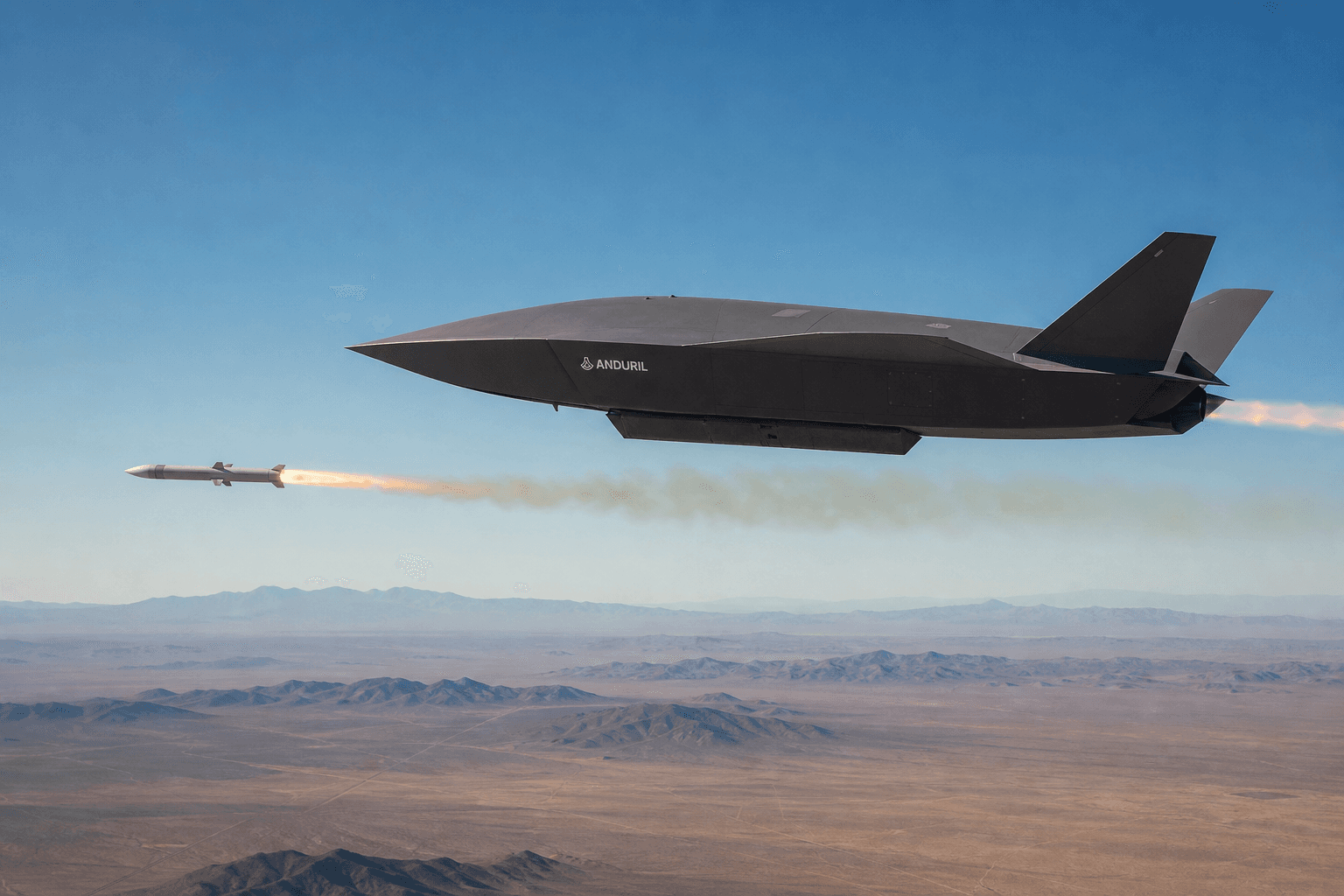
The test event over the Mojave Desert involved an externally carried Raytheon AIM-120 AMRAAM radar-guided missile. Anduril Industries has successfully fired an air-launched missile from the developmental YFQ-44 prototype. The test shot took place on 10 July over California’s Mojave Desert and was confirmed by both the US Air Force (USAF) and Anduril on 15 July. A single Raytheon AIM-120 AMRAAM (Advanced Medium Range Air-to-Air Missile) was fired from an underwing pylon on the YFQ-44’s port side. Anduril describes the scenario as an “end-to-end, beyond-line-of-sight strike against a simulated target”. The missile shot was carried out in conjunction with the US Air Force’s 412th Test Wing at Edwards AFB The YFQ-44 is one of two prototype uncrewed fighter jets selected by the USAF to become a frontline Collaborative Combat Aircraft. Both the Anduril jet and the General Atomics Aeronautical Systems YFQ-42 were awarded production contracts to transition from prototype development and testing into the delivery of operationally configured CCAs. “The test… represents an important step in turning CCA into an operational capability,” the 412th Test Wing says. The YFQ-44 missile shot was conducted from Edwards AFB in California’s Mojave Desert. Source: US Air Force The YFQ-44, which will be designated the FQ-44 for combat service, is now the first American CCA design to have successfully launched a guided missile and the latest uncrewed fighter design to do so overall. Boeing and the Royal Australian Air Force destroyed a drone with an AMRAAM fired from the Australian-built MQ-28 Ghost Bat in December 2025. The MQ-28 shot closely followed a successful air-to-air missile shot by the Turkish-made Baykar Kizilelma unmanned combat aircraft. The Block 1 test model of the MQ-28, like the YFQ-44, used an externally carried munition for its test shot. The future MQ-28 Block 3 combat variant will feature internal weapons bays for carrying stores. The FQ-44 is not expected to include internal bays, while the General Atomics FQ-42 will. The YFQ-42 has not yet attempted any live-fire weapons tests. General Atomics had paused flight testing on its CCA for roughly six weeks after a crash in early April led to the total loss of one aircraft. FQ-42 flights resumed in late May. No one was injured in the incident, which was attributed to an autopilot miscalculation for the aircraft’s weight and centre of gravity. The issue was resolved via a software fix, according to General Atomics. Governments around the world are racing to field operational CCAs, which are viewed as an affordable option for increasing the number of available combat aircraft and enhancing the capabilities of conventionally piloted fighters.
The Daily Touch & Go
The day's best aviation news in your inbox. Free, no spam.