

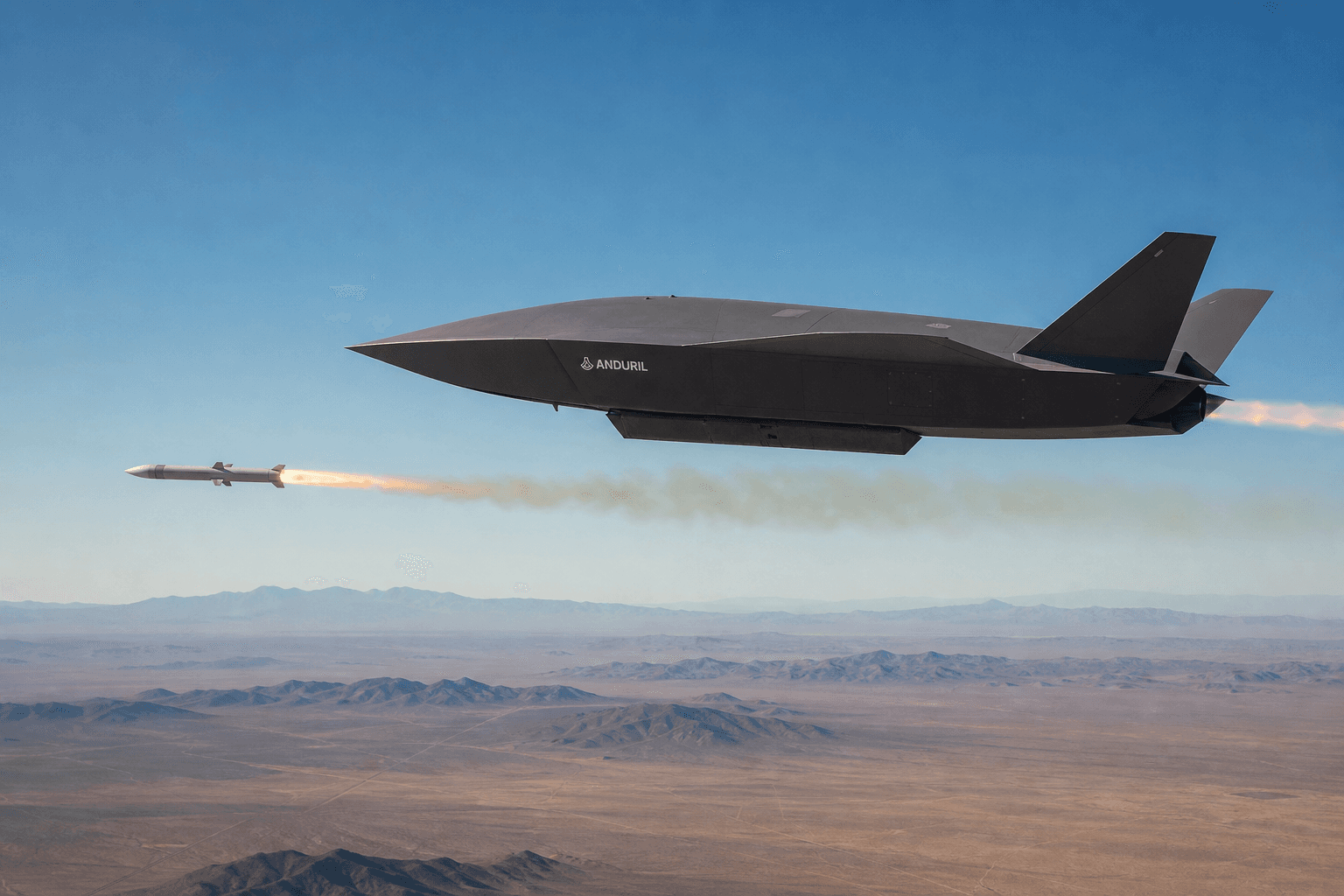
Illustration: The Touch & Go
Anduril YFQ-44 unmanned fighter fires AIM-120 missile in Mojave Desert test
The Anduril YFQ-44 drone successfully launched a Raytheon AIM-120 AMRAAM missile during a live-fire exercise, marking a milestone for US Collaborative Combat Aircraft programs.
The gist
Anduril’s YFQ-44 drone fires AIM-120 missile in a key live-fire test advancing US unmanned fighter capabilities.
The Anduril Industries YFQ-44 prototype uncrewed fighter jet has achieved a pivotal advancement in weapons integration by successfully firing a live air-to-air missile. The test, conducted on 10 July over California's Mojave Desert, involved the launch of a Raytheon AIM-120 AMRAAM from an underwing pylon on the aircraft’s port side. This live-fire event demonstrated the drone’s ability to conduct beyond-line-of-sight strikes against simulated targets, an essential capability for future combat operations.
Supported by the United States Air Force’s 412th Test Wing at Edwards Air Force Base, the event solidifies the YFQ-44’s transition from a developmental prototype towards operational status. The 412th Test Wing emphasized the significance of this milestone, describing it as a critical step in turning the Collaborative Combat Aircraft (CCA) concept into an operational combat asset. The YFQ-44’s missile shot showcases the integration of mature radar-guided missile technology on an autonomous fighter platform.
The YFQ-44 is one of two prototype CCAs selected by the US Air Force under a program aimed at increasing survivable and affordable air combat options. Alongside General Atomics’ YFQ-42, the YFQ-44 recently secured production contracts to move beyond prototype testing towards full operational configuration. The YFQ-44 is slated to carry the operational designation FQ-44 once introduced into service, positioning it as the US military’s first CCA to successfully execute a guided missile launch.
This live-fire success contrasts with its sister platform, the YFQ-42, which has yet to demonstrate live weapon employment. General Atomics temporarily paused flight tests of the YFQ-42 after a crash in April resulting from an autopilot miscalculation related to weight and center of gravity. Following a software correction, flight operations resumed in late May, but missile shots remain forthcoming.
Elsewhere, the YFQ-44’s achievement fits within a broader global push to field operational uncrewed fighters equipped with potent air-to-air weapons. Notably, in December 2025, Boeing partnered with the Royal Australian Air Force to destroy a drone target using an AIM-120 AMRAAM from the Australian-built MQ-28 Ghost Bat. That drone test model carried weapons externally, similar to the YFQ-44’s approach at this stage.
The MQ-28’s future Block 3 variant plans to incorporate internal weapons bays to reduce drag and radar signature, unlike the YFQ-44, which is not expected to feature internal bays. Conversely, the YFQ-42 will include such internal weapon stowage. These differing design philosophies highlight the varied strategic and tactical roles envisioned for each platform within the US Air Force’s evolving unmanned combat fleet.
Governments worldwide recognize CCAs as a cost-effective means to augment the number of combat aircraft while enhancing manned fighter effectiveness. The YFQ-44’s successful missile launch validates the feasibility of integrating high-performance weapons on autonomous platforms. The test paves the way for subsequent weapons integration trials and operational deployments in contested air combat environments.
The US Air Force’s long-term vision involves collaborative operations where CCAs like the FQ-44 augment manned fighters by performing a range of combat functions, including missile strikes. The Mojave Desert missile firing demonstrates the YFQ-44’s practical capability to launch an advanced radar-guided missile—a significant technical hurdle in autonomous aerial warfare. This capability is essential for the concept of operations envisaged for CCAs as force multipliers.
This missile launch from the YFQ-44 prototype represents not only a technological demonstration but a strategic milestone for the US military’s transition toward buying and deploying uncrewed air combat assets. The event confirms that autonomous aircraft can effectively deliver precision-guided munitions at extended ranges. Such advancements are critical as defense budgets seek to balance force expansion with the increasing complexity and cost of traditional manned fighter aircraft.
Frequently asked questions
- What missile did the Anduril YFQ-44 fire during its live test?
- The YFQ-44 fired a Raytheon AIM-120 AMRAAM, which is a radar-guided air-to-air missile, during its live-fire test over the Mojave Desert.
- What is the significance of the YFQ-44 missile test?
- This test marked the first time a US Collaborative Combat Aircraft prototype successfully launched a guided missile, demonstrating key operational capabilities for uncrewed fighters.
- How does the YFQ-44 differ from its sibling platform the YFQ-42 in terms of missile testing?
- The YFQ-44 has conducted a live missile launch, while the YFQ-42 has not yet performed live-fire tests following a temporary flight testing pause after a crash earlier in 2026.
Read more
All Aviation Safety →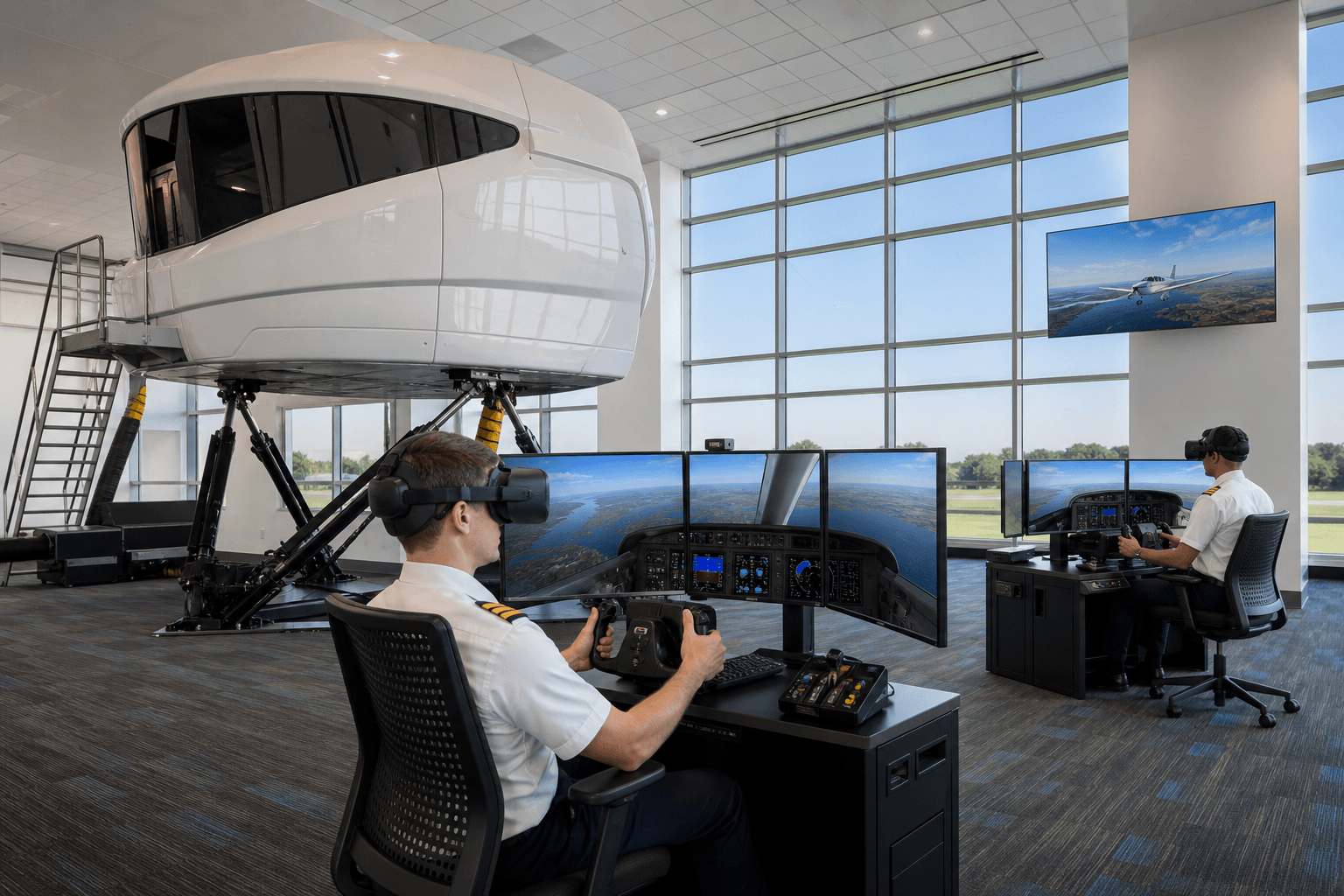
EASA revamps flight training simulator rules with new capability-based system
More flexible qualification framework lessens dependence on full-flight simulators. Europe's safety regulator has embarked on an implementation programme after overhauling the qualification framework for flight-simulation training devices. The change shifts away from the previous regulatory structure – founded on fixed device types and levels – to a more flexible capability-based approach, providing more freedom to use systems other than full-flight simulators. This enables training devices to be assessed for "what [they] can actually do", says European Union Aviation Safety Agency (EASA) flight standards director Francesco Gaetani. EASA had previously highlighted the need for a rule change in order to overcome "discrepancies and barriers" that restricted the possibility of obtaining training credits when using different types of training device. It had pointed out that flight-training devices would remain relegated to a limited role, while full-flight simulators dominated the sector, unless the situation was addressed. EASA drew up proposals based on a "capability signature" – essentially a standardised 'fingerprint' of the training device's fidelity levels and features. The new framework has also adapted to account for advances in technology including virtual reality and touchscreen interfaces. "It supports innovation, enables new technologies to be integrated into training and helps ensure that pilots continue to receive effective, high-quality training in an evolving aviation environment," says Gaetani. Approved training organisations will have more freedom to choose simulation devices which are most suited to achieving the necessary training objectives, through an optional 'task-to-tool' methodology. EASA has initiated an implementation support programme, including stakeholder workshops set to begin at its Cologne headquarters in December this year.
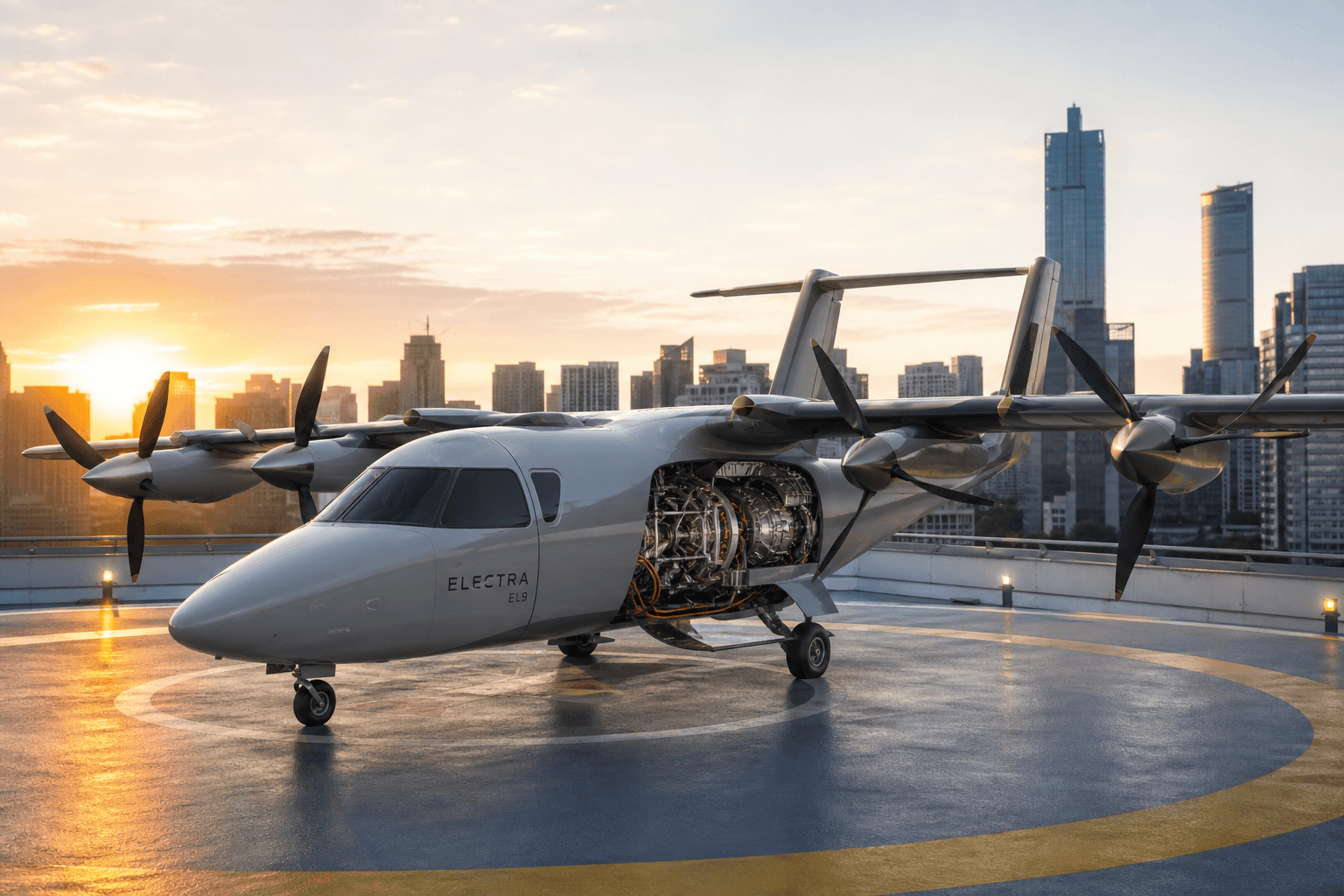
Safran's TG600 Turbogenerator Powering Electra EL9 Hybrid-Electric Aircraft
Hybrid-electric aircraft developer Electra on Wednesday announced a "life-of-program" agreement covering the production of turbogenerators for its flagship EL9 Ultra Short. The EL9, designed for operations with only a 150-foot ground roll, will be powered by Safran Helicopter Engines' TG600, which is built around the latter's Arrano gas turboshaft engine. Electra said it placed an initial order for 250 turbogenerators. The companies previously signed a deal for Safran, which is also an investor, to develop the 600-kilowatt electric turbogenerator propulsion system for EL9 prototype aircraft. Now, the TG600 is set to power the real deal. "We've closely evaluated the advanced air mobility market, and we believe the Electra eSTOL [electric short takeoff and landing] aircraft offers groundbreaking capability in a practical design that meets market needs of both today and tomorrow," said Florent Chauvancy, the former executive vice president of OEM sales for Safran Helicopter Engines, in a 2023 news release . On Wednesday, Electra CEO Marc Allen in a statement called the new deal a "defining step forward for Electra and for the future of advanced air mobility." The nine-passenger EL9 is expected to make its debut flight in 2027 or '28, with certification and entry into service by '30. Electra claims to have about 2,200 provisional orders from more than 60 operators. This is not Safran's first foray into electrification. The manufacturer in February 2025 achieved the first type certification for an electric motor for civil aircraft, after the European Union Aviation Safety Agency (EASA) declared its ENGINeUS 100 system airworthy. The engine is designed to provide 100 percent electric power for two-to-four-seat aircraft—such as Diamond Aircraft's eDA40, an early candidate—or hybrid propulsion for 19-seat regional models. Other ENGINeUS 100 customers include Swiss propulsion specialist H55, French manufacturer Aura Aero, and Aura's recently acquired VoltAero subsidiary. BRM Aero and Bye Aerospace intend to install the engine on their respective electric trainers, the Bristell B23 Energic and eFlyer family. At the 2025 Paris Air Show, Safran joined forces with Collins Aerospace and French firms Daher and Ascendance to research hybrid-electric propulsion for six-to-ten-seat aircraft. The consortium is targeting a platform "in the category" of Daher's Kodiak family of single-engine turboprops. The Integration Electra said the TG600 will be the "heart" of the EL9's hybrid-electric propulsion system, which also comprises eight electric engines from supplier Evolito. The Arrano engine around which it is built burns 18 percent less fuel versus "other in-service engines," the company said. The turboshaft will be complemented by two GENeUS electric generators provided by Safran Electrical & Power. In March, AviationWeek reported that Safran Helicopter Engines began assembling the first TG600 unit for Electra's prototype aircraft. Cédric Goubet, the company's president, said in a late 2025 LinkedIn post that it is "ready to launch development and gear up for flight testing." Goubet in a statement Wednesday said the new contract "signifies the official launch of our turbogenerator activities, a promising new chapter that complements our leadership in turboshaft technology." "We believe we have the most advanced and efficient hybrid-electric product in its class, a perfect fit for the EL9 to achieve revolutionary capabilities in new air mobility," he said. According to Electra, the EL9 is designed to move air travel away from airports. Instead, the aircraft will use ultra-short "access points" located on rooftops, parking lots, fields, barges, malls, casinos, or even ski resorts, cutting out unnecessary connections and ground transfers. The manufacturer believes it could save travelers hours on more than 2,600 routes spanning 50 to 265 miles that are suboptimal for driving, but lack routine commercial air service. It estimates 12,000 to 16,000 aircraft will be required to meet demand within the first decade of operation. EL9 access points will require just 150 feet of space for takeoff and landing, an unlock from the aircraft's blown-lift propulsion system. By redirecting airflows toward the ground, the EL9 is designed to take off at a leisurely 35 knots. Electra has already proven the capability on the EL2 Goldfinch, a demonstrator. But Safran's TG600 will be key to validating it with EL9 prototypes and, eventually, the real deal. Like many young aerospace startups, Electra is largely tight-lipped on suppliers, but it has said that Honeywell will provide the EL9's flight control computers and electromechanical actuation systems. Lockheed Martin's Skunk Works is helping design and commercialize the model. Many of the EL9's components and systems, however, are built in house. Electra has obtained several patents for novel portions of the blown-lift propulsion system.
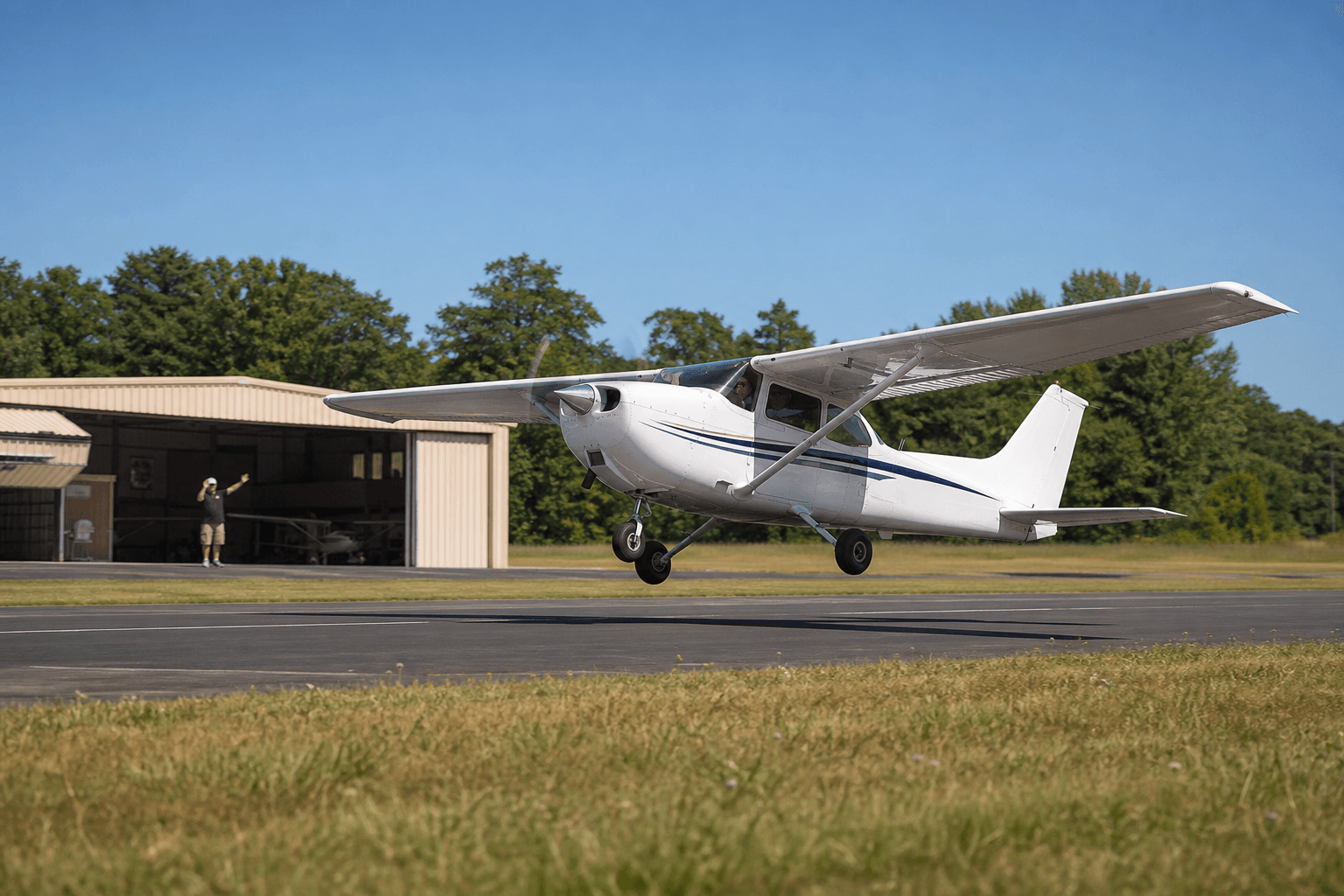
Pilots Honor Time-Honored Rites of Passage from First Solo to Captain Upgrade
Milestones in our lives, such as weddings, graduations, religious ceremonies, and significant birthdays usually involve a celebration. But I'd say nearly every pilot looks at their first solo flight as a major rite of passage they never forget. It marks the first time a person realizes they're truly responsible for their own life. Brush it off or not. It demands a sense of pride. Considerable research ( asking my lunch buddies and checking at Sporty's ) confirms the tradition of the flight instructor cutting off a piece from the back of their student's shirt still happens, even in many of today's mega-flight schools. The practice supposedly began when instructors sat behind their students in tandem trainers like J-3 Cubs with no intercom. When the student did something dumb, the instructor would tug on their shirt and yell or demonstrate what was wrong. When the student began to consistently demonstrate they could fly the traffic pattern and land with no tugs on their shirt, the CFI climbed out and sent the learner around for three solo takeoffs and landings. On landing, the shirt was cut off and inscribed—usually kept forever. This Article First Appeared in FLYING Magazine If you're not already a subscriber, what are you waiting for? Subscribe today to get the issue as soon as it is released in either Print or Digital formats. Subscribe Now These days, students typically know in advance that they're scheduled to solo on a particular day—weather permitting and having passed all pre-solo requirements like licenses, medicals, and tests. They launch alone from the hangar or tie-down, announce (if it's a controlled field) that this is a first solo, make three takeoffs and landings, and return to the hangar. Well, I'm sorry but I hate that. Back in the day, I'd work with the student on all the flying basics until finally entering the traffic pattern for takeoff and landing practice. If things didn't progress well, we'd head back out in the practice area and review airspeed and altitude control, stalls, ground reference maneuvers, or whatever. Then back to the airport where we'd concentrate on flying a precise pattern with appropriate airspeeds and a flare-out…but no touchdown. Flying down the runway with reduced power but in level slow flight a few feet off the ground—focusing on the far end—and then going around was an effective way of handling ground shyness. Finally, we'd ease off the throttle, gently raise the nose above the end of the runway, and the main gear would touch. Seeing the delight in the student's eyes was marvelous. READ MORE: Aviation Fuel-ishness Can't Be Overlooked READ MORE: Memories of the Iconic 'Gooney Bird' Stirred After a successful hour or so, I'd slide my seat back and (nearly) close my eyes, pretending I was majorly bored. Finally, I'd announce, "I'm tired of riding around this pattern with you. Let me out at the intersection and make three takeoffs and landings by yourself." The tower was OK with our clearing the runway and letting me out in the grass in the middle of the field, where I would sit, making daisy chains or picking wildflowers, while my fledgling student made circuits and landings. More than once, afterward, they'd clear the student back to the hangar, stranding me in the grass. That involved my climbing up five flights in the tower, uttering a few choice words and calling somebody to pick me up. And, yes, I'd cut part of my student's shirt off in a celebratory ceremony at the hangar. Other past traditions I've heard of are dumping a pail of water over their head, cutting off the necktie (remember those?) or even mashing a cream pie in the face. But fledgling pilots aren't the only aviators who mark upgrades or being "kicked upstairs." The best story I know involved my friend Kevin Uppstrom, a longtime Kalitta Air pilot who hauled freight in DC-3s for years (and taught me so much). In—mostly—Kevin's words: "Upgrading to captain was a lengthy process involving the completion of ground school, 30-plus hours of confidence-destroying simulator training and a round-the-world ride with a check airman for Operational Experience (OE). You'd make all the calls, do all the planning, deal with any problems, and fly one segment from the right seat. Only then (when the check airman was satisfied or tired of riding with you) would an FAA inspector observe a line check within the United States—the final step in the upgrade procedure. Then you were on your own, a graduate from a three-striper to four. "I deadheaded on one of our planes to Liege, Belgium, and then downrange to Bahrain, where, after a rest period, I would be flying as aviator in charge with a great crew—a low-key first officer and plumber (flight engineer). Rather than announcing my presence with an 'I'm the captain and you will respect my authority' attitude [definitely NOT a Kevin mentality], I wanted to start off on the right foot. So I planned to meet my crew in the hotel lobby next morning sporting both my three-stripe shoulder boards AND my four-stripe boards—a total of seven boards—on each shoulder of my uniform shirt. The sewing was tedious, somewhat of a challenge, but I got it done. "Next morning, I left the room early to be the first to meet my crew downstairs but, striding across the hotel lobby, I met up with an Atlas [Air] crew who gave me some truly odd looks. I think they thought I was some kind of field marshal. Eventually, my guys showed up and, knowing my sense of humor, smiled as they took in my seven stripes. "Since we were in the Middle East, where they place an inordinate amount of importance on things like gold braids and stripes, I didn't want to create an international incident with customs. So I demoted myself to a mere four-striper once we boarded the van to the airport. But being the supreme leader was fun while it lasted." Maybe you can understand how much I value Kevin as a person and a pilot. I met him when he was chief pilot, accumulating 16,000-plus hours flying DC-3s, Beech 18s, and a Learjet for a Part 135 freight operation in Middletown, Ohio (KMWO). I was the FAA inspector doing check rides for the company. By the late 1990s that part of the airfreight business was dying, and he was left with a big decision. He made "starting over" with this large airfreight airline based in Detroit and flying worldwide the right one. Whether it's a first solo or a captain upgrade, these moments stand as hard-earned milestones that define a pilot's journey. This column first appeared in the June Ultimate Issue 971 of the FLYING print edition.
Frontier to Launch Starlink High-Speed WiFi Across Fleet in Early 2027
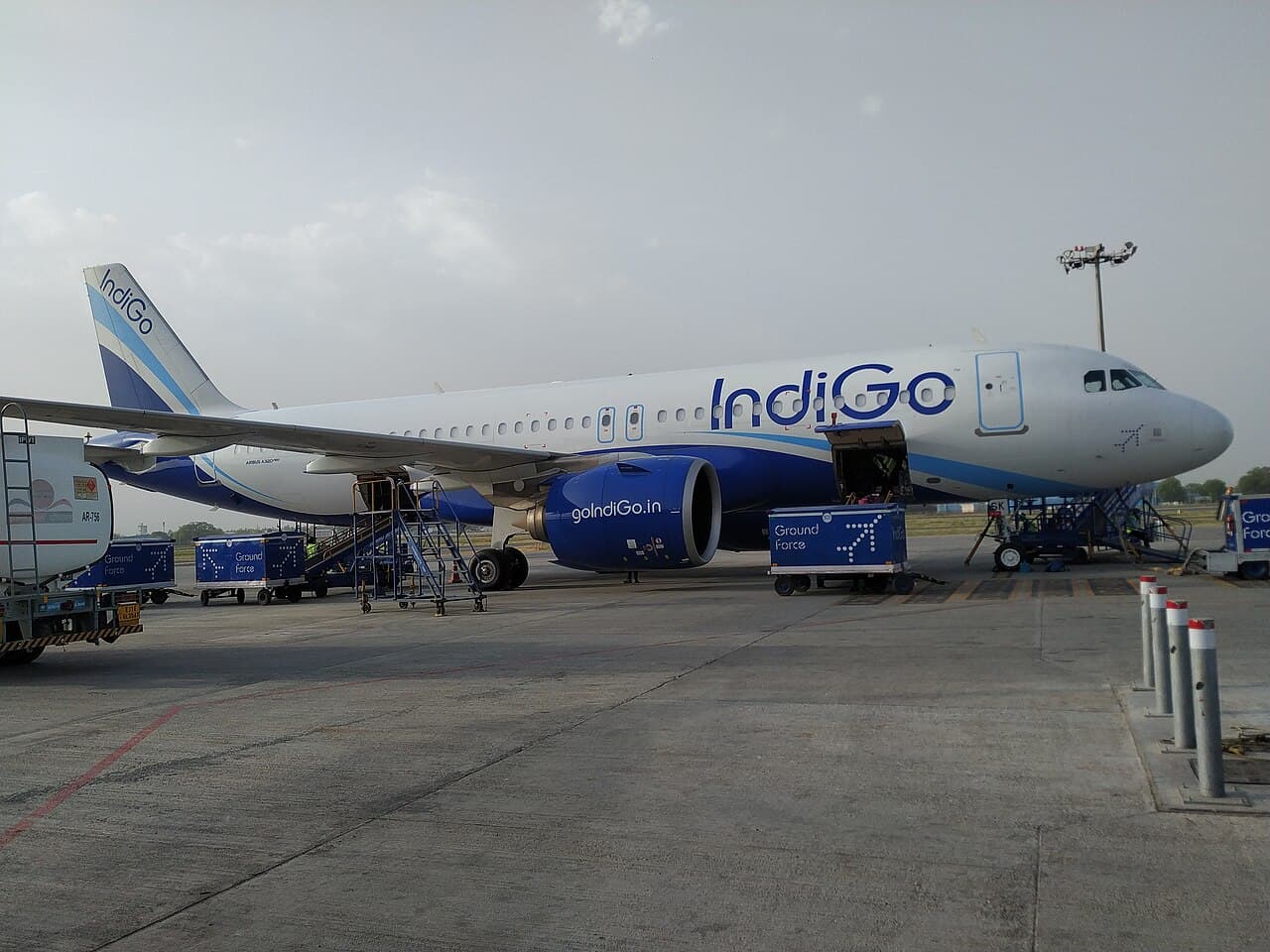
Frontier Airlines is set to revolutionize in-flight connectivity. The Denver-based low-cost carrier announced on July 14, 2026, that it will introduce Starlink, delivering high-speed, low-latency WiFi across its fleet. ezstandalone.cmd.push(function () { ezstandalone.showAds(119); }); Frontier will be the first US airline to offer passengers access to Starlink’s high-speed internet through a new system managed directly by Starlink.news.flyfrontier.com The first Starlink-equipped aircraft is scheduled for early 2027. Passengers can soon enjoy seamless HD streaming, online gaming, video calls, web browsing, and productivity tools at 35,000 feet. ezstandalone.cmd.push(function () { ezstandalone.showAds(127); }); Unlike traditional airline WiFi, which often suffers from slow speeds and dropped connections, Starlink promises reliable performance from gate to gate. Transforming the Passenger Experience Frontier’s partnership with SpaceX’s Starlink goes beyond entertainment. The system will also support crew operations, giving pilots, flight attendants, and ground teams better real-time tools for safety, maintenance, and customer service. ezstandalone.cmd.push(function () { ezstandalone.showAds(128); }); This upgrade aligns with Frontier’s broader efforts to enhance comfort while maintaining its signature low fares. Chief Executive Officer Jimmy Dempsey highlighted the strategic importance of the investment. “We’re continuing to invest in the products and services that matter most to our customers,” he said. ezstandalone.cmd.push(function () { ezstandalone.showAds(129); }); “Starlink transforms the onboard experience, giving customers the flexibility to work, stream, browse, and stay connected throughout their journey.” The announcement comes alongside other improvements, including the introduction of First Class seating and enhancements to Frontier’s loyalty program. These changes show how the airline is evolving its ultra-low-cost model to offer more value without raising base fares significantly. Acroterion, CC BY-SA 4.0, via Wikimedia Commons A Massive Global Rollout Frontier is part of a larger initiative by Indigo Partners, which includes Wizz Air in Europe, Volaris in Mexico, JetSMART in South America, and Cebu Pacific in the Philippines. Together, these carriers plan to equip more than 1,000 aircraft with Starlink. This represents one of the largest commitments to next-generation inflight connectivity worldwide. ezstandalone.cmd.push(function () { ezstandalone.showAds(130); }); Bill Franke, Managing Partner of Indigo Partners , emphasized the shared benefits. “Starlink will provide our portfolio airlines with reliable, high-speed connectivity, further enhancing the customer experience,” he noted. Starlink’s low-Earth orbit satellite constellation enables the impressive performance. Engineered by SpaceX, the system supports demanding applications like multiplayer gaming and high-quality video streaming that older satellite or air-to-ground systems often struggle to deliver. Why This Matters for Travelers For budget-conscious flyers, reliable WiFi can make a big difference. Whether catching up on work during a business trip, entertaining children on long flights, or staying in touch with family, consistent connectivity turns travel time into productive or enjoyable time. ezstandalone.cmd.push(function () { ezstandalone.showAds(131); }); Early feedback from other Starlink-equipped flights worldwide has been overwhelmingly positive, with passengers reporting speeds and reliability far superior to traditional options. Frontier operates one of the youngest and most fuel-efficient fleets in the United States. Adding premium connectivity supports its goal of delivering more comfort and flexibility while keeping fares low. As demand for seamless digital experiences grows, airlines that fail to upgrade risk falling behind. Photo Credit: Tony Webster, CC BY 2.0, via Wikimedia Commons Looking Ahead Installation will begin soon, with the first passenger flights featuring Starlink expected in early 2027. Frontier has not yet detailed exact pricing or how passengers will connect, but the system will likely include options for free or paid access, similar to other carriers testing Starlink. ezstandalone.cmd.push(function () { ezstandalone.showAds(132); }); This partnership signals a new era for low-cost carriers. By teaming up with SpaceX, Frontier is proving that affordable travel and high-tech amenities can go hand in hand. Frequent flyers on Frontier routes should look forward to faster, more reliable internet that keeps them connected from takeoff to landing. As the rollout progresses, travelers can expect clearer details on availability, device compatibility, and service tiers. ezstandalone.cmd.push(function () { ezstandalone.showAds(133); });
The Daily Touch & Go
The day's best aviation news in your inbox. Free, no spam.