

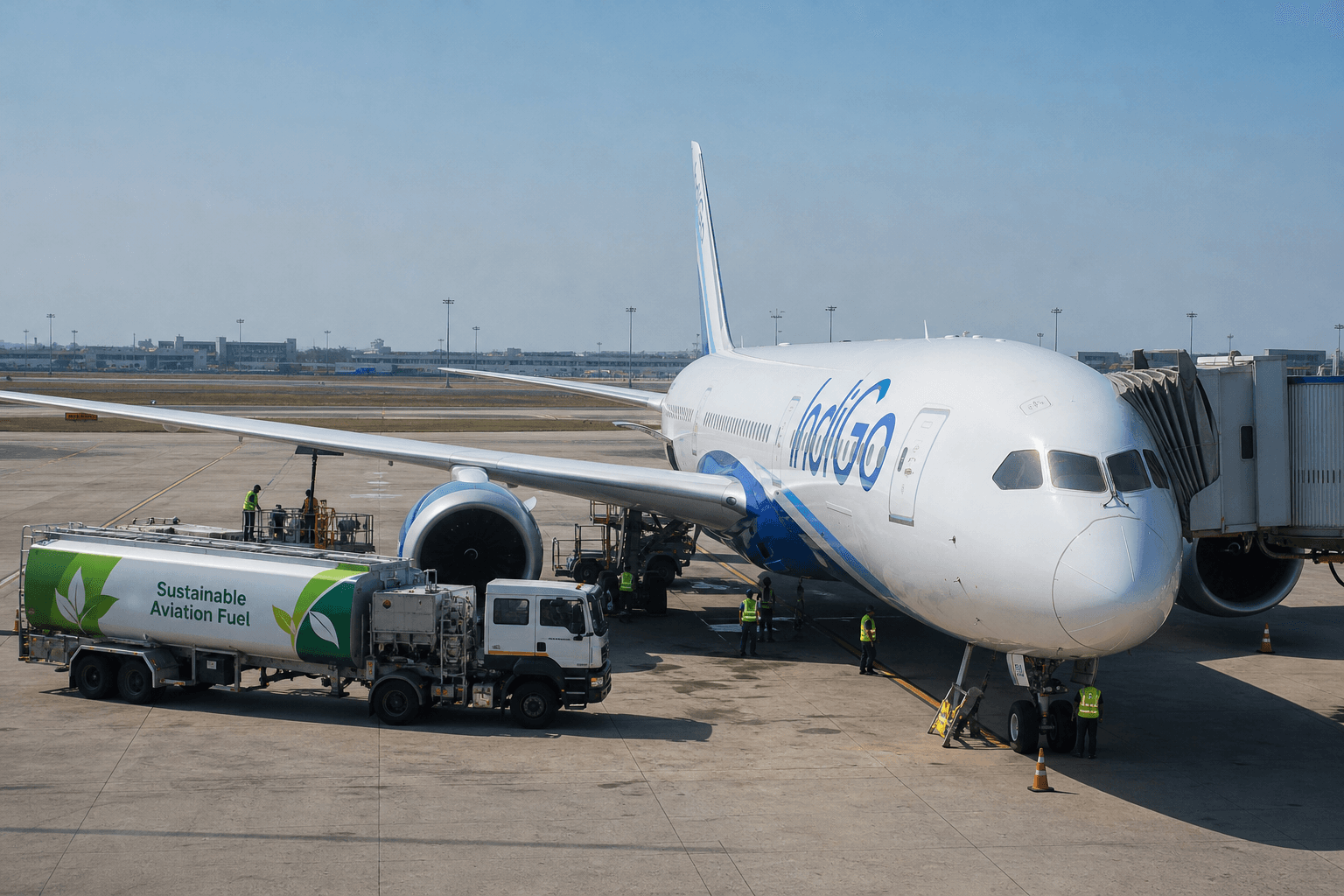
AI-generated illustration
Sustainability
Indian Oil Receives Approval for Commercial Sustainable Aviation Fuel Production at Panipat
Indian Oil Corporation has secured government permission to produce sustainable aviation fuel commercially from its Panipat refinery, aiming to meet India's 2027 blending goals.
The gist
Indian Oil gets the green light for commercial production of sustainable aviation fuel at Panipat, targeting 1% blending for 2027 international flights.
Continuing coverage
All India →Indian Oil Corporation, a state-run energy giant, announced it has obtained government approvals to commence commercial-scale production of sustainable aviation fuel (SAF) from its Panipat refinery in northern India. The move positions Indian Oil as one of the key suppliers supporting India’s commitments to introducing low-carbon fuels into the aviation sector. Chairman A S Sahney disclosed this development during a recent industry gathering, confirming the company’s regulatory clearance to supply SAF commercially.
The Panipat refinery’s SAF output is projected to fulfill the government’s target of blending 1 percent sustainable aviation fuel with conventional jet fuel for international flights by 2027. This target forms part of India’s broader strategy to reduce carbon emissions from aviation, a sector responsible for a growing share of greenhouse gases. Indian Oil’s initiative represents a critical early step toward scaling sustainable fuel production domestically, which aligns with global aviation industry trends toward net-zero emissions.
Indian Oil intends to finalize contracts with airlines to secure off-take agreements before embarking on further investments in SAF production capacity. This approach reflects a cautious commercial strategy aimed at ensuring a stable market demand as the company considers expanding beyond its initial facility. Sahney emphasized the importance of these agreements as a prerequisite to committing capital for additional new projects.
Earlier this year, company executives revealed plans for the first SAF plant at the Panipat refinery to begin operations within a short timeframe. They were targeting to start production close to the end of 2026, with a second plant investment decision anticipated within five to six months following initial output commencement. These timelines indicate Indian Oil’s ambition to ramp up production capacity rapidly to meet expected demand growth in sustainable jet fuel.
Sustainable aviation fuel is derived from renewable feedstocks such as used cooking oil and agricultural waste materials. It offers airlines a method to lower carbon emissions in comparison to conventional fossil jet fuels. By reducing lifecycle greenhouse gas emissions, SAF is viewed globally as one of the most viable solutions to decarbonize long-haul air travel where battery or hydrogen alternatives remain challenging.
India’s aviation industry, including major carriers and airports, has increasingly embraced sustainable fuel adoption as part of environmental commitments. Government bodies have set progressive blending mandates to encourage domestic SAF production and usage. Indian Oil’s Panipat facility will play an integral role in meeting these mandates, especially for international flights departing from India.
The emergence of SAF production at Panipat adds to a growing portfolio of Indian Oil’s renewable energy initiatives, positioning the company within the evolving clean energy market. While currently able to meet initial blending requirements, long-term plans suggest that the company will evaluate scaling production further depending on market response and regulatory incentives.
Indian Oil’s strategic focus on SAF production also responds to global aviation regulator pressure to reduce sector emissions, with major air transport organizations advocating for widespread adoption of renewable fuels. The company’s engagement with airlines through prospective agreements signals a move to build a value chain around SAF domestically.
With operational SAF production imminent at the Panipat plant and government approvals secured, Indian Oil is set to contribute to India’s sustainable aviation goals significantly by 2027. The company’s plans for subsequent expansion of SAF capacity will depend on market developments and finalized airline partnerships, shaping the future of green fuels in Indian aviation.
Originally reported by BusinessLine
Read more
All Sustainability →
JetBlue A320 Sustains Five Injuries From Severe Turbulence Near Fort Lauderdale
JetBlue Flight 1717 from Puerto Rico to Fort Lauderdale encountered severe turbulence causing five injuries, with all treated on-site and no hospital transports.

Russian An-12 Transport Crashes in Kemerovo Region Killing 17
A Russian Air Force Antonov An-12 cargo plane crashed near Yagunovo, Siberia, on November 17, killing all 17 on board amid investigation into a possible fuel leak fire.
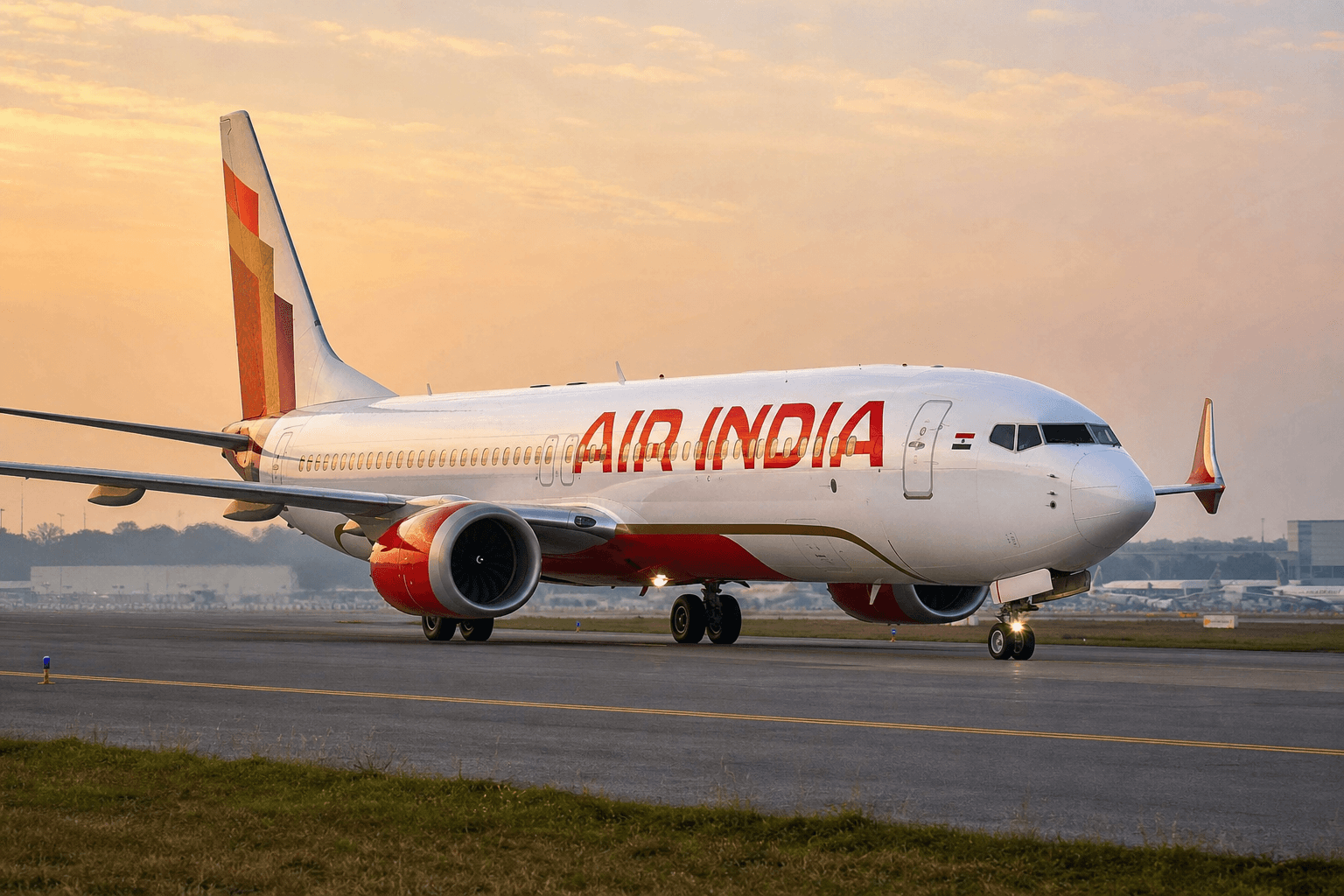
Indian Airlines Anticipate Ordering 1,000 Additional Aircraft Amid Rapid Travel Growth
India's aviation industry plans to boost its fleet by over 1,000 planes as demand surges, with manufacturers urged to speed deliveries to meet expansion needs.

Lufthansa Introduces Premium Business Seats on Select A320 Short-Haul Flights
Lufthansa will offer recliner premium business class seats on six Airbus A320s starting spring 2027, enhancing comfort on routes from Frankfurt to Athens, Cairo, and Nice.
The Daily Touch & Go
The day's best aviation news in your inbox. Free, no spam.