

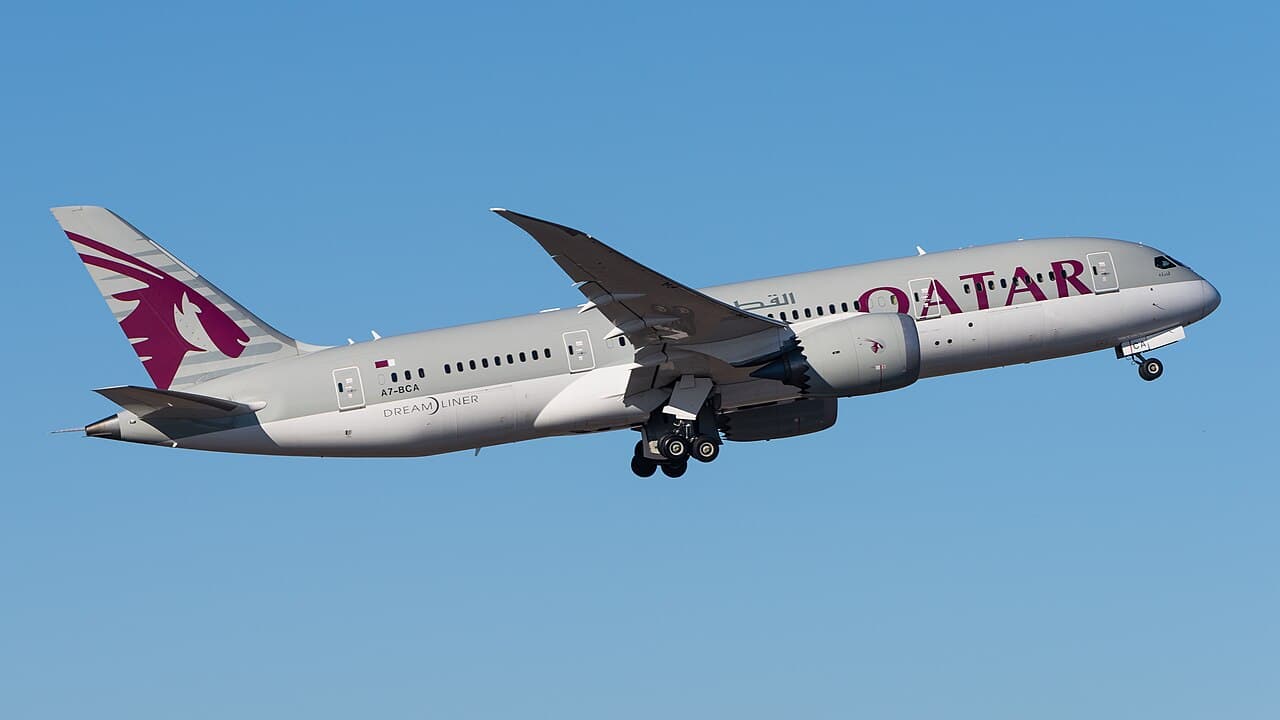
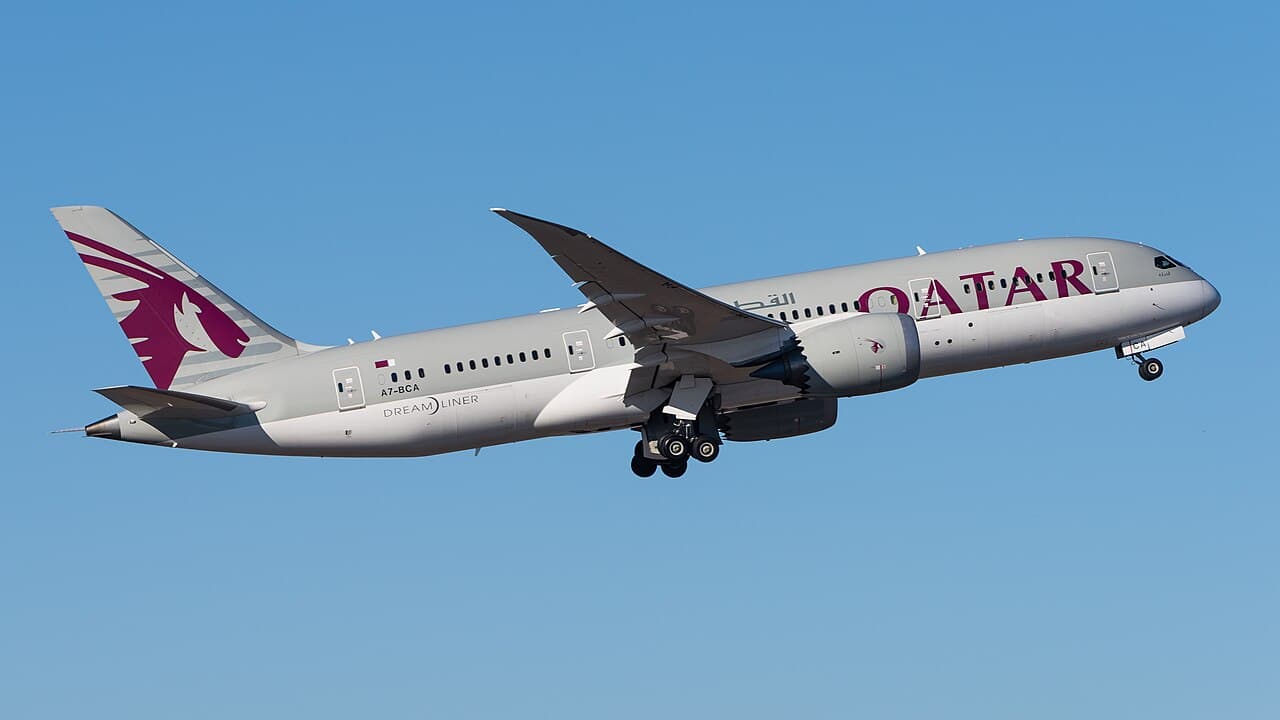
Image: Julian Herzog ( Website ) · CC BY 4.0 · via Wikimedia Commons
American Airlines Boeing 787 Diverts to Dublin After Multiple Flight Attendants Fall Ill Mid-Flight
Flight AA-719 from Rome to Philadelphia made an emergency landing in Dublin after six of eight flight attendants experienced sudden illness, prompting cancellation of the onward service.
The gist
Six flight attendants fell ill flying on American's 787 from Rome, forcing an emergency landing in Dublin and cancellation of the Philadelphia leg.
American Airlines flight AA-719, operating a Boeing 787-9 Dreamliner, unexpectedly diverted to Dublin Airport on July 25 after multiple flight attendants became unwell during the transatlantic flight from Rome to Philadelphia. The departure from Rome Fiumicino International Airport occurred just before 1 p.m. local time, with an anticipated flight duration of approximately eight and a half hours to American Airlines' Philadelphia hub. About three hours into the journey, the aircraft was cruising at 38,000 feet over the Atlantic Ocean when the flight crew altered their route towards Dublin due to a medical emergency onboard.
Flight tracking data from Flight Radar 24 confirmed the sudden course change, while communications with air traffic control indicated a medical diversion was initiated. Reports from aviation insiders revealed that six of the eight flight attendants began experiencing dizziness and illness during the flight, though none were incapacitated. The decision to divert was prompted by concerns over the crew's ability to safely continue serving and managing the cabin given the number affected.
The Boeing 787 series incorporates a unique cabin air system that does not utilize traditional bleed air sourced from the engines, a setup historically criticized for potentially introducing contaminants into cabin air. This design aspect makes exposure to fumes from bleed air contamination less plausible in this incident. Instead, a malfunction in the air conditioning packs, which condition and supply air to the cabin, is a more likely cause. Such faults can reduce oxygen levels sufficiently to induce hypoxia symptoms like dizziness and lightheadedness, particularly in crew actively working in the cabin environment.
Flight attendants, who are mobile and physically active during service, often require greater oxygen levels than seated passengers. If oxygen content drops, they may exhibit early hypoxia signs that passengers might not notice as severely. This aligns with the pattern of illness reported on AA-719, where the majority of affected persons were crew members rather than passengers.
Historical precedent within American Airlines suggests other unusual causes of mass crew illness have occurred. For example, in October 2018, an industrial cleaning chemical spilled in a lavatory during a flight from London Heathrow to Philadelphia resulted in several attendants suffering from noxious vapor exposure. This prior event also necessitated an emergency diversion and highlighted the potential for non-systemic causes such as chemical leaks to impact crew well-being.
The immediate consequence of the Dublin diversion was the cancellation of the continuation flight to Philadelphia. No replacement crew was available to operate the remaining leg, and investigations into the illness cause were ongoing at the time. American Airlines had yet to issue a formal statement clarifying the cause or providing additional details about passenger handling and compensatory measures.
Incidents involving crew illness mid-flight pose complex operational challenges, as they impact not only safety but also scheduling, airport operations, and passenger experience. Given the rarity of such mass crew illness events and the aircraft's advanced design features, aviation authorities and the airline industry will likely review preventative measures for air system faults and onboard contaminant exposure.
With no direct evidence pointing to engine bleed air contamination and the Boeing 787's distinct air system architecture, focus on air conditioning pack functionality and potential exposure to airborne chemicals will be critical. Further technical inspections and crew health monitoring will be necessary to determine root causes and mitigate risks to future flights.
Frequently asked questions
- What caused the American Airlines flight to divert to Dublin?
- Six of the eight flight attendants became suddenly ill mid-flight due to symptoms consistent with possible reduced oxygen levels, prompting an emergency diversion and landing in Dublin.
- Why is bleed air contamination unlikely on this Boeing 787 flight?
- The Boeing 787 uses a different cabin air system that does not rely on engine bleed air, which reduces the chance of contamination that has been reported in other aircraft types using traditional bleed air systems.
- What operational consequences resulted from the crew illness incident?
- The flight diverted to Dublin, the onward flight to Philadelphia was cancelled due to absence of replacement crew, and investigations into the cause of illness were underway.
Read more
All Aviation Safety →
American Airlines Q2 Profits Plunge 88%, Faces Potential 2026 Loss
In recent weeks, we've seen the major US airlines report their Q2 2026 earnings. Obviously it's an unusual time for the industry — while we've seen a huge spike in jet fuel prices, we've also seen airlines be able to charge higher fares ( which they believe they can sustain ). In the United States, the story has largely been the same at most airlines — we're seeing record revenue, while profits are down year-over-year. However, the extent to which profits are down differs massively. American is obviously the carrier among the "big three" that's struggling the most, and it has just reported its financial results , including updated guidance. It's all not very pretty. American "only" earns $71 million in its (historically) best quarter When it comes to quarterly results, generally American's best quarter is Q2, followed by Q4, followed by Q3, followed by Q1. That's because Q2 covers spring and early summer travel (the peak summer travel period has moved forward), Q4 covers holiday travel, Q3 covers some summer and fall travel, and Q1 is… well, rough. Obviously you'd expect some year-over-year changes at airlines, reflecting higher revenue but also higher costs. However, in general you'd hope that American is somewhat "tracking" its competitors, in terms of the percent changes year-over-year. In 2025, American's annual profits plunged by 87% , and CEO Robert Isom promised significant upside. So, how are things going now? American has just reported a net income of $71 million for Q2 2026, representing an 88% year-over-year decrease in net profit. As a point of comparison, Delta and United saw profits decrease by 25% and 17%, respectively. Airline Q2 2025 net income Q2 2026 net income Percent change American $599 million $71 million −88.1% Delta $2.13 billion ~$1.60 billion −24.9% United $973 million $805 million −17.3% Now, to be thorough, let's also compare Q1 2026 results compared to the previous year (keep in mind Q1 2025 was really rough due to the tariff situation, so all airlines saw a profit increase over that period). Airline Q1 2025 net income Q1 2026 net income Percent change American -$473 million -$382 million +19.2% Delta $240 million $570 million +137.5% United $387 million $973 million +151.4% It seems unlikely American will make money in 2026 American lost $382 million in the first quarter, and earned $71 million in the second quarter, so for the first half of the year, we're at a loss of $311 million, with the company's historically best quarter behind it. For context, in Q3 2025 American had a net income of -$114 million, and in Q4 2025 it had a net income of $99 million. At this point, it seems highly unlikely that American will turn a profit in 2026. American has also updated its full year 2026 guidance, and now expects earnings per share of -$0.65 to $0.65. That contrasts to the previous guidance of -$0.40 to $1.10. And keep in mind American's initial guidance for 2026 was $1.70 to $2.70. For context, Delta has maintained the same guidance throughout, of $6.50 to $7.50 per share. Meanwhile United's guidance has gone from $12 to $14 per share, to $9 to $11 per share. But worry not, folks, American CEO Robert Isom is "excited about the remainder of 2026," brags about how the carrier's "performance reflects the strength of [its] commercial strategy," and thanks the team "for their outstanding execution on [their] commercial and operational objectives during the quarter." The concept of American turning a profit this year seems like a pipe dream at this point, and must be based on assuming that oil prices crash, while the airline can maintain pricing power. 2026 isn't looking very promising for American Bottom line Admittedly no one expects that a turnaround will happen overnight, but American is continuing to lose ground to competitors when it comes to financial results, rather than narrowing the gap. The company had profits in Q2 decrease by 88%, and that's historically American's best quarter. Combined with the $382 million loss in the first quarter, it's hard to imagine a world in which the airline will turn a profit this year. As always, one can't help but be reminded of how in 2017, former American CEO Doug Parker said that the airline would never lose money again, and even in a bad year, the airline should earn around $3 billion in profits. That sure didn't age well, did it? One can't help but wonder how much longer the board will just sit on the sidelines as more and more ground is lost… What do you make of American's financial results, and how do you see this playing out?
Embraer Unveils Phenom 300EV With Garmin Emergency Autoland and Enhanced Safety Features
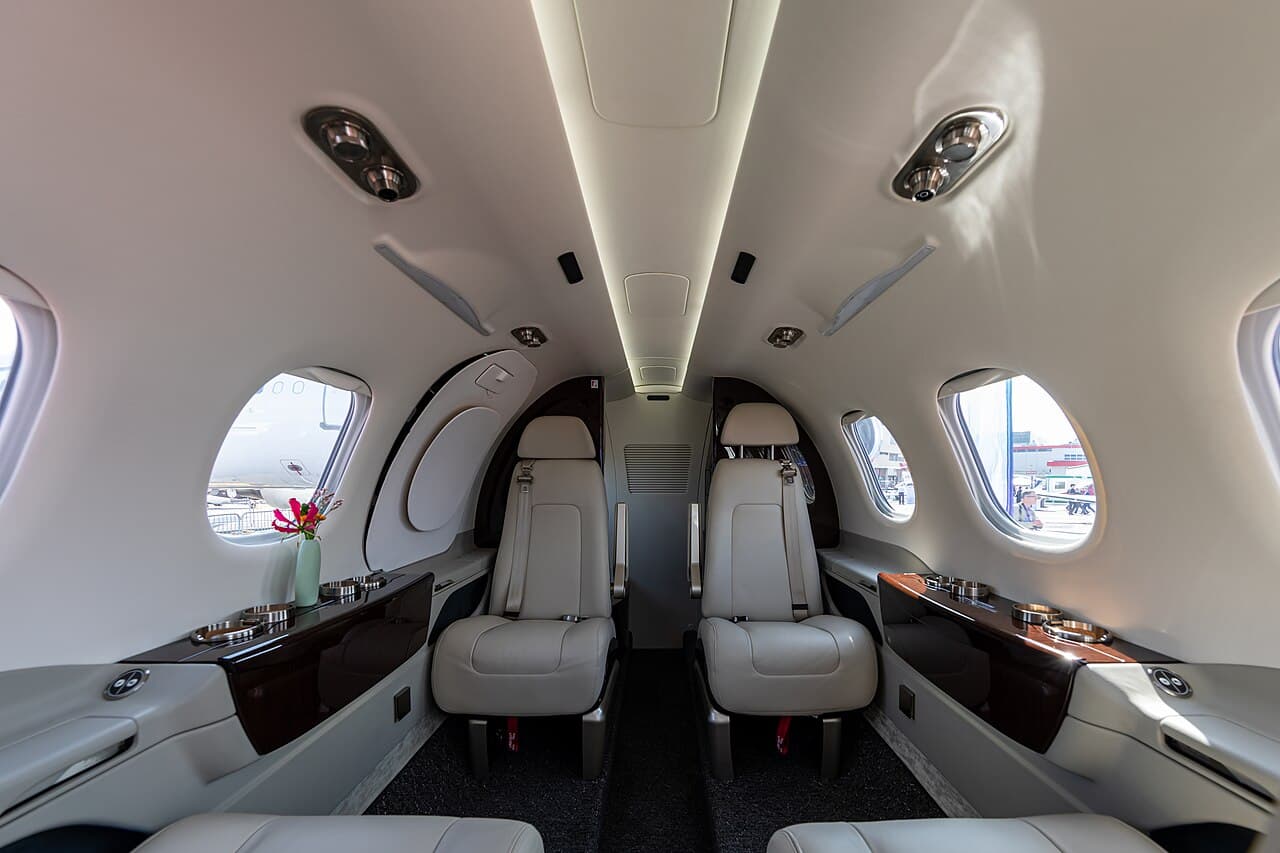
Embraer announced the Phenom 300EV on Tuesday as the latest version of its single-pilot light business jet. The manufacturer said the "EV" designation stands for "Evolution." Initial deliveries are expected in 2028. Expanded Safety Systems The Phenom 300EV will include Garmin Emergency Autoland , which can activate automatically or manually following pilot incapacitation and complete an automated landing. Embraer said the Phenom 300EV will be the largest business jet equipped with the system. The aircraft will also receive autobrake for takeoffs and landings. A new Embraer-developed electronic controller will manage the aircraft's rudder-by-wire system and other electronically controlled functions. The Garmin G3000 Prodigy Touch flight deck will add 3D taxiway routing, runway-occupancy alerts, synthetic-vision guidance, FANS 1/A+, RNP AR 0.3 capability and an inertial reference system. Existing systems include autothrottle, Emergency Descent Mode and Embraer's Runway Overrun Awareness and Alerting System. Range And Cabin Updates Embraer lists the Phenom 300EV's maximum range at 2,055 nautical miles under NBAA IFR reserve conditions, an increase from the Phenom 300E's published five-passenger range of 2,010 nautical miles. An increase in maximum zero-fuel weight will provide approximately 430 pounds of additional payload capacity. The aircraft will retain a maximum speed of Mach 0.80 and will use lithium-ion batteries, LED taxi lights and LED landing lights. The cabin will offer factory-installed Gogo Galileo low-Earth-orbit satellite connectivity. Starlink will be available later as an aftermarket installation under a supplemental type certificate. Other changes include a vacuum lavatory, improved temperature controls, an air-ionization system and a redesigned refreshment center. The aircraft will retain a maximum cabin altitude of 6,600 feet.
Embraer debuts Phenom 300EV light jet with Garmin Emergency Autoland and upgraded range
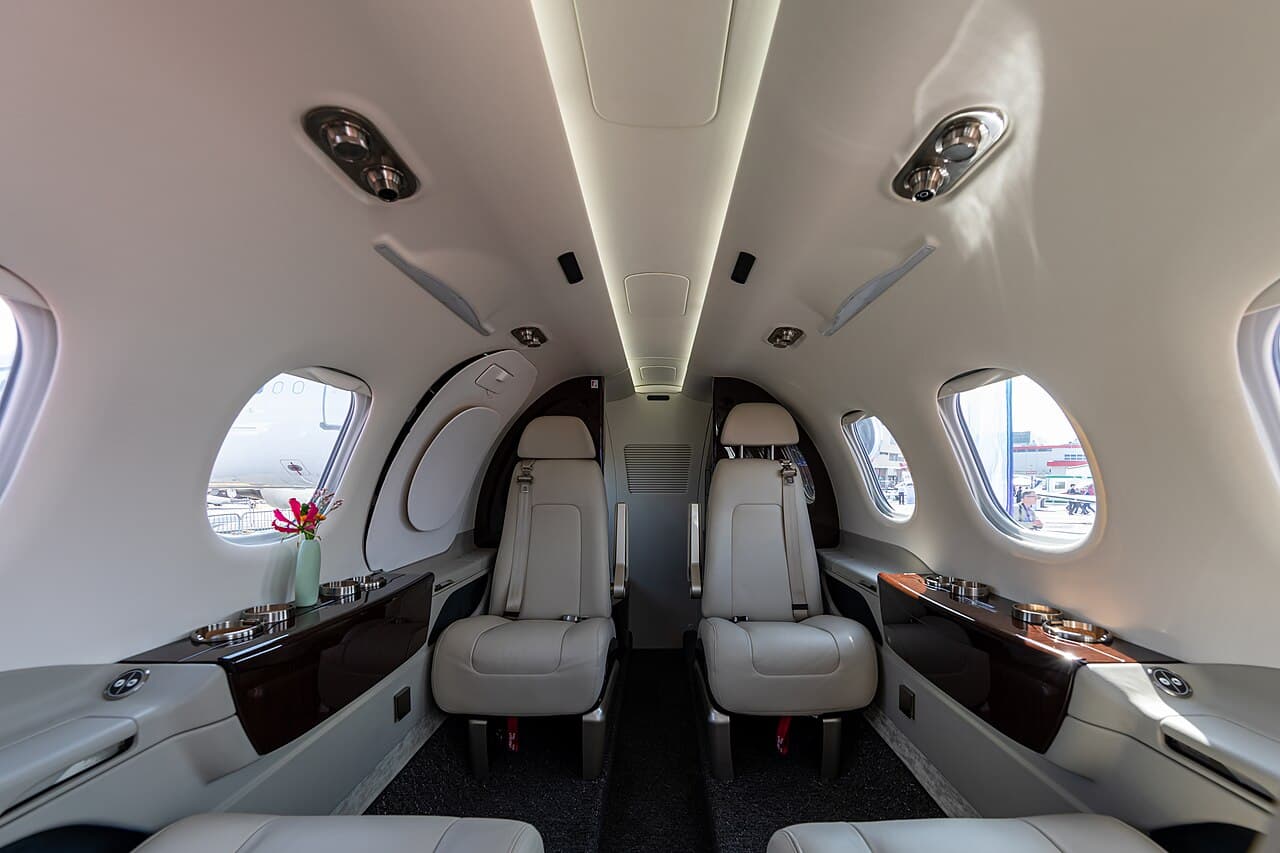
Embraer has launched the Phenom 300EV, the third generation of the planemakers best-selling light jet following the highly successful Phenom 300E and Phenom 300. On July 14, 2025, the Brazilian aircraft manufacturer said that the updated model arrives with intuitive safety technology, including Garmin Emergency Autoland. Embraer said the 'EV' designation stands for Evolution and deliveries of the new model are expected to begin in 2028. The latest executive jet "incorporates a series of performance and interior enhancements" from its predecessors such as Garmin G3000 Prodigy Touch, which includes runway and taxi situational awareness. PAUL BOWEN Landings and takeoffs are also supported by Autobrake and a new Embraer-developed Multi-Purpose Electronic Controller (MEC), integrates rudder-by-wire and other electronically controlled aircraft functions, contributing to reduced pilot workload and simplified maintenance. Michael Amalfitano, President and CEO of Embraer Executive Jets, said that for over a decade the Phenom 300 series have set the industry standard and the aircraft holds the "undisputed position as the category leader". "With the new Phenom 300EV, we are raising the bar once again," Amalfitano said. "Through purposeful innovations combining enhanced safety technology, amplified performance, and thoughtful cabin refinements, we have introduced meaningful advancements that make flying more intuitive, seamless and enjoyable. It is not only the evolution of the world's best-selling light jet, but a clear statement that the market leadership excellence benchmark continues to belong to Embraer." Embraer Performance updates include an extended range of up to 2,055 nautical miles and an increase in maximum zero fuel weight, adding approximately 430 pounds of payload capacity. The Phenom 300EV also introduces new True Blue Power lithium-ion batteries and LED taxi and landing lights designed to support improved reliability and dispatch performance. Starlink connectivity will also be available as an aftermarket solution through a Supplemental Type Certificate (STC). Introducing the Phenom 300EV, a bold evolution of the world's best-selling light jet for 14 consecutive years. There are light jets. And then there's the Phenom 300EV. Intuitive. Refined. Legendary. Read more: https://t.co/SD3KhYUZWx Phenom 300EV: https://t.co/2lTwriWz1C pic.twitter.com/UEMyMjJbiU — Embraer (@embraer) July 14, 2026 Additional enhancements include the introduction of an odorless vacuum lavatory, improved cabin temperature control, a redesigned refreshment center with the flexibility to bring a hot beverage machine of preference, and an air ionization system. RELATED India certifies multiple Embraer aircraft including E195 and E195-E2 jets
Lufthansa 787 Nose Gear Retracts Accidentally at Frankfurt Due to Missing Downlock Pin
German investigators found that the nose landing gear downlock pin was not installed before a Lufthansa Boeing 787-9 retracted unexpectedly at Frankfurt Airport on June 4. The German Federal Bureau of Aircraft Accident Investigation said 23 people were injured, including two seriously, and the aircraft was substantially damaged. Technicians Conducted Maintenance Test The Lufthansa 787 had arrived from Austin, Texas, and was being prepared for a flight to Los Angeles. Two technicians were troubleshooting an unresolved issue involving the main landing gear doors when the nose gear retracted immediately after they moved the landing gear lever. Proper maintenance procedures directed technicians to install the landing gear downlock pins before operating the lever. Investigators found the nose gear pin and its red warning flag inside a storage box in the avionics compartment. Four downlock pins had been installed correctly on the main landing gear. Aircraft Struck High Loader The Lufthansa 787’s nose, along with both engine cowlings, struck the concrete below. The forward fuselage also pressed down on a cargo high loader, injuring one person and damaging the loader and cargo-door area. Recovery crews drained about 60,000 kilograms of fuel before they lifted the nose back up with an air cushion. The nose gear extended and locked as the aircraft was raised. The BFU has not issued a probable-cause determination, and the investigation remains open. IR26-0454_1X_Boeing787 Download
The Daily Touch & Go
The day's best aviation news in your inbox. Free, no spam.