

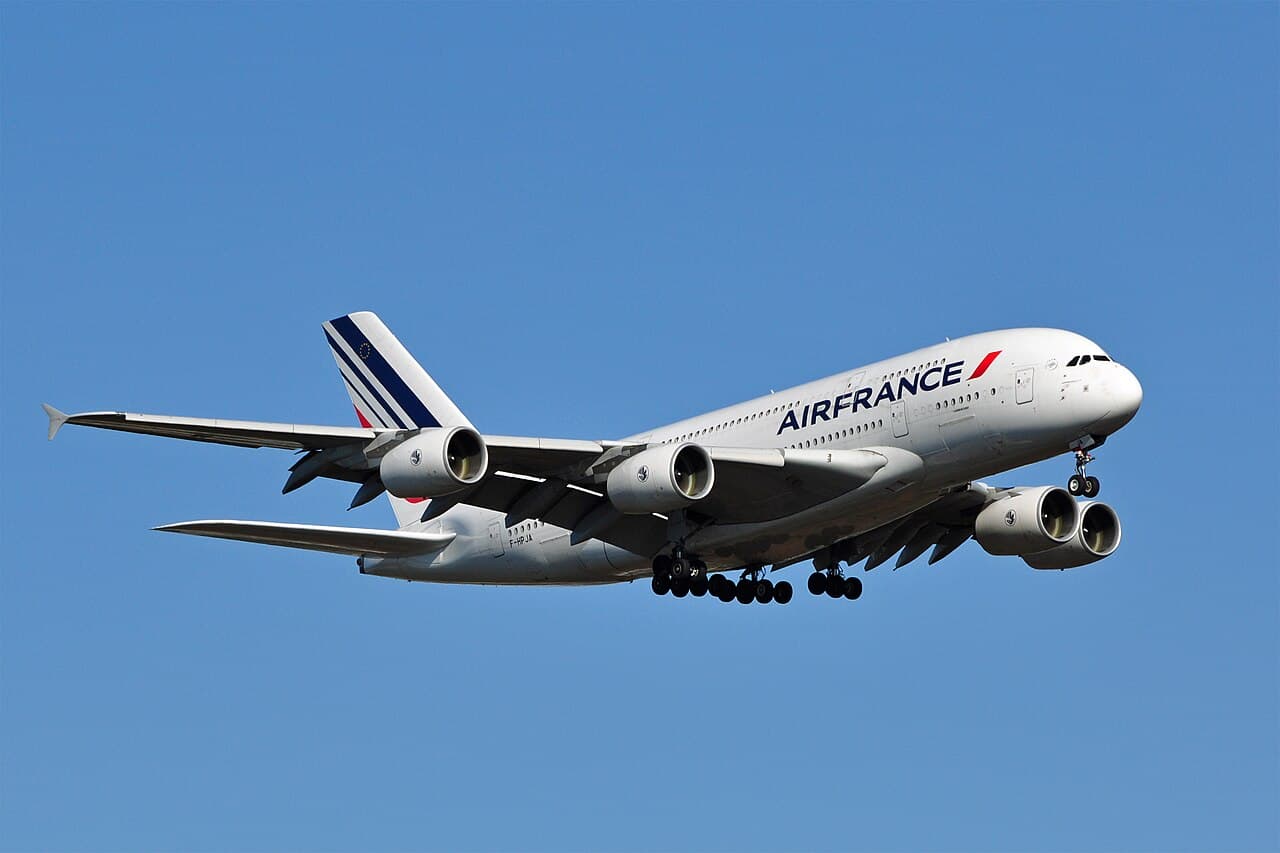
Image: Joe Ravi · CC BY-SA 3.0 · via Wikimedia Commons
Airbus fixed A380 wing cracks by replacing carbon composite parts with aluminum to avoid fleet grounding
Airbus resolved a critical wing rib foot cracking issue discovered in 2012 on half of the active A380 fleet by redesigning the wing structure to use aluminum components instead of carbon composites.
The gist
Airbus avoided grounding the A380 fleet by swiftly replacing carbon composite wing brackets with aluminum, fixing a wing cracking issue discovered in 2012.
Continuing coverage
All Airbus →- Legacy 1960s Boeing 737 Design Caps Economy Seat Width at 17 Inches
- Airbus Sees Premium Cabin Growth Driving US Domestic Aviation Through 2045
- flynas expands Airbus fleet with 25 new A330-900 and A321neo jets
- Airbus A350-1000ULR embarks on nonstop Toulouse to Melbourne test flight
- Airbus to upgrade A321neo with A321XLR wing design and single-slotted flaps
The Airbus A380, the world's largest passenger airliner, encountered a significant structural challenge in 2012 when cracks were found in its wing rib feet, parts critical for wing integrity. At that point, almost 80 A380s operated globally, and the cracking was detected on around 40 aircraft, impacting about half of the fleet. Airbus discovered that these cracks mostly occurred where aluminum alloy rib feet connected to carbon composite brackets within the wing structure.
The wing rib feet connect the internal wing ribs to the wing skin panels, playing a vital role in the overall wing strength. The combination of aluminum rib feet and carbon composite brackets, paired with manufacturing stresses, created conditions conducive to crack formation over time. Airlines such as Air France, Emirates, and Singapore Airlines were among those affected. This raised safety concerns, prompting the European Aviation Safety Agency (EASA) to mandate fleet-wide inspections under an airworthiness directive aimed at maintaining operational safety.
Airbus initially chose carbon composite brackets to reduce wing weight—saving approximately 660 pounds per wing—and designed the massive wingspan of nearly 262 feet to support a maximum takeoff weight exceeding 575 tonnes. However, the material mismatch proved problematic. To remedy this, Airbus developed a redesigned wing rib foot assembly that replaced the carbon composite brackets with conventional aluminum parts, a proven material used successfully in other Airbus aircraft wings.
The redesign and retrofit work began in late 2012 and covered approximately 120 A380s, including those already in service and new production aircraft. Airbus worked closely with EASA to keep the aircraft operational during this period under strict inspection protocols. The retrofit cost about $330 million and became a production standard from 2014 onwards. This swift engineering and regulatory collaboration prevented the grounding of the A380 fleet, preserving airline operations.
Despite resolving the initial cracking problem, the A380 has undergone additional wing-related inspections in subsequent years. In 2019, minor cracks were detected around the outer rear wing spar on some early production aircraft. Inspections were required on 25 planes operated by airlines including Qantas, Air France, Lufthansa, Singapore Airlines, and Emirates. These findings led EASA to expand inspection requirements over the coming years to cover more wing areas and aircraft.
By 2024, EASA mandated inspections that accounted not only for aircraft age but also for time spent in storage, responding to data linking prolonged ground time to increased crack severity. This broadened inspection regime included various wing spars to ensure flight safety given the A380's unique design and operational history.
In mid-2026, EASA issued a new emergency directive targeting the wing mid-spars on 16 A380s—15 operated by Emirates and one by Qantas—due to findings that indicated potential degradation threatening wing structural integrity. Some aircraft required immediate inspection, while others were given a limited window. Qantas's affected A380 was already in maintenance, avoiding schedule impact.
These recurring inspections reflect ongoing vigilance over the longevity and structural health of the A380’s complex wing design. Airbus developed special detailed inspection programs focusing on these mid-spars, vital components located within the wing box that bear crucial loads during flight. This iterative approach to safety demonstrates the continuous engineering attention required to maintain the A380's operational reliability over its service life.
Frequently asked questions
- What caused the wing cracks on the Airbus A380 discovered in 2012?
- The cracks were caused by the combination of aluminum alloy wing rib feet and carbon composite brackets, along with stresses during manufacturing, which led to cracks developing over time.
- How did Airbus solve the wing cracking issue on the A380?
- Airbus redesigned the wing rib foot assembly by replacing the carbon composite brackets with conventional aluminum components, implementing this redesign on existing and new aircraft starting in late 2012.
- Did the wing crack issue ever cause the Airbus A380 fleet to be grounded?
- No, the A380 fleet was not grounded; Airbus worked with EASA to keep planes in service under strict inspection directives while developing and retrofitting the permanent fix.
Read more
All Airlines →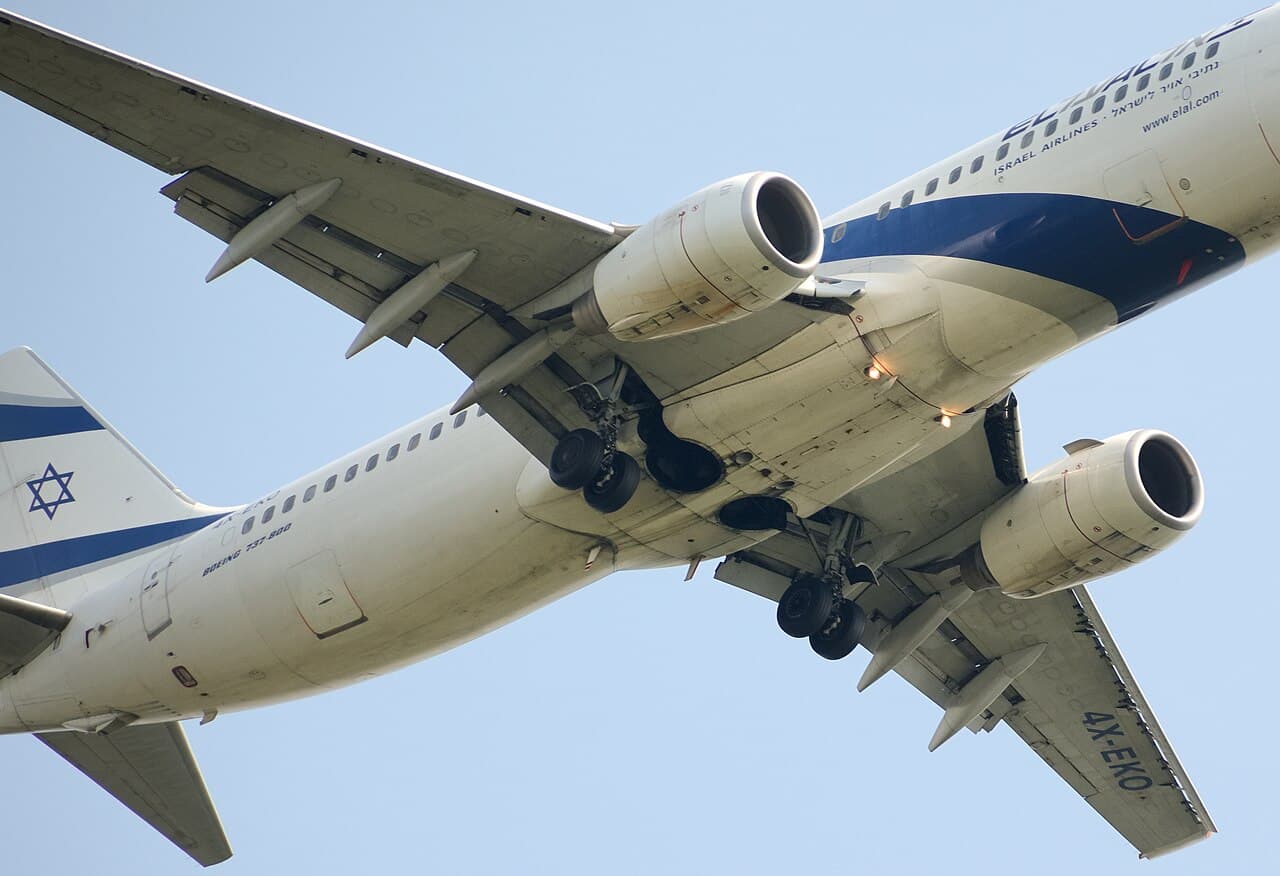
Legacy 1960s Boeing 737 Design Caps Economy Seat Width at 17 Inches
The Boeing 737 is one of the most popular narrowbodies in service, essentially offering the same economics and capabilities as the rival Airbus A320. It's the second-most successful commercial jetliner of all time (behind only the A320), and the two types have become ubiquitous on short-range routes, while later models are now becoming popular on medium-to-long-range routes.
Top 5 Premium Economy Cabins Rivaling Business Class on Long-Haul Flights
Business class fares continue to climb, and a growing number of travelers are looking for a smarter way to cross oceans without draining their travel budgets. Standard economy is often seen as a test of endurance, but the gap between the back and the executive cabin has closed dramatically. A select group of international carriers has elevated their mid-cabin offerings so effectively that passengers find themselves questioning the necessity of a five-figure business class ticket.
Senior Flight Attendants at US Carriers Surpass $100K Annually with New Pay Deals
Flight Attendant pay in 2026 varies widely by rank, seniority, the region, and carrier, but the top of the ladder is where the real money is. At major US airlines, entry-level cabin crew typically start around $25–$40 per hour, while senior international flight attendants can push base earnings toward $90,000 and beyond once premiums, per diems, and international layover pay are factored in. Seniority is key at all airlines, which usually sees an annual increase in salary and more pay as crew move up the ranks.
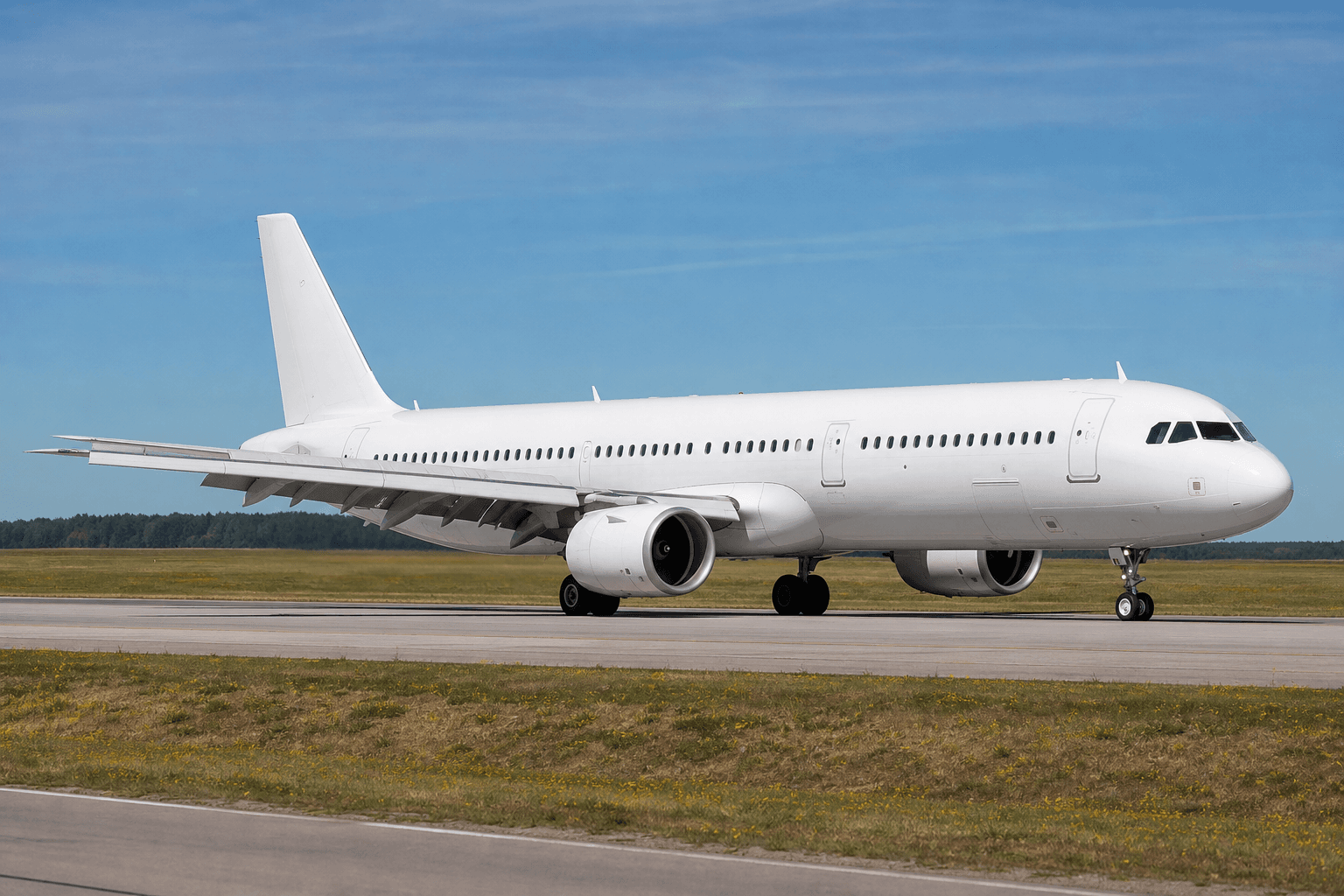
Airbus to upgrade A321neo with A321XLR wing design and single-slotted flaps
Airbus to incorporate batch of improvements on popular single-aisle model, and test production maturity of some on A320neo line. Airbus is to migrate A321XLR technology – including its revised wing design – to the A321neo, while other enhancements for the single-aisle family will initially be applied to the A320neo before being transferred up to the larger variants. The long-range XLR includes a lighter wing with a single-slotted inboard flap, and this will be incorporated into the regular A321neo, which currently uses a double-slotted design. A321neos will take advantage of a take-off performance improvement system which introduces intermediate flap positions, and works in conjunction with the single-slotted flap arrangement. The changes are part of a package of incremental improvements known as STEP4. A321neos will also benefit from new flight-control laws, the lighter electronic ‘e-rudder’, forward cabin temperature zones, and updated multi-functional runway lights. Head of A320-family development Torsten Hartung says the airframer is putting the "good ingredients" from the XLR onto the popular A321neo platform – the A321neo had a backlog of over 5,600 orders at the end of June. But the STEP4 enhancement will also entail new modifications which Airbus is to apply initially to the A320neo, as a low-risk measure to ensure production maturity before transferring them to the higher-rate A321neo, including the XLR variant. The A320neo will notably receive a new 'cobra' duct for the auxiliary power unit – mounted in the top of the fuselage, and aimed at enhancing cabin air quality – and corrosion-prevention measures such as titanium cabin rails. "The baseline A320neo is the first model to incorporate and prove the new modifications," says STEP leader for A320 family programme development Martin Schnoor. “Where we physically change the aircraft we decided to apply it first on A320neo in order to learn and see how well things are going." Once integration on the A320neo line is smooth, the new modifications will be made to the A321neo and XLR. Schnoor says deliveries of initial STEP4 A320neos are beginning, with the first A321neos and XLRs set to follow after a year. The A320neo has a different wing to the A321neo, but Airbus is ultimately aiming to migrate as many XLR innovations, outside of wing-related changes, to the A320neo as it can. Airbus says STEP4 will also eventually deliver further enhancements across the family, such as cabin-floor reinforcement, to account for changing standards in the weight of passengers and baggage, and a standardised flight data interface and management unit.
The Daily Touch & Go
The day's best aviation news in your inbox. Free, no spam.