

Illustration: The Touch & Go
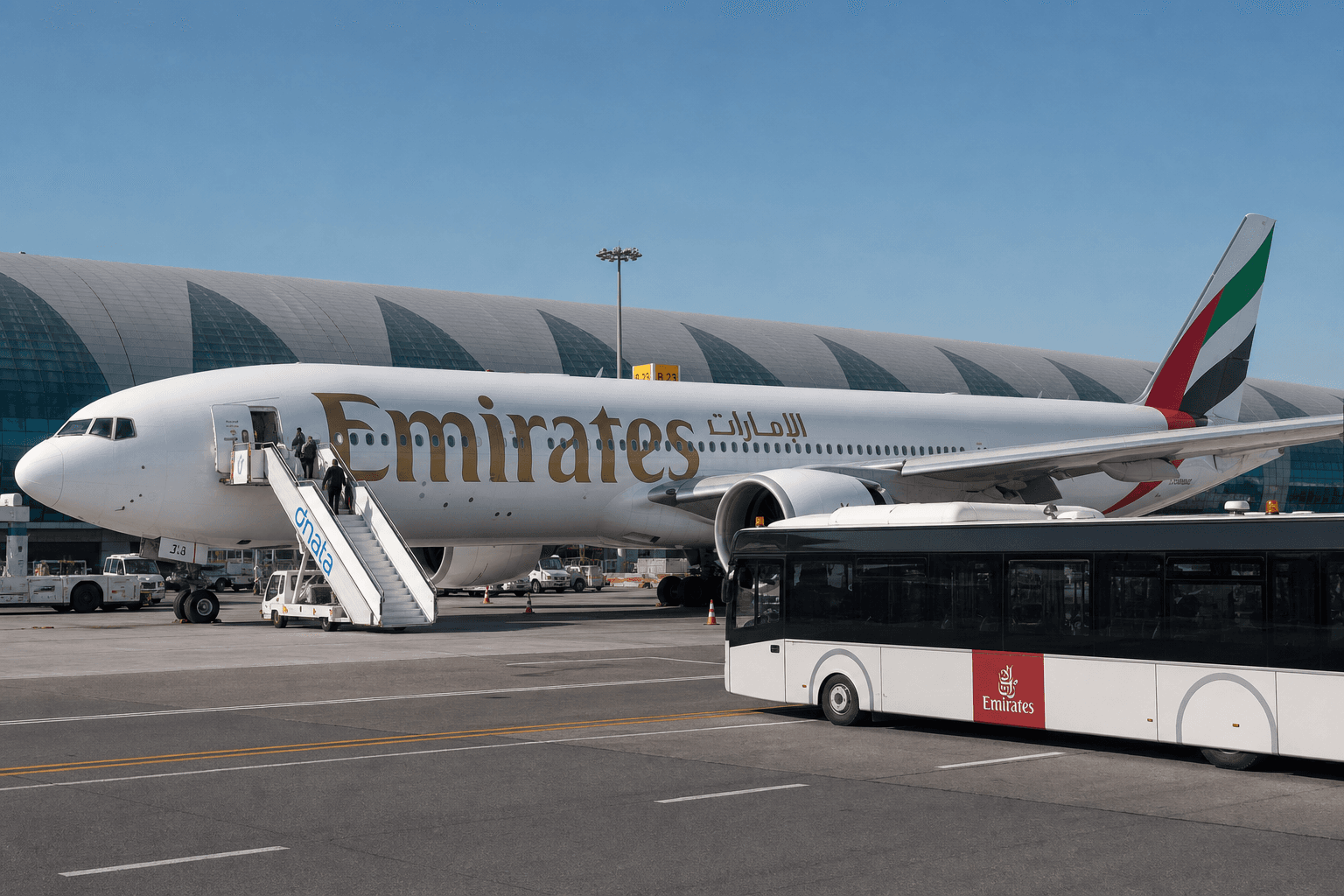
Emirates offers free Dubai hotel stays for 6-26 hour layovers with Dubai Connect program
Emirates provides eligible transit passengers with complimentary hotel accommodations, meals, transport, and visas during extended layovers in Dubai between 6 and 26 hours.
The gist
Emirates Dubai Connect grants passengers on 6-26 hour layovers free hotel, meals, transport, and visas, enhancing long transit experiences.
Continuing coverage
All Dubai →Emirates' Dubai Connect program extends a valuable service to passengers facing extended layovers at its Dubai International Airport hub. Designed to ease transit discomfort, the initiative provides a complimentary hotel stay, complimentary meals, transport to and from the airport, and a free UAE entry visa when applicable. This comprehensive offering caters to travelers with connection times ranging from six to 26 hours, making lengthy waits more comfortable and less stressful.
Eligibility for Dubai Connect requires passengers to be booked on Emirates-operated flights arriving and departing Dubai within the specified layover window. Both inbound and outbound segments must be Emirates flights, including those marketed by Emirates or Qantas, with exceptions for some FlyDubai-operated flights if they use Terminal 3. Importantly, bookings must be made on a single ticket issued on Emirates stock (ticket numbers starting with 176), including eligible award tickets booked via Emirates Skywards.
During the booking process on Emirates' official website, passengers can identify their eligibility for Dubai Connect as the option appears in the flight selection stage if conditions are met. Following booking, travelers can manage their reservations online to add the transit hotel service at least 12 hours prior to arrival, simplifying the logistics of extended layovers. Upon arrival in Dubai, travelers access the service by clearing immigration and visiting the Emirates Dubai Connect desk to receive vouchers and transportation details.
The precise hotel assigned to travelers under the program is not fixed but often includes prominent Dubai hotels such as Le Meridien Airport Hotel Dubai, JW Marriott Marquis Dubai, and the Copthorne Hotel Dubai. The accommodation package typically covers relevant meals depending on check-in time, potentially including breakfast, lunch, and dinner, ensuring passengers have adequate nourishment during their stay.
Emirates Dubai Connect distinguishes itself among similar offerings by rival airlines through its transparency, ease of booking, and inclusivity across all classes of service—ranging from economy to first class. It notably extends to award ticket holders, a feature not commonly matched by other carriers' free transit hotel policies. This approach demonstrates Emirates’ commitment to customer convenience during extended layovers.
Long haul itineraries, especially those booked by economy class passengers, benefit significantly from the chance to rest in a hotel room away from the airport environment, potentially improving passenger wellbeing and readiness upon reaching their final destination. Additionally, this transit experience allows visitors a brief introduction to Dubai, enhanced by the My Emirates Pass program that offers discounts across a wide range of local services with just an Emirates boarding pass.
Since the program's inception, Emirates has refined Dubai Connect to respond to traveler needs and market conditions, updating policy details and expanding eligibility where possible. This commitment to continuous improvement maintains the relevance and appeal of the offering within a competitive aviation market where passenger comfort increasingly influences airline choice.
The Emirates Dubai Connect program encapsulates a significant passenger benefit by turning extended transit times into a more pleasant interlude complete with accommodation, meals, and visa facilitation. For those with long layovers at DXB on an Emirates flight itinerary, taking advantage of this program delivers both practical respite and an enhanced travel experience that distinguishes Emirates transit services.
Frequently asked questions
- What layover duration qualifies for Emirates Dubai Connect complimentary hotel?
- Passengers with connecting stopovers in Dubai lasting between six and 26 hours are eligible for Emirates Dubai Connect free hotel accommodations.
- Who is eligible for Emirates Dubai Connect service?
- Travelers booked on Emirates-operated flights (including Qantas marketed flights and some FlyDubai Terminal 3 flights) on a single ticket issued by Emirates are eligible regardless of travel class, including award tickets through Emirates Skywards.
- What services does Emirates Dubai Connect include besides the hotel stay?
- The program includes transportation between the airport and hotel, complimentary meals appropriate to the stay time, and a free UAE entry visa if required.
Read more
All Airports →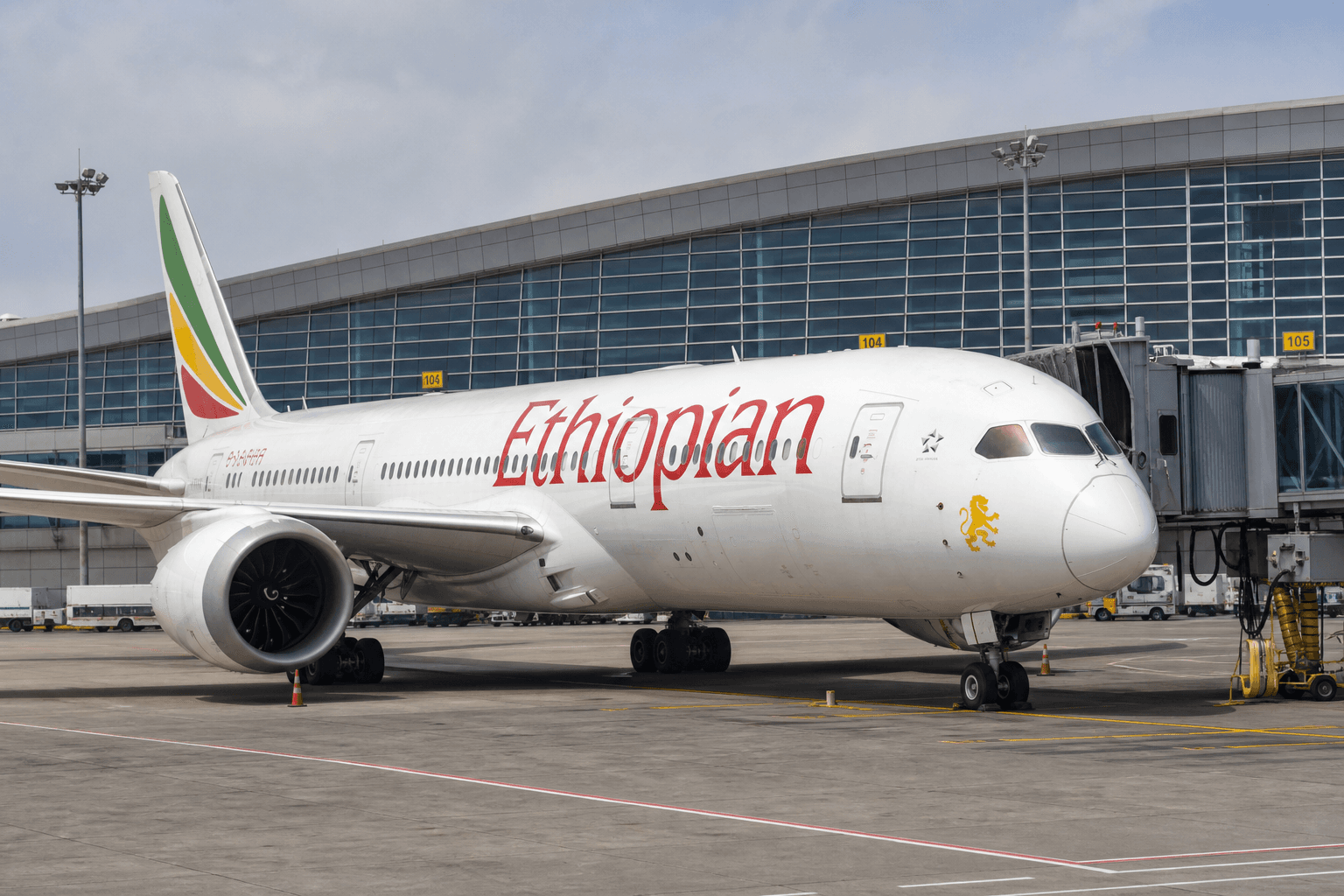
Ethiopian Airlines offers free 8–24 hour transit hotel stays at Addis Ababa hub
Ethiopian Airlines has a large global route network through its Addis Ababa (ADD) hub, as the airline flies to four continents from there. The airline offers a fairly pleasant onboard experience, including in business class , even if there are a bunch of different seat types . Given the carrier's complex network, in some cases, passengers might find themselves with an extended layover in Addis Ababa. The good news is that if your layover is long enough, you may be entitled to a free hotel room , which can make your travel experience much more pleasant. In this post, I'd like to take a closer look at how exactly the program works. Separately, I've written about similar programs offered by Emirates in Dubai (DXB) , by Qatar Airways in Doha (DOH) , and by Turkish Airlines in Istanbul (IST) . Basics of Ethiopian Airlines' stopover hotel program Ethiopian Airlines offers passengers with extended transit periods a complimentary hotel stay. On top of that, eligible travelers receive a complimentary transit visa, free meals, and transport to and from the hotel, as needed. As you'd expect, there are some terms to be aware of when it comes to the free hotel program, so let's go over all of those details (and thanks to this valuable FlyerTalk thread for clarifying many of the common questions). How long does your connection have to be? In order to get a free transit hotel from Ethiopian Airlines in Addis Ababa, you need to have a layover of 8-24 hours. You wouldn't be eligible if you're spending less or more time in Addis Ababa than that. Unlike with some other airline stopover programs, there's no need to take the next flight in order to be eligible for this. In other words, you could intentionally book a connection for a later flight to receive a stopover hotel. Interestingly when paying cash you'll notice that Ethiopian ordinarily charges $70 (or so) extra for a longer connection, but that doesn't apply when redeeming miles. Get a free stopover hotel with an 8-24 hour connection Who is eligible for a free stopover hotel? Ethiopian Airlines has fairly few restrictions beyond the above regarding who is eligible for a transit hotel. It doesn't matter if your ticket was issued by Ethiopian Airlines or a partner airline. Furthermore, award tickets qualify, regardless of which program you book through. The only major restriction is that you must be both arriving and departing on Ethiopian Airlines on a single ticket to be eligible for a stopover hotel. So you can't be arriving on one airline and departing on another airline. How do you book your free stopover hotel? There's no need to book your stopover hotel in advance. Instead, when you check-in for your Ethiopian Airlines flight, you should be given all the vouchers that you'll need. This includes the vouchers for the hotel, meals, transportation (if applicable), a transit visa, and more. In the event that you don't get these vouchers at check-in (for whatever reason), you can proceed to the transit desk in Addis Ababa, and they can help you there. Ethiopian Airlines customer service desk Addis Ababa Do you need a visa for entering Ethiopia? This stopover hotel program automatically comes with a transit visa, so you'll be given the documentation required for that. This applies regardless of your nationality. If you plan on staying in Ethiopia for longer than 24 hours (not in conjunction with this program), then standard visa policies apply. What stopover hotels does Ethiopian Airlines use? Ethiopian Airlines doesn't guarantee which hotel you'll be given with your stopover package. However, the most common option seems to be the Ethiopian Skylight Hotel, which is owned by the airline. The Ethiopian Skylight Hotel is the largest hotel in Africa, and has both an in-terminal location , and a location past immigration. So while it's no guarantee, hopefully you're accommodated at one of those, and they're both pretty well regarded. The location in the terminal is probably ideal if you have a shorter connection (closer to eight hours), where you just want to maximize rest, while with a longer connection (closer to 24 hours), you might like to get into town, see some sights, etc. Ethiopian Airlines Skylight Hotel in terminal room What kind of meals does Ethiopian Airlines include? If you take advantage of the complimentary stopover program, you can generally expect that the airline will include breakfast and dinner. While the exact details will vary based on which hotel you end up in, you can expect that you'll get access to an extensive buffet, plus soft drinks, with alcohol and some special desserts costing extra. When I stayed at the in-terminal hotel, I found the spread to be relatively good. Ethiopian Airlines Skylight Hotel dining area Bottom line Ethiopian Airlines offers an excellent complimentary hotel program for those with long layovers in Addis Ababa. You can take advantage of this with a layover of 8-24 hours, regardless of the cabin you're traveling in. You'll also receive meals, transportation, and a transit visa. This can be a great way to get some rest between flights. This is definitely a program worth understanding if you find yourself with a long layover in Addis Ababa. If you've used Ethiopian Airlines' free stopover hotel program, what was your experience like?

How Much Time Should You Leave Between Separate Flights on Different Tickets?
OMAAT reader Peter asked me a question that I think is worth addressing more broadly — if you book an itinerary that involves two or more separate tickets, how much of a buffer should you leave between flights on those two tickets? There's not going to be a "one size fits all" answer, but I'd like to share my thought process, and hear how others approach this. First let's talk about why you might want to book tickets this way, the things I'd factor into deciding on a buffer, and the approach I take (admittedly I don't always get this right!). Why you might book an itinerary on separate tickets Typically, most people will book an itinerary between their origin and destination on a single ticket, even if multiple airlines are involved (which is possible thanks to partnerships and interline agreements ). However, there are definitely situations — especially in the miles & points world — where you might want to book separate tickets: Maybe you only found reasonably priced award tickets out of a long haul gateway city, and then you need to position there on a separate ticket Maybe you're being savvy and are trying to avoid the UK Air Passenger Duty , so you book your first flight out of the UK separately as a short haul ticket, and then pick up your long haul ticket elsewhere Maybe an itinerary just ends up being cheaper if booked as two separate tickets, whether you paid with cash or points Maybe you booked a ticket far in advance, but then your plans change, though the most economical option is to just book a separate positioning flight, but still take your originally booked ticket Anyway, I do end up booking itineraries as separate tickets with some frequency, and the most common reason is because I'm redeeming points out of another gateway city, and that ends up being the most economical option. I sometimes book itineraries on two separate tickets The considerations with deciding on what buffer to leave To state the obvious, there are many factors that would impact my decision of how much of a buffer to leave between flights on separate tickets. For example, if you're flying a once daily flight to board a cruise or to attend a very important business meeting, I'd take a different approach than if you're connecting to a ticket in a market that has 50 daily flights. So to expand on that a bit, here are the things that I'd take into consideration: How important is it to actually make the flights on your second itinerary, and to arrive at your destination on-time? How flexible are your tickets? If you miss your second itinerary, is it a "use it or lose it" situation, or could you easily rebook? Are you checking bags? Obviously you'll want to add to your buffer if you are, especially since bags often can't be checked through on separate tickets What time of day is your first flight? The earlier you fly, the better the odds of things going smoothly What are the weather conditions to consider? On summer afternoons you have to be worried about thunderstorms, and in winter, consider how likely a snowstorm could be How many other flights are there that could get you to your destination within a reasonable timeframe, assuming you miss the originally booked one? How skilled are you at managing your own travels? If you're very resourceful and not stressed out by a potential misconnect, you can handle this differently than someone who gets really stressed in these situations Consider how much flexibility your ticket has How I decide on how much of a buffer to leave It goes without saying that if you want to maximize your odds of not having any major disruptions, you should leave a massive buffer between separate flights on itineraries. It's definitely a best practice to maybe even leave a day between separate itineraries, or at least to leave an unpleasantly large number of hours. That being said, I want to be realistic here: Often people have limited vacation, so adding an extra day enroute might not be practical, might significantly add to the expense of the trip, etc. Of course leaving a really long layover sounds smart, but most people don't want to spend 10 hours at an airport waiting for their connecting flight Let me share my approach, acknowledging of course that I don't always get this right (including recently!) . As I view it, I take a calculated risk, trying to find the middle ground between minimizing risk and being efficient. Obviously it depends on the circumstances, but assuming that I don't 100% have to be at the destination exactly at my planned arrival time, my most common approach is to typically leave a buffer of four hours, and/or to have at least another flight between my original flight and subsequent one that I can be rebooked on, in the event that it cancels. Admittedly this isn't a perfect system, and a lot can still go wrong. After all, "when it rains, it pours" also applies to aviation. Sometimes there's just a very bad weather system, and you have flights for an entire afternoon delayed by hours. In those situations, there's nothing you can do. To get a bit more specific, personally I generally hope for a bit bigger of a buffer if I'm checking bags, and if my second ticket is non-refundable or non-changeable. Meanwhile if I'm traveling alone, I'm on separate tickets, or it's in a high frequency market, I've certainly booked connections way shorter than that. Just to give an example, maybe I have an award ticket booked from Frankfurt to Chicago on Lufthansa, and then I book a connecting flight to Miami on American. There I'd gladly book a short connection, and worst case scenario, I can just rebook on another flight. That's an example of a low risk situation, as I see it. I generally view things as lower risk if they're at the end of my trip, and if I'm headed home, especially flying a US carrier, since they tend to be more flexible if you miss a flight (compared to Asia, Europe, etc.). I'll often leave a shorter buffer when returning home Bottom line Especially in the miles & points world, it's common to see people book flights across multiple tickets. This is often necessary if redeeming miles for a long haul flight out of a gateway, and then needing to position. It can be hard to decide on the right buffer. Obviously the bigger the buffer, the better the odds of everything going smoothly. At the same time, adding an overnight layover can add a lot of time and expense to a trip. My general rule of thumb is that I try to leave a buffer of at least four hours between separate tickets, with at least one flight between the two that would still get me to that destination in time to make the flight. Admittedly there are many other considerations as well, so that's not some hard and fast rule. What approach do you take when it comes to leaving a buffer between separate itineraries?
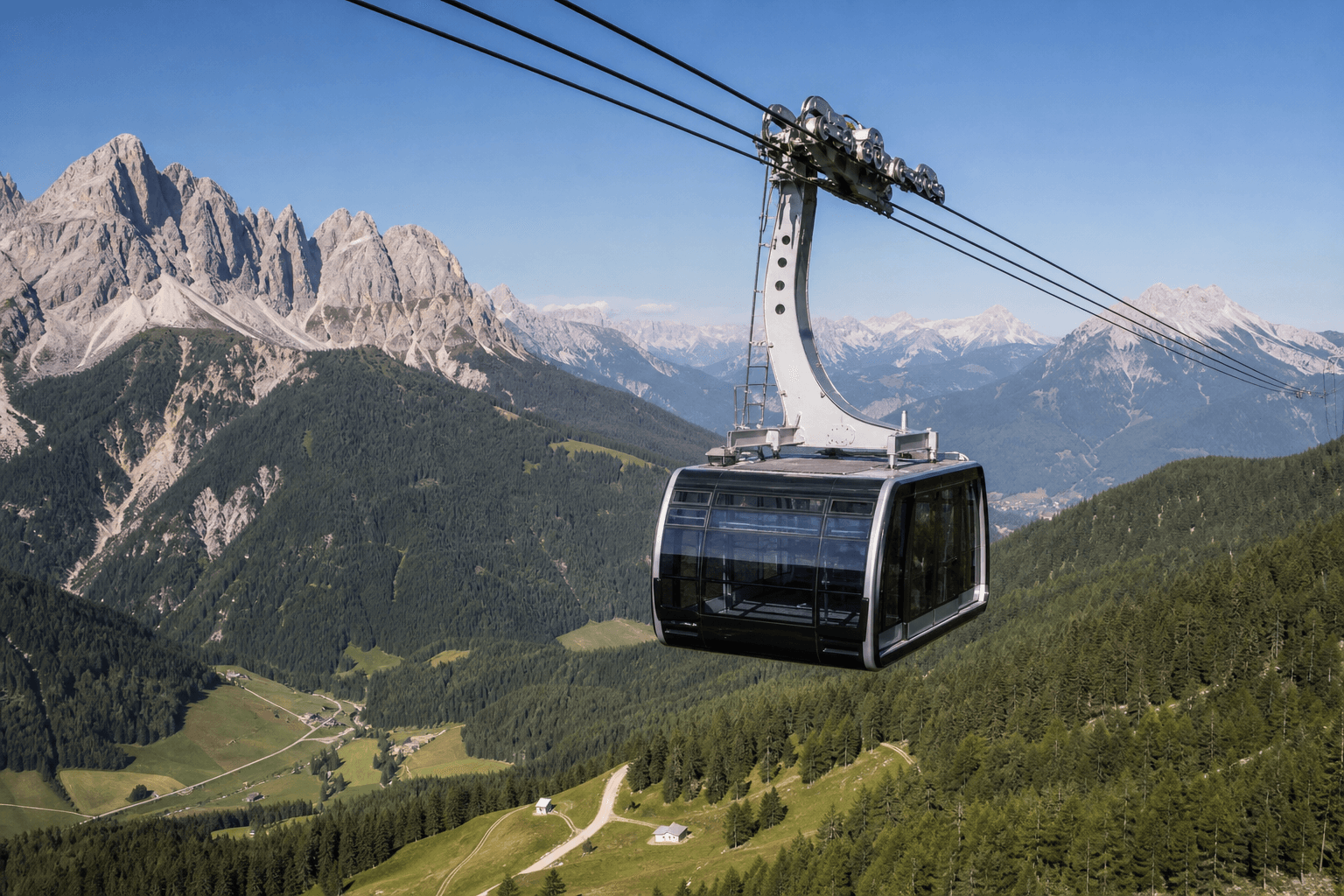
Exploring South Tyrol: A Stunning Dolomites Destination with Rich Culture and Cuisine
We recently took a family trip to South Tyrol (Südtirol), in the Dolomites. While I won't be writing a full trip report series about the trip (reviewing flights thoroughly while wrangling two little kids is impossible), I did want to review some of the individual portions of it, and in this short series, would like to focus on our time in South Tyrol, in the Dolomites. This was my first time visiting the region since I was a little kid, and I was so excited to return. In this post I'd like to talk about our time there in general, and then three hotel reviews will follow, of the places we stayed. Long story short, if you love mountain activities (especially in summer), amazing food, and an interesting culture, this is a place you should absolutely put on your list. I already can't wait to return. There are even some cool points hotel options, both belonging to Small Luxury Hotels of the World (via the Hilton Honors partnership), and Design Hotels (affiliated with Marriott Bonvoy). Why we decided to visit South Tyrol for a summer trip As longtime OMAAT readers know, I have a connection to Germany — both of my parents are from Germany ( I have dual citizenship ), and most of my relatives still live there. For that matter, Ford loves languages, and he picked up German at the start of the pandemic, and is fluent at this point. We'd also like our kids to have a connection to the culture, so we try to travel there when we can. Anyway, this summer we had a month-long trip to Europe, starting in Skiathos, Greece, and ending in Sylt, Germany. Between those two places, we had a period of around 11 days. So several weeks back, I posed the question on the blog of whether there are any charming hotels in Germany or Austria that I wasn't thinking of. There's plenty of natural beauty in the southern part of Germany and Austria, and I've enjoyed my time in places like Berchtesgaden, Salzburg, etc. However, I was hoping for something else unique. Several people brought up South Tyrol, and that reminded me that I had visited the region when I was a little kid, but not since. With my memory having been jogged, that immediately became the obvious choice for this trip. For those not familiar, South Tyrol is an autonomous region in northern Italy ( with a fascinating history ), located in the Dolomites. It's also interesting culturally, as it's a mix between feeling like you're in Germany (well, or Austria) and Italy, in terms of the language, food, etc. The easiest way to get there is to fly into Innsbruck (INN), and then it's a roughly two-hour drive. But you can also fly into Munich (MUC), and then it's around a four-hour drive. In our case, we fly into Innsbruck, which I was excited about as an avgeek, as it's a unique airport — I remember always flying into this in Microsoft Flight Simulator, back when I was a kid… good times! We flew Austrian into Innsbruck (INN) South Tyrol is has so much to offer as a destination I'm not going to write a detailed guide about South Tyrol, but instead, I'd like to share my big picture thoughts on this as a summer destination. South Tyrol is made up of all kinds of charming little towns, so there are endless choices as to where to stay, and there's no single best option. We ended up staying at three different hotels (20-60 minutes apart by car), and then made little day trips around the region. On the most basic level, the scenery in South Tyrol is just breathtakingly gorgeous, no matter where you look. It almost doesn't look real. Scenery around South Tyrol Scenery around South Tyrol Scenery around South Tyrol Even beyond the scenery in the region, the towns as such are charming and historic. For example, one of the places we stayed was the town of Castelrotto, and we happened to be there on "Church Day" (Kirchtag), which was fun to watch. Scenery around South Tyrol Scenery around South Tyrol The activities in the area are endless, from hiking, to cable cars, to wineries. It's a great family destination, given the access to the outdoors (all the little towns also have playgrounds), but it's also a great couples destination, given how spa oriented it is. Scenery around South Tyrol Speaking of spas, just about all the hotels in the area place huge emphasis on facilities dedicated to wellbeing, since that's kind of one of the selling points of the region. So while you can use hotels as a base for exploring the region, plenty of people just enjoy the hotel facilities as well. Scenery around South Tyrol The food and wine in South Tyrol were also truly incredible. As you'd expect for a region like this, there's a huge culture around food and wine, and goodness, it didn't disappoint. I love how the food is kind of a hybrid between Italian and Austrian classics, so whether you want a wiener schnitzel, raclette, or a plate of pasta, you won't be disappointed. Honestly, I don't remember ever having so many consecutively excellent meals. Dining in South Tyrol Dining in South Tyrol Oh, also, since this is technically in northern Italy, the coffee quality is next level, which I was delighted by. Coffee in South Tyrol I also thought it was interesting how few American visitors there were. A vast majority of the travelers we encountered were Germans, with Italians probably making up the second largest group. After that, I was surprised that the next biggest groups were from Asia (China, Japan, and Korea), which I wouldn't have necessarily expected. I think on the entire trip we heard maybe five people speaking American English, so that was certainly unusual for Europe in summer! South Tyrol has a good selection of charming hotels South Tyrol has almost no cookie cutter chain hotels, with the exception of the Four Points by Sheraton Bolzano (you don't actually want to stay in Bolzano — it's the industrial capital of the region). However, there are several options affiliated with Small Luxury Hotels of the World (allowing you to earn or redeem Hilton Honors points), and with Design Hotels (allowing you to earn or redeem Marriott Bonvoy points). Personally, we stayed at the following three properties: Miramonti Boutique Hotel, Small Luxury Hotels of the World ; this is an incredible property I can't recommend enough, and best of all, we booked it with Hilton Honors points Hotel Schwarzschmied, Marriott Design Hotels ; we enjoyed this hotel and it was the lowest price of the hotels we stayed at, with an amazing view, but it was my least favorite of the three (but it was still great!) Hotel Schgaguler, Marriott Design Hotels ; we loved this hotel as well, despite some of its quirks, and in particular, the half board was really great Miramonti Boutique Hotel, Small Luxury Hotels of the World Hotel Schwarzschmied, Marriott Design Hotels Hotel Schgaguler, Marriott Design Hotels Even beyond the hotels we stayed at, there are many others to choose from. For one, I've heard Forestis Dolomites is absolutely amazing, and more than one person has told me this is their favorite hotel in the world. However, it's very pricey and adults only, so wasn't right for this trip. Beyond the ones we stayed at, the selection of Marriott Design Hotels properties in the region is nothing short of astounding, and each looks charming. Beyond the two we stayed at, there are also the following six options: Villa Arnica is the smaller and more charming sister property of Hotel Schwarzschmied, but it was sold out on the days we were staying, and is also adults only 1477 Reichhalter is another sister property to Hotel Schwarzschmied and Villa Arnica, and it's located in the actual center of the town of Lana, with just eight rooms Parkhotel Mondschein is another property we considered, but which wasn't available for our dates Hotel Greif is a charming-looking hotel located in the city of Bolzano; I don't have any interest in staying here, but it looks better than the Four Points! Arua Private Spa Villas consists of several two-bedroom villas, so it's a great option for families Vigl
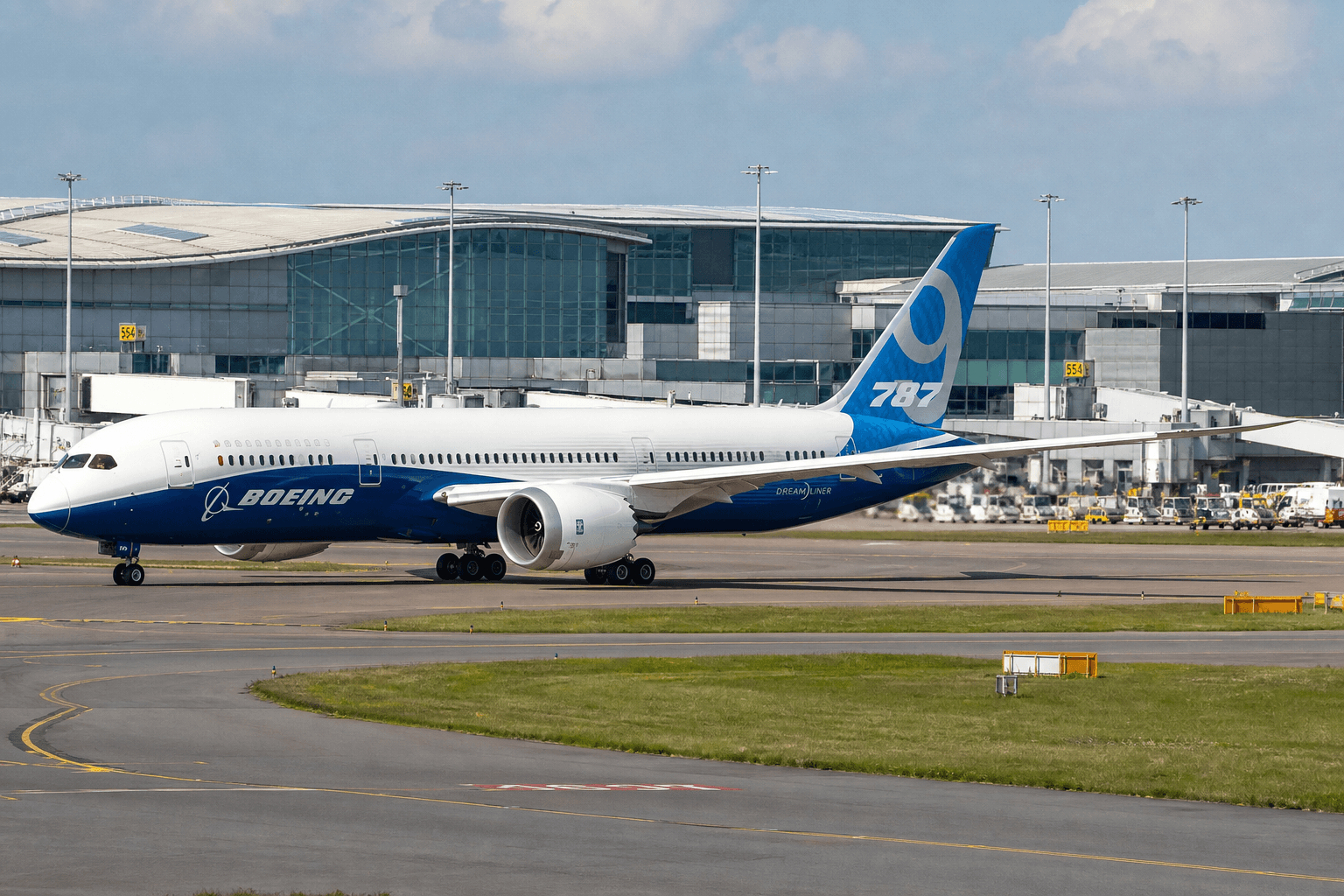
Heathrow Sees 1.2% Rise in North America Flights Amid 2026 World Cup Surge
London Heathrow Airport (LHR) enjoyed a fruitful June, with the facility's latest figures showing that long-haul demand from football fans jetting off to watch the 2026 FIFA World Cup in Canada, Mexico, and the US made a difference to its traffic levels. Most notably, the West London hub handled almost two million passengers on flights to and from North America, representing a year-on-year increase.
The Daily Touch & Go
The day's best aviation news in your inbox. Free, no spam.