

Illustration: The Touch & Go
Heathrow Sees 1.2% Rise in North America Flights Amid 2026 World Cup Surge
London Heathrow handled nearly two million passengers to North America in June 2026, boosted by football fans traveling to the World Cup and increased cargo volumes.
The gist
Heathrow’s North America flights and cargo surged in June 2026, driven by FIFA World Cup travel and strong transatlantic demand.
Continuing coverage
All Heathrow →- Why Commercial Flights Circle Above Airports Before Landing for Up to an Hour
- British Airways Drops Seven Long-Haul Routes, Shifts Focus to Heathrow
- Severe Storms Cause Nearly 1,000 Flight Delays and Cancellations at Heathrow and Gatwick
- Star Alliance CEO urges Heathrow to keep members co-located and ensure affordable expansion
London Heathrow Airport reported a notable increase in passenger traffic to and from North America during June 2026, coinciding with the FIFA World Cup activities in Canada, Mexico, and the United States. The airport recorded 1.965 million passengers on these routes, marking a 1.2% rise compared to June 2025. This growth represents the second consecutive month of increased travel between Heathrow and the North American region, underscoring the impact of major sporting events on global air travel patterns.
English football supporters likely made up a significant portion of the World Cup travelers departing from Heathrow, but the airport also highlighted its status as a key international transfer hub. Transfer passenger traffic to US destinations increased by 3%, reflecting Heathrow’s advertised position as the most connected UK airport for flights to the United States.
Cargo operations also saw strong performance in June, with trade volumes between North America and Heathrow up 6% year-over-year. Heathrow's CEO Thomas Woldbye cited sustained growth from the North American and Asia-Pacific markets, coupled with climbing cargo volumes, as indicators of robust global connectivity demand during the first half of 2026.
In terms of airline operations, data from aviation analytics firm Cirium showed that 10 airlines collectively scheduled 8,845 flights to and from North America via Heathrow in June, offering over 2.28 million seats. Passenger load factors exceeded 86.1%, signaling high utilization of available capacity on these transatlantic flights.
British Airways led the North America route network at Heathrow, operating 3,202 flights and more than 882,000 seats. Virgin Atlantic followed with 1,340 flights and over 389,000 seats. Among US carriers, American Airlines and United Airlines had similar flight numbers—1,260 and 1,200 respectively—but American offered a larger seat capacity, at 343,200 versus United's 267,631.
Other carriers included Delta Air Lines with 583 flights and approximately 150,000 seats, slightly ahead of Air Canada’s 540 flights but with fewer seats (169,317). JetBlue, Aeromexico, Alaska Airlines, and WestJet also contributed to the transatlantic capacity, each operating around 60 to 180 flights with seat capacities ranging from about 16,000 to 24,000.
With the 2026 FIFA World Cup semi-finals approaching, excitement and demand for last-minute travel options have increased. On July 15, England faces Argentina in Atlanta, Georgia, prompting Norse Atlantic Airways to capitalize on the surge by launching a special flight from London Gatwick to Hartsfield-Jackson Atlanta International Airport.
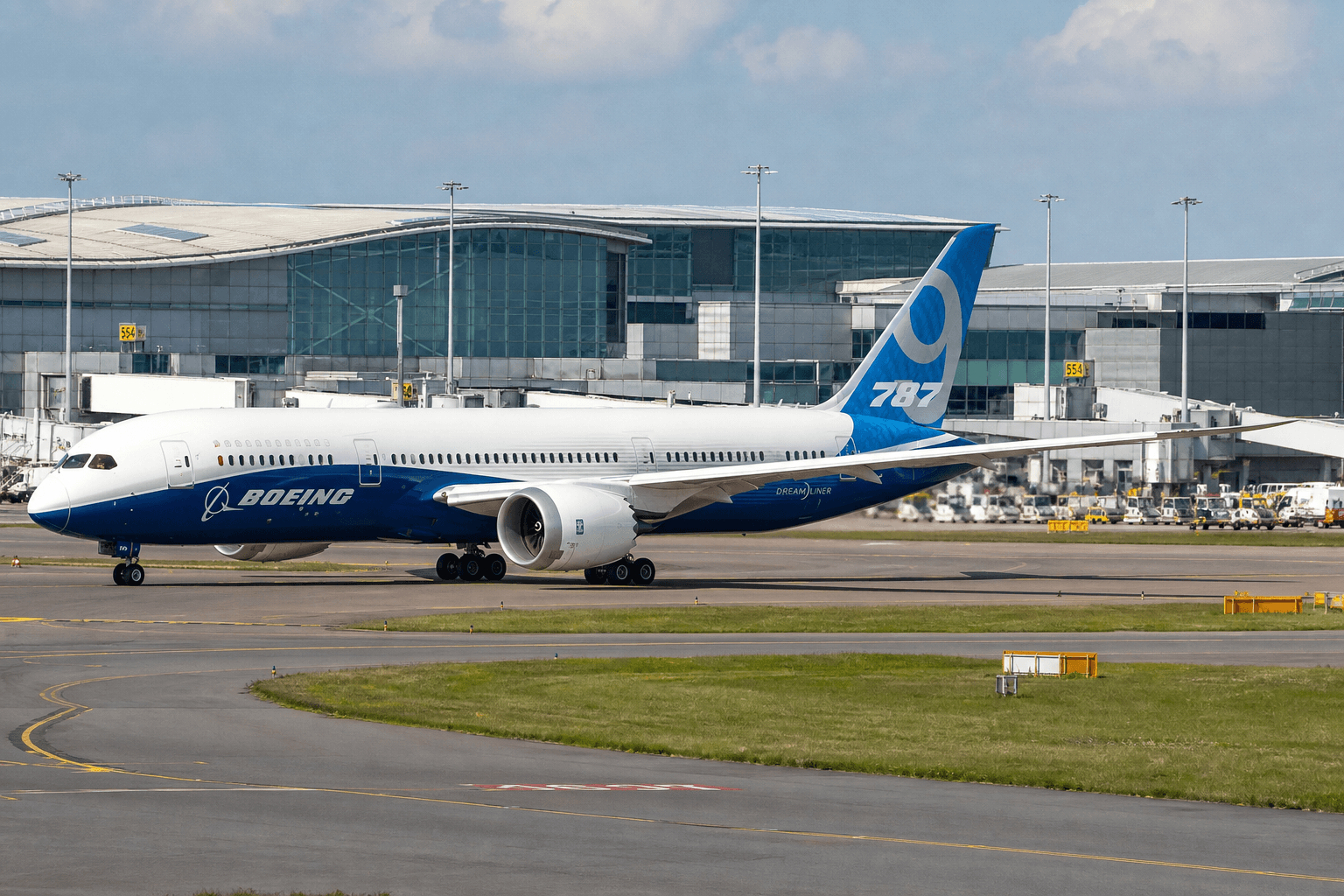
Norse Atlantic’s flight departs Gatwick at 7:40 PM on July 14 aboard a Boeing 787-9 Dreamliner seating 338 passengers. It arrives in Atlanta late that evening, enabling fans to attend the semi-final match. The return flight departs Atlanta at 10:30 PM on July 16, arriving in London just before noon the following day, providing convenient timing for travelers post-match.
Heathrow’s sustained increase in North American passenger numbers and cargo volumes amid a global sporting event illustrates the airport’s vital role as a major international gateway. The recent data confirms that global demand, fueled by both leisure travel and trade, continues to strengthen the transatlantic aviation market in mid-2026.
Frequently asked questions
- How much did North America-bound passenger traffic increase at Heathrow in June 2026?
- Heathrow experienced a 1.2% year-on-year increase in passengers traveling to and from North America in June 2026, totaling nearly two million passengers.
- Which airline operated the most North American flights from Heathrow in June 2026?
- British Airways was the busiest airline on the North America routes from Heathrow, operating 3,202 flights and offering over 882,000 seats.
- What special service did Norse Atlantic Airways introduce related to the World Cup?
- Norse Atlantic Airways launched a Boeing 787-9 flight from London Gatwick to Atlanta to accommodate fans traveling to the World Cup semi-final match on July 15, 2026.
Read more
All Airports →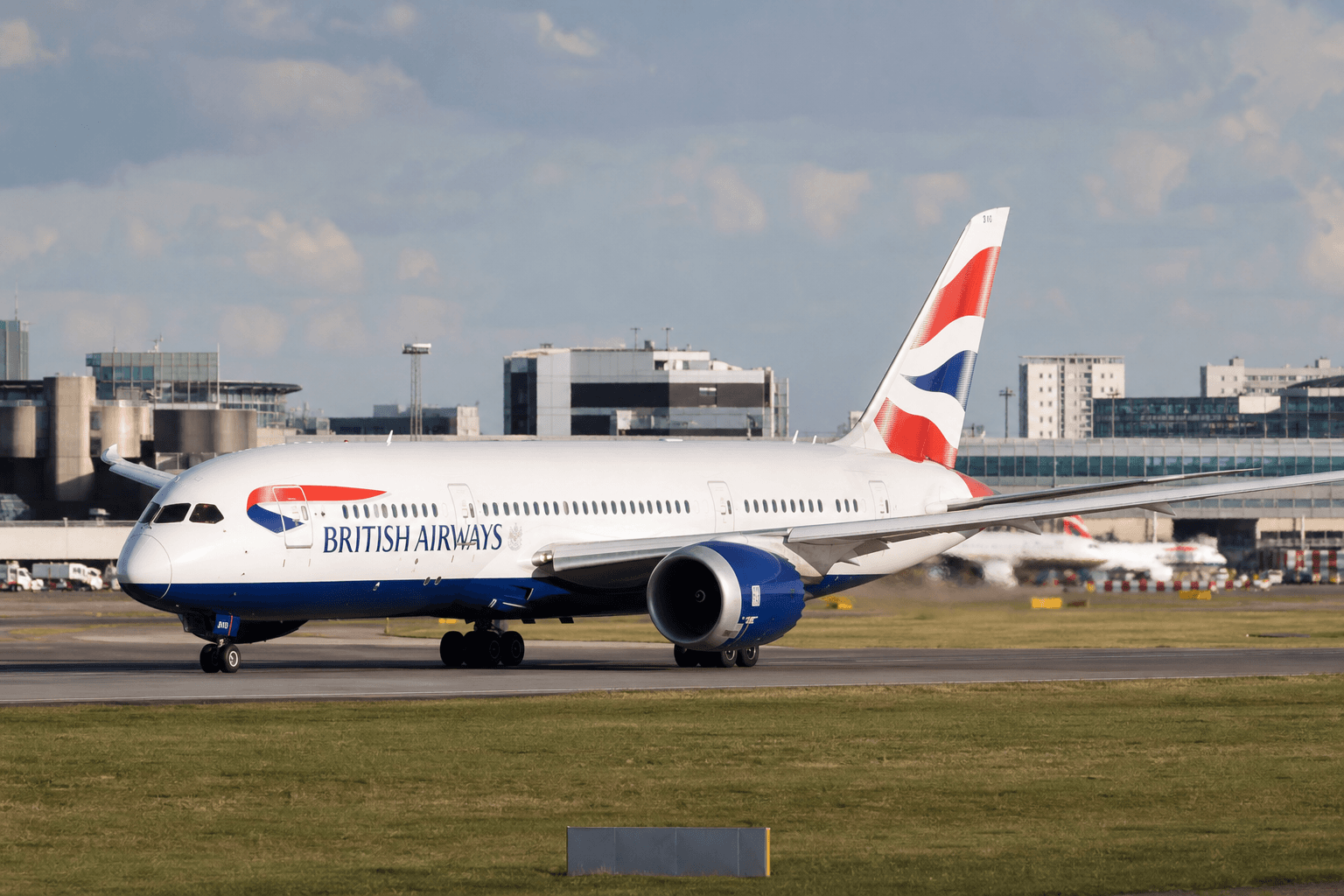
British Airways Drops Seven Long-Haul Routes, Shifts Focus to Heathrow
Between July and the end of the year, British Airways plans 93 daily departures on long-haul routes from London Heathrow Airport (LHR) and London Gatwick Airport (LGW). Influenced by various additional markets , OAG data shows that the offering has risen by 3% compared to the same period last year.
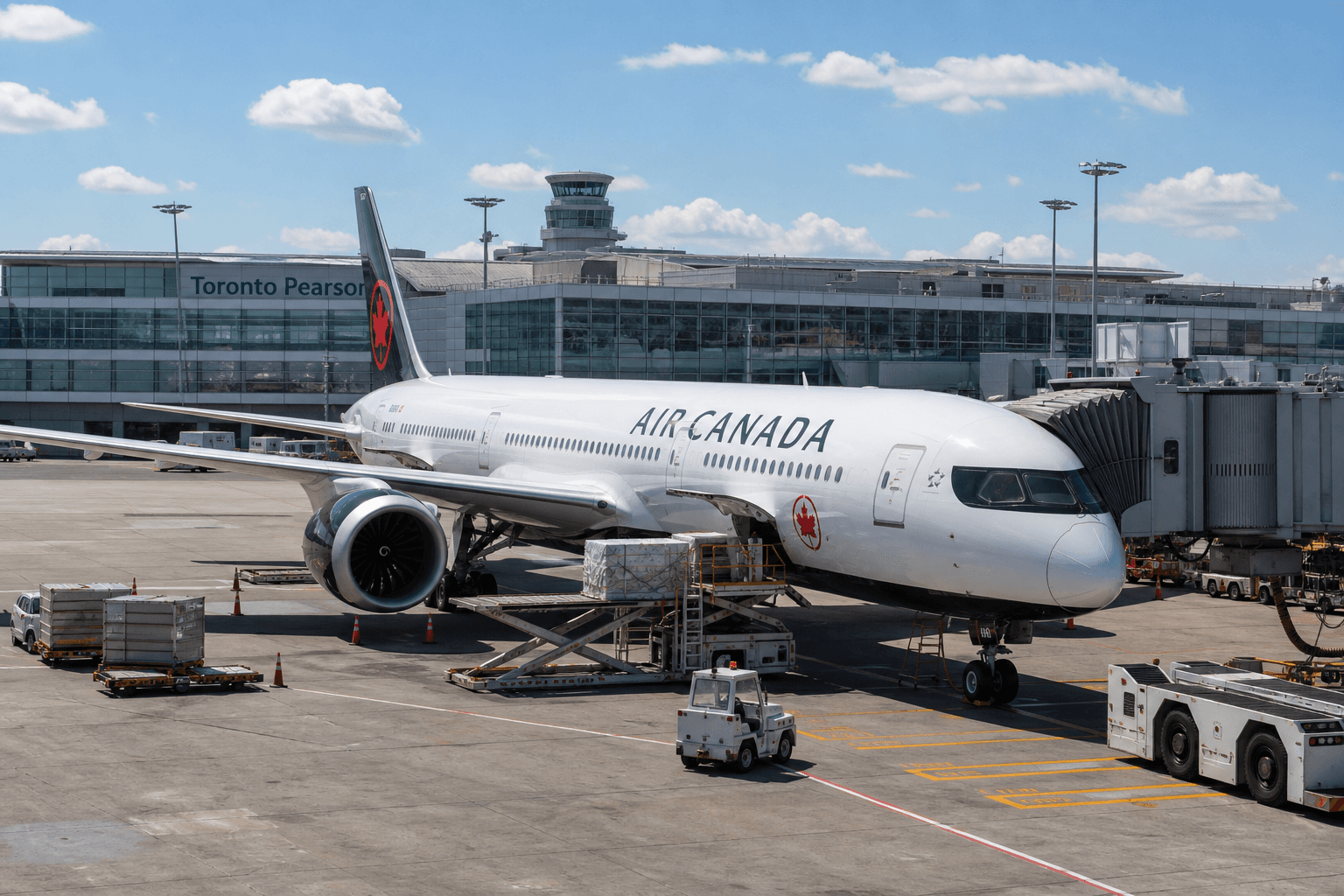
Toronto Pearson Leads as Canada's Busiest Airport with 46.8 Million Passengers in 2024
Canada represents a drop in the ocean in terms of global air traffic . Though tens of millions of people set foot in Canadian airports annually, the country has historically ranked in the mid-teens among the world's busiest hubs. However, passenger numbers are increasing, in line with a global rebound since the pandemic caused widespread groundings, and Canada's airports as a whole have become busier and busier.
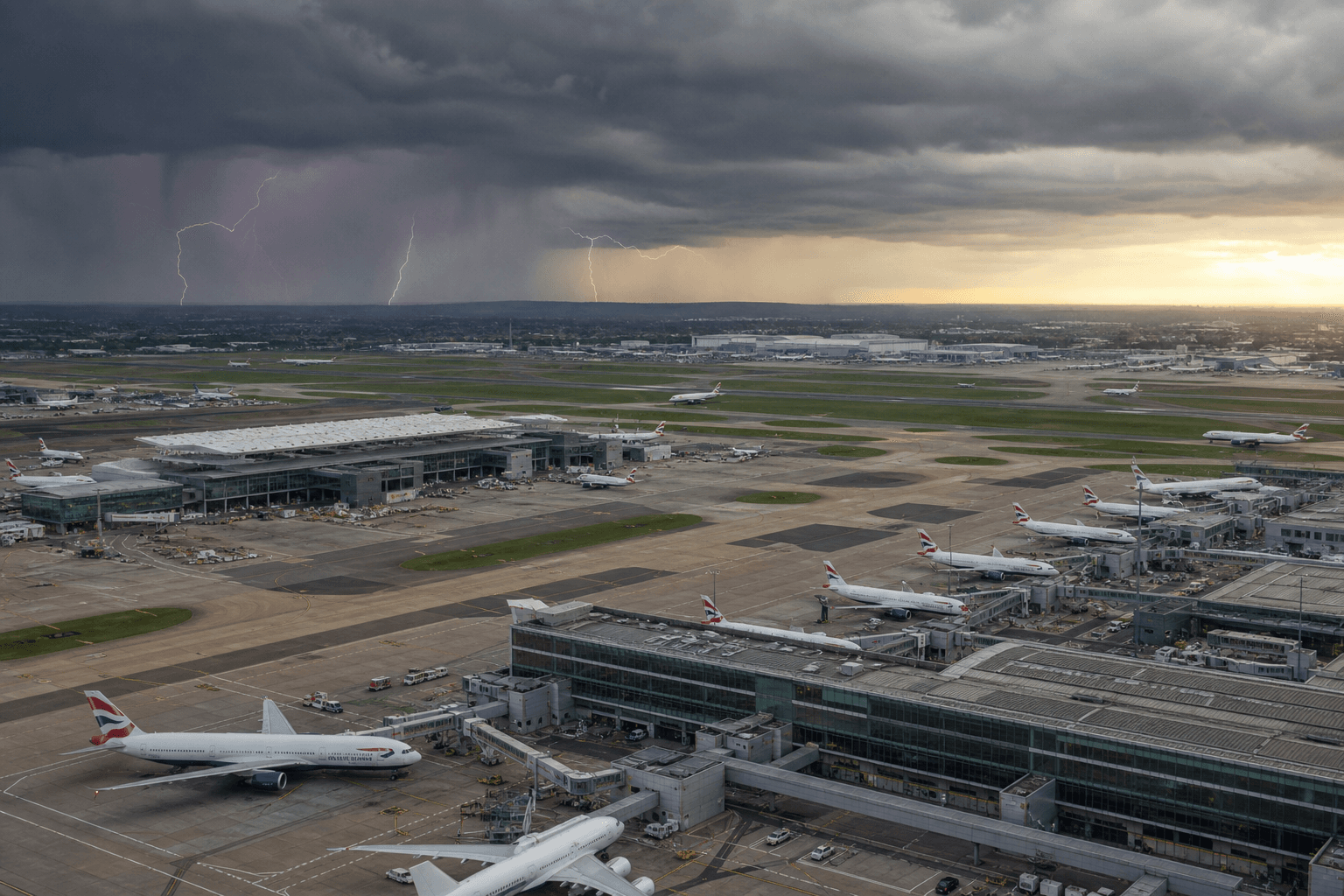
Severe Storms Cause Nearly 1,000 Flight Delays and Cancellations at Heathrow and Gatwick
Heathrow and Gatwick faced severe thunderstorms, resulting in hundreds of flights being canceled or delayed, causing chaos for travelers.

How Much Time Should You Leave Between Separate Flights on Different Tickets?
OMAAT reader Peter asked me a question that I think is worth addressing more broadly — if you book an itinerary that involves two or more separate tickets, how much of a buffer should you leave between flights on those two tickets? There's not going to be a "one size fits all" answer, but I'd like to share my thought process, and hear how others approach this. First let's talk about why you might want to book tickets this way, the things I'd factor into deciding on a buffer, and the approach I take (admittedly I don't always get this right!). Why you might book an itinerary on separate tickets Typically, most people will book an itinerary between their origin and destination on a single ticket, even if multiple airlines are involved (which is possible thanks to partnerships and interline agreements ). However, there are definitely situations — especially in the miles & points world — where you might want to book separate tickets: Maybe you only found reasonably priced award tickets out of a long haul gateway city, and then you need to position there on a separate ticket Maybe you're being savvy and are trying to avoid the UK Air Passenger Duty , so you book your first flight out of the UK separately as a short haul ticket, and then pick up your long haul ticket elsewhere Maybe an itinerary just ends up being cheaper if booked as two separate tickets, whether you paid with cash or points Maybe you booked a ticket far in advance, but then your plans change, though the most economical option is to just book a separate positioning flight, but still take your originally booked ticket Anyway, I do end up booking itineraries as separate tickets with some frequency, and the most common reason is because I'm redeeming points out of another gateway city, and that ends up being the most economical option. I sometimes book itineraries on two separate tickets The considerations with deciding on what buffer to leave To state the obvious, there are many factors that would impact my decision of how much of a buffer to leave between flights on separate tickets. For example, if you're flying a once daily flight to board a cruise or to attend a very important business meeting, I'd take a different approach than if you're connecting to a ticket in a market that has 50 daily flights. So to expand on that a bit, here are the things that I'd take into consideration: How important is it to actually make the flights on your second itinerary, and to arrive at your destination on-time? How flexible are your tickets? If you miss your second itinerary, is it a "use it or lose it" situation, or could you easily rebook? Are you checking bags? Obviously you'll want to add to your buffer if you are, especially since bags often can't be checked through on separate tickets What time of day is your first flight? The earlier you fly, the better the odds of things going smoothly What are the weather conditions to consider? On summer afternoons you have to be worried about thunderstorms, and in winter, consider how likely a snowstorm could be How many other flights are there that could get you to your destination within a reasonable timeframe, assuming you miss the originally booked one? How skilled are you at managing your own travels? If you're very resourceful and not stressed out by a potential misconnect, you can handle this differently than someone who gets really stressed in these situations Consider how much flexibility your ticket has How I decide on how much of a buffer to leave It goes without saying that if you want to maximize your odds of not having any major disruptions, you should leave a massive buffer between separate flights on itineraries. It's definitely a best practice to maybe even leave a day between separate itineraries, or at least to leave an unpleasantly large number of hours. That being said, I want to be realistic here: Often people have limited vacation, so adding an extra day enroute might not be practical, might significantly add to the expense of the trip, etc. Of course leaving a really long layover sounds smart, but most people don't want to spend 10 hours at an airport waiting for their connecting flight Let me share my approach, acknowledging of course that I don't always get this right (including recently!) . As I view it, I take a calculated risk, trying to find the middle ground between minimizing risk and being efficient. Obviously it depends on the circumstances, but assuming that I don't 100% have to be at the destination exactly at my planned arrival time, my most common approach is to typically leave a buffer of four hours, and/or to have at least another flight between my original flight and subsequent one that I can be rebooked on, in the event that it cancels. Admittedly this isn't a perfect system, and a lot can still go wrong. After all, "when it rains, it pours" also applies to aviation. Sometimes there's just a very bad weather system, and you have flights for an entire afternoon delayed by hours. In those situations, there's nothing you can do. To get a bit more specific, personally I generally hope for a bit bigger of a buffer if I'm checking bags, and if my second ticket is non-refundable or non-changeable. Meanwhile if I'm traveling alone, I'm on separate tickets, or it's in a high frequency market, I've certainly booked connections way shorter than that. Just to give an example, maybe I have an award ticket booked from Frankfurt to Chicago on Lufthansa, and then I book a connecting flight to Miami on American. There I'd gladly book a short connection, and worst case scenario, I can just rebook on another flight. That's an example of a low risk situation, as I see it. I generally view things as lower risk if they're at the end of my trip, and if I'm headed home, especially flying a US carrier, since they tend to be more flexible if you miss a flight (compared to Asia, Europe, etc.). I'll often leave a shorter buffer when returning home Bottom line Especially in the miles & points world, it's common to see people book flights across multiple tickets. This is often necessary if redeeming miles for a long haul flight out of a gateway, and then needing to position. It can be hard to decide on the right buffer. Obviously the bigger the buffer, the better the odds of everything going smoothly. At the same time, adding an overnight layover can add a lot of time and expense to a trip. My general rule of thumb is that I try to leave a buffer of at least four hours between separate tickets, with at least one flight between the two that would still get me to that destination in time to make the flight. Admittedly there are many other considerations as well, so that's not some hard and fast rule. What approach do you take when it comes to leaving a buffer between separate itineraries?
The Daily Touch & Go
The day's best aviation news in your inbox. Free, no spam.