

Illustration: The Touch & Go
Europe's FCAS fighter program collapses amid industrial disputes and divergent military goals
The ambitious Future Combat Air System has disintegrated due to tensions between French and German aerospace firms and differing national requirements for next-gen fighters.
The gist
Europe's FCAS project fails over industrial rivalry and conflicting fighter visions, jeopardizing a unified sixth-gen combat jet.
Continuing coverage
All Airbus →- Airbus Builds A321XLR Wings in UK and Final Assembly in Germany Across Four Nations
- Airbus Forecasts Doubling of Air Passengers by 2045 Led by Urban Growth and Aircraft Efficiency
- Syria Plans to Buy Eight Airbus Aircraft as Macron Visits to Support Reconstruction
- Airbus and MTU Aero Engines to launch joint venture for electric hydrogen fuel cell aviation engine
- Airbus and MTU to Launch Joint Venture for Hydrogen Fuel Cell Aviation Engines in 2027
The Future Combat Air System (FCAS), Europe’s flagship program to develop a next-generation fighter aircraft, has collapsed after years of strained cooperation between Airbus and Dassault Aviation. Originally envisioned as a collaborative pan-European effort, the project faced persistent industrial and political hurdles that ultimately proved insurmountable. The French firm Dassault, tasked with leading the New Generation Fighter (NGF) platform central to FCAS, clashed repeatedly with Airbus over design authority and control, contributing to the program’s breakdown.
Dassault’s leadership style and insistence on maintaining autonomy conflicted with Airbus’ cooperative, multinational corporate culture. Eric Trappier, Dassault’s CEO, was notably assertive in defending the company’s primacy over the NGF design, a stance that alienated Airbus and partners. Airbus, with its culture forged through European collaboration, struggled to reconcile this approach with Dassault’s fierce independence, heightening tensions within the program’s leadership.
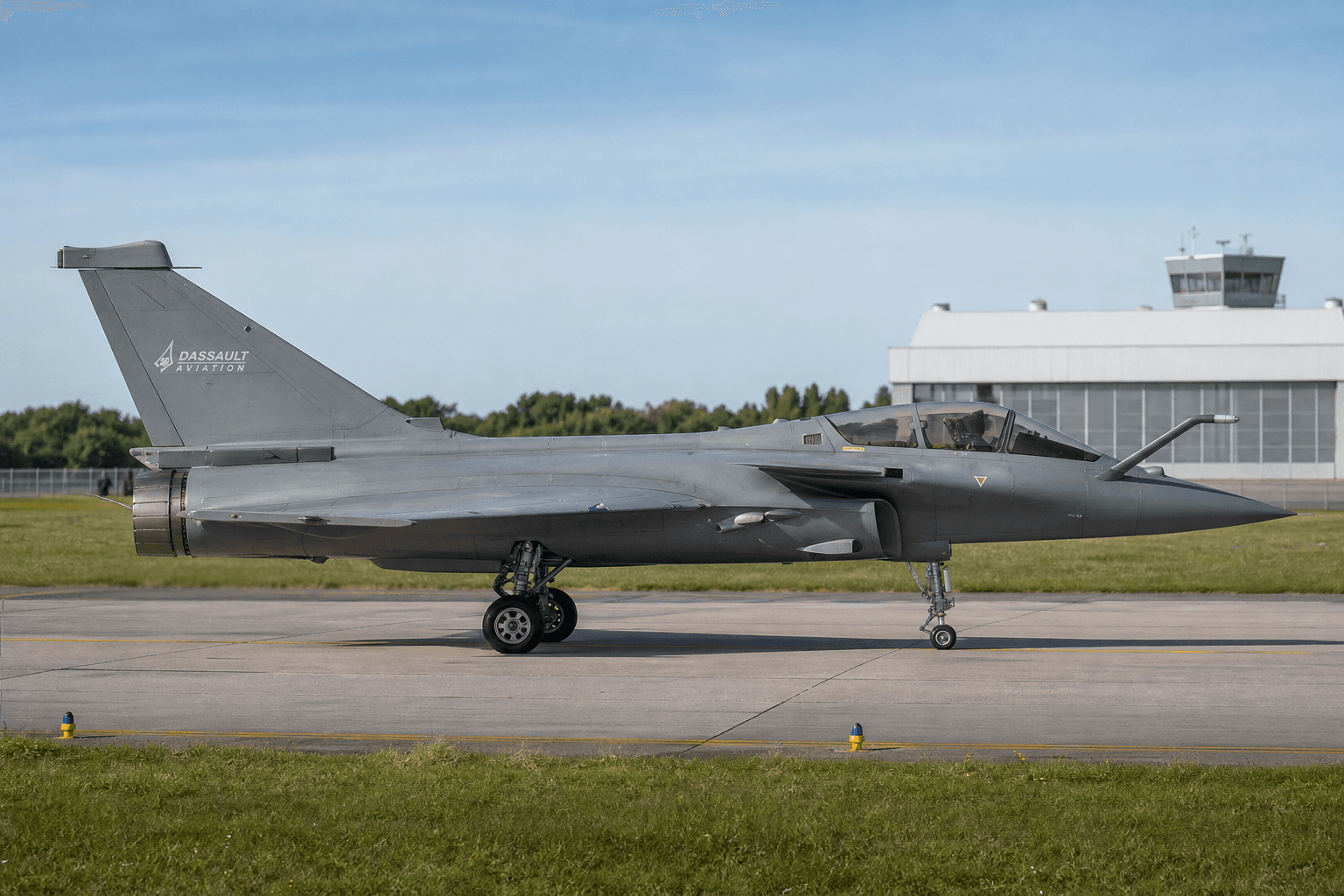
The divergent strategic requirements of the three nations funding FCAS—France, Germany, and Spain—further complicated efforts. France envisioned the NGF as a direct replacement for its Rafale fighter, including a carrier-capable naval variant, aligning closely with Dassault’s capabilities. In contrast, Germany and Spain prioritized a high-end air dominance fighter to succeed their Eurofighter Typhoon fleets. This fundamental mismatch in mission goals created a persistent rift in program objectives and design requirements.
This split echoes earlier European fighter development fractures. Dassault and France had departed from the precursor Future European Fighter Aircraft (FEFA) program due to disagreements with partners and chose independently to develop the Rafale. That history of separation over control and operational demands foreshadowed the FCAS troubles. FCAS’s failure highlights longstanding challenges in uniting European aerospace industries around a single, complex combat aircraft project.
With FCAS now defunct, the trajectory for Europe’s next-generation fighter ambitions is uncertain. Technologically, Dassault retains the expertise to carry forward a solo program, drawing upon decades of design and production experience. However, such a unilateral path requires funding on an unprecedented scale. The enormous development costs of a sixth-generation fighter may exceed what France alone is willing or able to bear.
Meanwhile, German industry, joined by Spain, has formed the 'Team Gen 6' consortium, aligning with the goal of preserving European aerospace sovereignty through independent development. Yet, their future capability strategy remains unclear, especially as the group is reportedly open to collaboration but appears politically and industrially distant from Dassault’s vision. Attempts to bring Germany and Spain into the ongoing Global Combat Air Programme—which involves Italy, Japan, and the UK—seem unlikely, given geopolitical and industrial complexities.
Sweden presents a potential but tentative avenue for cooperation. The Swedish Air Force is currently considering options for its successor to the Saab Gripen E. France’s acquisition of Saab GlobalEye surveillance aircraft has fostered closer ties between Paris and Stockholm, suggesting that some form of partnership could evolve. However, no formal alignment on next-generation fighter development has emerged yet, and any collaboration would have to overcome significant technical and strategic differences.
The FCAS breakup underscores that agility and adaptability are critical in modern aerospace projects. Many anticipated FCAS capabilities, particularly those related to networking and system-of-systems integration, are already being fielded or approached by global competitors. European air forces face the risk that delays or fragmentation in development could cede technological and operational advantage to adversaries already deploying advanced next-generation fighter features.
As things stand, Europe’s pathway towards a unified sixth-generation combat aircraft remains unsettled. The dissolution of FCAS crystallizes the challenges of aligning multiple national interests, industrial strategies, and defense requirements within a single multinational fighter program. Future efforts will need to address these fault lines directly if Europe seeks to regain momentum in cutting-edge fighter development.
Frequently asked questions
- What caused the collapse of Europe’s Future Combat Air System program?
- Persistent tensions and industrial rivalry between Dassault Aviation and Airbus, combined with conflicting national requirements from France, Germany, and Spain for the future fighter, led to the program’s collapse.
- Why did France and Dassault Aviation emphasize control over the New Generation Fighter?
- Dassault and France sought full design authority over the NGF, aiming for a replacement to the Rafale, including naval variants, which clashed with Airbus and partners’ vision for a Eurofighter successor.
- What alternatives exist for Europe’s next-generation fighter development after FCAS?
- Dassault may pursue an independent program funded by France, while German and Spanish industry formed 'Team Gen 6' seeking collaboration; Sweden is also a potential partner but any new consortium remains uncertain.
Read more
All Military/Defense →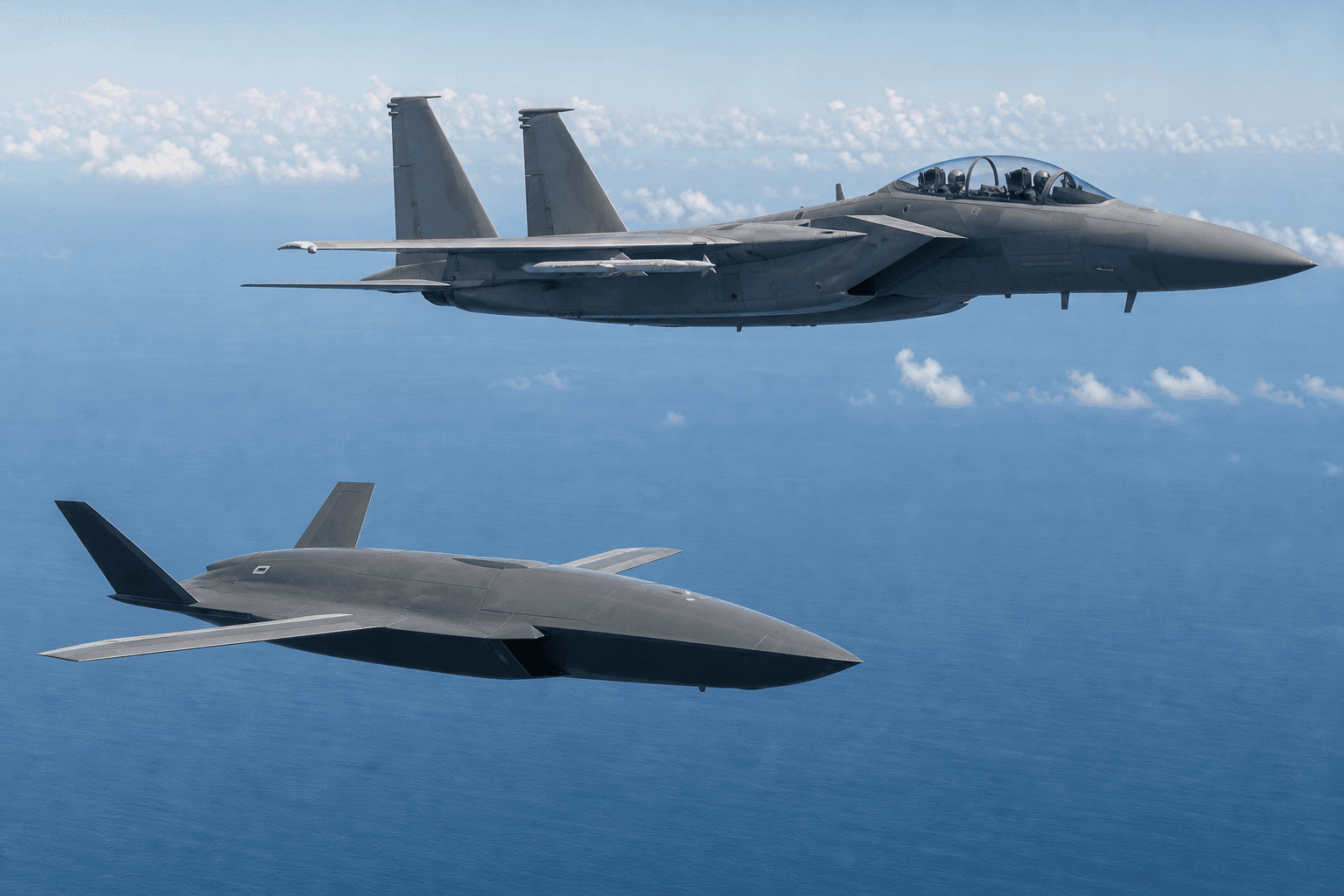
Boeing's MQ-28 Ghost Bat Joins US Air Force in Landmark Indo-Pacific Exercise
- MQ-28 Ghost Bat is first collaborative combat aircraft (CCA) to be integrated into multinational, joint force Exercise Valiant Shield 2026

Airbus and MTU Launch Joint Venture to Develop Hydrogen Fuel Cell Engines for Commercial Aircraft
As developers of electric and hybrid-electric aircraft experience growing pains , Airbus is doubling down on its ambition to produce a hydrogen-powered commercial aircraft. The European manufacturer on Tuesday revealed its plans to form a joint venture with Germany's MTU Aero Engines, which per its website claims its engine technology is found on one-third of the world's commercial aircraft. The new company will aim to develop a fully electric, hydrogen fuel cell-powered engine, with the objective of providing the first such system for a commercial aircraft. The nonbinding agreement follows a memorandum of understanding (MOU) the partners signed at the 2025 Paris Air Show. Airbus said it expects the joint venture to begin operations in 2027. The manufacturer said combining forces with MTU will create a "dedicated and highly agile" organization that is capable of accelerating the development, test, design, and certification of the fuel cell system. Bruno Fichefeux, head of future programs at Airbus, in a statement called it the "next logical step" toward the partners' shared vision of hydrogen-based propulsion. Per a news release, Airbus believes hydrogen could bring aviation's environmental impact more in line with that of electric ground vehicles. The only byproduct of the reaction between hydrogen and oxygen that occurs in the fuel cell is water vapor, which the manufacturer said will eliminate in-flight emissions. "By pooling our respective technology and expertise into a dedicated entity, we are establishing a European powerhouse capable of transforming advanced research into industrialised, certifiable electric propulsion systems," Fichefeux said. Stefan Weber, senior vice president of engineering and technology for MTU, added that "we want to create a company that covers the entire life cycle of fuel cell powertrains—from development and testing through certification to commercialisation." Regarding hydrogen, Airbus stands in stark contrast to its largest rival, Boeing. The American manufacturer has acknowledged hydrogen's potential as an alternative fuel source. But it has neither committed to incorporate the technology into its aircraft nor unveiled a hydrogen-powered concept. The agreement to form a hydrogen engine joint venture comes amid broader struggles for developers of sustainable propulsion technology. In the past few years, many have either folded, scaled back their ambitions, or been acquired by larger players. Airbus' Hydrogen Vision Airbus is king of the airframe, having led 2025 in commercial aircraft deliveries with 793, beating Boeing's 600. With MTU, it aims to lead the way in next-generation propulsion. The German company claims its engine technology powers one-third of the world's commercial aircraft, from corporate jets to widebody passenger airliners. It is also a primary industrial partner of the German Armed Forces, contributing to the engine for a next-generation European fighter jet. MTU does not build entire engines. Rather, it produces specialized components such as compressors and turbines in partnership with manufacturers. The firm also offers maintenance, repair, and overhaul. MTU's portfolio covers over 30 engine types, including the Pratt & Whitney Geared Turbofan (GTF) family that powers the A320neo. It also contributes to General Electric's CF6, which powers the A300 and Boeing 747, and GE9X, the intended engine for Boeing's long-haul 777X. Other projects include the NGFE, developed in partnership with Safran Aircraft Engines for a sixth-generation fighter, and the EJ200 engine for the Eurofighter Typhoon. MTU is also developing what it has dubbed the "Flying Fuel Cell." Per the company's website , the device is fully electric and uses a hydrogen fuel cell to power an electric motor, which drives the propeller using a gearbox. It is unclear whether the Flying Fuel Cell is intended to power the Airbus-MTU concept. But Airbus on Tuesday shared several updates to the program, including that MTU has "nailed down" the system's design and begun building a demonstrator. Airbus said MTU put its first test cell into operation this year and conducted the first test of the electric motor that will power it. Airbus in February 2025 reportedly scrapped its original 2035 target for flying a hydrogen-powered airliner. The aircraft manufacturer had been exploring four hydrogen-based "ZeroE" concepts since 2020. But in March 2025, it pivoted to focus solely on the hydrogen fuel cell architecture, finding it to be the most viable after fuel cell prototype and powertrain testing. Airbus shared a concept that features four electric propulsion engines, each powered by an independent fuel cell stack. It said in March 2025 that it aims to begin integrated ground testing of the system as soon as 2027. That same month, CEO Guillaume Faury cast doubt on the aviation industry's ability to meet its net-zero by 2050 targets. Sustainable aviation fuels (SAF) are viewed by experts as a more impactful solution than hydrogen, and Airbus is targeting a 100 percent SAF capability for all of its aircraft and helicopters by 2030. Since Airbus' pivot to the hydrogen fuel cell concept, other developers of novel propulsion systems have struggled. ZeroAvia—a leading developer of hydrogen-electric powertrains that could be retrofit on existing airframes—recently halved its workforce and delayed certification of its commercial ZA600 powertrain in favor of pursuing applications in autonomy and defense. In May, Dutch hybrid-electric regional aircraft developer Maeve Aerospace—a partner of Delta Air Lines, Skywest, Japan Airlines, and others— went bankrupt . In June, Switzerland's H55, the developer of an electric propulsion system that could be installed on multiple airframes, laid off about half of its workforce.
RAF Coningsby: UK's Premier Base for Typhoon Jets and Historic Battle of Britain Aircraft
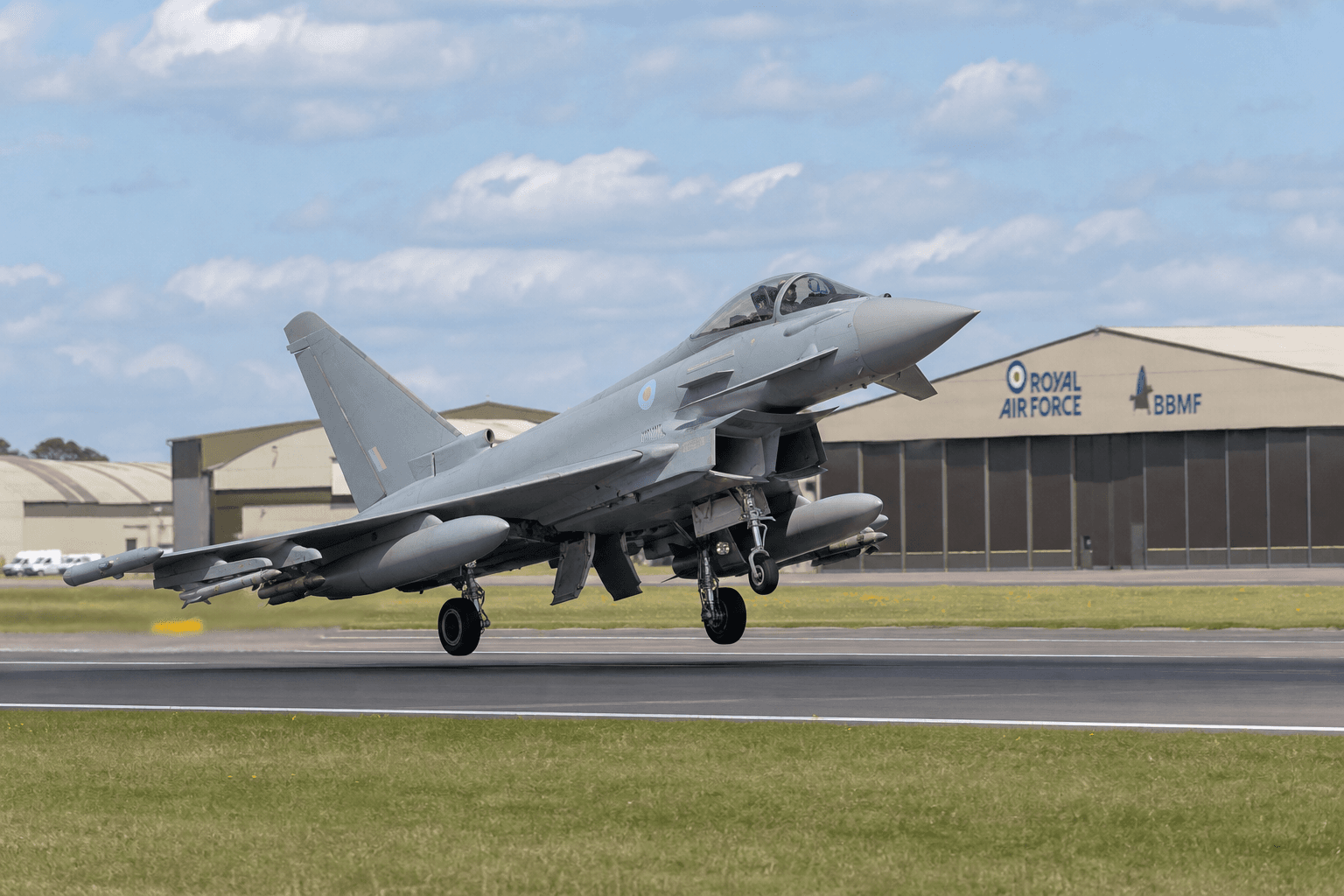
Few military airfields in the UK are as rewarding for aviation enthusiasts as RAF Coningsby . Home to the Royal Air Force’s frontline Typhoon force and the world-famous Battle of Britain Memorial Flight, the Lincolnshire base offers a fascinating mix of modern combat aircraft and priceless Second World War classics. On almost any visit, there’s the chance to watch cutting-edge fighters carrying out training sorties before seeing an 80-year-old Spitfire or Lancaster taxi out for a commemorative flight. Located in the heart of what became known as ‘Bomber County’ , RAF Coningsby is surrounded by aviation history. Alongside nearby RAF Waddington, RAF Cranwell and the former bomber stations that once dotted Lincolnshire, it remains one of Britain’s premier aviation destinations and a must-visit location for military aircraft spotters. A Brief History of RAF Coningsby RAF Coningsby opened in 1940 during the Second World War as one of the many bomber stations built across Lincolnshire to support RAF Bomber Command. Initially home to Whitleys before receiving Avro Lancasters, the station became an important operational base from which crews flew missions over occupied Europe. Following the war, Coningsby entered the jet age, operating a succession of famous aircraft including the English Electric Canberra, Avro Vulcan and Panavia Tornado F3. Since 2005, it has become one of the principal operating bases for the Eurofighter Typhoon , cementing its role at the forefront of UK air defence. Today, while many of Lincolnshire’s famous wartime bomber stations have disappeared or become museums, Coningsby remains a fully operational RAF station, continuing the county’s proud aviation tradition while preserving its remarkable heritage through the Battle of Britain Memorial Flight . Aircraft and Squadrons RAF Coningsby is one of the Royal Air Force’s busiest fast-jet stations and serves as a major centre for Typhoon operations. The station is home to: No. 3 (Fighter) Squadron – Frontline Eurofighter Typhoon FGR4 unit. No. XI (Fighter) Squadron – Another operational Typhoon squadron responsible for UK air defence and overseas deployments. No. 29 Squadron – The RAF’s Operational Conversion Unit, responsible for training new Typhoon pilots before they join frontline squadrons. Coningsby also hosts the Battle of Britain Memorial Flight , whose hangars house the Flight’s priceless collection of historic aircraft. While these aircraft fly only on selected training and display sorties, spotting one alongside modern Typhoons is an unforgettable experience. Thanks to the station’s operational tempo, visitors can often expect multiple Typhoon departures and recoveries during weekdays, together with occasional visits from other RAF, NATO and international military aircraft. Visit the Battle of Britain Memorial Flight Visitor Centre No visit to RAF Coningsby is complete without spending time at the Battle of Britain Memorial Flight Visitor Centre . Situated just outside the station, the Visitor Centre offers guided tours of the BBMF hangars, where visitors can get remarkably close to the Flight’s legendary aircraft, including the Avro Lancaster , Supermarine Spitfires , Hawker Hurricanes and Douglas Dakota . It’s a rare opportunity to see these historic aircraft undergoing maintenance and learn about the engineering expertise required to keep them airworthy. If you’re planning a spotting trip to Coningsby, combining it with a BBMF tour makes for an outstanding day out. ( You can read our full guide to visiting the BBMF Visitor Centre here .) Plane Spotting at RAF Coningsby Whether you’re hoping to photograph Typhoons launching on Quick Reaction Alert training sorties, capture a Lancaster taxying past in the sunshine, or simply enjoy one of Britain’s most historic military airfields, RAF Coningsby rarely disappoints. Below, we’ve rounded up the best spotting locations around the airfield, together with advice on photography, runway usage and the best times to visit. Spotters Car Park Along Dogdyke Lane there is a car park situated at the end of runway 07 (postcode LN4 4TE). From here you can sit and watch or photograph movements on the runway (however 25 departures are a little high by this point). There's usually plenty of spotters around, and vans selling food and drink. BoBMF Layby A little further up Dogdyke Lane is a layby next to the fence which looks out onto the Battle of Britain Memorial Flight hangar and apron. It's great for seeing these aircraft coming and going, and you can also see Typhoons parked up beyond. Runway 25 The B1192 runs past the end of runway 25. To get there you can continue past spot 1, then turn left onto New York Road and left onto the B1192/Langrick Road, heading north. Just before the traffic lights at the end of the runway is some rough ground on the left, in a farmer's field. You can pull onto here and park (with a donations box for local charity). If aircraft are landing on 25 this is a great spot for photography. Discover 150 More Spotting Locations Across the UK and Ireland If you enjoy exploring airports like RAF Coningsby, our Airport Spotting Guides: UK & Ireland (2nd Edition) is the perfect companion. This comprehensive guide features 150 airports, military airfields and aviation museums across the UK and Ireland, with detailed spotting locations, photography advice, runway information, visitor facilities and practical tips to help you make the most of every visit. Whether you’re watching Typhoons at Coningsby, airliners at Heathrow, maritime patrol aircraft at Lossiemouth or classic warbirds at Duxford, it’s an essential reference for every aviation enthusiast. Available in print from our online shop and major booksellers, it’s the ideal resource for planning your next spotting adventure—and a book you’ll return to time and time again. Get Your Copy Here
Historic Lilium Phoenix eVTOL prototypes preserved in German aviation museums
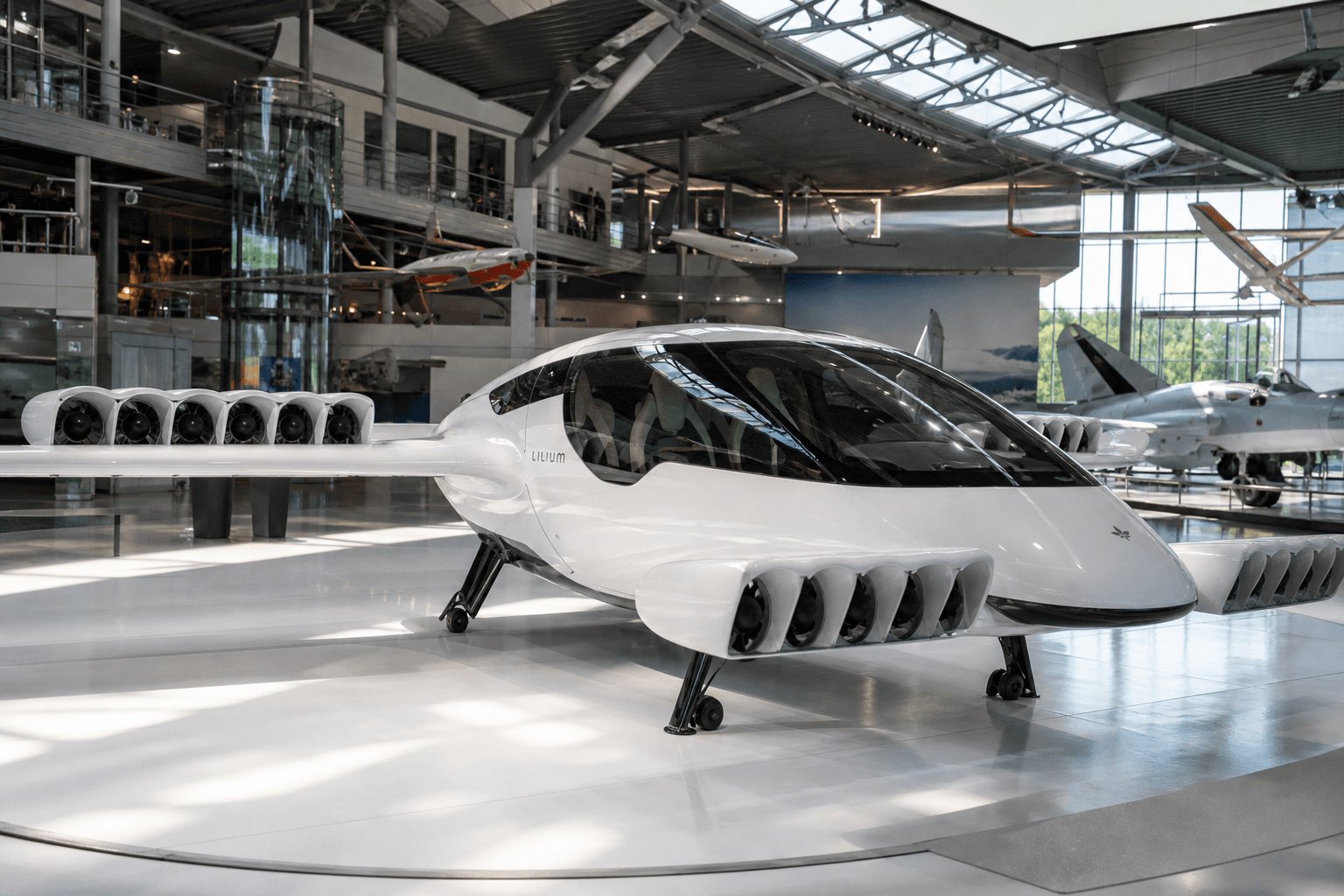
The lighter side of Flight International . Museum pieces With a growing list of advanced air mobility ventures giving up the ghost well before their experimental designs reach the market, history risks losing a physical record of their visions. However, thanks to the efforts of Robert Gardemin, the original test aircraft of one of the electric vertical take-off and landing (eVTOL) sector's pioneers have been saved. German developer Lilium filed for insolvency in October 2024. With no buyer found for the company's assets, Gardemin launched a successful crowdfunding campaign to raise €10,000 ($11,600) to rescue the so-called Phoenix scaled prototypes, which he describes as representing "years of dedicated work by over 1,000 people and one of the most ambitious electric aviation programmes ever developed in Germany". The uncrewed test aircraft had been heading for the scrapheap after completing early flight testing in Spain, with one – Phoenix 2 – notching almost 200 flight hours. According to an update from Gardemin on LinkedIn, the prototypes have been transferred to the Deutsches Technikmuseum in Berlin and Luftfahrtmuseum Wernigerode in Saxony Anhalt, where they will be reassembled for display, ensuring that "an important chapter in the emergence of eVTOL technology is not erased but made accessible to the public for generations to come". Joyce’s choices Alan Joyce was a working class lad from Dublin, the son of a cleaner and a factory worker, who through a love of numbers – mathematics, then management science – found himself working for and then running airlines, including, at the age of 42, Qantas. Now, almost three years after he quit as chief executive of the Australian flag-carrier, Joyce has penned a memoir, Riding the Jet Stream . He says he had two motivations – one professional, one personal. He needed to "set the record straight" about his 15-year stint at Qantas, including the grounding of the fleet in 2011, the industrial battles, and steering the business through the pandemic. Former Qantas CEO shares his experiences. Source: BillyPix "I wanted to tell it as it actually unfolded, in the room, under pressure, with every decision carrying enormous consequences for tens of thousands of people," he explains. The other was "more personal", he says. "I wanted to encourage young leaders to learn from my successes and failures, because I think that's where the real lessons sit." He also writes about what it was like to be "one of the few openly gay CEOs in corporate Australia" and how he used his platform for "something bigger than the bottom line, including the campaign for marriage equality". Riding the Jet Stream is available from Hardie Grant Books. Chipmunk at 80 Published to commemorate the 80th anniversary of the de Havilland Canada DHC-1’s first flight, Chipmunk at 80 includes “first-hand stories from pilots, engineers and custodians”, along with over 200 photographs, including rare archive shots. Written by Ben Griffiths and Ian Black, Volume 1 is a fitting tribute to an iconic type much loved by generations of military pilots, air cadets and total aviation people everywhere. Available to order now via chipmunkat80.carrd.co for £37.99. Bristol where-port A confused Doug Brown references a recent picture from The Sun newspaper, illustrating a story about Bristol airport's ambition to introduce long-haul flights. "I couldn't work out why Lulsgate had big X marks on the runway, and a massive displaced threshold I don't remember from landing my Hamble Cherokee there, until I spotted the Brabazon hangars to the right of the shot," he says. The picture was of a Bristol airport, but not the Bristol airport, BRS in Lulsgate Bottom. Instead, it was the former Filton airfield, famous birthplace of Concorde and now largely a housing estate, with the main Brabazon hangar repurposed to a music arena. Yuckspeak We can also coordinate any speaking moments with members of the leadership team = We can arrange an interview. Copa mechanism We are warned to avoid mangling metaphors, but surely there is an exception for Copa Airlines boss Pedro Heilbron's splendid summation of the Panamanian carrier's risk strategy: "We never roll the dice without a parachute." From yuckspeak to tales of yore, send your offcuts to murdo.morrison@flightglobal.com From the archive 1926 Gentleman’s way The Chairman, in thanking Mr. Upson for his talk, said that, having tested most of the methods of getting up into the air, he considered the airship the only gentleman’s way of travelling. His own experience in English airships was that one sat in comfort, there was no noise, one rang a bell for anything one wanted to eat or drink, one gazed quietly out on the scenery, and one could talk. Most of all, however, he would like to know from Mr. Upson when this airship was going to be finished. They had all talked about airships for such a long time, and what he wanted was to see the airship in the air. Mr. Upson said he was very sorry that the one question as to when the airship would be finished was the one that he was afraid he was unable to answer. 1951 ‘The Big Show’ Every evening, Pierre Clostermann recorded the story of his life with the R.A.F., and by the end of the war his jottings filled three large notebooks. They have now been published as "The Big Show", so that “Free Frenchmen might be reminded of their own hopes and loyalties” in those darker years and so that the tales of their sons’ deeds might give some consolation to the families of his fallen friends. Not one of these pages can be passed over lightly. The breathless concentration as the judder of a Spitfire’s cannon answers the anxious thumb at the gun-button, heart-beats quickening at the telephone’s urgent tinkle, the proud yet pitiful show of bravado as the lone pilot returns without his comrades – all those undying moments of a fighter pilot’s life are here. 1976 Amateur aerobatics There is no legislation to prevent an untutored pilot from attempting aerobatics, or to prevent an unqualified tutor from doing aerobatic coaching. This is a curious anomaly. A pilot may not take a passenger at night without being suitably trained and tested, yet he can legally roll his unsuspecting victim upside-down with no formal training at all. It is questionable as to which is more hazardous. Aviation legislation can be meticulous on seemingly petty points – it is only recently that the CAA has proposed making shoulder harnesses mandatory for the front seats of light aircraft – but appears sometimes to turn a blind eye to others. So there is little to prevent a pilot from picking up a few tips from an aerobatic pundit and then going up to try some manoeuvre himself. 2001 After the attacks With the backlog of passengers stranded by the events of 11 September now cleared, the slump in passenger confidence will leave the airlines having to fly, in some cases, near-empty aircraft. With little hope of securing finance from investors, the only solution is a direct injection of Federal cash. Assuming there are no more terrorist attacks, passengers may return, slowly. But airlines will have to cope with the cost of implementing new security measures. Israeli airline El Al is arguably the safest to fly on, but the cost of implementing El Al-style security measures, from pressurised, double armoured doors to the flightdeck, to individually interviewing each passenger, would be crippling. That is why the USA must step in and fund new security measures directly.
The Daily Touch & Go
The day's best aviation news in your inbox. Free, no spam.