

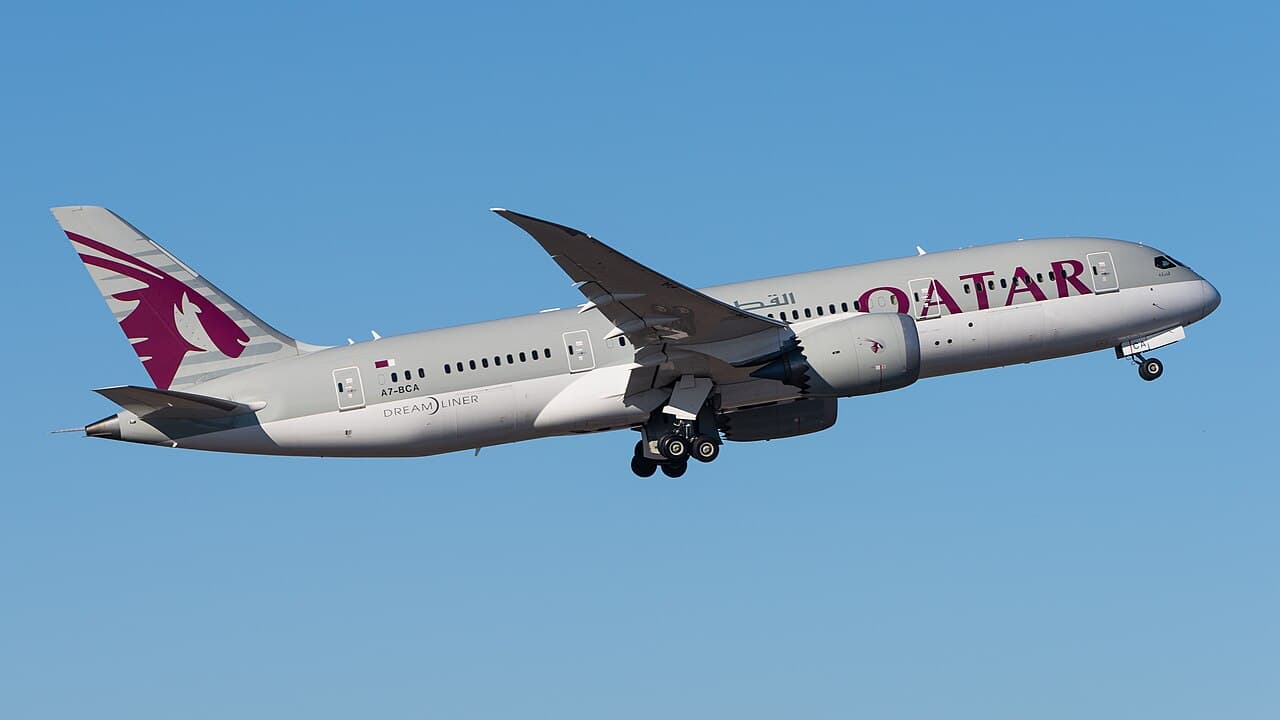
Image: Julian Herzog ( Website ) · CC BY 4.0 · via Wikimedia Commons
ANA Unveils The Room FX: Widest Business Suite on Boeing 787-9
ANA is launching The Room FX, a spacious business class suite on its Boeing 787-9 with a width up to 41.5 inches and enhanced features, debuting August 2026.
The gist
ANA's The Room FX offers the widest business class suite on 787-9s, with larger dimensions and advanced design debuting this August.
All Nippon Airways (ANA) has announced an enhanced version of its acclaimed business class suite, The Room FX, to be introduced on its Boeing 787-9 fleet starting August 2026. Building upon its widely praised Boeing 777-300ER suites, The Room FX adapts the luxurious, spacious design for the narrower 787 fuselage while surpassing the original dimensions with a maximum width of 41.5 inches, making it the largest business class suite available on the type. Three aircraft are scheduled to carry this product by the end of 2026, with plans to retrofit 16 more 787-9s from 2027 onward.
The original The Room, deployed on ANA's Boeing 777-300ER since 2019, introduced a business class seat famed for its sofa-style layout and exceptional width of up to 38 inches. Installed in a 1-2-1 configuration with 64 suites per aircraft, it provides direct aisle access to every passenger with a privacy door. The bed spans approximately 72 inches, and the cabin deliberately maintains lower seat density than industry norms, prioritizing passenger space over maximizing seat count, an approach that led to its reputation as one of the world's most spacious business products.
ANA's approach diverged from typical business class designs that focus on fitting the highest number of seats. By limiting suites to 64 on the 777-300ER, ANA ensured each suite’s footprint rivaled first-class standards at roughly twice the width of many competitors. While this layout reduces the total available business class seats and thus potential revenue on high-demand routes, it establishes ANA's unique market position by offering unrivaled space for premium travelers.
The Room FX presented on the 787-9 reflects an evolution of ANA's concept to fit the 787’s tighter cabin width of 18 feet compared to nearly 19 feet 3 inches on the 777. Partnering again with Safran Seats and British design firm Acumen, ANA reengineered the suite to extend the bed length to 76.5 inches and slightly increase the suite width to 41.5 inches at its widest. This was achieved via thinner privacy doors and partition walls, curved seatbacks to save space, and an alternating orientation layout, allowing each suite to occupy more floor area in the cabin.
The suite on the 787-9 uses a fixed-back, sofa-style design that eliminates the traditional electric recline mechanism in favor of a manually operated leg rest that flips up to form a flat bed, a design providing weight savings and a smaller structural footprint. This no-recline design, while lauded for space and efficiency, contrasts with the conventional electrically reclining seats preferred by some passengers elsewhere and has spurred debate since its initial adoption by carriers like Finnair.
ANA will install 48 of these suites per 787-9 aircraft in a 1-2-1 seating arrangement, from a total aircraft capacity reduction from 215 to 206 seats as economy seats are sacrificed to accommodate the larger business suites. Notably, between doors 1 and 2, ANA fits 24 business class seats compared to competitors like United Airlines’ 32 Polaris suites in the same forward cabin area, emphasizing ANA’s strategy of spaciousness over absolute seat count.
Compared with other airlines’ emerging 787 business class offerings, The Room FX stands out markedly. United’s Polaris suites, though more numerous at 72 seats, measure about 20 inches wide with comparable bed length. American Airlines’ Flagship suites offer slightly wider seats at 22.5 inches. Riyadh Air’s fewer but larger business seats measure 22.5 inches wide with longer beds but still fall significantly short of ANA’s maximum suite width, framing The Room FX as a truly distinctive product.
Since its introduction on the 777-300ER, The Room has garnered top rankings in passenger surveys and industry awards, often competing with Qatar Airways’ QSuite for the leading spot in business class worldwide. The Room FX aims to extend this legacy on the 787-9, directly addressing previous limitations like bed length and adapting to a narrower fuselage without compromising space.
ANA’s move to introduce The Room FX on its 787-9s signals a strategic commitment to premium passenger experience over maximizing seat density on long-haul routes. While limiting total seat availability, this decision reflects growing demand for truly spacious, first-class-caliber accommodations in business class, potentially reshaping premium offerings on mid-size twinjets for the next decade.
Frequently asked questions
- What makes ANA's The Room FX business class suite wider than others on the 787-9?
- ANA achieved greater width through a lower seat count, thinner privacy partitions, curved backrests, and a fixed-back sofa design, reaching up to 41.5 inches wide despite the 787's narrower fuselage.
- How does The Room FX differ from the original The Room on ANA's 777-300ER?
- The Room FX on the 787-9 is wider and features a longer bed than the 777 version, uses a no-recline fixed backrest with a manual leg rest, and incorporates design changes to fit the smaller fuselage while enhancing suite space.
- How does ANA's seating density in business class compare to other airlines on the Boeing 787-9?
- ANA fits 48 business suites on the 787-9, fewer than competitors like United's 72 Polaris suites, prioritizing passenger space over seat count, resulting in a larger suite footprint per passenger.
Read more
All Airlines →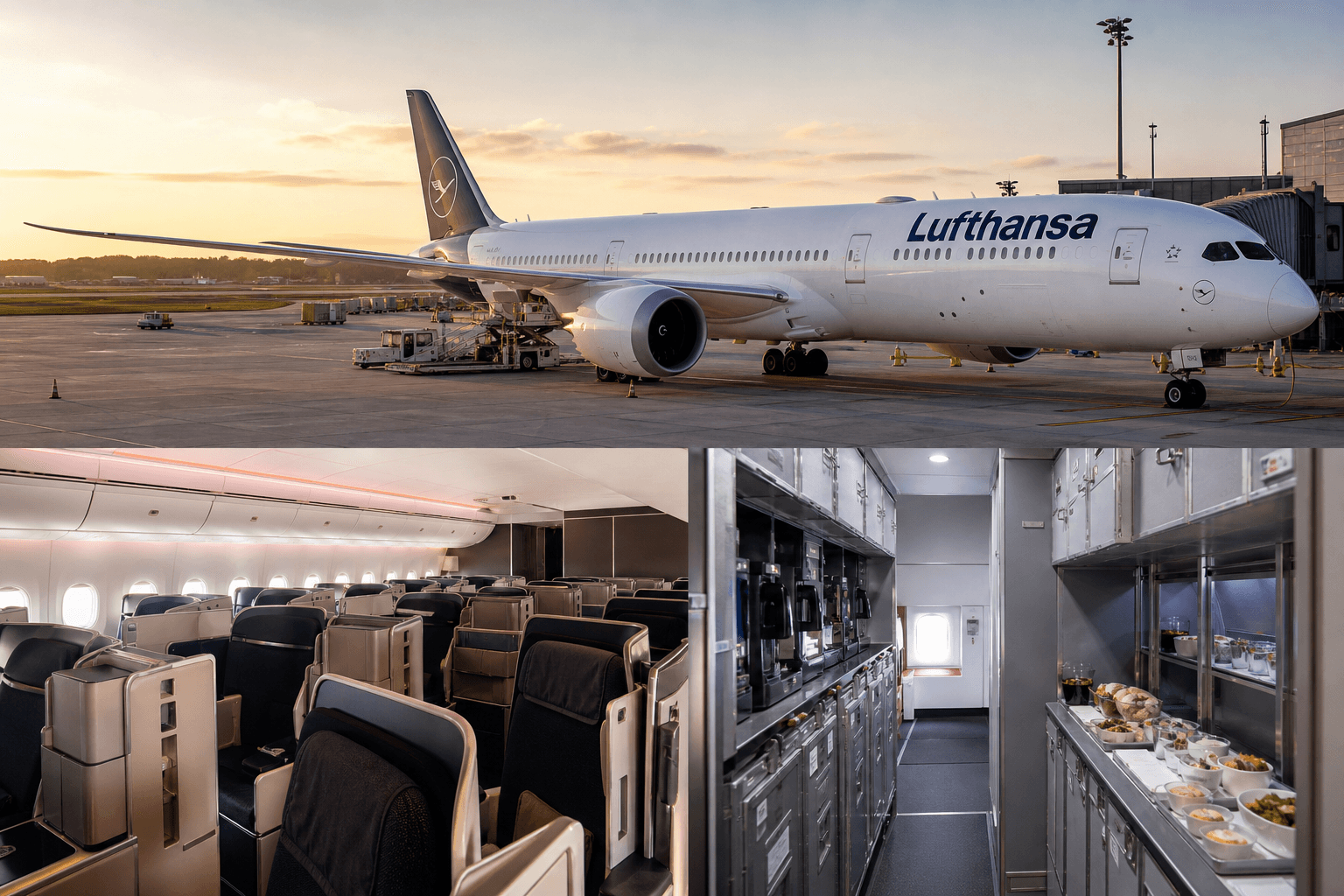
Lufthansa Locks Business Class Lavatory During Meal Service for Catering Space
While not particularly significant, and while there's nothing wrong with this, here's something I find interesting. Lufthansa recently improved its business class catering, and as a result, the airline is now blocking a business class lavatory during the meal service on some planes. It's funny, because I just flew Lufthansa's new Allegris business class on the 787 (more on that soon), and I noticed something was up with the lavatory. At the same time, aeroTELELGRAPH published a story explaining what's going on. Lufthansa's upgraded catering leads to downgraded bathroom options In addition to Lufthansa's new Allegris cabins , Lufthansa also recently overhauled its entire onboard soft product, with what's being referred to as "FOX." Among other things, this includes improvements in the business class meal service, including a lot more effort being put into presentation. Rather than all dishes just being "nuked" in the oven and looking like they fell off a truck, the crew puts more effort into plating, garnishes, etc. As you'd expect, that takes a bit of effort, and galley space can be limited. That brings us to what I find noteworthy. Lufthansa has confirmed that "on a few aircraft types – including the Boeing 787 – one of the two toilets in Business Class will be closed during preparations for the first service." The logic here is that the forward galley on the Dreamliner isn't huge, and there is a lavatory up there. The crews have little carts they place in the galley so they can work on properly plating the dishes, and there's really not room for people to be navigating around them, without getting in the way of their workflow, and slowing down the service. Apparently this plating required a lot of effort? 😉 I knew something was up with the Dreamliner lavatory! I tend to notice the little details of the passenger experience, even the most minor things. After all, I've flown a massive number of airlines in premium cabins, and it's the little details that set airlines apart. I just flew the Lufthansa 787 with Allegris cabins, and there are two lavatories behind the business class cabin, and one in front. It seemed like one of the rear ones may have been intended for premium economy, or something, as it wasn't clear (this is supported by Lufthansa claiming that one of two business class lavatories is blocked). After takeoff I tried to go to the forward lavatory, and as I walked up, the crew asked me to use the lavatory in the back. I thought that was odd at first, since the lavatory sign indicated it was unoccupied. However, as soon as I walked back, the forward lavatory showed as occupied, and stayed that way throughout the service (in other words, they locked it). As you can imagine, this made me wonder about the logic for this policy, and now I know! Personally, I don't have an issue with this. Most people tend to not use the lavatory during the meal service, for obvious reasons. So having fewer lavatories available shouldn't be an issue. For what it's worth, the airline claims it hasn't received any complaints about this policy. Lufthansa is blocking some business class lavatories Bottom line Lufthansa recently rolled out its new soft product on long haul flights, which includes improved catering in business class. This largely centers around the crew putting more effort into plating and presentation, and that takes time… and space. In light of that, Lufthansa crews are now blocking one of the lavatories in business class on some aircraft, so that they have more space to work in the galley. Much of the effort that goes into presentation doesn't happen on galley counters, but instead, happens on carts that are set up in the galley, so I understand why they need more space. Anyway, in case you're like me and wonder why the forward lavatory is blocked during the meal service (as I just noticed on a flight), now you know!
Delta Offers $17.34 Business Class Upgrade on 15-Hour Atlanta to Seoul Flight
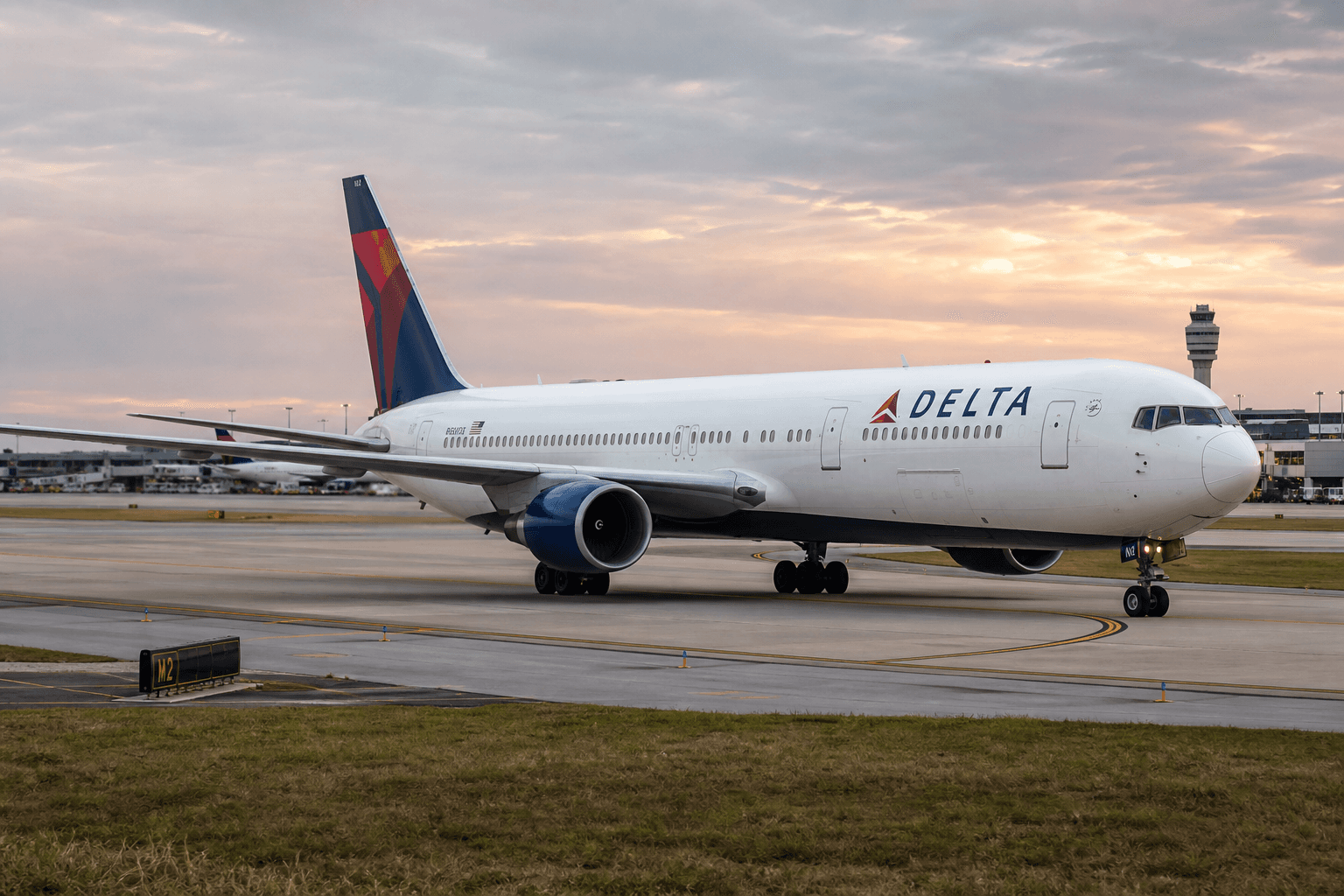
Airlines have gotten much better at monetizing their premium cabins over the years, and that comes in a variety of forms, including increasingly selling upgrades for cash as the departure date approaches, much to the chagrin of elite members trying to take advantage of their upgrade perks. Upgrade costs can be all over the place, and in some cases, they've become pretty attractive. However, I don't think I've ever seen anything quite like this before… Delta charges $17.34 for business class upgrade to Asia A Reddit user shares their experience being offered — and accepting — a $17.34 upgrade from Premium Select (premium economy) to Delta One (business class) on the 15+ hour flight from Atlanta (ATL) to Seoul Incheon (ICN). https://www.reddit.com/r/delta/comments/1uz6muy/hows_this_for_an_upgrade_price/ As the person explains: The ticket was changed to the current one on 5-28-26 and flights were LGA (Main B) to ICN via ATL (PS G) and return was HKG (D1 I) to JFK via LAX (D1 I), I being capital i. Upgrade pricing was at $2390. On 7-13, pricing went north to $2661. It went down to $1812 the next day, the 14th. Some time during the evening on the 14th, I changed the HKG-JFK flight to ICN-JFK via LAX to fly on Korean Air's 747. That changed the booking codes for return flights to Z while LGA-ATL was repriced to Comfort W and ATL-ICN was repriced to PS A. Upgrade pricing at this time went down to $1671. It stayed there until this morning at 8:13am, when I went into the seat map for ATL-ICN and saw $17.34. I didn't cancel out of the screen in case it never returns. Got to the purchase confirmation screen and the charge is also showing on my card. Currently, I'm about a month and a half out from checking in and flying. I was hunting for the elusive $699 upgrade offer but I'm not complaining at all with $17.34. Book asap, celebrate later. Was this price the best deal ever, a glitch, or what? Airlines don't publish how they come up with their upgrade pricing, though they seem to take into account a massive number of factors. This may include everything from your originally booked fare, to your elite status, to how many seats are remaining and in what fare buckets, to how close to departure it is. So, was a $17.34 upgrade to Delta One a glitch, or did Delta really mean to offer such an attractive price? On the one hand, originally booked fares may factor into the upgrade cost, and as a result, it's possible (in theory) that one booked a very expensive premium economy fare, and then the upgrade cost is based on some heavily discounted business class fare. But what's more interesting is how the upgrade cost jumps around. It looks like this ticket was changed a couple of times, but then overnight the upgrade cost went from $1,671 to $17.34, so that's nearly a 99% drop in the cost of the upgrade. My speculation would be that this was a glitch of some sort, which is to say that the upgrade algorithm sorta broke, and used bad logic. Now, this should of course still be honored, since upgrade pricing is dynamic, and if you want to have a very complicated system, that can go both ways. But as a customer, talk about a huge win! It's a good reminder to frequently check upgrade pricing, because you never know what you might find. $17.34 seems like a fair deal for an upgrade! 😉 Bottom line A Delta customer was offered a $17.34 upgrade to business class on a flight from Atlanta to Seoul Incheon, which must be some sort of a record. Upgrade costs can jump around. In this case, the upgrade cost went from $1,671 to $17.34 from one minute to the next, a nearly 99% drop! What do you make of this Delta One upgrade cost? Have you ever seen anything like this before?
Lufthansa Debuts 787-9 Allegris Business Class with Mixed Results on Soft Product
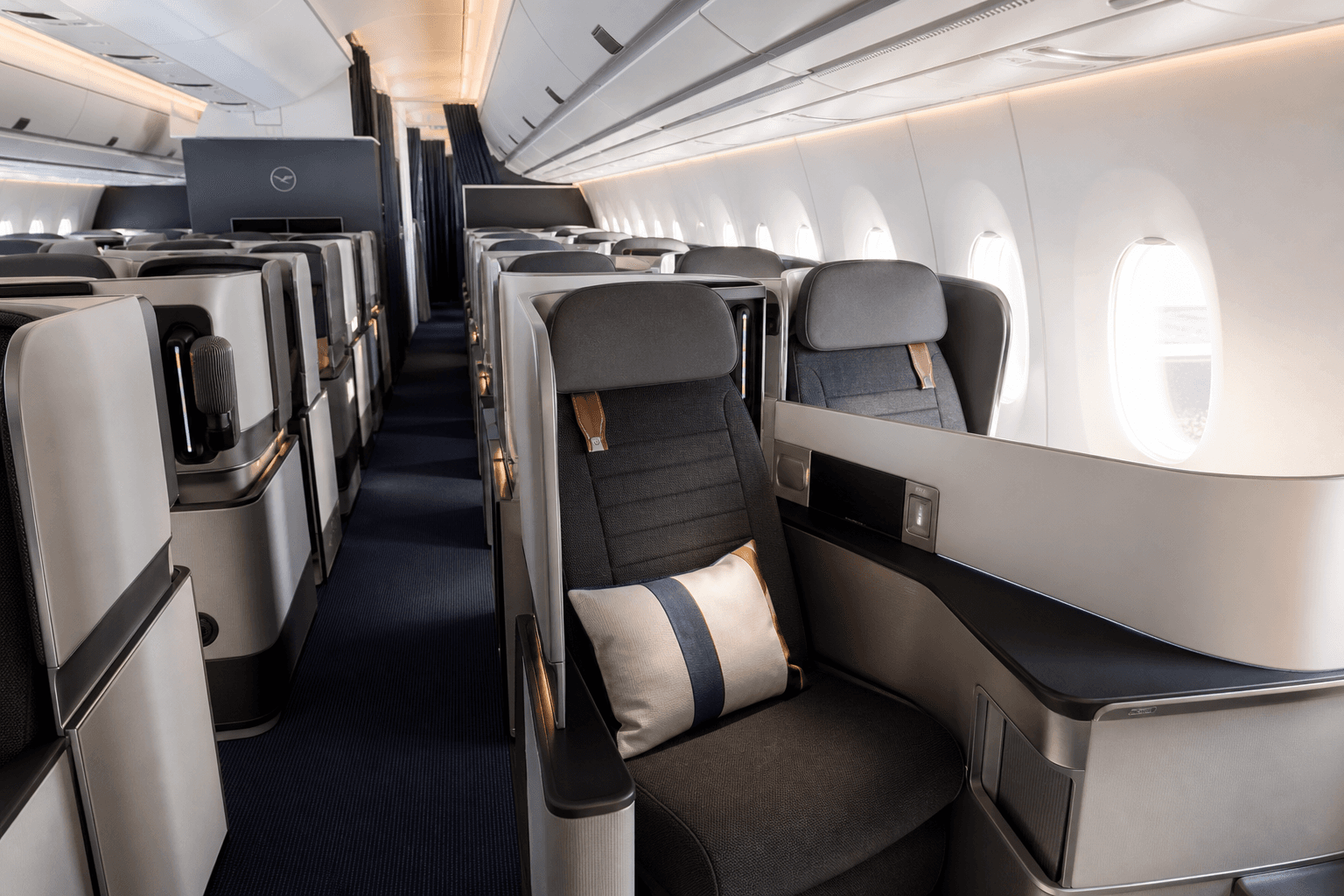
Hello from Germany, as I just flew Lufthansa's new Boeing 787-9 Allegris business class on the 9hr25min flight from Austin (AUS) to Frankfurt (FRA), kicking off what should be a very fun trip . While this was my first flight on Lufthansa's new purpose-built Dreamliner , it was my second flight in Allegris business class , as I had also flown the product on the Airbus A350-900 . The added twist here is that Lufthansa recently rolled out its new "FOX" business class soft product , so I was looking forward to experiencing the new catering, amenities, etc. How is the Lufthansa long haul business class experience, when you combine Allegris and FOX? Well, it's solid. It's a huge improvement over the old product, and it's competitive with what other airlines offer. It's nothing that's going to blow anyone away, though. When it comes to the new meal service, I got the distinct impression that the changes are much bigger when departing from Germany rather than an outstation, because I still found the catering to be sort of lackluster. Anyway, while I'll have a full trip report soon, I'd like to share some initial impressions on the experience. Lufthansa's 787 Allegris business class seats are pretty good Lufthansa's Boeing 787-9s with Allegris cabins are equipped with 28 business class seats, spread across nine rows, in an alternating 1-2-1 and 1-1-1 configuration. Lufthansa promotes how Allegris business class offers customers a lot of choice, because there are so many different seating types to choose from. Lufthansa 787 Allegris business class cabin That's of course a double edged sword, as there's a fee to assign most types of seats, and on top of that, your experience will differ massively based on which seat you end up in. Furthermore, if you're traveling with someone, there are literally no seats next to one another, except the pair of front row seats, which you have to pay a lot extra for. I'll talk more about the best Allegris business class seat assignment strategy in a separate post. Lufthansa 787 Allegris business class cabin Lufthansa 787 Allegris business class seats On the plus side, I think the cabin is pretty spiffy-looking overall, and I do prefer being in business class when there's not a first class cabin (which is a benefit of the 787 over the A350), in terms of service, lavatory access, etc. I ended up in one of the "privacy" window seats, and to Lufthansa's credit, this is actually quite a spacious seat, both when lounging around and when in bed mode. Lufthansa 787 Allegris business class seat Lufthansa 787 Allegris business class seat Lufthansa 787 Allegris business class seat The tech is obviously solid, with USB-A, USB-C, AC, and wireless charging, a crisp seat back monitor, and bluetooth audio. Lufthansa 787 Allegris business class seat features But it's the little aspects of the experience I don't understand. I found the seat to be extremely hard, and while in theory you can control the firmness of the seat, I found there to be very little change. Fortunately there's a mattress pad, which helps. Furthermore, there are no individual air nozzles, and while the A350 has seat cooling, I didn't notice that feature on this plane (but maybe I just couldn't find it)? Lufthansa 787 Allegris business class seat tablet Lufthansa's 787 Allegris business class entertainment & Wi-Fi are solid Lufthansa's Allegris business class entertainment system is quite easy to use, and there's a good variety of movies and TV shows, along with the map feature, and even an external nose camera. So I had no issues staying entertained. Lufthansa 787 Allegris business class entertainment Lufthansa 787 Allegris business class entertainment The plane also has Panasonic Wi-Fi. The speeds weren't great, and perhaps what I found strangest is the bait and switch pricing, which is obviously a glitch — the page shows a price of 25 EUR, but then the payment page asks for 29 EUR. That obviously shouldn't happen. These planes should get Starlink Wi-Fi eventually , which will be great. Lufthansa 787 Allegris business class Wi-Fi pricing Lufthansa 787 Allegris business class Wi-Fi pricing Lufthansa's new business class amenities are much improved Lufthansa recently overhauled its soft product, so what all has changed in business class? Well, in addition to the new business class pillow and blanket that the airline has long offered, there's also a mattress pad, which is well padded, and useful, especially given how hard the seats are. Lufthansa business class pillow & blanket Lufthansa business class mattress pad There are also slippers, handy for going to the lavatory. Lufthansa business class slippers Then there's the 100th anniversary amenity kit, with all the basics, plus a couple of products from BABOR. Lufthansa business class amenity kit There were also loungewear tops handed out, from van Laack, similar to what you'll find in first class, minus the bottoms. Lufthansa business class loungewear Before landing, all passengers were offered a box of chocolates with Lufthansa branding, a nice goodbye touch. Lufthansa business class chocolates Lufthansa has definitely put some effort into improving its business class experience, and addressing some of the previous shortfalls, so kudos to the airline for that. Lufthansa's new business class catering was a miss on this flight Okay, so this topic is sort of rough. Just days before taking this flight, I flew Lufthansa's old business class across the Atlantic in the other direction, originating in Germany. I didn't review the flight since we were traveling with two little kids, and that's a handful, and I figured I'd review the new soft product on this flight. When I flew out of Frankfurt, I was super impressed by the new catering, and thought the difference in quality was huge. Meanwhile when departing Austin, I didn't at all find that to be the case, unfortunately. So, what's the meal service like on this flight? Before takeoff I was offered a welcome drink (I chose the signature Avionic cocktail), which was served with some packaged nuts. When departing Germany, they're instead served in a classier bag. No biggie, I'm just pointing out the minor differences. Lufthansa business class pre-departure drink & nuts After takeoff, service began with a carrot yuzu, edamame, sesame, and ginger, amuse bouche, which was a nice touch. Lufthansa business class amuse bouche There were then three appetizer choices, and I opted for the beef tenderloin with horseradish cream, honey soy, and pickled vegetables. This was automatically served with an heirloom tomato and cucumber tartare with black garlic, a nice twist on the typical salad. Then there was a selection of bread, plus a cauliflower miso dip with edamame. Lufthansa business class appetizer For the main course, I opted for the seafood stew, with shrimp, monkfish, mussels, tomato, zucchini, and yukon potato. I'm sorry, but this was bad in every way. The portion was tiny, the seafood was chewy, there was barely any "stew," and the presentation was awful. Lufthansa business class main course Admittedly before I ordered it, I wondered how they'd be able to do a good job essentially pulling off a bouillabaisse. And the answer is that they can't, so maybe they shouldn't have it on the menu? Again, let me emphasize that when departing Germany, I found the new catering to be great, including the presentation. Then for dessert, there was the choice of fruit, cheese, and/or dessert, and I had the fruit plus dessert, which was a chocolate mousse with strawberry. Lufthansa business class dessert Breakfast was then served before landing. Lufthansa now has little menu cards it gives you to fill out before going to sleep, with your order. Lufthansa business class breakfast card There were three options, and I opted for the spinach egg cake, as it was described, but that's not really what I'd call this. Instead, it was just gross (presumably) powdered srambled eggs with some spinach in t
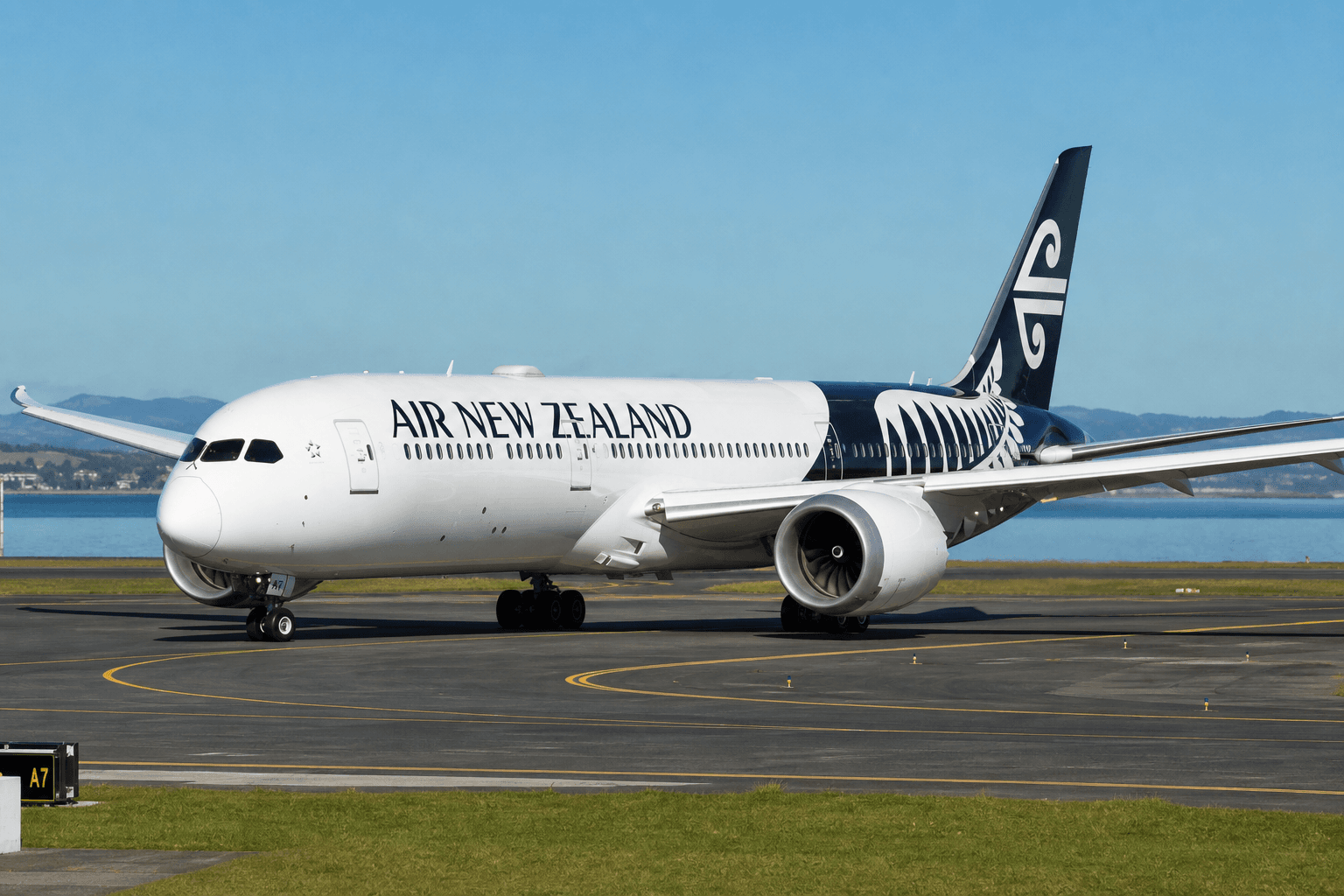
Air New Zealand CEO Nikhil Ravishankar outlines strategy to enhance sleep and connectivity
When even your closest neighbor is several hours' flight away, concepts such as air connectivity and passenger experience become even more important. For many decades, Air New Zealand has successfully connected one of the most geographically remote countries to the rest of the world, while innovating its aircraft cabins with fresh and unique concepts aimed at making long journeys more enjoyable for regular passengers. In June 2026, seven months after his appointment to the role of Air New Zealand CEO, Nikhil Ravishankar met with AeroTime during the International Air Transport Association (IATA) 82 nd Annual General Meeting (AGM) in Brazil to discuss the Kiwi airline's unique market positioning. At the time of our conversation, a topic that was the focus of much of Ravishankar's attention was the fuel crisis triggered by the conflict in the Middle East. In fact, Air New Zealand was one of the first airlines to cancel flights in the first half of 2026 in response to this exogenous supply shock. "At the moment we are now facing more tailwinds than headwinds. I like using a sort of rugby analogy to describe it as 'a game of two halves'," he stated, before going on to dissect the overall situation at the airline, beginning with the positives. "On one side, our operational performance as an airline is as good as it's ever been. We're now consistently one of the top five airlines when it comes to on-time performance, cancelation rates and operational performance. So, our operational performance is really fantastic," he said. "Our customer satisfaction scores are also as high as they've ever been. Air New Zealand has a legacy of being very good at customer experience, we have a very unique Kiwi service proposition, and our customers love flying with us, which is always helpful." "Your customers liking your product is always a good starting point," he added. "For a long time, we've been suffering engine issues, both on the narrowbody and widebody fleets. This time last year, about 20% of our fleet was grounded," he continued. "We're now in a place where most of our aircraft are flying and, at the end of this month, we will only have one aircraft on the ground [AOG] because of engine issues, and that's a huge improvement in 12 months." Ravishankar then switched to the challenges faced by the airline, the "headwinds" as he described them. "On the flip side, of course, like everybody else, we're now dealing with the fuel crisis and Asia-Pacific is a little bit more exposed," he said. "A lot of our crude comes from the conflict zone, and that has sort of impacted us, but the markets continue to clear." "This is a pricing issue for us, not a supply issue," he continued. "So, we haven't seen any challenges with supply. Since it's a price shock, we're trying to minimize it, but we can't do so fully. We are mitigating about 40% of the price increase through a combination of fare increases, flying consolidation, frequency reductions and cost management." "It's the same algorithm that all airlines are using to deal with this situation," he added. "So that's a bit of a headwind, and that in turn has an impact on the demand profile." But what is the traffic profile Ravishankar referred to? Here, the CEO offered two points as a way to frame an answer to the question. "New Zealand is actually a bigger country than many people think. It's the size of Japan, but only has 5.3 million people, versus Japan's 125 million. So, we're a large, hilly, sparsely populated country. Domestically, aviation is very important to us to connect many smaller communities to our main centers." Ravishankar explained how Air New Zealand flies to 20 domestic destinations, quite a dense domestic aviation network for the population size of the country. "And we're far away from everywhere else in the world. If you put a 2,000-kilometer circle around Auckland, you don't even hit the East Coast of Australia, but if you did that over Berlin, you cover from Western Russia to the Nordics, the UK, and even parts of North Africa. So international connectivity is very important too." "Those two dynamics are critical because we do about 16 million flights a year, about 10 to 11 of those are domestic flights, so a lot of the flying we do is just to connect New Zealanders with each other," he added. "The remaining you could say is a 50-50 split between Kiwis going abroad and incoming visitors, a large portion of whom, around 43%, are tourists." Tourism is New Zealand's second largest GDP earner, Ravishankar said, adding that tourism demand into New Zealand is currently as strong as it's ever been. "I often say I've never met anyone around the world who says they never want to visit New Zealand. It's on everyone's bucket list and, particularly now, in this sort of chaotic world, it's an oasis of peace, tranquility and stability," he said. "So, our tourism proposition is very strong." Beating the tyranny of distance The growth in international demand has been somewhat balanced out by weaker domestic demand, whether it is for movement within the islands or Kiwis traveling abroad. "That demand is much softer at the moment and that's reflective of the strength of the underlying economy and the New Zealand dollar, but that's part of economic cycles, and that will come right," Ravishankar explained. Interestingly, Ravishankar named Singapore, not neighboring Australia, as the airline's single largest foreign market. Australia, the United States, and parts of Asia follow suit. China, the giant of the Asia-Pacific region, is also a growth market for Air New Zealand. "China visitor numbers have started to pick up again," he said. "So, I think it'll always remain an important market for New Zealand. 40% of our global trade is with China, so it's a very, very important market for us. We fly to Shanghai, Hong Kong, and Singapore, and they all act as sort of hubs for us." In response to the strong international demand, Air New Zealand has reactivated its B787 fleet , part of which had been grounded since the COVID-19 pandemic (the last of those stored aircraft re-entered service in early July 2026), but also preparing for a significant expansion of its long-haul capacity, adding 10 more Dreamliners and bringing the fleet from 14 to 24. "It's an aircraft that works for us really well in terms of our network design," Ravishankar said. "On the long-haul fleet, if I could summarize our strategy into a single line, it would be 'to win on sleep'. So, if you look at our first two new long-range B787-9s which are to be delivered shortly, these are fitted with SkyNest , that is bunk beds in economy class," he explained. "And alongside SkyNest, those new aircraft will have seven different seat products within a single aircraft, five of those seven seats are optimized for sleep." Here, Ravishankar was talking about the rather unique, innovative product which will allow economy class passengers to pay a bit extra to spend a few hours sleeping in a proper bed. Air New Zealand first unveiled SkyNest in 2020, with sales going online in May 2026. "We're excited about the bunk beds. The early signs are very promising commercially as well. They're selling well, so you can buy it today. It's on sale," he said. "That's going to be interesting for all our widebodies." RELATED Air New Zealand to sell Skynest sleep pods for economy travelers starting May But SkyNest is far from a one-off, it follows in the footsteps of SkyCouch, which entered service in 2011. SkyCouch allows families traveling together to combine the three economy class seats in a row to make a bed. "Sky Couch is very popular with families with young kids," Ravishankar said, before also going on to talk about the other types of seats on offer onboard Air New Zealand's Dreamliners. "We've also got our premium economy offering, which is a brand-new seat, and then, obviously, Business Premier and Business Premier Luxe which are two different flavors of our business class." The airl
The Daily Touch & Go
The day's best aviation news in your inbox. Free, no spam.