


EU to Extend Aviation Emissions Trading System to Some Flights Beyond Europe by 2029
The European Commission plans to include flights up to 5,000km from the EU centre in its emissions trading system starting in 2029, excluding transatlantic routes and enhancing sustainable aviation initiatives.
The gist
From 2029 the EU will expand its emissions trading system to cover certain flights beyond Europe, aiming to curb aviation pollution and support sustainable fuels.
The European Commission has announced a proposal to expand the scope of its Emissions Trading System (ETS) for aviation by including flights departing to third countries within a 5,000-kilometer radius of the EU’s geographic center. This move, set to take effect in 2029, represents a significant extension beyond the current restriction to intra-European Economic Area (EEA) flights. Notably, transatlantic flights are excluded from this expansion, focusing the ETS on routes more susceptible to carbon leakage and emissions inefficiencies.
This policy adjustment comes after an extensive review of the global carbon offsetting scheme for international aviation, known as CORSIA, concluded that CORSIA has yet to deliver sufficiently ambitious reductions. As a response, the Commission seeks to fortify its own ETS framework, applying it to flights departing any EEA airport to destinations no more than 5,000 kilometers away from the largest aerodrome in the geographical center of the Union. This distance roughly amounts to half the maximum range covered by flights from central Europe, intentionally excluding much longer flights such as those crossing the Atlantic.
The expansion marks a reversal of the 2013 decision to limit ETS coverage following the international agreement on CORSIA at ICAO. At that time, the EU scaled back the scheme from all flights to only intra-EEA journeys to avoid overlap with global measures. However, ongoing assessments revealed that CORSIA’s implementation has not yet matched expectations. Consequently, by extending ETS coverage to nearby third-country flights, the Commission aims to more effectively price carbon emissions and drive aviation decarbonization efforts within its influence.
According to Commission documents, the revised ETS scope is designed to prevent so-called hub leakage, where passengers might switch to routes exempt from carbon costs. This targeted approach restricts ETS to routes most vulnerable to such displacement. The regulatory change is scheduled to start in 2029, which offers a two-year delay beyond the termination of the current ‘stop the clock’ arrangement limiting ETS’s application to third countries.
Moreover, the Commission intends to periodically review the interaction between its ETS expansion and CORSIA’s effectiveness. A comprehensive evaluation in 2032 will determine if the global scheme meets its goals. Should CORSIA prove robust and efficient by then, the EU plans to scale back ETS coverage to flights within the EEA and select nearby territories like the UK, Switzerland, and Gibraltar. If not, the option to extend ETS to cover all departing flights remains on the table.
The proposed amendments also include funding enhancements for sustainable aviation fuels (SAF) and emerging technologies such as hydrogen and electric propulsion. By increasing emissions allowances in proportion to the expanded flight coverage, the EU aims to bolster investment in cleaner aviation sources and accelerate the sector’s transition towards net zero.
The reaction from environmental organizations reflected concern over the exclusion of longer-haul flights. Critics argue the 5,000-kilometer boundary lets the most polluting intercontinental routes, especially those over the Atlantic to the US and China, avoid carbon pricing obligations. There is a sentiment that this concession caters more to geopolitical pressures than climate science and economic imperatives. Nonetheless, the proposal signals a strategic yet cautious approach to expanding aviation carbon regulation in alignment with international frameworks.
This development arrives amid intensifying global scrutiny of aviation’s climate impacts and efforts to reconcile environmental ambitions with operational realities. The EU’s ETS extension will affect airline operations, emissions accounting, and potentially ticket pricing on an expanded set of routes. By integrating climate costs into a broader swath of regional flights, it intends to incentivize cleaner technologies and sustainable fuels across European-linked corridors.
Airlines operating flights within the expanded 5,000-kilometer radius should prepare for compliance requirements starting in 2029, including securing emissions allowances and adapting to new fuel mandates. The Commission’s phased approach with periodic evaluations underscores the dynamic nature of aviation climate policies and their dependence on global cooperation frameworks like CORSIA.
Frequently asked questions
- Which flights will be newly covered by the EU Emissions Trading System starting 2029?
- Flights departing from any EEA airport to third countries located up to 5,000 kilometers from the geographic center of the EU will be covered starting 2029, excluding transatlantic routes.
- Why did the European Commission decide to expand the ETS scope now?
- The decision followed an assessment that the global CORSIA scheme has not yet been sufficiently strengthened to reduce aviation emissions effectively, prompting the EU to broaden its ETS coverage.
Read more
All Technology/eVTOL →
Orlando International Airport to Build US's First eVTOL Vertistop with Flights Expected This Year
In an exciting move, the Greater Orlando Aviation Authority will proceed with approved plans to develop the United States first vertistop . Located on the grounds of Orlando International Airport (MCO), this is the first step in bringing electric vertical takeoff and landing to the Central Florida region.
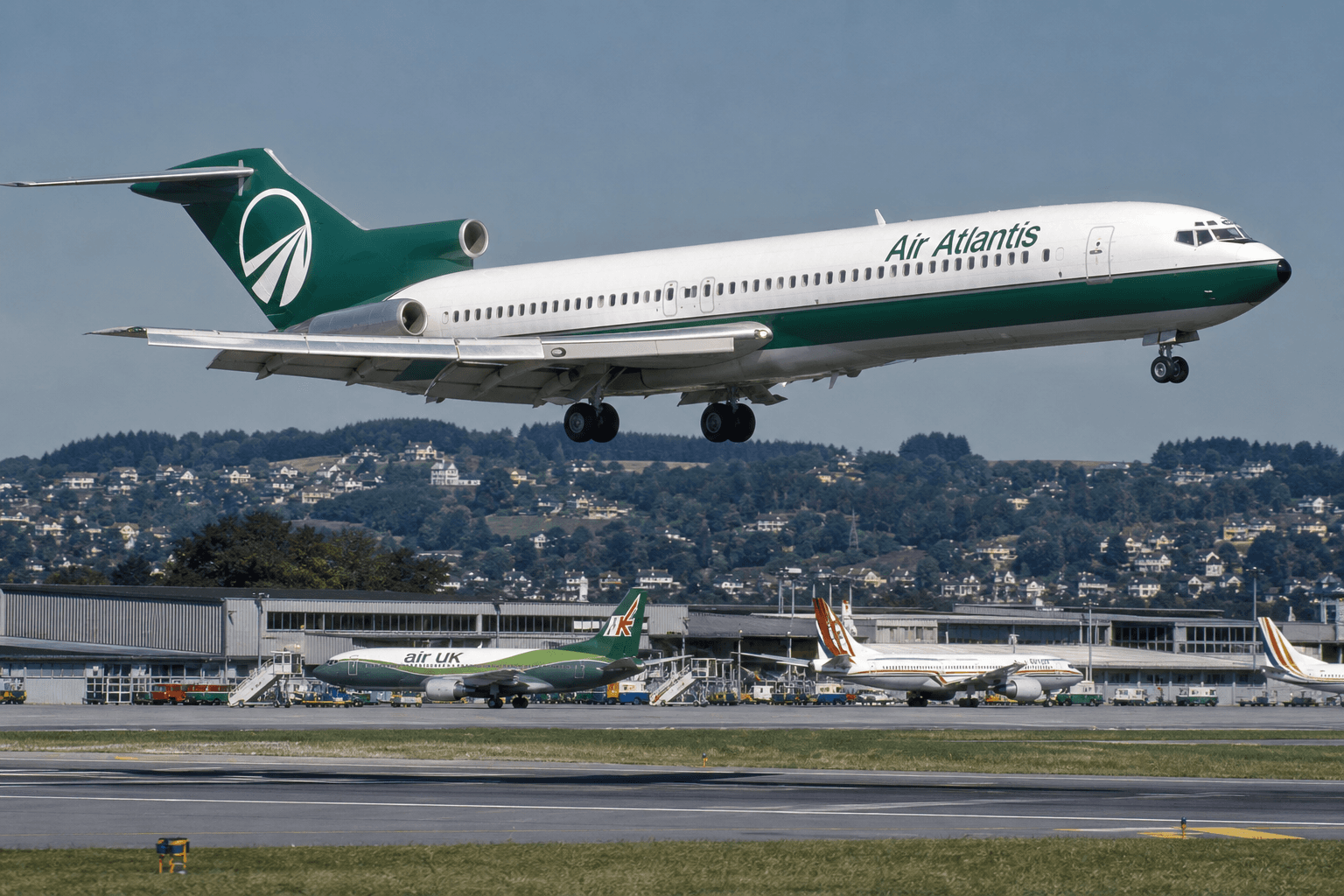
Air Atlantis, Portuguese Charter Airline, Shaped 1980s European Holiday Travel
For many plane spotters who frequented regional airports during the late 1980s and early 1990s, the sight of an Air Atlantis aircraft arriving from Portugal remains a fond memory. Wearing an attractive green-and-white livery and operating a fleet of Boeing 727s and 737s, the airline became a familiar visitor at airports across the UK and Europe during the package holiday boom. Although Air Atlantis existed for less than a decade, it played an important role in Portuguese aviation and helped support the rapid growth of tourism to the Algarve and Madeira before eventually being absorbed back into its parent company. The Birth of Air Atlantis Air Atlantis Boeing 707 at Birmingham. Photo: simon butler Air Atlantis was established in 1985 as a wholly owned subsidiary of Portugal’s flag carrier, TAP Air Portugal. During the 1980s, demand for leisure travel from northern Europe to Portugal was growing rapidly, particularly from the United Kingdom, Germany and Scandinavia. Rather than use its mainline fleet on charter operations, TAP created a dedicated airline that could focus entirely on the booming holiday market while allowing the parent airline to concentrate on scheduled international services. Based at Lisbon Airport, Air Atlantis began operations in 1986 and quickly became a major player in Portugal’s charter sector. Charter Flights Across Europe Air Atlantis 727-200. Photo: Rob Hodgkins The airline’s business centred on flying holidaymakers from across Europe to Portugal’s popular resort destinations. Flights linked cities throughout Britain, Ireland, Germany, France, Belgium, the Netherlands and Scandinavia with Lisbon, Faro, Funchal and Porto, carrying thousands of package holiday passengers every summer. British enthusiasts regularly saw Air Atlantis aircraft at airports including Manchester, Birmingham, Glasgow, Newcastle, East Midlands, Bristol, Bournemouth and many other regional airports. Their flights were often operated on behalf of major tour operators, meaning the airline became a familiar sight despite never operating scheduled services of its own. As well as leisure flights, Air Atlantis occasionally undertook ad hoc charter work and aircraft leasing for other airlines when demand required. The Air Atlantis Fleet Pedro Aragão, CC BY-SA 3.0 GFDL, via Wikimedia Commons Air Atlantis operated a fleet mostly in line with its parent, TAP Air Portugal, through whom it mostly procured its aircraft. In fact, the airline’s livery closely resembled that of the parent carrier through its use of white, green and red, reflecting the Portuguese flag. Air Atlantis began operations with Boeing 707-300, 727-100 and 737-200 aircraft in 1985. It later added Boeing 727-200 and 737-300 types as the fleet grew. In total, 19 aircraft were operated by Air Atlantis between 1985 and 1989. Perhaps the airline’s greatest attraction for enthusiasts was its fleet. The aircraft were configured in high-density seating layouts to maximise passenger capacity. Part of the Golden Age of Charter Flying Air Atlantis arrived at a time when charter airlines were flourishing across Europe. During the late 1980s, airports around the UK welcomed a fascinating variety of leisure carriers every summer. Britannia Airways, Dan-Air, Air Europe, Monarch, TEA, Spantax and many others regularly appeared alongside overseas operators such as Air Atlantis. For plane spotters, this meant regional airports often offered far greater variety than they do today, with unusual airlines and aircraft arriving from across Europe on weekly holiday flights. Why Did Air Atlantis Disappear? After Air Atlantis was closed down some of its fleet merged back into TAP Air Portugal. Photo: Aero Icarus By the early 1990s, the European airline market was changing rapidly. Charter and scheduled operations were becoming increasingly integrated, while deregulation created new opportunities for airlines to operate more flexibly. In 1993, TAP decided to wind up Air Atlantis and bring its charter activities back under the main airline. The fleet was gradually dispersed, with several aircraft finding new homes elsewhere around the world. Although the airline disappeared after only seven years, it left behind fond memories for enthusiasts who photographed its aircraft during the golden age of European package holidays. Do you remember seeing Air Atlantis at your local airport? Did you ever fly on the airline? Leave a comment below! For more articles on historic airlines and aircraft, remember to sign up for our free newsletter below! Title image: Maarten Visser

North Central Texas Council Launches $1M Fund for eVTOL Airport Chargers
The North Central Texas Council of Governments has opened a $1 million funding program for electric-aircraft charging equipment at public-use airports in the Dallas-Fort Worth region. Applications are due Aug. 7 at 5 p.m. CDT. The money was initially approved in September 2024 for a potential advanced-air-mobility demonstration connected to the 2026 World Cup. That plan did not proceed as originally envisioned. Arlington dropped expectations for carrying passengers during the tournament because aircraft certification and FAA regulations would not be completed in time, and NCTCOG later redirected the funding toward permanent charging infrastructure and airport readiness. The revised program also supports North Texas' participation in the larger eVTOL Integration Pilot Program ( eIPP ). The state’s participation in the initiative is led by the Texas Department of Transportation and is intended to develop infrastructure, routes and operating procedures for future electric-aircraft demonstrations and service. Airports in the council's 12-county planning area may seek awards of up to $200,000. The program does not require matching funds. Eligible expenses include an eVTOL charger and infrastructure directly required to install and operate it. Stand-alone electrical improvements that do not result in an installed charger are not eligible. The council said applications will be evaluated on airport planning documents, knowledge of advanced-air-mobility infrastructure, partnerships and implementation schedules. Proposed projects must also demonstrate how the equipment could support future aircraft operators, demonstrations or private investment.
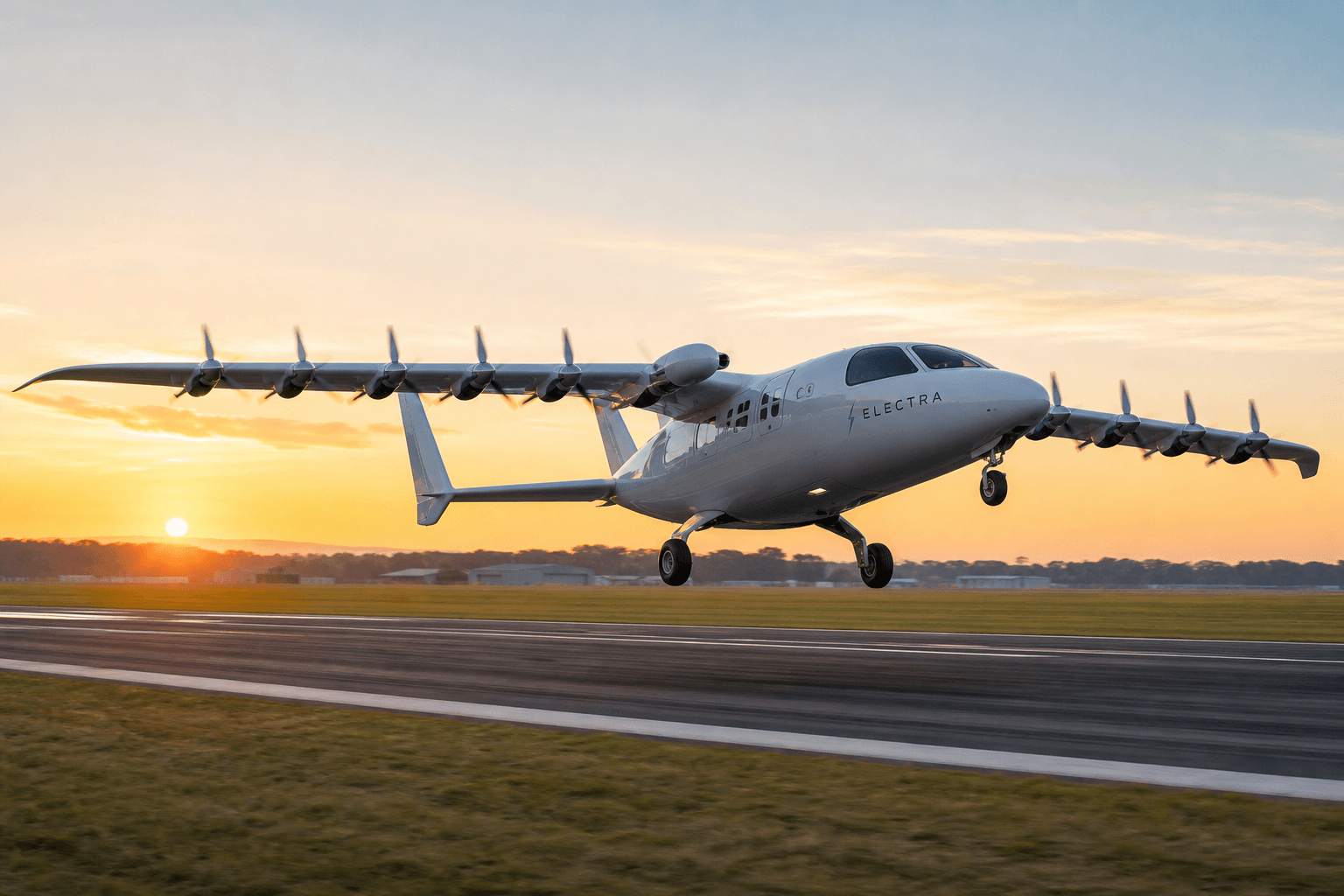
FAA Sets Certification Basis for Electra EL9 Hybrid-Electric Aircraft
Electra announced Friday that the FAA has closed the G-1 issue paper for its EL9 Ultra Short aircraft, formally establishing the certification basis for the nine-passenger hybrid-electric design. The milestone does not constitute type certification but sets the regulatory requirements the company must meet to obtain it. Certification Framework The company submitted its Part 23 type certification application in November 2025. Closing the G-1 issue paper after seven months establishes an agreed regulatory foundation for the EL9's distributed hybrid-electric propulsion, blown-lift system and fly-by-wire controls. "The swift G1 achievement reflects the hard work and productive collaboration between Electra and the FAA," Electra CEO Marc Allen said. Allen said the company will now carry that work into the G-2 phase of the certification program. Compliance Planning The G-2 phase will focus on the EL9's means of compliance, or how Electra will demonstrate that the design meets the certification basis. Electra Senior Vice President for Product Development JP Stewart said that work will include engineering analysis, ground and flight testing, inspections, conformity activities and certification data. Electra said the EL9 is designed to take off and land in 150 feet or less and carry up to nine passengers on routes of up to 330 nautical miles. The aircraft uses a small turbine-powered generator, battery packs and eight electric motors distributed along the wing to produce lift at low airspeeds.
The Daily Touch & Go
The day's best aviation news in your inbox. Free, no spam.