


Archer and Beta Launch US Electric Air Taxi Charger Network Targeting 250 Sites by 2030
Archer Aviation and Beta Technologies join forces to build up to 250 interoperable electric aircraft charging locations across US airports and cities by 2030.
The gist
Archer and Beta unveil plans for 250 interoperable electric aircraft chargers in the US to support air taxi growth by 2030.
Continuing coverage
All Electric Aircraft →- Orlando International Airport to Build US's First eVTOL Vertistop with Flights Expected This Year
- North Central Texas Council Launches $1M Fund for eVTOL Airport Chargers
- FAA and BETA Technologies Launch eVTOL Integration Pilot Program with First Electric Cargo Flights
- EAA AirVenture Showcases Cutting-Edge Electric Aircraft and Autonomous Flight Tech
- Electric Aircraft Start Short Flights Between Hawaiian Islands in Early Trials
Archer Aviation and Beta Technologies announced the formation of the Consortium for Electric Skyways (ACES), targeting deployment of up to 250 electric aircraft charging locations by 2030 across key US states such as New York, Florida, California, and Texas. This initiative aims to create the vital infrastructure backbone needed to scale electric air taxi operations nationwide. Archer founder Adam Goldstein emphasized that electric air taxis require robust charging support for sustainable expansion.
Beta Technologies currently operates a network encompassing 123 active and developing sites featuring their proprietary electric charging systems, with over 60 deployed at airports. These chargers accommodate not only Beta’s own electric vertical takeoff and landing aircraft (eVTOL) models like the Alia A250 and Alia CX300, but also Archer’s Midnight and even zero-emission electric ground vehicles such as airport shuttles. The partnership plans to leverage the FAA’s eVTOL Integration Pilot Program (eIPP) framework to roll out chargers in participating states, aiding commercial and medical air taxi operations.
Earlier in July, Beta completed the first official eIPP organ transport mission utilizing its electric air taxi services between Maryland and Virginia, showcasing operational viability and regulatory progress. The multistate eIPP effort includes at least 26 states, signaling coast-to-coast potential for the electric aircraft charger network. Macquarie Capital is engaged as a strategic advisor and the funder supporting site acquisition and development for ACES.
The consortium’s charging systems adhere to the Combined Charging Standard (CCS), providing interoperability across various electric aviation and ground vehicles. Although the CCS is being phased out for Tesla’s North American Charging Standard for electric cars, the General Aviation Manufacturers Association endorses CCS as the preferred framework for electric aircraft. This standard aligns with the European Organisation for Civil Aviation Equipment’s ED-308 guidelines, harmonizing VTOL charging infrastructure requirements internationally.
Other electric aircraft manufacturers, such as Joby Aviation, have developed proprietary charging systems like the Global Electric Aviation Charging System (GEACS); however, Archer and Beta favor an open standard approach with CCS to avoid fragmentation. Beta’s chargers focus on centralized battery pack designs, differing from Joby’s multi-channel coolant-cooled system. The consortium encourages broad industry adoption by integrating more manufacturers, infrastructure providers, and investors.
Archer and Beta’s clients, including Republic Airways, Bristow Group, and Surf Air Mobility, will use the ACES network primarily for cargo and medical flight operations, while Archer expects access for passenger air taxi services during peak periods. Both companies have partnered with major fixed-base operators (FBOs) like Signature Aviation and Atlantic Aviation to install charging units on general aviation aprons, catering to the public and existing airport users.
Site selection for chargers is driven by detailed traffic and operational data assessment, including volume and proximity to power sources. Beta aims to cluster chargers to create interconnected mesh networks increasing utility and reliability. Chargers can typically be installed within six to nine months, making rapid deployment feasible across the prioritized regions.
The eIPP program involvement strongly influences charger location priorities, with projects currently underway or awarded in Pennsylvania, Texas, Florida, Utah, North Carolina, Louisiana, New York, and New Jersey. Archer and Beta plan to reveal further details at the Farnborough International Airshow in July 2026, including a discussion featuring senior US Transportation Department officials on advancing electric aviation infrastructure.
By establishing a unified, interoperable charging network grounded in widely accepted standards, Archer and Beta are charting a concrete pathway toward scalable electric air mobility operations. Their efforts solidify the physical infrastructure foundation necessary to transition urban and regional air transport to zero-emission electric propulsion systems across the US.
Frequently asked questions
- What is the Consortium for Electric Skyways (ACES)?
- ACES is a collaboration between Archer Aviation and Beta Technologies aiming to install up to 250 interoperable electric aircraft charging sites across US airports and cities by 2030.
- Which charging standard does ACES use for electric aircraft?
- ACES uses the Combined Charging Standard (CCS), a widely endorsed interoperable framework for electric aviation charging infrastructure aligned with international regulations.
- What types of aircraft and vehicles can use the ACES charging network?
- The ACES chargers support eVTOLs like Beta’s Alia A250 and Archer’s Midnight, runway-based electric aircraft such as Beta’s Alia CX300, and electric ground vehicles including zero-emission airport shuttles.
Read more
All Cargo →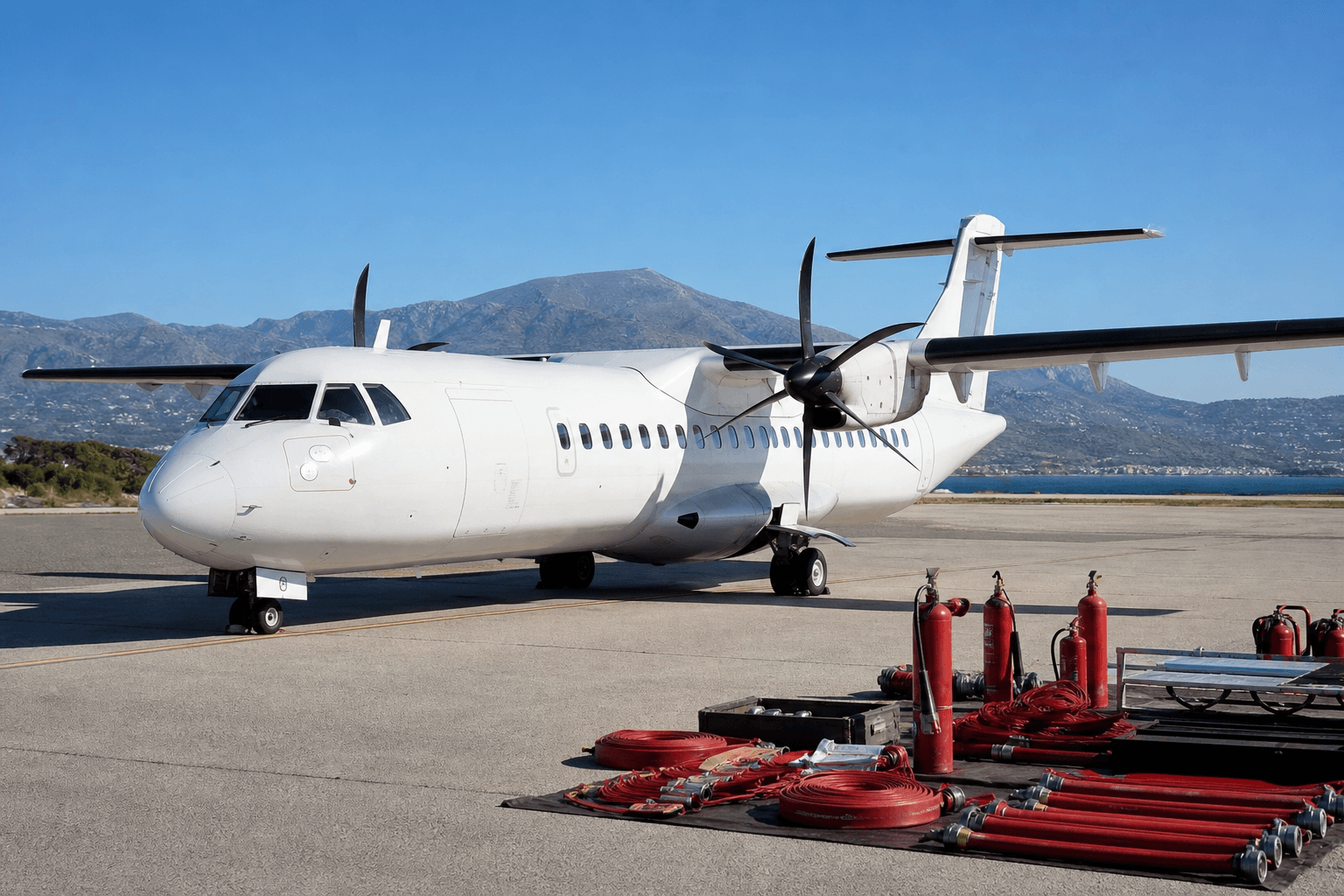
Corsica Technics to Convert ATR 72s into Firefighting Waterbombers with Kepplair Kits
Bastia-based MRO firm signs LoI for 10 modification kits from French developer Kepplair Evolution. MRO provider Corsica Technics has signed a letter of intent (LoI) covering the acquisition of 10 kits from Kepplair Evolution to covert ATR 72 passenger or cargo aircraft into firefighting waterbombers. An element of a wider initiative to grow its Bastia airport home into a maintenance hub in the Mediterranean, the LoI will allow Corsica Technics to provide customers with a rapidly deployable firefighting solution. As part of the conversion, the Kepplair 72 twin-turboprop is also outfitted for cargo transport and medical evacuation missions, delivering year-round versatility. Paris-headquartered Kepplair Evolution currently holds commitments for 18 aircraft or conversion kits. Kepplair is now awaiting the arrival of its first donor aircraft at Toulouse Blagnac airport for conversion into the initial prototype. Based on an ATR 72 cargo aircraft provided by ACIA Aero Capital, modification work, including the integration of the company’s KEDS delivery system, will be performed by Aerotec & Concept Flight testing and the initial drop tests are expected to begin by year-end. "The Kepplair 72 is based on a well-established, robust and readily available platform, with a conversion concept that meets current market needs," says Jean-Marc Cristelli, president of Corsica Technics. "Corsica Technics wishes to capitalise on this momentum by drawing on its roots in the aviation sector and its ability to support the development of new solutions for civil protection."
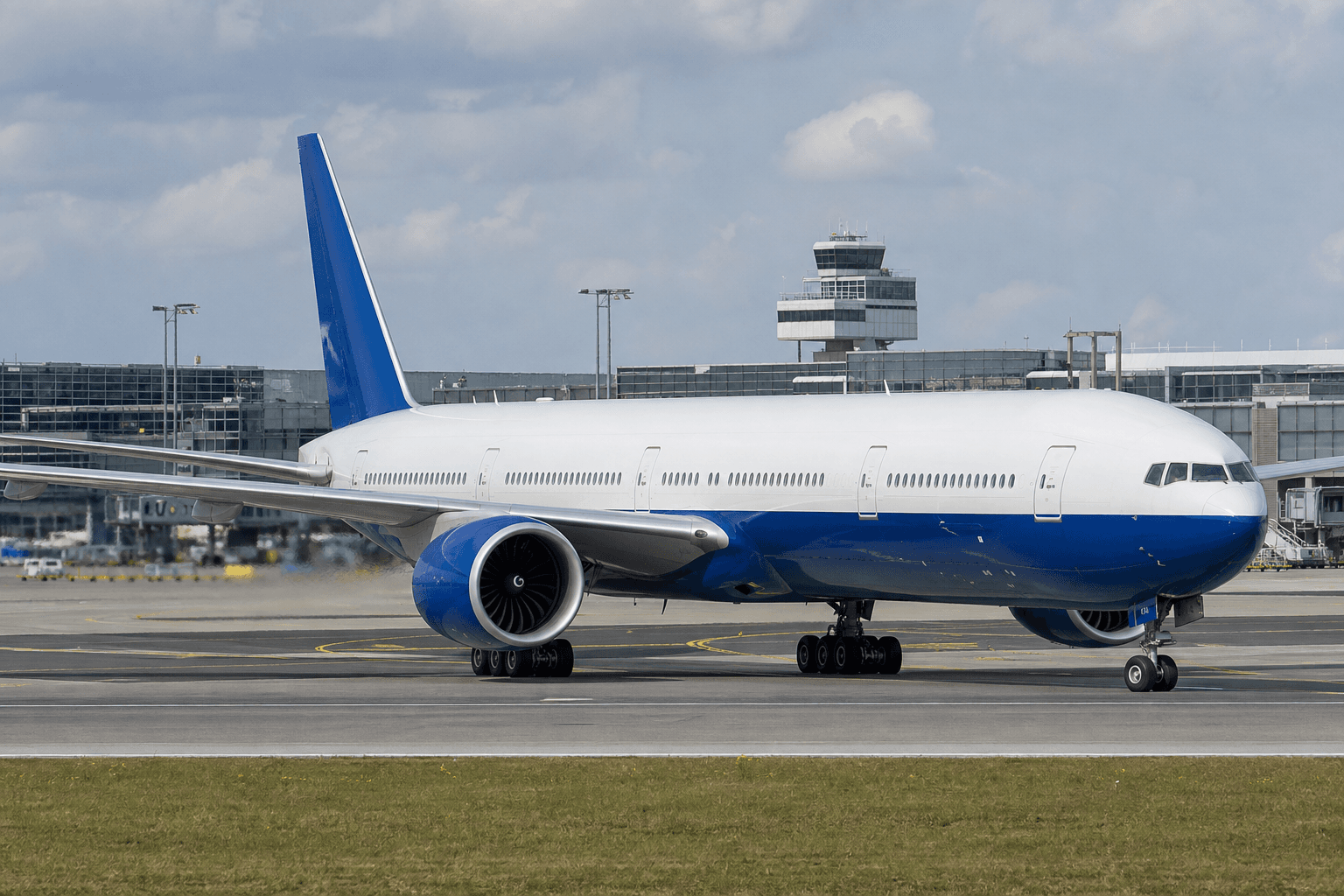
Inside Turkmenistan Airlines' Quiet Business Class Flight on a 777-300ER
Hello from Turkmenistan! Well, okay, hello from India… you thought you were going to get Wi-Fi at Ashgabat Airport? Lol. I am downright giddy, as I just fulfilled an avgeek dream I've had for years , which is to fly with Turkmenistan Airlines! Specifically, I flew the carrier's ex-Cathay Pacific Boeing 777-300ER on the 4hr35min flight from Frankfurt (FRA) to Ashgabat (ASB). My conclusion? I demand my money back (even though I paid "just" $1,000 for my full fare one-way business class ticket from Frankfurt to Delhi)! The flight was way too normal for my liking. I was expecting to be reporting back from a prison in Turkmenistan, awaiting deportation to North Korea, ideally on an Air Koryo codeshare flight (okay, I'm kidding, before anyone yells at me). Instead, I had a rather pleasant, drama-free flight, and it was only mildly strange… I even got tucked in when it was time to sleep, due to my own awkwardness. Heck, I took dozens and dozens of pictures, and no one yelled at me. This isn't what I signed up for!!! Why I've been obsessed with flying Turkmenistan Airlines Most people (at least those who aren't regular OMAAT readers) are probably thinking "WTF, you flew what airline to where?" Everyone needs hobbies in life, and one of my hobbies is flying very strange airlines, at least from a US or Western-centric perspective. Tajikitan's Somon Air, or Uzbekistan Airways? Yes please, I'll take seconds! However, arguably Turkmenistan Airlines is one of the most mysterious airlines in the world, and for years I've been talking about how I want to fly the airline . That largely comes down to the country, Turkmenistan. Side note — it's a very rich country, with the world's fourth largest natural gas reserves (even if you wouldn't know about the wealth based on how individuals live). More interestingly, though, it's also one of the world's most secretive countries. I've heard it described as the North Korea of the "stans," in terms of travel restrictions, censorship, etc. For example, you can only visit the country as a tourist if you have a guide with you at all times. So I've been curious to fly with the airline. The carrier operates a limited network to Europe, Southeast Asia, the Middle East, and within Central Asia. I've largely heard that the carrier's flights are mostly empty, and the primary motivation for the network is to move cargo. I've also heard that the onboard experience is just bizarre, that no pictures are allowed, and that Ashgabat Airport is a ghost town, with essentially a 1:1 ratio between passengers and guards. So, how was my Turkmenistan Airlines business class flight? I'm going to keep this section brief, so that there's still a little "meat" to the full flight review, which I'll publish soon. To say that I was excited when I saw the Turkmenistan Airlines Boeing 777-300ER at the gate in Frankfurt would be an understatement. Turkmenistan Airlines 777 Frankfurt Airport This was actually an ex-Cathay Pacific plane, with interiors almost entirely unchanged. There were 40 business class seats… and two other passengers. Turkmenistan Airlines 777 business class cabin Turkmenistan Airlines 777 business class cabin Well, and then there was the dude with the big hat who stood in front of the plane while it was on the ground in Frankfurt, who also flew in business class (but then put on a baseball cap onboard). Turkmenistan Airlines 777 Frankfurt Airport The inflight entertainment was riveting… if you want to read the inflight magazine, where just about every page is about the country's president. Turkmenistan Airlines inflight magazine Turkmenistan Airlines inflight magazine Turkmenistan Airlines inflight magazine When it comes to the seat back entertainment, there were a very limited number of TV shows, yet somehow an interview with Dr. Fauci on "the politicization of public health, the threats he faced during Covid, and his concerns over a divided America" made it into the selection. Yeah, you know, your typical entertainment option alongside "The Big Bang Theory." Turkmenistan Airlines 777 business class inflight entertainment Turkmenistan Airlines gets A+ for its drink presentation! Turkmenistan Airlines business class pre-departure drink The airline also gets an A+ for its schedule padding. I was amazed looking at the flight history for the Frankfurt to Ashgabat route, and seeing how it consistently arrives on-time or ahead of schedule. That's when I realized that it's because they pad their schedules to the point of oblivion, with a 4hr35min flight being blocked at 6hr. Watch out, Delta, Turkmenistan Airlines is the real "on-time machine!" The meal service was surprisingly extensive. There was a dinner after takeoff, and I opted for the short rib with potatoes, which came with a side of cold cuts, a salad, and some cheese. The flight attendant generously let me peer at the menu for 30 seconds before making a selection. Turkmenistan Airlines business class meal service There was then a dessert, consisting of a cheesecake tart, and a mini Mars bar, and I ordered a cup of tea to go along with it. Turkmenistan Airlines business class meal service I managed to get in a little snooze. I almost got caught taking pictures, as I stood over my seat with my phone, trying to take a picture of the bed. As the flight attendant walked up to me, I tried to come up with the best excuse I could — "I can't figure out how to use the blanket" — what the hell was I thinking? Well, it worked out, because the flight attendant then said "I will show you," and then… tucked me in. Talk about a Singapore Airlines first class level of service! About 90 minutes after the first meal service, I was offered a pre-landing snack, with a sandwich and yogurt. By the way, I'm really confused by what the meat is here, and in the above picture, given that Turkmenistan is an overwhelmingly Muslim country? Is this… not pork? I tried to ask, but that got lost in translation. Turkmenistan Airlines business class pre-landing service Also, the forward lavatory sure was a lovely throwback to Cathay Pacific first class! Ah… good times! Remember when you could consistently book it for 67,500 AAdvantage miles, and there were often multiple award seats? Turkmenistan Airlines 777 business class lavatory Also, is that… just a tin of NIVEA? Is everyone just supposed to stick their finger in there and moisturize… or? Turkmenistan Airlines 777 business class lavatory amenities Anything going on in this region I should know about? Turkmenistan Airlines 777 business class map feature Anyway, that's all for now. While the flight was calmer than expected, fortunately the airport lived up to everything I hoped for! Bottom line Sometimes dreams really do come true… and for me that was flying Turkmenistan Airlines business class! I've been fascinated by the airline for years, given… well, everything. Honestly, the entire experience was better and more anticlimactic than I was expecting, and that's probably a good thing. I had an oddly pleasant flight, and being one of three people in a 40-seat business class cabin in the peak of summer is something you won't find on many airlines. It was also sort of a fun trip down memory lane to fly on a former Cathay Pacific jet. I wish I could come up with a Josh Cahill style narrative here about how I was scammed, or about how it was the worst flight ever… but well, I'll leave that to him.

Fraport sees global passenger growth in H1 2026 despite Frankfurt dip
Fraport AG has released its traffic figures for June and the first half of 2026. While Frankfurt Airport saw a modest decline in passenger numbers, the company’s global portfolio delivered overall growth. ezstandalone.cmd.push(function () { ezstandalone.showAds(119); }); The group handled 77.7 million passengers across its actively managed airports in the first six months, marking a 1.0 percent increase compared to the same period in 2025. Frankfurt Airport Faces Headwinds In June 2026, Frankfurt Airport (FRA) welcomed approximately 5.7 million passengers. This represents a 1.7 percent decrease from June 2025. For the first half of the year, the airport recorded 28.9 million passengers, down 0.8 percent year-on-year. ezstandalone.cmd.push(function () { ezstandalone.showAds(127); }); Several factors contributed to the softer performance. Strikes at Lufthansa affected nearly 700,000 passengers directly. The outbreak of the Iran war caused significant flight restrictions and reduced demand for Middle East routes. Passenger numbers to this region dropped 35 percent in the first half, with only about 880,000 travellers. In June alone, traffic to the Middle East was still 27 percent lower than the previous year. ezstandalone.cmd.push(function () { ezstandalone.showAds(128); }); Positive trends emerged in other regions. Traffic to southern and northern Europe increased. Long-haul routes to the Far East rose, with Africa and Latin America also showing gains. In the first six months, passengers to Africa grew 8.0 percent to 1.6 million, while Far East traffic climbed 6.4 percent to 3.3 million. Cargo operations at Frankfurt remained resilient. Airfreight and airmail volumes increased by 2.0 percent in June to 177,676 metric tons. For the first half, cargo grew 1.0 percent to 1.0 million metric tons. However, aircraft movements fell 4.9 percent in June to 39,390, and total maximum takeoff weights decreased by 2.3 percent. ezstandalone.cmd.push(function () { ezstandalone.showAds(129); }); Frankfurt Airport Photo Credit: Fraport Strong Performance Across International Airports Fraport’s international airports largely delivered growth, offsetting the Frankfurt decline. In June, the total number of passengers at all actively managed airports reached around 19.7 million, a slight 1.1 percent dip. Yet the half-year total of 77.7 million passengers confirmed positive momentum for the group. Notable performers included: Ljubljana Airport (LJU) in Slovenia: Passenger numbers surged 12.7 percent to 184,211. Brazilian gateways (Fortaleza and Porto Alegre): Combined traffic rose 2.0 percent to 1.2 million passengers. Lima Airport (LIM) in Peru: Up 0.9 percent to around 2.0 million passengers. 14 Greek airports: Handled 5.6 million passengers, an increase of 4.7 percent. Bulgarian coastal airports (Burgas and Varna): Grew 8.0 percent to 593,964 passengers. Antalya Airport (AYT) in Turkey was an exception, with traffic down 9.6 percent to 4.5 million passengers in June. High tourism prices and geopolitical tensions in the Middle East affected bookings. ezstandalone.cmd.push(function () { ezstandalone.showAds(130); }); Ljubljana Airport Photo Credit: Fraport CEO Outlook: Financial Guidance Maintained Fraport CEO Dr. Stefan Schulte acknowledged the challenging first half but expressed confidence in the company’s position. “The first half of the year was impacted by many extraordinary factors,” he said. These included strikes, the Iran war, jet fuel concerns, and rising oil prices that made passengers more reluctant to book. As a result, Fraport now projects full-year passenger volumes at Frankfurt to remain roughly at 2025 levels. The company still expects positive growth at its international airports. Importantly, Schulte confirmed that financial targets remain achievable, and the group is maintaining its 2026 financial outlook. He noted that weaker traffic in Germany may slightly dampen overall financial performance. ezstandalone.cmd.push(function () { ezstandalone.showAds(131); }); Resilience in a Complex Environment Fraport’s diversified global portfolio has once again proven valuable. While Frankfurt — its largest hub — faces short-term pressures from geopolitical events and operational disruptions, strong results from Greece, Bulgaria, Slovenia, and Latin America demonstrate the strength of its international operations. The modest cargo growth at Frankfurt also provides a buffer, as airfreight often moves independently of leisure passenger trends. With summer travel season underway, Fraport will focus on recovering Middle East routes and capitalizing on robust demand in Europe and other long-haul markets. Overall, the first-half results show a group that remains on track. Despite external challenges, Fraport continues to manage volatility effectively while preserving its financial guidance for the full year. ezstandalone.cmd.push(function () { ezstandalone.showAds(132); }); Travellers and industry observers will watch closely to see how the second half of 2026 unfolds amid ongoing global uncertainties.
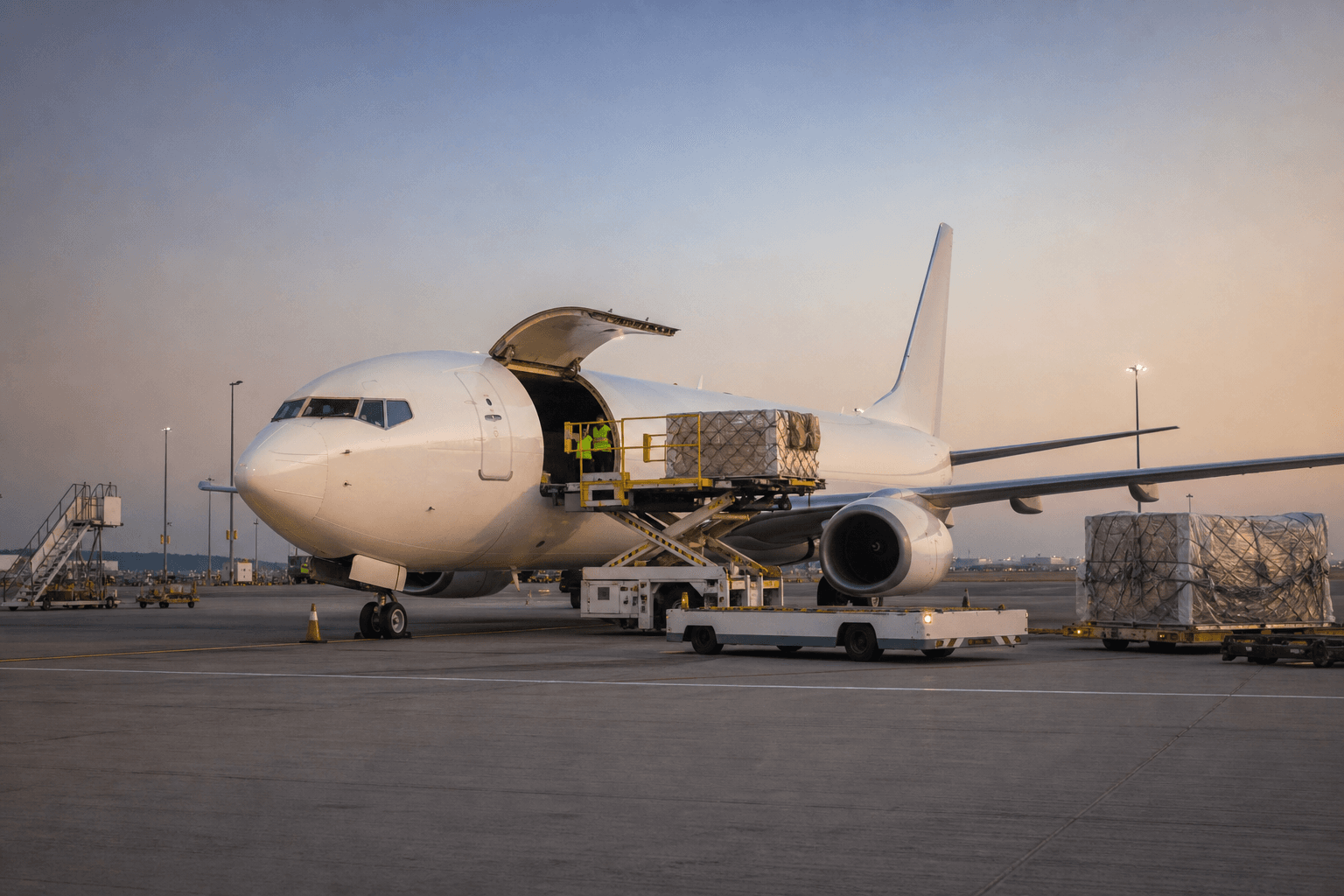
SolitAir Launches Direct Cargo Service Between Dubai and Tianjin to Boost China-UAE Trade
SolitAir, the UAE’s dedicated B2B airport-to-airport cargo airline, has launched a new scheduled route connecting its Dubai World Central (DWC) hub to Tianjin Binhai International Airport (TSN) in northern China. ezstandalone.cmd.push(function () { ezstandalone.showAds(119); }); The move strengthens the carrier’s growing footprint in one of the world’s most important trade markets, building on its successful operations to Hong Kong and Urumqi. The inaugural flight carried a VIP cargo shipment, underlining the route’s focus on secure, reliable, and time-critical air freight solutions. Customers needing fast, tailored transport for high-value or sensitive goods now have a direct and efficient link between the UAE and northern China. ezstandalone.cmd.push(function () { ezstandalone.showAds(127); }); Strategic Gateway in Northern China Tianjin, a bustling port city of 14 million people, ranks among China’s largest industrial and logistics hubs. It serves as the main maritime and air gateway for the Beijing-Tianjin-Hebei economic region, which accounted for 8.5% of China’s GDP in 2025. Tianjin Port is one of the world’s busiest, handling more than 23 million TEUs annually. Meanwhile, Tianjin Binhai International Airport supports advanced manufacturing sectors such as automotive, aerospace, electronics, pharmaceuticals, and high-value industrial equipment. The city also plays a growing role in the Belt and Road Initiative, making it a vital node for international trade. ezstandalone.cmd.push(function () { ezstandalone.showAds(128); }); CEO: “Supporting Evolving Customer Needs” Hamdi Osman, Founder and CEO of SolitAir , highlighted the importance of the new route. “China remains one of the most dynamic growth markets for global trade,” he said. “Adding Tianjin reflects our commitment to meeting our customers’ evolving needs.” “This route gives us direct access to northern China’s vibrant manufacturing and logistics hub while further strengthening the US$111 billion non-oil trade relationship between China and the UAE.” ezstandalone.cmd.push(function () { ezstandalone.showAds(129); }); Rapid Network Expansion The Tianjin launch follows SolitAir’s recent entry into Europe with its inaugural route to Sofia, Bulgaria. Since starting operations in October 2024, the airline has quickly scaled up to 56 routes across 33 countries. This includes a strong 18-city network across Africa. The carrier continues to focus on commercially vital, time-sensitive corridors linking Asia, the Middle East, Africa, and Europe. SolitAir operates a modern fleet of seven Boeing 737-800 BCF freighters. Each aircraft offers a 20-tonne cargo capacity and is well-suited for a wide range of shipments, including dangerous goods, pharmaceuticals, perishables, valuable items, and oversized freight. ezstandalone.cmd.push(function () { ezstandalone.showAds(130); }); The airline’s reliable, versatile aircraft deliver the range and performance needed for demanding routes. Comprehensive Service Offering The airline provides an integrated platform across four key service areas: On-Demand Charters, Tailor-Made Programs, Scheduled Flights, and ACMI Services. This flexible approach allows SolitAir to deliver custom solutions on both high-demand and underserved routes. SolitAir holds several important certifications, including the UAE GCAA Air Operator Certificate (AOC), Dangerous Goods certification, EASA Third Country Operator (TCO) authorisation, United Kingdom Third Country Operator Certificate, and ACC3 designation from the Belgian Civil Aviation Authority. ezstandalone.cmd.push(function () { ezstandalone.showAds(131); }); These approvals ensure secure and compliant cargo operations to and from the European Union. Future Growth Plans Looking ahead, SolitAir aims to expand its fleet to 20 aircraft. The airline operates from a 20,440-square-metre dedicated cargo hub at Dubai World Central (Al Maktoum International Airport), positioning it well for continued growth in global B2B air cargo. The new Tianjin route enhances connectivity for businesses moving goods between key economic centres. It reflects SolitAir’s strategy of linking dynamic markets with dependable, customer-focused air freight services. ezstandalone.cmd.push(function () { ezstandalone.showAds(132); });
The Daily Touch & Go
The day's best aviation news in your inbox. Free, no spam.