

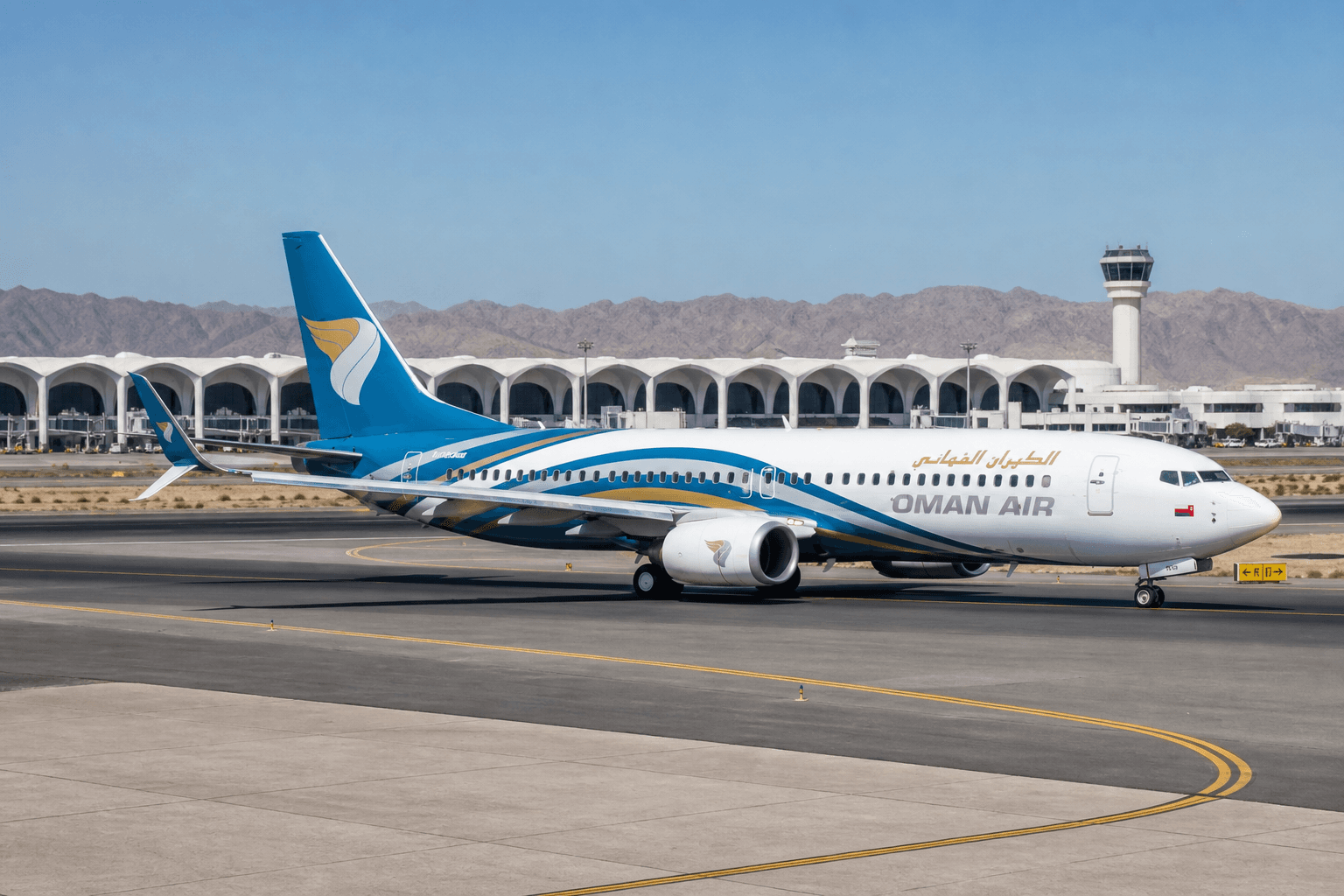
Illustration: The Touch & Go
Oman Air appoints Nasser Al Sharji as CEO as Con Korfiatis steps down after two years
Nasser Al Sharji will assume leadership of Oman Air on 1 September, succeeding Con Korfiatis who transitions to an advisory role following a major transformation effort.
The gist
Oman Air names Nasser Al Sharji CEO from September, with Con Korfiatis shifting to advisor after driving key reforms.
Oman Air is set to welcome a new chief executive as Nasser Al Sharji takes the helm starting 1 September, succeeding Con Korfiatis who will step back into an advisory position. The leadership change marks a pivotal moment for the Muscat-based national carrier as it builds on recent organizational progress and operational turnaround efforts. Al Sharji brings a wealth of experience in aviation and airport management, having served as chief executive at Transom Handling and acting chief of Oman Airports.
Con Korfiatis joined Oman Air in May 2024, coming from the Saudi low-cost airline Flyadeal. His tenure focused on reversing the carrier’s losses by implementing a broad transformation program geared toward profitability. Under his leadership, Oman Air advanced key areas such as financial sustainability, enhanced operational efficiency, and improved organizational effectiveness amid a fiercely competitive aviation landscape.
Oman Air chairman Saeed Al Mawali highlighted Al Sharji's leadership credentials as a decisive factor in his appointment. He emphasized Al Sharji's substantial expertise in navigating complex transformations within the aviation sector, expressing confidence in his ability to continue developing Oman Air’s strategic foundations. This transition signals a continuation of the carrier's efforts to consolidate its standing as Oman’s flagship airline.
Before joining Oman Air, Nasser Al Sharji developed a career that straddled multiple aviation-related roles. His recent experience includes executive leadership at Transom Handling, an aviation services company, combined with acting chief responsibilities at Oman Airports. His blend of operational and executive insight is expected to guide Oman Air through its next phase of growth and modernization.
Korfiatis’s transformation initiative dealt with streamlining Oman Air's operations and business model to adapt to shifting market conditions and competitive pressures. The airline has under his guidance taken measurable steps toward financial discipline while maintaining focus on efficient service delivery and organizational agility. These foundational reforms have set the stage for Al Sharji’s tenure to potentially capitalize further on the progress made.
As the airline prepares for Al Sharji’s induction on September 1, Korfiatis will maintain a supportive role as an advisor, providing continuity and insight from his recent leadership period. This dual-leadership approach may help mitigate transition risks and preserve momentum for ongoing projects and strategic planning within the carrier.
Oman Air’s leadership change coincides with ongoing global aviation challenges, including fluctuating demand patterns and a dynamic competitive environment in the Middle East. The appointment of Al Sharji suggests the airline’s commitment to steering a steady course through industry fluctuations by leveraging experienced leadership. This move is indicative of the importance Oman Air places on adaptive management to enhance its resilience and market positioning.
The carrier’s strategic priorities likely remain aligned with boosting operational efficiencies, expanding network connectivity, and enhancing customer experience. Building on the transformation program initiated under Korfiatis, Al Sharji is poised to focus on sustaining profitability and reinforcing Oman Air’s competitive edge as a key regional carrier.
This leadership evolution at Oman Air highlights the significance of agile executive management in the aviation sector, where market dynamics require constant vigilance and proactive change. With Al Sharji taking charge, Oman Air appears positioned to pursue steady growth and operational excellence as it moves into the coming years.
Frequently asked questions
- When does Nasser Al Sharji become the CEO of Oman Air?
- Nasser Al Sharji will take over as CEO of Oman Air on 1 September.
- What role will Con Korfiatis hold after stepping down as Oman Air's CEO?
- Con Korfiatis will move to an advisory role at Oman Air after stepping down as CEO.
- What progress did Oman Air make under Con Korfiatis's leadership?
- Under Korfiatis, Oman Air made important progress toward financial sustainability, operational efficiency, and organizational effectiveness.
Read more
All Sustainability →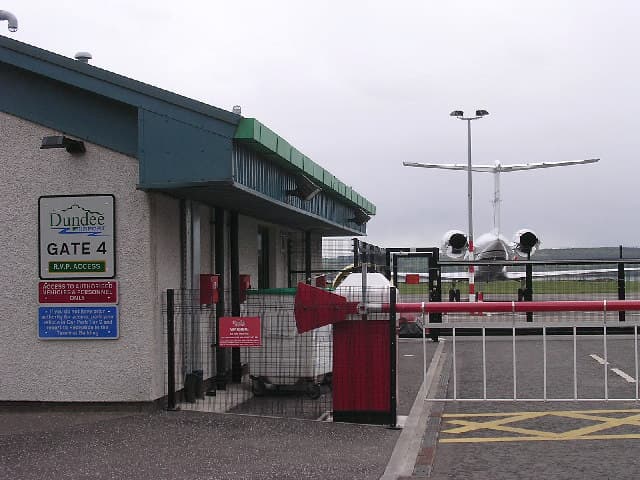
Loganair to Close Dundee Base and End All Flights by October 2026
Loganair will close its Dundee base later this year. The airline has confirmed it will stop all operations from Dundee Airport after 23 October 2026. This decision ends scheduled commercial flights from the airport. ezstandalone.cmd.push(function () { ezstandalone.showAds(119); }); The main service affected is the Dundee to London Heathrow route. Loganair will fly the final flights on Friday 23 October. The route has run under a Public Service Obligation, or PSO, since 2014. Local council and government funding has helped support it. Loganair says the contract is no longer financially viable. ezstandalone.cmd.push(function () { ezstandalone.showAds(127); }); Routes to the Islands Also End The base closure means more than just the London service will stop. Flights to Kirkwall in Orkney and Sumburgh in Shetland will also finish in October. These routes have linked Dundee with the northern isles. Once they end, Dundee Airport will have no regular commercial passenger flights. ezstandalone.cmd.push(function () { ezstandalone.showAds(128); }); Loganair explained the decision in a clear statement. “Following a review of the route’s long-term viability, Loganair can confirm that its Dundee–London Heathrow service will cease after Friday 23 October, and the operating base will close.” The company added that it had looked at other options but could not find a sustainable way forward. ezstandalone.cmd.push(function () { ezstandalone.showAds(129); }); Riik@mctr, CC BY-SA 2.0, via Wikimedia Commons Impact on Jobs and Staff Around 16 posts linked to Loganair’s Dundee operations now face risk. The airline says it will support affected workers. Staff will receive help to find alternative roles across the wider network where possible. Airport staff employed by Highlands and Islands Airports Limited may also see changes. The operator has started talks about shorter opening hours. The British Airline Pilots Association (BALPA) issued a short statement following the news of the closure. “Following Loganair’s announcement of the closure of its Dundee and Southampton bases, BALPA has moved quickly to formally engage with the company on behalf of affected members.” ezstandalone.cmd.push(function () { ezstandalone.showAds(130); }); They urged affected personnel to get in touch with their Company Council as early as possible. Earlier Plans Changed In May 2026, Loganair first announced it would end the Heathrow route. At that time the airline said it remained committed to the Dundee base. It planned to explore other London airports. By August those plans had changed. The full base closure followed after further review. ezstandalone.cmd.push(function () { ezstandalone.showAds(131); }); Photo Credit: Loganair Airport Future and Government Response Dundee Airport now faces an uncertain period. Without Loganair it will rely mainly on private and general aviation. First Minister John Swinney has spoken about the situation. He said the Scottish Government remains committed to keeping the airport open. Officials will look at ways to protect air links despite pressure on public finances. The airport has served the city for decades. Loganair’s presence dates back many years. Its departure marks a significant shift for local travel and business connections. ezstandalone.cmd.push(function () { ezstandalone.showAds(132); }); Looking Ahead Passengers with bookings after 23 October will hear from the airline directly. They can expect refunds or help with alternative travel options. Meanwhile, local leaders continue discussions with funding partners. The goal is to find new ways to maintain useful air services for Dundee and the wider region. Loganair’s move forms part of broader network changes. The airline is also closing its Southampton base around the same time. ezstandalone.cmd.push(function () { ezstandalone.showAds(133); }); These decisions reflect ongoing challenges facing regional carriers, including rising costs and the need for routes to remain viable. The final flights in late October will mark the end of an era for Dundee Airport. Residents, businesses and island communities will watch closely for any future developments that could restore regular commercial services.
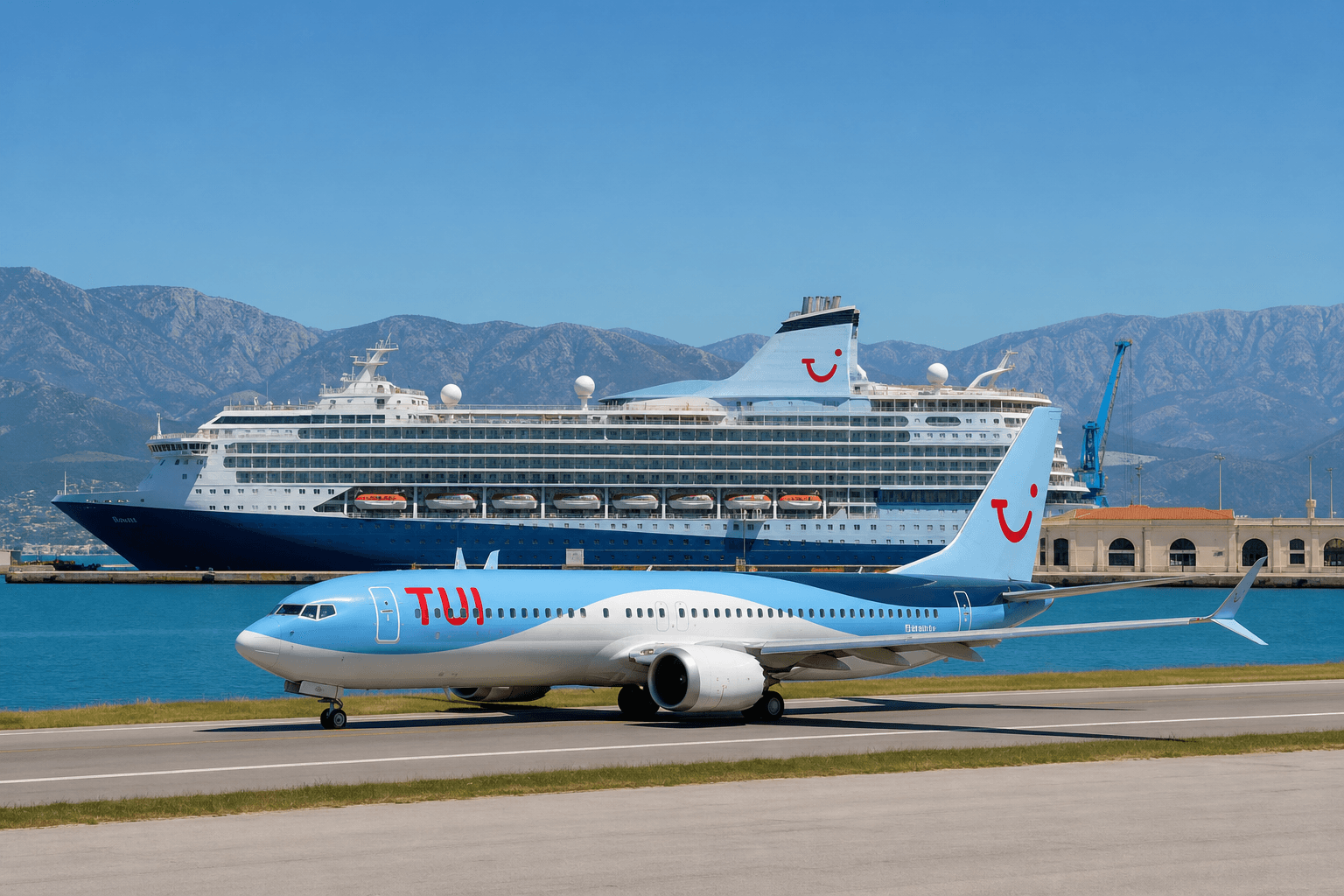
TUI Group Posts Resilient Q3 Earnings Despite Iran Conflict Impact
TUI Group delivered a solid third-quarter performance in a challenging environment. The effects of the Iran war put downward pressure on both profit and revenue. Still, the company reported underlying EBIT of €234.6 million at constant currency. ezstandalone.cmd.push(function () { ezstandalone.showAds(119); }); This result came against a record prior-year quarter and included broader geopolitical uncertainty plus one-off costs. The tourism group reaffirmed its full-year guidance for underlying EBIT between €1.1 billion and €1.4 billion. Its integrated business model, which includes owned hotels and ships, continues to show strength. ezstandalone.cmd.push(function () { ezstandalone.showAds(127); }); Strong Underlying Results Despite Headwinds In the third quarter of financial year 2026, Group underlying EBIT reached €233.8 million, or €234.6 million at constant currency. This compared with €320.6 million in the same period last year. Results reflected higher geopolitical uncertainty that affected customer booking behaviour. A €20 million one-off impact linked to the Iran conflict also weighed on the numbers. ezstandalone.cmd.push(function () { ezstandalone.showAds(128); }); Group revenue stood at €5.8 billion, down from €6.2 billion a year earlier. Customer volumes totalled 9.9 million, a decline of 3 percent. Most of the pressure came from the Markets + Airline segment. For the first nine months, underlying EBIT came in at €118.3 million, or €123.2 million at constant currency. ezstandalone.cmd.push(function () { ezstandalone.showAds(129); }); Excluding €81 million of one-off costs from the Iran conflict and a Jamaica hurricane, the figure rose by €35 million, or €40 million at constant currency. This increase highlights the underlying strength of the business. Herbert394, CC BY-SA 4.0 , via Wikimedia Commons Segment Performance Shows Resilience Holiday Experiences remained the main driver of profits. Hotels & Resorts delivered underlying EBIT of €122.7 million. Demand stayed solid and average rates rose. Geopolitical issues affected some properties in the Eastern Mediterranean, Mexico and the Caribbean. Cruises generated underlying EBIT of €132.4 million. Strong demand for UK and German brands supported results, even after the €20 million Iran-related cost. TUI Musement improved to €22.7 million thanks to better B2B business and efficiency gains. ezstandalone.cmd.push(function () { ezstandalone.showAds(130); }); Markets + Airline recorded underlying EBIT of –€17.4 million. Softer demand and higher pricing pressure played a role. The team managed capacity and yields carefully to stay competitive amid higher fuel costs and extra market capacity. Net debt stood at €2.3 billion on 30 June 2026, up €0.4 billion year-on-year. The rise mainly reflected lower customer deposits as people booked closer to departure. Booking Momentum Improves Booked revenue for Summer 2026 in Markets + Airline improved by one percentage point to –6 percent since the May update. Momentum over the past four weeks has been encouraging. ezstandalone.cmd.push(function () { ezstandalone.showAds(131); }); Booked revenue ran 7 percent ahead of the prior year. This trend shows resilient demand for holidays and the appeal of TUI’s product range. Holiday Experiences trading for the fourth quarter points to solid underlying demand. The company continues to expand capacity in line with its growth strategy. Winter 2026/27 bookings remain at an early stage with limited visibility. Customers still focus on summer plans and book later than before. ezstandalone.cmd.push(function () { ezstandalone.showAds(132); }); Future Outlook TUI has suspended its revenue guidance. It continues to expect underlying EBIT in the range of €1.1 billion to €1.4 billion for the full year. The outlook assumes no major escalation in geopolitical tensions and stable fuel supplies. The company is also advancing its sustainability goals. It launched Mein Schiff Flow, which will operate on e-LNG together with Mein Schiff Relax. TUI Airline added 14 new Boeing 737 Max aircraft that use about 15 percent less fuel than the planes they replace. TUI’s integrated model of owned hotels, ships and distribution channels continues to prove its value. The business has navigated a volatile period while keeping its strategic transformation on track. ezstandalone.cmd.push(function () { ezstandalone.showAds(133); }); With a strong balance sheet and improving booking trends, the group remains well positioned for the rest of the year.
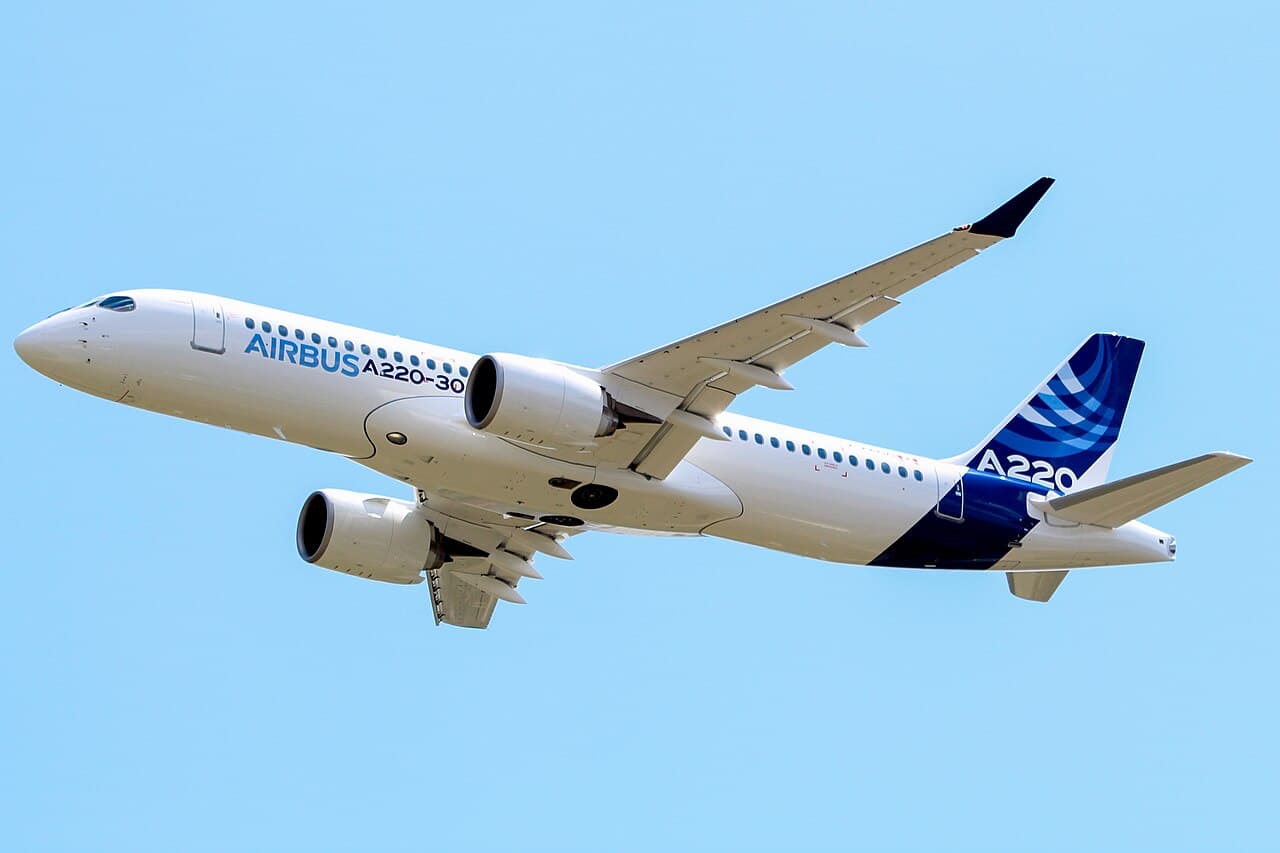
airBaltic plans major fleet cut to 36 aircraft by end of 2026 amid financial challenges
Latvian flag carrier airBaltic has been in a rough financial spot for some time, and in recent weeks there has been talk of the airline potentially needing to suspend operations due to running out of cash. The airline has now unveiled a new business plan, intended to strengthen its long term sustainability. This is actually a pretty radical transformation, so expect a lot of things at the airline to change… particularly, its network! First let's talk about what's changing, and then we'll talk about how airBaltic got into this situation in the first place. airBaltic unveils updated, long term business plan airBaltic's supervisory board has just approved the carrier's updated business plan, which is intended to strengthen the company's long term competitiveness, establish a sustainable capital structure, support future development, and maintain reliable connectivity for Latvia and the wider region. Here's what will be changing, summarized as succinctly as possible: airBaltic currently has a fleet of 54 Airbus A220-300s, and was planning on growing that fleet to 100 planes ; however, the airline now plans to shrink instead, decreasing its fleet to just 36 planes by the end of 2026, before eventually increasing the fleet to around 40 planes by 2031 The airline plans to largely maintain its scheduled capacity (since the airline does a lot of leasing out of aircraft — more on that below); available seat kilometers are expected to decline from 9.6 billion in 2026 to 8.7 billion in 2027, before gradually increasing to 10.5 billion by 2031 airBaltic will continue to have a network heavily focused on Latvia, but rather than pursuing broad expansion, the airline will focus on deepening its presence in existing markets by increasing frequencies where demand and profitability are strongest airBaltic largely leasing out its aircraft to other airlines under a wet lease model (particularly Lufthansa Group carriers), but the airline plans to increasingly focus on year-round deployment with this strategy, to mitigate the seasonal issue To fund these changes, airBaltic is seeking 225 million EUR in interim financing, intended to bridge the company to a permanent financing solution. The company is also seeking 100 million EUR of new capital. Here's how Erno Hildén, airBaltic's CEO, describes this updated strategy: "Every successful airline must continuously adapt to a changing market. Thus, this business plan is about making disciplined choices that strengthen airBaltic's long-term competitiveness while preserving what matters most – reliable connectivity and operations, together with financial sustainability. It provides a stronger foundation for the company's future and positions us to create long-term value for our customers, partners and Latvia." airBaltic's fleet will shrink to just 36 planes How airBaltic has found itself in such a tough spot airBaltic has historically been an incredibly well run airline. The CEO used to be Martin Gauss, but he was fired (which I found to be an odd decision) , and he's now CEO of Gulf Air . airBaltic operates an all-Airbus A220 fleet, and the airline had huge growth plans, and intended to acquire 100 of these aircraft. For a long time, the idea was as follows: Latvia has convenient geography for connections in Northern Europe, as well as to Russia, etc. Latvia is part of the European Union, but airBaltic has a major cost advantage, given that Latvia is a bit cheaper than some other countries in the EU, so there was merit to the airline wet leasing its aircraft to other airlines However, as you'd expect, the situation has evolved over time. With Russian airspace closed to airlines from the European Union, that has massively limited airBaltic's potential route network, and particularly has limited the number of connecting itineraries the airline can sell. If the current conflict with Russia didn't apply, it would be a totally different story at airBaltic. While airBaltic continues have a robust wet leasing business, the issue is that most airlines looking to lease planes only need them in summer, and not winter, given that it's when demand is highest. In early 2025, Lufthansa Group even bought a small stake in airBaltic , in part because of how much it values the wet lease agreements for subsidiaries like Lufthansa, SWISS, Brussels Airlines, etc. But the issue is that summer-only wet leases need to be able to cover costs not just for summer, but also winter, since it's not like airBaltic has anywhere to profitably fly those excess planes in winter. What has really caused issues for airBaltic in recent times is the increase in fuel costs. Not only have fuel costs increases been particularly bad in Northern Europe, but it's also tough to be a full service(ish) airline that exclusively has a regional network, given how robust ultra low cost carrier competition is in the region. Unfortunately for airBaltic, shrinking probably is the right choice here. That way the airline can focus its network on routes that are actually profitable, and on top of that, can be more selective about wet leasing, to airlines that actually value having planes on a year-round basis. airBaltic will shrink its wet lease operations Bottom line airBaltic has been on the brink of collapse in recent months, and the company's board has approved a new business plan, which will include some major changes. The most significant change is that the carrier's fleet will go from 54 planes to 36 planes by the end of the year. Then by 2031 the fleet will grow to 40 planes, compared to the planned 100 planes. With this downsizing, airBaltic also plans to increasingly focus on its most profitable routes, so expect some network cuts. We'll also see reductions to the carrier's wet leasing operations, as the airline tries to secure year-round deals, rather than just seasonal deals. What do you make of these airBaltic updates?
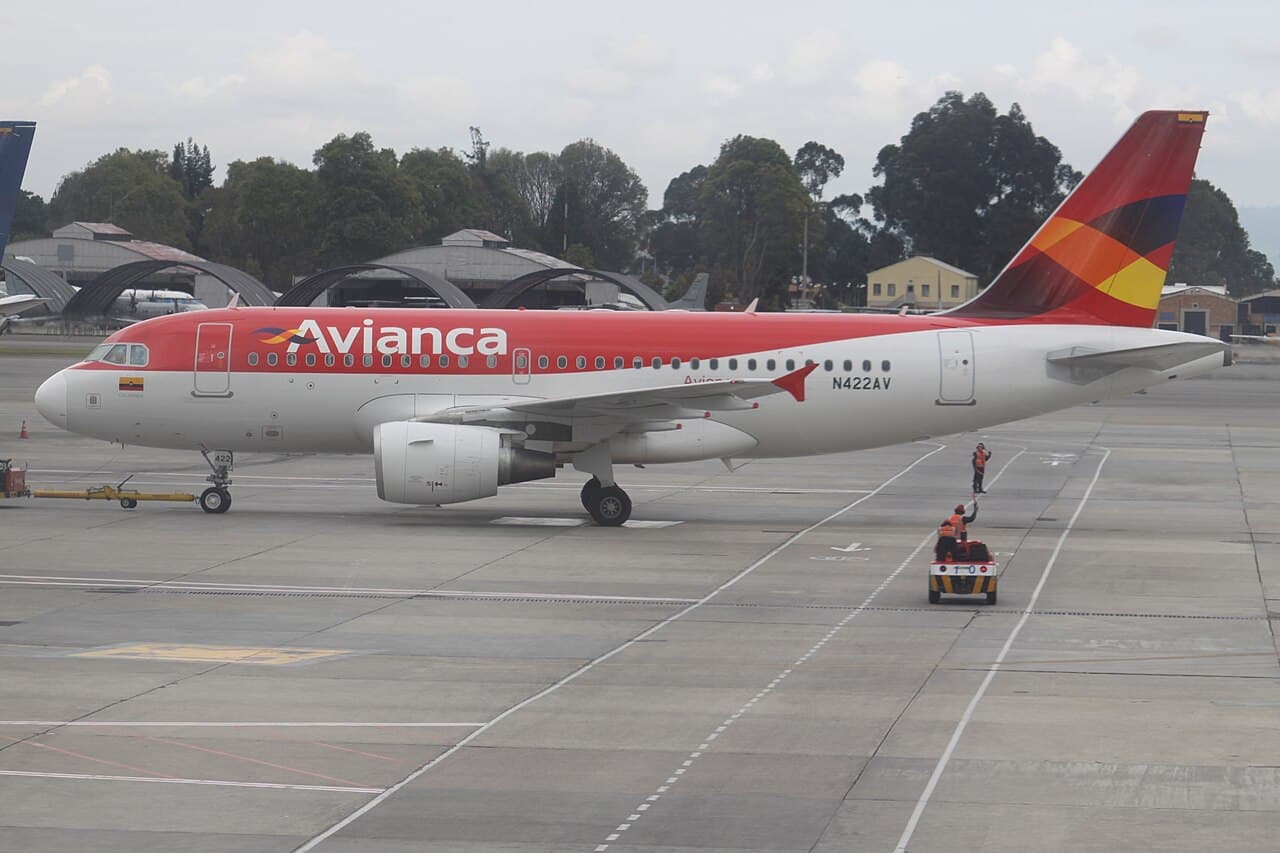
Massive Colombia earthquake disrupts flights; major airports sustain damage
Social media videos showed damaged ceilings and broken windows at an airport in Pereira. A massive earthquake that hit Colombia on 10 August impacted several major airports in the region, causing flight cancellations. Videos on social media show major damage at Matecana airport in Pereira, near the earthquake's epicentre. Large portions of the airport's ceiling and windows appeared to have broken, leaving debris strewn across the terminal interior. The airport sees about two-dozen flights per day, most of which are cancelled into Tuesday and beyond, FlightRadar24 data show. Operations were also suspended at airports in Manizales, Armenia, Cartago, and Buenaventura, Colombia's aviation authority said Monday, pending inspections of facilities and control towers for damage. Some had begun to reopen by Tuesday morning, local time. Seventy-eight flights were cancelled at El Dorado airport in Bogota on Monday, according to FlightAware, and another 312 were delayed. Alfonso Bonilla Aragon airport in Cali reopened late Monday local time after a power outage, authorities say, which resulted in about 40 flights being cancelled. Jose Maria Cordova airport in Medellin says it is operating normally on Tuesday after being evacuated on Monday. Sixteen flights were cancelled into and out of the airport on Monday. In Popayan, south of the most impacted area, flights at Guillermo León Valencia airport were restricted due to emissions from the Purace volcano, adding further complication to the nation's airspace. The 7.4-magnitude quake struck about 200 miles west of the country's capital of Bogota. More than 180 people had been confirmed dead by Colombian authorities in their latest update Tuesday morning local time, as reported by local paper El Tiempo . Avianca says passengers with tickets for flights on Monday could reschedule for up to 15 days with no penalties. "We continue to monitor the evolving situation and traveller demand to adjust our operations and implemented measures according to the country’s connectivity needs," says Avianca.
The Daily Touch & Go
The day's best aviation news in your inbox. Free, no spam.