

Image: Aeroprints.com · CC BY-SA 3.0 · via Wikimedia Commons
Massive Colombia earthquake disrupts flights; major airports sustain damage
A 7.4-magnitude earthquake struck western Colombia, damaging airports and cancelling dozens of flights across the region.
The gist
A powerful Colombian earthquake caused extensive airport damage and widespread flight cancellations in multiple cities.
A severe 7.4-magnitude earthquake rattled western Colombia on 10 August, severely impacting regional aviation infrastructure and air traffic operations. The quake caused significant structural damage at Matecana airport in Pereira, close to the epicenter, where portions of the ceiling collapsed and windows shattered, scattering debris throughout the terminal. This disruption led to cancellation of nearly all of the airport’s approximately two dozen daily flights into Tuesday and likely beyond.
Colombia’s aviation authority subsequently suspended operations at several other key airports pending damage assessments. Airports in Manizales, Armenia, Cartago, and Buenaventura halted services temporarily to inspect facilities and control towers for potential structural harm before resuming operations. By Tuesday morning, some had partially reopened after safety evaluations cleared them for limited flights.
Flight data systems recorded major disruptions at the country’s largest hub. At El Dorado airport in Bogota, 78 flights were cancelled and over 300 delayed on Monday. Meanwhile, Alfonso Bonilla Aragon airport in Cali resumed operations late Monday after a power outage forced cancellations affecting about 40 flights. Jose Maria Cordova airport in Medellin was evacuated on Monday but was operating normally by Tuesday with some cancellations recorded.
In the southern city of Popayan, flight restrictions were imposed due to volcanic emissions from the nearby Purace volcano, compounding operational challenges in the region’s airspace. This situation added complexity to already strained aviation logistics caused by the earthquake’s extensive impact.
Colombian authorities reported more than 180 fatalities by Tuesday morning, underscoring the quake’s severity. The proximity of the epicenter to heavily trafficked areas and critical transportation hubs amplified the disruption to passenger and cargo air service. Airports nearer the epicenter bore the brunt of physical damage, while major cities farther afield struggled with flight delays and cancellations.
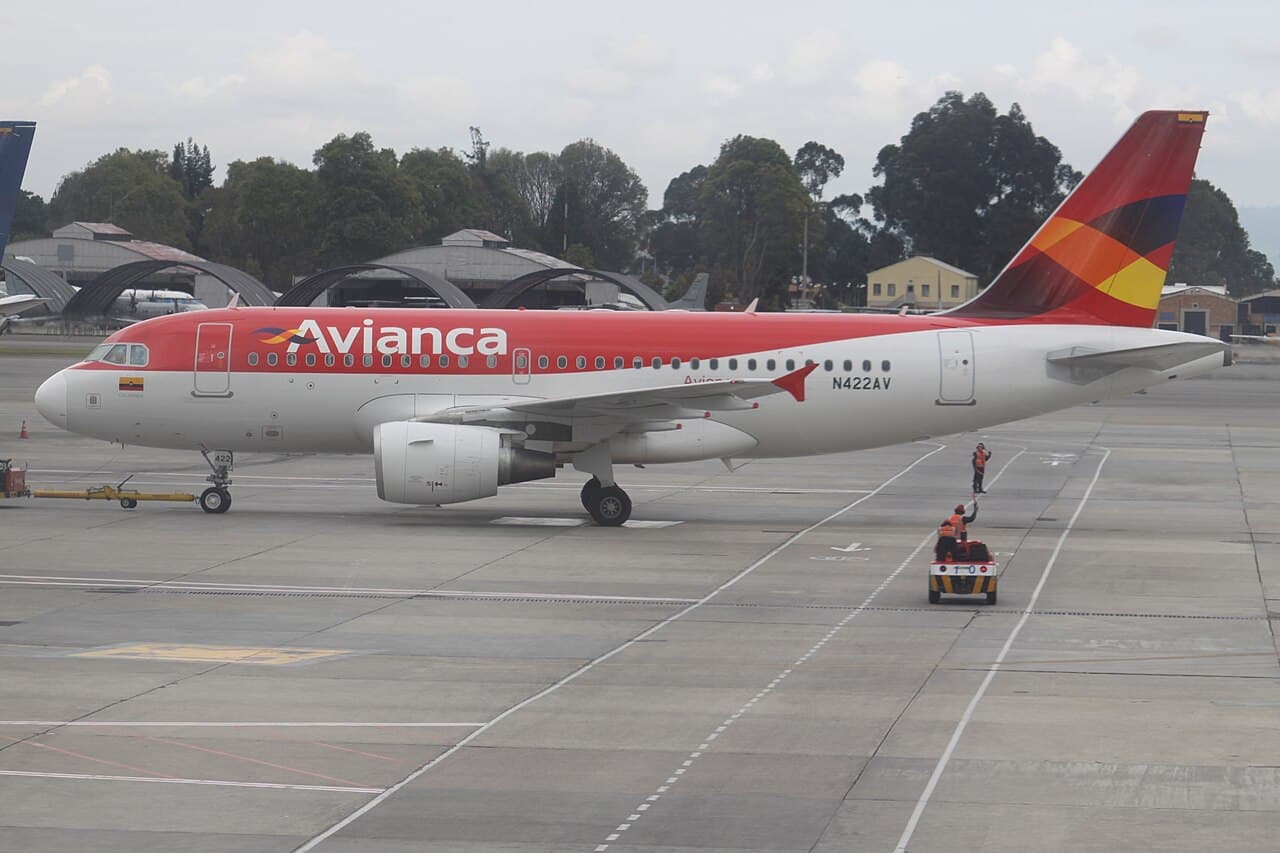
Avianca, the nation’s largest airline, responded by offering flexibility for passengers affected by the cancellations. Travelers with tickets for flights impacted on Monday could reschedule without penalties for up to 15 days, allowing adjustment to the evolving situation. The airline also indicated ongoing monitoring of demand and operational capabilities to align service with Colombia’s connectivity requirements during the recovery period.
This earthquake revealed vulnerabilities in airport infrastructure resilience against natural disasters in Colombia. The damage at Matecana and outages at other airports highlight the critical need for robust inspection and maintenance regimes to ensure safety and rapid restoration of air services after seismic events.
Given Colombia’s geographic positioning along the Pacific Ring of Fire, where seismic activity is frequent, such incidents pose continual risks to aviation continuity. Coordinated efforts between aviation authorities, airport operators, and airlines will be essential to manage future contingencies and mitigate disruption to the country’s air network.
Frequently asked questions
- Which airports in Colombia were affected by the earthquake?
- Matecana airport in Pereira sustained major damage; operations were suspended or disrupted at airports in Manizales, Armenia, Cartago, Buenaventura, Cali, Medellin, and Bogota.
- How many flights were cancelled or delayed due to the earthquake?
- At least 78 flights were cancelled and over 300 delayed at Bogota's El Dorado airport on Monday, with additional cancellations at Pereira, Cali, and Medellin airports.
- What measures did Avianca implement in response to the disruption?
- Avianca allowed passengers with flights affected on Monday to reschedule up to 15 days later without penalties and is monitoring the situation to adjust operations accordingly.
Read more
All Sustainability →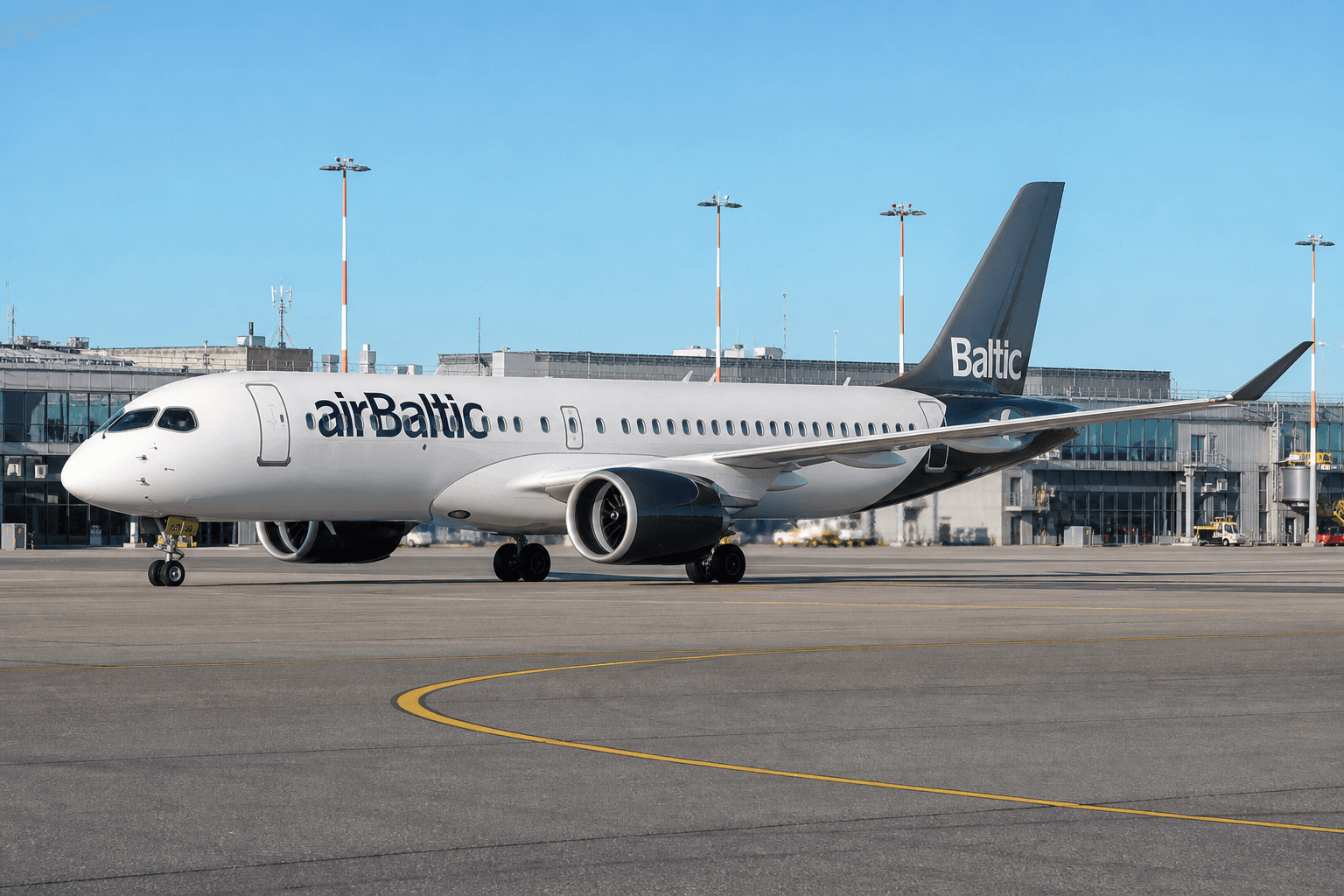
airBaltic to cut fleet nearly in half as it shifts focus to financial stability
airBaltic has set a new course prioritizing "financial stability first, growth second" in a bid to secure its long-term future and competitiveness. On August 11, 2026, airBaltic confirmed that the Supervisory Working Group had approved its business plan that will see the airline cut its fleet size and seek $259 million (€225 million) of interim financing. The Supervisory Working Group was established by Lativia's Ministry of Finance on December 16, 2025, following airBaltic's financial results, on November 20, 2025. The Lavian flag carrier was required to develop a completely new strategy and business plan to ensure its sustainability without regular state financial involvement. airBaltic cuts fleet to 26 aircraft The new plan includes a more focused network centered around Riga, a reduced all-Airbus A220-300 fleet, stronger year-round ACMI partnerships, and improved operational efficiency. "Rather than pursuing broad expansion, airBaltic will focus on deepening its presence in existing markets by increasing depth and frequency where demand and profitability are strongest," the airline said in a statement. By the end of 2026, airBaltic expects to reduce its fleet of 54 Airbus A220-300s down to 26, with a plan to gradually increase this to around 40 aircraft by 2031. BalkansCat / Shutterstock "Despite the smaller fleet, scheduled capacity is expected to remain broadly stable through improved aircraft utilization," the airline added. "Moreover, enhanced commercial partnerships with ACMI partners will enable more efficient year-round aircraft deployment while reducing seasonal volatility across the business." The previous strategy airBaltic followed was developed in preparation for the planned initial public offering (IPO) with growth central to the plan as well as a larger fleet of 100 aircraft. Why airBaltic needed a new strategy The revised business plan responds to a difficult operating environment where the carrier suffered from developments in Ukraine and the Middle East and Pratt & Whitney engine availability constraints. #image_title "Every successful airline must continuously adapt to a changing market," Erno Hildén, CEO of airBaltic said. "Thus, this business plan is about making disciplined choices that strengthen airBaltic's long-term competitiveness while preserving what matters most – reliable connectivity and operations, together with financial sustainability. It provides a stronger foundation for the company's future and positions us to create long-term value for our customers, partners and Latvia." airBaltic seeks €225 million in interim financing To bridge the company to a permanent solution airBaltic is also seeking $259 million (€225 million) of interim financing and $115 million (€100 million) of new equity capital. "The proposed recapitalization also contemplates partial equitization of the 2029 Senior Secured Notes, with the remaining portion replaced by new, reduced debt of up to EUR 125 million, as well as partial equitization of selected other balance-sheet obligations," airBaltic explained. Essentially, airBaltic is proposing to turn some of its debt into ownership of the company, while reducing the rest of its debt to as much as $144 million (€125 million). Some parts of the proposed recapitalization remain subject to the required approvals. "Under the revised business plan, airBaltic expects revenue to reach approximately EUR 0.8 billion in 2027, increasing to EUR 0.9 billion in 2029 and EUR 1.0 billion by 2031," airBaltic added. Holders of airBaltic's 2029 Senior Secured Notes are encouraged to take part in votes on the proposed recapitalization and new business plan. The first is on August 17, 2026, with further voting rounds expected to follow. RELATED Istanbul Airport leaps past London-Heathrow as Europe's busiest airport
airBaltic Announces Fleet Reduction and Financial Restructuring to Enhance Profitability
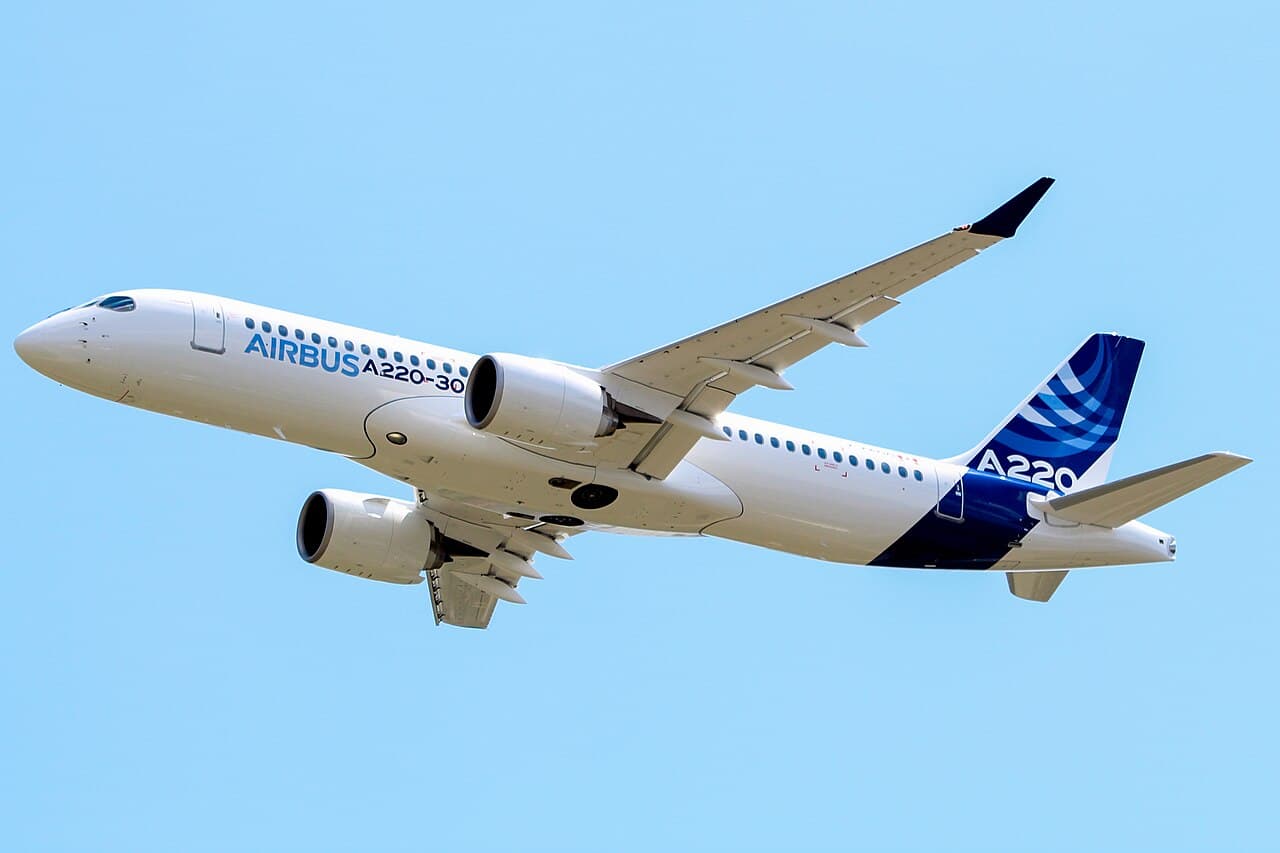
Latvian airline airBaltic has announced a major restructuring plan. The carrier aims to strengthen its balance sheet, shrink its Airbus A220-300 fleet, and boost profitability. Riga will remain its primary hub. The airline expects to operate about 36 A220-300 aircraft by the end of 2026. ezstandalone.cmd.push(function () { ezstandalone.showAds(119); }); This marks a clear reduction from its current fleet of 54 planes. Over the following years, the fleet will grow gradually to around 40 aircraft by 2031. Earlier plans had targeted a much larger fleet of nearly 100 aircraft. Despite the smaller fleet size, airBaltic projects that scheduled capacity will stay broadly stable in the longer term. The airline plans to achieve this through higher aircraft utilisation, a more demand-driven network, and expanded year-round ACMI partnerships. ezstandalone.cmd.push(function () { ezstandalone.showAds(127); }); Financial Targets and Cost Savings airBaltic is targeting roughly €45 million in recurring annual benefits. These gains will come from a mix of cost reductions and new revenue initiatives. Revenue is forecast to rise from €779 million in 2025 to about €800 million in 2027. By 2031, the airline expects revenue to reach approximately €1 billion. EBITDAR is projected to hit around €300 million in the same year. ezstandalone.cmd.push(function () { ezstandalone.showAds(128); }); As part of the plan, airBaltic seeks €225 million in interim financing. This funding will help meet near-term liquidity needs. A longer-term recapitalisation would involve up to €225 million of new debt and €100 million of new equity. Together, these measures total €325 million. The restructuring also proposes converting a portion of the airline’s 2029 Senior Secured Notes into equity. The remaining portion would be replaced by up to €125 million of reduced debt. All financing and recapitalisation steps remain subject to bondholder resolutions and other necessary approvals. ezstandalone.cmd.push(function () { ezstandalone.showAds(129); }); Photo Credit: airBaltic Improved Leverage Outlook Net leverage is expected to improve significantly under the plan. It is projected to fall from 8.94x in 2025 to around 4.8x after the proposed recapitalisation at the end of 2026. By 2031, leverage could decline further to 1.6x. Reasons Behind the Revised Strategy airBaltic said the updated plan reflects several external pressures. These include weaker demand and slower revenue growth, ongoing geopolitical uncertainty, and continued constraints on Pratt & Whitney engine availability. The airline stressed that normal operations continue without interruption. Existing tickets, bookings, and passenger services remain fully unaffected by the restructuring. ezstandalone.cmd.push(function () { ezstandalone.showAds(130); }); Looking Ahead The revised business plan marks a shift toward greater financial discipline and operational focus. By operating a leaner fleet more intensively and securing fresh capital, airBaltic aims to build a more resilient and profitable business over the coming years. The carrier continues to serve its network from Riga while adapting to current market realities. Further updates on the financing process and implementation of the plan are expected as approvals progress. This strategic reset positions airBaltic to navigate current challenges while laying the groundwork for sustainable growth through 2031. ezstandalone.cmd.push(function () { ezstandalone.showAds(131); });
American Airlines completes first US passenger flight powered by non-biobased sustainable aviation fuel
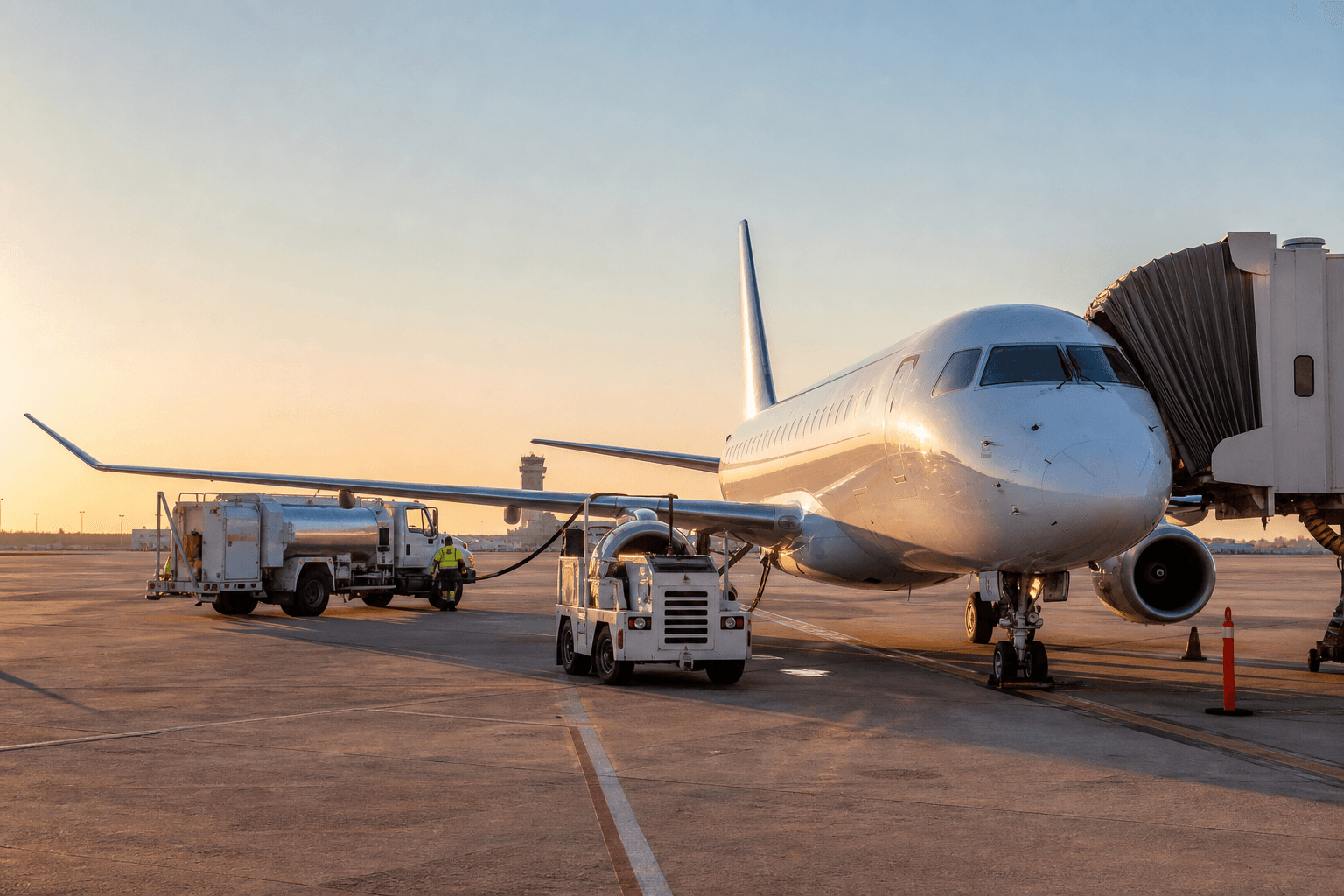
American Airlines flew the first U.S. commercial passenger flight last week using sustainable aviation fuel made without biobased feedstocks. The airline said the flight operated from Corpus Christi to Dallas-Fort Worth. Fuel producer Infinium produced the electro sustainable aviation fuel, or eSAF, at its Pathfinder facility in Corpus Christi. The company makes the fuel using waste carbon dioxide and renewable electricity rather than plant- or animal-derived feedstocks. Although American did not identify the aircraft used for the flight, Envoy Air typically operates Embraer E175s between Corpus Christi and DFW for American Eagle. Fuel Entered Existing Airport System Infinium blended the eSAF with conventional jet fuel before delivering it to the common fuel tanks at Corpus Christi International Airport. The fuel was then allocated to the American flight to Dallas-Fort Worth. American said the process demonstrated that eSAF can move through existing aviation fuel infrastructure. "This flight represents a significant moment for aviation," American Airlines CEO Robert Isom said in a company statement. "Through our partnership with Infinium, we’re demonstrating how next generation technologies like eSAF can move from early investment to real-world application." Larger Production Project Planned Infinium says its Pathfinder facility has produced eFuels since 2023. American has also agreed to purchase commercial volumes of eSAF from Infinium's planned Project Roadrunner facility in West Texas. Infinium expects Project Roadrunner to begin producing and delivering eSAF in 2027. The company says the facility will produce more than 5 million gallons annually once it reaches full capacity.
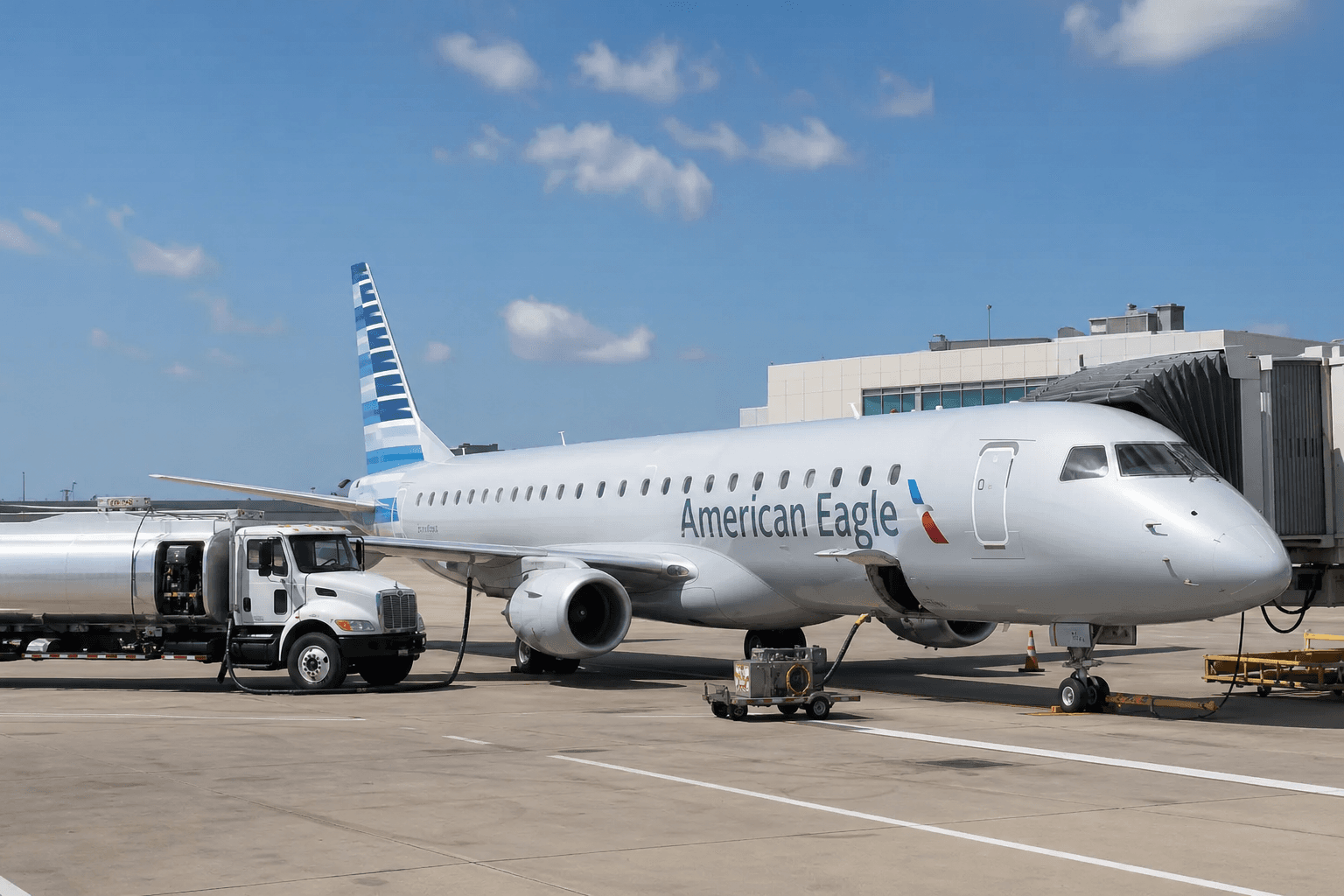
American Airlines Flies US First with Electro Sustainable Aviation Fuel at Corpus Christi
American Airlines has used electro sustainable aviation fuel on a commercial passenger flight following what the carrier says was the first delivery of non-biobased sustainable aviation fuel (SAF) to a US commercial airport. The eSAF was produced by Infinium at its Pathfinder facility in Corpus Christi, Texas, blended with conventional jet fuel and delivered into the common fuel tanks at Corpus Christi International Airport (CRP). It was then used aboard an American flight from Corpus Christi to Dallas Fort Worth International Airport (DFW). American and Infinium said the delivery marked the first time SAF made without biobased feedstocks had been supplied to a commercial airport in the US. The fuel was tested to meet ASTM specifications for Jet A, allowing it to be used in existing aircraft engines and airport fueling systems without modification. The eSAF was used on an American Eagle Embraer E175 for the Corpus Christi to Dallas/Fort Worth flight. The flight was not powered entirely by eSAF. The synthetic fuel was blended with conventional jet fuel before being delivered to the airport's shared fuel system. Infinium produces the fuel using waste carbon dioxide and renewable electricity rather than biological feedstocks such as used cooking oil or plant material. The company says its eSAF can reduce lifecycle greenhouse gas emissions by more than 90% compared with conventional petroleum-based jet fuel. "Adding eSAF to our product slate, and seeing it power a commercial passenger flight, marks another meaningful step forward in bringing practical, low-carbon fuel solutions to industry," Infinium CEO Robert Schuetzle said. KLM had already used synthetic kerosene on a passenger flight in 2021. American and Infinium say this is the first time synthetic SAF has been delivered through the existing fuel system at a US commercial airport for use on a passenger flight. American has signed an agreement to purchase commercial volumes of eSAF from Infinium's Project Roadrunner plant, which is now under construction. It is expected to begin production and deliveries in 2027 and eventually produce more than 5 million gallons of eSAF annually. "This flight represents a significant moment for aviation," American Airlines CEO Robert Isom said. "Through our partnership with Infinium, we're demonstrating how next generation technologies like eSAF can move from early investment to real-world application." Cost remains one of the biggest obstacles to wider use of synthetic aviation fuel. Isom acknowledged the issue, saying lower SAF prices will be necessary for the technology to be broadly adopted by airlines. SAF accounts for less than 1% of global jet fuel consumption, according to American and Infinium. Aviation consumes nearly 100 billion gallons of jet fuel annually.
The Daily Touch & Go
The day's best aviation news in your inbox. Free, no spam.