

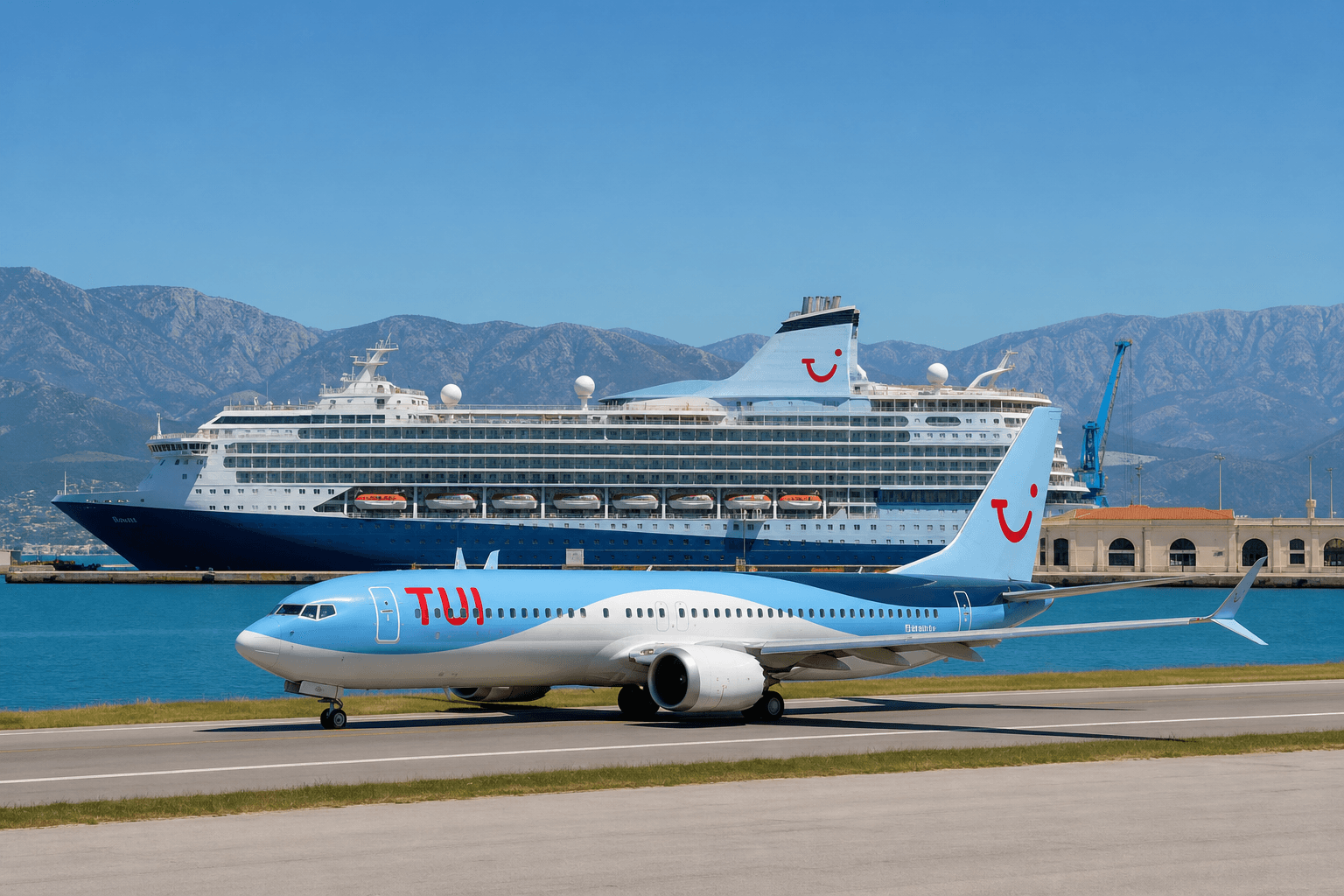
Illustration: The Touch & Go
TUI Group Posts Resilient Q3 Earnings Despite Iran Conflict Impact
TUI Group's Q3 underlying EBIT reached €234.6 million amid geopolitical challenges, reaffirming full-year guidance and underscoring its integrated model's strength.
The gist
TUI Group’s Q3 EBIT held strong at €234.6 million despite Iran war costs, maintaining confidence in full-year earnings forecasts.
TUI Group reported a solid third-quarter performance for financial year 2026 despite facing economic headwinds from geopolitical tensions and one-off costs linked to the Iran conflict. The company posted an underlying EBIT of €234.6 million at constant currency, down from €320.6 million for the same quarter in the previous year. This earnings metric was pressured by a €20 million one-off cost associated with the Iran war and an overall more uncertain global environment dampening customer bookings.
Revenue for the quarter fell to €5.8 billion from €6.2 billion year-over-year, while customer volumes dropped by 3 percent to 9.9 million. The Markets + Airline segment bore the brunt of this decline, reflecting the impacts of softer demand and competitive pricing pressures amid rising fuel costs and increased market capacity. Nevertheless, the company’s integrated business model—incorporating owned hotels, cruise ships, and airline operations—continued to demonstrate resilience as demand held firm in key holiday experience segments.
Hotels & Resorts remained a primary profit contributor, generating underlying EBIT of €122.7 million. Solid demand supported higher average rates, though some properties experienced disruption from geopolitical tensions, particularly in the Eastern Mediterranean, Mexico, and Caribbean areas. Meanwhile, the Cruises segment produced €132.4 million in underlying EBIT, buoyed by strong demand for UK and German brands despite the Iran-related expenses. The newly named TUI Musement business also improved profitability to €22.7 million driven by B2B growth and operational efficiency improvements.
The Markets + Airline segment reported an underlying EBIT loss of €17.4 million. To counteract the headwinds from weakened demand and pricing challenges, the airline optimized capacity and yields cautiously, aiming to remain competitive despite rising fuel prices. The group’s net debt increased by €400 million to €2.3 billion as of June 30, 2026. This uptick primarily reflected lower advance customer deposits linked to a trend of bookings closer to departure dates.
Looking at booked revenue, the Markets + Airline segment saw an encouraging one-percentage-point improvement since May, narrowing the decline to -6 percent for Summer 2026. Furthermore, booked revenue across the group was 7 percent ahead compared with the previous year, signaling persistent consumer appetite for holidays and strong appeal of TUI’s offerings. Fourth-quarter holiday experiences are projected to maintain underlying demand, with capacity expansion continuing in accordance with TUI’s growth plans.
Despite suspending revenue guidance due to unpredictable geopolitical factors, TUI reaffirmed its full-year underlying EBIT outlook of €1.1 billion to €1.4 billion. This forecast assumes stable fuel supply and no major escalation in conflicts. Aligned with its sustainability priorities, the company recently launched the Mein Schiff Flow cruise ship operating on e-LNG fuel and introduced 14 Boeing 737 Max aircraft to its TUI Airline fleet, which deliver approximately 15 percent fuel efficiency improvements over predecessors.
TUI’s combination of owned assets and integrated channels has helped the company navigate recent volatility while progressing on strategic transformations. Backed by a robust balance sheet and improving booking momentum, the tourism giant is positioned to address ongoing challenges in the global travel market during the remaining year.
Frequently asked questions
- What was TUI Group’s underlying EBIT in Q3 2026 and how did it compare to last year?
- TUI Group’s underlying EBIT was €234.6 million at constant currency in Q3 2026, down from €320.6 million in the same quarter last year, impacted by geopolitical uncertainty and a €20 million one-off cost related to the Iran conflict.
- Which TUI business segments performed well despite challenges?
- The Hotels & Resorts segment delivered €122.7 million EBIT supported by strong demand and higher average rates, while the Cruises segment generated €132.4 million EBIT with strong UK and German brand demand, offsetting some geopolitical disruptions.
- How has TUI addressed fuel efficiency and sustainability in its fleet?
- TUI introduced 14 new Boeing 737 Max aircraft to its airline, which use about 15 percent less fuel than the planes they replaced, and launched the Mein Schiff Flow cruise ship operating on environmentally friendlier e-LNG fuel as part of their sustainability goals.
Read more
All Sustainability →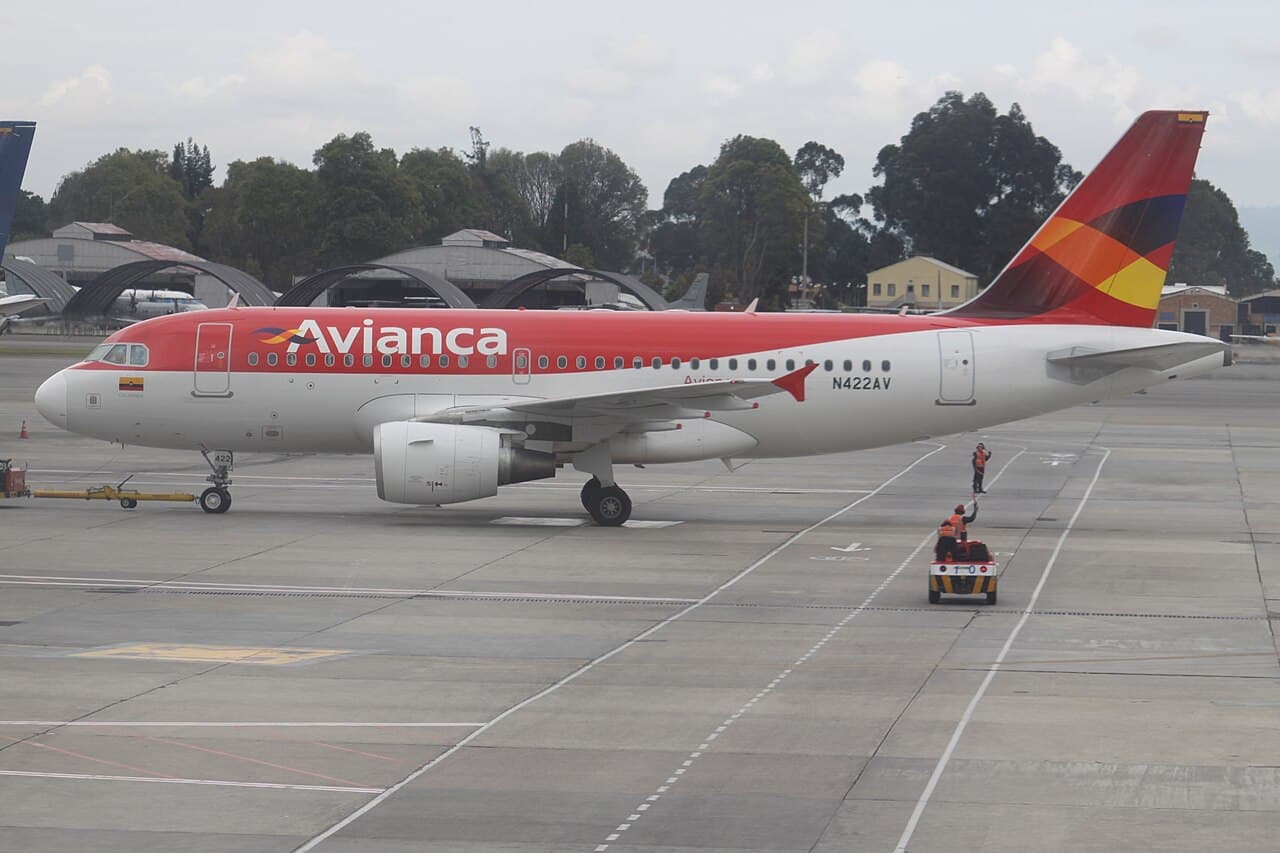
Massive Colombia earthquake disrupts flights; major airports sustain damage
Social media videos showed damaged ceilings and broken windows at an airport in Pereira. A massive earthquake that hit Colombia on 10 August impacted several major airports in the region, causing flight cancellations. Videos on social media show major damage at Matecana airport in Pereira, near the earthquake's epicentre. Large portions of the airport's ceiling and windows appeared to have broken, leaving debris strewn across the terminal interior. The airport sees about two-dozen flights per day, most of which are cancelled into Tuesday and beyond, FlightRadar24 data show. Operations were also suspended at airports in Manizales, Armenia, Cartago, and Buenaventura, Colombia's aviation authority said Monday, pending inspections of facilities and control towers for damage. Some had begun to reopen by Tuesday morning, local time. Seventy-eight flights were cancelled at El Dorado airport in Bogota on Monday, according to FlightAware, and another 312 were delayed. Alfonso Bonilla Aragon airport in Cali reopened late Monday local time after a power outage, authorities say, which resulted in about 40 flights being cancelled. Jose Maria Cordova airport in Medellin says it is operating normally on Tuesday after being evacuated on Monday. Sixteen flights were cancelled into and out of the airport on Monday. In Popayan, south of the most impacted area, flights at Guillermo León Valencia airport were restricted due to emissions from the Purace volcano, adding further complication to the nation's airspace. The 7.4-magnitude quake struck about 200 miles west of the country's capital of Bogota. More than 180 people had been confirmed dead by Colombian authorities in their latest update Tuesday morning local time, as reported by local paper El Tiempo . Avianca says passengers with tickets for flights on Monday could reschedule for up to 15 days with no penalties. "We continue to monitor the evolving situation and traveller demand to adjust our operations and implemented measures according to the country’s connectivity needs," says Avianca.
Air Baltic to scale back A220 fleet to around 40 aircraft in strategic overhaul
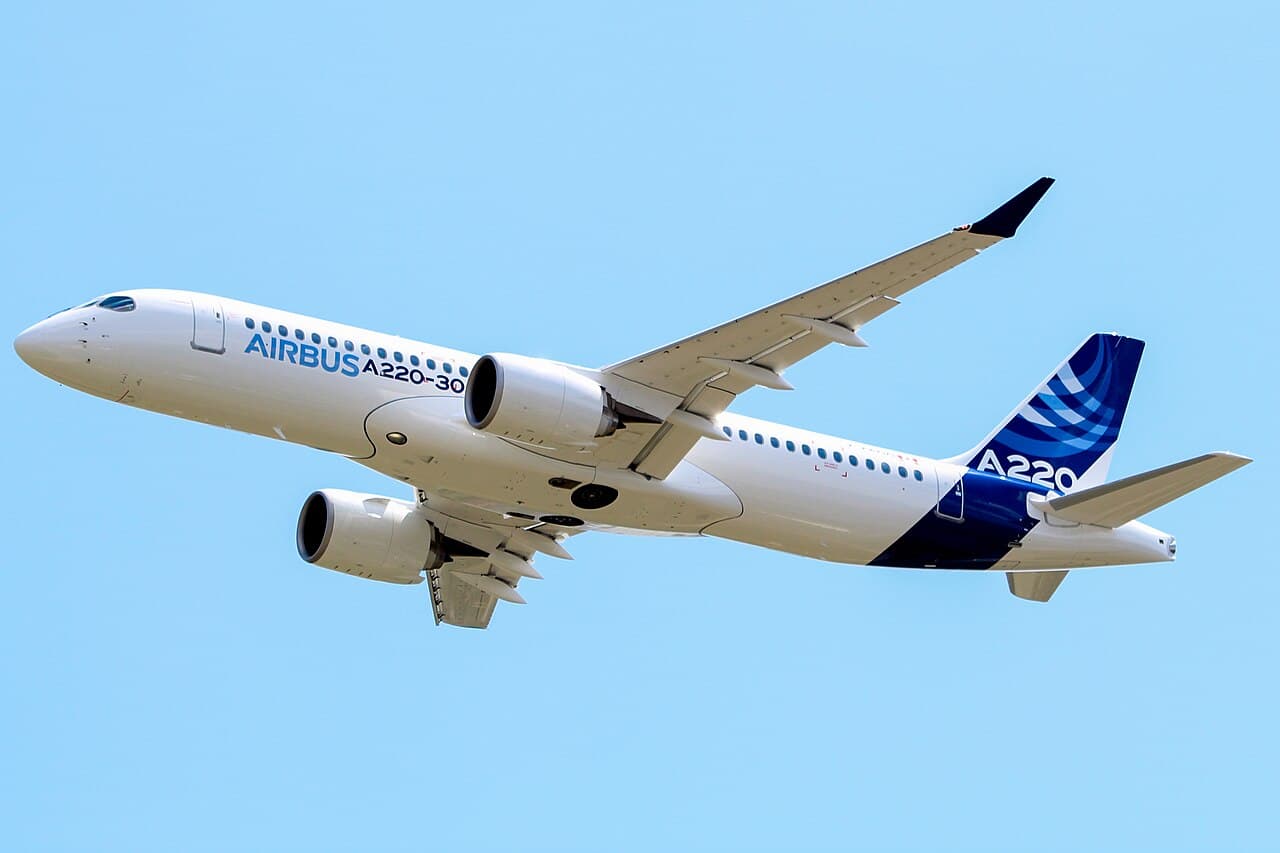
Latvian carrier envisages a long-term fleet of around 40 A220-300s as it works on €225m interim recapitalisation. Air Baltic is to cut its fleet to around 40 Airbus A220-300s under a new long-term strategic plan, supported by moves for an initial interim €225 million ($260 million) recapitalisation. The Latvian carrier operates a fleet of 54 A220s but, under the plan announced today, expects this to fall to 36 by the end of the year and to stand at 41 by 2031. Under the carrier's previous business plan, developed in line with an anticipated IPO, Air Baltic envisaged expansion towards a 100-strong aircraft fleet off the back of “sustained growth” in passenger volumes and ticket revenue across the Baltic region and wider European markets. "Since then, the operating environment has changed materially," the carrier says, citing moderated demand and revenue growth, geopolitical events in the Ukraine and the Middle East and the Pratt & Whitney GTF engine issues which have restricted the carrier's ability to deploy its full fleet. "The revised business plan responds to these developments with a deliberate shift in priorities: financial stability first, growth second,” the carrier says. “It aligns Air Baltic's network, fleet, cost base and capital structure with current market conditions." Earlier this year Air Baltic secured consent from the country's parliament for a short-term state loan of €30 million to prop up its liquidity. The carrier’s medium-term strategy had centred on an IPO to raise capital, but market conditions and the company's financial position left the timing and feasibility of such a venture uncertain. Air Baltic chief executive Erno Hilden, who took the helm in December last year, says: "Every successful airline must continuously adapt to a changing market. Thus, this business plan is about making disciplined choices that strengthen Air Baltic's long-term competitiveness while preserving what matters most – reliable connectivity and operations, together with financial sustainability." Air Baltic's revamped business plans will focus on its Riga hub, but rather than "pursuing broad expansion”, will add depth and frequency on existing routes where demand and profitability are strongest. This will be supplemented by selected point-to-point services and seasonal flying to improve fleet utilisation. While the carrier envisages scheduled capacity initially falling, it sees this surpassing current levels by 2031, reflecting what it terms "a more focused network strategy". The carrier aims to strengthen its commercial partnerships with ACMI customers as part of efforts to boost its profitability. Air Baltic is targeting €45 million in recurring annual benefits from the measures, predominantly generated through cost savings. The carrier's plan also includes measures to recapitalise. It aims to address its near-term liquidity requirements through €225 million of interim financing. "The interim financing is intended to bridge the company to a permanent financing solution and remains contingent on the required bondholder resolutions and other approvals," it says. The carrier's proposed permanent financing package comprises up to €225 million of new debt financing and €100 million of new equity capital. Air Baltic expects to post revenues of around €800 million this year, rising to €1 billion by 2031. The plan envisages its EBITDAR to reach €192 million next year and €300 million in 2031.
airBaltic to cut fleet nearly in half as it shifts focus to financial stability
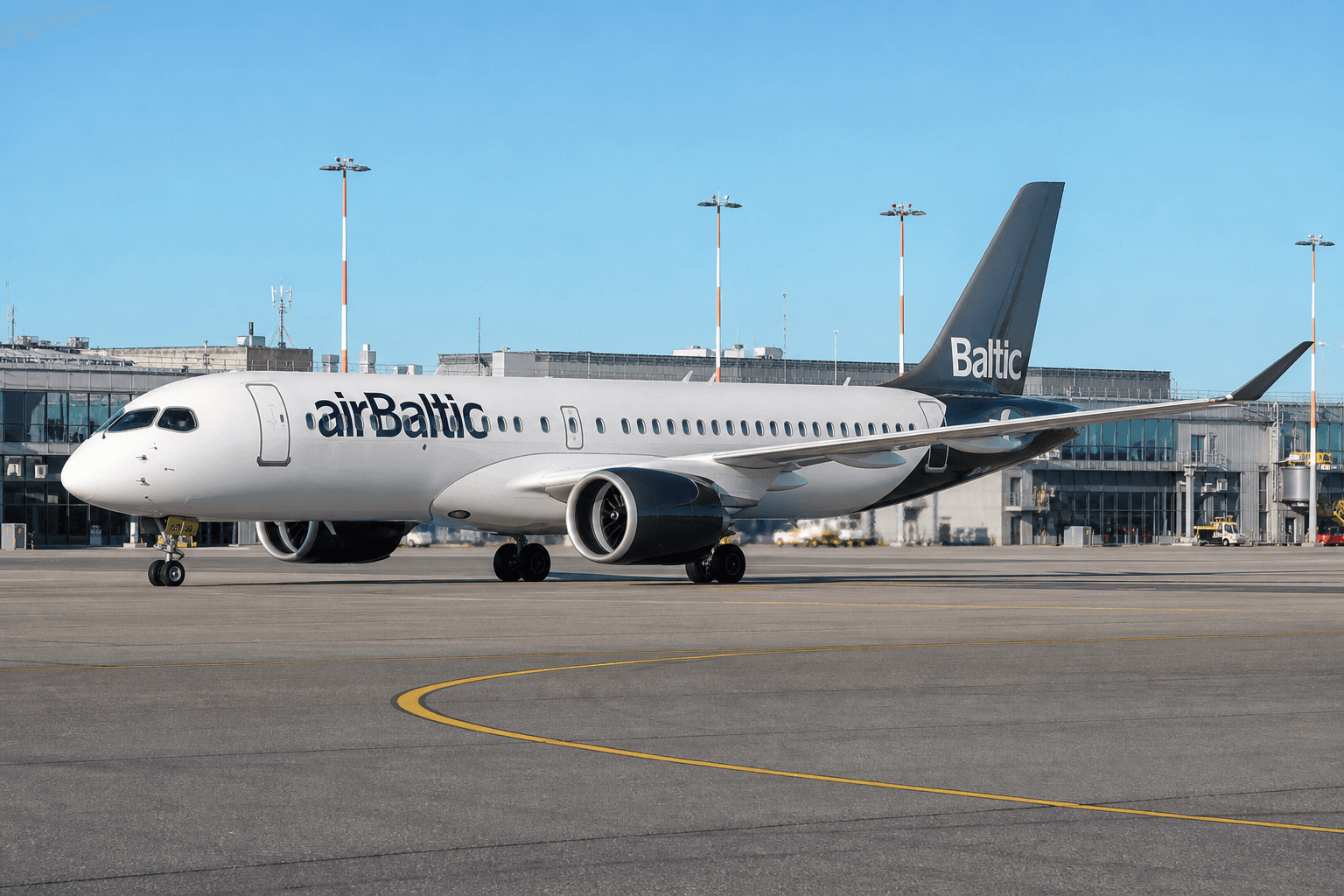
airBaltic has set a new course prioritizing "financial stability first, growth second" in a bid to secure its long-term future and competitiveness. On August 11, 2026, airBaltic confirmed that the Supervisory Working Group had approved its business plan that will see the airline cut its fleet size and seek $259 million (€225 million) of interim financing. The Supervisory Working Group was established by Lativia's Ministry of Finance on December 16, 2025, following airBaltic's financial results, on November 20, 2025. The Lavian flag carrier was required to develop a completely new strategy and business plan to ensure its sustainability without regular state financial involvement. airBaltic cuts fleet to 26 aircraft The new plan includes a more focused network centered around Riga, a reduced all-Airbus A220-300 fleet, stronger year-round ACMI partnerships, and improved operational efficiency. "Rather than pursuing broad expansion, airBaltic will focus on deepening its presence in existing markets by increasing depth and frequency where demand and profitability are strongest," the airline said in a statement. By the end of 2026, airBaltic expects to reduce its fleet of 54 Airbus A220-300s down to 26, with a plan to gradually increase this to around 40 aircraft by 2031. BalkansCat / Shutterstock "Despite the smaller fleet, scheduled capacity is expected to remain broadly stable through improved aircraft utilization," the airline added. "Moreover, enhanced commercial partnerships with ACMI partners will enable more efficient year-round aircraft deployment while reducing seasonal volatility across the business." The previous strategy airBaltic followed was developed in preparation for the planned initial public offering (IPO) with growth central to the plan as well as a larger fleet of 100 aircraft. Why airBaltic needed a new strategy The revised business plan responds to a difficult operating environment where the carrier suffered from developments in Ukraine and the Middle East and Pratt & Whitney engine availability constraints. #image_title "Every successful airline must continuously adapt to a changing market," Erno Hildén, CEO of airBaltic said. "Thus, this business plan is about making disciplined choices that strengthen airBaltic's long-term competitiveness while preserving what matters most – reliable connectivity and operations, together with financial sustainability. It provides a stronger foundation for the company's future and positions us to create long-term value for our customers, partners and Latvia." airBaltic seeks €225 million in interim financing To bridge the company to a permanent solution airBaltic is also seeking $259 million (€225 million) of interim financing and $115 million (€100 million) of new equity capital. "The proposed recapitalization also contemplates partial equitization of the 2029 Senior Secured Notes, with the remaining portion replaced by new, reduced debt of up to EUR 125 million, as well as partial equitization of selected other balance-sheet obligations," airBaltic explained. Essentially, airBaltic is proposing to turn some of its debt into ownership of the company, while reducing the rest of its debt to as much as $144 million (€125 million). Some parts of the proposed recapitalization remain subject to the required approvals. "Under the revised business plan, airBaltic expects revenue to reach approximately EUR 0.8 billion in 2027, increasing to EUR 0.9 billion in 2029 and EUR 1.0 billion by 2031," airBaltic added. Holders of airBaltic's 2029 Senior Secured Notes are encouraged to take part in votes on the proposed recapitalization and new business plan. The first is on August 17, 2026, with further voting rounds expected to follow. RELATED Istanbul Airport leaps past London-Heathrow as Europe's busiest airport
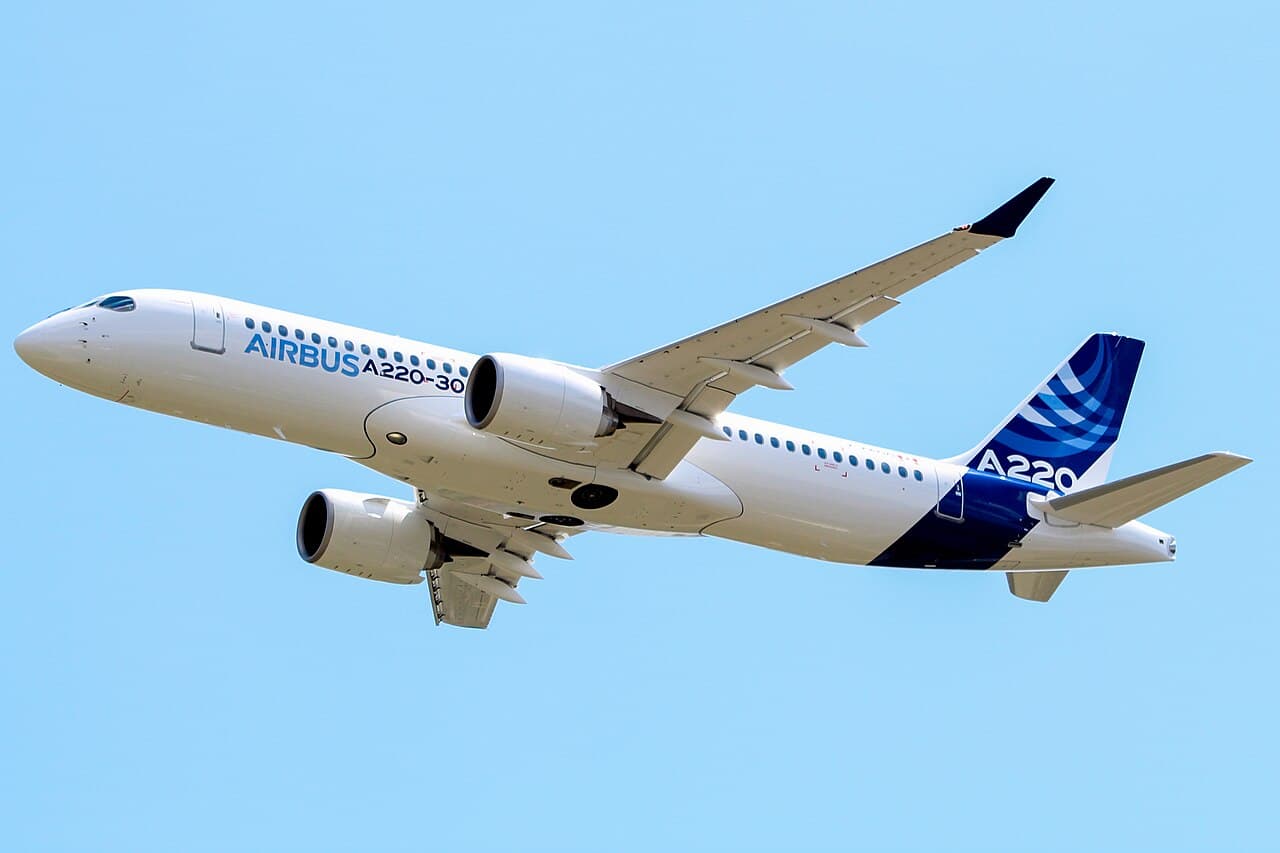
airBaltic Announces Fleet Reduction and Financial Restructuring to Enhance Profitability
Latvian airline airBaltic has announced a major restructuring plan. The carrier aims to strengthen its balance sheet, shrink its Airbus A220-300 fleet, and boost profitability. Riga will remain its primary hub. The airline expects to operate about 36 A220-300 aircraft by the end of 2026. ezstandalone.cmd.push(function () { ezstandalone.showAds(119); }); This marks a clear reduction from its current fleet of 54 planes. Over the following years, the fleet will grow gradually to around 40 aircraft by 2031. Earlier plans had targeted a much larger fleet of nearly 100 aircraft. Despite the smaller fleet size, airBaltic projects that scheduled capacity will stay broadly stable in the longer term. The airline plans to achieve this through higher aircraft utilisation, a more demand-driven network, and expanded year-round ACMI partnerships. ezstandalone.cmd.push(function () { ezstandalone.showAds(127); }); Financial Targets and Cost Savings airBaltic is targeting roughly €45 million in recurring annual benefits. These gains will come from a mix of cost reductions and new revenue initiatives. Revenue is forecast to rise from €779 million in 2025 to about €800 million in 2027. By 2031, the airline expects revenue to reach approximately €1 billion. EBITDAR is projected to hit around €300 million in the same year. ezstandalone.cmd.push(function () { ezstandalone.showAds(128); }); As part of the plan, airBaltic seeks €225 million in interim financing. This funding will help meet near-term liquidity needs. A longer-term recapitalisation would involve up to €225 million of new debt and €100 million of new equity. Together, these measures total €325 million. The restructuring also proposes converting a portion of the airline’s 2029 Senior Secured Notes into equity. The remaining portion would be replaced by up to €125 million of reduced debt. All financing and recapitalisation steps remain subject to bondholder resolutions and other necessary approvals. ezstandalone.cmd.push(function () { ezstandalone.showAds(129); }); Photo Credit: airBaltic Improved Leverage Outlook Net leverage is expected to improve significantly under the plan. It is projected to fall from 8.94x in 2025 to around 4.8x after the proposed recapitalisation at the end of 2026. By 2031, leverage could decline further to 1.6x. Reasons Behind the Revised Strategy airBaltic said the updated plan reflects several external pressures. These include weaker demand and slower revenue growth, ongoing geopolitical uncertainty, and continued constraints on Pratt & Whitney engine availability. The airline stressed that normal operations continue without interruption. Existing tickets, bookings, and passenger services remain fully unaffected by the restructuring. ezstandalone.cmd.push(function () { ezstandalone.showAds(130); }); Looking Ahead The revised business plan marks a shift toward greater financial discipline and operational focus. By operating a leaner fleet more intensively and securing fresh capital, airBaltic aims to build a more resilient and profitable business over the coming years. The carrier continues to serve its network from Riga while adapting to current market realities. Further updates on the financing process and implementation of the plan are expected as approvals progress. This strategic reset positions airBaltic to navigate current challenges while laying the groundwork for sustainable growth through 2031. ezstandalone.cmd.push(function () { ezstandalone.showAds(131); });
The Daily Touch & Go
The day's best aviation news in your inbox. Free, no spam.