

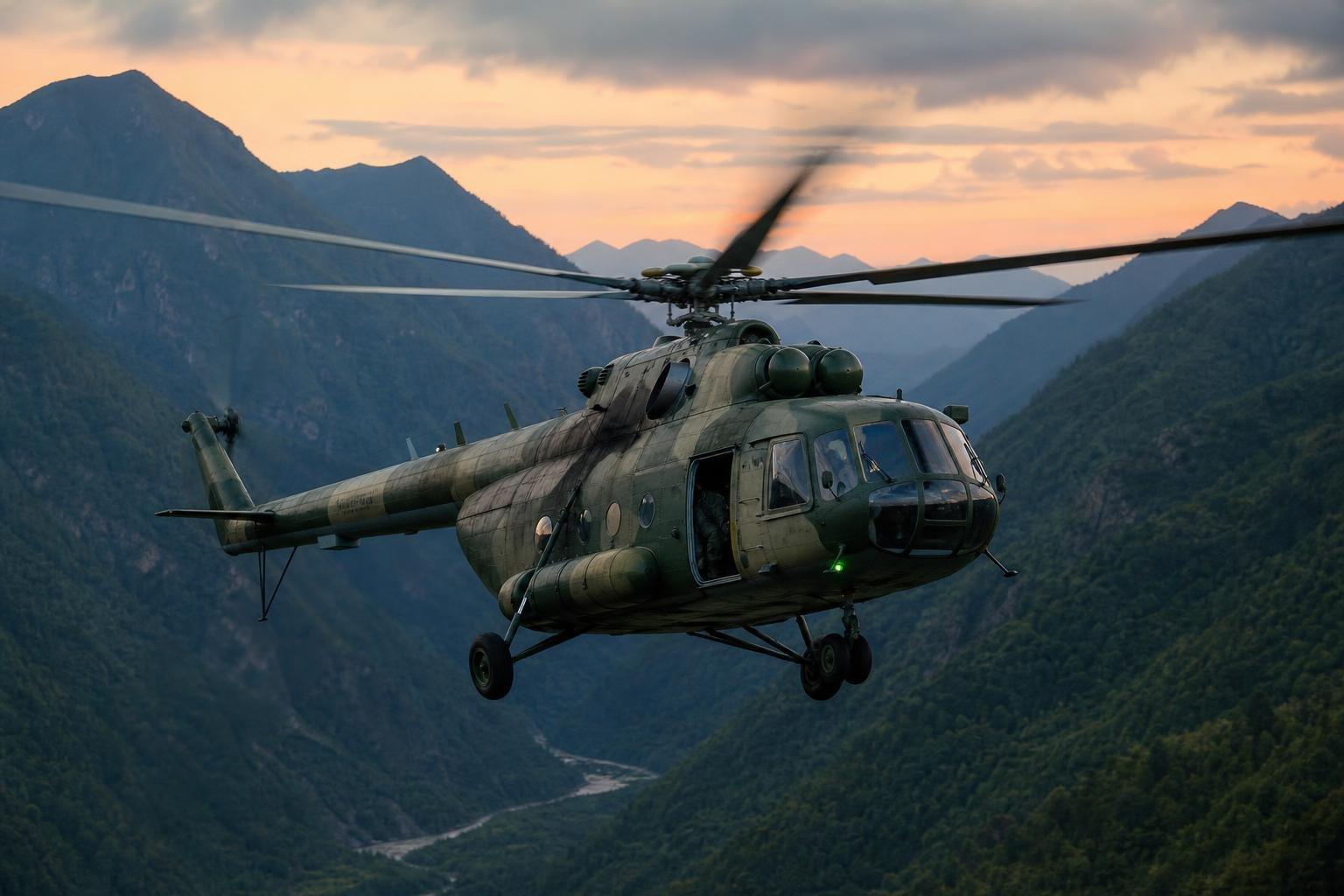
AI-generated illustration
Peruvian Air Force Mi-17 Crash Kills Eight During Night Extraction of Army Patrol in Ayacucho
The 1988-built helicopter, FAP 636, went down near Sanabamba in the VRAEM while picking up three soldiers, leaving its pilot as the only survivor of nine aboard.
The gist
A Peruvian Air Force Mi-17 crashed during a night patrol extraction in Ayacucho, killing eight; only the pilot survived.
Eight Peruvian military personnel were killed when a Peruvian Air Force Mil Mi-17 helicopter crashed near Sanabamba, in the Ayacucho region, during a night operation to extract an Army patrol. The pilot was the only one of the nine people aboard to survive. The accident was reported on November 27, and the Defense Ministry said its circumstances and cause remain under investigation.
Peru's Joint Armed Forces Command said the dead were five Air Force personnel and three Army soldiers. The surviving pilot, Commander Enzo Espinoza Roque, was flown to Lima for specialized medical treatment. The helicopter, registered FAP 636, was working in the Apurímac, Ene and Mantaro river valleys, known as the VRAEM, where security forces confront armed remnants of the Shining Path insurgency and drug trafficking groups. The area is mountainous and forested, and helicopters support patrols and other military operations there because road access is limited.
Defense Minister Rafael Belaúnde Llosa told broadcaster RPP that the crew was picking up three troops who had been reconnoitering a dangerous area. He said extractions of this kind are flown at night for security reasons. In his preliminary account, the Mi-17 was very close to the ground on its final approach to land when a rotor blade apparently struck a tree, and the aircraft overturned.
The minister's description is not a final accident finding. Investigators have not yet determined whether weather, visibility, the mechanical condition of the helicopter or other factors played a part.
FAP 636 was built by Kazan Helicopters in 1988. A 2009 Peruvian Defense Ministry insurance inventory lists it under construction number 419M41, and a historical fleet register shows it was delivered to the Peruvian Air Force in 1993, five years after it left the factory. Peru acquired several Soviet-designed Mi-17s through secondhand purchases in the early 1990s, including aircraft from Nicaragua.
In September 2020, the Air Force awarded Helicentro Perú a contract worth 19.5 million soles, about $5.45 million at the time, for a major overhaul of FAP 636 and its conversion to the high-altitude Mi-17-1V configuration. The work was to cover the airframe, engines, flight controls, avionics and communications. According to the contract report, the helicopter had logged 5,910.5 flight hours and had last undergone a major overhaul in 2006. Whether the 2020 work was completed could not be independently verified.
The Air Force flies several generations of the type. A 2020 report counted 11 Mi-17-1B helicopters in its inventory, seven of them operational, along with three Mi-171Sh helicopters bought in 2010 and delivered in 2012; those figures are historical and do not represent a verified count for November 2026. The Peruvian Army, separately, ordered 24 Mi-171Sh-P helicopters in 2013, receiving eight in 2014, 13 in 2015 and three in 2016, according to Peruvian reporting. The Army aircraft are not part of the Air Force fleet.
The Sanabamba crash is the second fatal loss of a Peruvian Air Force Mi-17 this year. On February 22, another of the helicopters went down near Chala Viejo, in the Arequipa region, while heading to support emergency operations, killing all 15 people aboard, seven of them children. No evidence has been presented linking the causes of the two accidents.
Originally reported by Air Data News
Read more
All Military/Defense →
South Korea Receives Its First C-390 Millennium, Becoming Asia's First Operator of the Embraer Airlifter
The first of three Embraer C-390s for the Republic of Korea Air Force landed at Seoul Air Base on Nov. 23 after a ferry flight from Portugal, with formal handover reportedly set for December.
Hackers Breach Air Force Cloud One Platform Supporting North American Air Defense Command System
An intrusion found during an upgrade led the US Air Force to pause migrations to Cloud One and freeze updates to apps on it, including a radar-fed command and control system, Reuters reported.
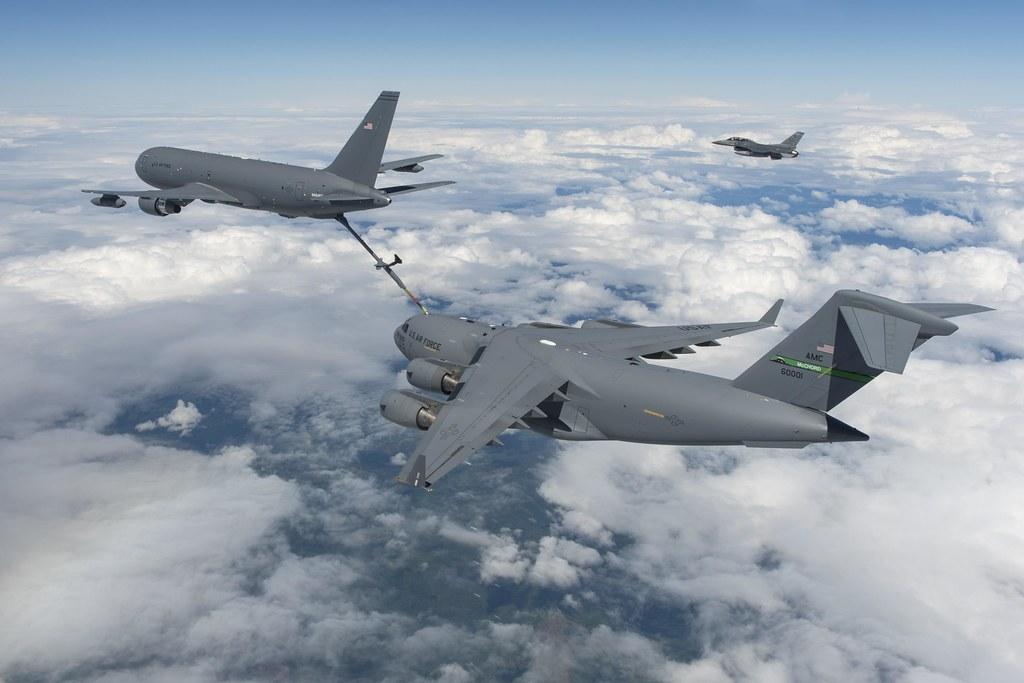
Boeing Wins $2.82 Billion Lot 13 Order for 15 KC-46A Tankers, Closing Out Original Buy
The Pentagon's November 24 award for 15 more KC-46A Pegasus tankers completes the Air Force's original procurement plan, with any follow-on order tied to fixes for the boom vision system.
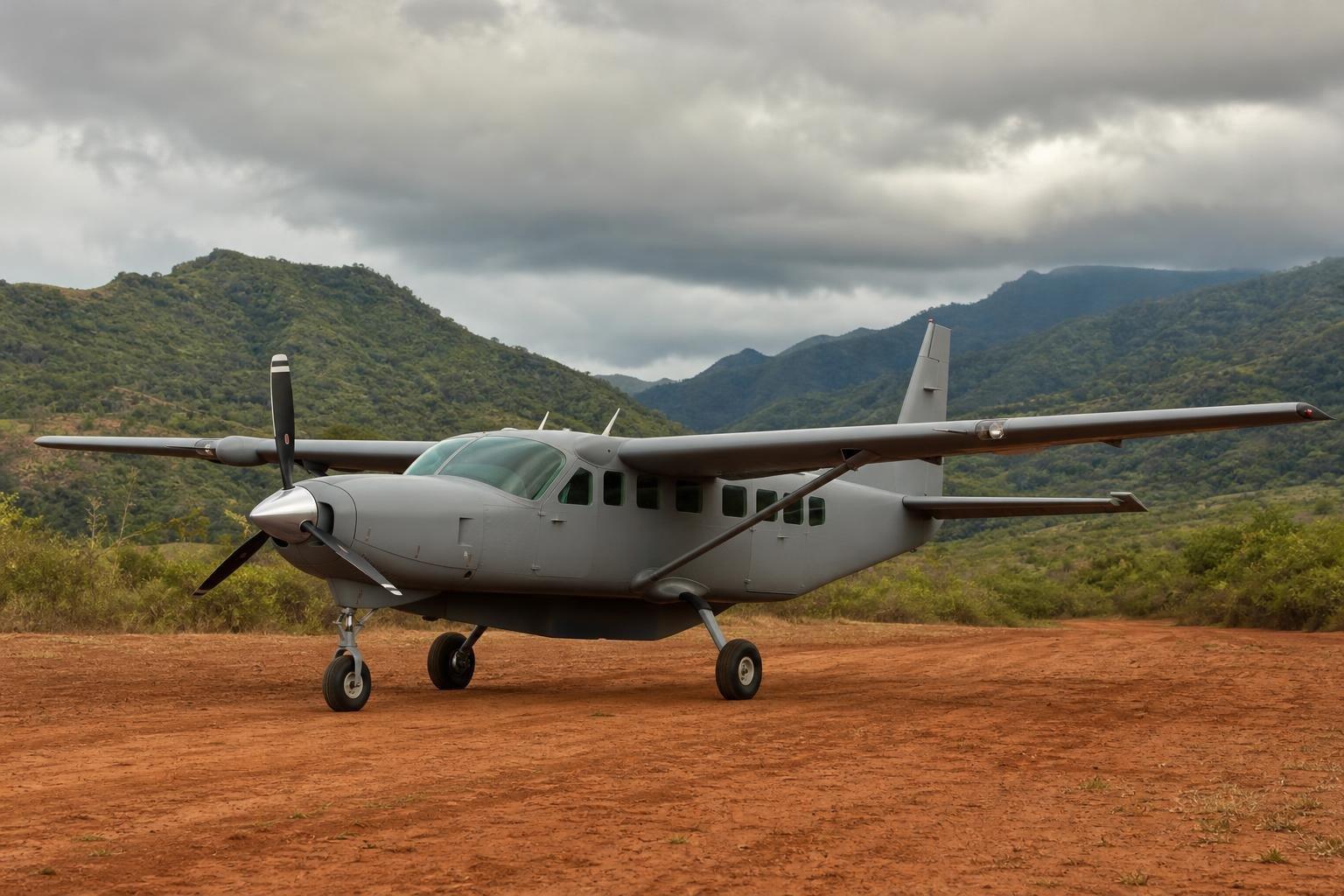
DR Congo Army Searches for Missing Cessna 208 as FRN Rebels Claim to Have Shot Down a Warplane
Congolese forces lost contact with a Cessna 208 on Sunday, the same day FRN rebels said they downed a converted attack aircraft of that type near Minembwe and captured two foreign crew.
The Daily Touch & Go
Launching soon: the day's best aviation news in your inbox. Join the list, free.