

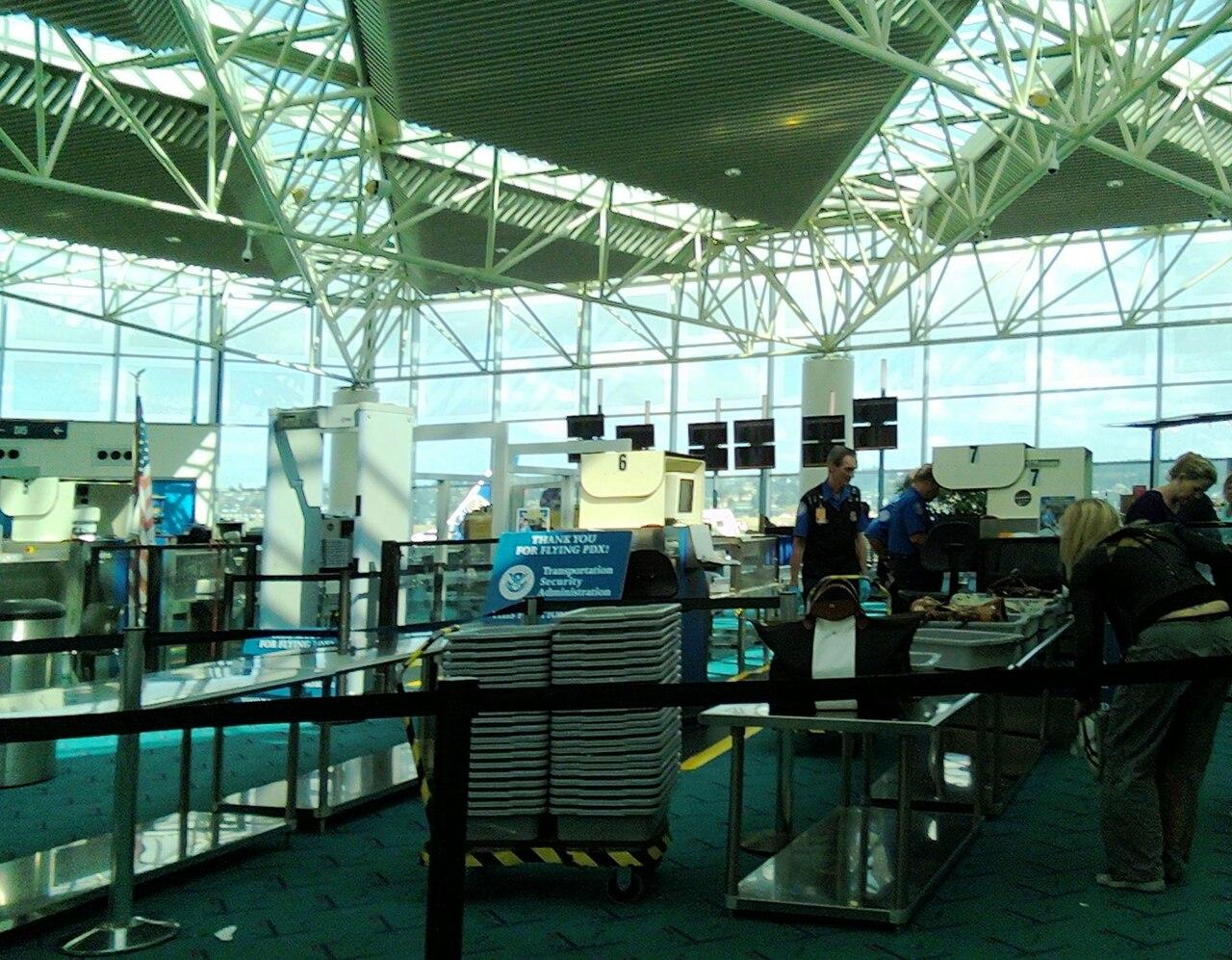
Image: M.O. Stevens · CC BY 3.0 · via Wikimedia Commons
Southwest Airlines denies liability after damaging passenger's stroller on Portland flight
A passenger traveling with twins says Southwest Airlines damaged their double stroller en route to Portland; Southwest claims no responsibility for damaged belongings.
The gist
Southwest Airlines denies responsibility after reportedly damaging a passenger's stroller on a Portland flight, sparking online backlash.
A recent Southwest Airlines flight to Portland, Oregon, ended with a troubling experience for passenger Jason Piquette and his family when their double stroller was badly damaged during transit. Piquette, who was traveling with his twins from North Carolina, discovered the stroller’s wheels were crooked and rolling unstably after arrival. This left the family without a functioning stroller for their week-long trip, adding stress to an already financially strained situation for the family.
Upon noticing the damage, Piquette contacted Southwest's customer service seeking compensation or assistance. However, according to Piquette, the airline's representatives stated that Southwest handles only lost items and does not take responsibility for damage to personal belongings, effectively denying liability for the stroller’s damage. This response caused frustration for the family and led Piquette to share his story on social media platforms like TikTok and Facebook, where his posts quickly went viral.
The incident has highlighted a gap between passenger expectations and airline policy. Southwest’s online Help Center specifies that they are not responsible for damages classified as minor or resulting from wear and tear, including dents, scuffs, or scratches. Yet, the airline’s documents do not clearly delineate what qualifies as compensable damage, leaving customers uncertain about their rights in such cases.
On the other hand, the U.S. Department of Transportation (DOT) regulations provide a framework intended to protect passengers. The DOT states that airlines are responsible for compensating damages to baggage up to $4,700, covering damages to wheels, handles, straps, and other components. This responsibility applies while baggage is in the airline's control, unless damage stems from pre-flight conditions or improper packing by the passenger, which complicates liability arguments.
Piquette’s public posts also underline the personal impact such damages can have, especially on families with young children who depend on equipment like double strollers daily. He voiced concern that large corporations may evade accountability for these disruptions, noting that small incidents can significantly affect people’s lives.
In response to the widespread attention, members of the public have offered financial aid to Piquette, donating around $400 to assist with purchasing a replacement stroller. Others have even offered to lend the family a stroller during their stay in Oregon, reflecting community support amid corporate pushback.
For travelers facing luggage damage, Southwest advises filing reports of damage or loss with the airline's Baggage Service Office within 24 hours of the flight’s conclusion. Passengers are encouraged to document any damage thoroughly with photos or videos and keep baggage tags as evidence to support claims. Acting swiftly is critical to preserving rights for compensation under both airline policies and DOT regulations.
Frequently asked questions
- What was damaged on the Southwest Airlines flight to Portland?
- A passenger's double stroller was damaged during a Southwest Airlines flight to Portland, resulting in crooked and unstable wheels.
- What is Southwest Airlines' policy on damaged baggage?
- Southwest states they handle missing baggage but do not take responsibility for damage classified as minor or wear and tear, without specifying exact compensation criteria.
- What do U.S. Department of Transportation rules say about airline liability for baggage damage?
- The DOT mandates airlines to compensate passengers up to $4,700 for baggage damage caused while under airline control, including wheels and handles, unless damage occurred before the trip or due to improper packing.
Read more
All Airlines →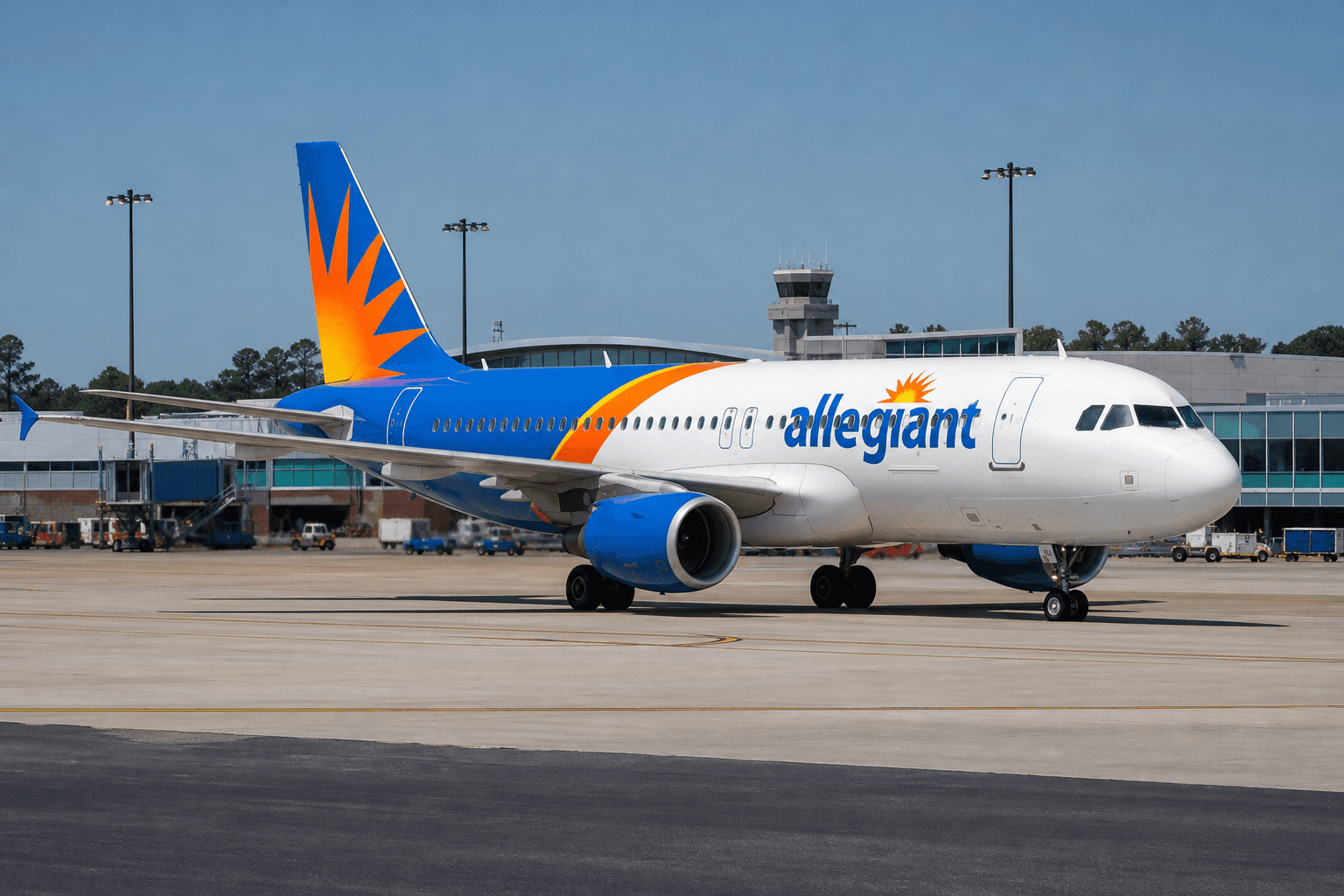
Allegiant Air Cuts 13 Myrtle Beach Routes Including Atlantic City and Midwest Cities
Allegiant Air has flown to Myrtle Beach since 2009. Cirium Diio data shows that it was the ultra-low-cost carrier's third destination in South Carolina. It came after Columbia, the capital, and Greenville/Spartanburg, both first served 20 years ago. All flights to Columbia have now ended .
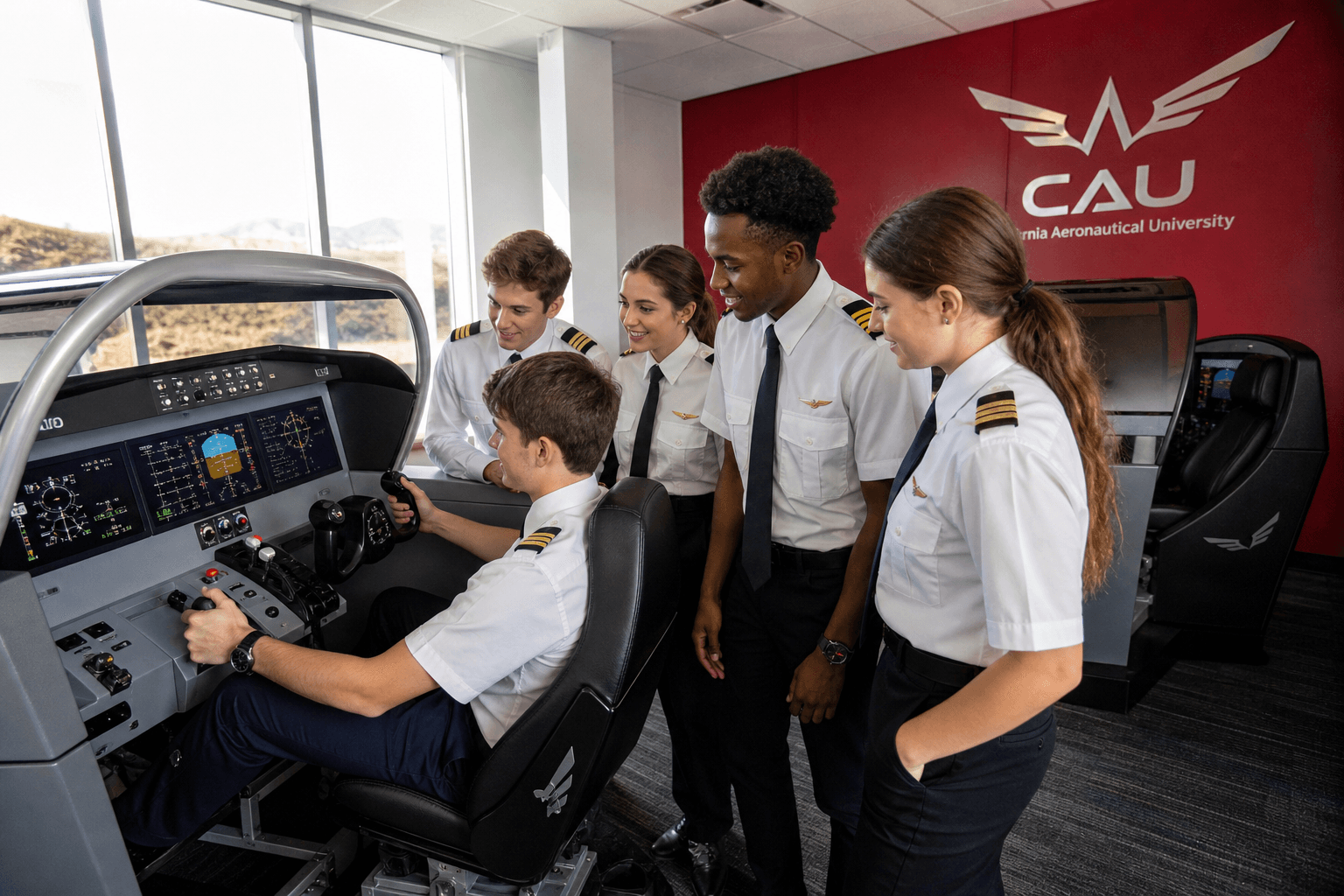
CAU Flight Team Rises to Top 10 Nationally, Emphasizing Safety and Pilot Competencies
Collegiate flight competition provides student pilots with opportunities to apply aviation knowledge, refine flying skills, and develop the professionalism needed throughout their careers. For California Aeronautical University (CAU), it has also become a way to reinforce many of the same competencies that contribute to safe and effective flight operations.
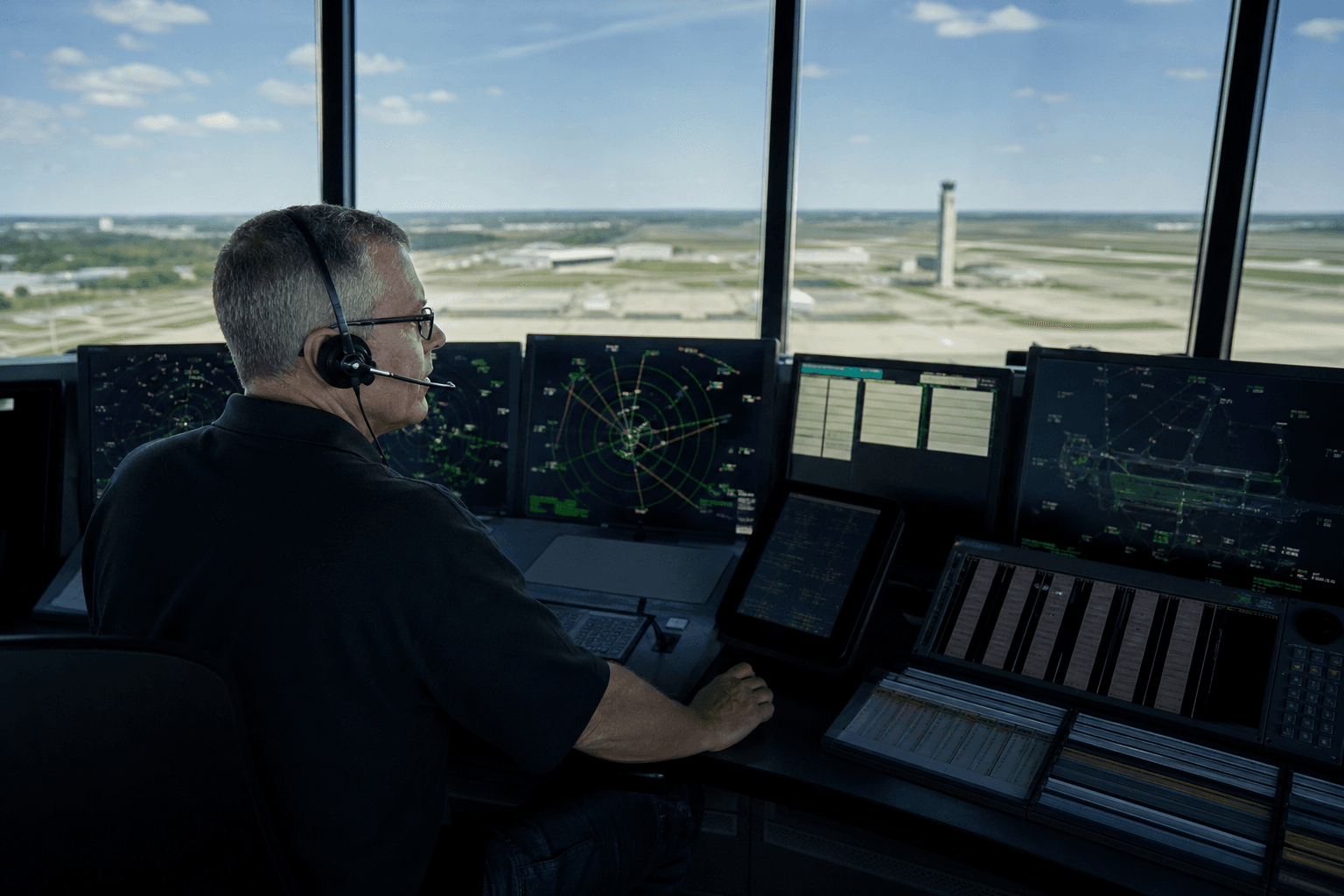
FAA Issues Nationwide Ground Stop Due to Air Traffic Control Communications Failure
The FAA issued a nationwide ground stop Friday afternoon following reports of communications problems affecting air traffic control facilities across the country. The order took effect around 3:54 p.m. EST on Nov. 13 and directed aircraft operators to suspend departures at all U.S. airports. Aircraft already airborne were permitted to continue their flights and land. FAA Investigating Communications Issues "Due to extraordinary circumstances and for reasons of safety," the FAA said in its nationwide advisory. The agency issued the directive through its Air Traffic Control System Command Center, which coordinates traffic management initiatives across the National Airspace System. Transportation Secretary Sean Duffy said a communications problem was affecting all 22 Air Route Traffic Control Centers. FAA technicians were investigating the issue, according to the Associated Press . The agency had issued a ground stop affecting Chicago-area operations shortly before announcing the nationwide restriction. The nationwide order also included provisions for international aircraft already inbound to the United States. "All departing traffic should remain ground stopped until further notice," the FAA said in its advisory. "Inbound international flights will be managed on a case by case basis." Previous Nationwide Ground Stop The last nationwide ground stop occurred Jan. 11, 2023, when a failure of the FAA’s Notice to Air Missions (NOTAM) system halted departures across the country. The restriction lasted less than two hours, although the disruption caused thousands of flight delays and cancellations. Before that, the last nationwide suspension followed the Sept. 11, 2001, terrorist attacks. Friday’s disruption comes amid ongoing efforts to modernize the FAA’s air traffic control infrastructure. Congress approved $12.5 billion in 2025 for upgrades to the agency’s aging communications systems. The FAA and White House requested an additional $30.1 billion Friday for other modernization needs. Officials had not identified the specific cause of the communications problems or announced an expected restoration time when the ground stop was issued.
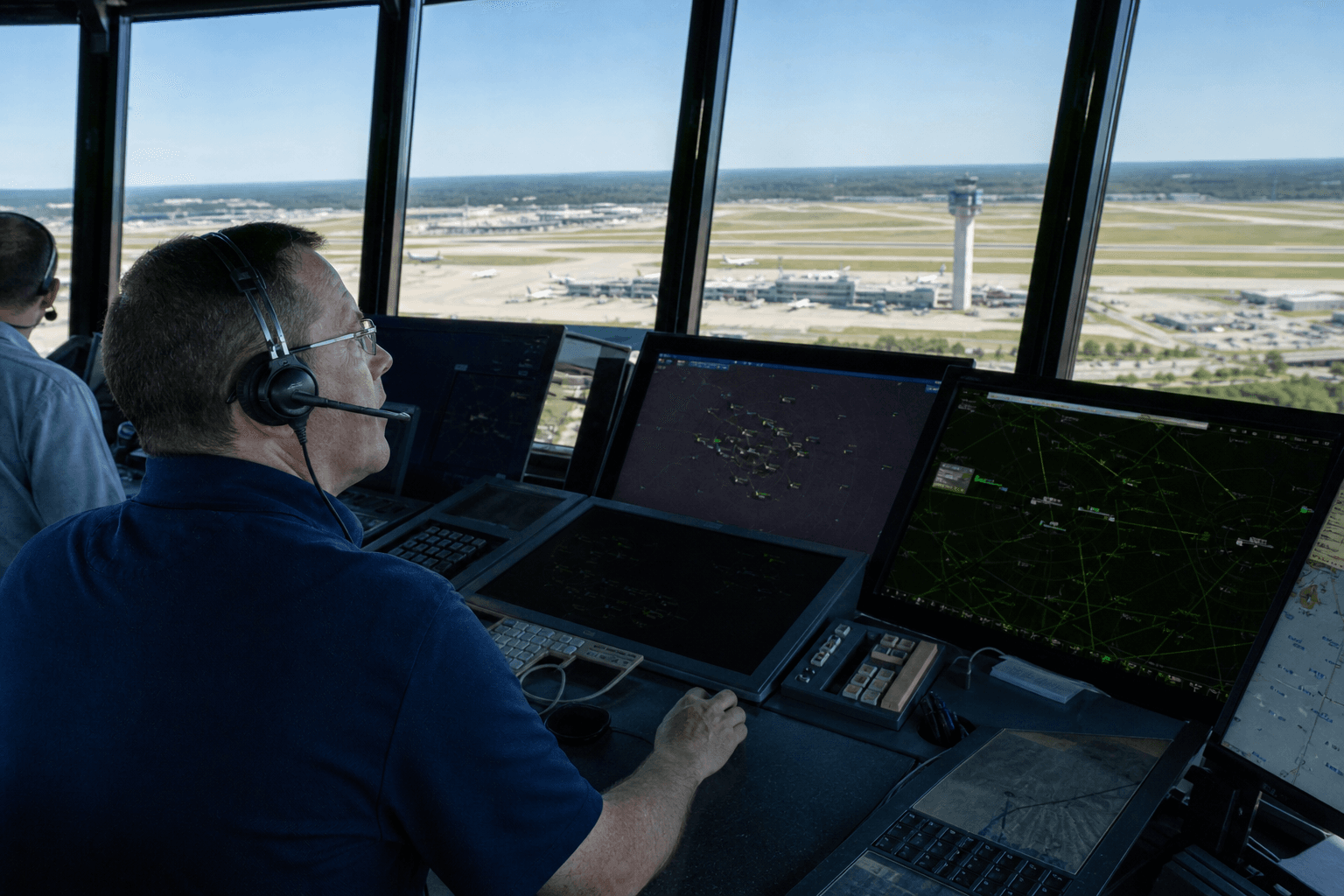
FAA orders nationwide ground stop after communication failures at all ARTCCs
The FAA has ordered a national ground stop due to “extraordinary circumstances and for reasons of safety.” It is the second time since the 9/11 attacks that the agency has ordered a ground stop at all airports. The previous instance was in January 2023 following the failure of the Notices to Airmen (NOTAM) system . “The FAA issued a nationwide ground stop for all U.S. airports following communication issues impacting multiple Air Route Traffic Control Centers,” the agency said in a statement Friday afternoon. “FAA technicians are investigating the issue. We will provide updates.” Air Route Traffic Control Centers (ARTCCs) provide aircraft separation, traffic sequencing, routing assistance, and airspace coordination services to aircraft operating on IFR flight plans within controlled airspace, primarily during the en route phase of flight. They are divided into sectors, each handled by one or a team of air traffic controllers. There are 22 ARTCCs in the U.S. The @FAAnews issued a nationwide ground stop for all U.S. airports following a communication issue impacting all Air Route Traffic Control Centers. FAA technicians are investigating the issue. We will provide immediate updates as we have them. — Secretary Sean Duffy (@SecDuffy) November 13, 2026 Per an Air Traffic Control System Command Center advisory from the FAA: "Due to extraordinary circumstances and for reasons of safety. Attention all aircraft operators, by order of the Federal Aviation Command Center all airports are ground stopped. All departing traffic should remain ground stopped until further notice. Inbound international flights will be managed on a case by case basis." An unnamed airline source told CNN that the communications issues originated from a problem with network routers. A controller at William P. Hobby Airport (KHOU) in Houston said at 4:13 p.m. EST that “our update time is 7 hours and 15 minutes from now,” or around 11:30 p.m. Airlines Weigh In “Flights already in the air can continue to their destinations,” a spokesperson for American Airlines told FLYING . “We expect disruption to our schedule for the rest of the day, depending on the length of the FAA's nationwide ground stop. It will be all hands on deck across American to get customers on their way as soon as possible when the FAA lifts this ground stop.” Southwest Airlines said it is “engaged with the FAA and is making operational adjustments across our network in compliance with the nationwide groundstop,” adding that it will provide updates on a dedicated webpage . “We recognize the disruption this may cause for our Customers and their travel plans, and our Teams are working to minimize impacts wherever possible,” the carrier said in a statement. Controllers Nationwide Report Ground Stop Air traffic controllers across the U.S. reported the ground stop. A ground controller at Seattle-Tacoma International Airport (KSEA) was one of the first to report the disruption, telling the pilot of a Southwest Airlines airplane that "we went into a national ground stop, all aircraft, with update unknown." The transmission was made a little after 3:30 p.m. EST. "Are you saying national, like Reagan National [Airport], or national the whole country?" another pilot asked a few minutes later. "Across all en route facilities they're having communication issues, so ground stop for all aircraft, with update time unknown," the controller replied. Elsewhere, a controller at Minneapolis-St. Paul International (KMSP) said at 3:44 p.m. EST that "all airports are ground stopped until 22:00 Zulu for a nationwide outage." 22:00 Zulu translates to 5 p.m. EST. Ground Stop Comes Amid ATC Modernization Effort The FAA is undertaking a multibillion-dollar effort to modernize the nation’s ATC systems, called the Brand New ATC System (BNATCS). Goals of the project include replacing and upgrading thousands of radars, radios, voice switches, facilities, and other hardware and software across the country. It is also deploying new electronic flight strips, surface awareness tools, and other equipment. As of November 5, the FAA said it had installed Surface Awareness Initiative (SAI) systems at 143 towers, transitioned 26 towers from paper to electronic flight strips, and installed 226 new voice switches. The agency has also replaced nearly 70 percent of the copper wiring that carries ATC radar and communications data with fiber, satellite, and digital connections. The FAA maintains a website that tracks progress on BNATCS. One portion of the ATC modernization effort involves the Strategic Management of Airspace, Routes and Trajectories, or SMART, system. The AI-powered, cloud-based platform was rolled out to all of the nation’s ARTCCs earlier this week and is based out of a center in Washington, D.C. SMART centralizes about 200 data streams—including weather patterns, flight paths, traffic flow, and controller staffing metrics—into one platform. FAA personnel in Washington, D.C. use the information to make scheduling recommendations that are routed to air traffic controllers, who can accept or decline them. The system was initially deployed in the Washington, D.C. area in September. Air Space Intelligence, the firm the FAA contracted to develop SMART, said Friday that the communications issues at ARTCCs are “not based on or a result of the SMART system, any product of ASI, or our integration with FAA and ATC.” This is a developing story.
The Daily Touch & Go
The day's best aviation news in your inbox. Free, no spam.