

Illustration: The Touch & Go
AURA AERO to Showcase INTEGRAL R Aerobatic Trainer at EAA AirVenture 2026
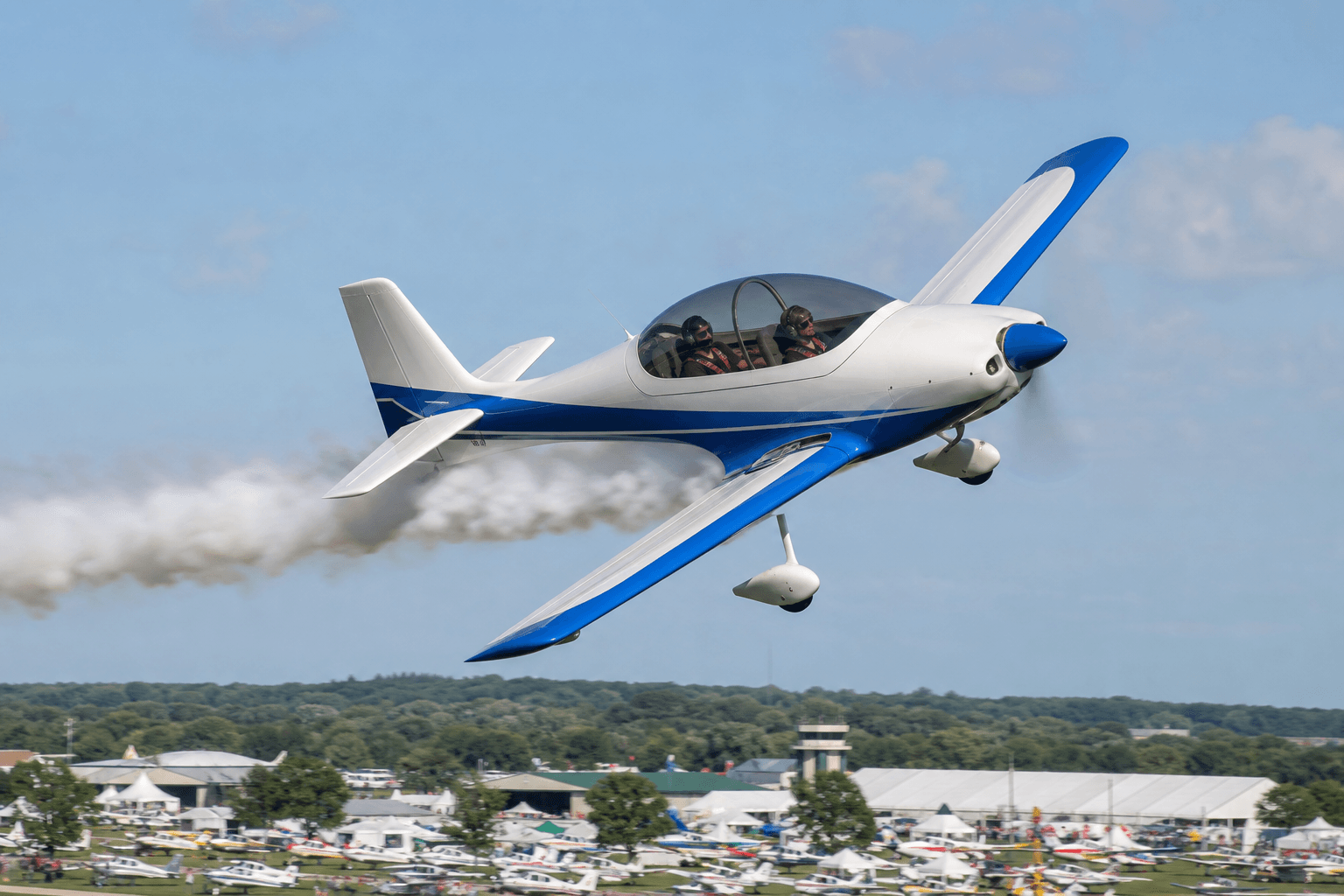
AURA AERO will fly its certified European two-seat INTEGRAL R aerobatic trainer at AirVenture 2026 as it advances toward FAA approval, highlighting its U.S. manufacturing plans.
The gist
AURA AERO brings its INTEGRAL R aerobatic trainer to AirVenture 2026, aiming for FAA certification and expanding U.S. production capabilities.
AURA AERO announced it will present its INTEGRAL R aerobatic trainer at EAA AirVenture 2026, scheduled July 20-26 in Oshkosh, Wisconsin. The two-seat aircraft, already certified in Europe, is making inroads toward FAA certification to establish a presence in the U.S. market. The INTEGRAL R will perform aerobatic demonstrations on July 20 and 21 near the International Aerobatic Club Pavilion, showcasing its capabilities to attendees.
Based in Daytona Beach, Florida, AURA AERO typically operates the INTEGRAL R from its U.S. headquarters, where the company has also launched manufacturing operations. The INTEGRAL R is designed as a high-performance trainer with aerobatic strengths, able to withstand plus and minus 7.5 G forces at a maximum takeoff weight of 935 kilograms. It uses a Lycoming AEIO-390 engine and Garmin G3X avionics, plus includes a whole-aircraft parachute system for increased safety.
Mike Goulian and Steve Fiegel, experienced aerobatic pilots affiliated with AURA AERO, will conduct presentations on the aircraft at AirVenture, including a session at the IAC Aerobatics Center on July 24 at 1 p.m. Fiegel, notably, has a record of competitive success with the INTEGRAL R, securing three first-place finishes in the Intermediate Power category of International Aerobatic Club competitions since 2025.
Performance figures for the INTEGRAL R include a cruising speed of approximately 150 knots and a range extending to 530 nautical miles, aligning with the requirements of flight schools and aerobatic training programs looking for reliable, efficient aircraft. The aircraft’s combination of advanced design and practical flight characteristics positions it well in a niche market for aerobatics.
Drew McEwen, AURA AERO’s chief commercial officer, highlighted AirVenture’s importance as a global aviation event that connects the company to the wider U.S. aviation ecosystem, including pilots and flight schools. McEwen emphasized the INTEGRAL R as a modern, safe, and high-performance option tailored to North American pilot expectations.
Beyond the INTEGRAL R, AURA AERO is developing a broader production footprint at its Daytona Beach site, which opened in October 2025. The facility is slated to manufacture both piston-engine and electric versions of the INTEGRAL line, signaling the company’s commitment to innovation and sustainability in pilot training.
In addition, AURA AERO is advancing ERA, a 19-seat hybrid-electric regional aircraft projected for market entry around 2030. With a 900-nautical-mile range, ERA represents the company’s push into regional transport markets, complementing its training aircraft portfolio and expanding its footprint in U.S. aerospace manufacturing.
The progress toward FAA certification of the INTEGRAL R, combined with active demonstration activities at a major gathering like AirVenture, marks a critical phase in AURA AERO’s strategy for U.S. market penetration. Their combination of technological innovation and competitive aerobatic performance aims to capture a growing segment of North American aviation training.
Read more
All Regulatory →
Rising Costs and Predatory Loans Challenge Aspiring Pro Pilots Financing Training
When I was in my early teens, I once asked an older pilot if he had any advice for someone just starting flight training, and he half-jokingly replied, "Ah, yes, have rich parents!" I didn't quite recognize the sage wisdom of this advice and failed to follow it, having had the temerity to get myself born into a large family of rather modest means. So I scrapped and schemed and worked a number of odd jobs through my teen years to pay for primary training and then went off to college and amassed an eye-watering level of student loan debt while completing my advanced ratings, all to graduate just after the 9/11 attacks. In retrospect I was fortunate. My seemingly poor timing put me in a very good position when the pilot shortage finally gathered steam, and as expensive as flight training seemed then, it has become even more so. It was also an era of easy borrowing and low interest rates. If you, like me, lacked the foresight to be born into wealth and are now trying to finance your dream of becoming a professional pilot, you face greater obstacles than I ever did. Post-COVID inflation has made most things more expensive, and everything in aviation from used aircraft to engine overhauls to insurance has outpaced it. Meanwhile, interest rates have skyrocketed, with prime lending rates above 8 percent for a full year now and most unsecured loans at least 3 percent above that. Few reputable banks are offering noncollege flight training loans these days, and this void has been filled by lenders who can be described as little better than loan sharks. Predatory interest rates of 17 percent or more are common. Sadly, many of the flight schools appear to be willing accomplices, prominently advertising "easy" financing "as low as 4.5 percent" or some similarly unrealistic rate. Many of their partner lenders will not reveal actual rates or terms until the student has already been accepted to the training program, with a proposed start date. Every week there are posts on aviation forums by students who have just learned, shortly before starting training, that their proposed $130,000, 15-year loan will end up costing $250,000 or more, with monthly payments above $2,000. Unfortunately, many see little alternative but to sign on the dotted line, justifying the terms with optimistic career earnings projections and the perceived rush to get their ratings "before the pilot shortage is over." It's an effective trap for lower-income kids with a dream but not much financial literacy. Honestly, had I been put in that position at 18 years old, I probably would have signed on the dotted line myself. I was financially illiterate at that age too. I've learned a lot about money since then, though, and about the aviation industry. Let me offer some really sound advice: Be very wary of any flight school that requires significant money up front. There are many cases of schools suddenly closing or otherwise absconding with students' funds or refusing or delaying repayment of the balance after the student has flunked out or quit midway through training. At the very least, they should require no more in your account than is required to complete the next block of training (e.g, private pilot certificate, instrument rating, etc). If a flight school's preferred lender isn't upfront about rates or terms, be very skeptical. Anyone who requires you to be accepted at the school and have a start date before revealing loan terms is likely springing a debt trap on you. A hard truth of aviation is that the majority of those who start primary training quit before earning their private pilot certificate, and the attrition rate for professional programs is similarly high. Not everyone will enjoy flying, and not everyone is cut out for it. You won't really know if it's for you until you're at least through primary training. Don't make any momentous financial decisions until then. Career earnings for a pilot can be high, but also vary quite widely depending on timing, keeping a clean record, maintaining a Class I medical, networking ability, and sometimes just plain dumb luck. Do not base financial decisions on best-case scenarios. And in any case, plan on several early years of earning less than $50,000, perhaps substantially less. Do not, under any circumstances, accept any substantial loan at more than 12 percent interest. It will be a millstone around your neck. Unlike most debt, student loans are not dischargeable in personal bankruptcy. Having to repay a crippling amount of high-interest debt early in your career will cause a high level of stress and may well lead to career decisions that prioritize short-term earnings over long-term advancement. There was a period during the pilot shortage when it made some sense to spend more and even accept less than satisfactory loan terms in order to finish training quickly and reach the airlines ASAP. In my opinion, that period is over. Hiring is starting to return to traditional norms, and there's even a bit of a glut of low-time pilots. It's difficult to be hired at regional airlines at 1,500 hours right now, for example. All of this points to doing your training in a way that minimizes borrowing until interest rates come down. First, get as far into your training as you can while paying cash. If you have a decent job now, pay cash to train toward a private pilot certificate at a local flight school while still working. Make the decision to quit and take on debt only once you have your certificate. If you don't have a job that will pay for primary training, put major effort into securing aviation scholarships and grants. Most aviation organizations offer them, and you should apply for every single one. Some are relatively small, but the dollars add up, and there's a multiplicative effect as your name gets out there. In fact, this is a fantastic way to get a head start on networking. When you reach the point that you simply have to finance your training, shop around. You'll be surprised to find there's a fair amount of variance among private student loan lenders—not all are loan sharks. If your intended school is pushing use of a predatory lender, I'd be very skeptical about training there. After all, when the lending is more lucrative than providing the actual training, that makes the training a loss leader—and quality is likely to suffer accordingly. READ MORE: 6 Mistakes to Avoid When Looking for Pilot Training Loan s Rates vary significantly based on credit scores and history. If you know that you'll be applying for loans in the next few years, put a strong effort into increasing your credit history and scores now. Alternatively, you'll get better rates by having a cosigner with good credit. This doesn't need to be a parent, but given that they'll share responsibility for the loan with you, you had best have a good relationship and proven yourself trustworthy to anyone you ask to cosign on a loan. The Federal Reserve is expected to start lowering interest rates next summer. As long as your lender does not tack on substantial origination fees, you may well be better off taking multiple smaller loans throughout your training, versus one big loan at the start. And while variable rate loans can be a gamble, I think they're a decent bet now, so long as yours is adjusted monthly or quarterly and is tied to a fair index (the former standard, London Interbank Offered Rate [LIBOR], has been discontinued, and Secured Overnight Financing Rate [SOFR] is the best replacement). Finally, the best interest rates going these days in the U.S. are for federal direct subsidized and unsubsidized Loans. For the 2023-24 school year, they're set at 5.5 percent for undergraduate students and 7.05 percent for graduate/professional students. The catch is these loans can only be used at nationally accredited institutions, which largely limits you to college flight programs (both four-year and two-year). With pilot supply and recruiting returning t
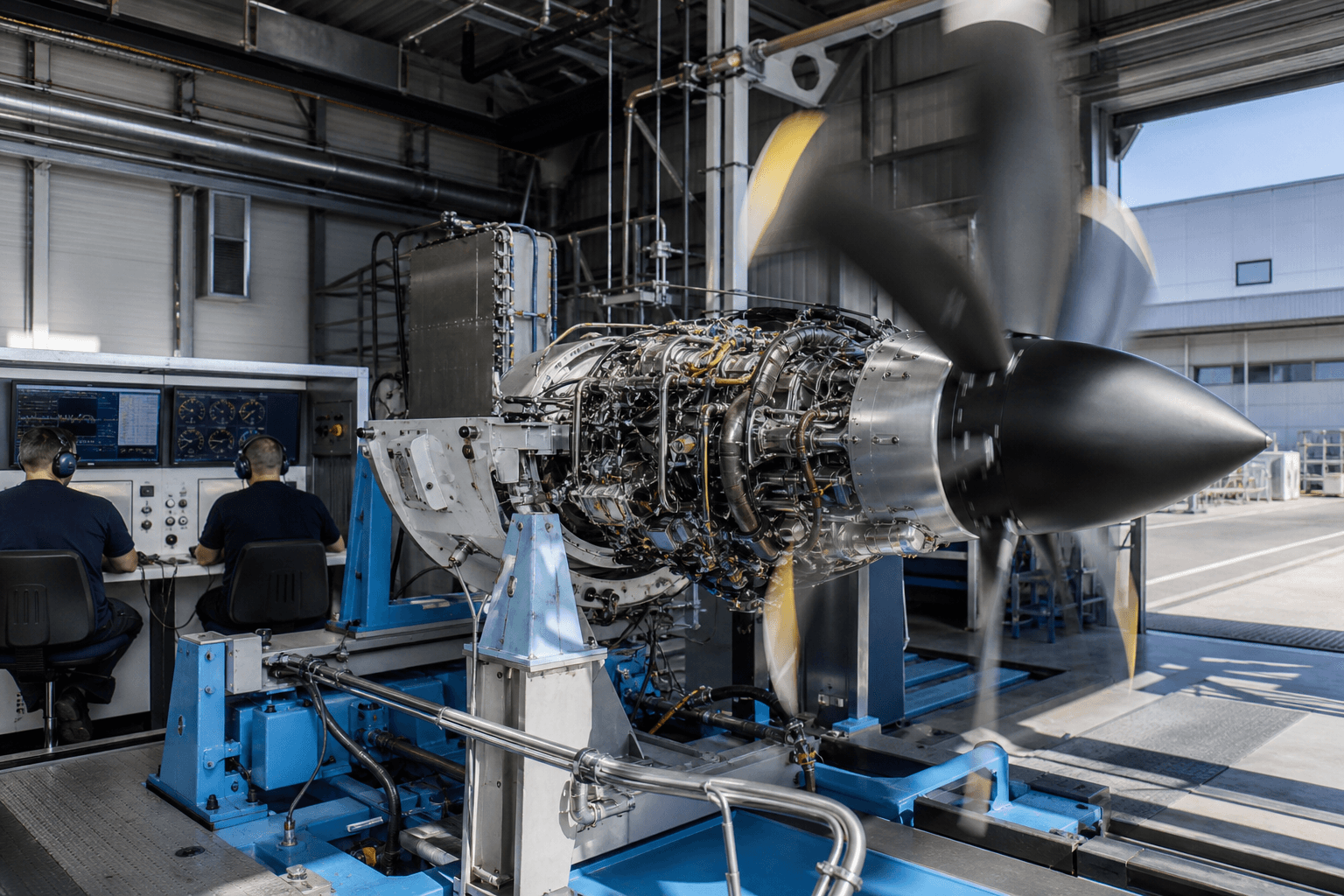
VK-800 engine begins 150-hour endurance tests for Russia's LMS-901 Baikal and other light aircraft
Variants of engine will be used on LMS-192 Osvey and LMS-901 Baikal as well as light trainer. Endurance testing of Russian aerospace firm UZGA's VK-800 engine has commenced, with the powerplant set to run for 150h on a dedicated ground rig. The engine is intended to power at least three aircraft models. These comprise the LMS-901 Baikal utility aircraft, the twin-engined LMS-192 Osvey regional transport — being developed jointly with Belarus — and the UTS-800 light trainer. The engine variants for these models are respectively the VK-800SM, the -800S1 and the -800SP. UZGA says the endurance test commenced "on the eve" of the Innoprom industrial exhibition in Ekaterinburg which opened on 6 July. The company presented the VK-800, which has an output of 806-877hp, as part of its display at the show. UZGA says the engine is being tested at "maximum operating conditions", allowing assessment of stability and reliability. The company adds that flight tests of the UTS-800 will "soon begin". The single-engined aircraft features composite structure, a 'glass cockpit', and lightweight ejection seats. Development prospects for light aviation was discussed during a forum at the Innoprom event. Federal air transport regulator Rosaviatsia's chief, Dmitry Yadrov, stated that the Baikal aircraft is expected to secure certification next year with the Osvey following at the end of 2029. He says domestic operators are requesting 127 such aircraft by 2035. The Baikal is intended to replace the Soviet-era Antonov An-2, but Yadrov highlighted the need to preserve the An-2 fleet "until a fully-fledged production replacement becomes available". He says a new type certificate for the An-2 was recently signed, enabling assignment of responsibility for the type's support and modernisation — including engine upgrades — to the Siberian aviation research institute SibNIA. The An-2 remains a "vital element of transport accessibility", adds Yadrov. United Aircraft chief Vadim Badekha, during the forum, stated that the aerospace firm was ready to establish partnerships for projects in the light aviation sector, and offer production sites such as its Sokol plant in Nizhny Novgorod. "We understand perfectly well that entering a large, serious, and extensive production requires significant investment," he said. "We have established the necessary capacity. And we are ready to provide this capacity, including for the launch of a major series of light aircraft."

Embraer obtains global certification for upgraded Praetor 500E business jet
The Praetor 500E and its sistership the 600E, revealed by Embraer in February, are updated variants of the company’s original Praetors. Brazilian, European and US regulators have certificated Embraer’s Praetor 500E midsize business jet, a milestone coming one month after those authorities approved its larger Praetor 600E. The models are updated variants of the Brazilian…
Court directs EU to reconsider excluding business jet manufacturing from green taxonomy
Ruling finds European Commission used flawed reasoning to keep executive aircraft manufacture out of classification system. Dassault Aviation has secured a favourable court verdict on executive jet production, days after carrying out the first flight of its long-range Falcon 10X. Dassault had sought annulment of a European Commission rule — laid down in 2023 —…
The Daily Touch & Go
The day's best aviation news in your inbox. Free, no spam.