


Garmin Launches Axis Flight Displays Tailored for Certified Piston Aircraft
Garmin introduces Axis, a new integrated flight display family designed for certified piston singles and twins, featuring built-in IFR GPS, nav/comm radios, and audio panels to simplify installation and enhance safety.
The gist
Garmin’s new Axis flight displays integrate navigation, communication, and audio into one unit for certified piston aircraft, boosting safety and easing upgrades.
Garmin has unveiled Axis, an innovative family of integrated flight displays tailored for piston-powered aircraft, including certified singles and twins covered by an AML STC protecting hundreds of models. Designed to support a broad swath of the general aviation piston fleet, Axis also serves experimental and light sport aircraft, offering a modular avionics upgrade path. By combining navigation, communication, and audio panel functions into one display, Garmin aims to reduce installation complexity, aircraft weight, and overall costs while enhancing pilot situational awareness and safety.
The Axis family consists of three display sizes: an 11.6-inch landscape, an 8-inch portrait, and an 8-inch landscape, each boasting a highly responsive touchscreen interface supplemented by tactile controls for critical functions. This design flexibility addresses the diverse instrument panel configurations typical in piston aircraft. Importantly, Axis shares panel cutouts and mounting points with Garmin’s established G3X Touch series, enabling straightforward upgrades for operators familiar with those systems.
In terms of compliance and availability, Garmin reports the 11.6-inch Axis displays have earned FAA and EASA Technical Standard Order (TSO) approval and will hit the market in July, with 8-inch variants following in early 2027. The FAA STC covers hundreds of certified Part 23 Class I and II piston singles and twins. This extensive coverage enables many legacy aircraft owners to retrofit modern avionics with minimal modification, bringing contemporary capabilities to older airframes.
A standout feature of the Axis 11.6 is its integration of a TSO-certified IFR GPS paired with VHF comm and nav radios plus a four-place intercom audio panel within one unit. The comm radio supports 10 watts transmit power, 8.33 kHz channel spacing, and a standby frequency monitor, allowing pilots to listen to secondary frequencies concurrently with active ATC channels. The audio panel includes dual comm switching, comm playback, Bluetooth connectivity for music and phones, and compatibility with external radios, further consolidating cockpit systems and reducing pilot workload.
Enhancing operational safety, Axis incorporates Garmin’s Smart Glide emergency autonav capability, Runway Occupancy Awareness (ROA), and optional SurfaceWatch runway incursion alerting. Smart Glide assists pilots in engine-out scenarios by autonomously navigating to and, when paired with Garmin’s GFC 500 or 600 autopilot, flying to a suitable airport. Physical emergency procedure accessibility is emphasized by a dedicated button on the display bezel for quick activation, underlining Garmin’s commitment to intuitive designs that can aid pilots under stress.
Graphical and situational visuals are robust, with the primary flight display showing flight data alongside a horizontal situation indicator (HSI) that can blend charts, traffic, and embedded maps. Synthetic Vision Technology (SVT) delivers 3D terrain and obstacle awareness, including enhanced runway and taxiway markings. Complementary tools such as Pathway rectangles visualize the aircraft’s intended flight path, while a 3D SafeTaxi feature presents a three-dimensional airport layout directly on the PFD, helping pilots, especially those unfamiliar with an airport environment, to avoid confusion and enhance ground safety.
The multifunction display integrates dynamic mapping with ADS-B traffic and weather data, waypoint information, and terminal charts. It also features an HDMI input for live video feeds, broadening functionality for surveillance or enhanced situational awareness. Engine monitoring is thorough, with an optional engine indication system (EIS) presenting color-coded gauges and bar graphs tailored for a range of piston engines, turbocharged powerplants, radials, and experimental turbines. Flight data can be automatically uploaded post-flight via Garmin services, encouraging proactive engine health management.
Connectivity options include built-in Wi-Fi and Bluetooth for linking to Garmin Pilot and other onboard systems, enabling real-time sharing of GPS position, weather, traffic, and flight plans. The USB-C port supports database updates, download of flight logs, and device charging up to 27 watts. Database Concierge technology empowers pilots to update their systems wirelessly, minimizing downtime during aircraft upgrades or maintenance cycles.
CubCrafters, a manufacturer noted for rugged backcountry aircraft, has announced a partnership with Garmin to incorporate the Axis system into their fleet, both for new builds and retrofits. After an 18-month engineering collaboration, CubCrafters views Axis as elevating cockpit capability and pilot safety. This alliance exemplifies Axis’s potential to modernize avionics in diverse piston-powered aircraft, further demonstrating Garmin’s strategic expansion in the general aviation marketplace.
Read more
All Aviation Safety →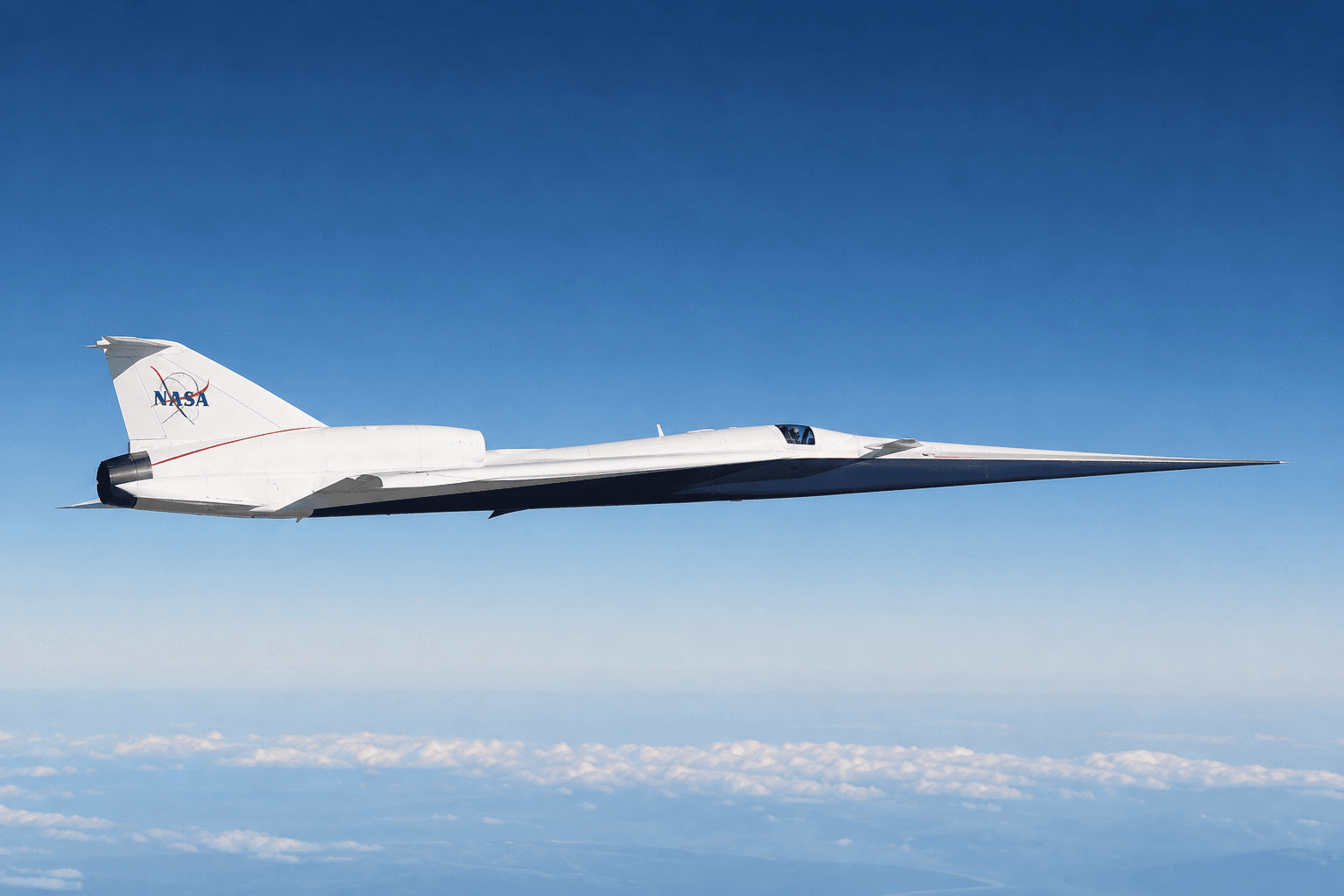
FAA Proposes Replacing 53-Year-Old Ban on Supersonic Flight Over U.S. Land With Noise-Based Rules
Global Aviation Round-Up from Aircraft Value Intelligence (AVN) A computer rendering of what the United Airlines supersonic aircraft will look like in the future. (Boom Supersonic) Editor's Note: To watch a video version of this article, click here . For 53 years, one federal regulation has stood between Americans and the return of supersonic air travel over the continental United States. That rule, adopted during the Nixon administration, prohibits civilian aircraft from exceeding the speed of sound over land. Now the Federal Aviation Administration (FAA) is preparing to rewrite it. On July 2, the agency published a Notice of Proposed Rulemaking in the Federal Register that would replace the existing speed-based restriction with a performance standard centered on noise. The proposal follows an announcement by the Department of Transportation on June 30 and represents the most significant shift in U.S. supersonic policy in decades. The change reflects a different way of thinking about the problem. Instead of asking whether an aircraft breaks the sound barrier, regulators are asking whether people on the ground are disturbed when it does. That distinction could reshape the future of commercial aviation. For many travelers, supersonic passenger service is synonymous with the Concorde, the sleek Anglo-French jet that cut transatlantic flight times in half. Its future unraveled after the fatal Air France crash near Paris in 2000. Although Concorde briefly returned to service, passenger demand weakened, operating costs climbed, and the aircraft was retired in 2003. Since then, commercial supersonic travel has largely disappeared. Today’s aircraft designers believe the technology has advanced enough to make another attempt. The original U.S. ban grew out of public frustration during the 1960s, when military testing produced frequent sonic booms over populated areas. Residents complained of rattling walls, cracked plaster, broken windows and sudden explosions of noise that interrupted everyday life. Thousands of complaints poured into government offices, convincing regulators that the public cost outweighed the benefit of faster travel. The FAA responded by banning routine civilian supersonic flight over land. With few exceptions, commercial aircraft have remained below Mach 1 across the continental U.S. ever since. Engineering, however, has changed dramatically over the past half-century. Instead of allowing powerful shock waves to merge into the classic sonic boom, engineers have learned how to shape an aircraft so those pressure waves remain dispersed. The resulting sound reaching the ground is significantly weaker than the ear-splitting boom associated with earlier generations of supersonic aircraft. The FAA’s proposal reflects those advances. Under the draft rule, future aircraft would have to meet a strict ground-level overpressure limit of 0.11 pounds per square foot. While the measurement is technical, the practical goal is straightforward: produce a sound that resembles a soft thump rather than the explosive crack historically associated with breaking the sound barrier. NASA’s Supersonic Experiment The proposed rule arrives as NASA continues work on one of its most ambitious experimental aircraft. The X-59 Quiet SuperSonic Technology (QueSST) demonstrator hardly resembles a conventional jet. Its unusually long, narrow nose and carefully sculpted airframe were designed with a single objective: reducing the intensity of sonic booms before they reach people on the ground. The aircraft recently completed another important step in its flight-test program, reaching Mach 1.4 at roughly 55,000 feet. Engineers view the milestone as another indication that the research program is progressing as expected. The most important testing, however, won’t focus on speed alone. NASA plans to fly the X-59 over selected U.S. communities while researchers gather feedback from residents who experience its sound signature. Beyond measuring decibel levels, scientists want to understand how people actually react. Does the sound surprise them? Is it annoying? Or is it mild enough to blend into the background of everyday life? Those public-response studies could prove pivotal. If communities consistently report that the aircraft produces little more than a brief, unobtrusive noise, regulators would have stronger evidence that quiet supersonic operations can safely coexist with populated areas. The research is expected to influence not only future FAA decisions but also international standards governing commercial supersonic aviation. The stakes extend well beyond NASA. Several aerospace manufacturers are investing heavily in next-generation supersonic airliners designed to shorten travel times between major cities. Because of the current U.S. ban, most development plans have centered on transoceanic routes where aircraft can legally accelerate beyond Mach 1. A new regulatory framework would dramatically broaden those possibilities. Flights that now consume most of a business day could eventually take only a few hours. A traveler leaving New York in the morning could conduct afternoon meetings in Los Angeles and return home that evening. Commercial service remains years away, but for the first time in decades, the regulatory landscape appears to be moving in the same direction as the technology. The proposal also provides something the aerospace industry values almost as much as technical innovation: regulatory certainty. Designing, certifying and manufacturing an entirely new generation of commercial aircraft requires billions of dollars and years of development. A clearer path through the approval process reduces investment risk, giving manufacturers and their financial backers greater confidence that quiet supersonic flight could become a viable commercial business rather than an engineering experiment. John Persinos is the editor-in-chief of Aircraft Value Intelligence .
Dan-Air Flight 1008 Crashes Into Tenerife Mountain Killing All 146 Onboard
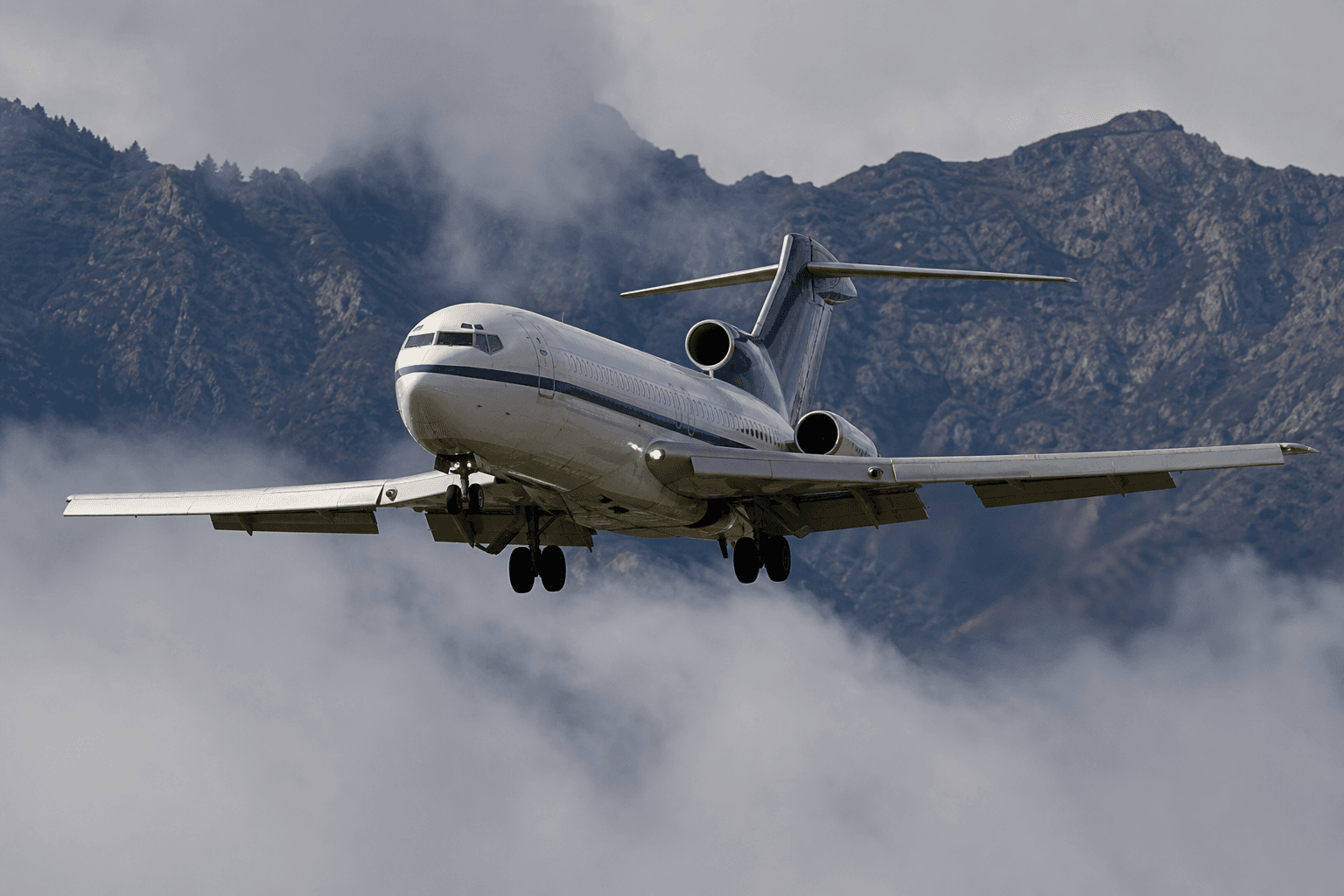
On 25 April 1980, tragedy struck one of Britain’s best-known independent airlines when a Dan-Air London Boeing 727 crashed into a mountainside while approaching Tenerife in the Canary Islands. The loss of Flight 1008 claimed the lives of all 146 passengers and crew on board, making it the deadliest accident in Dan-Air’s history and one of the worst aviation disasters involving a British airline at the time. A Holiday Flight to Tenerife The accident aircraft. Photo: Rob Hodgkins Dan-Air Flight 1008 was a charter service from Manchester to Tenerife North Airport (then known as Los Rodeos), carrying 138 holidaymakers and eight crew aboard a Boeing 727-46 registered G-BDAN. Built in 1966, the trijet had joined Dan-Air’s fleet in 1974 after earlier service in the United States. By 1980 it had accumulated more than 30,000 flying hours and was one of several Boeing 727s that had joined the airline. The flight across the Bay of Biscay and into the Canary Islands was routine. Weather around Tenerife, however, was less forgiving. Low cloud obscured the mountainous interior of the island, requiring aircraft to rely entirely on instrument procedures during their approach. Confusion During the Approach As Flight 1008 neared Tenerife North, it was sequenced behind a slower Iberia aircraft. Air traffic control instructed the Dan-Air crew to enter a holding pattern near the airport before commencing their approach. The problem was that this was not one of the published holding procedures available on the crew’s approach charts. Although the instructions were acknowledged, ambiguity over exactly how the hold should be flown soon led to a fatal navigational error. Instead of remaining clear of the island’s mountainous terrain, the Boeing 727 drifted towards high ground while descending. Unaware of the developing danger, the aircraft continued descending after being cleared to 5,000 feet—an altitude that was safe for the intended procedure, but not for the path the aircraft had actually taken. A Desperate Final Attempt Moments later, the Ground Proximity Warning System (GPWS) sounded, warning the crew that terrain lay directly ahead. The pilots immediately applied full power and attempted to climb away from danger. However, believing they were in a different position to where they actually were, the captain initiated a steep right turn. At 13:21 local time, the Boeing 727 struck the forested slopes of Mount La Esperanza while still in cloud. The aircraft broke apart on impact and was destroyed. There were no survivors. What Caused the Crash? The official Spanish investigation concluded that the accident was a classic example of Controlled Flight Into Terrain (CFIT), where an aircraft under full control is inadvertently flown into the ground. Investigators determined that the flight crew had incorrectly interpreted the unpublished holding procedure and descended into an area where the minimum safe altitude was far higher than the altitude they had been cleared to fly. However, the subsequent British conclusion to the investigation painted a more complex picture. It found that the instructions issued by air traffic control had been ambiguous and that the unpublished holding pattern itself was unsuitable for a Boeing 727 to fly accurately. The report also concluded that the aircraft should never have been cleared below 7,000 feet while operating in that area, noting that the assigned altitude of 5,000 feet left no safe terrain clearance. Rather than blaming a single error, the investigation highlighted how misunderstandings, unclear procedures and inadequate terrain protection combined to produce a catastrophe. Dan-Air’s Darkest Day The accident was a devastating blow for Dan-Air London. Founded in 1953, the airline had built an excellent reputation operating inclusive-tour charters, scheduled services and ad hoc flights across Europe. Its fleet of Comets, HS.748s, One-Elevens, 727s and later 737s became a familiar sight at British regional airports throughout the 1970s and 1980s. Although the airline continued to grow following the accident, Flight 1008 remained its worst-ever disaster involving fare-paying passengers. Dan-Air would eventually be acquired by British Airways in 1992, bringing one of Britain’s best-loved independent airlines to an end. Remembering Flight 1008 Dan Air 1008 Memorial in Manchester. Plucas58, CC BY-SA 4.0 <https://creativecommons.org/licenses/by-sa/4.0>, via Wikimedia Commons Today, more than four decades later, Flight 1008 is sometimes overshadowed by the far more widely known Tenerife Airport Disaster of 1977, which also occurred at Tenerife North Airport. Yet the accident remains a significant event in British aviation history. It reinforced the importance of clearly published instrument procedures, unambiguous air traffic control phraseology and maintaining safe terrain clearance at all times during instrument approaches. For those who remember seeing Dan-Air’s Boeing 727s arriving at airports around Britain, Flight 1008 also serves as a poignant reminder of an airline that played an important role in UK aviation—and of the 146 people whose holiday ended in tragedy on the slopes of Tenerife. Boeing 727 Special For more content on the classic Boeing 727 trijet airliner, Airport Spotting Premium members have access to the special edition July 2026 magazine packed full of articles and info. For this, and all the other content that comes with a Premium membership, you can sign up here . Title image: clipperarctic, CC BY-SA 2.0 <https://creativecommons.org/licenses/by-sa/2.0>, via Wikimedia Commons

2021 Cirrus SF50 G2+ Vision Jet Offers Immediate Availability and Advanced Safety Features
Each day, the team at Aircraft For Sale picks an airplane that catches our attention because it is unique, represents a good deal, or has other interesting qualities. You can read Aircraft For Sale: Today's Top Pick at FLYINGMag.com daily. Today's Top Pick is a 2021 Cirrus SF50 G2+ Pilots who routinely use their light aircraft for family transport know the value of providing a smooth, comfortable, airline-style experience for passengers. Let's add "uneventful" to the description, because passengers generally do not like surprises when flying—no steep turns, abrupt changes in altitude, or unstabilized approaches. An air stair entry helps the SF50 feel like a small airliner. [Credit: Aerista] The Cirrus SF50, with intuitive, pilot-friendly systems, pressurized cabin, and 300 ktas cruise speed, could be an ideal vehicle for enjoyable, efficient cross-country travel. Like other Cirrus aircraft, the Vision Jet has a built-in airframe parachute for deployment in emergencies such as engine failures or loss of control. It is also equipped with the Safe Return Emergency Autoland system, which enables passengers to initiate an automated landing in cases of pilot incapacitation. Perhaps the most attractive feature of the aircraft for sale today is its availability. Buyers often wait a year or more for delivery after ordering a new Vision Jet, but used models generally are ready for shoppers to acquire right away. The prospect of getting airborne in a new-to-you light jet without a long wait makes this example especially attractive. This 2021 Cirrus Vision Jet has 615 hours on its airframe and engine since new. The aircraft is equipped for flight into known icing conditions. It is also equipped with air conditioning, extended baggage, compartment, stick shaker and pusher system for stall avoidance, custom Xi interior and exterior, seating for seven, and USB ports. The SF50’s distinctive V-tail design stands out on the ramp. [Credit: Aerista] The panel features Perspective Touch+ by Garmin avionics with 14-inch high-resolution displays for PFD and MFD, digital audio panel, dual WAAS GPS/Nav/Coms, enhanced data logging, ADS-B In and Out, ADS-B traffic and weather, terrain and obstacle awareness, dual AHRS, and a three-axis digital autopilot Pilots interested in stepping up to the speed, payload and pressurized cabin comfort of a jet should consider this 2021 Cirrus SF50 G2+ Vision Jet, which is available for $2.9 million on AircraftForSale. If you're interested in financing, you can do so with FLYING Finance. Use our airplane loan calculator to calculate your estimated monthly payments. Or, to speak with an aviation finance specialist, visit flyingfinance.com . FLYING Magazine: We Fly: Cirrus Vision Jet G2+ FLYING Magazine: Cirrus Vision Jet Gets Auto Radar, Cirrus IQ FLYING Magazine: Cirrus Vision Jet Gains FAA Type Certification FLYING Magazine: Cirrus Vision Jet Wins Collier Trophy Plane + Pilot : 2019 Planes of the Year: Cirrus SF50 Vision Jet G2 And Piper 100 Plane + Pilot : Going Direct: Why the Cirrus SF50 Vision Jet Matters AVweb: Cirrus SF50 VisionJet: Fast Track to Production The Aviation Consumer: Cirrus Vision Jet G2: Higher, Quieter, Safer
Crew oversight led to Boeing 737 Max 8 slow, shallow take-off at Luton after intersection departure change
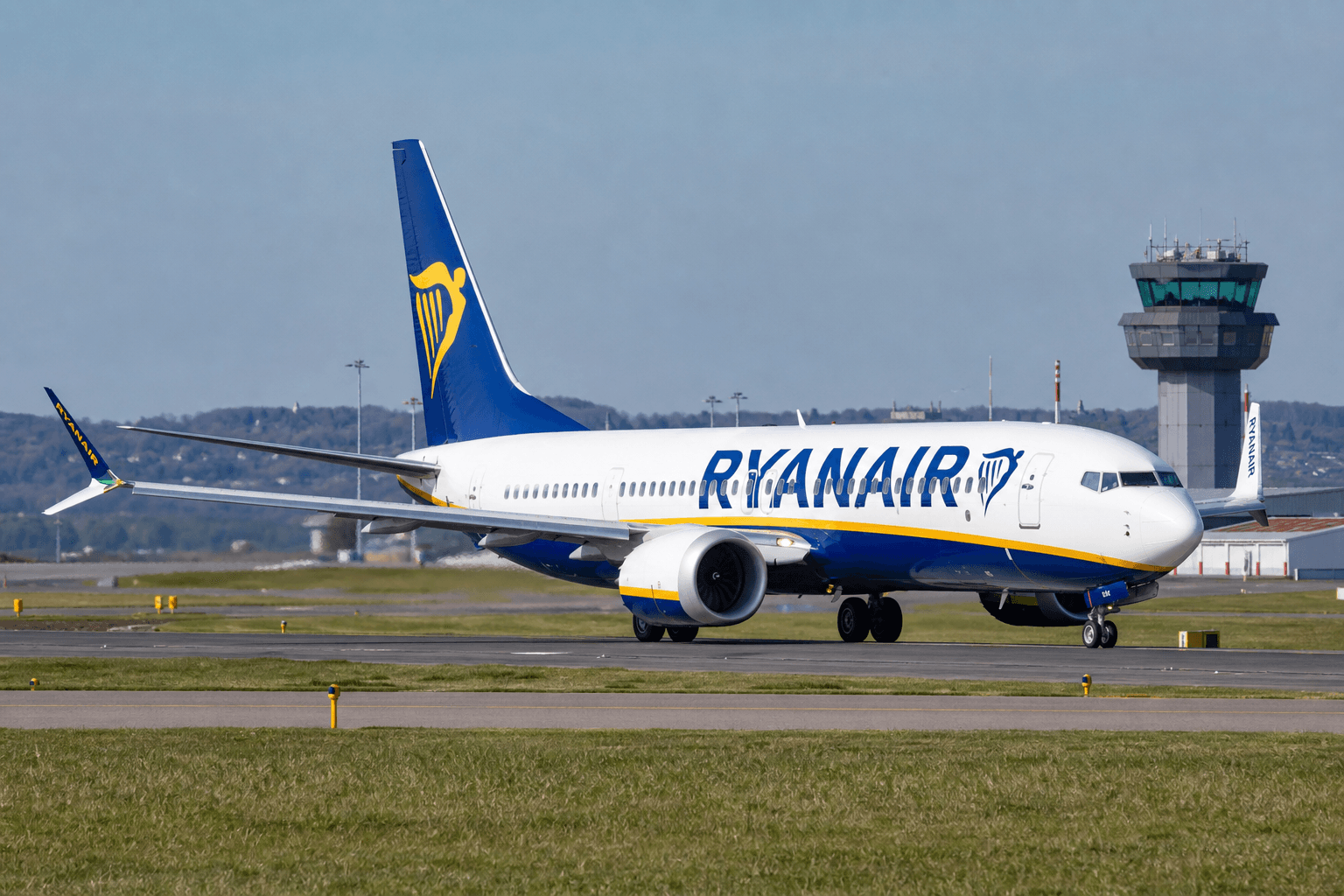
Pilots accepted intersection departure for Max 8 but did not update flight-management computer. UK investigators have determined that the crew of a Boeing 737 Max 8 did not update performance data after switching from a planned full-length runway take-off to an intersection departure. The crew of the Ascend Airways jet (G-CRUX) had informed London Luton air traffic control that they could accept a departure from intersection A of runway 25. But the pilots, who had originally intended a full-length take-off, failed to verify that the revised V-speed data had been correctly entered into flight-management computer. This resulted in a lower thrust setting than required. Flight-data analysis revealed that the maximum thrust during the take-off roll was 82.1% rather than the 85.2% needed. Available runway distance from intersection A was 1,771m — some 345m less than the full length. Owing to the low thrust, the take-off roll was "long", says the Air Accidents Investigation Branch, and the aircraft lifted off just 162m from the runway end — crossing it at a height of just 13ft. According to the inquiry the subsequent climb was "slow" and "very shallow". Air traffic control information stated that the aircraft appeared on radar to be climbing through 900ft about 0.8nm from the airport. "Under normal circumstances the aircraft would appear much closer to the airfield at that height," the inquiry says. It points out that an engine failure or loss of thrust during the take-off roll could potentially have resulted in an overrun. None of the 162 passengers and six crew members was injured during the occurrence on 22 April last year. Ascend Airways' UK division ceased operations in April this year.
The Daily Touch & Go
The day's best aviation news in your inbox. Free, no spam.