


Almost $2 Million in Unpaid Aircraft Property Taxes Uncovered in Travis County Texas
Travis County Tax Office reports nearly $2 million owed by 20 aircraft owners for delinquent property taxes, many linked to Austin-area airports.
The gist
Twenty aircraft owners in Travis County face $1.98 million in back property taxes, highlighting enforcement on aviation assets.
Travis County, Texas, is confronting substantial unpaid property taxes totaling nearly $2 million levied against owners of aircraft based within the county. The Travis County Tax Office recently published a list revealing 20 aircraft-related tax accounts with outstanding balances that add up to approximately $1.98 million. These delinquencies vary significantly, with some individual debts amounting to tens of thousands of dollars and others exceeding $300,000. This publication aims to signal the urgency of settling these arrears and to prompt aircraft owners toward tax compliance.
Among the unpaid accounts, several stand out due to the sheer magnitude of their delinquency. The largest single balance reported approaches $339,000, while another exceeds $230,000. Multiple other aircraft owners on the list owe sums above $100,000 each, compounding the overall delinquent amount due. The size of these overdue taxes underscores the fiscal impact on local government revenues and highlights a segment of aircraft owners failing to meet their fiscal responsibilities. This scale of unpaid taxes is significant even within the broader property tax framework in Travis County.
Most of the delinquent aircraft are tied to airports servicing the Austin metropolitan region. Twelve of the accounts are connected explicitly with Austin Executive Airport, one of several general aviation hubs within Travis County. Others are registered near Austin-Bergstrom International Airport, the principal commercial airport serving the city. The geographical concentration of these unpaid taxes at aviation facilities in and around Austin points to a systemic issue affecting owners who base their planes locally and utilize local infrastructure.
The Travis County Tax Office clarified that publicizing this list supports its enforcement strategy by encouraging transparency and compliance among aircraft owners. The Tax Assessor-Collector, Celia Israel, emphasized that property tax obligations for aircraft owners are an expected part of basing their assets in Texas. Israel stated that if owners elect to keep and house their planes within the state, they are reasonably expected to pay their fair share of the required property taxes. This stance affirms the county’s commitment to equitable taxation across all property classes, including aviation assets.
Enforcement of property tax collection on aircraft is vital because these payments support local governments and public services. Although most property taxes assessed for the 2025 tax year have been collected, the county remains focused on recovering the remaining delinquent funds. These revenues contribute to essential community functions such as education, infrastructure, and safety services. Failure by aircraft owners to settle these taxes could lead to enforcement actions, including liens or seizures, although the tax office did not elaborate on specific penalties in this release.
This situation in Travis County highlights an often-overlooked segment of property taxation: aircraft based outside of major commercial centers but within regional airports. The nature of aircraft ownership, with possibilities to house planes in different jurisdictions, sometimes complicates tax assessment and collection efforts. The Travis County Tax Office’s initiative to make delinquent accounts public represents an assertive measure to reinforce compliance and to remind owners that local tax laws apply equally to aviation property as they do to residential or commercial holdings.
Travis County joins other jurisdictions that have occasionally faced challenges in collecting property taxes from aircraft owners due to the mobile nature and high value of aviation assets. Ensuring aircraft owners fulfill their property tax responsibilities is important to local governments attempting to balance their budgets and provide community services. Delinquent taxes of this magnitude could prompt other counties to consider similar transparency and enforcement actions targeting unpaid aviation property taxes.
Frequently asked questions
- How much unpaid property tax do aircraft owners owe in Travis County?
- Aircraft owners in Travis County owe nearly $2 million in delinquent property taxes according to the tax office's recent published list.
- Which airports are most associated with these delinquent aircraft tax accounts?
- Twelve accounts are linked to Austin Executive Airport and others near Austin-Bergstrom International Airport, both serving the Austin area.
Read more
All Airports →
Dubai Overtakes Atlanta as World's Busiest Airport in Early 2026
The question of which airport is the busiest in the world is more than just a piece of trivia for aviation enthusiasts. As travel demand continues to recover post-pandemic, the size and business of an airport help passengers anticipate wait times, helps airlines optimize their networks, and allows governments to prioritize massive infrastructure investments. For a facility to claim the top spot, it must manage a staggering symphony of takeoff and landing slots, coordinating tens of millions of passengers across hundreds of gates every single year.

Dallas Fort Worth Debuts Spacious New Chase Sapphire Lounge with Whiskey Tastings and Spa
The 18,000-square-foot Chase Sapphire Lounge opens July 16 across from Gate D25 in DFW Terminal D. After a preview, I'd rank it as Dallas' best bank lounge, with elevated food, a dedicated whiskey room, bookable facials and relaxation pods, showers and Chase's first grab-and-go experiment.

United Airlines Plans Massive Denver Flight Training Campus with up to 6,000 Jobs by 2030
United Airlines is moving ahead with plans to develop a major new flight training campus near Denver International Airport (DEN), a project that could eventually support up to 6,000 jobs while significantly increasing the airline's pilot training capacity. The proposal, according to Denvertie , follows recent approval to rezone a 114-acre site and is expected to culminate in a new facility opening around 2030. The investment reflects United's long-term growth strategy as it prepares for one of the largest fleet expansion programs in commercial aviation.
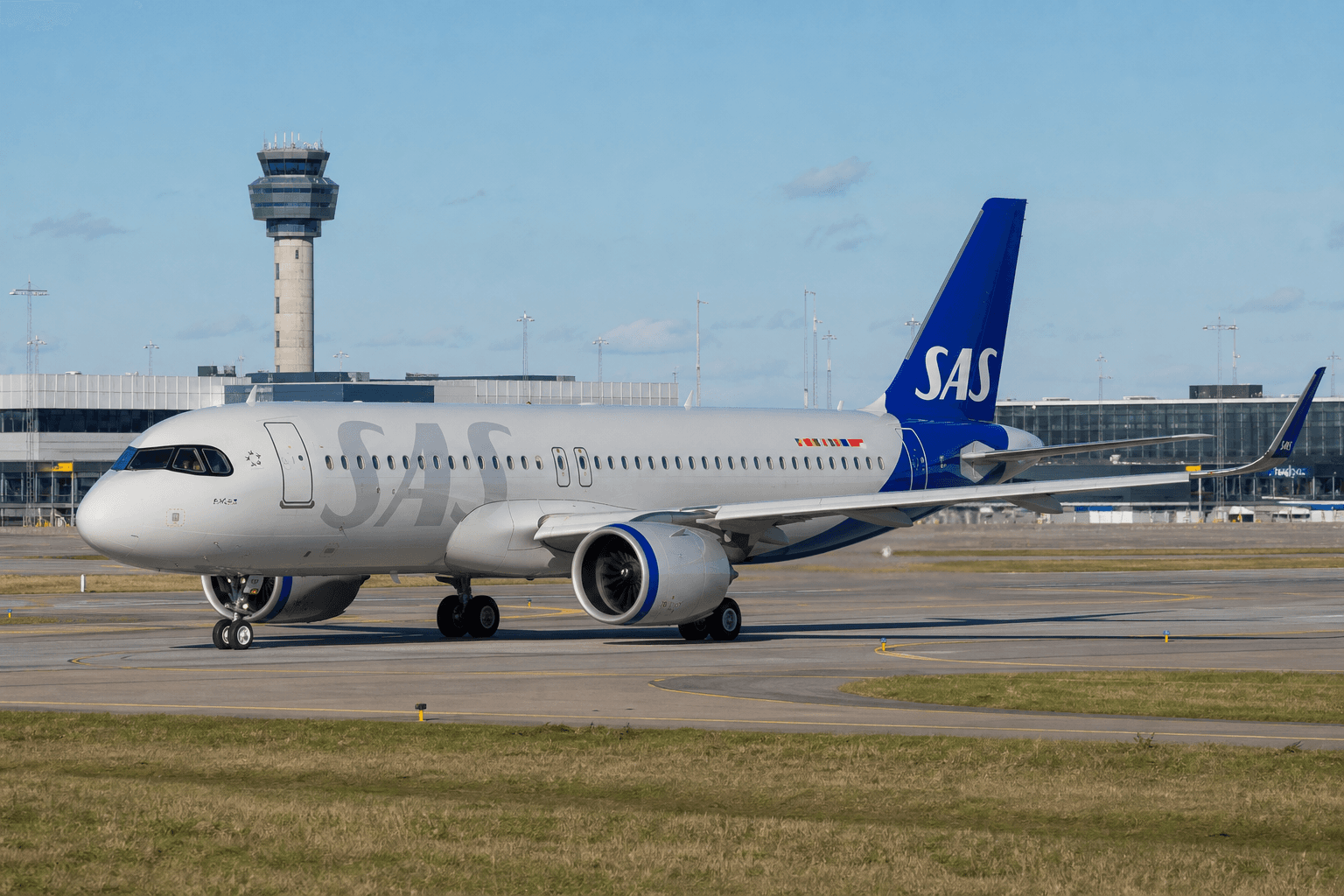
SAS Evolves With New SkyTeam Alliance And Modern Airbus Fleet
Scandinavian Airlines, better known simply as SAS , is the flag carrier of Denmark, Norway and Sweden. Founded shortly after the Second World War, it has grown into one of Europe’s longest-established airlines and remains one of the most recognisable carriers in Northern Europe. Following a major restructuring in the mid-2020s, SAS entered a new chapter in its history by joining the SkyTeam alliance and strengthening ties with Air France-KLM. Today the airline operates an almost all-Airbus jet fleet alongside regional turboprops, connecting Scandinavia with destinations across Europe, North America and Asia. Brief History of Scandinavian Airlines A historic photo of Bromma Airport. Credit SAS Museet. Scandinavian Airlines System (SAS) was officially founded on 1 August 1946 , when the national airlines of Denmark, Norway and Sweden combined their international operations into a single airline. The partnership allowed the three countries to compete more effectively on long-haul routes in the post-war era. During the 1950s and 1960s SAS became one of Europe’s most innovative airlines. It pioneered transpolar flights between Europe and North America via Greenland, helping reduce journey times, and later became one of the launch customers for the Douglas DC-8. The airline has operated many classic aircraft over the decades, including the Douglas DC-6, DC-7, DC-8, Caravelle, Douglas DC-9, Boeing 747, Boeing 767, McDonnell Douglas MD-80 and Boeing 737 Classic and Next Generation families. In more recent years SAS has become an almost entirely Airbus operator. Like many airlines, SAS faced severe financial difficulties during the COVID-19 pandemic. After entering Chapter 11 bankruptcy protection in the United States in 2022, the airline completed a major restructuring in 2024. This brought new investment from Air France-KLM, Castlelake, Lind Invest and the Danish government, while also ending SAS’ long membership of Star Alliance. On 1 September 2024 , SAS officially joined SkyTeam , marking one of the biggest alliance changes in recent aviation history. Current Bases and Operations Photo (c) SAS AB SAS operates from three primary Scandinavian hubs: Copenhagen (CPH) Stockholm Arlanda (ARN) Oslo Gardermoen (OSL) Among these, Copenhagen has become the airline’s principal international hub and continues to receive significant investment as SAS expands its long-haul network. The airline serves well over 100 destinations throughout Europe, together with intercontinental services to North America and Asia. Regional services are also operated through partner airlines and wet-leased aircraft, particularly within Sweden and Norway. Important and Notable Routes SAS has always been strongest on routes linking Scandinavia with the rest of Europe, but several long-haul services have become particularly significant. Among its busiest and best-known intercontinental routes are: Copenhagen – New York (JFK) Copenhagen – Chicago O’Hare Copenhagen – San Francisco Copenhagen – Seattle Copenhagen – Boston Oslo – New York Stockholm – Newark The airline also operates services to destinations including Tokyo and Shanghai, while Copenhagen remains the centre of almost all long-haul operations. Historically, SAS became famous for pioneering transpolar services over Greenland, establishing one of the fastest links between Europe and North America during the early jet age. Fleet Overview SAS A319 OY-KBT SAS has modernised its fleet considerably over the past decade and today operates one of Europe’s youngest Airbus fleets. Current Fleet (Last Update: July 2026) Aircraft Type In Service Airbus A319-100 4 Airbus A320neo 66 Airbus A321LR 3 Airbus A330-300 8 Airbus A350-900 4 ATR 72-600 6 Regional services are also operated by partner airlines using ATR 72s, CRJ900s and Embraer E195 aircraft under the SAS brand. Aircraft on Order 18 × Airbus A330-900neo (firm order) Additional long-haul aircraft remain under consideration as part of SAS’ fleet renewal programme. Airline Livery SAS introduced its current corporate identity in 2019 , replacing the classic dark blue cheatline that had been a familiar sight for decades. The new livery features a pale silver-grey fuselage with large dark blue SAS titles across the forward fuselage. The tail remains deep blue but now carries a simplified white SAS logo, while the engines are painted in matching blue. The overall design gives the airline a clean, modern Scandinavian appearance. However, enthusiasts should note that not every aircraft has yet been repainted . Several Airbus A320neo family aircraft continue to fly in the previous livery, making it possible to see both generations of SAS branding in service today. Special Liveries Unlike many airlines, SAS has generally preferred a consistent fleet appearance, although a handful of aircraft have carried promotional designs over the years. Occasionally, alliance branding and promotional decals also appear on individual aircraft. For example, this year Airbus A330 LN-RKR is wearing this special scheme marking the airline’s 80th anniversary. Airbus A319 OY-KBO is also in a special retro livery. Have you ever flown SAS? What do you think of the airline and its livery? Leave a comment below!
The Daily Touch & Go
The day's best aviation news in your inbox. Free, no spam.