

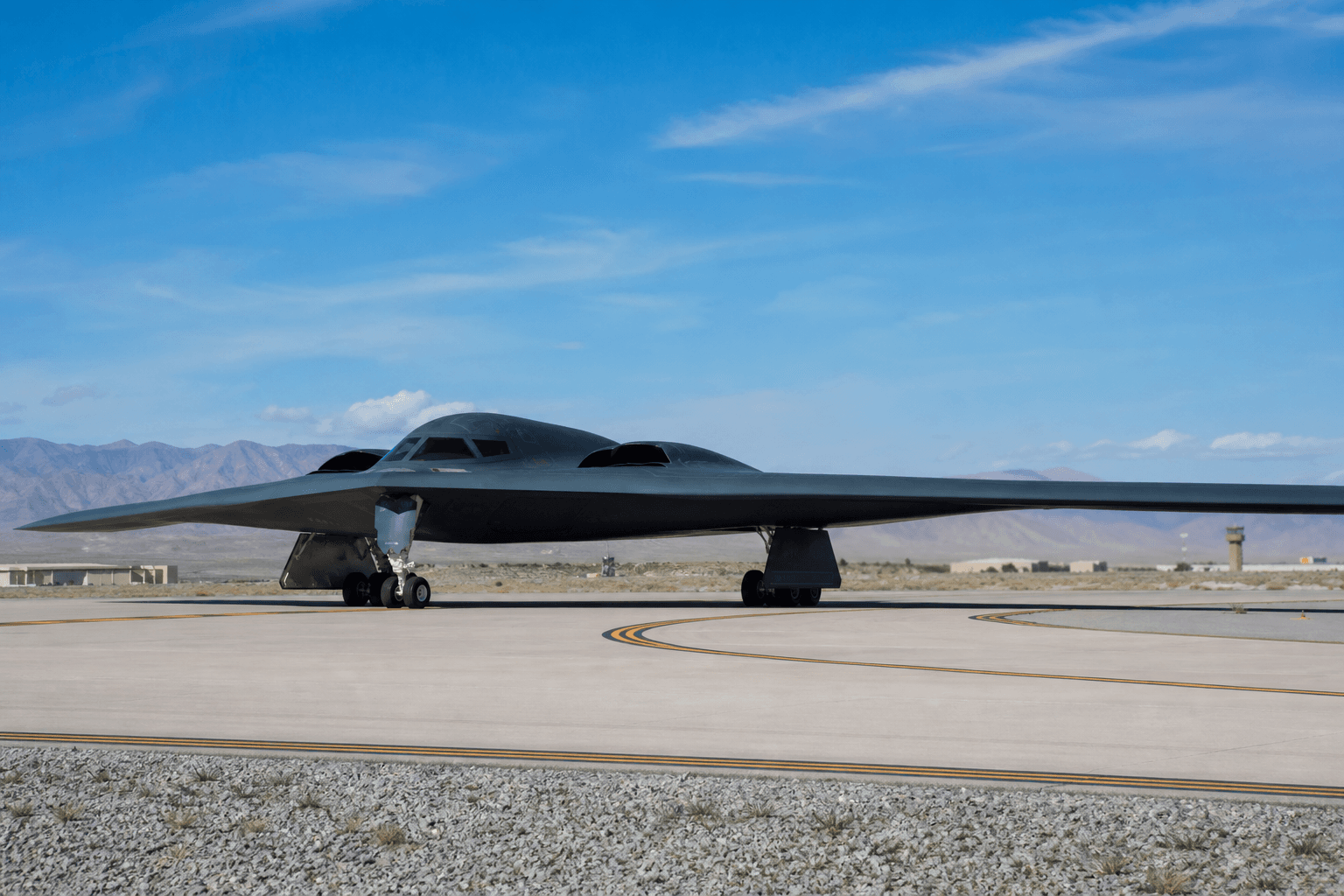
Illustration: The Touch & Go
USAF Requests $1.7B to Upgrade B-1 and B-2 as B-21 Raider Production Ramps Up
The U.S. Air Force will invest $1.7 billion over five years to modernize B-1 and B-2 bombers while accelerating B-21 Raider production starting in 2027.
The gist
The USAF plans a $1.7B modernization of B-1 and B-2 bombers to bridge the gap until enough B-21 Raiders enter service by 2027.
Continuing coverage
All B-21 Raider →- USAF Commits $2B to Prepare Ellsworth AFB as First Operational B-21 Raider Base
- USAF's 65-Year-Old KC-135 Stratotankers To Support B-21 Raiders Into 2040s
- Doubling B-21 Raider Production Faces Major Hurdles Despite $10 Billion Funding Boost
- B-21 Raider Outperforms B-2, B-52, and B-1B Bombers Across All Key Metrics
The U.S. Air Force has outlined plans to invest $1.7 billion over the next five years to keep its legacy bomber fleets, the B-1B Lancer and the B-2 Spirit, mission ready and modernized. This move comes as the much-anticipated Northrop Grumman B-21 Raider program progresses, but the new stealth bomber will not reach sufficient operational numbers until after 2027 to fully replace the aging aircraft. The continuing upgrades to the B-1 and B-2 platforms reflect the USAF’s effort to maintain credible long-range strike capabilities during this interim period.
The B-21 Raider program is viewed as foundational to the USAF’s future long-range strike capability. Production plans have been accelerated with a 25% increase in manufacturing pace to meet initial operational service dates by 2027 and achieve a projected fleet size of 100 aircraft. Northrop Grumman has reported investing over $5 billion in digital engineering and manufacturing infrastructure to meet this ramp-up, with a workforce of approximately 8,000 personnel directly involved in development and production across more than 400 suppliers in 40 U.S. states.
Despite the rapid B-21 program advancement, the USAF’s immediate strategic needs dictate extending the operational lives of the current bomber fleets. Of the allocated $1.7 billion modernization budget, about $1.35 billion will go to the 19 B-2 Spirits, known for their stealth and nuclear capability, while $342 million is assigned for upgrades to the 44 B-1B Lancers. This funding ratio shows a clear Pentagon preference to maintain stealth strike capabilities over the B-1B’s larger conventional payload capacity.
The B-2 Spirit remains the only current bomber capable of delivering nuclear weapons and the Massive Ordnance Penetrator bunker-buster bomb, making it vital for strategic deterrence. Colonel Mark Gunzinger, a retired USAF deputy undersecretary of defense and strategic strike expert, has emphasized the importance of keeping the B-2 operational to fill the gap until large numbers of B-21s become active, noting the bomber’s uniqueness in penetrating enemy defenses with stealth technology.
Ellsworth Air Force Base in South Dakota has been selected as the first operational home for the B-21 Raider, leveraging its existing infrastructure and strategic central U.S. location. The base, currently housing the 28th Bomb Wing and about 3,300 personnel, provides ideal training and operational facilities to prepare for the Raider’s arrival. The central continental location supports rapid strategic strike reach globally with aerial refueling.
Significant investments have already been made at Ellsworth Air Force Base to accommodate the B-21. Since 2021, approximately $2 billion has funded expansion projects including a Low Observable Restoration Facility dedicated to maintaining the Raider’s stealth coatings. Additionally, $129.5 million was spent to reconstruct Runway 31, ensuring it meets support standards for the advanced bomber’s operational requirements.
The modernization of legacy bombers alongside the accelerated production of the B-21 ensures that the USAF maintains a credible and flexible strategic bomber force during the transitional period. The combination of continued B-1 and B-2 upgrades with the phased introduction of the Raider reflects a balanced approach to national defense capability against emerging security challenges.
With the B-21 set to reshape long-range strike in the decades ahead, the USAF’s dual strategy underlines current operational imperatives. Modernizing existing aircraft while scaling the Raider’s production aligns with defense priorities of sustaining deterrence and readiness across various conflict scenarios.
Ultimately, the USAF’s $1.7 billion investment in bombers ensures no capability gap emerges as the service fields new stealth assets. Ellsworth’s preparation for the Raider’s arrival underscores the long-term commitment to a robust strategic bomber presence within continental U.S. bases.
Frequently asked questions
- Why is the USAF investing in B-1 and B-2 modernization when the B-21 Raider is coming?
- Because the B-21 Raider will not be delivered in sufficient numbers until after 2027, the USAF plans to modernize its existing B-1 and B-2 bombers to maintain long-range strike capabilities until the new fleet is operational.
- How much is the USAF allocating to modernize the B-2 fleet compared to the B-1 fleet?
- The USAF is allocating around $1.35 billion for the 19 B-2 aircraft, significantly more per plane than the $342 million set aside for modernizing the 44 B-1 bombers, reflecting a strategic focus on stealth and nuclear capability.
- Where will the first operational B-21 Raider bombers be based?
- The first B-21 Raiders will be stationed at Ellsworth Air Force Base in South Dakota, chosen for its strategic central U.S. location and existing bomber infrastructure.
Read more
All Military/Defense →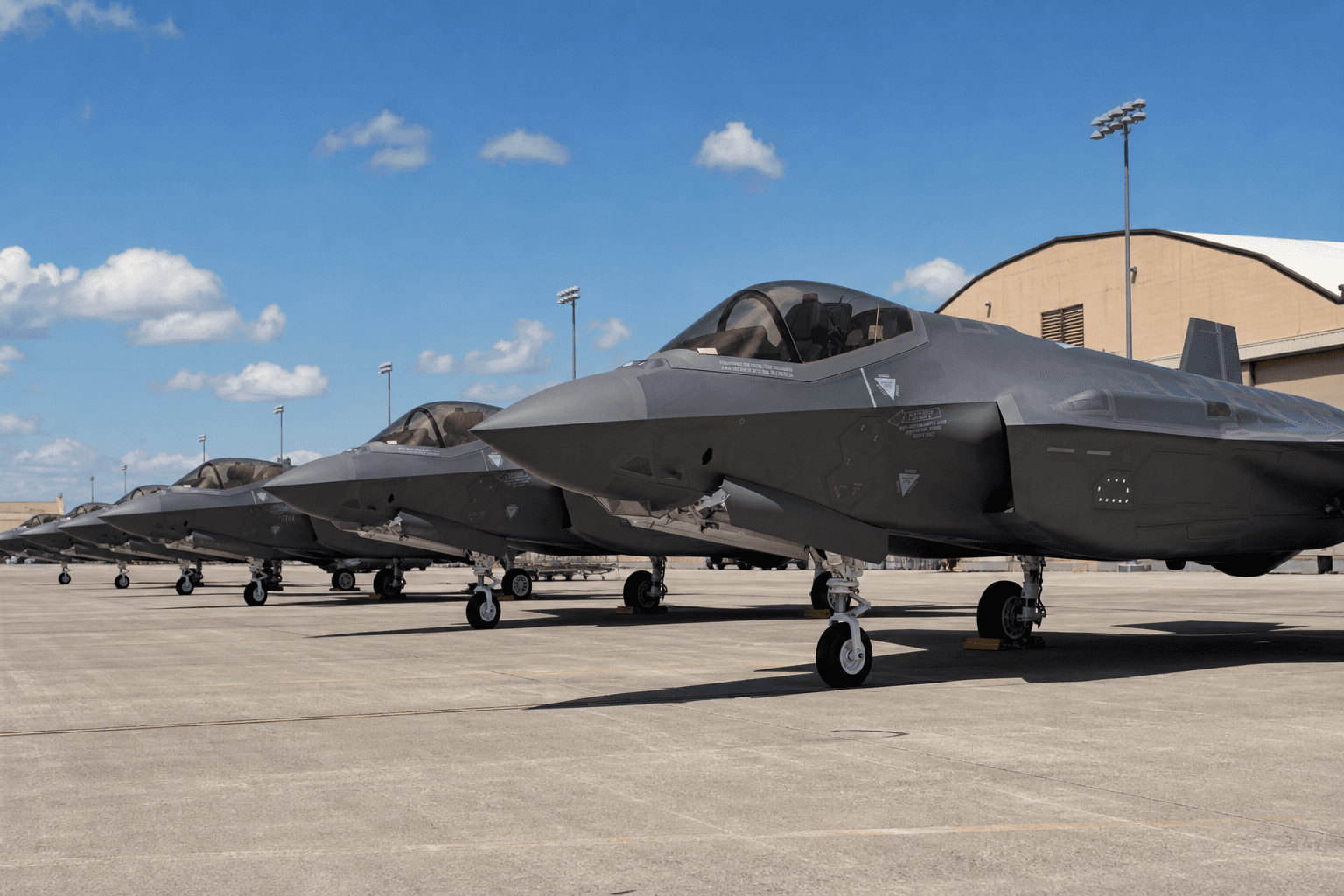
At Least 15 F-35s Delivered Without Required Equipment Since May 2025
Pictured is a U.S. Air Force photo of F-35A fighters at Jacksonville Air National Guard Base, Fla. on July 9, 2025. At least 15 F-35s built in the last year have lacked required equipment, according to a Defense Contract Management Agency (DCMA) list sent to sister publication Defense Daily after a Freedom of Information Act (FOIA) request. On Feb. 7, Defense Daily requested from DCMA a list of all Department of Defense Form DD-250s–Material Inspection and Receiving Reports–filed with the agency since May 2025, for all Lockheed Martin F-35 fighters delivered to the U.S. Air Force, U.S. Navy, and U.S. Marine Corps between May 1, 2025, and Feb. 6, 2026. When a military service accepts a system but does not mark it as delivered because of material shortfalls, that system is "DD-250ed" and is in a not operationally ready-supply (NORS) status until the gaps are filled. The signing of the "receipt"–the DD-250–marks a transfer in ownership from the contractor to the federal government. Nine "DD-250ed" F-35s are on the list provided by DCMA on July 13 in response to the FOIA request–one Marine F-35B to be delivered/ferried to VMFA-533 at Marine Corps Air Station Beaufort, S.C., three Navy F-35Cs to be delivered/ferried to VFA-125, a fleet replacement squadron at Naval Air Station Lemoore, Calif., one F-35A to be delivered/ferried to the 325 th Fighter Wing, a training wing at Tyndall AFB, Fla., and four F-35As to be delivered/ferried to the 125 th Fighter Wing, an Air National Guard domestic air defense wing. Asked why each of the above nine aircraft were "DD-250ed," the F-35 Joint Program Office (JPO) wrote in a July 14 email that "we cannot detail the specific equipment shortfalls, resolution timelines, or variant mix of these aircraft." "Due to program security reasons, we are protecting any additional information with enhanced security measures," according to the JPO. In addition to the above nine aircraft, six Marine Corps F-35s are in NORS status as "DD-250ed." Marine Lt. Gen. Gregory Masiello, the director of the F-35 Joint Program Office (JPO), testified last month that "we have accepted six aircraft for the Marine Corps that do not have a radar installed" because the Marine Corps is awaiting the installation of the Northrop Grumman [NOC] APG-85 radar, which the Pentagon expects to field in the first half of 2028. The APG-85 is critical to the 55 upgrades in the Block 4 program–22 of which have fielded so far, including seven last year, and six on target for this year, according to Masiello. For full functionality, the APG-85 and Block 4 require 62 kilowatts to 80 kilowatts (kW) of cooling versus the 32 kW on the plane now. The current mission capable rate of the F-35 is 56 percent, and the full mission capable rate is 25 percent. Radar mountings in the F-35's nose are different for the current APG-81, also by Northrop Grumman, and the APG-85–a difference which has helped complicate fielding of the new radar that was to deliver with F-35 Lot 17. The Air Force has been considering an APG-81/APG-85 dual-mount bulkhead, though the latter may take two years to field. The service's fiscal 2027 future years defense plan (FYDP) contains $133 million in fiscal 2031 for retrofitting 14 F-35As with APG-85s–a unit cost of $9.5 million per radar, and outside the FYDP the service said it plans to spend about $1.6 billion to retrofit another 167 jets with the APG-85. The first signed DD-250 for an F-35 in Lot 17 was on July 8, 2025, for an F-35A delivered/ferried the next day to the 125th Fighter Wing in Jacksonville, according to the list provided by DCMA in response to the FOIA request. Radar-less F-35s must fly with nose ballast to balance the fighter during flight. Temporarily radar-less fighters are not unprecedented. For example, in the late 1960s, McDonnell Douglas, now part of Boeing, put lead in the nose of the F-4J for the Navy/Marine Corps due to late deliveries of the fighter's government furnished equipment radar by Westinghouse, now part of Northrop Grumman, and in the 1980s, the Panavia Tornado F2 interceptor had so-called "Blue Circle" concrete in the nose due to delays in the development of the fighter's Foxhunter radar by GEC-Marconi, now part of BAE Systems. British Aerospace, Germany's MBB, and Aeritalia built the Panavia Tornado. Those companies are now part of BAE Systems, Airbus, and Leonardo, respectively. A version of this story originally appeared in sister publication Defense Daily .
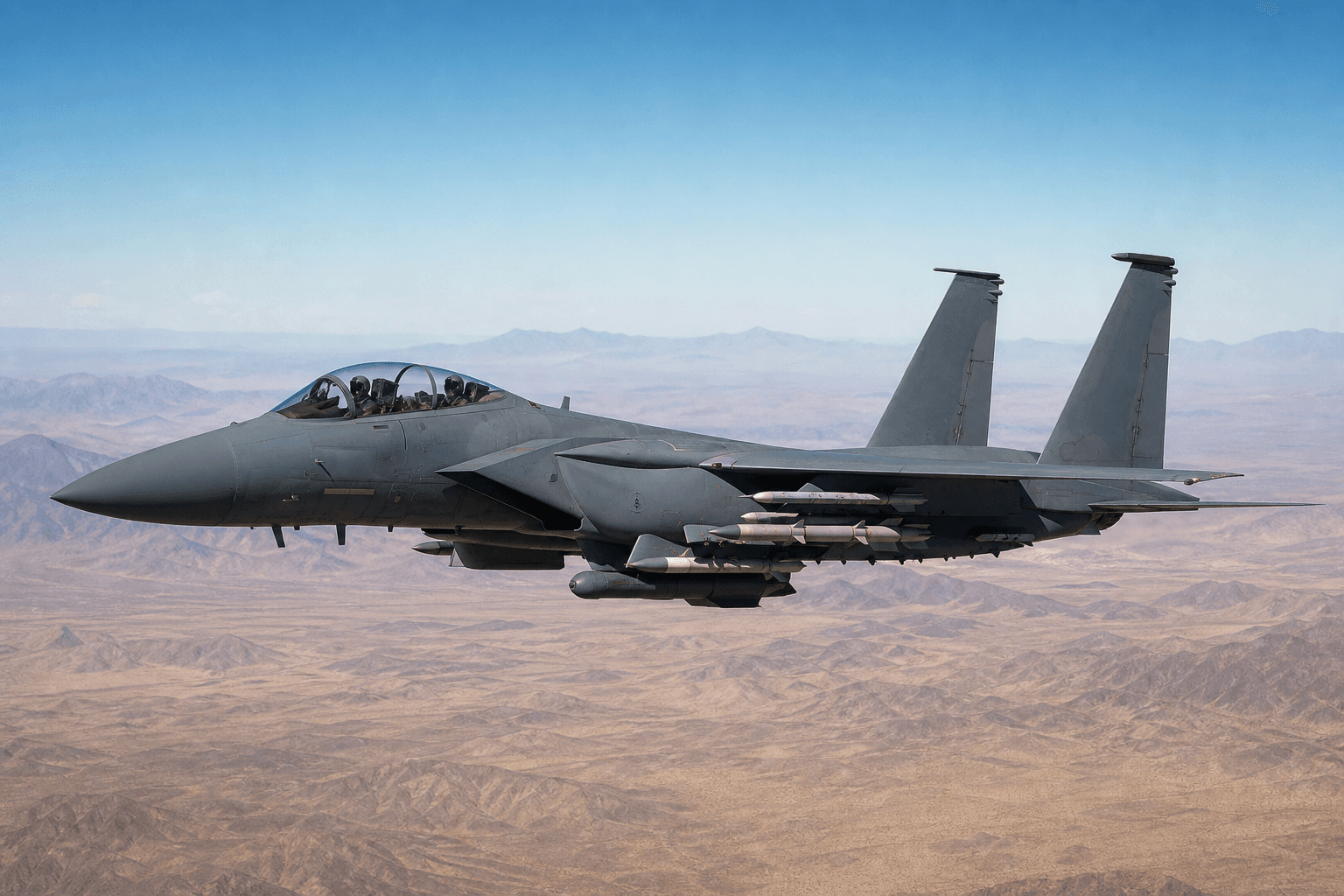
USAF Plans 267 F-15EX Fighters to Complement Growing F-35 Fleet as 'Missile Trucks'
The Lockheed Martin Lightning II fighter jet is the world's most advanced fighter and is taking its place as the second-most in-service fighter jet in the world (depending on how the numbers are counted). At the same time, the Air Force is planning to double the number of F-15EXs it is procuring to 267. Importantly, this is not so much increasing its F-15 fleet as it is intended to recapitalize the aging F-15E fleet as they age out and retire .
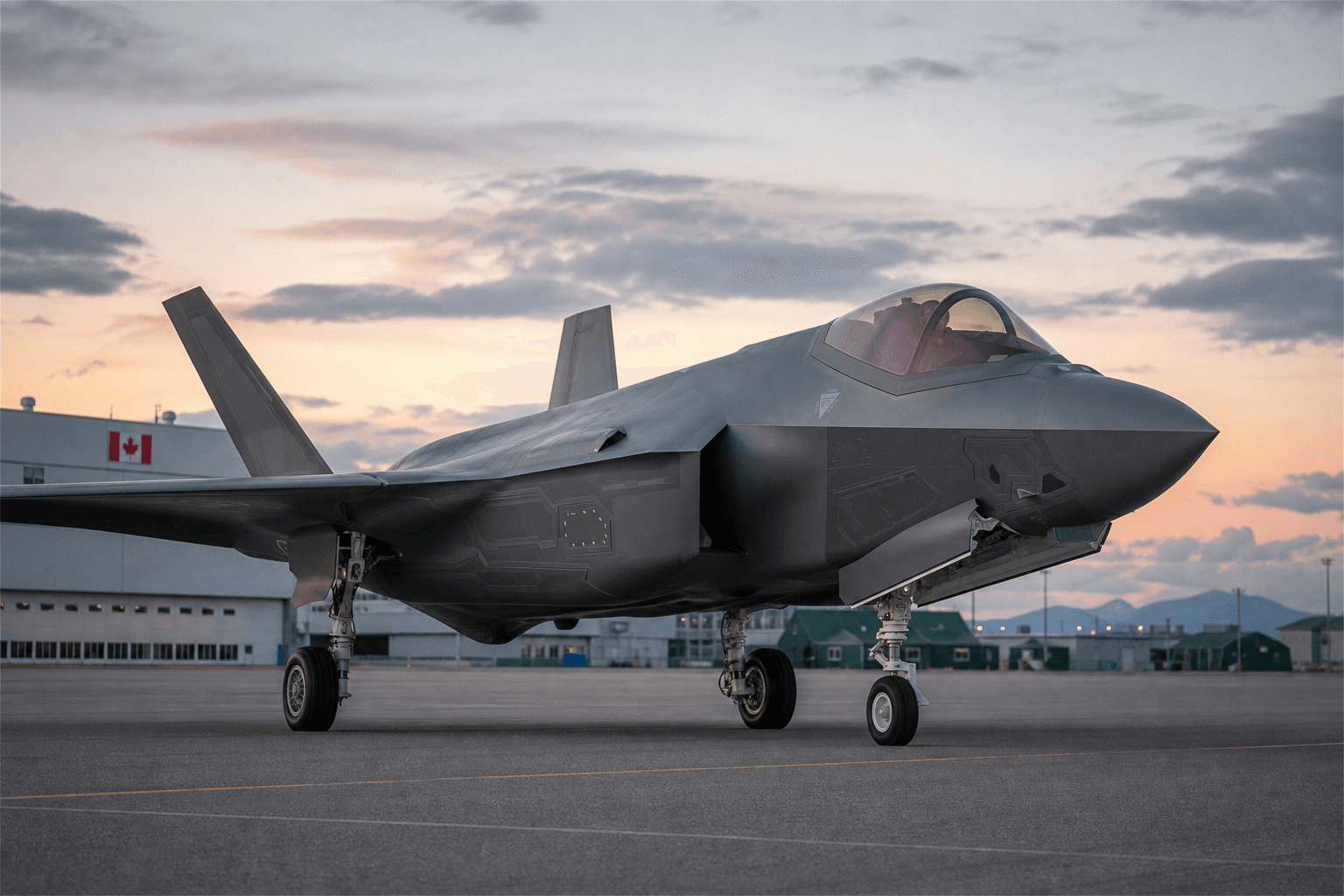
Canada Quietly Advances F-35 Fighter Jet Payments Amid Public Debate on Purchase
Canada's fighter jet debate has increasingly been framed as a dramatic political decision: should Ottawa proceed with its planned purchase of F-35 stealth fighters or pivot toward alternatives such as Saab's Gripen? Public discussions have focused on cost overruns, industrial benefits, trade tensions with Washington, and broader questions surrounding Canada's long-term defense dependence on the United States . To many observers, the issue still appears unresolved, with government leaders publicly emphasizing that reviews are ongoing and that options remain available.
B-52J Engine Upgrade Set to Outpace Jets Built Decades Later
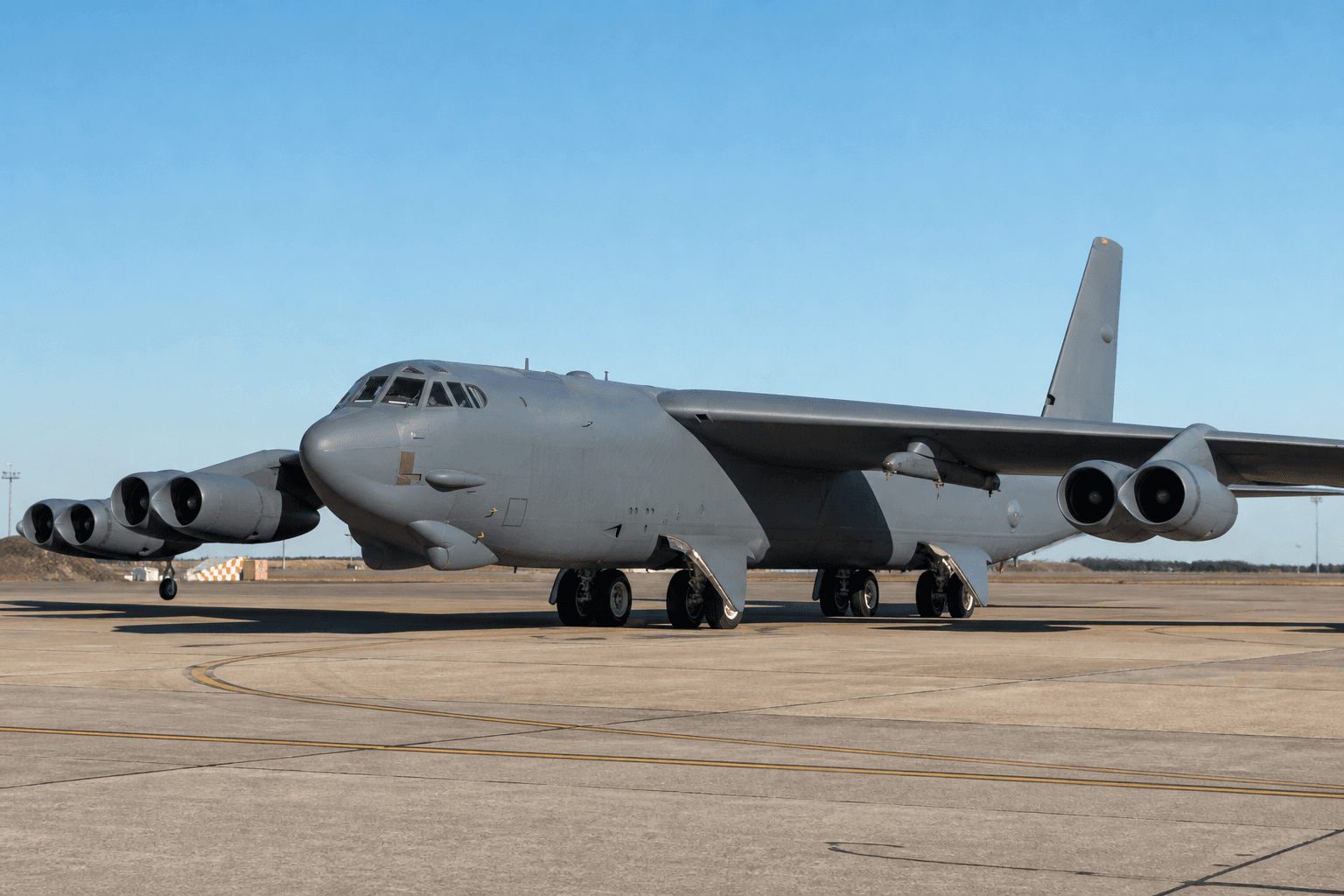
When the United States Air Force replaces the Boeing B-52's eight engines under the Commercial Engine Replacement Program, the resulting aircraft, the B-52J, will have 30% better fuel efficiency, a meaningfully extended unrefueled range, and a maintenance burden so reduced that it will cost significantly less per flight hour to operate than the Rockwell B-1 Lancer . The B-1B entered service in 1986, thirty-four years after the B-52 first flew. It was specifically designed to replace the Stratofortress. It is now being retired while the B-52 flies on, and the F-130-powered B-52J will still be flying in the 2050s after the B-1B is long gone. That inversion is entirely the product of one engine swap.
The Daily Touch & Go
The day's best aviation news in your inbox. Free, no spam.