

Illustration: The Touch & Go
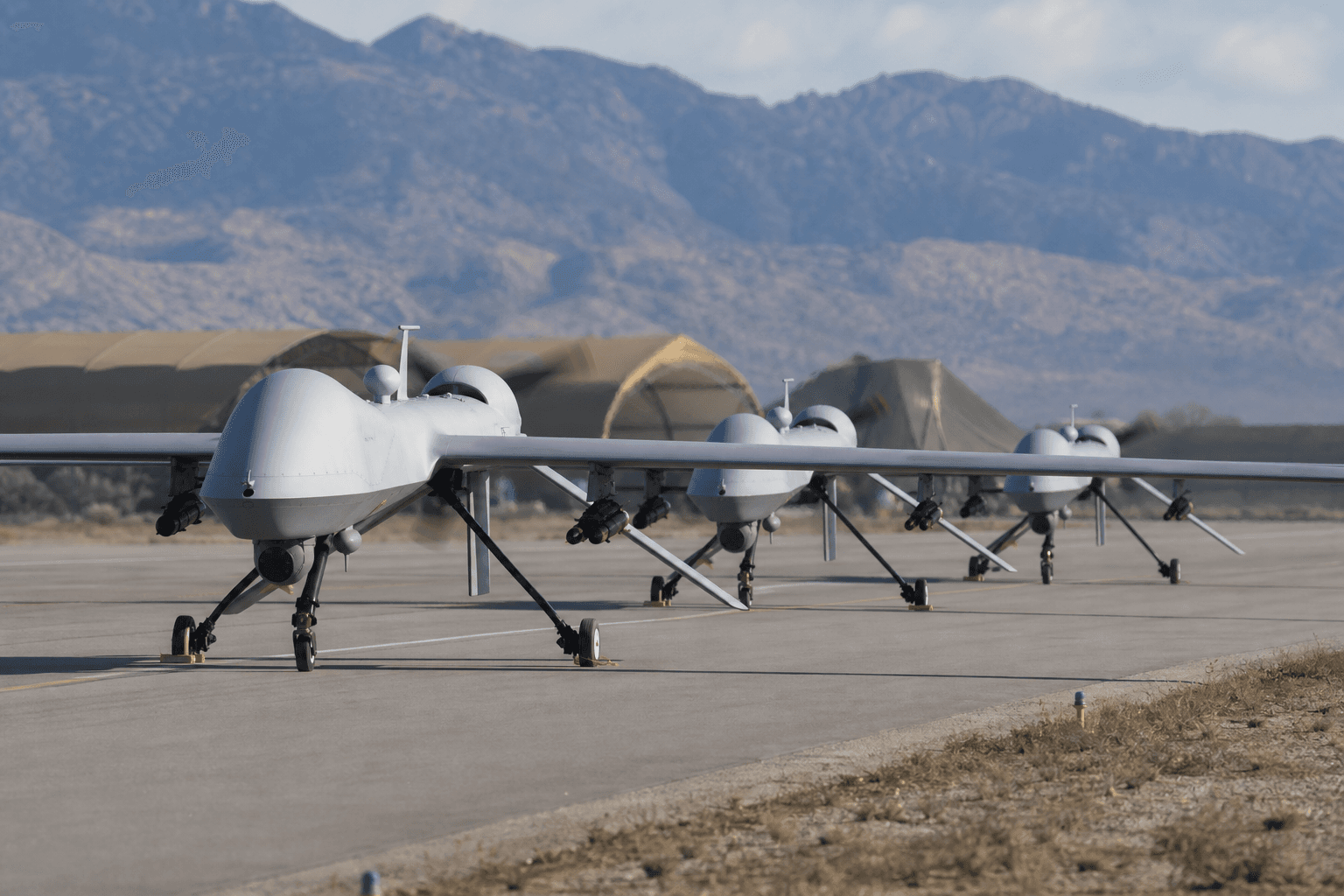
DIU and USAF Partner to Develop Modular Massed MQ-9A Reaper Replacement by 2031
The Defense Innovation Unit and U.S. Air Force aim to field a fleet of 20 modular massed aircraft to succeed the costly MQ-9A Reaper, targeting initial operations by fiscal 2031.
The gist
DIU and the Air Force are collaborating on a modular, mass-producible MQ-9A follow-on to enable high-risk operations at lower cost by 2031.
The Defense Innovation Unit (DIU) and the U.S. Air Force have embarked on a joint initiative to develop a next-generation unmanned aircraft intended to replace the MQ-9A Reaper, a platform that can cost up to $50 million per unit depending on its payload configuration. This effort targets a new class of massed modular aircraft (MMA) capable of overwhelming enemy defenses through quantity and persistence rather than relying on a few expensive, high-value assets.
The MQ-9A Reaper, operated primarily by the Air Force’s 432nd Wing among others, has been a workhorse for intelligence, surveillance, reconnaissance (ISR), and precision strike operations. However, given the platform’s high unit cost and vulnerability to emerging low-cost, layered anti-aircraft threats, defense leaders see a critical need for a more sustainable approach to unmanned aerial operations.
The DIU’s solicitation emphasizes the necessity for modularity and payload flexibility, demanding the new MMA retain the MQ-9A’s current sensor and mission capabilities, such as full motion video for ISR tasks and strike options. A core operational concept is to deploy large numbers of these risk-tolerant aircraft simultaneously, accepting higher attrition rates to saturate adversary defenses, thereby forcing opponents to expend costly missile inventory against a sustained aerial presence.
The USAF expects to achieve initial operational capability with a fleet of 20 massed modular aircraft by fiscal year 2031. Responses to DIU’s solicitation were due July 23, signifying accelerated progress in selecting potential industry partners capable of delivering on this vision. This initiative is aligned with broader Air Force modernization goals to leverage mass, maneuverability, persistent presence, and distributed lethality as foundational strategies for future ISR and strike platforms.
A critical design philosophy behind the MMA centers on open systems architecture and modular components to ensure ease of upgrade and interoperability. The Air Force highlighted that these design elements are no longer afterthought enhancements but necessary from inception to address rapidly evolving threat environments and technology advancements.
Maj. Gen. Christopher Niemi, head of Air Force force modernization, confirmed approval of requirements documents for the MQ-9A replacement and indicated adoption of the Collaborative Combat Aircraft process to foster innovative development and manufacturing approaches. Niemi stressed the benefits of modern production techniques to enable mass manufacturing and cost efficiencies, potentially driving unit costs below current MQ-9A levels through modular payload configurations suited for high-threat environments.
The operational context underscores the high demand and resulting wear on the MQ-9A fleet, with Air Force Chief of Staff Gen. Kenneth Wilsbach noting significant Reaper engagement in strikes over Iran, alongside fleet attrition that left the service with about 135 MQ-9As after losing 24 units. Although the MQ-9A production line closed last year, General Atomics continues to produce MQ-9B variants including the SkyGuardian and SeaGuardian, which incorporate updated capabilities.
Congress has also expressed interest in sustaining and expanding the MQ-9 inventory. The Senate Armed Services Committee mandated at least 45 MQ-9s to be built by fiscal 2029 to reach a 180-aircraft minimum inventory, indicating that while a next-generation platform is under development, production and deployment of current variants must continue to meet ongoing mission demands.
Frequently asked questions
- What is the goal of the DIU and Air Force collaboration on MQ-9A replacement?
- The goal is to develop a modular massed aircraft fleet to replace the MQ-9A Reaper by fiscal 2031, enabling deployment of numerous lower-cost aircraft to overwhelm enemy defenses.
- Why does the Air Force want a modular and mass-producible MQ-9A follow-on?
- A modular massed aircraft allows for easier upgrades, lower production costs, and acceptance of higher operational losses to sustain persistent presence in contested environments.
- How many MQ-9A Reapers does the Air Force plan to have at initial operational capability?
- The Air Force aims for an initial fleet of 20 massed modular aircraft by fiscal 2031 as the MQ-9A replacement.
Read more
All Military/Defense →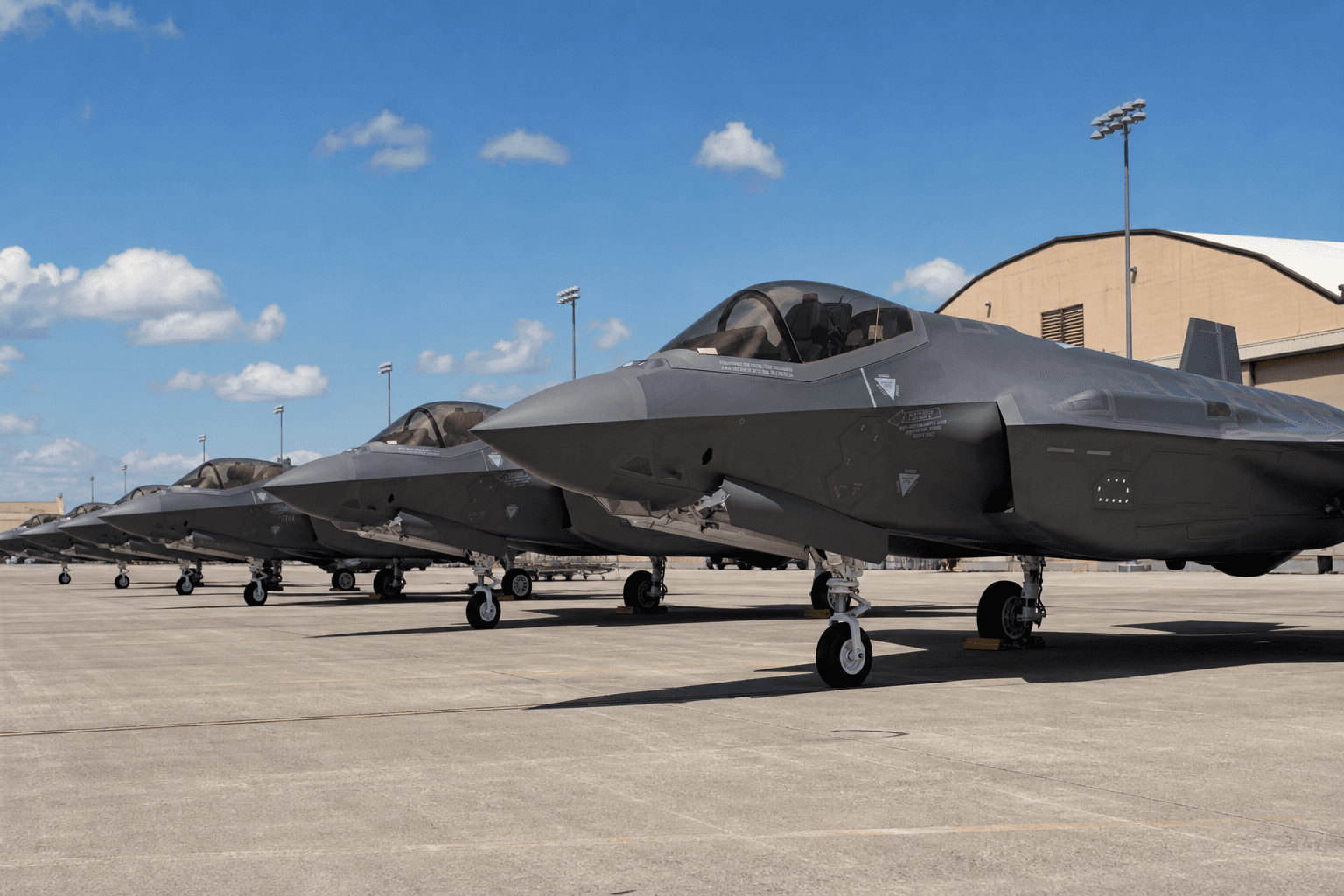
At Least 15 F-35s Delivered Without Required Equipment Since May 2025
Pictured is a U.S. Air Force photo of F-35A fighters at Jacksonville Air National Guard Base, Fla. on July 9, 2025. At least 15 F-35s built in the last year have lacked required equipment, according to a Defense Contract Management Agency (DCMA) list sent to sister publication Defense Daily after a Freedom of Information Act (FOIA) request. On Feb. 7, Defense Daily requested from DCMA a list of all Department of Defense Form DD-250s–Material Inspection and Receiving Reports–filed with the agency since May 2025, for all Lockheed Martin F-35 fighters delivered to the U.S. Air Force, U.S. Navy, and U.S. Marine Corps between May 1, 2025, and Feb. 6, 2026. When a military service accepts a system but does not mark it as delivered because of material shortfalls, that system is "DD-250ed" and is in a not operationally ready-supply (NORS) status until the gaps are filled. The signing of the "receipt"–the DD-250–marks a transfer in ownership from the contractor to the federal government. Nine "DD-250ed" F-35s are on the list provided by DCMA on July 13 in response to the FOIA request–one Marine F-35B to be delivered/ferried to VMFA-533 at Marine Corps Air Station Beaufort, S.C., three Navy F-35Cs to be delivered/ferried to VFA-125, a fleet replacement squadron at Naval Air Station Lemoore, Calif., one F-35A to be delivered/ferried to the 325 th Fighter Wing, a training wing at Tyndall AFB, Fla., and four F-35As to be delivered/ferried to the 125 th Fighter Wing, an Air National Guard domestic air defense wing. Asked why each of the above nine aircraft were "DD-250ed," the F-35 Joint Program Office (JPO) wrote in a July 14 email that "we cannot detail the specific equipment shortfalls, resolution timelines, or variant mix of these aircraft." "Due to program security reasons, we are protecting any additional information with enhanced security measures," according to the JPO. In addition to the above nine aircraft, six Marine Corps F-35s are in NORS status as "DD-250ed." Marine Lt. Gen. Gregory Masiello, the director of the F-35 Joint Program Office (JPO), testified last month that "we have accepted six aircraft for the Marine Corps that do not have a radar installed" because the Marine Corps is awaiting the installation of the Northrop Grumman [NOC] APG-85 radar, which the Pentagon expects to field in the first half of 2028. The APG-85 is critical to the 55 upgrades in the Block 4 program–22 of which have fielded so far, including seven last year, and six on target for this year, according to Masiello. For full functionality, the APG-85 and Block 4 require 62 kilowatts to 80 kilowatts (kW) of cooling versus the 32 kW on the plane now. The current mission capable rate of the F-35 is 56 percent, and the full mission capable rate is 25 percent. Radar mountings in the F-35's nose are different for the current APG-81, also by Northrop Grumman, and the APG-85–a difference which has helped complicate fielding of the new radar that was to deliver with F-35 Lot 17. The Air Force has been considering an APG-81/APG-85 dual-mount bulkhead, though the latter may take two years to field. The service's fiscal 2027 future years defense plan (FYDP) contains $133 million in fiscal 2031 for retrofitting 14 F-35As with APG-85s–a unit cost of $9.5 million per radar, and outside the FYDP the service said it plans to spend about $1.6 billion to retrofit another 167 jets with the APG-85. The first signed DD-250 for an F-35 in Lot 17 was on July 8, 2025, for an F-35A delivered/ferried the next day to the 125th Fighter Wing in Jacksonville, according to the list provided by DCMA in response to the FOIA request. Radar-less F-35s must fly with nose ballast to balance the fighter during flight. Temporarily radar-less fighters are not unprecedented. For example, in the late 1960s, McDonnell Douglas, now part of Boeing, put lead in the nose of the F-4J for the Navy/Marine Corps due to late deliveries of the fighter's government furnished equipment radar by Westinghouse, now part of Northrop Grumman, and in the 1980s, the Panavia Tornado F2 interceptor had so-called "Blue Circle" concrete in the nose due to delays in the development of the fighter's Foxhunter radar by GEC-Marconi, now part of BAE Systems. British Aerospace, Germany's MBB, and Aeritalia built the Panavia Tornado. Those companies are now part of BAE Systems, Airbus, and Leonardo, respectively. A version of this story originally appeared in sister publication Defense Daily .
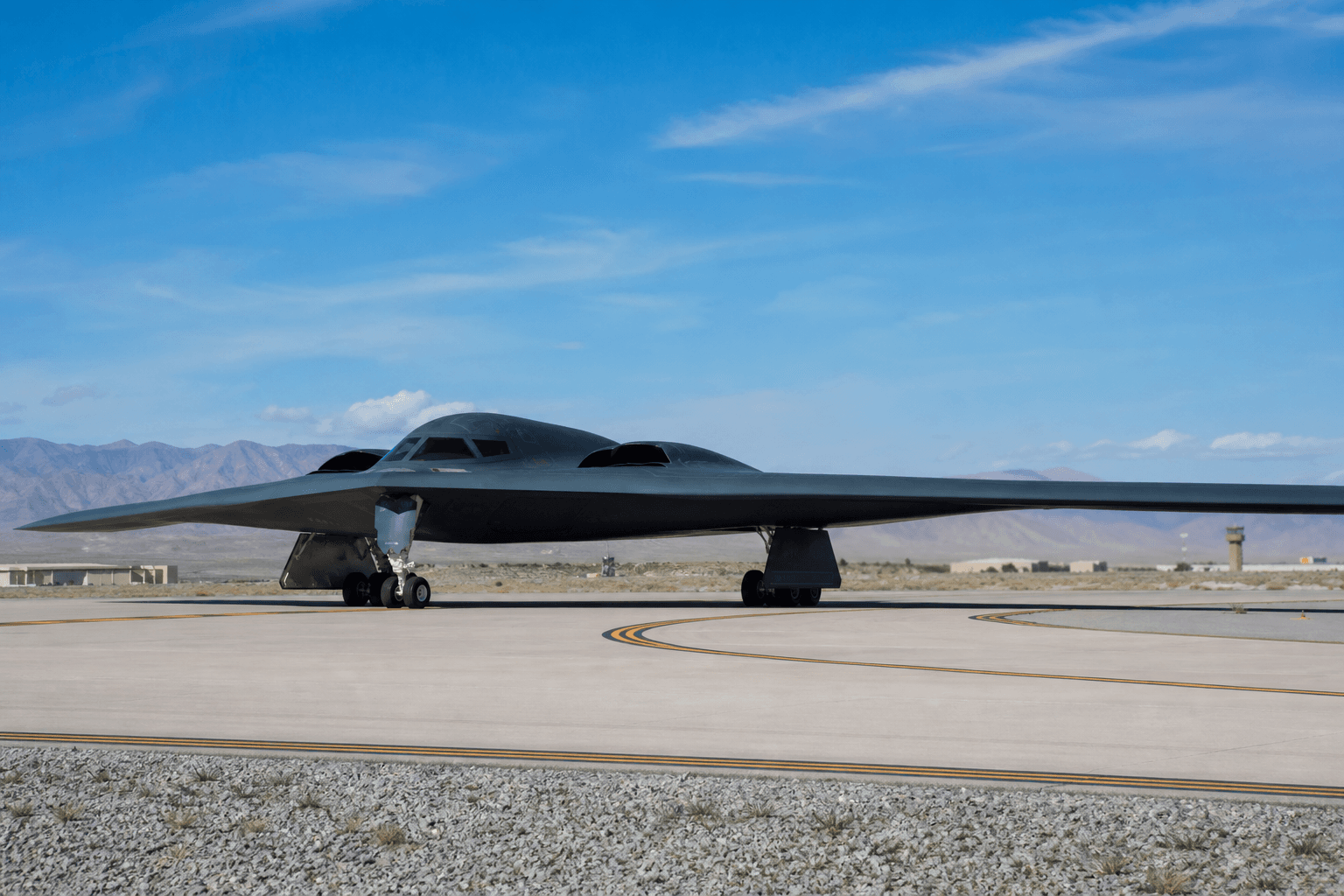
USAF Requests $1.7B to Upgrade B-1 and B-2 as B-21 Raider Production Ramps Up
The Northrop Grumman B-21 Raider program is already underway, and the aircraft is the future of the US military's long-range strike capability. The Raider is set to replace legacy aircraft , such as the B-2 Spirit and the Rockwell International B-1B Lancer. While the B-21 is set for operational service as soon as 2027, it will take time for the United States Air Force (USAF) to receive enough of the aircraft to finally and permanently retire both older bombers.
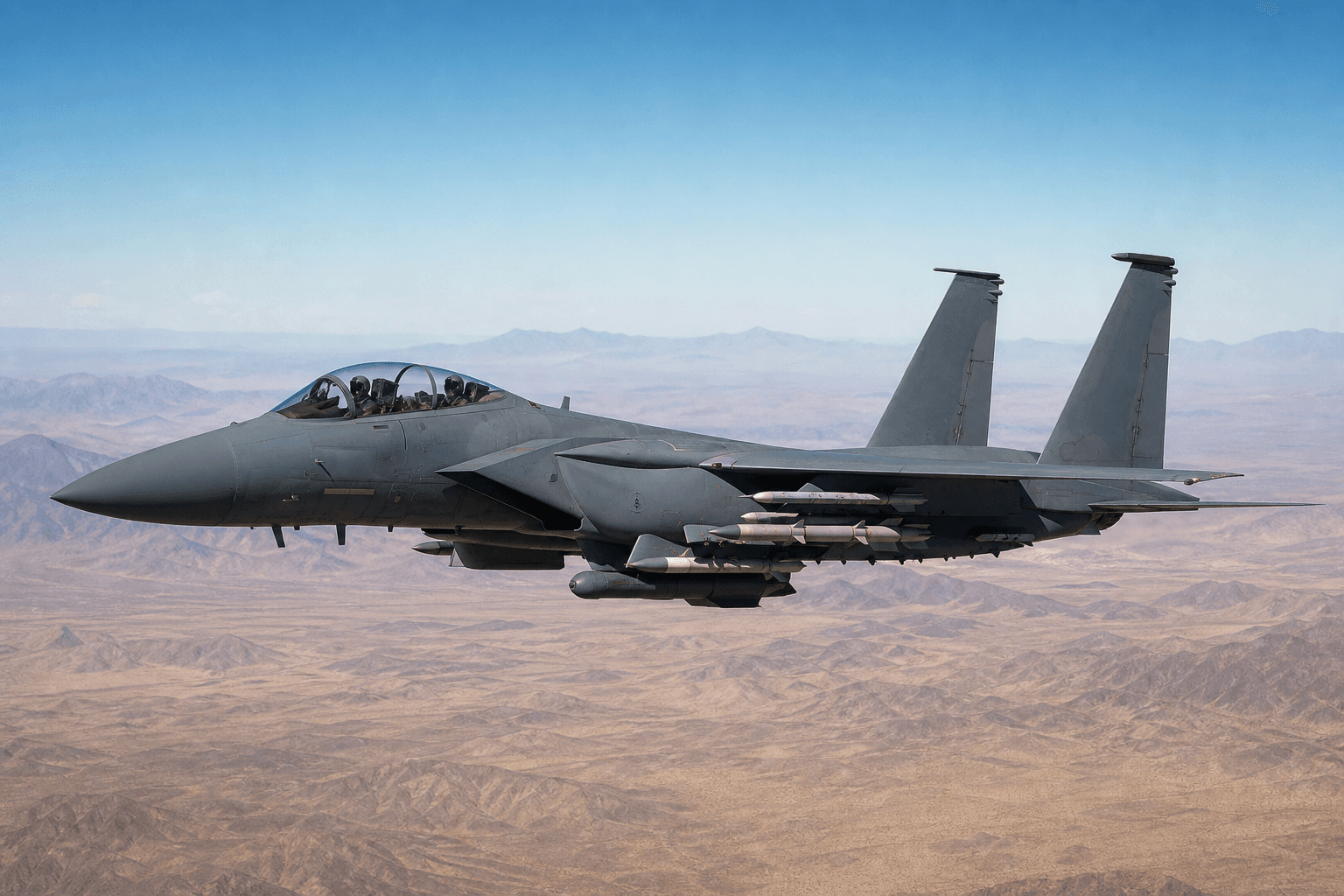
USAF Plans 267 F-15EX Fighters to Complement Growing F-35 Fleet as 'Missile Trucks'
The Lockheed Martin Lightning II fighter jet is the world's most advanced fighter and is taking its place as the second-most in-service fighter jet in the world (depending on how the numbers are counted). At the same time, the Air Force is planning to double the number of F-15EXs it is procuring to 267. Importantly, this is not so much increasing its F-15 fleet as it is intended to recapitalize the aging F-15E fleet as they age out and retire .
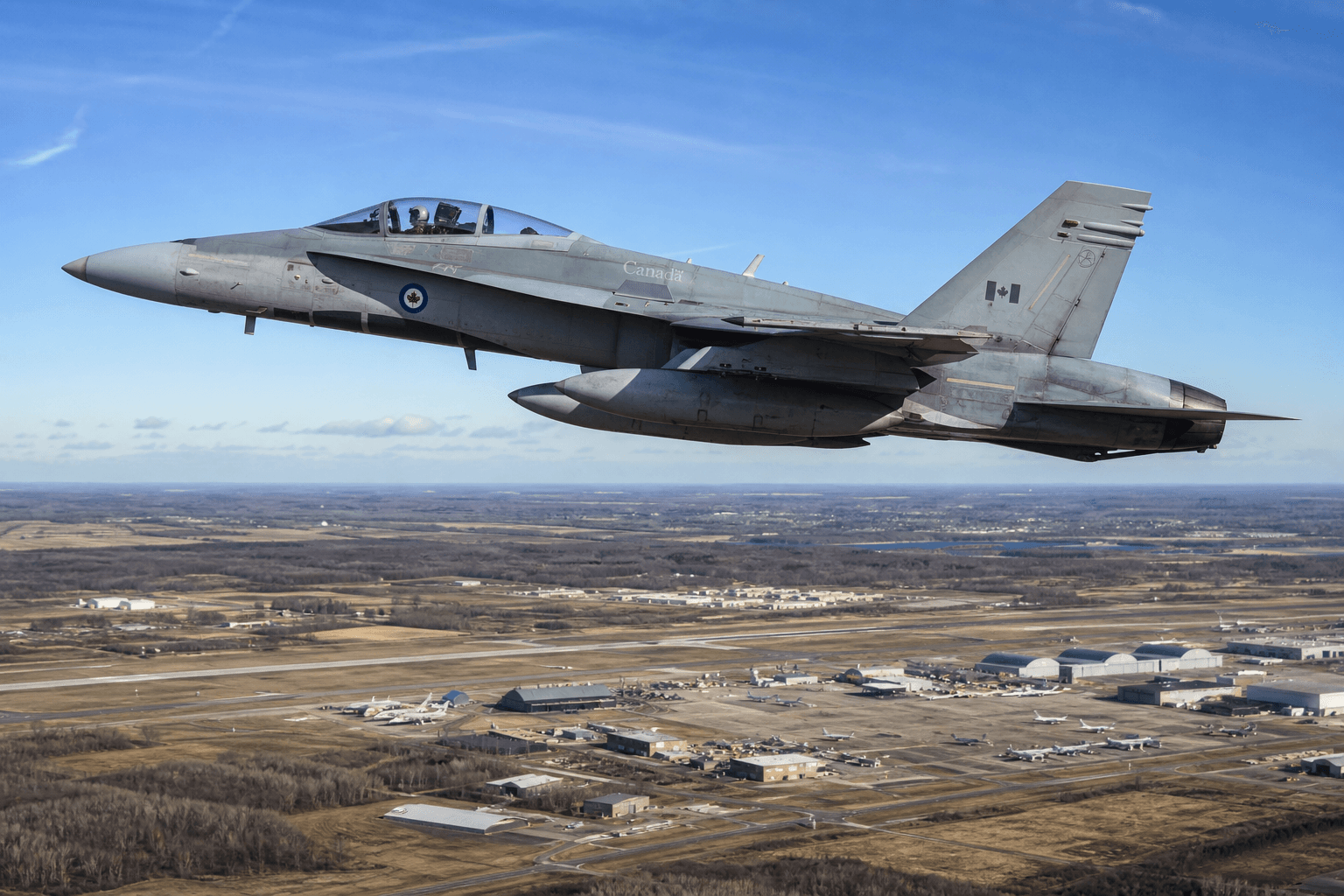
Royal Canadian Air Force Fighter Pilot Salaries Range From 60K to Over 220K CAD Annually in 2026
Fighter pilots are among the most visible faces of the Royal Canadian Air Force, but their compensation is far less than that of a Hollywood superstar, and details on it are easily available to the public. Pay guides are published by the Canadian Armed Forces, with compensation rising with rank and years of service. It is also supplemented by targeted allowances and a robust benefits package built around mobility, readiness, and long careers.
The Daily Touch & Go
The day's best aviation news in your inbox. Free, no spam.