


Illustration: The Touch & Go
Aviation Pioneer Wally Funk Dies at 87, Remembered for Mercury 13 and Spaceflight Legacy
Wally Funk, youngest Mercury 13 astronaut candidate and record-setting space traveler, passed away at 87 in Grapevine, Texas, leaving a storied aviation and space legacy.
The gist
Wally Funk, pioneering female aviator and oldest person to fly into space, has died at 87, closing a groundbreaking chapter in aviation history.
Mary Wallace Funk, known as Wally Funk, a trailblazing figure in aviation and space exploration, died peacefully at her home in Grapevine, Texas, at age 87. As the youngest member of the 1961 Women in Space Program, later dubbed the Mercury 13, Funk was among the first women trained privately as astronaut candidates during an era when NASA’s official astronaut corps consisted solely of men. Despite facing institutional barriers, Funk’s determination and accomplishments left a lasting impact on the aerospace community.
The Women in Space Program was conceived in the early 1960s by physician William Lovelace II and funded by aviation pioneer Jacqueline Cochran, founder of the Women Airforce Service Pilots (WASPs). The program aimed to demonstrate that women could meet the rigorous physical and mental standards required for spaceflight, with Cochran advocating that women’s smaller stature and lower oxygen needs would be advantages in space travel. Although Funk and others underwent the same grueling tests as NASA’s male astronauts, NASA’s astronaut selection ultimately excluded women, stipulating military test pilot experience, a qualification denied to women at the time.
Born February 1, 1939, in Las Vegas, New Mexico, Funk grew up in Taos where her early love for the outdoors and competitive spirit flourished. After a severe skiing injury during college threatened her mobility, Funk defied medical expectations and resumed her education at Stephens College, Missouri, where she discovered aviation through a program that allowed female students to break the prevailing dress codes and male-dominated culture. Flying quickly became a passion that shaped her remarkable career.
Following graduation in 1960, Funk became the youngest female civilian flight instructor at a U.S. military base, breaking gender barriers in a male-dominated field. She earned recognition not only as a pilot but also as the first woman FAA inspector and National Transportation Safety Board air safety investigator, leveraging her expertise to improve aviation safety standards. Her flying experience was expansive, covering civilian and military aircraft alike, and her career was distinguished by both skill and trailblazing leadership.
Funk’s astronaut aspirations, delayed for decades by institutional prejudice, were fulfilled in 2021 when at age 82 she flew aboard Blue Origin’s New Shepard 16 suborbital mission. This flight made her the oldest person to reach space at that time, a record previously held by John Glenn. This milestone offered long-overdue validation of her status as a pioneer in human spaceflight and inspired a new generation of women in aviation and aerospace.
Beyond her professional accomplishments, Funk remained actively engaged with the aviation community. She was a longtime fixture at Women in Aviation International conventions, sharing her expertise on preflight inspections and captivating audiences with her infectious enthusiasm and charisma. Admirers often gathered around her for insights, photographs, and the spirited energy that came to define her presence.
Her passing marks the end of a remarkable life that bridged the early days of space exploration with today’s renewed interest in commercial spaceflight. Wally Funk’s journey from a determined young pilot overcoming adversity to a record-setting space traveler exemplifies perseverance and innovation in aviation history. Her legacy lives on, inspiring countless women to pursue careers in aeronautics and space.
With new opportunities emerging for commercial and governmental space travel, Funk’s story stands as a powerful testament to breaking gender barriers and pursuing dreams despite formidable obstacles. Her contributions not only shaped the course of aviation safety and astronaut training but also highlighted the critical role of inclusion and diversity in aerospace advancements.
Frequently asked questions
- Who was Wally Funk and what is she known for?
- Wally Funk was the youngest member of the Mercury 13 Women in Space program and became a pioneering aviator, later flying into space aboard Blue Origin's New Shepard 16 mission at age 82, setting an age record.
- Why was the Women in Space program shut down in 1961?
- The program ended when NASA required astronaut candidates to be military test pilots, a role closed to women at the time, effectively halting their participation despite completing the same rigorous training.
- What roles did Wally Funk hold in aviation after her astronaut training?
- Funk was the first female FAA inspector, an air safety investigator for the National Transportation Safety Board, and a civilian flight instructor, making significant contributions to aviation safety and training.
Read more
All Aviation Safety →
CoachAir CEO Details Digital Infrastructure Vital for Advancing Advanced Air Mobility
Global Aviation Round-Up from Aircraft Value Intelligence (AVN) Jacob Baumler, founder and CEO of CoachAir. Editor’s Note: This week, John Persinos interviewed Jacob Baumler, founder and CEO of CoachAir , which verifies private charter compliance and protects payments through partner branded infrastructure. The company's work spans Part 135 charter operations, public safety aviation, and advanced air mobility. An influential voice on the intersection of aviation, technology, and regulatory compliance, Jacob advises industry stakeholders on the digital transformation of aviation operations and commerce. John’s questions are in bold. The Federal Aviation Administration (FAA) is steadily laying the groundwork for Advanced Air Mobility (AAM), but commercialization still faces regulatory hurdles. Which compliance or operational bottlenecks do you believe are most underestimated by the industry, and how can technology help overcome them? Much of the conversation surrounding AAM has focused on aircraft certification, propulsion technology, and airspace integration. Those are all critical milestones, but I believe the industry's greatest challenge is creating trust at operational scale. As AAM moves from demonstration flights to thousands of daily commercial operations, every mission must be verified for legality, operational readiness, and regulatory compliance before takeoff. That level of oversight simply cannot rely on manual processes. This realization is one of the reasons we founded CoachAir. We recognized early that AAM would require more than revolutionary aircraft—it would require aviation intelligence that strengthens public safety and operational resilience. CoachAir helps verify the legality of the aircraft, operator, and mission before funds move, then securely manages the transaction from booking through flight completion. By automating verification and creating transparent audit trails, we help operators, regulators, airports, and passengers make decisions with greater confidence. The future of AAM will not simply depend on certifying innovative aircraft. It will depend on building a resilient aviation ecosystem where every commercial flight is safe, legal, transparent, and operationally ready before it ever leaves the ground. As electric Vertical Take-Off and Landing ( eVTOL) operators prepare for commercial service, digital trust will become increasingly important. How do you see automated compliance verification and transaction infrastructure evolving to support high-frequency AAM operations safely and efficiently? As operations become more frequent, trust must become automated. High-frequency AAM cannot depend on disconnected databases, manual document reviews, or fragmented payment systems. Every commercial flight should move through a continuous digital workflow where operational readiness is verified before funds move and every transaction is supported by transparent, auditable records. I believe the industry is moving toward intelligent systems that continuously validate operational requirements while securely managing the entire customer transaction. That includes verifying the legality of the mission, monitoring operational status throughout the flight, and providing complete financial and operational accountability from booking through completion. Automated verification also strengthens operational resilience. By continuously validating compliance and securely managing transactions end to end, operators can adapt to changing conditions while maintaining safety, regulatory integrity, and public confidence. Ultimately, digital trust is not just about efficiency—it is about creating the foundation that allows AAM to scale safely. Many AAM companies have focused heavily on aircraft development, but less attention has been paid to the supporting ecosystem. What pieces of infrastructure, whether regulatory, digital, or operational, need to mature before AAM can scale beyond pilot programs? Every major advancement in aviation has required more than new aircraft. It has required an ecosystem capable of supporting safe, reliable, and scalable operations. AAM will be no different. Beyond certification, the industry needs mature digital infrastructure that connects operators, airports, vertiports, regulators, insurers, financial institutions, and passengers through trusted operational data. Identity verification, compliance monitoring, secure payment systems, maintenance records, operational intelligence, cybersecurity, and standardized data exchange will all become essential components of commercial AAM. CoachAir was built around that vision. Rather than creating another booking platform, we are building aviation intelligence infrastructure that connects stakeholders through trusted verification, secure transaction management, and operational intelligence. That trusted foundation creates a more resilient aviation ecosystem capable of supporting commercial AAM safely, efficiently, and at scale. Part 135 charter operators have decades of experience navigating complex regulatory requirements. What lessons from today's on-demand aviation industry can AAM startups apply as they transition from testing to commercial passenger service? The Part 135 industry has spent decades proving that aviation succeeds through operational discipline. Every flight requires countless decisions involving maintenance, crew qualifications, weather, dispatch, insurance, documentation, and regulatory compliance. Those processes are not barriers to innovation—they are the reason aviation remains one of the safest forms of transportation in the world. AAM startups have an opportunity to build upon those lessons instead of reinventing them. Technology should reduce administrative burden while reinforcing the operational standards and safety culture that aviation has refined over generations. Automation should support experienced operators, not replace their judgment. The companies that successfully balance innovation with disciplined operations, regulatory compliance, and public safety will be the ones that earn long-term trust and lead the industry into its next chapter. Public confidence will ultimately determine how quickly Advanced Air Mobility gains widespread acceptance. Beyond aircraft safety, what role do transparent data, compliance records, and operational intelligence play in building that trust with passengers, regulators, and investors? Public confidence has always been built on transparency. Passengers do not simply trust an aircraft because it is technologically advanced—they trust the systems behind it that ensure every flight meets rigorous operational and regulatory standards. Transparent compliance records, verified operational data, and continuous operational intelligence allow every stakeholder to make informed decisions with confidence. Regulators gain greater oversight. Operators strengthen accountability. Investors reduce operational risk. Passengers gain confidence that safety extends beyond the aircraft itself. At CoachAir, we have summarized that philosophy in three words: Verify Before You Fly. We believe public safety begins long before takeoff. Our trademarked platform verifies the legality of the aircraft, operator, and mission before funds move, then securely manages the transaction from booking through flight completion. Trust should never be assumed—it should be verified. That approach not only strengthens public confidence but also builds the resilience necessary for the next generation of aviation. Looking five years ahead, do you expect the biggest breakthroughs in AAM to come from advances in aircraft technology, regulatory modernization, digital compliance infrastructure, or business models? Which area deserves more attention from investors and policymakers today? Aircraft technology will continue advancing rapidly, and regulators are making meaningful progress toward commercial AAM. However, I believe the most signific
FAA Proposes Replacing 53-Year-Old Ban on Supersonic Flight Over U.S. Land With Noise-Based Rules
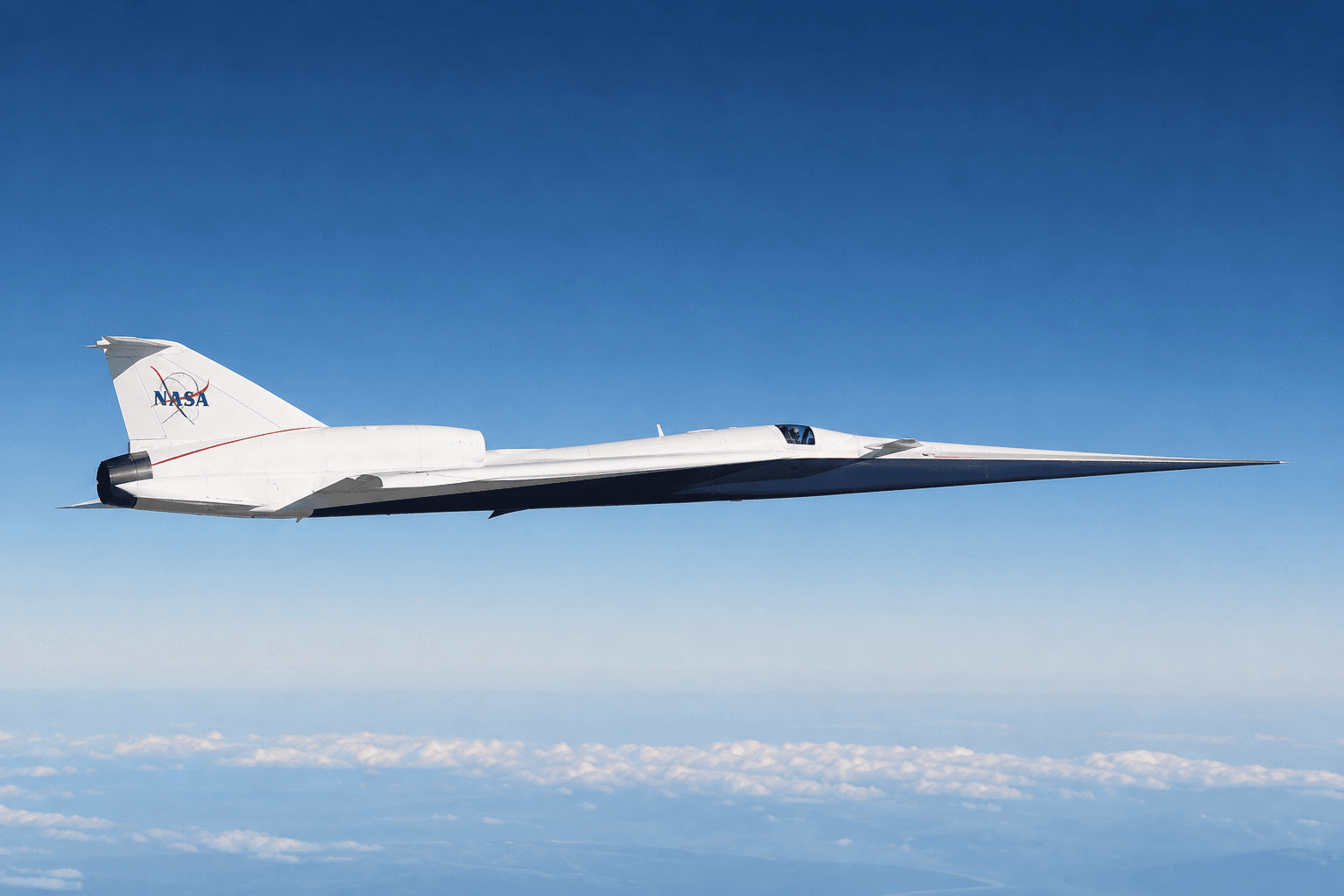
Global Aviation Round-Up from Aircraft Value Intelligence (AVN) A computer rendering of what the United Airlines supersonic aircraft will look like in the future. (Boom Supersonic) Editor's Note: To watch a video version of this article, click here . For 53 years, one federal regulation has stood between Americans and the return of supersonic air travel over the continental United States. That rule, adopted during the Nixon administration, prohibits civilian aircraft from exceeding the speed of sound over land. Now the Federal Aviation Administration (FAA) is preparing to rewrite it. On July 2, the agency published a Notice of Proposed Rulemaking in the Federal Register that would replace the existing speed-based restriction with a performance standard centered on noise. The proposal follows an announcement by the Department of Transportation on June 30 and represents the most significant shift in U.S. supersonic policy in decades. The change reflects a different way of thinking about the problem. Instead of asking whether an aircraft breaks the sound barrier, regulators are asking whether people on the ground are disturbed when it does. That distinction could reshape the future of commercial aviation. For many travelers, supersonic passenger service is synonymous with the Concorde, the sleek Anglo-French jet that cut transatlantic flight times in half. Its future unraveled after the fatal Air France crash near Paris in 2000. Although Concorde briefly returned to service, passenger demand weakened, operating costs climbed, and the aircraft was retired in 2003. Since then, commercial supersonic travel has largely disappeared. Today’s aircraft designers believe the technology has advanced enough to make another attempt. The original U.S. ban grew out of public frustration during the 1960s, when military testing produced frequent sonic booms over populated areas. Residents complained of rattling walls, cracked plaster, broken windows and sudden explosions of noise that interrupted everyday life. Thousands of complaints poured into government offices, convincing regulators that the public cost outweighed the benefit of faster travel. The FAA responded by banning routine civilian supersonic flight over land. With few exceptions, commercial aircraft have remained below Mach 1 across the continental U.S. ever since. Engineering, however, has changed dramatically over the past half-century. Instead of allowing powerful shock waves to merge into the classic sonic boom, engineers have learned how to shape an aircraft so those pressure waves remain dispersed. The resulting sound reaching the ground is significantly weaker than the ear-splitting boom associated with earlier generations of supersonic aircraft. The FAA’s proposal reflects those advances. Under the draft rule, future aircraft would have to meet a strict ground-level overpressure limit of 0.11 pounds per square foot. While the measurement is technical, the practical goal is straightforward: produce a sound that resembles a soft thump rather than the explosive crack historically associated with breaking the sound barrier. NASA’s Supersonic Experiment The proposed rule arrives as NASA continues work on one of its most ambitious experimental aircraft. The X-59 Quiet SuperSonic Technology (QueSST) demonstrator hardly resembles a conventional jet. Its unusually long, narrow nose and carefully sculpted airframe were designed with a single objective: reducing the intensity of sonic booms before they reach people on the ground. The aircraft recently completed another important step in its flight-test program, reaching Mach 1.4 at roughly 55,000 feet. Engineers view the milestone as another indication that the research program is progressing as expected. The most important testing, however, won’t focus on speed alone. NASA plans to fly the X-59 over selected U.S. communities while researchers gather feedback from residents who experience its sound signature. Beyond measuring decibel levels, scientists want to understand how people actually react. Does the sound surprise them? Is it annoying? Or is it mild enough to blend into the background of everyday life? Those public-response studies could prove pivotal. If communities consistently report that the aircraft produces little more than a brief, unobtrusive noise, regulators would have stronger evidence that quiet supersonic operations can safely coexist with populated areas. The research is expected to influence not only future FAA decisions but also international standards governing commercial supersonic aviation. The stakes extend well beyond NASA. Several aerospace manufacturers are investing heavily in next-generation supersonic airliners designed to shorten travel times between major cities. Because of the current U.S. ban, most development plans have centered on transoceanic routes where aircraft can legally accelerate beyond Mach 1. A new regulatory framework would dramatically broaden those possibilities. Flights that now consume most of a business day could eventually take only a few hours. A traveler leaving New York in the morning could conduct afternoon meetings in Los Angeles and return home that evening. Commercial service remains years away, but for the first time in decades, the regulatory landscape appears to be moving in the same direction as the technology. The proposal also provides something the aerospace industry values almost as much as technical innovation: regulatory certainty. Designing, certifying and manufacturing an entirely new generation of commercial aircraft requires billions of dollars and years of development. A clearer path through the approval process reduces investment risk, giving manufacturers and their financial backers greater confidence that quiet supersonic flight could become a viable commercial business rather than an engineering experiment. John Persinos is the editor-in-chief of Aircraft Value Intelligence .

Garmin Launches Axis Flight Displays Tailored for Certified Piston Aircraft
Garmin on Wednesday unveiled a new family of flight displays designed for piston-powered aircraft called Axis . Axis is designed to work with certified piston-powered singles and twins though an AML STC (Approved Model List Supplemental Type Certificate) covering hundreds of models. The integrated avionics system is also available for experimental and light sport aircraft. Axis is designed for maximum safety and efficiency, according to Garmin. The flight displays can include a built-in IFR GPS, nav/comm radio, and audio panel capability, which reduces aircraft weight and simplifies installation. Axis is compatible with many of the same navigators, radios, modules, and sensors as Garmin's popular G3X Touch flight displays, and features an easy upgrade path, using the same panel cutouts and mounting points. READ MORE: Garmin Opens Mesa Gateway Location READ MORE: Garmin's Autoland Passes First Real-World Test "Axis redefines Garmin's flight display portfolio and brings industry-first capability to a single flight display," said Carl Wolf, Garmin vice president of aviation sales, marketing, programs and support, in a news release. "This game-changing flight display system delivers a modern, highly capable cockpit experience while significantly reducing time, complexity and cost of installation through integration of navigation, communication, and audio functions into a single flight display. The visual design elements and crisp user interface bring together decades of Garmin innovation in a familiar yet modern design. "Axis sets the new standard for what pilots can expect from an integrated flight display system." Axis Family Since there is no such thing as a standard panel, the Axis displays come in multiple sizes— 11.6-inch landscape, 8-inch portrait, and 8-inch landscape. Each includes highly responsive touchscreen displays as well as physical controls for quick access to key functions. Garmin has a well-earned reputation for safety-minded innovation. Axis incorporates the company's Smart Glide, Runway Occupancy Awareness (ROA), and optional SurfaceWatch runway monitoring technology to help pilots manage emergencies and reduce risk. Designed to simplify avionics upgrades and reduce installation costs, Axis offers a streamlined upgrade path from G3X Touch, leveraging many of the same sensors, modules, panel cutouts, and mounting points while integrating multiple avionics functions into one display. According to Garmin, the Axis 11.6-inch flight displays have achieved FAA/EASA Technical Standard Order (TSO) and will be available in July. The 8-inch displays are expected to be available in early 2027. The FAA STC will cover hundreds of models of certified Part 23 Class I/II piston singles and twins. Each display can be configured as a primary flight display (PFD) or multi-function display (MFD) with an optional engine indication system (EIS). The displays can be kept full screen or appear split screen, depending on what the pilot wants.The flight displays are configurable for both experimental as well as certified aircraft. The Axis 11.6 is available with a TSO-certified IFR GPS, comm radio, nav radio, and audio panel all built into a single unit. The VHF comm radio offers 10 watts of transmit power, supports 8.33 kHz frequency tuning and standby comm monitoring. This enables pilots to monitor a standby frequency while staying tuned to the active ATC frequency. The built-in, four-place intercom audio panel includes dual-comm switching with support for one external radio, comm playback, and Bluetooth capability for music and phone calls. The Axis 11.6 is available in three certified variants. The base version offers a PFD/MFD, while the GPS/comm and GPS/nav/comm models include an IFR GPS and integrated audio panel. Experimental and LSA aircraft can leverage both certified and non-TSO versions of the 11.6-inch displays. The unit offers enhanced situational awareness on the PFD, including primary flight data, as well as the horizontal situation indicator (HSI), which can include an embedded map or traffic view, depending on pilot preference. Widgets provide additional situational awareness on the PFD by displaying three compact views of MFD functions, including map, flight plan, weather, and traffic. Enhanced Synthetic Vision Technology (SVT) provides 3D depictions of terrain, obstacles, runway and taxiway markings, allowing for pilots to more clearly interpret their surroundings. Pathway rectangles will help pilots to visualize the highway in the sky, depicting their flight path, including en route legs, flight track, and course intercepts. 3D SafeTaxi provides pilots with a three-dimensional, exocentric view of the airport environment directly on the PFD. This provides a clear, localized picture of taxiways, runways, hangars, and surrounding buildings, helping the pilot who is unfamiliar with the airport avoid confusion. The MFD features dynamic mapping, ADS-B traffic, weather, waypoint information, including terminal charts and an expanded Electronic Instrument System (EIS). Additionally, an HDMI video input on each display allows for live-camera video monitoring. A dedicated emergency button is located on the display bezel, allowing pilots to quickly access emergency procedure options such as the activation of Smart Glide in the event of an uncommanded loss of engine power. SmartGilde efficiently navigates to an airport within range. If the aircraft is equipped with either a Garmin GFC 500 or GFC 600 autopilot, the system can auto-engage to fly the aircraft en route. Axis also comes with advanced engine monitoring. The EIS (Engine Information System) uses large, prominent engine gauges with color-coded pointers and data bands that indicate normal operating ranges, cautions and exceedances. Bar gauges display numerical values for additional precision. With an interface adapter and sensors, Axis can serve as the primary EIS display in piston-powered aircraft equipped with most normally aspirated or turbocharged 4- to 6-cylinder engines, plus radial and turbine-powered experimental aircraft . After landing this information can be automatically uploaded to flyGarmin.com via the Garmin Pilot app or the GDL 60 datalink and PlaneSync service. Pilots can optionally choose to share these logs with analysis services such as FlySto or SavvyAviation to gain deeper insights on engine health, maintenance updates, flight analysis, and more. You can stay connected both socially and with aviation weather services while you fly, as Axis has built-in Wi-Fi and Bluetooth to allow pilots to connect with Garmin Pilot in flight as well as share GPS, traffic, weather, and flight plans. A built-in USB-C data port supports data transfer capabilities like downloading databases and offloading flight logs. The USB-C port will also support device charging up to 27 watts. Additionally, Database Concierge allows pilots to download updates to their Garmin Pilot app and wirelessly transfer to their compatible avionics via a compatible mobile device. Axis and CubCrafters CubCrafters, the makers of rugged backcountry aircraft, announced it is one of the first companies to incorporate Garmin's Axis integrated flight display system into its aircraft. According to Brad Damm, CubCrafters vice president, the Axis lineup can be added to both for factory-new aircraft and those that come in for a retrofit. In a news release Damm noted the collaboration took 18 months of engineering to make the advanced technology available to CubCrafters pilots.

Dan-Air Flight 1008 Crashes Into Tenerife Mountain Killing All 146 Onboard
On 25 April 1980, tragedy struck one of Britain’s best-known independent airlines when a Dan-Air London Boeing 727 crashed into a mountainside while approaching Tenerife in the Canary Islands. The loss of Flight 1008 claimed the lives of all 146 passengers and crew on board, making it the deadliest accident in Dan-Air’s history and one of the worst aviation disasters involving a British airline at the time. A Holiday Flight to Tenerife The accident aircraft. Photo: Rob Hodgkins Dan-Air Flight 1008 was a charter service from Manchester to Tenerife North Airport (then known as Los Rodeos), carrying 138 holidaymakers and eight crew aboard a Boeing 727-46 registered G-BDAN. Built in 1966, the trijet had joined Dan-Air’s fleet in 1974 after earlier service in the United States. By 1980 it had accumulated more than 30,000 flying hours and was one of several Boeing 727s that had joined the airline. The flight across the Bay of Biscay and into the Canary Islands was routine. Weather around Tenerife, however, was less forgiving. Low cloud obscured the mountainous interior of the island, requiring aircraft to rely entirely on instrument procedures during their approach. Confusion During the Approach As Flight 1008 neared Tenerife North, it was sequenced behind a slower Iberia aircraft. Air traffic control instructed the Dan-Air crew to enter a holding pattern near the airport before commencing their approach. The problem was that this was not one of the published holding procedures available on the crew’s approach charts. Although the instructions were acknowledged, ambiguity over exactly how the hold should be flown soon led to a fatal navigational error. Instead of remaining clear of the island’s mountainous terrain, the Boeing 727 drifted towards high ground while descending. Unaware of the developing danger, the aircraft continued descending after being cleared to 5,000 feet—an altitude that was safe for the intended procedure, but not for the path the aircraft had actually taken. A Desperate Final Attempt Moments later, the Ground Proximity Warning System (GPWS) sounded, warning the crew that terrain lay directly ahead. The pilots immediately applied full power and attempted to climb away from danger. However, believing they were in a different position to where they actually were, the captain initiated a steep right turn. At 13:21 local time, the Boeing 727 struck the forested slopes of Mount La Esperanza while still in cloud. The aircraft broke apart on impact and was destroyed. There were no survivors. What Caused the Crash? The official Spanish investigation concluded that the accident was a classic example of Controlled Flight Into Terrain (CFIT), where an aircraft under full control is inadvertently flown into the ground. Investigators determined that the flight crew had incorrectly interpreted the unpublished holding procedure and descended into an area where the minimum safe altitude was far higher than the altitude they had been cleared to fly. However, the subsequent British conclusion to the investigation painted a more complex picture. It found that the instructions issued by air traffic control had been ambiguous and that the unpublished holding pattern itself was unsuitable for a Boeing 727 to fly accurately. The report also concluded that the aircraft should never have been cleared below 7,000 feet while operating in that area, noting that the assigned altitude of 5,000 feet left no safe terrain clearance. Rather than blaming a single error, the investigation highlighted how misunderstandings, unclear procedures and inadequate terrain protection combined to produce a catastrophe. Dan-Air’s Darkest Day The accident was a devastating blow for Dan-Air London. Founded in 1953, the airline had built an excellent reputation operating inclusive-tour charters, scheduled services and ad hoc flights across Europe. Its fleet of Comets, HS.748s, One-Elevens, 727s and later 737s became a familiar sight at British regional airports throughout the 1970s and 1980s. Although the airline continued to grow following the accident, Flight 1008 remained its worst-ever disaster involving fare-paying passengers. Dan-Air would eventually be acquired by British Airways in 1992, bringing one of Britain’s best-loved independent airlines to an end. Remembering Flight 1008 Dan Air 1008 Memorial in Manchester. Plucas58, CC BY-SA 4.0 <https://creativecommons.org/licenses/by-sa/4.0>, via Wikimedia Commons Today, more than four decades later, Flight 1008 is sometimes overshadowed by the far more widely known Tenerife Airport Disaster of 1977, which also occurred at Tenerife North Airport. Yet the accident remains a significant event in British aviation history. It reinforced the importance of clearly published instrument procedures, unambiguous air traffic control phraseology and maintaining safe terrain clearance at all times during instrument approaches. For those who remember seeing Dan-Air’s Boeing 727s arriving at airports around Britain, Flight 1008 also serves as a poignant reminder of an airline that played an important role in UK aviation—and of the 146 people whose holiday ended in tragedy on the slopes of Tenerife. Boeing 727 Special For more content on the classic Boeing 727 trijet airliner, Airport Spotting Premium members have access to the special edition July 2026 magazine packed full of articles and info. For this, and all the other content that comes with a Premium membership, you can sign up here . Title image: clipperarctic, CC BY-SA 2.0 <https://creativecommons.org/licenses/by-sa/2.0>, via Wikimedia Commons
The Daily Touch & Go
The day's best aviation news in your inbox. Free, no spam.