

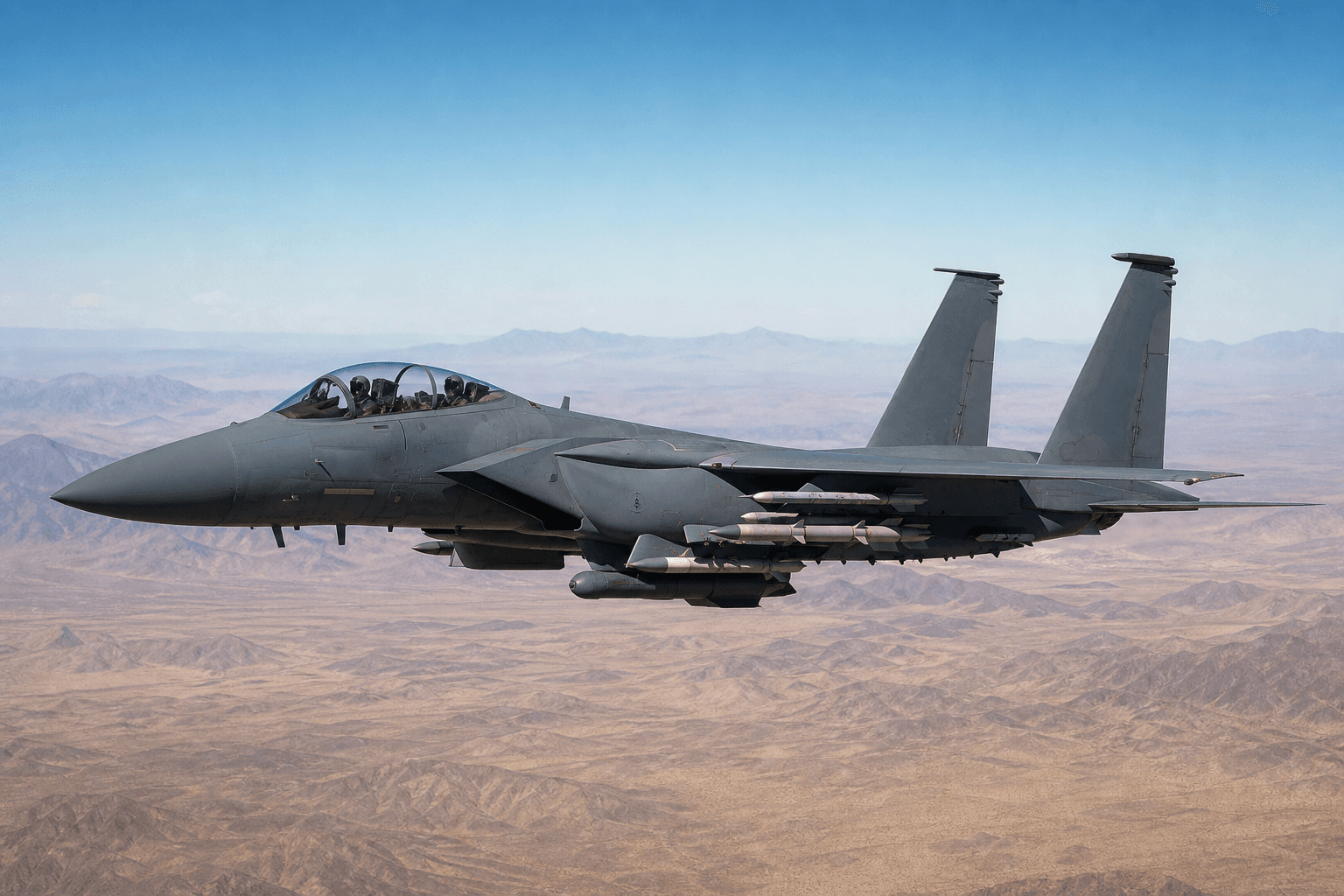
Illustration: The Touch & Go
USAF Plans 267 F-15EX Fighters to Complement Growing F-35 Fleet as 'Missile Trucks'
The US Air Force intends to expand its F-15EX fleet to 267 to supplement its stealthy F-35 jets with heavier missile firepower for future conflicts.
The gist
The USAF doubles F-15EX orders to 267 to pair with F-35s, leveraging large missile capacity alongside stealth capabilities.
Continuing coverage
All Fighter Jets →- How the F-22's F119 Engine Overcame Long-Standing Fighter Jet Engine Trade-Offs
- Cathay Pacific A350 Intercepted by NATO Jets After Radio Silence Over Europe
- Saab inks $2.5B deal to deliver 16 Gripen E fighters to Ukraine by 2030
- US Marine F-35B Pilots Leaving for Airlines Offering Pay Nearly Double
- Thermal Management Emerges as Critical Challenge for 6th-Generation Fighter Jets
The United States Air Force is increasing its procurement of the Boeing F-15EX fighter jet to 267 units, aiming to counterbalance its expanding Lockheed Martin F-35 Lightning II stealth fighter fleet. This decision is part of a strategic plan to replace aging F-15E Strike Eagles with advanced, modernized versions that can carry a larger missile payload into operations alongside the stealthier F-35s. The F-35 continues to be the centerpiece of USAF fighter capability, but the F-15EX is filling a critical ‘missile truck’ role due to its heavy payload capacity and lower stealth profile.
Since entering service in 2016, the F-35A has been lauded for its advanced sensor suite and stealth features, designed to penetrate contested enemy airspace and destroy high-value targets, including air defense systems. The F-35’s stealth and integrated computing systems essentially enable it to act as a flying command platform, gathering intelligence and directing operations. However, its internal weapons bays limit the amount of ordnance it can carry internally, which can constrain mission profiles requiring large missile volumes.
The F-15EX, introduced in 2024, is an upgraded version of the venerable F-15 air superiority fighter line. Although it maintains the familiar airframe, the F-15EX features state-of-the-art avionics and can carry substantially more weapons externally than the F-35 can internally. Notably, the F-15EX can carry up to 12 air-to-air missiles and has a total weapons payload capacity of 29,500 lbs, exceeding the F-35’s 18,000 lbs capacity which is constrained to 5,700 lbs within its internal bays.
By roughly doubling the planned order for the F-15EX to 267 jets, USAF planners are reinforcing a high-low mix strategy. In this approach, stealthy F-35s act as the spearhead, penetrating and suppressing sophisticated enemy air defenses, while F-15EXs stand back from heavily contested zones to execute massed missile attacks on targets detected and designated by the F-35’s sensors. This approach leverages the respective strengths of both aircraft to maintain air superiority and provide flexibility in combat.
This tandem has been likened to a quarterback and a strong target enforcer. The F-35 provides high-level situational awareness and targeting data, while the F-15EX delivers large quantities of missiles to saturate air defense networks or engage multiple threat vectors such as drones and cruise missiles. This use of legacy 4th-generation fighters alongside 5th-generation stealth jets follows patterns seen in allied forces, such as the UK pairing the F-35 with Eurofighter Typhoons.
Operational experience has shown the importance of missile quantity in air combat. For example, during air operations against Iranian networks in 2024 and 2025, stealth aircraft like the F-35 played key roles in disabling advanced air defenses. However, the ability to swarm targets using large volumes of missile fire remains vital. The F-15EX’s capacity to carry externally mounted weapons without stealth trade-offs enables it to fulfill this role effectively in less contested airspace.
In terms of overall force structure, while the USAF plans for 267 F-15EXs, the number of F-35As under acquisition is significantly higher at 1,763 units, confirming the latter remains the backbone of future air combat capabilities. Additionally, the Air Force is developing loyal wingman unmanned aircraft systems, known as Collaborative Combat Aircraft, designed to operate alongside F-35s, further enhancing its combat network.
The growing F-15EX fleet also serves an industrial purpose by sustaining production lines and corporate expertise while legacy F-15Es retire. Ultimately, this expansion supports the USAF’s broader aim to counter emerging threats, notably from China, which produces a comparable number of frontline fighter jets, and to maintain dominance in air superiority missions by combining stealth, sensor fusion, and high-volume missile delivery.
Frequently asked questions
- Why is the US Air Force increasing its F-15EX fighter jet purchases?
- The USAF is increasing F-15EX orders to 267 to recapitalize its aging F-15E fleet and to deploy these aircraft as missile trucks paired with F-35 stealth fighters.
- How does the F-15EX complement the F-35 in US Air Force operations?
- The F-15EX carries a large missile load externally and operates farther from contested airspace, while the F-35 uses stealth and sensors to penetrate defenses and direct attacks, providing targeting data to the F-15EX.
- What are the payload differences between the F-15EX and F-35?
- The F-15EX can carry up to 29,500 lbs of weapons with 12 air-to-air missiles, whereas the F-35A has an 18,000 lbs payload but can only carry about 5,700 lbs internally, limiting missile numbers to usually six or fewer without external stores.
Read more
All Military/Defense →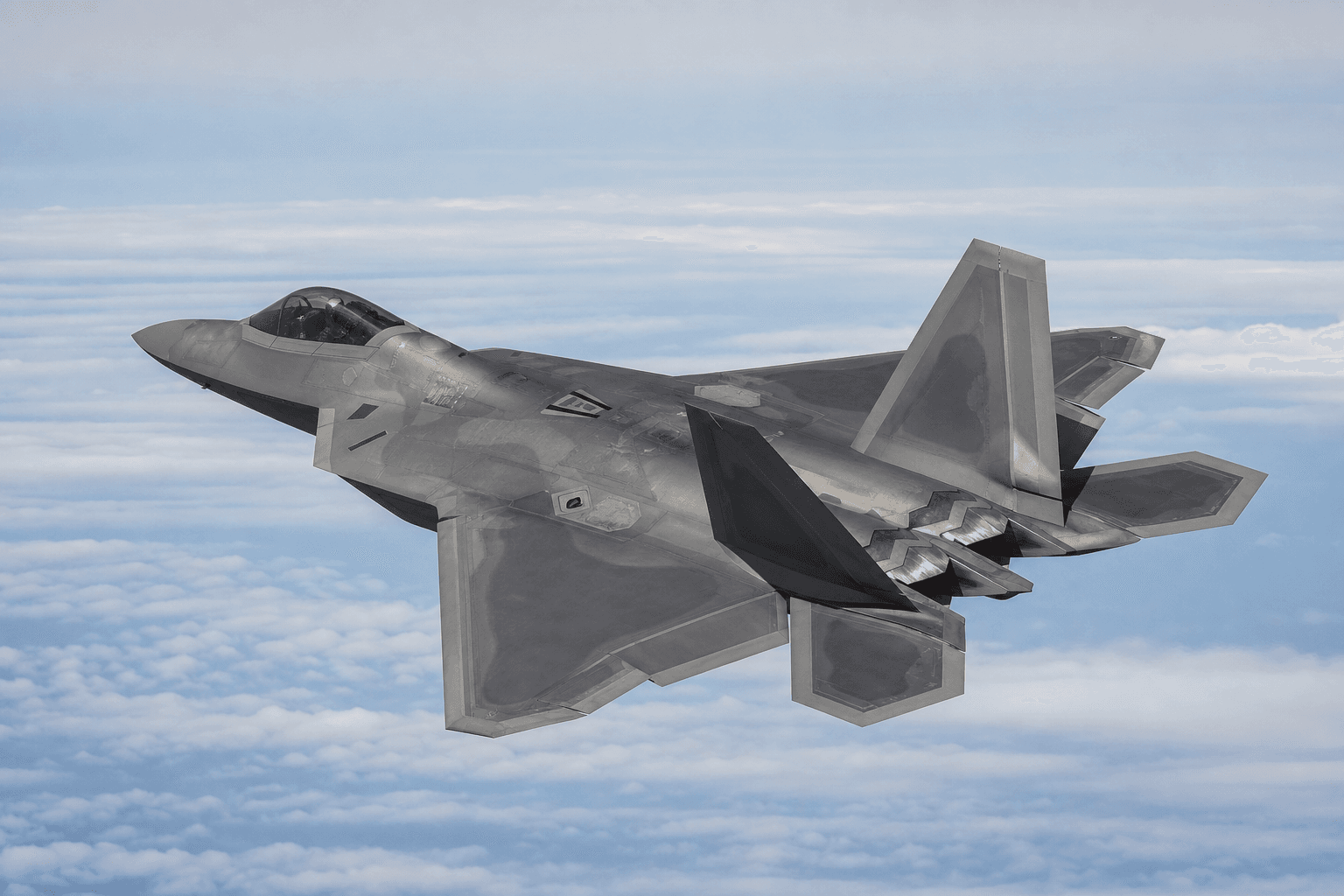
How the F-22's F119 Engine Overcame Long-Standing Fighter Jet Engine Trade-Offs
The Lockheed Martin F-22 Raptor was built as a generational leap over the existing F-15 Eagle. The F-15 Eagle was designed as an air superiority fighter , but by the 1980s, the Air Force felt it might not have the "unfair" advantage that they wanted, as the Soviet Union developed the Su-27 and MiG-29. The F-22 was initially designed as a late Cold War effort to overmatch any fighter jets the Soviets could field.
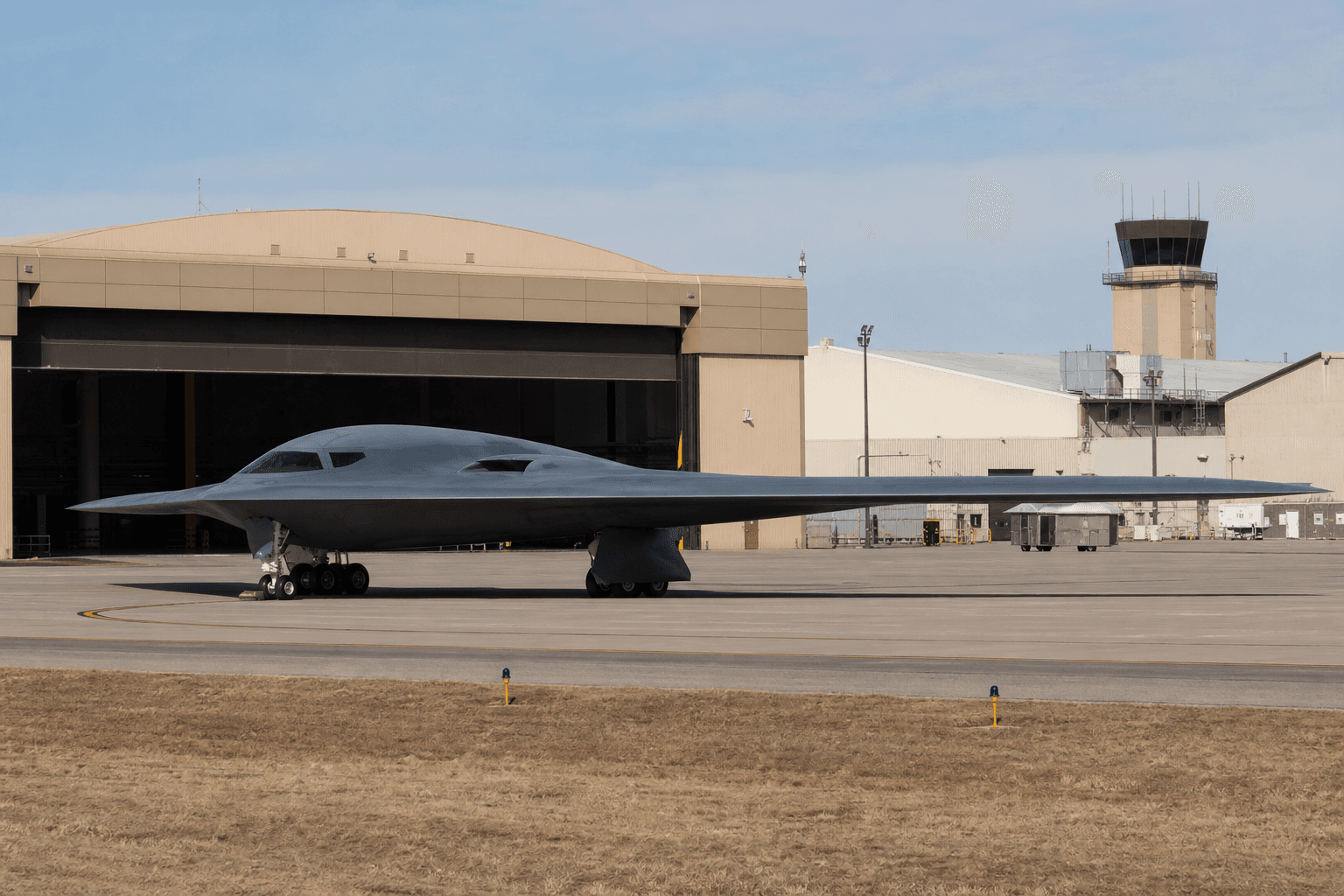
USAF Commits $2B to Prepare Ellsworth AFB as First Operational B-21 Raider Base
Ellsworth Air Force Base (RCA) was selected to be the first main operating base of the Northrop Grumman B-21 Raider. Located in South Dakota, the base has been home to the Rockwell B-1B Lancer, a supersonic swing-wing bomber. Although the B-21 is a less delicate plane than the NG B-2 Spirit, rebuilding the base in order to prepare for its first stealth aircraft comes at a cost of nearly $2 billion to taxpayers .
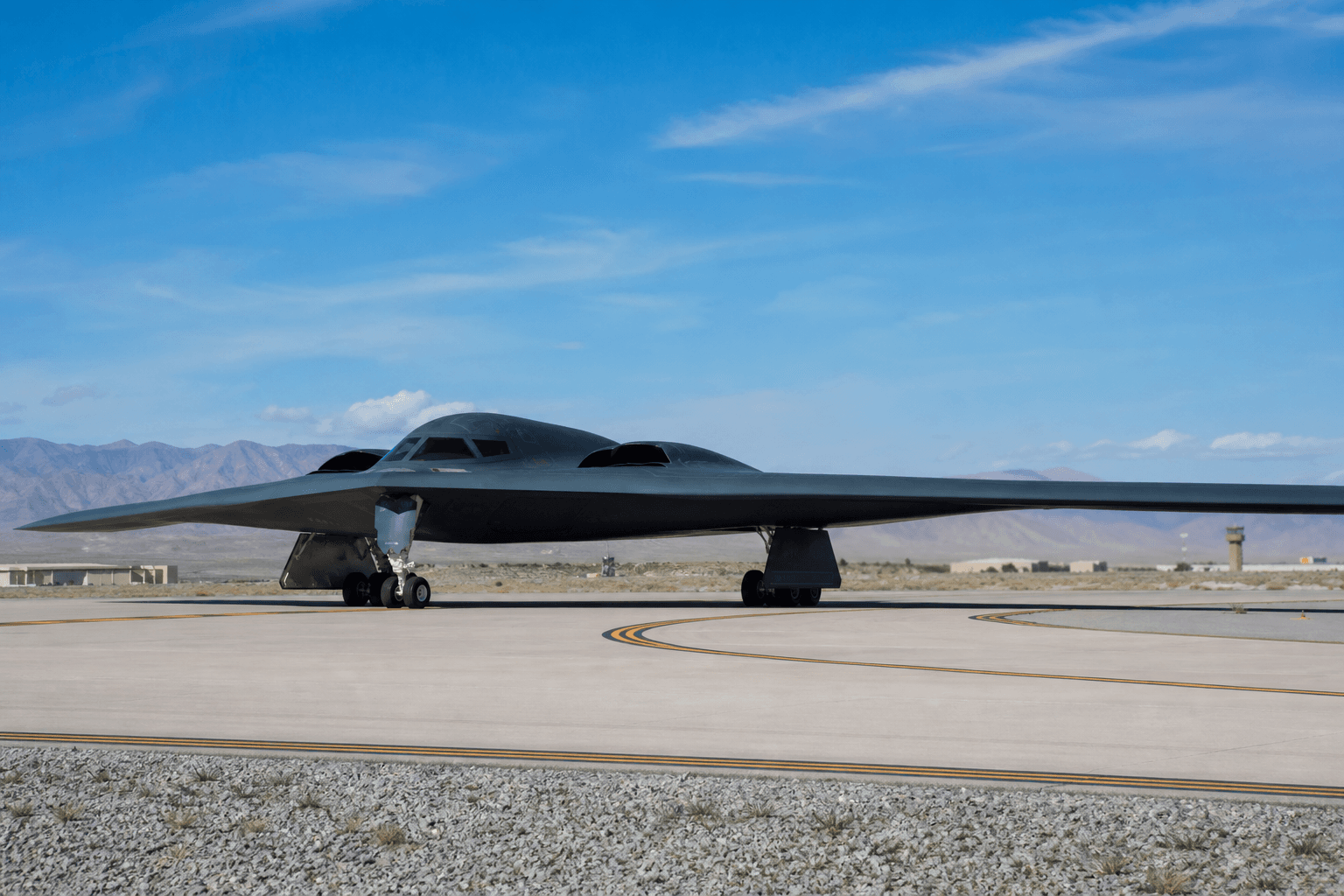
USAF Requests $1.7B to Upgrade B-1 and B-2 as B-21 Raider Production Ramps Up
The Northrop Grumman B-21 Raider program is already underway, and the aircraft is the future of the US military's long-range strike capability. The Raider is set to replace legacy aircraft , such as the B-2 Spirit and the Rockwell International B-1B Lancer. While the B-21 is set for operational service as soon as 2027, it will take time for the United States Air Force (USAF) to receive enough of the aircraft to finally and permanently retire both older bombers.
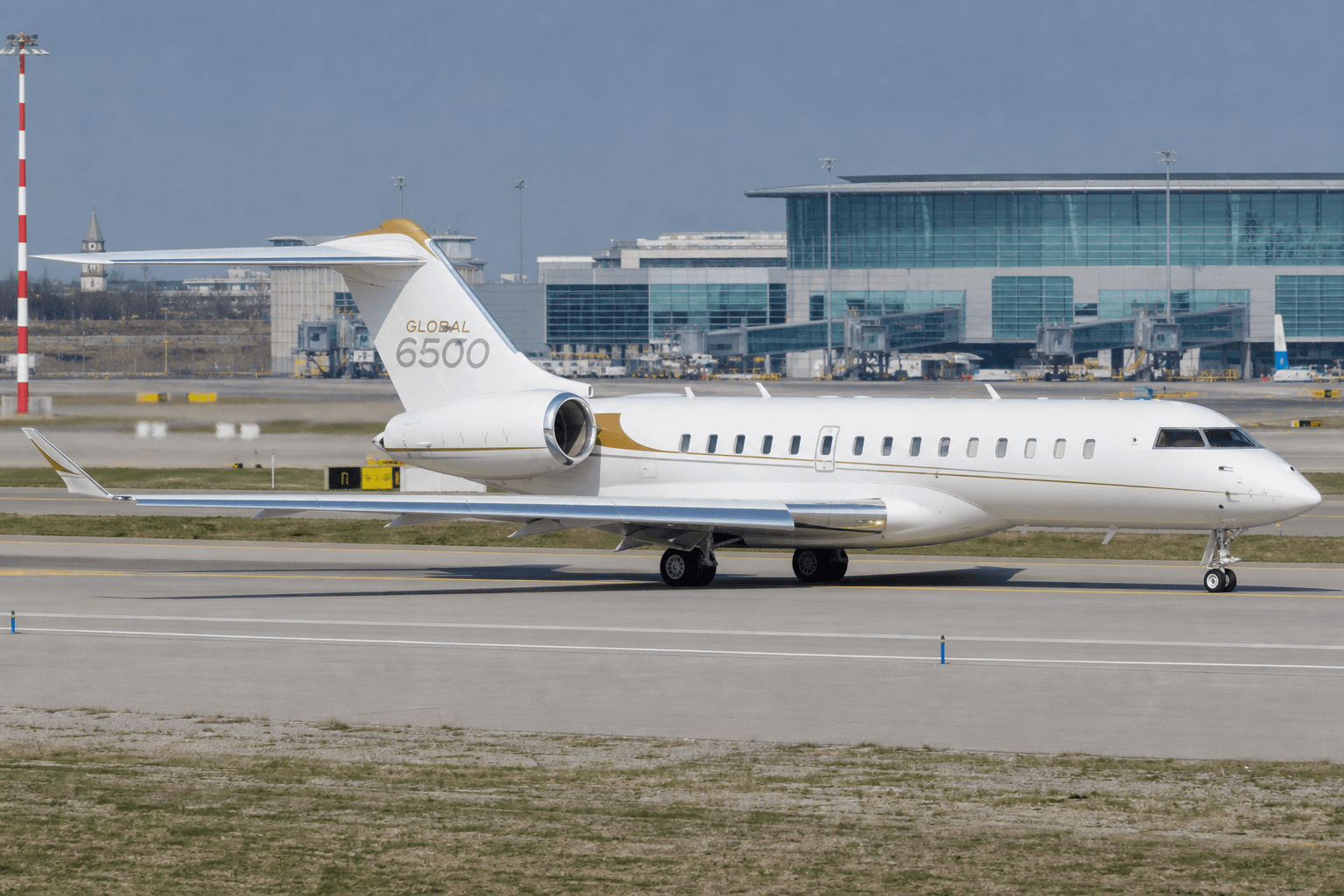
South Korea selects Bombardier Global 6500 jets for new electronic warfare fleet
South Korea has selected the Bombardier Global 6500 as the platform for a new pair of electronic warfare aircraft. Korean Air will purchase two Global 6500 business jets from Bombardier for conversion under South Korea's stand-off electronic warfare program, the Canadian manufacturer announced on July 14, 2026. The aircraft will be equipped to disrupt enemy radar, communications and other electronic signals while operating beyond the immediate reach of air and ground threats. Bombardier worked with Korean Air and South Korean defense company LIG Nex1 on the winning proposal. The companies marked the agreement during a signing ceremony in Seoul. Bombardier did not disclose the contract value, delivery schedule or details of the electronic warfare equipment that will be installed aboard the aircraft. "The Global 6500 aircraft is in demand around the world because of its performance and versatility," said Michael Anckner, Vice President of Worldwide Sales at Bombardier Defense. South Korea has now selected the Global 6500 for two separate special-mission aircraft programs. The country previously chose four Global 6500s for an airborne early warning and control fleet led by L3Harris. Those aircraft will carry sensors and mission systems used to monitor the airspace and direct military operations. The latest pair of aircraft will perform electronic attack missions, giving South Korea a planned fleet of six Global 6500-based military aircraft across the two programs. The Global 6500 is powered by two Rolls-Royce Pearl 15 engines. Its range, high-altitude performance and large cabin allow military customers to install sensors, operator consoles and communications equipment without developing a new aircraft from scratch. The business jet has attracted growing interest for surveillance, command-and-control and electronic warfare missions. The US Army also selected the Global 6500 for its High Accuracy Detection and Exploitation System, or HADES, intelligence and surveillance program. Bombardier delivered the first aircraft for that effort in 2024.
The Daily Touch & Go
The day's best aviation news in your inbox. Free, no spam.