

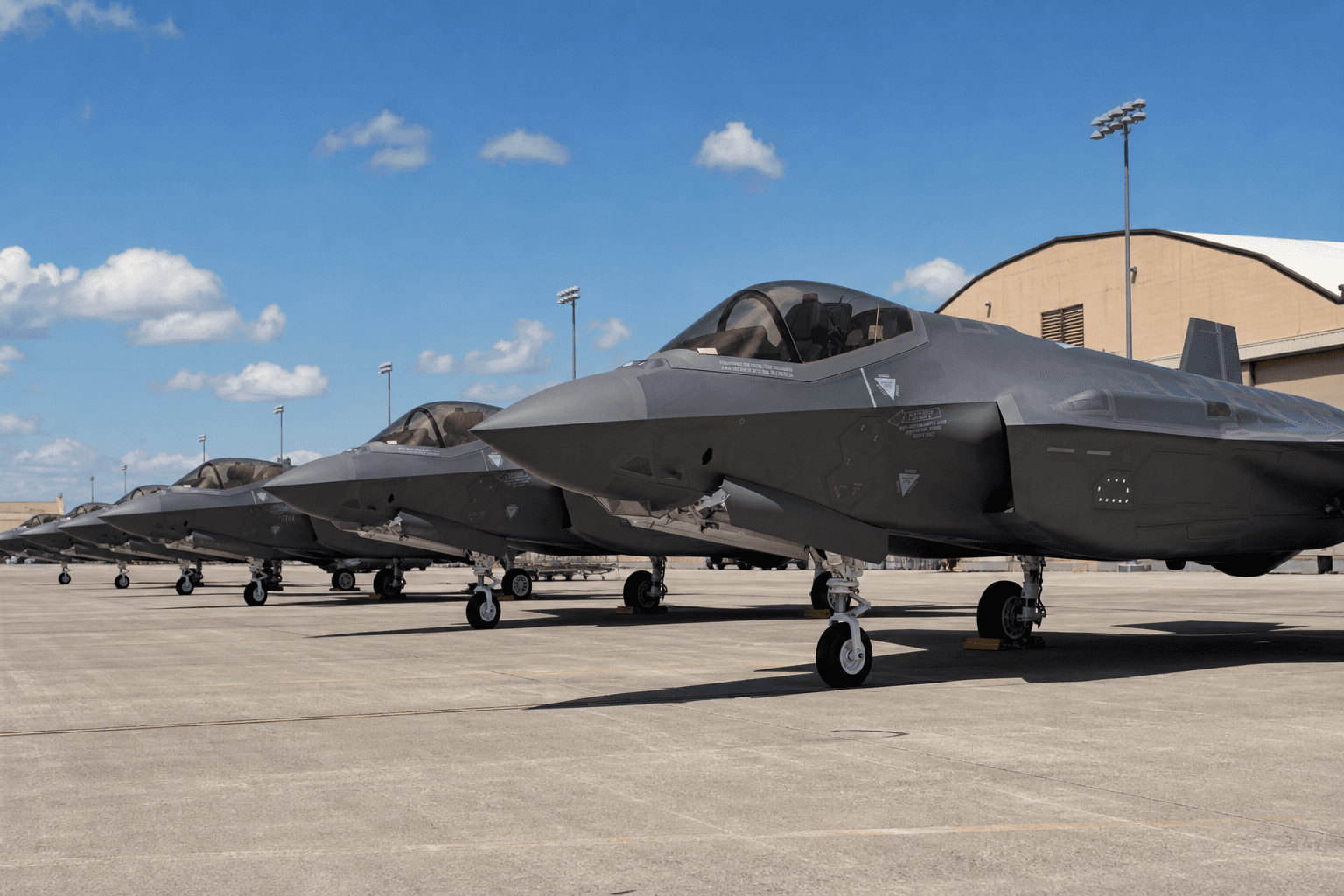
Illustration: The Touch & Go
At Least 15 F-35s Delivered Without Required Equipment Since May 2025
Fifteen Lockheed Martin F-35 fighters accepted by U.S. military services since May 2025 lack essential components and remain non-operational, Defense Contract Management Agency records show.
The gist
Fifteen recent F-35 deliveries to U.S. forces are incomplete due to missing equipment, delaying their operational readiness.
Continuing coverage
All F-35 →- USAF Plans 267 F-15EX Fighters to Complement Growing F-35 Fleet as 'Missile Trucks'
- Canada Quietly Advances F-35 Fighter Jet Payments Amid Public Debate on Purchase
- UK F-35s intercept Russian Tu-142 near Royal Navy carrier HMS Prince of Wales
- Trump signals lifting Turkey sanctions and reconsiders F-35 sales amid S-400 dispute
- UK Defence Investment Plan boosts Global Combat Air Programme and unmanned systems, trims older fleets
Since May 2025, the U.S. Department of Defense has accepted at least 15 Lockheed Martin F-35 fighters that lack required equipment, according to a Defense Contract Management Agency (DCMA) list obtained through a Freedom of Information Act (FOIA) request. These aircraft have been placed in a status known as DD-250ed, indicating they were accepted but not fully delivered operationally due to material shortfalls. This status leaves them in non-operational ready supply (NORS) until the missing components are installed and tested.
The DD-250 form represents a formal inspection and receipt of material, marking the transfer of ownership from contractor to government. However, when equipment deficiencies prevent full acceptance, the aircraft are signed off as DD-250ed but are not considered mission capable. Nine of these deficient F-35s are detailed in the DCMA data released in July 2026, including variants destined for the Marine Corps, Navy, and Air Force.
Specifically, these DD-250ed fighters include one F-35B assigned to Marine Fighter Attack Squadron 533 at Marine Corps Air Station Beaufort, South Carolina, three F-35Cs intended for Naval Fighter Attack Squadron 125 at Naval Air Station Lemoore, California, and five F-35As allocated to Air Force units including the 325th Fighter Wing at Tyndall Air Force Base, Florida, and the 125th Fighter Wing of the Air National Guard. The exact nature of the missing equipment on these nine aircraft has not been publicly detailed by the F-35 Joint Program Office (JPO), which cited program security for withholding specifics.
In addition to these nine jets, six Marine Corps F-35s remain in NORS status lacking radars. The JPO director, Marine Lieutenant General Gregory Masiello, recently confirmed acceptance of six Marine F-35s without the Northrop Grumman APG-85 radars installed. These radars are critical components of the Block 4 modernization program planned to introduce 55 upgrades over several years. The APG-85 radar is expected to be fielded starting in the first half of 2028, significantly enhancing combat capabilities compared to the current APG-81 radar installed on earlier F-35s.
These radar-less aircraft require nose ballast to maintain proper flight balance until their radars are installed, a practice with historical precedent. The U.S. Navy faced a similar situation in the late 1960s when F-4J Phantoms flew with lead ballast in the nose due to Westinghouse radar delivery delays. Similarly, the Panavia Tornado F2 interceptor from the 1980s operated temporarily with concrete ballast while awaiting its Foxhunter radar. These past examples demonstrate the logistical and operational challenges of fielding advanced radar systems in fighter aircraft programs.
The APG-85 radar introduces increased power and cooling demands, requiring 62 to 80 kilowatts of cooling capacity compared to the existing 32 kilowatts on the F-35. The physical mounting differences between the APG-81 and APG-85 radars create integration challenges, complicating efforts to retrofit or dual-mount these systems in the current fleet. The U.S. Air Force has considered a dual-mount bulkhead solution but expects a two-year timeline to develop and field this upgrade.
Financially, the retrofit of F-35s with APG-85 radars is a significant investment. The Air Force's fiscal 2027 future years defense plan allocates $133 million in 2031 to upgrade 14 F-35As, reflecting a unit radar cost of approximately $9.5 million. Plans also include spending roughly $1.6 billion outside the FYDP to retrofit another 167 F-35s with APG-85 radars. These investments highlight the priority placed on delivering the full capabilities associated with the Block 4 modernization efforts.
Mission capability rates for the F-35 remain an ongoing concern. Presently, the overall mission capable rate is around 56 percent, while the full mission capable rate, which includes aircraft fully ready for all intended missions, stands at just 25 percent. The presence of DD-250ed aircraft, lacking critical components like advanced radars, contributes to these lower operational readiness levels, emphasizing the importance of addressing these shortfalls to meet combat readiness goals.
The earliest known Lot 17 F-35 delivery under this arrangement occurred on July 8, 2025, when an F-35A was DD-250ed and ferried to the 125th Fighter Wing in Jacksonville, Florida. Until the equipment shortages are resolved, these aircraft remain grounded operationally despite their transfer to military units, highlighting the complexities of integrating next-generation technology in a high-tempo production and deployment cycle.
Frequently asked questions
- What does it mean for an F-35 to be DD-250ed?
- DD-250ed means the aircraft has been formally accepted by the military but lacks required equipment, making it non-operational until deficiencies are resolved.
- Why are some Marine Corps F-35s missing radars?
- The Marine Corps accepted six F-35s without radars because they are awaiting installation of the newer APG-85 radar, planned for fielding in 2028 as part of Block 4 upgrades.
- How does the missing radar affect the F-35's operations?
- Without radars, the F-35s require nose ballast for balance and cannot perform full missions, reducing their operational readiness and mission capable rates.
Read more
All Military/Defense →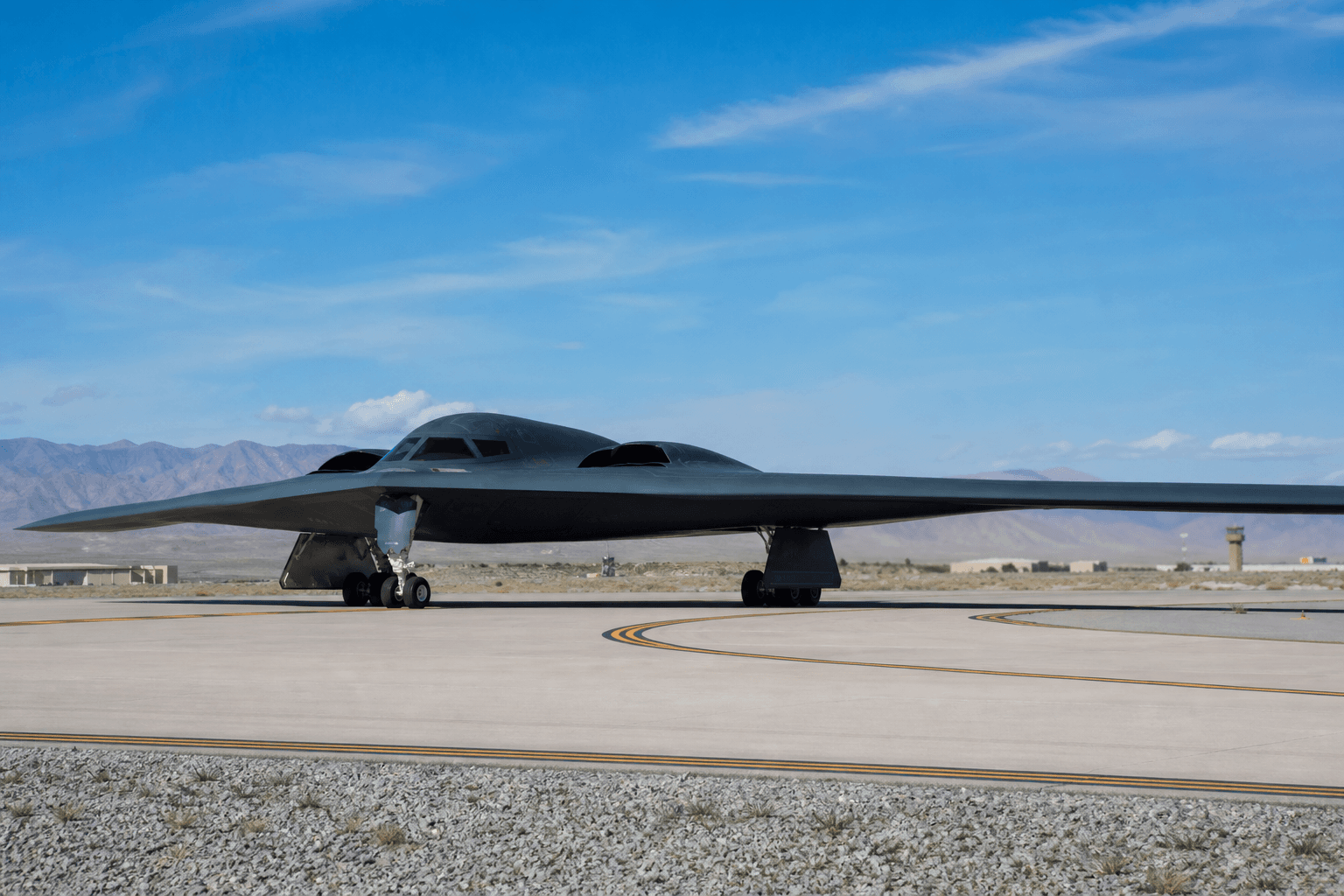
USAF Requests $1.7B to Upgrade B-1 and B-2 as B-21 Raider Production Ramps Up
The Northrop Grumman B-21 Raider program is already underway, and the aircraft is the future of the US military's long-range strike capability. The Raider is set to replace legacy aircraft , such as the B-2 Spirit and the Rockwell International B-1B Lancer. While the B-21 is set for operational service as soon as 2027, it will take time for the United States Air Force (USAF) to receive enough of the aircraft to finally and permanently retire both older bombers.
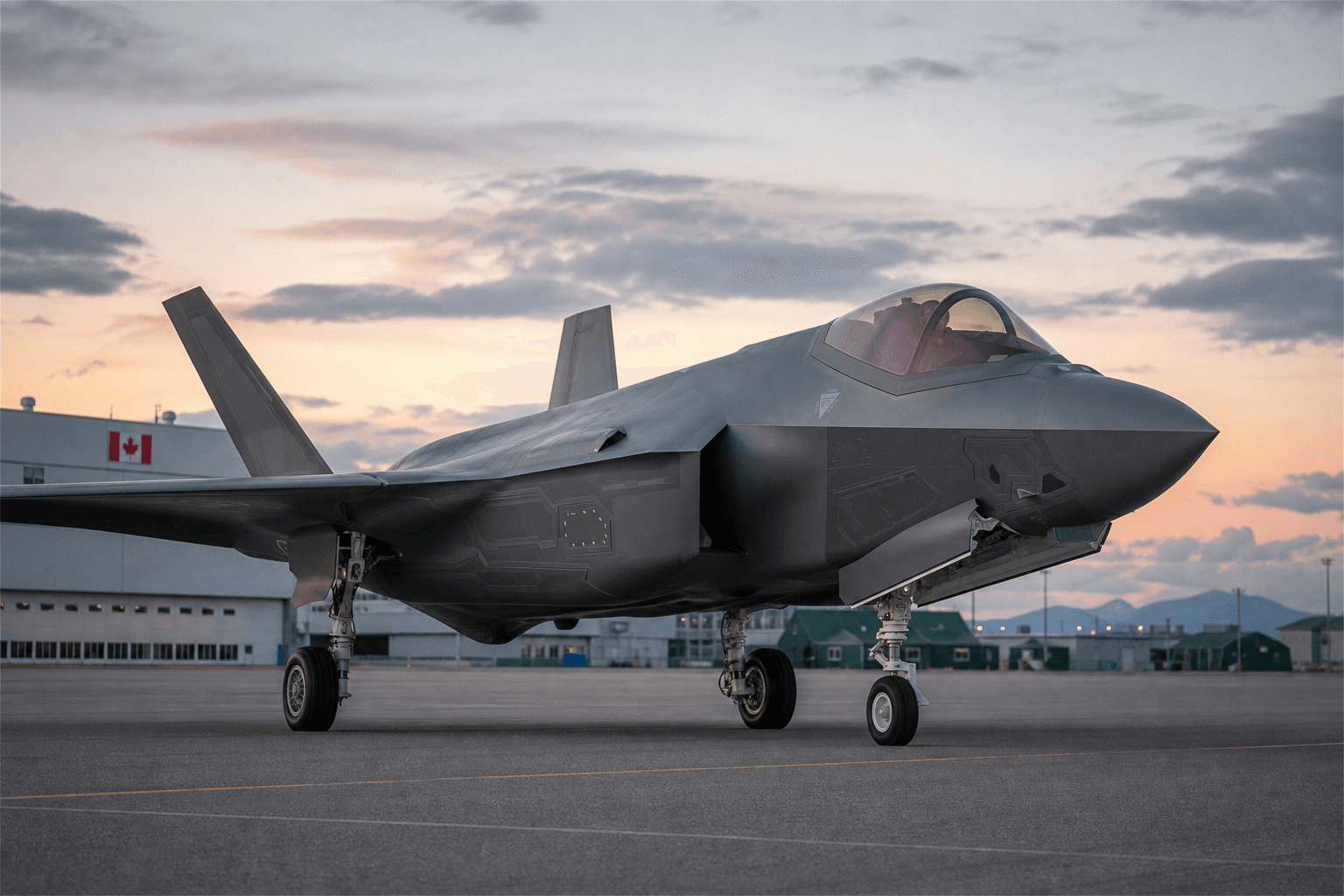
Canada Quietly Advances F-35 Fighter Jet Payments Amid Public Debate on Purchase
Canada's fighter jet debate has increasingly been framed as a dramatic political decision: should Ottawa proceed with its planned purchase of F-35 stealth fighters or pivot toward alternatives such as Saab's Gripen? Public discussions have focused on cost overruns, industrial benefits, trade tensions with Washington, and broader questions surrounding Canada's long-term defense dependence on the United States . To many observers, the issue still appears unresolved, with government leaders publicly emphasizing that reviews are ongoing and that options remain available.
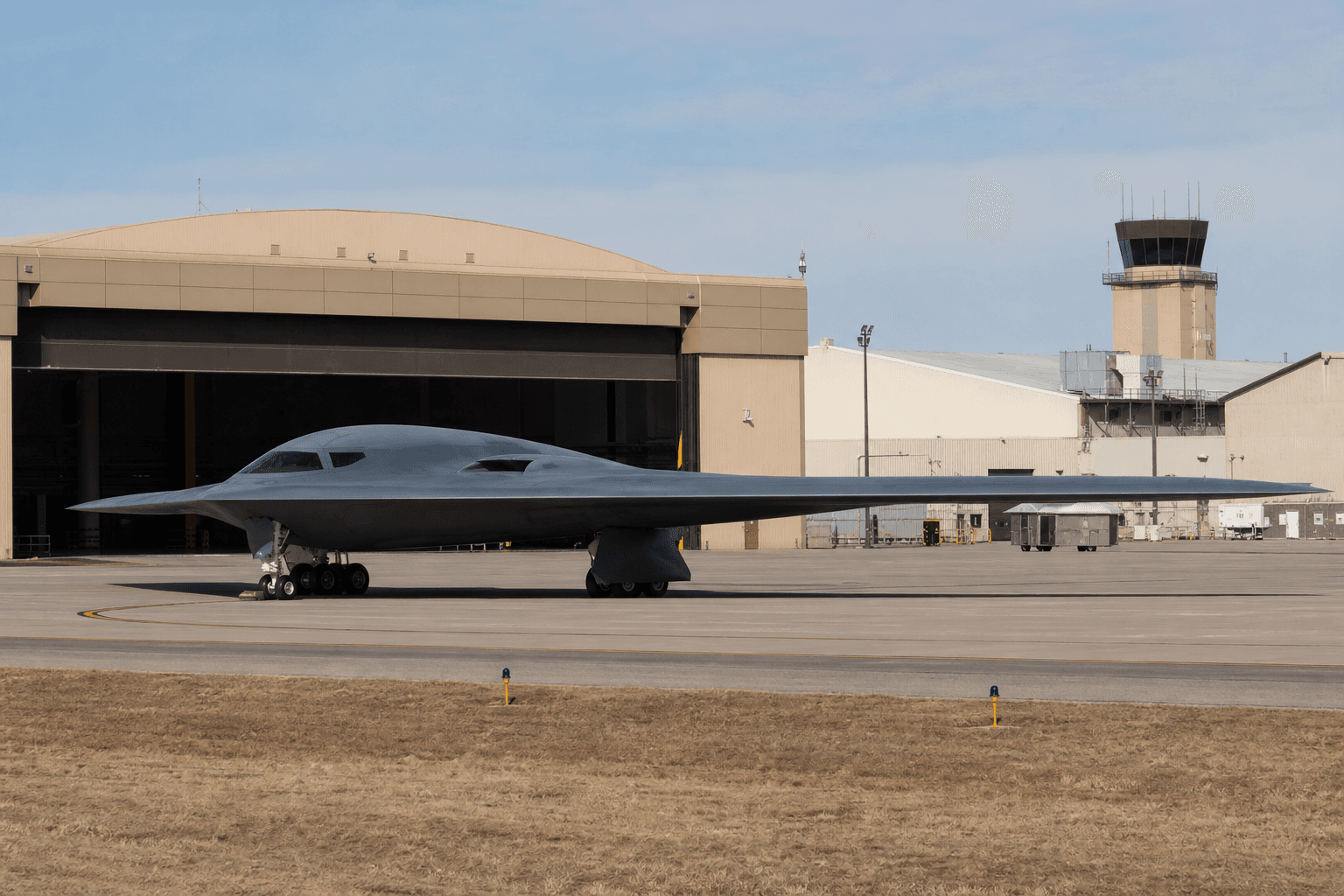
USAF Commits $2B to Prepare Ellsworth AFB as First Operational B-21 Raider Base
Ellsworth Air Force Base (RCA) was selected to be the first main operating base of the Northrop Grumman B-21 Raider. Located in South Dakota, the base has been home to the Rockwell B-1B Lancer, a supersonic swing-wing bomber. Although the B-21 is a less delicate plane than the NG B-2 Spirit, rebuilding the base in order to prepare for its first stealth aircraft comes at a cost of nearly $2 billion to taxpayers .

B-52J Engine Upgrade Set to Outpace Jets Built Decades Later
When the United States Air Force replaces the Boeing B-52's eight engines under the Commercial Engine Replacement Program, the resulting aircraft, the B-52J, will have 30% better fuel efficiency, a meaningfully extended unrefueled range, and a maintenance burden so reduced that it will cost significantly less per flight hour to operate than the Rockwell B-1 Lancer . The B-1B entered service in 1986, thirty-four years after the B-52 first flew. It was specifically designed to replace the Stratofortress. It is now being retired while the B-52 flies on, and the F-130-powered B-52J will still be flying in the 2050s after the B-1B is long gone. That inversion is entirely the product of one engine swap.
The Daily Touch & Go
The day's best aviation news in your inbox. Free, no spam.