

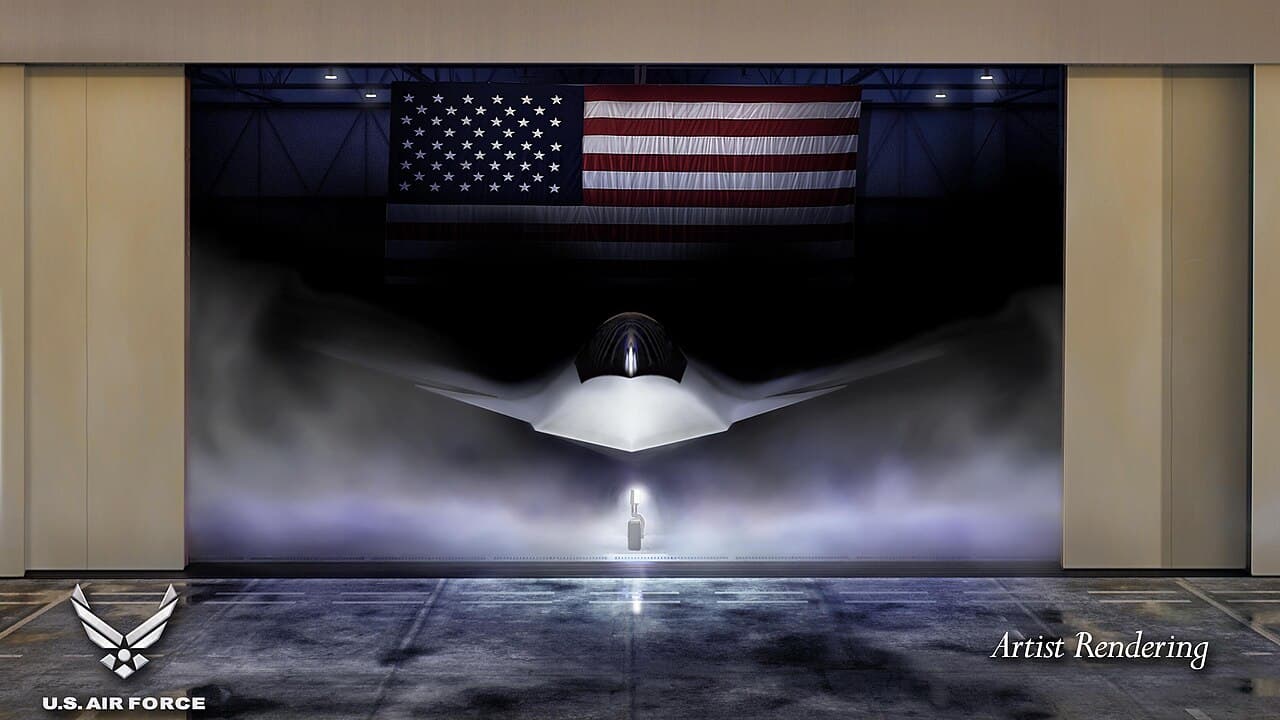
Image: United States Air Force · Public domain · via Wikimedia Commons
US F-47 Sixth-Gen Fighter Faces $300M Price Tag and Limited Fleet Size
Boeing's F-47 fighter, slated at $300 million each, will see production capped at 185-200 aircraft, raising questions about future US air dominance amid China's growing stealth fleet.
The gist
The US plans 185-200 F-47 fighters at $300 million each, a costly force aiming to compete with China's expanding stealth jets.
Continuing coverage
All Boeing →- Boeing books 121 jet orders in June while boosting deliveries to highest monthly level in years
- Boeing 737 MAX Surpasses 7,200 Orders, Becoming Company's Best-Selling Aircraft
- Boeing posts strongest first-half aircraft deliveries since 2018 with 314 jets
- Boeing invests $10 billion to overhaul 737 Max production in historic Everett plant
- Nine Countries Collaborate Globally to Supply Boeing 787 Dreamliner Structural Parts
The United States is advancing its next-generation fighter jet program with Boeing's F-47, a high-performance aircraft costing approximately $300 million per unit. Production is targeted at a maximum fleet size between 185 and 200 units. This initiative comes amid ongoing competition with China, which has showcased two sixth-generation fighter prototypes as of late 2024, emphasizing the global race for air superiority.
Despite China's rapid display of prototype progress, their Chengdu J-20 stealth fighter fleet, classified as a fifth-generation aircraft, is projected to exceed 1,000 operational units by 2030. The J-20 serves as a backbone for the People's Liberation Army Air Force’s regional air power expansion, presenting a significant numerical advantage over the planned F-47 fleet.
Although the F-47 program builds on advanced capabilities, the United States will retain a substantial stealth aircraft presence by leveraging its existing fleet of over 1,200 Lockheed Martin F-35 Lightning IIs. Orders for the F-35 family are expected to double or even surpass 3,000 units globally, supplemented by upcoming platforms such as the Northrop Grumman B-21 Raider bombers and over a thousand unmanned 'loyal wingman' drones.
The comprehensive force mix integrates manned and unmanned platforms through advanced data-link interoperability, enabling complex operational synergies across US services and allied nations including Japan, Australia, and the United Kingdom. This coalition-based approach enhances collective deterrence in the Indo-Pacific region beyond the F-47's limited production.
Technological advantages play a pivotal role in the F-47’s design, particularly its propulsion system under the Next Generation Adaptive Propulsion (NGAP) program. Developed by Pratt & Whitney and General Electric, these engines promise unprecedented fuel efficiency, high thrust, significant electrical power outputs, and reduced thermal signatures critical for stealth and directed-energy weaponry applications.
Contrasting this, Chinese engines like the WS-15 that power upgraded J-20s improve performance and reduce detectability but lag significantly behind US engine technology. This disparity reflects decades of advanced aerospace development by US and Western manufacturers, translating into a substantial qualitative edge for the F-47 platform.
However, the F-47's high unit cost introduces vulnerabilities related to force sustainment and wartime attrition. Lessons from recent operations underscore the operational risks and logistical challenges posed by reliance on expensive, complex weapon systems that are slow to replace. To mitigate this, the US continues procuring more affordable, rugged platforms like the Boeing F-15EX Eagle II and upgrading B-52 bombers for multi-role support.
Together, the F-47, F-35, B-21, drones, and legacy aircraft equipped with upgraded avionics form a 'high-low' mixed fleet architecture. This blend balances cutting-edge capability with cost-effective volume and survivability, with interoperability acting as the force multiplier, ensuring robustness against numerical disadvantages relative to potential adversaries.
The interplay of cutting-edge technology, allied interoperability, and diversified force composition defines the US approach to next-generation air dominance. While the F-47 fleet size is constrained by its price tag, the broader system-of-systems and strategic procurement decisions aim to maintain credible deterrence and operational flexibility through 2030 and beyond.
Frequently asked questions
- What is the expected cost per F-47 fighter jet?
- The Department of Defense has declared that each F-47 fighter jet will cost approximately 300 million US dollars.
- How many F-47 aircraft does the US plan to produce?
- The total F-47 fleet size is anticipated to be between 185 and 200 planes.
- How does the US F-47 fleet size compare to China's fighter jets?
- China plans to have over 1,000 Chengdu J-20 stealth fighters by 2030, significantly outnumbering the US's planned F-47 fleet of up to 200 jets.
Read more
All Military/Defense →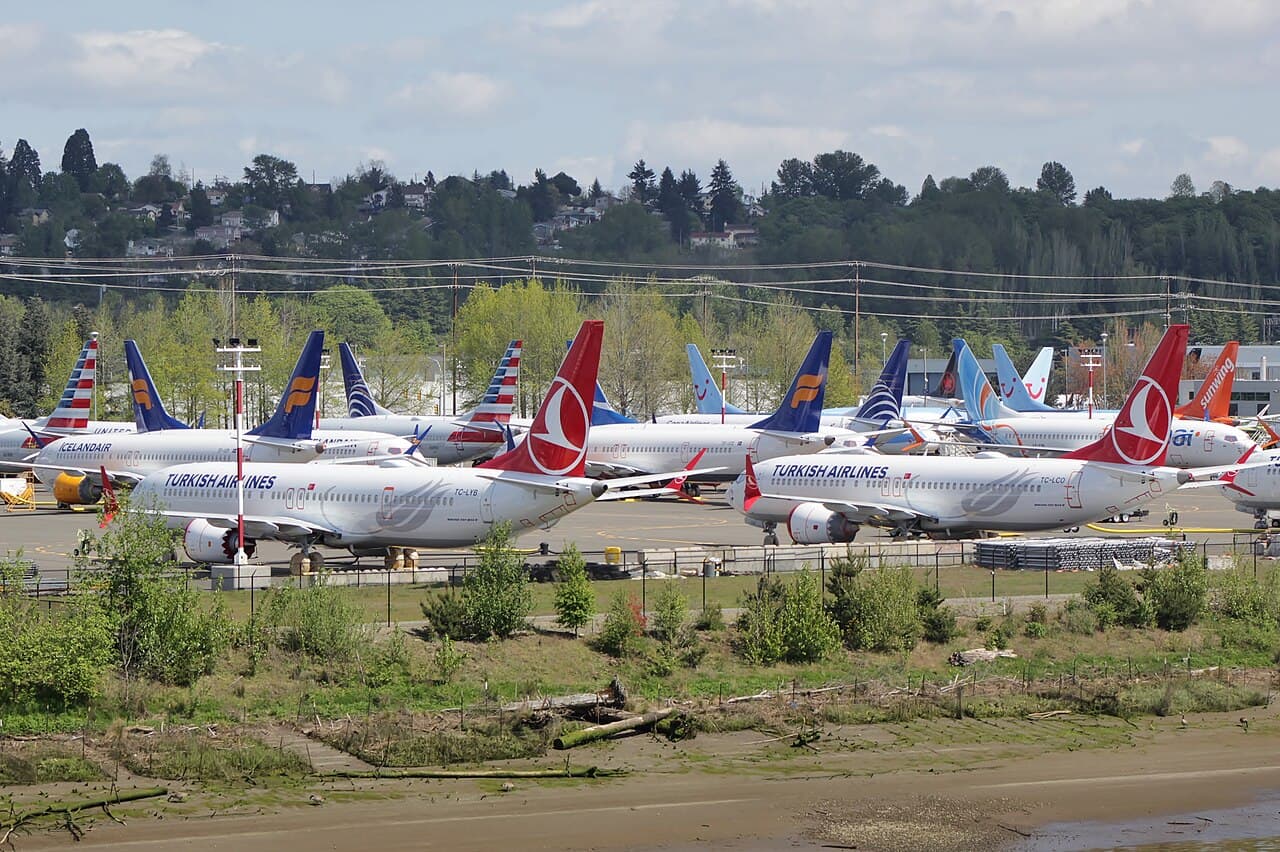
Boeing posts strongest first-half aircraft deliveries since 2018 with 314 jets
Boeing delivered 314 commercial aircraft during the first half of 2026, its highest total for the period since 2018 as production of the 737 MAX continues to recover. The manufacturer handed over 171 aircraft during the second quarter, including 129 737s, 25 787 Dreamliners, 10 767s and seven 777s, Boeing said on July 14, 2026. Its first-half deliveries included 243 737s, 40 787s, 16 767s and 15 777s. Boeing delivered 64 commercial aircraft in June alone, up from 60 in May and 60 during the same month last year, according to company delivery data. The June total included 42 737 MAX aircraft and 13 787s. The stronger pace comes as Boeing raises output of the 737 MAX, its best-selling commercial aircraft. The company is moving monthly production from 42 aircraft toward 47, although deliveries can vary from month to month depending on inspections, customer schedules and work needed on aircraft already built. Boeing's 314 first-half deliveries were 12% higher than the 280 aircraft it handed over during the same period in 2025. Last year's first-half total had already marked a significant improvement after production disruptions and tighter regulatory oversight slowed deliveries earlier in the decade. Airbus remained ahead, delivering 351 aircraft during the first six months of 2026, including 89 in June. That was a 15% increase from the European manufacturer's first-half total a year earlier. Boeing's June 787 deliveries included five aircraft for Riyadh Air that had been delayed by issues involving seat certification. The Saudi carrier began revenue operations in June after receiving its first Dreamliners. The manufacturer also delivered three 777 freighters and five 767s during June. Three of the 767s will be converted into KC-46 aerial refueling tankers by Boeing's defense business. Boeing reported 121 gross commercial aircraft orders and eight cancellations during June, leaving 113 net orders for the month. Its first-half order total stood at 408 after cancellations and accounting adjustments. The company has now recorded 7,206 orders for the 737 MAX family, surpassing the 7,159 orders received for the previous-generation 737NG. Boeing separately reported 35 defense aircraft and satellite deliveries during the second quarter and 65 during the first half. The six-month total included 32 new or remanufactured AH-64 Apache helicopters, eight KC-46 tankers, eight CH-47 Chinooks and five F/A-18-family aircraft. Boeing cautioned that its delivery figures remain preliminary until it publishes its second-quarter financial results on July 28.
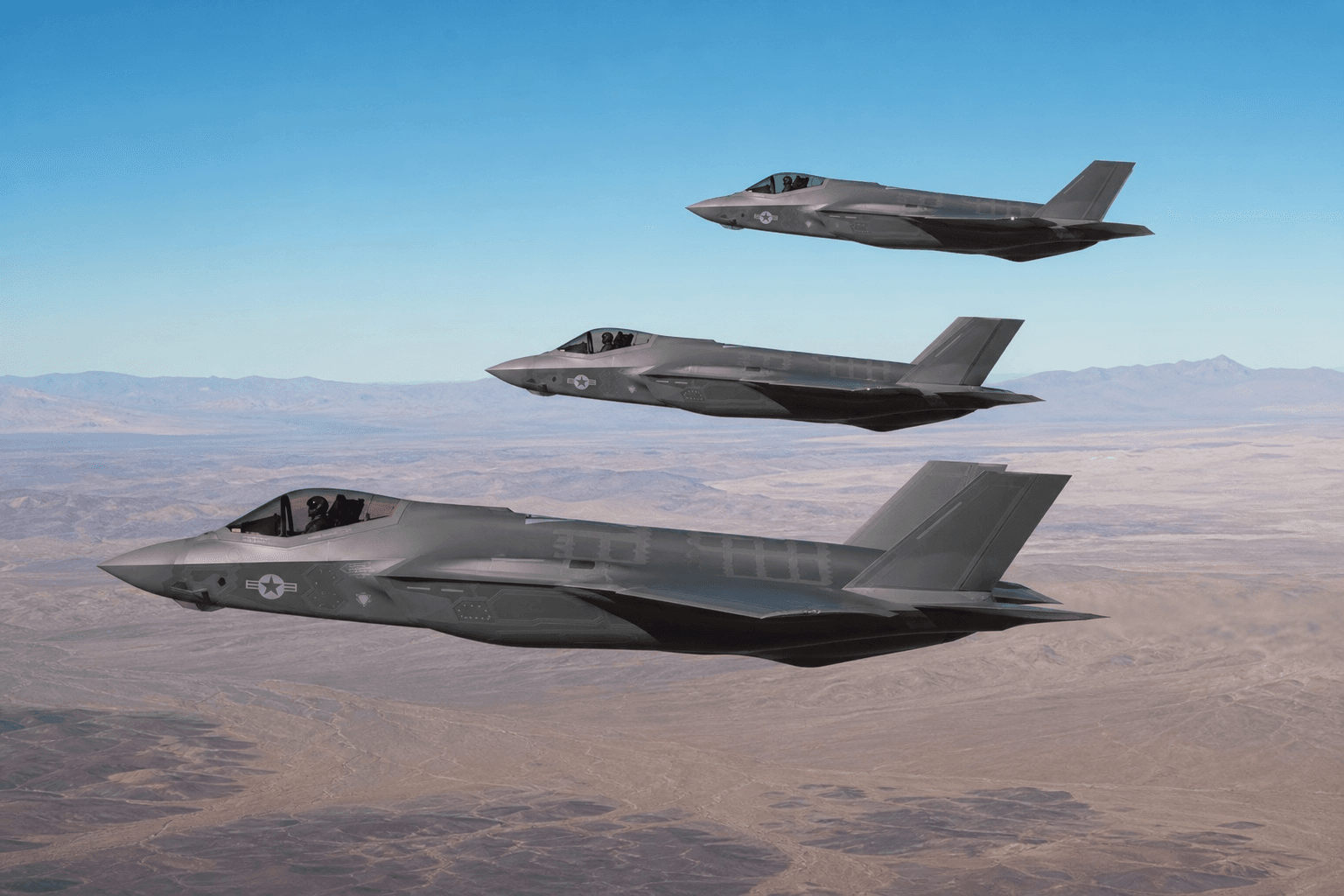
US Air Force Fighter Pilots Earn Base Salary Plus Bonuses Amid Pilot Shortage
All US military pilots are commissioned officers, and their basic salary follows the same pay scale regardless of whether they are fighter jet pilots or transportation aircraft pilots. It also doesn't matter if they serve the US Air Force, the US Navy, the US Coast Guard, or the US Army. Compared with commercial pilots, US military pilot salaries are quite low, but they are only the beginning , with bonuses, allowances, and various other benefits and incentives significantly increasing the pay.
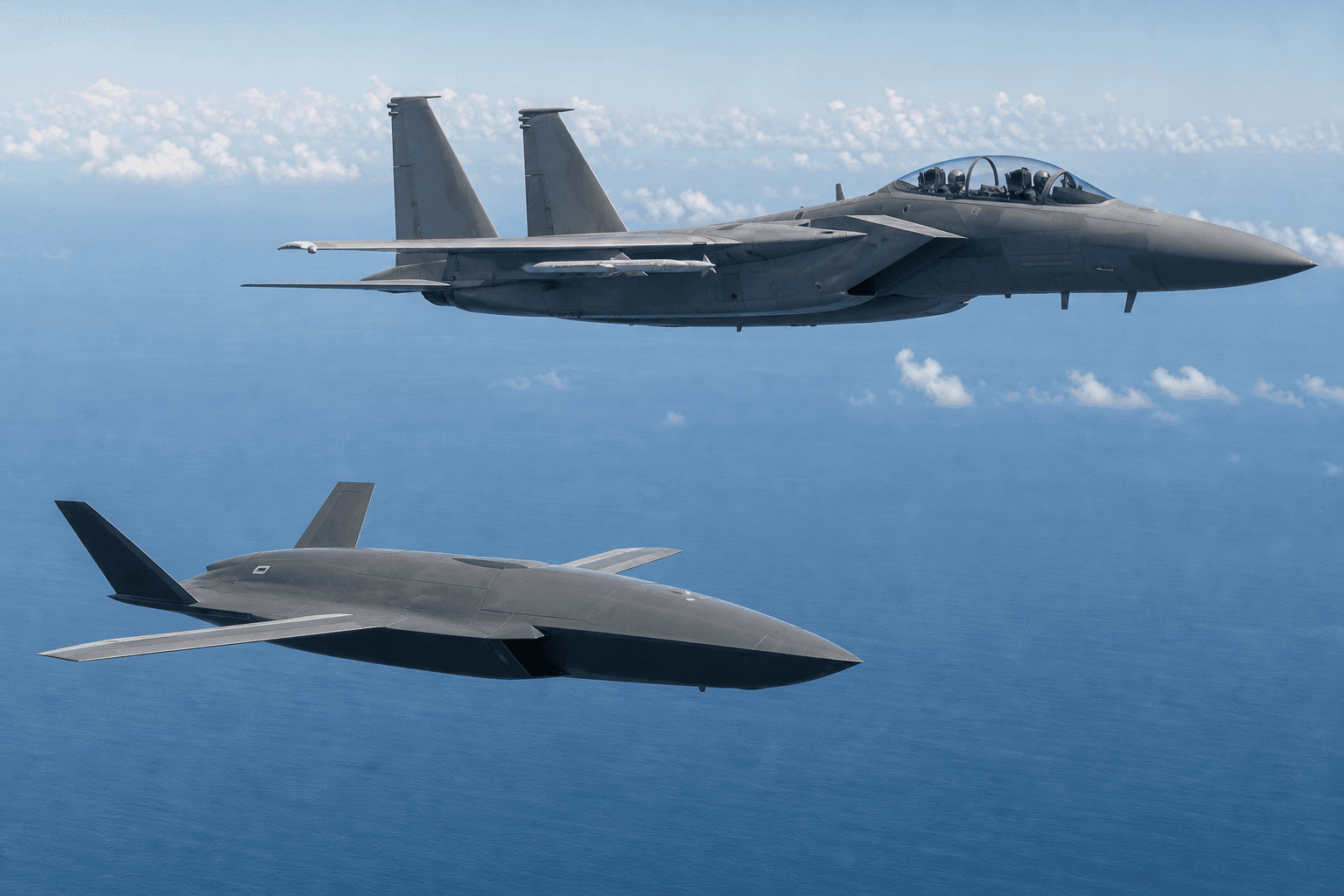
Boeing's MQ-28 Ghost Bat Joins US Air Force in Landmark Indo-Pacific Exercise
- MQ-28 Ghost Bat is first collaborative combat aircraft (CCA) to be integrated into multinational, joint force Exercise Valiant Shield 2026

China's Datangshan Aviation Museum Closes for Major Relocation to Changchun
For years, the China Aviation Museum at Datangshan, on the northern outskirts of Beijing, ranked among the world’s greatest destinations for aviation enthusiasts. Home to hundreds of military and civil aircraft, it was a museum unlike any other, combining an extraordinary outdoor collection with a vast underground hangar carved into the side of a mountain. Sadly, however, visitors hoping to experience this remarkable museum will have to wait. The museum closed in late 2025, with its priceless collection now being relocated to a new site, meaning one of aviation’s great pilgrimage destinations is temporarily no more. One of the World’s Greatest Aviation Museums Opened in 1989 to mark the 40th anniversary of the People’s Liberation Army Air Force (PLAAF), the China Aviation Museum quickly became the country’s national aviation museum and one of the largest collections of aircraft anywhere in the world. Located on the site of the former Shahezhen Air Base, around 40km (25 miles) north of central Beijing, the museum occupied more than 700,000 square metres and displayed well over 300 aircraft representing the history of Chinese military and civil aviation. Perhaps its most distinctive feature was the enormous underground exhibition hall. Originally constructed as a hardened aircraft shelter during the Cold War, this huge tunnel bored deep into Datangshan Mountain became home to dozens of historic aircraft, creating one of the most unique museum settings anywhere in the world. Outside, visitors could spend hours wandering among rows of fighters, bombers, transports and helicopters representing almost every type ever flown by the Chinese Air Force. A Treasure Trove for Airliner Enthusiasts Former Orbis DC-8 at Datangshan. Photo: Peter Garwood Although much of the museum focused on military aviation, Datangshan held an equally fascinating collection of classic airliners. Many had once flown with the Civil Aviation Administration of China (CAAC), the state airline that eventually evolved into today’s Chinese airline industry. Others had been acquired from overseas operators or preserved because of their historical importance. Among the highlights were: Hawker Siddeley Trident British Aerospace BAe 146 Douglas DC-8 (formerly operated by ORBIS International) Airbus A310 Vickers Viscount Tupolev Tu-124 Ilyushin Il-18 (including Chairman Mao Zedong’s former VIP aircraft) Lisunov Li-2 Antonov An-24 Convair 240 For enthusiasts interested in classic jetliners, this was one of the few places in the world where British, Soviet, American and Chinese aircraft stood side by side. Alongside these were dozens of rare military aircraft, including early MiGs, indigenous Chinese fighters, experimental prototypes and aircraft captured or obtained from countries around the world. The collection also featured everything from a Lockheed F-104 Starfighter and Northrop F-5 to a Martin RB-57D Canberra and even a Lockheed D-21 reconnaissance drone. Why Has the Museum Closed? A line-up of Migs. Photo: allen In October 2025, the museum closed to visitors as preparations began to relocate the collection. Although no detailed official public announcement has been issued explaining the full plans, multiple aviation and travel sources report that much, if not all, of the collection is expected to move to a brand-new aviation museum in Changchun, in Jilin Province, northeastern China. The relocation is believed to be one of the largest museum moves ever undertaken in the aviation world. Moving more than 300 historic aircraft is an enormous logistical undertaking. Many of the exhibits are too large to transport by road without extensive dismantling, while others are unique or fragile museum pieces requiring specialist conservation work. When Will It Reopen? At the time of writing, the new museum has not yet opened. Reports from visitors and aviation museums monitoring the relocation suggest that the new facility is unlikely to welcome visitors before mid-2027 at the earliest. While work is believed to be progressing, no confirmed opening date has been announced publicly. This means anyone planning an aviation-focused trip to Beijing should be aware that Datangshan is currently unavailable, despite older travel guides and websites continuing to list normal opening hours. A Museum Worth Waiting For Curtiss-Wright C-46. Photo: Erwin Although its closure is disappointing, there is every reason to be optimistic. The Datangshan museum had become increasingly difficult to maintain, particularly its enormous outdoor displays, and relocating the collection offers the opportunity to conserve many historically important aircraft while presenting them in a more modern setting. For enthusiasts, the hope is that the new museum will preserve not only China’s remarkable military aviation heritage but also its unique collection of classic Western airliners—aircraft such as the Trident, BAe 146, DC-8, Airbus A310 and Vickers Viscount that are becoming increasingly rare elsewhere in the world. Until then, the China Aviation Museum remains one of aviation’s great “missing” museums. It may be closed, but its remarkable collection still promises to become one of the world’s essential destinations for aircraft enthusiasts once its new home finally opens its doors.
The Daily Touch & Go
The day's best aviation news in your inbox. Free, no spam.