

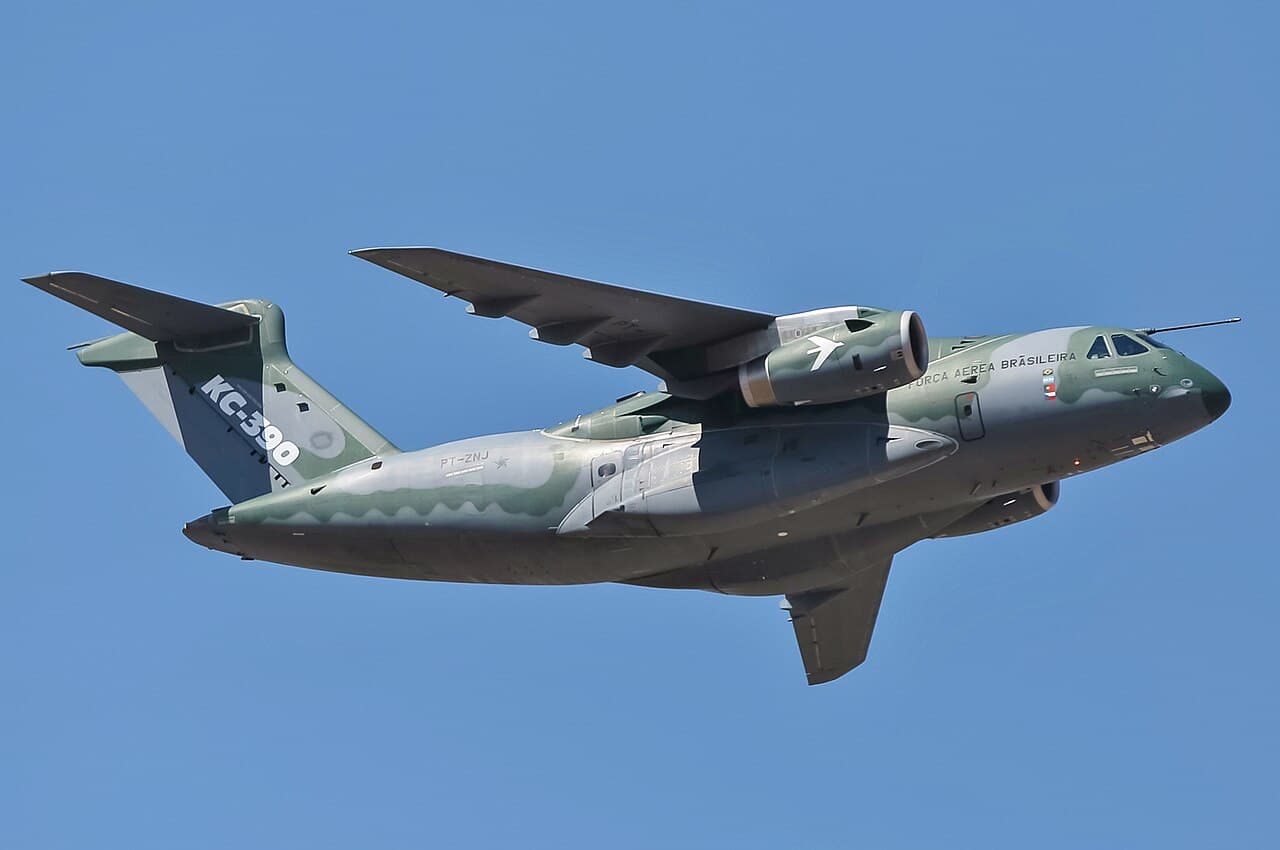
Image: Marcos Corrêa/PR · CC BY-SA 4.0 · via Wikimedia Commons
Czech Air Force Receives First Embraer C-390 Millennium 20 Months After Contract
Embraer has delivered its first C-390 Millennium to the Czech Air Force, enhancing the country's airlift capacity with a modern, versatile transport aircraft.
The gist
The Czech Air Force takes delivery of its first Embraer C-390, boosting tactical airlift with a fast, heavy-lift transport aircraft.
On July 16, 2026, Embraer officially handed over the first C-390 Millennium transport aircraft to the Czech Air Force during a ceremony at Prague Kbely Air Base. This delivery came just 20 months after signing the acquisition agreement, a rapid turnaround underscoring Embraer’s ability to meet customer timelines swiftly. Several senior Czech military leaders attended, including Defense Minister Jaromír Zůna and Chief of the General Staff General Miroslav Hlaváč, alongside Embraer Defense & Security CEO Bosco da Costa Junior. The event marked a significant enhancement in the Czech armed forces’ air mobility capabilities.
Brigadier General Jaroslav Falta, commander of the 24th Air Transportation Base, highlighted that the C-390 will provide a substantial new capability for moving heavy and oversized cargo over long distances. This will support not only NATO operations but also domestic emergency responses. He emphasized that while the aircraft itself is impressive, the trained personnel operating it represent the true value behind the program’s success. Defense Minister Zůna echoed this sentiment, describing the delivery as a milestone that reinforces the Czech Republic’s ability to transport personnel, equipment, and humanitarian aid both independently and in cooperation with NATO allies. The new aircraft is expected to enhance the readiness and flexibility of Czech forces for years to come.
The C-390 Millennium is the most modern medium military transport aircraft designed and built in the 21st century. It brings superior performance with a payload capacity of up to 26 tons, exceeding that of comparable transports in its class. The aircraft can cruise at speeds up to 470 knots and operate over longer distances, providing significant operational advantages. Its ability to take off and land on unpaved or temporary runways further extends its utility in austere or damaged environments where traditional airfields are unavailable or compromised.
Beyond typical cargo transport, the C-390 is multifunctional. It can carry troops, execute equipment and personnel airdrops, conduct medical evacuation missions, support search and rescue operations, and engage in firefighting and humanitarian relief tasks. The addition of quick-installation air-to-air refueling equipment further boosts its versatility, enabling it to serve as a tanker or as a receiver, thus expanding its mission profiles and air force operational capabilities.
The Czech Republic joins a growing list of nations operating the Embraer C-390 Millennium, including Brazil, Portugal, Hungary, South Korea, the Netherlands, Austria, Uzbekistan, Sweden, the United Arab Emirates, Slovakia, and Lithuania. This international fleet reflects the aircraft’s adoption as a new standard in tactical airlift with advanced capabilities tailored to modern military and humanitarian requirements.
Embraer noted that the Czech Republic has been involved in the development of the C-390 program from its early stages. This partnership included collaboration with Czech industrial firms, fostering the growth of the local aerospace sector. Embraer anticipates the Czech industrial base will continue to expand as the program develops, strengthening the defense-industrial relationship between the two countries.
This delivery marks a turning point for Czech military air transport, providing a reliable and advanced platform capable of fulfilling a wide range of missions. The aircraft's robust payload capacity, speed, and operational flexibility will allow the Czech Air Force to support NATO commitments and respond effectively to domestic emergencies. By fielding this modern tactical airlifter, the Czech Republic boosts its strategic mobility and operational independence in air logistics.
The swift acquisition and delivery of the C-390 Millennium illustrate Embraer’s commitment to meeting its customers’ needs with efficient production and support. With this first aircraft now in service, the Czech Air Force begins integrating a new asset designed to address evolving operational challenges in the coming decades.
Frequently asked questions
- How quickly did Embraer deliver the C-390 Millennium to the Czech Air Force after signing the contract?
- Embraer delivered the first C-390 Millennium to the Czech Air Force just 20 months after signing the acquisition agreement.
- What capabilities does the C-390 provide the Czech Air Force?
- The C-390 enhances the Czech Air Force’s ability to move heavy and oversized cargo over long distances, supports troop transport, medical evacuation, airdrops, firefighting, and can perform air-to-air refueling, improving NATO and domestic emergency operations.
- Which other countries operate the Embraer C-390 Millennium?
- Besides the Czech Republic, countries operating the C-390 include Brazil, Portugal, Hungary, South Korea, the Netherlands, Austria, Uzbekistan, Sweden, the United Arab Emirates, Slovakia, and Lithuania.
Read more
All Aviation Safety →
FAA Administrator Bryan Bedford Drives Rapid Modernization with Trump-Era Urgency
Bryan Bedford took over leadership of the FAA in July 2025 after a long career in commercial aviation, including senior roles at Republic Airways and Frontier Airlines. He is an instrument-rated pilot, an aircraft owner, and one of the few recent agency leaders to arrive in Washington, D.C., with direct experience in both a general aviation cockpit and the airline C-suite. Some in aviation may also remember him from an appearance on reality TV's Undercover Boss , a fitting footnote for an executive whose management style has long emphasized seeing operations up close rather than from a distance. So close, in fact, that Bedford can be seen in the show servicing lavatories on a Frontier Airbus jet. That operating background now intersects with a White House that has pushed the FAA to move faster. In FLYING’s conversation with Bedford, he repeatedly pointed to President Donald Trump's role in setting the tone and timetable for the agency's agenda—from air traffic control (ATC) modernization to drone policy, supersonic flight, and broader aviation innovation. Bedford said the president has been unusually clear about what he wants delivered, and he described the FAA and Department of Transportation as "moving at the speed of Trump" on initiatives tied to those priorities. This Article First Appeared in FLYING Magazine If you're not already a subscriber, what are you waiting for? Subscribe today to get the issue as soon as it is released in either Print or Digital formats. Subscribe Now Nine months into the job, Bedford framed the FAA less as an agency building toward distant benchmarks than one being pressed to show measurable progress on a shorter clock. He discussed the administration's push for a "brand-new" ATC system, the role AI and machine learning could play in future traffic management, what MOSAIC could mean for general aviation, and why the fight over landing fees and ADS-B has become a safety issue in his eyes. FLYING interviewed Bedford at the agency's headquarters in Washington in April. What follows is an edited Q&A for length and clarity: Setting the Pace FLYING Magazine (FM) : Your first year on the job is coming up this summer. As you look at the agency today, what do you think has changed the most? Bryan Bedford (BB): Well, so much has changed. I want to be careful, but I think the biggest thing is our focus. We've got Flight Plan 2026, and the purpose of that is to drive agency focus from the top of the executive branch all the way down to the front line that's delivering the services, whether you're a technician, a controller, or a regional manager. We just wanted to make sure everybody was aligned on the same priorities. Generally, the FAA, when it would put out a plan, it would be no less than five years and generally a 10-year-long plan. So there was never really that excitement that we can see things being accomplished. So we set goals and we actually finish goals. That ability to connect to the fact that we're doing things and we're doing it at speed, I think, is creating a sense of energy and accomplishment. READ MORE: FAA Aims to Block State, Local Crew Break Requirements READ MORE: FAA Says Happy Fourth of July With $1.776B in Airport Grants Of course, we redesigned the organizational structure, just trying to flatten it out a bit, make it more accountable, and make it easier to manage from an executive sense. And this is my perspective, not necessarily the agency's perspective, but I think most people who come into this role tend to want to fly it at about 30,000 feet. I really want to get below the surface, so to speak, and see if we're being effective. What are the issues that our frontline employees are feeling on a day-to-day basis? And are we giving them the solutions? FM: You came from the private sector, and the airline business moves fast. What was the biggest transition coming into government? BB: As I testified, I'm not political. I don't profess to understand it. It's a contact sport I've never played before. So I have a hard time really adapting to the political nature of some of the decisions that we make. That's created a learning curve for me to understand that I'm not the CEO of a business. I am one cog in a really big machine. Understanding what the big boss wants to deliver and making sure that our resources are aligned with delivering on the executive orders—that's something where frankly the president's been really, really clear about what his priorities are, and that's given the agency a lot of direction that we can actually turn into action, like eVTOLs, supersonic, and space. There's a lot of innovation that this administration is feverishly trying to unlock, and to the extent it touches the FAA or the DOT, we're certainly moving at the speed of Trump to try to make those executive orders turn into rulemaking and then turn into actual innovation that customers feel. FM: That is a striking phrase—"moving at the speed of Trump." Does that urgency change the way the FAA operates? Bryan Bedford (left) is in lockstep with President Donald Trump and DOT Secretary Sean Duffy on the direction of the FAA. [Credit: FAA] BB: It does, because it gives us clarity. The president's been really clear about what his priorities are. That allows us to align resources around delivering on those priorities instead of drifting into long-term discussions without real action. We're trying to do things and do them at speed. Modernizing ATC FM: Let's talk about the new air traffic control system. For pilots, especially in general aviation, what does that actually mean? BB: In the most practical terms, you've seen a step-function change in how aeromedical works. We went from having over 4,900 medical certificates outstanding for more than 18 months to less than 142 outstanding for more than six months. So again, this idea that there's a sense of urgency, and we want to actually fix things that are pain points for our stakeholders. And, certainly, GA is a huge stakeholder for us. But on the modernization side, I think the easiest way to explain it is this: Next-gen, for all of the good things it did, brought us a lot of great technologies, but the adoption cycle is measured in decades, not years. And the president gave me and the secretary very clear instructions that he wants this brand-new air traffic control system built before he leaves office, which gives us a really hard date in 2028. So we've created a waterfall implementation that completes in Q4 of 2028. And we're either on track or ahead of that deployment. The long poles in the tent were on the supply-chain side—buy 612 radars, make sure you got a great price, and they can be delivered and operational in three years. Same thing with voice switches. Same thing with the analog-to-digital conversion. FM: And that is only the first step? BB: Right. [This] is very equipment focused. Modernization, which is what the president really wants to get at, requires a second level of funding, and that is to actually bring advanced automation, AI, machine learning, all of those things that are going to be needed to manage traffic in the 21st century. That stuff has to ride on a cloud-native architecture that has unlimited compute power to do all the things those advanced algorithms need to do. We don't have that in the current data architecture for the FAA. So there is a second step, which we're busily working on, to transform how data is managed and acted upon. FM: You mentioned AI and machine learning. What specifically are you looking at? BB: I won't get too deep into the weeds, but we've got three labs in here competing right now for what we would think of as a transformational use of technology or use of advanced machine learning and AI—pre-flying, if you will, to develop four-dimensional flight trajectories that are strategically deconflicted before planes leave the ground. Versus today, how we manage it is you file a flight plan, we accept your flight plan, you
Expert Details Future of Drone Markets, AI Safety, and Workforce Training in UAS Sector
Global Aviation Round-Up from Aircraft Value Intelligence (AVN) James McDanolds, Director of Uncrewed Technology Programs at the Sonoran Desert Institute. (Photo: Sonoran Desert Institute) Editor's Note: This week, John Persinos conducted a video interview with James McDanolds, Director of Uncrewed Technology Programs at the Sonoran Desert Institute. James oversees education and workforce development for the rapidly evolving unmanned aircraft sector. The following article is a transcript edited for clarity and concision. John's questions are in bold . To watch the full video Q&A, click here . Investors are pouring capital into autonomous aviation, advanced air mobility (AAM), and AI-enabled flight systems, but many business models remain unproven. From your vantage point, James, which UAS market segments appear most likely to deliver sustainable returns over the next few years, and which ones may be attracting more enthusiasm than economic reality? I would point to the more established applications, the ones people already recognize as long-term staples. Those are the areas where drones are already being used as essential tools, especially for critical infrastructure inspection. That includes oil and gas, transmission lines, substations, roadways, and bridges. In these industries, drones improve safety while providing fast access to critical information. If companies can’t quickly assess the condition of an asset or determine what maintenance is needed, the costs can be enormous, particularly in the energy and infrastructure sectors. One segment that’s somewhere in the middle is drone delivery. It’s been around for about a decade, but it’s now gaining real traction as the technology matures and practical use cases become clearer. People often think of delivery in metropolitan areas, but rural applications may be even more compelling. Imagine a blizzard that leaves roads impassable for hours or even days. Do you delay urgently needed medications, or do you send them by drone? Those are the kinds of real-world applications that are driving adoption. As for advanced air mobility, it’s still in its infancy. Companies like Joby are making tremendous progress, and it’s impressive how far that technology has come after years of development. But for now, AAM remains an early-stage, niche market. AI is increasingly finding its way into mission planning, detect-and-avoid systems, predictive maintenance, and autonomous decision-making. Where do you believe artificial intelligence genuinely improves safety and operational efficiency, and where should human judgment remain firmly in the loop? I think the key is implementing AI in stages. We’re still in the early phases of AI adoption, especially in aviation. People sometimes forget that commercial aviation has relied on automation for decades through autopilot systems. But autopilot doesn’t handle every phase of flight. It handles the portions that have been thoroughly tested and proven reliable after tens or even hundreds of thousands of flight hours. We should apply that same philosophy to AI in uncrewed aircraft systems. It’s still aviation. Even if no one is physically aboard the aircraft, operators still have a responsibility to protect people and property on the ground. That means there’s always an elevated level of risk, and human oversight remains essential. The industry often talks about a shortage of qualified drone professionals. Based on your experience building training programs, what skills are employers struggling to find today, and how should educational institutions adapt their curricula to prepare graduates for increasingly autonomous flight operations? There are really two groups entering the industry. One consists of people starting their first career in drones. The other includes experienced professionals who are incorporating drones into careers they already have. Both groups can benefit from better training. One misconception is that earning a Part 107 certificate is enough to land a job. It’s an important baseline, but it’s only a starting point. Part 107 doesn’t require a practical flight examination, and employers know that. They’re going to ask, “Can you demonstrate real flight skills? How would you handle this situation? Can you operate safely under real-world conditions?” In many industries, though, flying the drone is only part of the job. The real value comes from collecting data and turning that information into actionable decisions for the business or client. As commercial aviation and military aviation both accelerate investment in autonomous systems, how do you see the relationship evolving between traditional crewed aircraft and uncrewed platforms? Are we moving toward true integration, or will these remain largely separate ecosystems for the foreseeable future? That’s a great question, and it’s difficult to answer because none of us can predict the future. In the near term, once Part 108 is fully implemented and we begin seeing fleets of uncrewed aircraft operating alongside traditional aviation in increasingly congested airspace, we’ll still need to maintain clear separation between crewed and uncrewed operations. Over time, however, as those operations expand, it’s hard to imagine the two systems remaining completely separate. They’ll inevitably become more integrated. Looking ahead five to 10 years, which technological breakthrough or regulatory milestone do you believe will most dramatically reshape the economics of commercial UAS operations? In other words, what development should airline executives, aircraft financiers, appraisers, aerospace engineers, and aviation technology investors be watching most closely today? From an investor’s perspective, I’d pay close attention to companies that are already operating under beyond visual line of sight waivers, especially those conducting multi-UAS operations or operating across multiple locations in the United States. Those organizations already have a turnkey foundation because they’re preparing for Part 108 today. The FAA is using operational data from those companies to help shape the Part 108 rulemaking process. Part 108 will be the major unlock for large-scale commercial revenue. Today, you may need one operator for every aircraft. Eventually, one operator could oversee many aircraft simultaneously. Companies that are already succeeding under the waiver system will likely have a significant first-mover advantage once Part 108 takes effect. They’re positioned to scale quickly while many competitors are still trying to catch up. Thanks for your time. John Persinos is the editor-in-chief of Aircraft Value Intelligence.
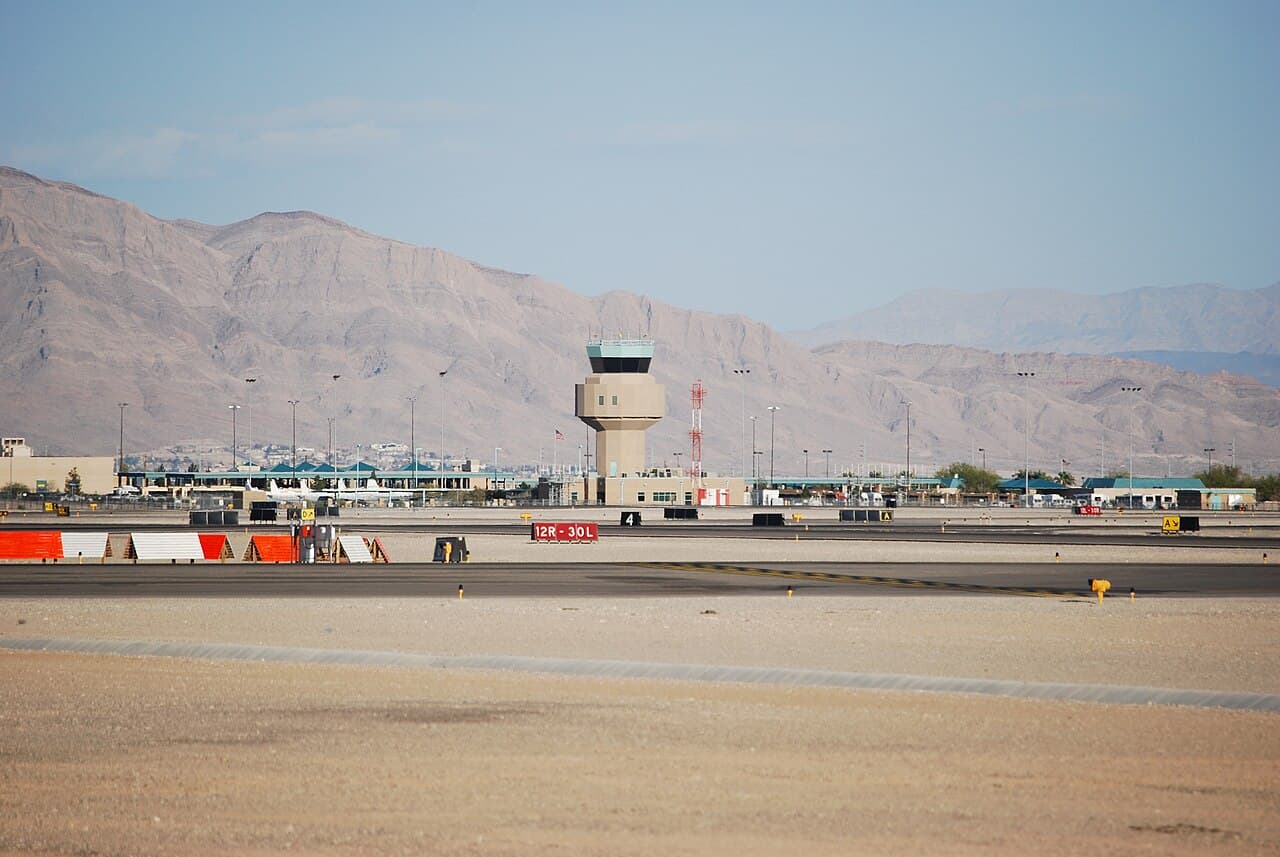
ICE Agents Abandon Partial Arrest at Las Vegas Airport, Arrest Man Later at LAX
A man was thrown to the ground and handcuffed by a pair of Immigration and Customs Enforcement (ICE) agents at Las Vegas Airport (LAS), only for them to run off mid-arrest, as the guy had a handcuff locked on one of his wrists. Honestly, when I first saw this, I assumed the the two "officers" were actually robbers posing as ICE agents. But nope, they're really ICE agents. I find the justification for why the ran off to be really strange as well… ICE agents attempt bizarre arrest at Las Vegas Airport A video has gone viral on social media, showing a man being restrained and handcuffed on the floor in the Las Vegas Airport terminal, in an incident that happened on the evening of Monday, July 13, 2026. The two officers are undercover and posing as passengers — when they notice they're being filmed, the one ICE agent lifts up the hood of his hoodie, while the other agent has a face mask on (always nice to see people who think masks work, right?). 😉 A passenger records all of this, at which point one of the ICE agents tries to swing at him to get him to stop filming (so much for our constitutional rights to film in public, eh?). Meanwhile there's a TSA agent there trying to "control" the situation and keep the crowd away, explaining that the two people are law enforcement. Eventually the two ICE agents just run off, leaving the man on the floor with one handcuff on. A subsequent video even suggests that they stole something from the man, but that hasn't been confirmed. View this post on Instagram A post shared by Chris Motley (@motleymodel) When I first saw this video, I genuinely thought this was some sort of a robbery, with the people posing as ICE agents, and the TSA officer being confused. If these are ICE agents, why did they just walk way in the middle of detaining him? They're just going to leave him with one handcuff on? Did they walk away because they made a mistake, or because they're that scared of being filmed by someone? For what it's worth, immediately after the incident, police removed the handcuff from the guy's hand, since he had no outstanding warrants. He was then able to continue on his flight to Los Angeles (LAX), though that wasn't the end of this story… ICE instead arrested him at Los Angeles Airport This man caught his flight, only to then be arrested by ICE upon landing at Los Angeles Airport (LAX). ICE has even made a social media post about this, identifying the man as a 57-year-old Vietnamese national who reportedly overstayed his visa. 🚨ICE Los Angeles arrested Phu Nguyen, 57, of Vietnam, at LAX, July 14. Nguyen overstayed his visa and, despite attempts by agitators to help him evade ICE officers at Las Vegas airport, was taken into custody as soon as he landed in Los Angeles. pic.twitter.com/UQ9lR0hEcK — ICE Los Angeles (@EROLosAngeles) July 15, 2026 The Department of Homeland Security (DHS) claims that the arrest was called off to "de-escalate the situation and for officer safety," due to "a crowd of anti-ICE agitators." Here's the full statement: On July 13, ICE attempted to arrest Phu Nguyen, an illegal alien who is an illegal alien and citizen of Australia and was born in Vietnam, at the Las Vegas Airport. As officers attempted to arrest Nguyen, a crowd of anti-ICE agitators surrounded officers. To de-escalate the situation and for officer safety, officers did not proceed with the arrest at the Las Vegas Airport and chose to instead arrest him at his flight the following day departing the Los Angeles International Airport on July 14. Nguyen entered the United States legally on a visa on May 27, 2013, with permission to remain in the United States until May 26, 2015. Nguyen refused to depart in violation of our nation's laws. He will receive full due process and remain in ICE custody pending the outcome of his removal proceedings. Being in detention is a choice. We encourage all illegal aliens to take control of their departure with the CBP Home App. The United States is offering illegal aliens $2,600 and a free flight to self-deport now. We encourage every person here illegally to take advantage of this offer and reserve the chance to come back to the U.S. the right legal way to live the American dream. If not, you will be arrested and deported without a chance to return. I'm sorry, I'm really confused here. The situation shown above rises to the point where they were concerned about officer safety? Honestly, these just seemed like concerned travelers who thought someone was being robbed. Like, if you see two people in hoodies pushing someone to the ground, is it wrong to ask what's going on, and to film? Did anyone threaten the ICE agents, or do anything that suggested they'd be violent? I understand we've seen some tense situations involving ICE, but this doesn't seem to rise to that level. Bottom line There's video going viral showing a man being handcuffed by two random-looking people at Las Vegas Airport, with bystanders even suggesting they took things from him. What makes this even stranger is that they just ran off after the guy had been handcuffed on one wrist. Clearly they didn't like to be filmed, given that one of the people even took a swing at the guy filming. Authorities have now confirmed that these were in fact ICE officers, and that this arrest was called off to "de-escalate the situation and for officer safety." Instead, the traveler was arrested upon landing at Los Angeles Airport, after his flight.
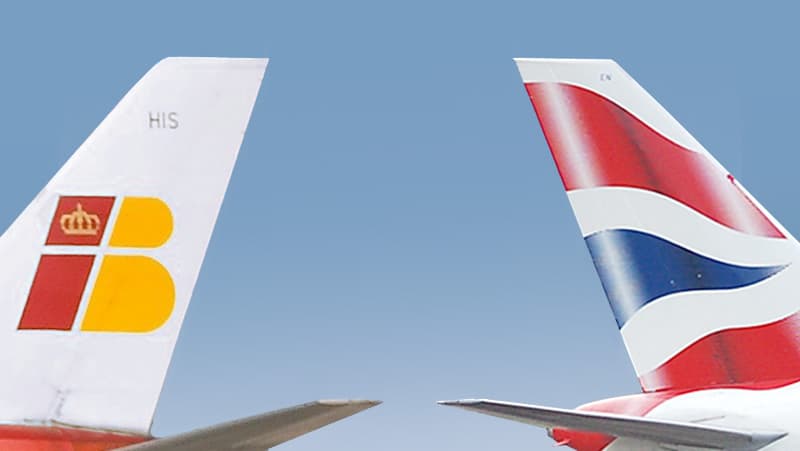
Emergency TCAS Alert Prevents Mid-Air Collision Between Iberia and Air Europa Jets Over Atlantic
A mid-air collision between two packed commercial airliners high above the Atlantic Ocean was narrowly avoided after an emergency system often described by aviation experts as “the last line of defense” issued an alert to the pilots of both aircraft to take evasive action. The shocking incident occurred on July 10 but is only now coming to light after the trusted industry publication, the Aviation Herald , obtained information about what appears to have been an incredibly close call. The two aircraft involved in the incident both belong to Spanish Airlines: An Airbus A321XLR narrowbody aircraft operated by Iberia, which was flying from Recife, Brazil, to Madrid, Spain, and a Boeing 787-9 Dreamliner, operated by Air Europa and flying from Madrid to Paulo Guarulhos, Brazil. Iberia flight IB-140 was flying northbound towards Europe at an altitude of around 36,000 feet above the Atlantic, while Air Europa flight UX-57 had also been reportedly cleared to fly at the same altitude, and on the same track as the Iberia, but in the opposite direction. Flying across the Atlantic requires special training for pilots because of the complicated system of ‘tracks’ that criss-cross between North and South America and Europe – a sort of freeway in the sky which requires an advanced driving license to be allowed to drive along. Air traffic controllers clear pilots to fly along a designated track at a specific altitude with clear separations between planes. What exactly went wrong in this case is yet to be determined, although the fact that an emergency alert system was activated is some evidence of how close the two airplanes came to a disaster. The alert system in question is called TCAS, or Traffic Alert and Collision Avoidance System. TCAS sounds an audible alarm in the cockpit if it detects the threat of a midair collision. It functions independently of ground-based alert systems, giving alerts when all other systems have failed. The system provides two levels of threat alert: Traffic advisories and resolution advisories. It’s not known whether the system provided a traffic advisory or a resolution advisory. In any case, the pilots of the Iberia A321XLR immediately reacted to the alert and descended to avoid c colliding with the Air Europa plane. Both planes arrived at their intended destinations without further incident. When pilots receive a resolution advisory, the TCAS system will give instructions on what kind of manoeuvre the pilots need to perform to avoid a collision, which could involve quickly climbing or descending to get out of the way of the other aircraft. These manoeuvres can be pretty dramatic, and, in the past, resolution advisories have resulted in some nasty injuries to passengers and crew who have been thrown about the cabin.
The Daily Touch & Go
The day's best aviation news in your inbox. Free, no spam.