


Illustration: The Touch & Go
Embraer Launches Phenom 300EV Light Jet With Autoland and Enhanced Payload
Embraer announced its Phenom 300EV will debut in 2028 featuring Garmin Autoland, increased payload, and cabin improvements, building on the popular 300E model.
The gist
Embraer’s Phenom 300EV adds Autoland, 430 lbs more payload, and cabin upgrades to its bestselling light jet lineup starting 2028.
Continuing coverage
All Business Aviation →- Palm Beach International Airport Renamed to President Donald J. Trump International Airport on July 9
- Tech Boom Fuels Surge in Private Jet Demand Among Young SpaceX Employees
- NBAA Opens Nominations for 2026 Gold Wing Award Honoring Business Aviation Journalism
- Private Jet Charter Costs in 2026 Vary Widely by Aircraft Size and Hidden Fees
- Jet Aviation Secures 30-Year Lease to Launch New FBO at Rocky Mountain Metropolitan Airport
Embraer Executive Jets revealed its latest advancement in the light business jet segment with the forthcoming Phenom 300EV, set to complement the existing Phenom 300E by 2028. This upgraded model marks a notable evolution, increasing payload capacity by 430 pounds and extending its maximum range to 2,065 nautical miles, slightly surpassing the 300E’s 2,010 nautical miles. This range enhancement makes new city pairings feasible, such as nonstop flights from Aspen to New York or London to Athens, expanding operational versatility for owners and operators.
One of the Phenom 300EV’s headline features is the integration of Garmin’s Autoland system, a groundbreaking addition in the light jet category. Embraer proudly positions the 300EV as the largest business jet to incorporate this technology, which automatically lands the aircraft if pilot incapacitation occurs. This capability follows the system's first live activation in December, highlighting its operational readiness and safety value. Embraer CEO Michael Amalfitano emphasized the aircraft’s suite of innovations aimed at elevating safety, performance, and in-flight comfort to a new level.
The aircraft’s enhanced safety suite includes the class-exclusive Autobreak system, which works alongside Garmin’s advanced avionics package, the G3000 Prodigy Touch. This system consists of three large flight displays and dual touchscreen controllers, now upgraded with better runway and situational awareness tools. Complementary electronic systems such as rudder-by-wire controlled via Embraer’s Multi-Purpose Electronic Controller (MEC) help reduce pilot workload. Other features carried forward include emergency descent mode, autothrottle introduced on the 300E in 2023, and Runway Overrun Awareness and Alerting System (ROAAS), present since 2020.
On the hardware side, the 300EV benefits from new lithium-ion batteries and energy-efficient LED taxi and landing lights. These improvements support both operational reliability and energy savings. Under the hood, the jet continues to be powered by Pratt & Whitney Canada’s PW535E1 engine, maintaining top speeds of Mach 0.80 (533 knots) and a high-speed cruise of 464 knots. The combination of aerodynamic refinements and engine performance ensures the Phenom 300EV remains competitive in its class.
Passenger experience enhancements include factory-equipped Gogo Galileo satellite WiFi, with options for operators to add SpaceX Starlink connectivity through supplemental type certification. The cabin interior receives thoughtful updates such as an odorless vacuum lavatory, improved climate control with air ionization, and a redesigned refreshment center. Embraer also highlights the 300EV’s low maximum cabin altitude of 6,600 feet, one of the best in its category, contributing to passenger comfort during cruising.
The Phenom 300EV preserves the family’s generous baggage compartment and is equipped with the largest windows in its class, further amplifying cabin ambiance. The aircraft retains its signature robust entry airstair design—borrowed from larger jet models—ensuring seamless boarding. These factors cumulatively underscore Embraer’s focus on marrying performance and passenger comfort in a light jet footprint.
Looking at the competitive landscape, Embraer prepares to defend its lead as the top-selling light jet manufacturer amid growing market activity. Textron Aviation plans FAA certifications for its next-generation Citation CJ4 and M2 jets by 2026 and 2027, while HondaJet aims to introduce its transcontinental-range Echelon around 2028. In broader categories, Embraer recently scored type certifications for its mid-size Praetor 500E and 600E, while Bombardier and Gulfstream solidified their positions with Global 8000 and G800 certifications, respectively.
Embraer’s success with the 300 series is evident in sales data. According to a 2026 general aviation survey, Embraer sold 155 executive jets in 2025 compared to 130 the previous year, with 66 deliveries of the Phenom 300E alone. This combined demand cements the model’s status as the most popular light jet, outpacing competitors like Pilatus’ PC-24 and Textron’s CJ4. Introducing the advanced 300EV model ensures Embraer will maintain its lead by offering a state-of-the-art, feature-rich light jet for business and private aviation markets.
Frequently asked questions
- What is the expected range and payload increase of the Phenom 300EV compared to the 300E?
- The Phenom 300EV offers a range of 2,065 nm, slightly up from 2,010 nm on the 300E, with a payload increase of 430 pounds.
- What new safety features does the Phenom 300EV include?
- It introduces Garmin's Autoland system for automated landings in emergencies, class-exclusive Autobreak, improved situational awareness on the Garmin G3000 suite, and retains prior safety systems like emergency descent mode and Runway Overrun Awareness.
- When will the Phenom 300EV deliveries begin and what connectivity options are available?
- Deliveries are expected to start as soon as 2028, with line-fit Gogo Galileo satellite WiFi, and optional supplement type certification for SpaceX Starlink connectivity.
Read more
All Aviation Safety →
Pilots urged to use updated airmets and sigmets for safer flights in changing weather
Most pilots can tell at least one story about a flight that did not go as planned because of unpredicted weather along the route. We all know that weather forecasts aren’t perfect, but that can lead to concerns regarding the safety of the flight.

How London integrates transport to safeguard 180 million airport passengers annually
Six London airports collectively serve around 180 million passengers per year, and for most of them the journey to the aircraft begins not at the check-in counter but on a metro or commuter rail platform. ezstandalone.cmd.push(function () { ezstandalone.showAds(119); }); The safety of an air passenger essentially starts in the city. In this article, we explain how the transport networks of the British capital build this invisible line of protection from the center of London to the terminal doors. Integrated Transit Systems Connecting Major Global Gateways to the City Center Every major London airport is connected to the city center by a dedicated rail route, and this is not just a matter of convenience. ezstandalone.cmd.push(function () { ezstandalone.showAds(127); }); Predictability of travel is the foundation of safety. A passenger carrying luggage and documents is especially vulnerable in an unfamiliar environment. Here, the general rush and dense crowds make them an easy target for pickpockets. Dedicated express trains and lines with permanent staff minimize the number of transfers and, with them, the number of risky situations. The scale of this infrastructure is clearly visible on the main routes: ezstandalone.cmd.push(function () { ezstandalone.showAds(128); }); All of the paths in the table have their own control service but share a common logic. All stations are fully staffed, and emergency contact points are provided. There is constant surveillance by video from the rail terminal to the airport terminal. The passenger need not know who takes on what since the protection is felt to be seamless. For a passenger who has a boarding pass in his pocket, it translates to a single notion. It can be done in a pre-planned way with no last-minute decisions. Advanced Surveillance and Crowding Management Technologies Across Key Routes London’s transport network is one of the most camera-dense in the world. According to Transport for London, it uses more than 77,000 CCTV cameras, around 15,000 of which are in the Underground. Stations on the Elizabeth line, the key route to Heathrow, were designed from the start with full coverage. There are 749 cameras installed on the London section alone. ezstandalone.cmd.push(function () { ezstandalone.showAds(129); }); However, footage by itself solves little. Recordings flow into control centers where operators monitor not only incidents but also passenger density. When platforms become overcrowded, station control is introduced. Entry is temporarily restricted, and flows are redirected to less busy exits and escalators. The peak waves at airport hubs coincide with flight schedules. Thus, such measures are planned in advance rather than at the moment of collapse. The cameras’ own health is monitored automatically, and repair teams fix issues before passengers notice them. Photo Credit: Airports Council International The Crucial Role of Frontline Transit Personnel and Dedicated Patrol Teams Technology plays a key role, but the final decision in an unusual situation is still made by a human. This means thousands of specialists, from station staff to patrol teams, and demand for them continues to grow. ezstandalone.cmd.push(function () { ezstandalone.showAds(130); }); The website Jooble shows the current London transport security roles from nearly the entire market. Around 2,800 vacancies are open in this category alone, with an average salary of £49,200 per year. The service aggregates listings from most sources on one page, verifies posts, blocks spam and phishing, and subscription alerts eliminate the need to manually monitor job boards. The scale of the platform speaks for itself: 66 countries of presence and around 300,000 new vacancies daily. Such a high demand for personnel on recruitment platforms directly reflects the city’s commitment to maintaining a visible security presence, ensuring that vacancies are rapidly filled to keep the transit network fully staffed. ezstandalone.cmd.push(function () { ezstandalone.showAds(131); }); The core of the system is formed by two agencies. British Transport Police is responsible for railways, the Underground, and DLR. The Roads and Transport Policing Command of the London Police, a division where more than 1,500 positions are funded directly by Transport for London, patrols the bus network and roads. This is why a passenger rushing to a flight will typically see uniformed personnel on nearly every segment of the route. Photo Credit: London Gatwick Airport Interagency Collaboration with Aviation Authorities and Met Police Forces Jurisdiction boundaries here are deliberately blurred. Heathrow is patrolled by the aviation unit of the Metropolitan Police; Gatwick, by Sussex Police; and although these are formally different structures, joint operations have long been the norm. ezstandalone.cmd.push(function () { ezstandalone.showAds(132); }); A telling example is Project Servator, unpredictable patrol deployments in time and place, where uniformed and plainclothes officers work side by side with dog units at transport hubs. Since 2015, such operations have led to more than 650 arrests. The aviation industry itself sets a high pace of change: The adoption of technologies like AeroSHARK highlight the speed at which the industry adopts innovations in flight operations. Ground networks, being the first link in the passenger journey, must maintain a comparable level, and interagency exercises with aviation authorities are held regularly for exactly this purpose. ezstandalone.cmd.push(function () { ezstandalone.showAds(133); }); Passenger Awareness Initiatives and Real-Time Emergency Response Protocols Passengers continue to be the most common sensor deployed in the network, despite all the cameras and patrols. The campaign of ‘See it. Say it. Sorted.’ has become a habit, and a suspicious item can be reported free of charge by SMS to 61016, and each message is dealt with by the British Transport Police control center. There is a list of basic measures that passengers can take: Reporting of unusual conduct to station staff or 61016 — suspicious items. Do not leave luggage unattended even for a couple of minutes; Use emergency contact points installed on platforms; Do NOT follow staff evacuation routes; follow staff instructions. ezstandalone.cmd.push(function () { ezstandalone.showAds(134); }); Emergency procedures practiced in advance: joint drills with airports, well-designed evacuation schemes, and real-time alerts via displays and mobile services. Additionally, inter-coordination between transport control centers and airport services enables the immediate redirection of all passengers in the event of an incident. So the safety of an air passenger in London is not an individual service but a characteristic of the redirection: from the first turnstile to the boarding gate. ezstandalone.cmd.push(function () { ezstandalone.showAds(135); });
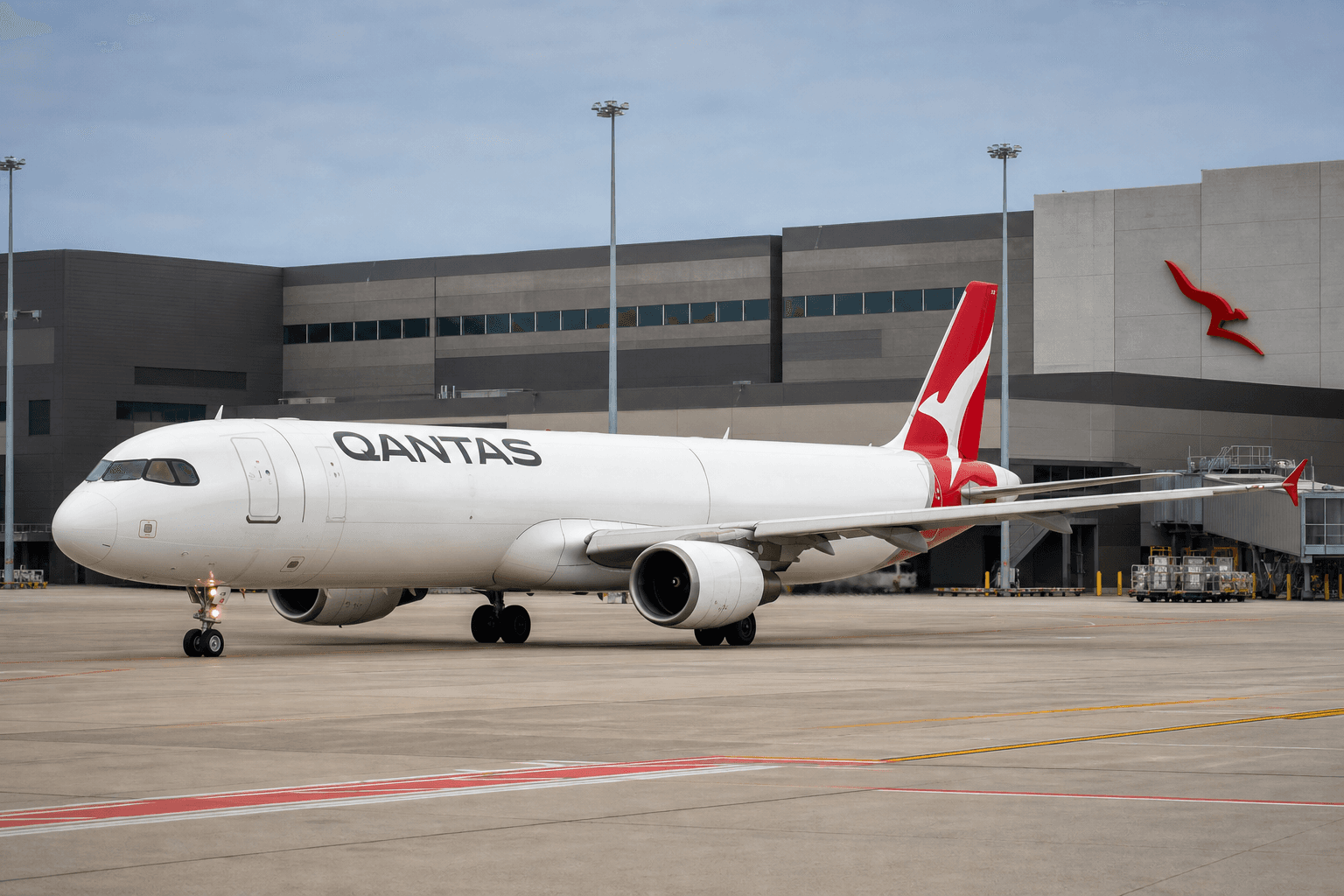
Qantas Freight Starts Operational Trials at Western Sydney International Airport
Western Sydney International (Nancy-Bird Walton) Airport (WSI) has taken a major step forward in its journey to become a key transport hub. ezstandalone.cmd.push(function () { ezstandalone.showAds(119); }); A Qantas Airbus A321 freighter became the first cargo aircraft to land at the new facility, marking the start of important operational trials. The aircraft, operating as flight QF7301, touched down smoothly at 2:00 pm. This readiness flight tested critical processes at the airport’s new Cargo Precinct. ezstandalone.cmd.push(function () { ezstandalone.showAds(127); }); Ground teams checked aircraft handling, ground operations, systems integration, airside coordination, and cargo transfer procedures. Everything went according to plan, paving the way for regular freight services. Regular Operations Set to Launch Soon Regular domestic freighter operations will begin on 27 July. The new terminal is expected to handle more than 850 tonnes of freight each week. ezstandalone.cmd.push(function () { ezstandalone.showAds(128); }); Qantas Freight, Australia’s leading air cargo carrier, will operate from a state-of-the-art 24,000 square-metre facility. This modern terminal will allow faster and more efficient cargo handling for a wide range of goods. The 24-hour Cargo Precinct uses the latest technology to deliver high efficiency and sustainability. Its design supports future growth and helps meet rising demand for fast deliveries, especially in e-commerce and time-sensitive supplies. ezstandalone.cmd.push(function () { ezstandalone.showAds(129); }); Photo Credits: Western Sydney International Airport Igor Kwiatkowski, Qantas Freight Executive Manager , highlighted the significance of the trial. “Western Sydney International Airport is set to become one of Australia’s key air freight hubs and today’s flight was an important opportunity to test key procedures ahead of starting operations.” “In just a few weeks, this new 24-hour facility will provide greater flexibility for our freight network, helping us meet growing demand for e-commerce and next-day deliveries. The airport will increase Sydney’s air cargo capacity helping us to move time-critical supplies around Australia and overseas in the months ahead.” Strong Collaboration and Future-Proof Design Simon Hickey, Chief Executive Officer of Western Sydney International Airport , praised the teamwork behind the successful trial. ezstandalone.cmd.push(function () { ezstandalone.showAds(130); }); “We’ve utilised the latest technology and innovations to deliver a highly efficient, sustainable, and future-proofed 24-hour Cargo Precinct. Our operational readiness program and live aircraft trials present an excellent opportunity to test these capabilities.” “I also want to acknowledge the huge amount of cooperation and coordination across WSI, together with our colleagues at Air Services Australia and our trusted Cargo Precinct partners.” This freight milestone comes as WSI prepares for full operations. Jetstar will operate the first commercial passenger flight on 25 October 2026, with Qantas passenger services following on 28 March 2027. ezstandalone.cmd.push(function () { ezstandalone.showAds(131); }); The integrated passenger and freight agreements show a clear vision for the airport’s role in connecting Western Sydney to the rest of Australia and the world. Boosting Capacity and Economic Growth The new freight hub addresses growing demand in Sydney ’s air cargo market. By adding significant capacity, it reduces pressure on existing facilities and supports faster domestic and international supply chains. Businesses that rely on air freight — from perishables and pharmaceuticals to e-commerce parcels — will benefit from more options and greater reliability. ezstandalone.cmd.push(function () { ezstandalone.showAds(132); }); The trials also demonstrate the airport’s commitment to safety and efficiency. Every process tested during the first landing will help ensure smooth operations when commercial services begin. This careful preparation minimises risks and builds confidence among airlines, partners, and customers. Conclusion Western Sydney International Airport signals a shift in how Australia moves goods and people. For local businesses and communities in Western Sydney, the development brings new economic opportunities and better connectivity. As Qantas Freight prepares to ramp up services, the successful trial flight signals a bright future. The combination of modern infrastructure, strong partnerships, and forward-thinking planning positions WSI as a vital part of Australia’s aviation and freight network for decades to come. ezstandalone.cmd.push(function () { ezstandalone.showAds(133); }); With regular operations starting in mid-July, the new chapter for Australian freight has officially begun.
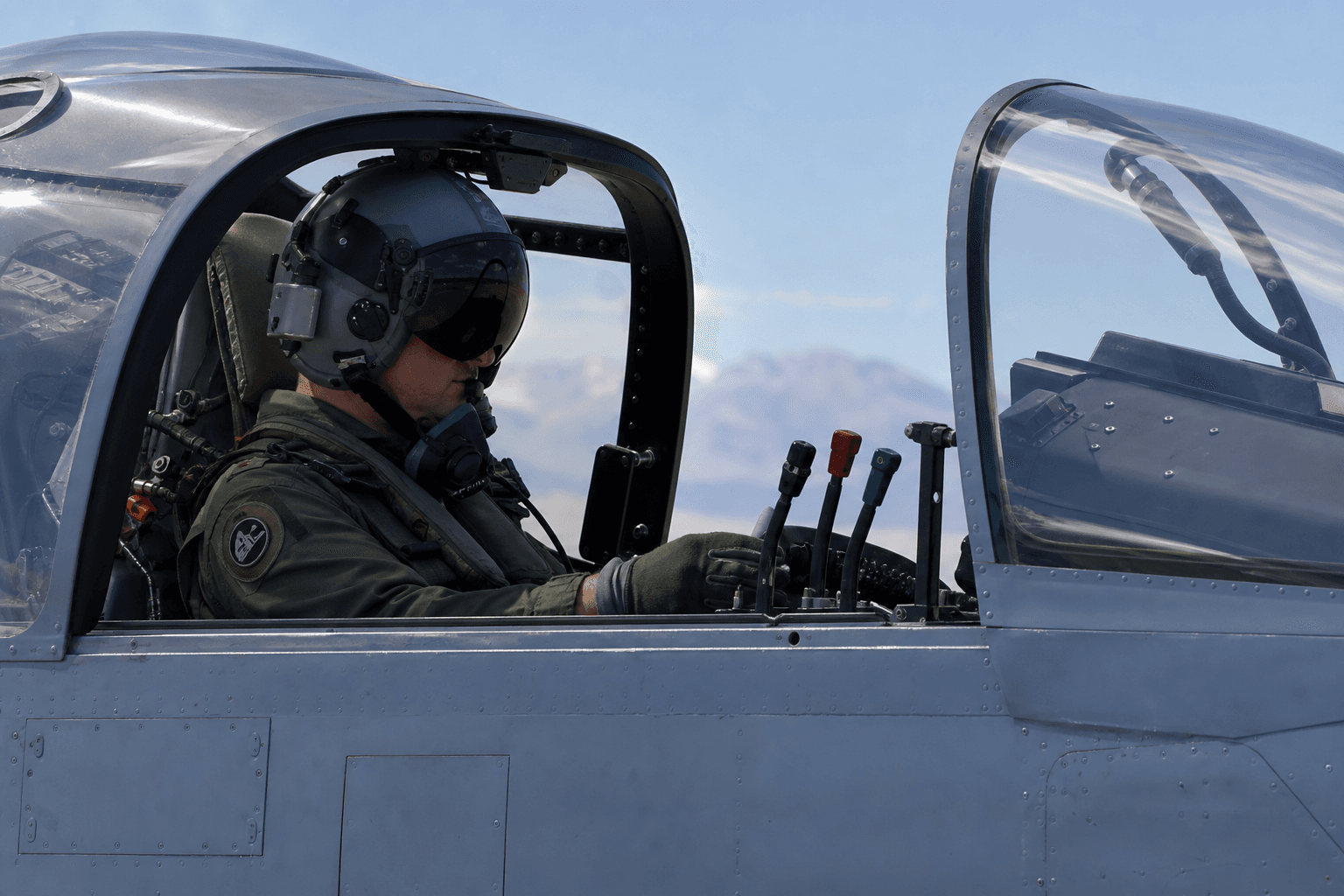
Fuel Valve Design Confusion Leads to $17.9M Loss of Air Force OA-1K Skyraider II
The official US Air Force Accident Investigation Board has released its report of the first mishap involving the Air Force Special Operations Command's new 'attack tractor.' The crash was caused by erroneous control input of a student pilot during their first time at the controls of the L3Harris OA-1K Skyraider II. It all came down to the difference between a silver handle located a few inches away from a red handle inside the cockpit.
The Daily Touch & Go
The day's best aviation news in your inbox. Free, no spam.