

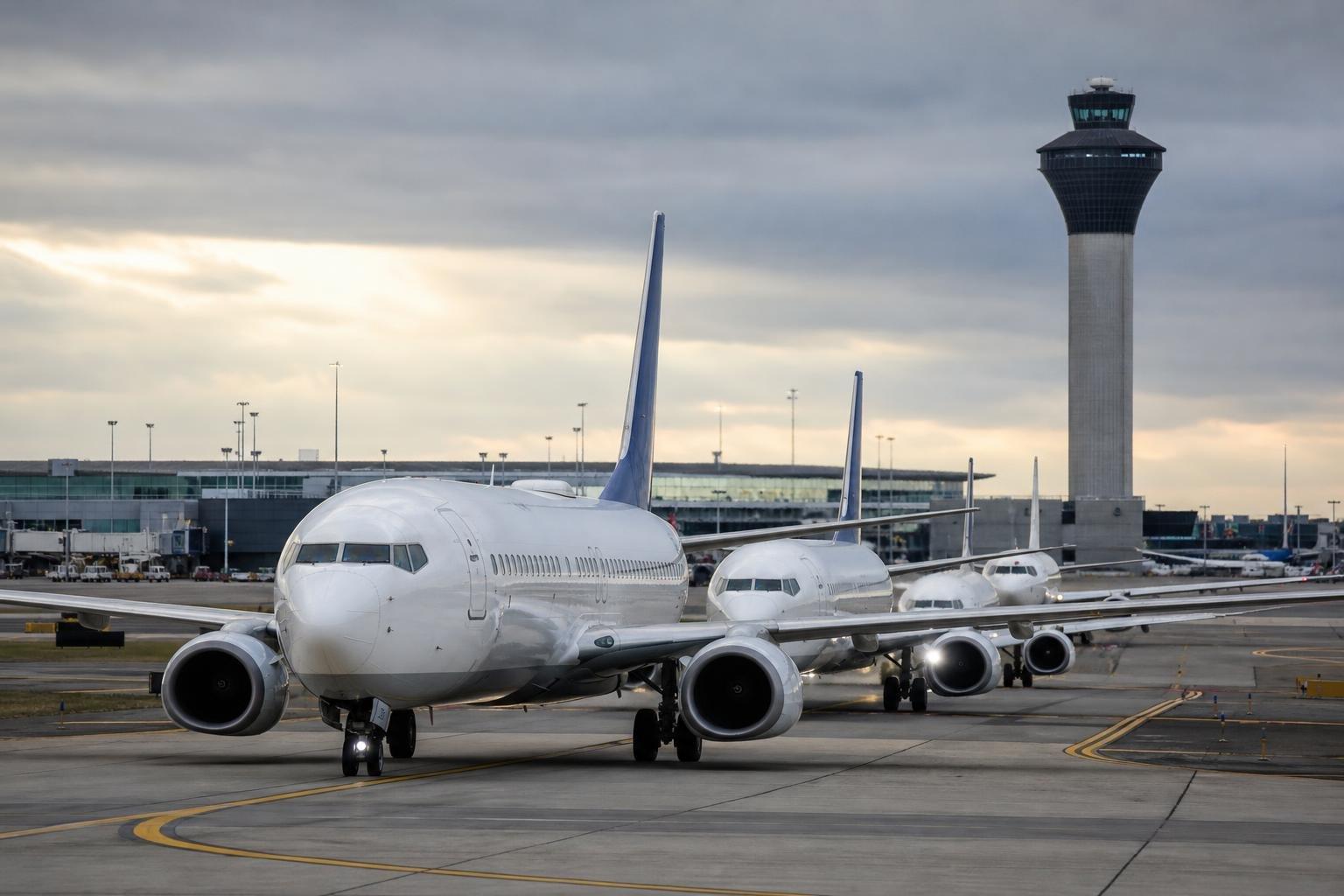
AI-generated illustration
FAA Ground Stops Hit O'Hare and Atlanta on Three Straight Days of Thanksgiving Week
Radar, airline software and staffing problems halted flights at the two busiest US hubs, less than two weeks after the November 13 nationwide air traffic control breakdown.
The gist
Equipment failures and controller shortages forced ground stops at O'Hare and Atlanta on three consecutive days of Thanksgiving week.
Continuing coverage
All Faa →- FAA Orders Pre-Flight Inspections of Boeing 757 Fuselage Repairs After Crack Reports
- Academy Report Says FAA Skipped Required Risk Assessment Before Closing DC Helicopter Route 4
- Surface Radar Outage Forces Second Ground Stop in Two Days at Chicago O'Hare During Thanksgiving Rush
- Army Seeks to Restart Helicopter Training Flights Near Reagan National as FAA Approval Remains Pending
- FAA Follows Canada in Ordering Bell 429 Tail Rotor Checks Over Uncoated Bearings
The Federal Aviation Administration ordered ground stops at Chicago O'Hare and Atlanta Hartsfield-Jackson on three successive days during Thanksgiving week, as equipment failures and air traffic controller shortages disrupted flights at the start of one of the year's heaviest travel periods. The interruptions came less than two weeks after a technical failure on November 13 triggered the third nationwide ground stop in US history. Chicago and Atlanta ranked first and second in the world for aircraft movements in 2025, with a combined 1.66 million takeoffs and landings. The FAA expects this Thanksgiving period to be the busiest in 16 years, with nearly 418,000 flights scheduled between November 23 and December 1.
The latest stop came Tuesday afternoon, when O'Hare's ground surveillance radar, which controllers use to track aircraft and vehicles on runways and taxiways, failed. The FAA said the ground stop was lifted by 4:07 p.m., with flights delayed an average of 47 minutes. It mainly affected flights bound for O'Hare from other Illinois airports, while departures from Chicago continued. The agency said afterward that it was temporarily delaying some flights while technicians repaired a piece of air traffic equipment, and that the problem was specific to O'Hare and did not affect other airports or FAA systems. Delays persisted after the stop ended, and by late afternoon FlightAware had recorded 373 delayed flights at O'Hare. The FAA also anticipated a staffing shortage at Chicago Terminal Radar Approach Control (TRACON) on Tuesday evening.
The run of disruptions began Sunday morning, when an outage in Delta Air Lines' automated weight-and-balance system led the FAA to briefly halt Atlanta-bound Delta flights. Delta said more than 1,600 of its flights nationwide were delayed. With the software down, Delta staff calculated weight and balance figures by hand. The FAA said the outage was not related to air traffic control systems. It followed a November 16 system outage at United Airlines that disrupted departures for more than 90 minutes.
On Monday, the FAA stopped O'Hare-bound flights for about 90 minutes, citing staffing constraints at Chicago TRACON, the facility that guides aircraft into and out of the Chicago area. November figures compiled by the industry website 123ATC show the facility has 83 fully certified controllers against a staffing target of 100. Staffing shortages also caused a 44-minute ground stop that evening at Harry Reid International Airport in Las Vegas.
Nationally, roughly 11,000 fully certified controllers handle more than 44,000 flights a day. In May the FAA lowered its target for certified controllers from 14,633 to 12,563, a figure it has still not reached. National Air Traffic Controllers Association President Nick Daniels told NPR on November 16 that the system is short about 3,000 certified controllers, and that most controllers work six-day weeks with mandatory overtime and shifts of up to 10 hours. New FAA requirements for line up and wait operations, in which an aircraft is cleared onto a runway before receiving takeoff clearance, also took effect Tuesday: a supervisor must now oversee those operations without performing other operational duties at the same time. Controllers told the Washington Post that supervisors frequently take on several duties, particularly on morning and night shifts.
The November 13 nationwide stop lasted nearly five hours, and more than 18,000 flights were canceled in the disruption that followed, affecting about 1.5 million passengers. Only two such stops had occurred before, on September 11, 2001, and in January 2023, when the NOTAM pilot-alert system failed. A single router at an FAA site in El Dorado, Arkansas, is believed to have flooded the network with about 1,000 log-on attempts every four to five seconds, setting off cascading failures that destabilized radar and communications feeds at 17 facilities as overloaded sites switched to backups. Controllers used the radar and radio channels still available to guide some 3,500 airborne aircraft to their destinations.
The FAA has told L3Harris, which owns and operates the agency's telecommunications network, to pause router upgrades while an investigation proceeds. The contractor had been replacing copper T1 lines with fiber-optic lines and installing new routers to replace units built between 2001 and 2006. A second recently installed router in Amarillo, Texas, is also being examined. Juniper Networks, which makes the new routers, told the Wall Street Journal its router did not fail and appeared to be working as intended, and the Washington Post reported on November 17 that an FAA official had overseen, tested and approved the contractor's work in Arkansas before the outage.
Days before the outage, the FAA had expanded SMART, an artificial intelligence-based traffic management system from startup Air Space Intelligence, to all 22 of its en route centers; the FAA and the company deny any link between SMART and the failure. On Tuesday, 24 House Democrats wrote to the FAA criticizing the November 10 nationwide deployment, which came 50 days into a planned 90-day validation period in the Washington, D.C. region, and raising allegations of retaliation against employees who voiced safety concerns. They asked for a response by November 30. Transportation Secretary Sean Duffy, who had been seeking another $30 billion in aviation infrastructure funding on top of $12.5 billion appropriated in 2025, raised the request to $50 billion on the day of the outage. Senate Commerce Committee Chairman Ted Cruz said he did not expect the full $50 billion to be funded, adding that some of it is not safety-related.
Reported by World Socialist Web Site, with additional reporting from ABC7 Chicago
Read more
All Aviation Safety →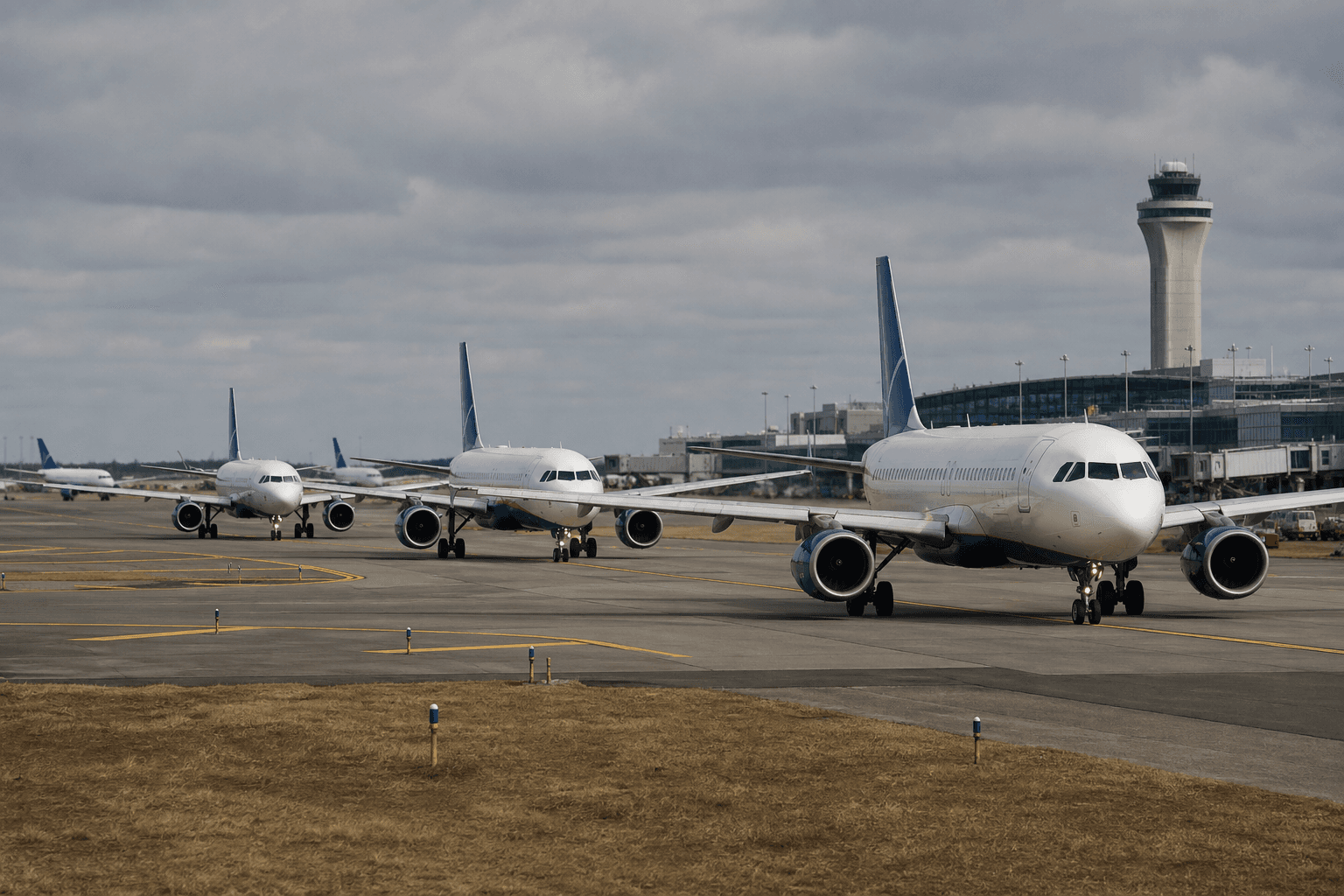
FAA Halts O'Hare Arrivals for Over an Hour as Chicago TRACON Runs Short of Controllers
A staffing shortfall at the radar facility that handles Chicago arrivals triggered a ground stop for O'Hare-bound flights on Monday, at the start of the Thanksgiving travel period.
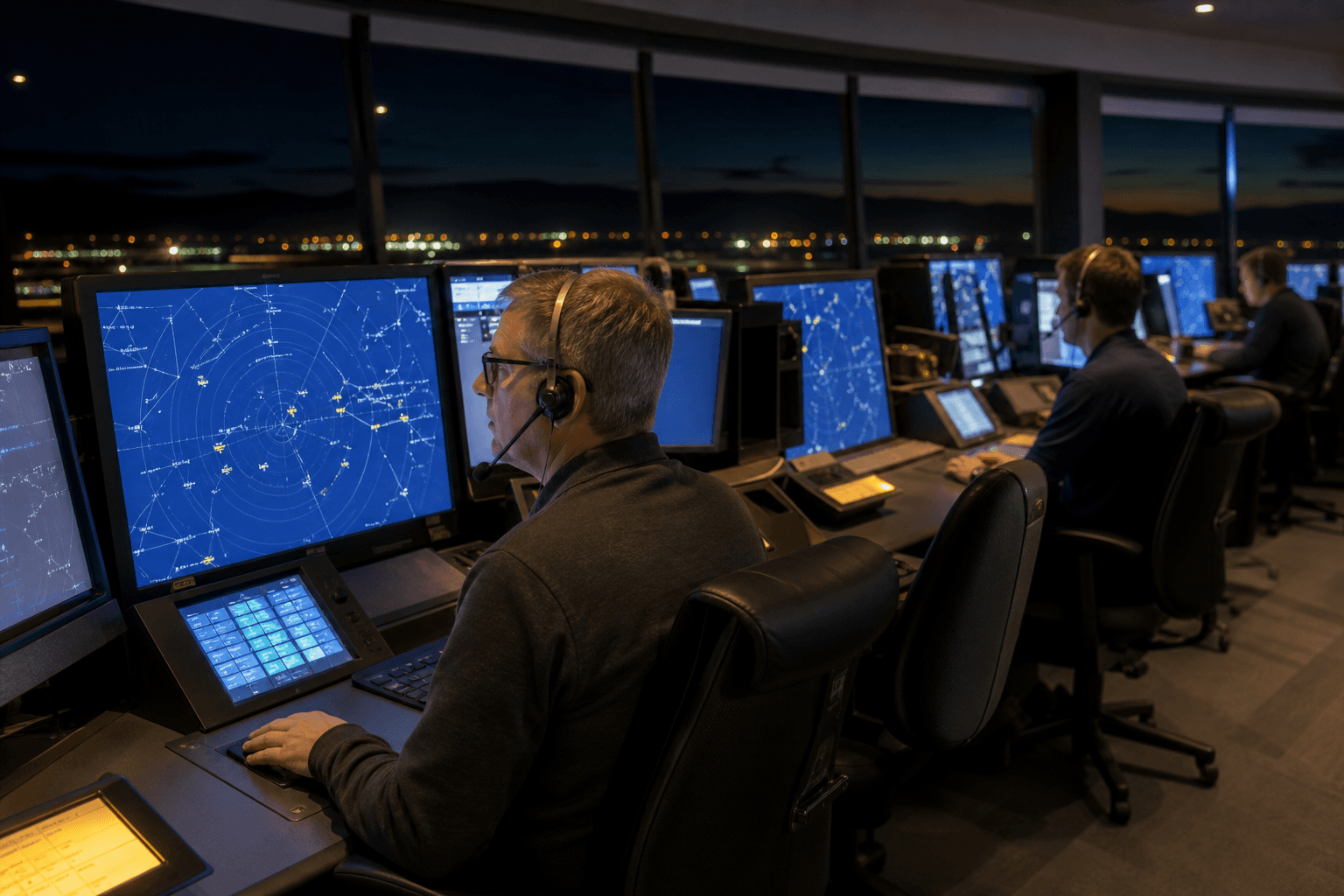
White House Forms Tiger Team to Head Off Air Traffic Control Outages Before Thanksgiving
A multi-agency group drawn from the FAA, Transportation, Defense and the intelligence community has met daily since a five-hour nationwide ground stop halted US flights.
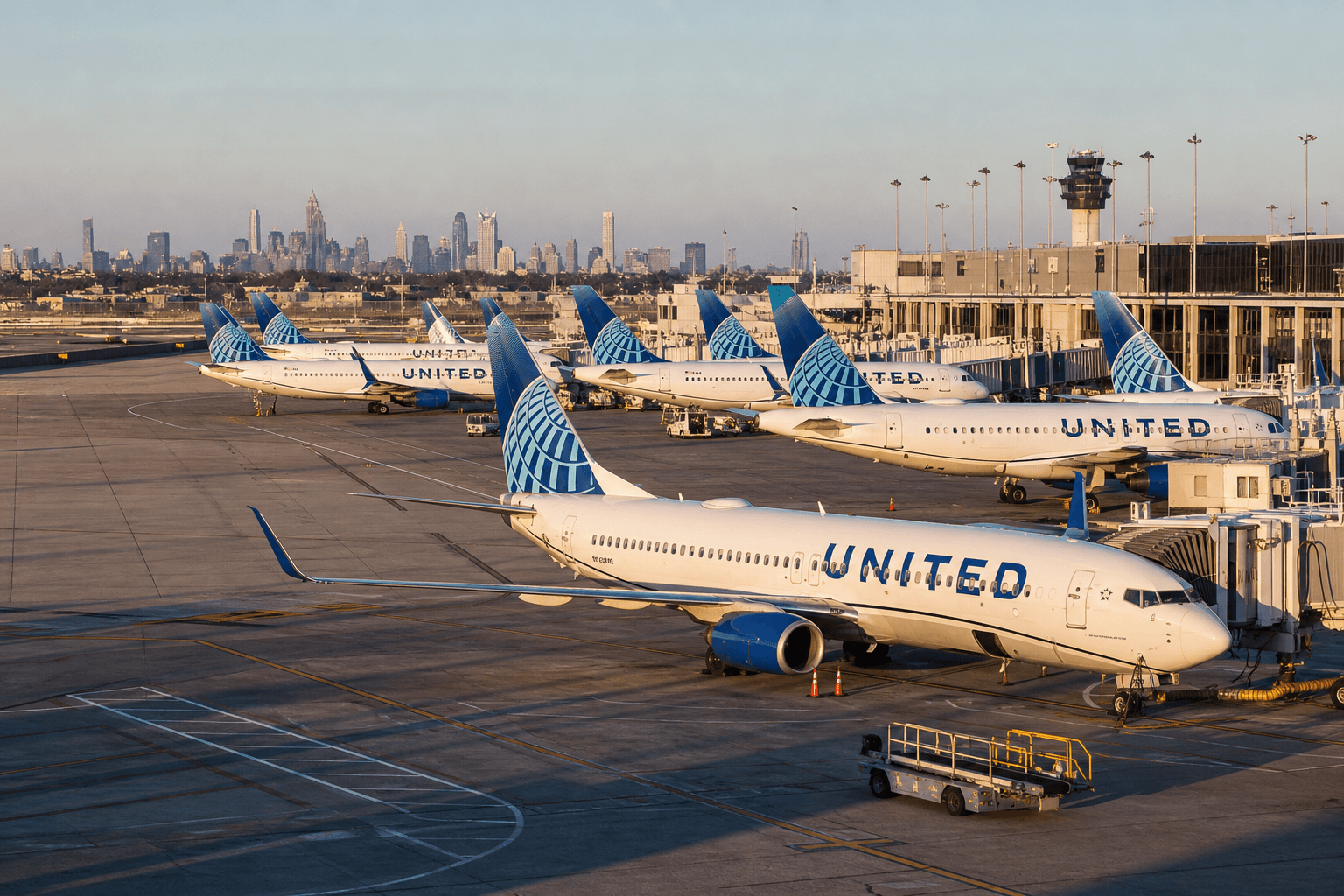
FAA Nationwide Ground Stop Sends NBA, NHL and College Teams Scrambling for Weekend Travel
A ground stop of more than four hours Friday, tied to communications problems at regional air traffic control centers, forced teams onto buses, back to campus and into rescheduled kickoffs.
GAO Warned FAA's Rushed Air Traffic Control Overhaul Risked Disruptions Before Nationwide Outage
Months before a router installation in Arkansas triggered the longest commercial ground stop since 9/11, government auditors and former FAA officials cautioned that the agency was moving too fast without a master schedule.
The Daily Touch & Go
The day's best aviation news in your inbox. Free, no spam.