

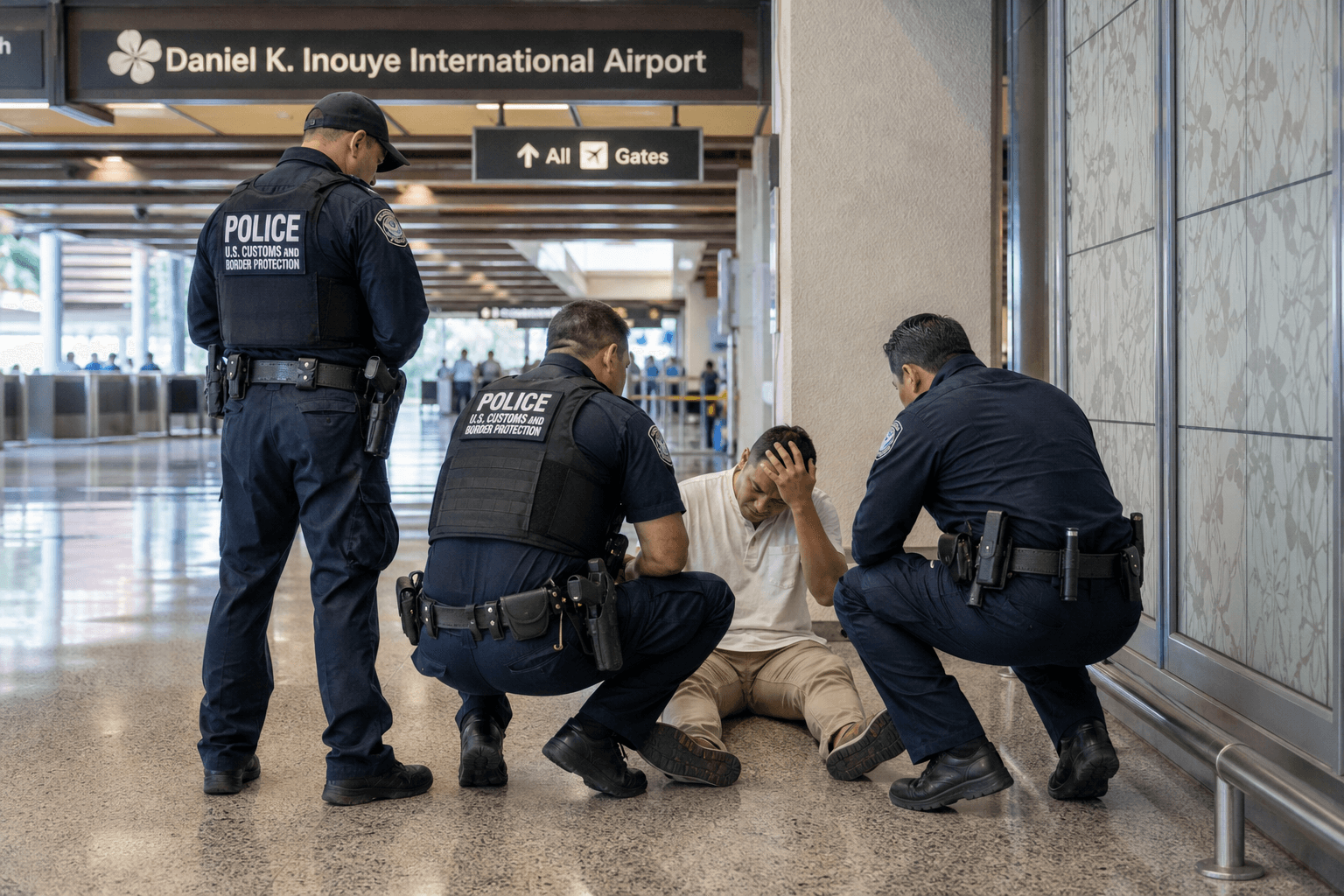
AI-generated illustration
Japanese Woman Handcuffed and Deported at Honolulu Airport After Protest
Video shows a Japanese tourist forcibly restrained and sent on a flight back to Nagoya after refusing secondary inspection at Honolulu airport.
The gist
A Japanese tourist was handcuffed and deported at Honolulu airport after refusing secondary questioning by border officers.
A Japanese woman traveling to Hawaii was handcuffed by U.S. border officers and rushed onto a flight back to Nagoya, Japan, after refusing to cooperate with a secondary inspection at Honolulu's Daniel K. Inouye International Airport. New footage of the incident, originally aired on Airport Security: USA two years ago and recently reposted by Frontline Crime, captures the woman crying out for help as officers restrain her.
Customs and Border Protection (CBP) agents had questioned the woman, described as a hostess, about her visit, including who paid for her airfare and hotel. The woman stated a man sponsored her trip, but she was unable to provide further contact information or details. The officers indicated suspicion that the man is linked to organized crime in Japan, which contributed to concerns about her intentions in Hawaii.
The questioning escalated after the woman accused agents of suspecting her of prostitution when they asked routine entry questions. Officials interpreted her reaction as evidence that she might be hiding her true purpose for travel. Because she entered as a tourist without work authorization, any intention to engage in employment, such as serving at a club, would render her ineligible for temporary admission.
An officer told her that she had not overcome the presumption that she intended to immigrate and informed her she would be denied entry and sent back to Japan. The deportation was expedited, as missing the return flight would have resulted in her spending the night in federal detention. This situation contrasts with the limited resources available for holding detainees temporarily at the airport.
The case has drawn attention online, with commentators questioning the efficacy of the woman's refusal to answer questions and the broader approach of immigration enforcement. Other travel detentions at Honolulu airport have been documented, including lengthy confinement of travelers suspected of attempting to overstay or violate visa terms.
Incidents like this raise questions about the balance between thorough immigration enforcement and the treatment of travelers. Hawaii's unique status as a U.S. state popular with international tourists means airport officials often face challenges identifying those intending permitted visits versus impermissible employment or residence. The reliance on database checks and suspicion linked to third parties paying for travel adds complexity.
Despite public debate, agents maintain that standard operating procedures require processing suspected ineligible travelers promptly to avoid extended detention. This includes immediate removal on the next available flight where possible. The authorities point out that resources and staffing do not support prolonged holding at the airport, underscoring the preference for quick deportation rather than extended incarceration.
This case also highlights the risks travelers face in the context of heightened immigration scrutiny, where simple missteps or refusals to cooperate during questioning can lead to forcible removal. As travel resumes and international visitors return, similar incidents may recur if policies and enforcement methods remain unchanged.
Originally reported by View From The Wing
Read more
All Airports →
Airlines Extend Scheduled Flight Times to Improve On-Time Stats Despite Costs
To boost on-time arrival rates, airlines schedule flights with longer block times accounting for ground delays and congestion, despite increased operational costs.
US Airlines Prepare for Record Thanksgiving Travel Surge with Nearly 29 Million Passengers
US carriers anticipate unprecedented crowds over the Thanksgiving weekend with busiest days expected on November 29 and 30, offering more flights and seats than last year.
IAG launches new media firm offering brands access to 122 million travelers annually
International Airlines Group introduces IAG Media to unify advertising across its airlines, targeting diverse traveler audiences through digital and onboard channels.
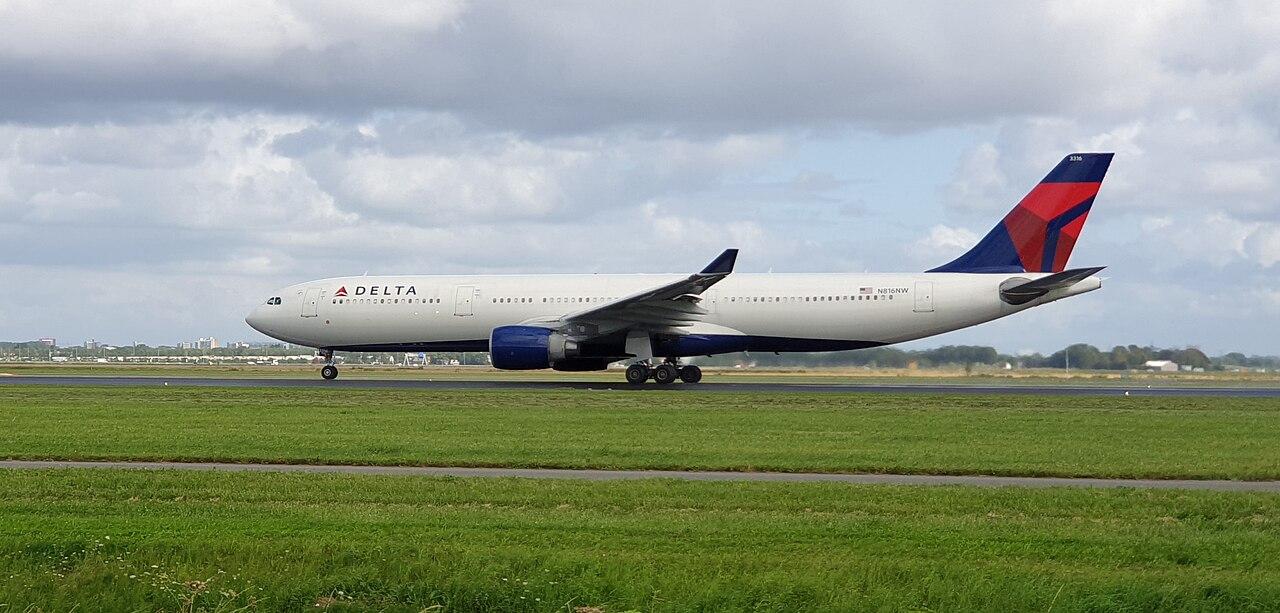
Delta Air Lines launches seasonal nonstop flights from Minneapolis to Maui
Delta began seasonal service connecting Minneapolis-St. Paul and Kahului, Maui, offering five weekly flights with Airbus A330-300 through mid-April.
The Daily Touch & Go
The day's best aviation news in your inbox. Free, no spam.