


Illustration: The Touch & Go
Liverpool Pilot Skywrites 'I'm Bored' During Two-Hour Piper Tomahawk Test Flight
A trained instructor pilot from Ravenair flew a Piper Tomahawk on a two-hour post-maintenance test above Liverpool, skillfully tracing the words I'm Bored in the sky.
The gist
During a mandatory two-hour test flight, a Ravenair pilot creatively skywrote I'm Bored over Liverpool, showcasing skillful flying on a Piper Tomahawk.
A pilot conducting a two-hour test flight after engine maintenance took to the skies above Liverpool, United Kingdom, and drew the words I'm Bored with his aircraft. The flight, performed on Saturday, July 11, involved a Piper Tomahawk departing from Liverpool John Lennon Airport (LPL) at 11:25 AM and returning at 1:25 PM. This in-air message was captured by flight trackers, sparking international attention for its unusual and creative nature.
The pilot, a man in his twenties and a qualified flying instructor, was assigned by Ravenair, the owner of the Tomahawk, specifically to carry out the mandatory post-maintenance test flight. Such flights can last several hours to ensure the aircraft's safety and reliability after repairs. During the otherwise routine and solitary flight, the pilot displayed his skill by meticulously spelling out the phrase in the sky using the aircraft's precise movements.
According to Ravenair's Operations Manager, although the pilot humorously admitted boredom, the task of writing clear, legible words in the sky required intense concentration and planning. Accurately maneuvering the Piper Tomahawk — a single-engine, low-wing monoplane primarily used in flight training — to produce readable lettering on flight tracking apps demanded significant airmanship and precision.
This episode reflects a recent trend of pilots using test flights to create distinctive skywriting patterns visible on flight trackers. Notably, earlier instances include a U.S. pilot who spent six hours outlining the contiguous United States and inscribing USA 250 to celebrate America's 250th anniversary. Such aerial artworks attract attention from aviation enthusiasts and the broader public alike.
The Piper Tomahawk involved in this flight, registered G-RVNA, is a two-seat aircraft powered by a Lycoming O-235 four-cylinder piston engine. Between 1978 and 1982, 2,484 of these planes were produced, frequently employed for training and personal use. It has a maximum speed near 126 mph (203 km/h), a range up to 539 miles (867 km), and a service ceiling of 13,000 feet, making it well suited for skills development flights such as this.
This incident showcases the intersection of necessary maintenance operations and pilot creativity. The flight's flight path, intentionally shaped to deliver a playful message, highlights both the monotony sometimes experienced during long flights and the skill pilots possess to transform routine requirements into moments of interest and public engagement. The flight has now garnered global media attention and positive social media response with over a quarter million views on platforms like X.
Liverpool John Lennon Airport continues to serve as a hub for various flight operations including training, maintenance, and charter services. The visibility of such events via publicly accessible flight tracking websites adds a new dimension where recreational pilot maneuvers transcend conventional spectacle to enter the virtual public domain observed worldwide.
In summary, the Ravenair test flight over Liverpool combining safety protocol with a lighthearted aerial message demonstrates how routine aviation activities can unexpectedly engage and amuse the public while underscoring pilot expertise. The Piper Tomahawk’s agility was instrumental in enabling this unique demonstration during a standard two-hour post-maintenance flight.
Frequently asked questions
- Why was the Piper Tomahawk flying over Liverpool for two hours?
- The aircraft had undergone engine maintenance which required a mandatory two-hour test flight to ensure it was safe and functioning properly before returning to service.
- Who operated the test flight and what was notable about it?
- A trained flying instructor in his 20s, assigned by Ravenair, operated the flight and creatively traced the words 'I'm Bored' in the sky during the test, demonstrating precise flying skills.
- What are the specifications and typical uses of the Piper Tomahawk aircraft?
- The Piper Tomahawk is a two-seat, single-engine low-wing monoplane used mainly for flight training and personal use, with a max speed of about 126 mph and a range of 539 miles, powered by a Lycoming O-235 engine.
Read more
All MRO/Maintenance →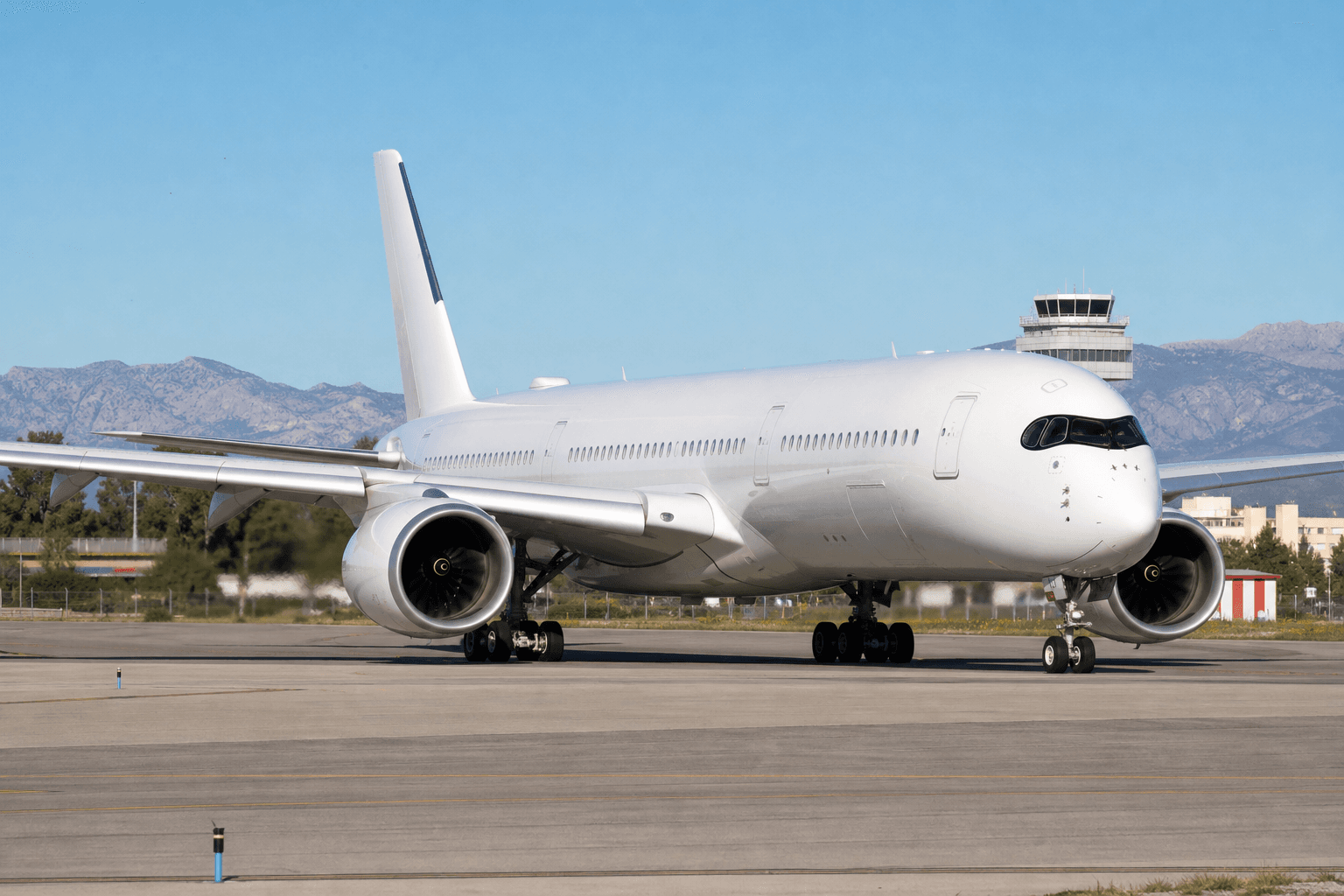
Air Europa to Receive First Airbus A350-900 in 2028 amid Strategic Overhaul
Spanish carrier is "optimistic" about this year after increasing 2025 profits by one-third. Air Europa expects to take delivery of its first Airbus A350-900 in 2028 and has embarked on a new strategic plan to achieve a "major structural and operational transformation" over the next two years. The Spanish carrier, which increased its full-year pre-tax profit by one-third to €155 million ($176 million) in 2025, says its new '+Air 28' plan will focus on operational efficiency, profitability and data-driven decision-making. As part of the plan, the carrier will launch a new maintenance division – Air Europa Technics – which will provide MRO services for its own aircraft and to third-party operators. Air Europa says it will adapt its maintenance capabilities to service the A350-900, ahead of incorporating the type into its currently all-Boeing fleet. It operates more than 60 aircraft, comprising 787-8s and -9s as well as 737s, and is in the process of adding 737 Max 8s as well . The carrier firmed an order with Airbus for up to 40 A350-900s at the beginning of this year. Air Europa confirms to FlightGlobal that the airline will take delivery of its first A350 at some point in 2028. Air Europa says it is "optimistic" about the remainder of 2026, despite "global instability surrounding the fuel market". Operating revenue in the first four months of the year was 9.2% higher than in the same period in 2025. The airline aims to increase its full-year pre-tax profit by 28% in 2026, it says. Full-year revenue in 2025 was 7.3% higher than the previous year, at €3.1 billion. Earnings before interest, taxes, depreciation and amortisation (EBITDA) increased by 14%, to €235 million. Passenger numbers were up 2.6% on a 1.5% increase in capacity, leading to a slight increase in load factor to 84.4%. "The continuous expansion and renewal of our fleet, together with structural improvements and operational efficiency, are the pillars on which we will continue to grow and demonstrate the strategic role we play, especially in Europe and Latin America," says Air Europa president Juan Jose Hidalgo. The airline’s chief executive, Richard Clark, adds: “The 2025 results are, once again, the outcome of the joint collaboration of all the professionals at this company. This effort does not stop, and it is the key to continuing our international expansion, as reflected in the opening of new routes, both domestic and international.” Air Europa’s recently-opened routes include Oviedo and Seville in Spain, Geneva in Switzerland and Johannesburg in South Africa. Star Alliance carrier Turkish Airlines is in the process of acquiring a 25-27% stake in Air Europa , which is a SkyTeam member. British Airways parent IAG is also a 20% shareholder in Air Europa, which is majority-owned by Globalia.
Vueling to Launch Boeing 737 MAX 8-200 on Mediterranean and European Routes in December 2026
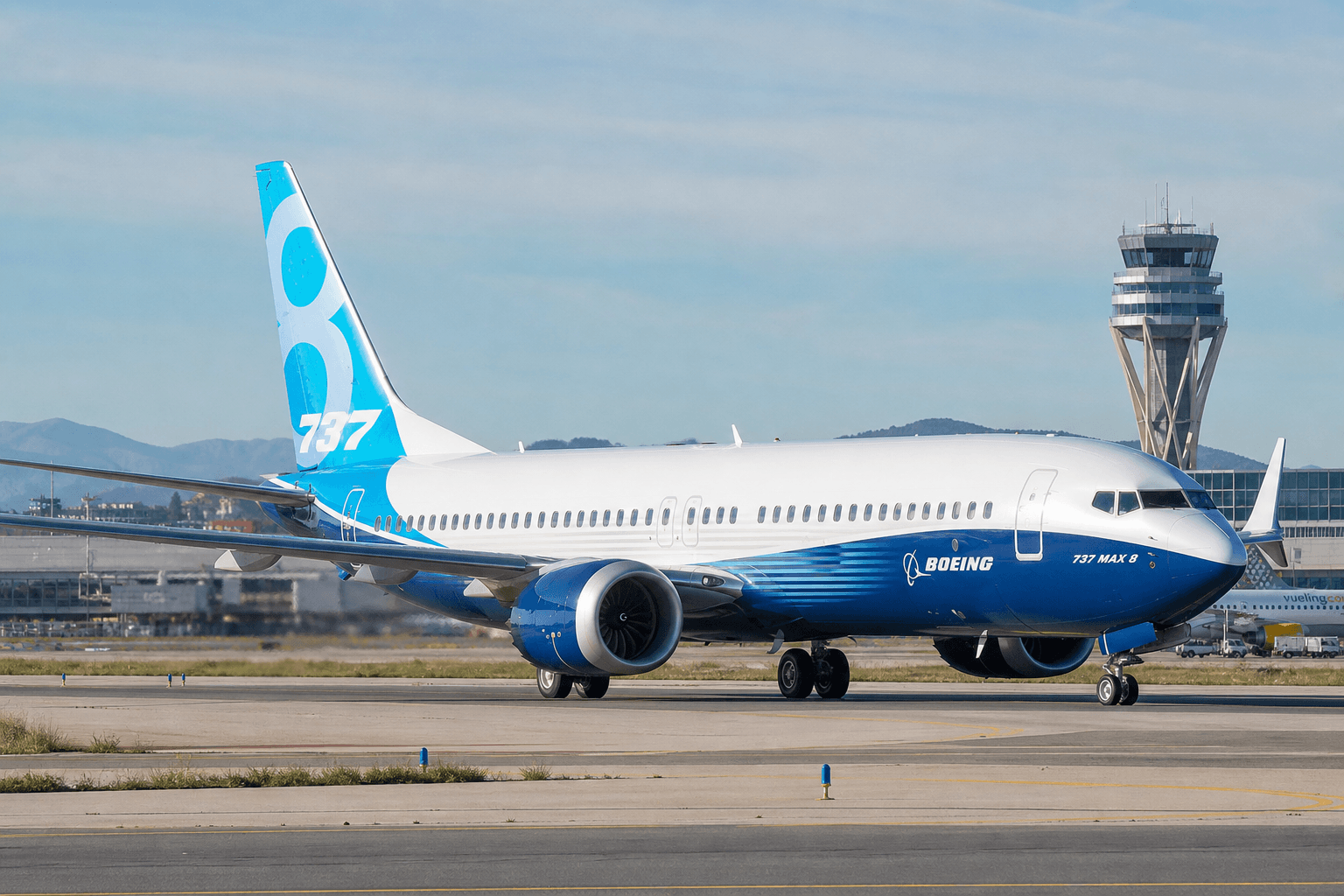
Spanish low-cost carrier Vueling has unveiled the first routes that will see its new Boeing 737 MAX 8-200 aircraft enter commercial service later this year, marking the beginning of one of the most significant fleet changes in the airline’s history. For more than two decades, Vueling has operated an exclusively Airbus narrowbody fleet. However, from December 2026 the airline will begin introducing Boeing aircraft for the first time as parent company IAG pushes ahead with its mixed-fleet strategy. First 737 MAX Routes Confirmed According to newly filed schedules, the Boeing 737 MAX 8-200 will make its operational debut on 18 December 2026 . Initially, the aircraft will operate only selected flights on a handful of routes from the airline’s main hub at Barcelona-El Prat Airport (BCN) before gradually becoming more widespread. The first planned destinations include: Alicante Fuerteventura Ibiza Málaga Palma de Mallorca Paris Charles de Gaulle Paris Orly Rome Fiumicino Seville Source: Aeroroutes The inaugural day of operations is expected to include services between Barcelona and: Alicante Rome Fiumicino Palma de Mallorca As is always the case with newly filed schedules, aircraft allocations remain subject to change before the winter season begins. A Historic Fleet Change The move represents a remarkable departure for Vueling. Since launching operations in 2004, the Barcelona-based airline has built its business around the Airbus A320 family, operating A319s, A320s, A320neos, A321s and A321neos. Introducing the Boeing 737 MAX means pilots, engineers and cabin crew will all require new training while maintenance and operational procedures are expanded to accommodate a second aircraft family. The aircraft entering service are the Boeing 737 MAX 8-200 , a high-capacity version originally developed for low-cost carriers. Seating around 197-200 passengers in a single-class layout, the type offers significantly lower fuel burn and operating costs compared with previous-generation aircraft. Why Boeing? The change follows IAG’s decision to allocate its order for 50 Boeing 737 MAX aircraft to Vueling. The order comprises: 25 Boeing 737 MAX 8-200s 25 Boeing 737 MAX 10s The first three aircraft are expected to arrive before the end of 2026, with additional deliveries continuing over the coming years. Although introducing a second aircraft type inevitably increases operational complexity, the move gives Vueling greater fleet flexibility and reduces reliance on a single manufacturer. The high-density MAX 8-200 is also well suited to the airline’s busy Mediterranean network, where demand often peaks during holiday periods. Current Fleet Before the arrival of the Boeing fleet, Vueling operates approximately 140 Airbus aircraft comprising: Airbus A319-100 Airbus A320-200 Airbus A320neo Airbus A321-200 Airbus A321neo The airline serves more than 100 destinations across Europe, North Africa and the Mediterranean from its principal base in Barcelona, alongside major operations at Paris-Orly, Bilbao and several other Spanish airports. With the Boeing 737 MAX now just months away from entering service, Vueling is preparing for the biggest operational transformation in its history—bringing an end to more than 20 years as one of Europe’s best-known all-Airbus airlines.
Limited Facilities Worldwide Certified to Service Boeing 777X GE9X Engines at Launch
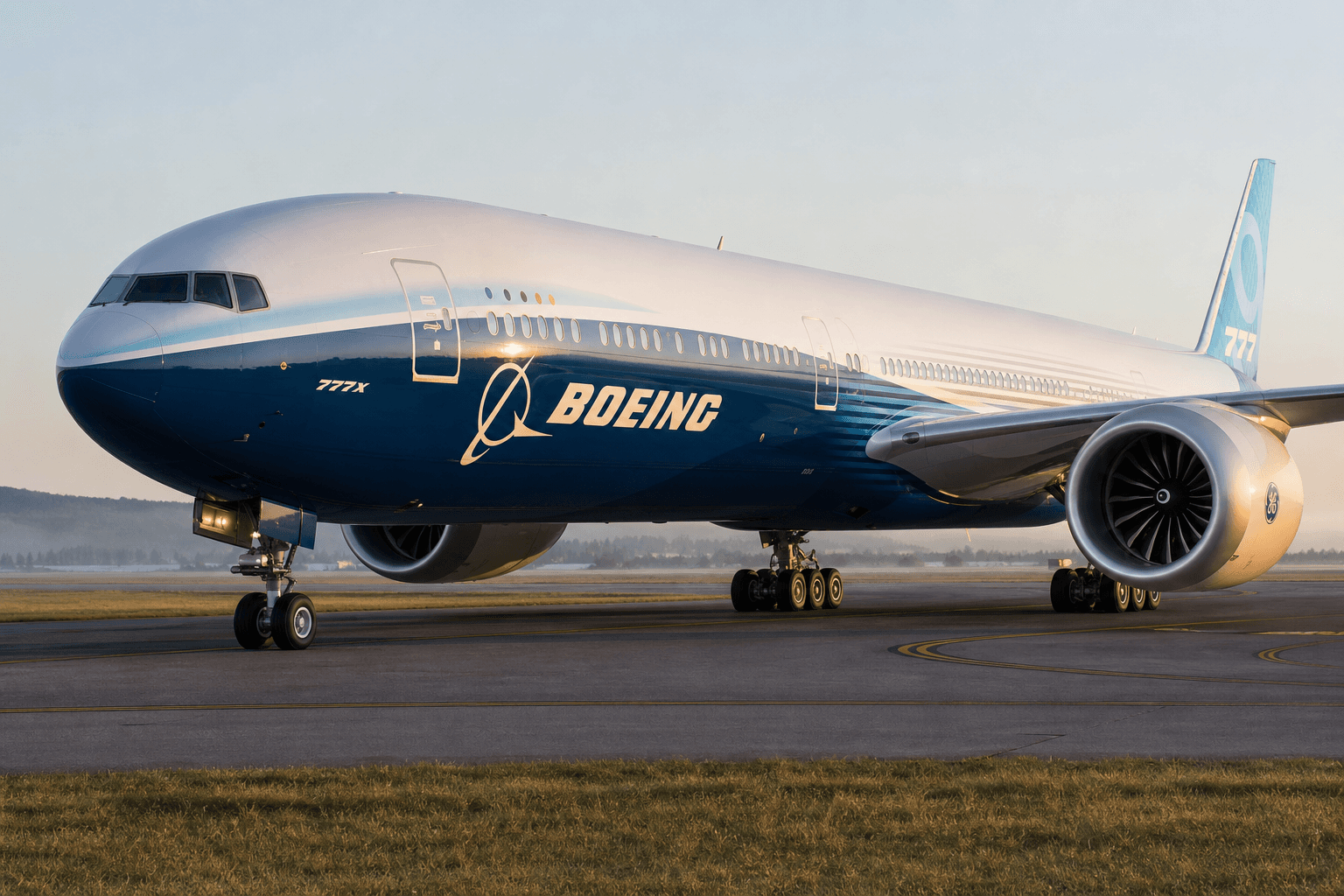
An engine like the CFM56 is easy to work on, in part because it's a known motor that has been in service for decades and has global support. It's easy to arrange maintenance for the engine, while parts are cheap to source and can be delivered quickly. But with any new engine, it takes time to scale up a maintenance network, particularly today, as new models are becoming increasingly complex, and this is the exact challenge that early Boeing 777X operators will face with the aircraft's General Electric GE9X engines.
Norwegian Air Swaps Its Logo for British Airways' After England Beats Norway in World Cup Bet
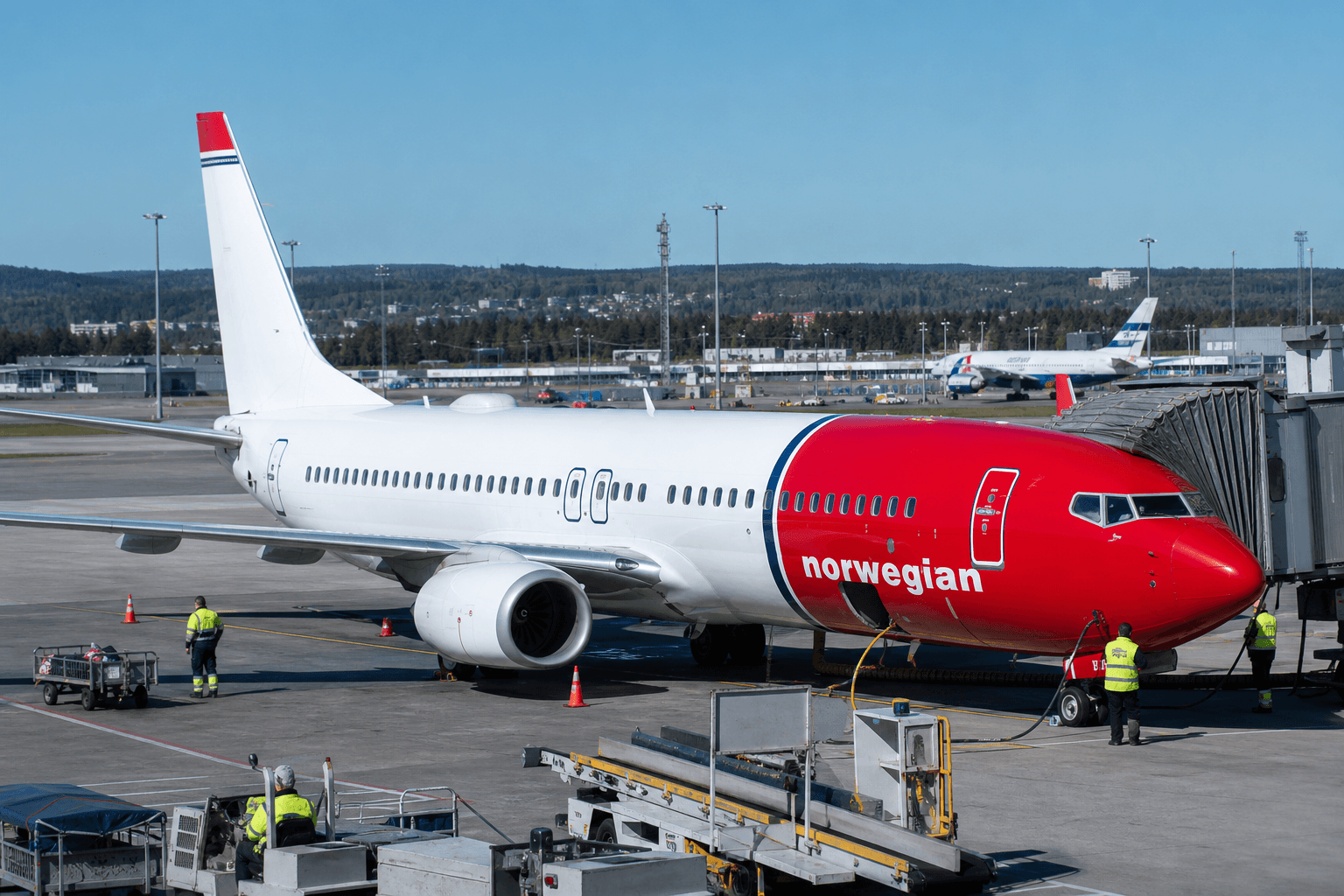
Oslo-based Norwegian Air has replaced its own logo on its official Instagram page with that of British Airways after losing a bet with the rival carrier over who would prevail in the hotly contested quarterfinal match between England and Norway in the FIFA World Cup on Saturday. In the days leading up to the match, Norwegian trolled British Airways on social media and challenged the Heathrow-based flag carrier of the United Kingdom to a bet: The side that loses must replace their logo with that of their rivals for 24 hours. View this post on Instagram A post shared by Norwegian (@flynorwegian) Surprisingly, the lawyers at British Airways actually gave the go-ahead for the airline’s social media team to engage in this heated rivalry, and before long, a Norwegian Air intern was on a plane to London with a USB stick containing the airline’s logos. A day before the match, USB sticks containing logo files were exchanged at BA’s headquarters close to London Heathrow Airport. The match ended in a stunning victory for England, with Jude Bellingham, the Real Madrid midfielder, scoring both goals in the 2-1 victory for the English team in Miami. As the celebrations in England continued through the night, Norwegian Air followed through with its promise, changing its own logo to that of British Airways logo on its Instagram page. In a seperate post, Norwegian Air wrote: “While the tournament is over for us, this friendly bet will forever live in all our hearts We wish England and British Airways all the best in the semi-final, and we sincerely hope you'll get to bring football home!” British Airways then cheekily replied: “We love this new look on you,” while its fellow oneworld airline Qantas also got in on the fun, saying: “felt cute might delete later xx” Malaysia Airlines also called out how unique this whole situation is, saying: “Respect to Norwegian! Most airlines need six months and 14 approvals to change a logo.” Norwegian Air had thrown its full support behind its national soccer team in the lead-up to the match, adorning its cabins with Norwegian flags and encouraging passengers and crew to take part in the iconic ‘Viking Row’ that has come to symbolise Norway’s national soccer team. With all this newfound interest in Norwegian Air’s social media presence, the airline certainly wasn’t going to miss this great marketing opportunity. Hours after the match, the airline offered a discount code for passengers flying between England and the airline’s destinations in Norway and beyond. At one point in Norwegian Air’s not-too-distant past, the airline directly challenged British Airways on routes to North America from London Gatwick Airport, as it attempted to break into the low-cost, long-haul market. Unfortunately, maintenance issues with the Rolls-Royce engines on its fleet of Boeing 787 Dreamliners further compounded Norwegian’s financial performance on these routes, and there were real concerns that the carrier might fall into liquidation. In the end, Norwegian abandoned its long-haul ambitions and retreated to its core market in Norway. As it turned out, however, that was the best decision it could have made. After undergoing a painful transformation, the airline is once again profitable, albeit much smaller than it was before the COVID-19 pandemic.
The Daily Touch & Go
The day's best aviation news in your inbox. Free, no spam.